Notes & Queries – February 2024
Q: I was just listening to Bill Monroe’s recording of “Christmas Time’s a-Comin’” and I would swear I could hear the unmistakable voice of Del McCoury in the harmony. The song was recorded in 1951, can you shed some light on this? Dallas Hudson, Charlotte NC
A: You are correct that Bill Monroe recorded the song in 1951. Personnel on the session included the following: Bill Monroe-mandolin, lead vocal on verse/tenor vocal on chorus; Edd Mayfield-guitar, lead vocal on chorus; James Garfield ‘Gar’ Bowers-banjo; Gordon Terry-fiddle; Oscar ‘Shorty’ Sheehan-string bass; Owen Bradley-vibraphone.
Del McCoury was only 12-years old at the time and didn’t join Monroe’s band until 1963. I suspect that what you heard concerning Del McCoury and “Christmas Time’s a-Comin’” was a circa 2002 CD by various artists called Christmas on the Mountain – A Bluegrass Christmas. Included as part of the project was a recording of “Christmas Time’s a-Comin’” that featured vocals by Del McCoury, Doc Watson and Mac Wiseman. I’m not sure if the CD is still available. It was issued by the Universal South label.
Ray Davis, the Singer
County Sales manager Corbin Hayslett came across some interesting items recently while canvasing for obscure vintage bluegrass recordings. He sent a photo of one of his 78 rpm finds, a release on the DC label by Ray Davis with “I’d Rather Die Young” and “Ray’s Boogie.” With the photo came a query: “Do you think this is THE Wango Ray Davis?” For confirmation, I reached out to West Virginia musician Scott Brannon, a long-time friend of Ray’s, who wrote back: “Yes, this is Ray Davis. I don’t know a lot about the recordings. He gave me a copy of the ‘Drunken Driver’ but it’s on the Marshall label. Never been played. I’m thinking DC and Marshall records were connected. Chubby Wise is playing fiddle on the ‘Drunken Driver.’ Don’t know the steel player.”
For those unfamiliar with the legacy of Ray Davis, he was a broadcaster who got his start in the late 1940s. He was known for his decades-long sponsorship by Baltimore-based used car salesman John Wilbanks, whose Johnny’s Used Cars was known as “The Walking Man’s Friend.” With underwriting from Wilbanks, Ray Davis became a local legend of the airwaves, playing and promoting bluegrass on a tiny AM radio station (WBMD) that covered Baltimore and its surrounding environs. He also promoted shows, served as a master of ceremonies at area country music parks, and in the early 1960s launched a record label that was named in honor of his hometown of Wango, Maryland.
In a June 1975 edition of Bluegrass Unlimited, Davis told writer George B. McCeney that “my first M. C. job in Baltimore was at the old Hippodrome in 1950 . . . I even sang with that show. Always did want to sing with a western swing band.” Throughout the early 1950s, Davis incorporated singing into his mix of musical activities. One venue that hosted dances on the weekends featured “Ray Davis, of WBMD, and his Hillbilly Jamboree Band” and a musical extravaganza at the Bel Air (Maryland) Armory boasted “Extra” talent that consisted of the “Carter Sisters and Ray Davis.”
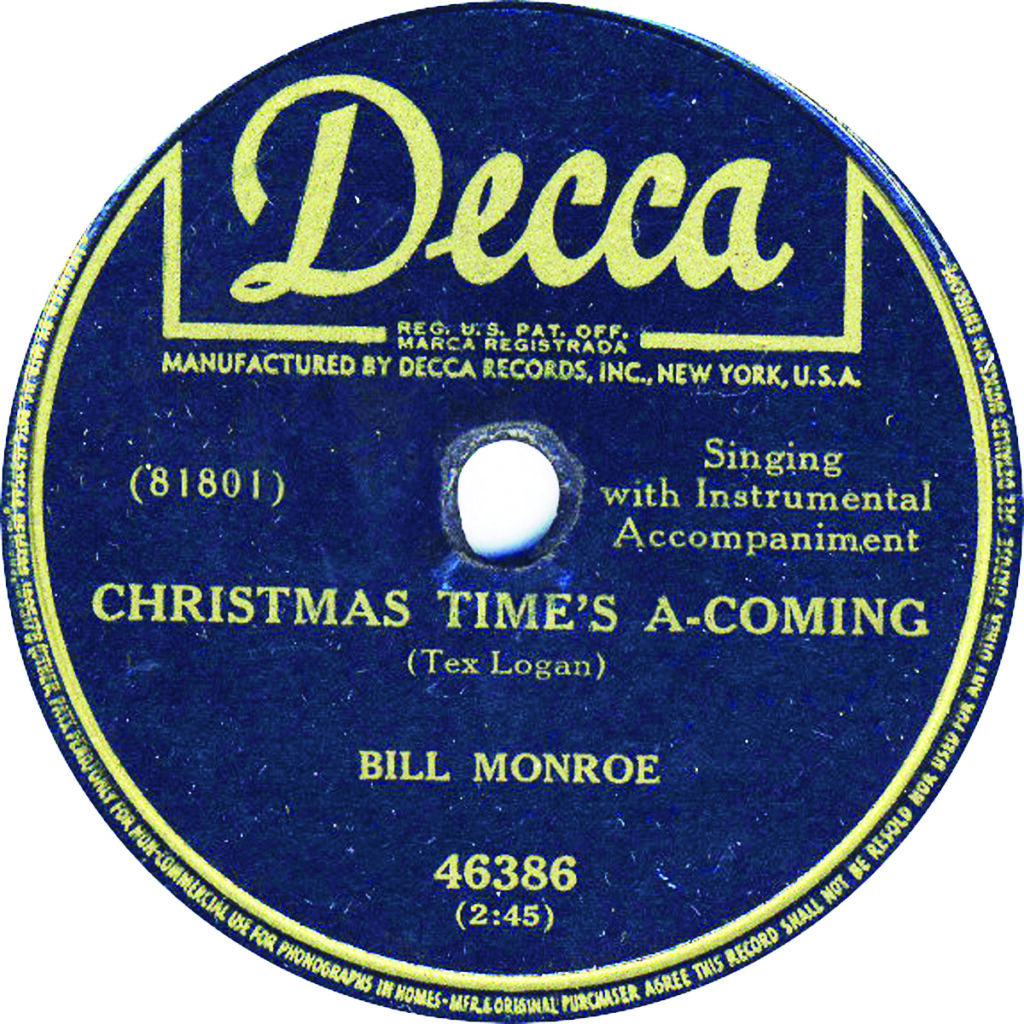
Thus, it was probably no surprise when in the middle and latter part of 1953, a small series of recordings by Ray Davis appeared on the market. The first release appeared on the DC label and consisted of the aforementioned “I’d Rather Die Young” and “Ray’s Boogie.” Reviews in the trade magazines of the day were tepid, at best. Of “I’d Rather Die Young,” the August 29, 1953, edition of Billboard described it as “Okay country-style coverage of the ditty originally cut by the Hilltoppers and which is selling well right now. This might get a bit of the action in some spots, tho it’s probably too late.” The review didn’t mention it, but it’s worth noting that bluegrass balladeer Mac Wiseman’s latest release at the time was “I’d Rather Die Young.” Wiseman was the house band at Pennsylvania’s Sunset Park at the same time that Davis was the park’s master of ceremonies. Billboard pegged the flip side, “Ray’s Boogie,” as a “good country instrumental boogie featuring a fiddle player.” The fiddler just happened to be legendary former Blue Grass Boy Chubby Wise.
The DC label that released the 78 disc was launched around 1947. The firm was founded by Lillian Claiborne and her partner Haskell Davis. The label’s initials reflected the last names of the co-owners (Davis and Claiborne) as well as the city that it operated out of: Washington DC.
Researcher/collector Jay Bruder wrote of Claiborne that she was “a middle-aged white woman, married to a successful businessman, with a fair amount of cash and an interest in all kinds of music. Between the end of World War II and 1950 Lillian assembled a virtual monopoly on recording talent in Washington . . . Her roster included White Pop, Black Pop, Hillbilly, Country and Western, Gospel, and R & B.” By the time Ray Davis recorded for the label, Haskell Davis appeared to have left the scene, leaving Mrs. Claiborne (as she was often referred to by those who knew her) solely in charge.
In addition to the record label, Claiborne and Davis also launched a publishing concern that was named, quite naturally, Claiborne-Davis Music, which was affiliated with BMI. The instrumental, “Ray’s Boogie,” was published by Claiborne-Davis. Credits on the disc revealed Emanuel “Manny” Goldberg as the tune’s copyright holder. Goldberg was a Baltimore-based record distributor. Ray Davis and Goldberg were evidently connected through their various music activities, and it was Goldberg who arranged Ray’s session with DC.
Another disc by Ray Davis appeared in November 1953, this time on Manny Goldberg’s Marshall label. The Billboard issue from the 21st of the month recapped “The Drunken Driver” as a “lecture on drunken drivers [that] is sung and talked adequately by Davis, while the fiddles grind out behind him. The intent is more praiseworthy than the finished record, tho it could get spins.” The flip side, “You Can’t Break My Heart,” was defined as an “up-tempo weeper [that] receives an okay performance by the singer, whose style is closest to Ernest Tubb.”
Although appearing on the Marshall label, the disc was apparently intended as a DC release. Etched in the plastic of each record was a DC catalog number of 6006. Jay Bruder opined that the release of the disc on the Marshall label “illustrates the close collaboration between Mrs. Claiborne” and Manny Goldberg.
Ray Davis and Manny Goldberg claimed ownership of the song “The Drunken Driver.” They published it with Claiborne-Davis Music. In truth, the song is older and pre-dates Davis’ 1953 recording by nearly fifteen years, or more. Molly O’Day popularized the song with her 1947 release on Columbia Records and printings of the song’s lyrics appeared as a poem in newspapers as early as 1940. “You Can’t Break My Heart” was a 1946 release by Spade Cooley that was credited to Cooley and Smokey Rogers.
Ray Davis had one additional release, on the Baltimore-based Audio label (recorded by the Audio Services Company). Disc 1025 A & B contained “Give a Broken Heart a Chance to Cry” and “Slippery Path.”
Collectively, the DC, Marshall and Audio releases marked the start and end of Ray Davis’s career as a singer. After launching his Wango label in the early 1960s, he had various groups provide musical backing for several recitations such as “Orphan Joe” and “Father’s Table Grace,” but his singing days were over.
Ray Davis realized the most widespread phase of his career when he made a move in the middle 1980s to WAMU-FM in Washington, DC. When that station launched its digital streaming program, under the auspices of BluegrassCountry.org, his fame stretched world-wide.
(Special thanks to Jay Bruder for his assistance with documenting Ray Davis’s early recording career.)
Going to Live in Green Pastures
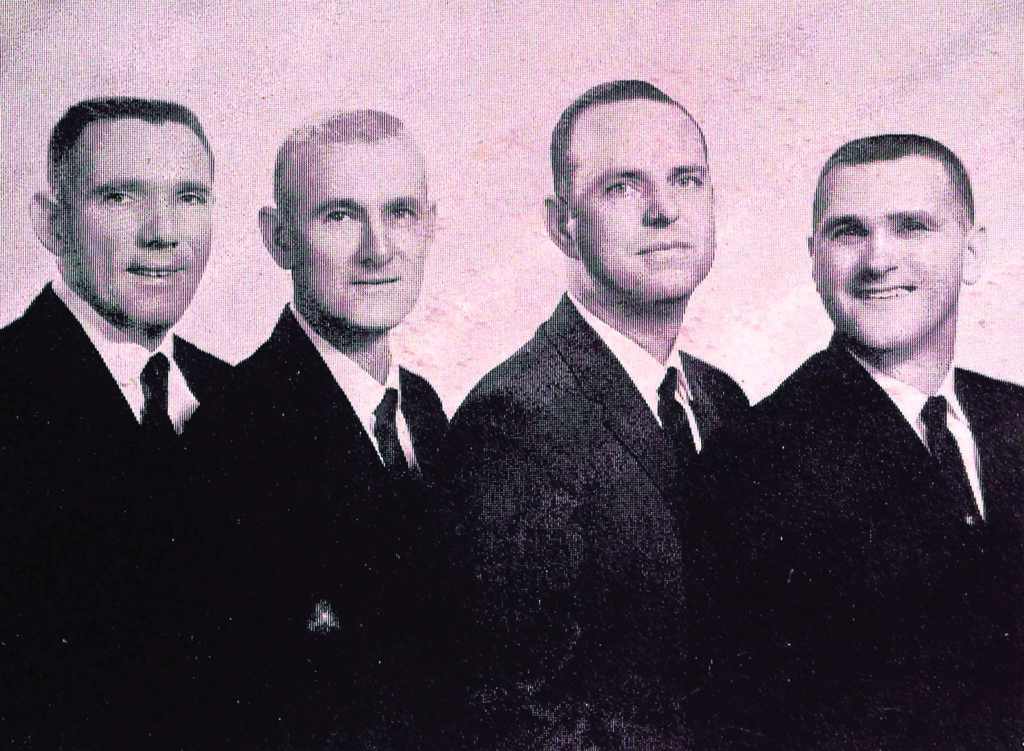
Early in his solo career, Ralph Stanley once introduced the song “Going Up Home to Live in Green Pastures” by noting that “someone once told me that this was Abraham Lincoln’s favorite hymn.” Such seems to be the mystery that surrounds this song’s true origins. In truth, it was copyrighted in 1963 by H. W. VanHoose as “Going to Live in Green Pastures.” It was published by Stamps Quartet Music in a hymnal called Vict’ry Road.
VanHoose (March 16, 1900 – October 26, 1978) was a West Virginia native whose own history is sparsely documented. He was born Henry Wesley VanHoose in Wayne County, which is situated just south of Huntington; the county’s western border abuts the eastern edge of Kentucky. Census records reveal that VanHoose achieved a 7th grade education. Curiously, his World War I draft notice indicated that his occupation in 1918 was as a public-school teacher. By the mid-1930s he had shifted his employment to that of a mail carrier with the United States Postal Service.
It’s possible that VanHoose’s interest in songwriting developed earlier, but the first direct evidence of his craft was a song called “Our Lord Has Walked This Lonesome Road.” It was published in a 1952 Stamps Quartet Music songbook called Living Way. Throughout the middle and late 1950s, VanHoose supplied at least another half dozen or so songs to various Stamps Quartet books.
In all, VanHoose had at least 31 songs that were published with Stamps Quartet Music, the most popular of which was “Going to Live in Green Pastures.” The first known recording of the song took place in 1967 when the Chestnut Grove Quartet, an a cappella gospel group from Abingdon, Virginia, featured it as the lead track on their second album called What Love. In addition to a steady stream of work in area churches, the Quartet also had a live radio program. Among its many listeners was none other than Ralph Stanley.
Stanley thought enough of the song to include it on his first post-Carter Stanley gospel album, a 1968 outing for King Records called Over the Sunset Hill. A young Larry Sparks played guitar and sang lead.
It was during this timeframe that VanHoose’s credit for the song began to slip away. The Chestnut Grove Quartet release failed to list any writer credits. When the Ralph Stanley album was released, the song was listed simply as Traditional. A short time later when a single from the album was issued, Ralph Stanley – not knowing the true origins of the song – claimed a co-writer’s credit, along with an eastern Kentucky songwriter/musician named Arvil Gearheart.
Another early recording of the song that found favor with fans of traditional bluegrass was made by the Cooke Duet, Hubert and Jeanette. Hubert was the brother of Jack Cooke, the long-time bass player for Ralph Stanley. Bluegrass Unlimited columnist Walt Saunders once asked Hubert if the Cookes’ version of “Going to Live in Green Pastures” was inspired by or learned from Ralph Stanley. Hubert replied that they got it from the same place that Ralph did: the Chestnut Grove Quartet. The Cooke album failed to give credit to anyone for the writing of the song.
From the early 1970s through the turn of the new millennium, “Going to Live in Green Pastures” was recorded on a number of high-profile recordings, only a few of which gave proper credit to H. W. VanHoose. The issue was further confused when the song’s title underwent several changes, including “Going Up Home to Live in Green Pastures” or simply “Green Pastures.”
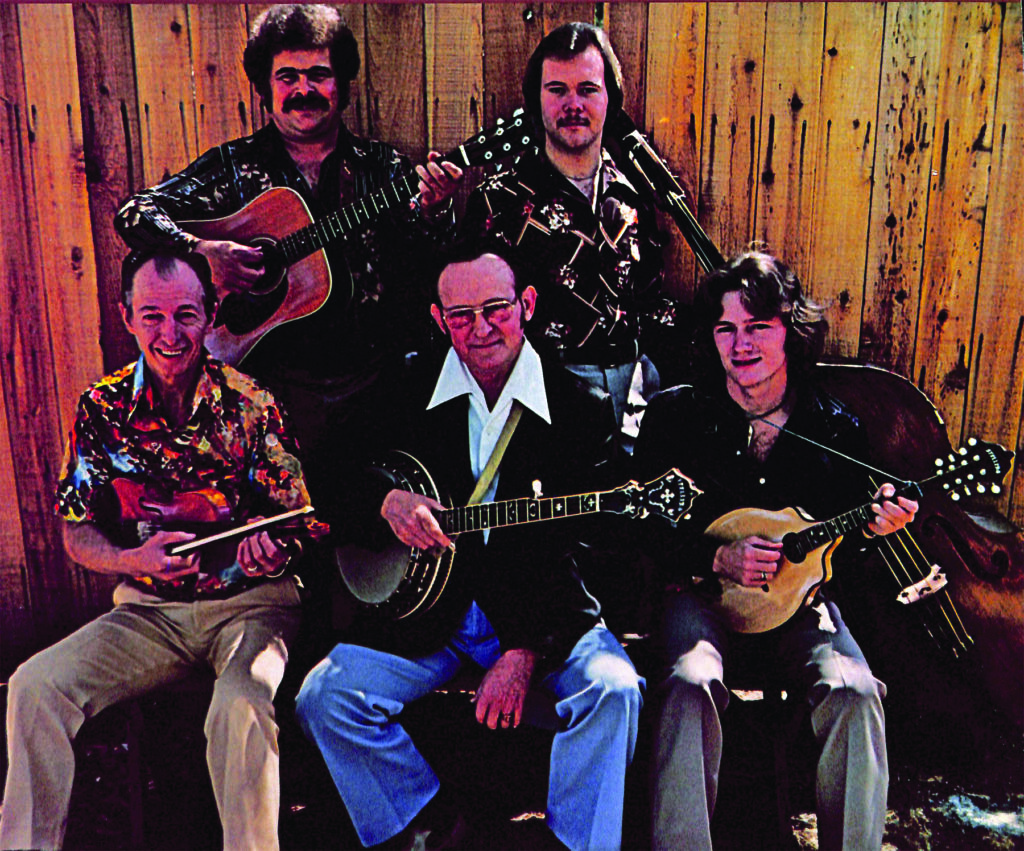
Ralph Stanley recorded the song at least two more times; once on his 1973 album I Want to Preach the Gospel and again on the 1992 double disc set Saturday Night/Sunday Morning (on which the song was credited to Ralph’s wife, Jimmi Stanley). Larry Sparks, Carl Tipton and the Dry Branch Fire Squad made recordings in the mid- to late-1970s, all of which named no writer for the song.
Probably the biggest boost to the song’s popularity came from Emmylou Harris, who recorded it on her 1980 album Roses in the Snow. She listed the song as Traditional, with an arrangement by Brian Ahern. A 1983 album called Here Today (with David Grisman, Vince Gill, et al.) credited Ralph Stanley and Arvil Gearheart. Another 1983 album called Down Home Praise (with Chris Hillman, Bernie Leadon, et al.), a 1989 disc by the Lewis Family (called Generation to Generation), and a re-recording by Larry Sparks on his 1992 Travelin’ release all gave credit to VanHoose. Emmylou Harris reprised the song in 2001 for inclusion on the popular Down from the Mountain collection; there, she listed the song as Traditional.
Although “Going to Live in Green Pastures” is not a traditional song, in the sense that its author is unknown, it is a good example of how a song moves around to become part of a tradition. H. W. VanHoose passed away in 1978 and didn’t get to witness the widespread popularity that his song enjoyed. The mail-carrier-turned-songwriter would probably be amazed.
Over Jordan
Bonnie Ross Beverley (May 19, 1943 – November 23, 2023) was a talented multi-instrumentalist who spent most of his life in and around the Lynchburg, Virginia, area. Throughout his career, he used various spellings for his name and was most often listed as Bonny Beverly. He is probably best known for his work in the late 1970s and early- and mid-1980s with Don Reno as a member of the Tennessee Cut-Ups. Although some of his other work was not as high-profile in nature, he logged over sixty years as a working musician.
Beverley was a self-taught musician who was proficient on guitar, mandolin and fiddle. Among his earliest exposure to music was the playing of his father, Lacy Beverley. As a teen in the late 1950s, Bonnie performed with Larry Hall, who later played with Clinton King in the 1960s. Among Beverly’s first professional work was occasional subbing for Mack Magaha on Reno & Smiley’s popular Top O’ the Morning television program in Roanoke, Virginia. This, no doubt, led to his later job playing fiddle with Red Smiley’s Bluegrass Cut-Ups. He had the distinction of appearing with Smiley at Carlton Haney’s first multi-day bluegrass festival, which was held on Labor Day weekend in 1965 in Fincastle, Virginia. In preparing to play the song “Baby Blue Eyes” as part of a guitar workshop at the festival, Smiley introduced Beverley: “Bonnie, if you’ll take the fiddle and kick it off. This is Bonnie Beverley playing fiddle. We call him Teddy Bear most of the time, or Sugar Bear. Bluegrass music is not complete without an old-time fiddle and we have Bonnie Beverley doin’ the fiddle playin’.” That same weekend, he also appeared with Don Reno as part of a band that backed up Clyde Moody.
In August 1969, Beverley played fiddle on two songs that were recorded by Roanoke-based Clinton King. The tracks, “I Can’t Stand This Misery” and “Old Virginia Hills” were released as a single on the Rebel label.
Throughout the early and middle 1970s, Beverley appeared on a number of releases by other artists on the Major label of Waynesboro, Virginia. These include singles and albums by George Winn (“The Legend of Bluegrass” / “The Memory of Curly Butler”), the Sprouse Brothers of Staunton, Virginia (“Big Sandy” / “I Hear a Sweet Voice Calling”), and a 1976 album by Larry Stephenson called Best of Bluegrass. Some of his stage work during the same period included fill-in work backing up Mac Wiseman and subbing in Lester Flatt’s Nashville Grass for an ailing Paul Warren. With bass player John Palmer and banjoist David Deese, Beverley journeyed to Nashville for shows with a 1970s version of the Carter Family. Still more work included some shows with country singer Faron Young. Closer to home Beverley appeared on a number of shows with bluegrass balladeer Jim Eanes and even played on some of his last recordings.
Beverley renewed his association with Don Reno in the middle of 1977. He was pegged as a fill-in for Bill Harrell, who was recovering from an automobile accident. Later that summer, when Reno & Harrell split and each formed their own respective bands, Beverley became a permanent member of Reno’s Tennessee Cut-Ups. He played guitar and occasionally twin fiddled with Buck Ryan.
It was with Reno and company that Beverley realized his most extensive work in the recording studio. In December 1977, he participated in the recording of Buck Ryan’s album Dream Train Engineer. He mostly played guitar but did appear on several twin fiddle numbers. His work with Reno included Magnificent Bluegrass Band, 30th Anniversary Album, a 2-LP set by The Bluegrass Cardinals called ‘Live’ & On Stage! that included a guest appearance by the Reno band, and The Final Chapter. Following Reno’s passing in 1984, Beverley performed with the Reno Brothers at a 1986 tribute to Don that took place at a Camp Springs, North Carolina, festival.
Throughout the late 1980s, Beverley performed with Alvin Breeden in a couple bands: Southern Wind and the Virginia Cut-Ups. Breeden was a banjoist who played in the style of Don Reno; Beverley’s addition to the group was a natural fit.
In 1995, Beverley teamed up briefly with former Tennessee Cut-Up Steve Wilson.
Beverley’s last steady work was with a group called Dixie Blue, from 2006 to 2009. The band featured a mix of country classics and bluegrass and always gave special billing to its popular member: “featuring fiddler Bonny Beverly.” Following that, he continued to play locally with several bands in the Lynchburg area. His last time to perform on stage was in August of 2022 when he appeared with Charles Frazier and the Virginia Ramblers.
Beverley’s passing was announced to the bluegrass world on Thanksgiving morning in a Facebook post by Dale Reno: “On a sad note I have to inform you all that a long-time friend, long-time Tennessee Cut-Up, and great fiddler Mr. Bonny Beverly has passed away this morning. Had many great times on the road and at home. I’ve known Bonny since I was a little baby. Going to miss you bro.” Doyle Lawson characterized him as “a very good and overlooked musician.”