Notes & Queries – February 2021
NOTES
In reference to a query in the November 2020 column concerning the song “When the Work’s All Done This Fall,” GC from Alexandria, Alabama, writes that “I had the song in my CD player as I read the question in ‘Notes and Queries.’ The song was also recorded by Norman Blake in 1991 on Just Gimme Somethin’ I’m Used To (Shanachie 6001). A great CD and a great song.”
BR, via e-mail writes: “Just received the latest edition of BU. In the ‘Notes and Queries’ section, OJ from Michigan asked about a bluegrass version of ‘May the Bird of Paradise Fly Up Your Nose.’ The Early Morning String Dusters from the Knox/Loudon County area of East Tennessee have been performing this song to the delight of local audiences for the last 25 years. The band always closes with this number featuring the bird calls of bassist Sam Carey. [Note: a 2015 live performance of the song by the Early Morning String Dusters can be found on YouTube.]
QUERIES
Q: I recall a song called “Prison” that was popular about 2015 that I have not heard played recently. I even have words but now I cannot find anything online. I would like to know who sang it and any other information you have about it. It should be played more. CG, via e-mail.
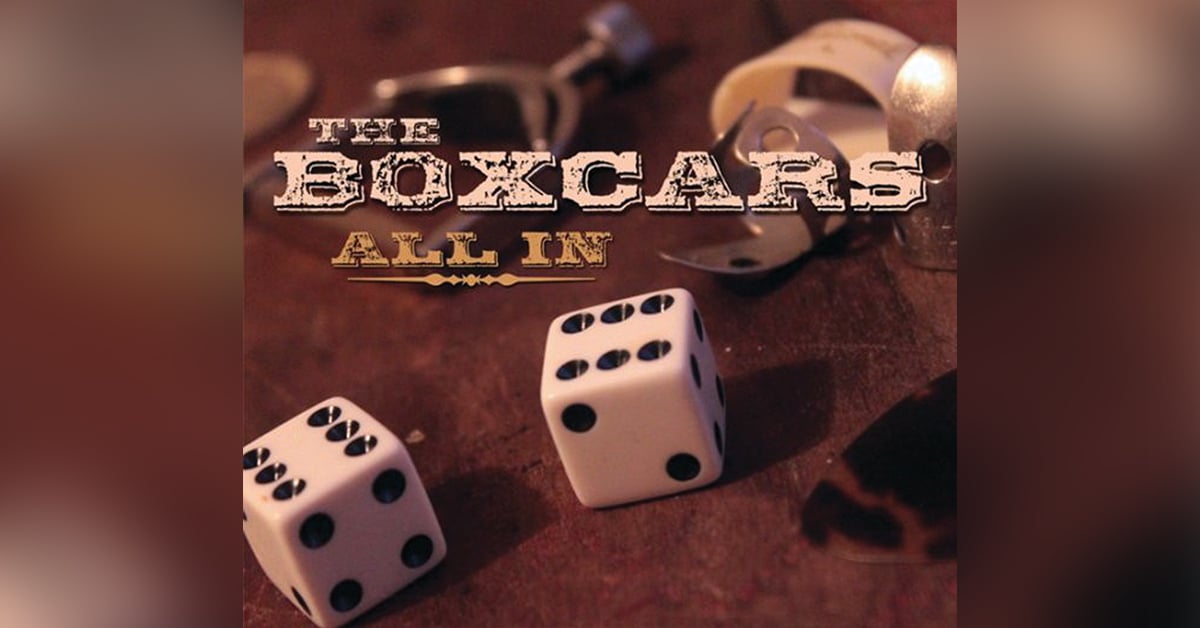
A: The song you heard, “Prison,” was recorded by The Boxcars and was released on their 2012 CD for the Mountain Home label called All In. The authors are Sonya Isaacs and Rebecca Isaacs Bowman, both of whom are members of the popular gospel group The Isaacs. Rebecca is married to Boxcar member John Bowman.
Q: I have a recording of Bill and Mary Reid (or Reed) with Bill singing “I’ll Go to Bed” and Mary singing “Your Life Was Short.” I know nothing about them other than the fact that they were not the same Bill and Mary Reid who played in Lynchburg, Virginia, in the 1950s. I don’t know if this Bill and Mary were married to each other, or not, but they are hillbilly (not blue grass) and are really good. Can you find out what label they were on and did they record anything else? Anything you can find out would be great. Thanks. JS, Salem, Virginia
A: This Bill and Mary Reid (Reed) are proving to be very elusive. Perhaps some of our readers can help shed some light on this obscure duo.
Q: I have a copy of an album by Del McCoury that was released on the Grassound label in 1976. I have enjoyed listening to the album many times over the years but have always been puzzled by the song “I Hope You Have Learned.” It is sung as a duet all the way through, with Del taking the tenor part. The lead singer is uncredited on the album. Any idea who the mystery singer might be? BQS, Palo Alto, CA
A: The album you mention was produced by bluegrass festival promoter Carlton Haney, with co-production assistance from bluegrass historian Fred Bartenstein and Riders in the Sky cohort Ranger Doug Green. It was recorded in Nashville in August of 1971 and featured band members Dick Staber on mandolin, John Farmer on banjo, and Dewey Renfro on bass; Buddy Spicher was hired to play fiddle. This was McCoury’s second trip to the studio to record an album under his own name, yet by the time of its 1976 release, it was his fifth LP release. The album was later reissued on CD by Rebel Records in 1992 with the title Livin’ on the Mountain. Surprisingly, the uncredited mystery singer turns out to be none of Del’s band members but is co-producer Fred Bartenstein. Apparently one of the perks of being a co-producer is getting to sing together with Del McCoury!

Q: I am writing to ask if Matt Downing still plays banjo for The Roys or has he gone to play for someone else. Just would like to know who he is playing with these days. DS, Dahlonega, Georgia.
A: It’s a safe bet that – times being what they are – many road musicians aren’t doing much in the way of picking these days. But, to answer your question, we received a brief note from The Roys: “We have been off the road for a while. I believe Matt went back to his home state of Texas. God Bless.” Matt is an endorser/player of Hatfield banjos whose website describes him as “a self-taught banjo player from Texas. He loves Earl, Reno & Traditional Bluegrass.” In addition to his work with The Roys, Matt has logged time with Dolly Parton, with his own group Matt Downing and the Prime Time Ramblers (“hard driving, Traditional Bluegrass from the great State Of Texas”), and more recently The Bluegrass Outfit. As recently as 2019, Matt was keeping busy with several groups of pickers in the Austin, Texas, area that included fiddlers Dennis Ludiker and Beth Chrisman, mandolin players Mike McKinley and Alex Rueb, guitarists Rob Lifford and Jenn Miori Hodges, guitar, and bass players Emma Rose and Amanda Jo Chisolm.
Q: I recently came into possession of a circa 1930s hymnal that contains “Angel Band.” I noticed that the printed version has a verse (the second one) that I’ve never heard sung by any of the vintage bluegrass bands. Did any groups ever make use of this verse? TAG, via e-mail.
A: “Angel Band” enjoyed a robust history in the 1950s and ‘60s, long before its run-away success as part of the Oh Brother soundtrack. The hymn dates back to the 1860s when lyricist Jefferson Hascall wrote the words and composer William Bradbury supplied the melody. The Knoxville-based trio of the Webster Brothers (Earl and Audie) and Carl Butler were the first modern country group to record the hymn. The February 5, 1955, issue of Billboard magazine gave it a glowing review: “The religious opus is awarded a rendition full of feeling and expression. Butler and the Webster Brothers do a fine job that collectors of sacred disks will quickly recognize. Very strong wax here.”
The printed hymn contains four verses, each of which starts as follows:
1 – My latest sun is sinking fast
2 – I know I’m near the holy ranks
3 – I’ve almost gained my heavenly home
4 – O bear my longing heart to him
The Webster/Butler version made use of verses 1, 4, and 3, in that order. The Stanley Brothers, who were reportedly inspired by the Webster/Butler version, performed the hymn on their 1955 show dates using the same 1-4-3 pattern. However, when they recorded it later in the year for Mercury Records, they pared it down to the first and fourth verses. This was most likely due to potential radio airplay and jukebox spins; songs clocking in at around two minutes were more likely to get air time than ones registering around three minutes.
Top-tier bands including Carl Story and Flatt & Scruggs followed suit a few years later. Story’s 1959 45-rpm single for Starday and Flatt & Scruggs’s version on their 1960 Songs of Glory album for Columbia both used verses 1 and 3. It wasn’t until 1963 that the husband/wife duo of Benny and Vallie Cain, mainstays of the Washington, D. C. bluegrass scene, released a version of “Angel Band” that included all four verses. Their 45-rpm single release on Rebel Records – today a scarce collector’s item – utilized a unique arrangement to make use of entire hymn in under three minutes. Instead of singing verse/chorus throughout, they recorded verses 1 and 2, then the chorus, then verses 3 and 4, and another chorus. Also coming out at about the same time was a gospel album by the Indiana-based Barrier Brothers whose Gospel Songs Bluegrass Style on the Cumberland label contained their version of “Angel Band,” which used the first three verses.
Who Wrote That Song?
The venerable gospel song “You Go to Your Church and I’ll Go to Mine” has been a mainstay in bluegrass since the early 1950s. The earliest piece of evidence of the song’s association with bluegrass is a lyric page from a circa-1950 song and picture folio that was issued by the Stanley Brothers; the duo never recorded it. The first commercial recording of it by a bluegrass group (sans banjo) was a 1951 waxing by the Virginia Trio (Jim and Jesse McReynolds and Larry Roll). Bill Clifton, who recorded the song for Starday Records in the early part of 1958, traced his own affection for it back to Jim and Jesse, and once opined that it was one – with its non-denominational theme and message of inclusion for all – that he wished he had written it. The McReynolds and Clifton versions spawned later recordings by a host of performers including the Lewis Family, J. D. Crowe, Red Allen, and more recently C. J. Lewandowski.

Unlike many gospel songs that wound up as bluegrass favorites, “You Go to Your Church” did not start out life in one of the widespread shape note hymnals that populated the South. Instead, it was the invention of a Maine-turned-New-York-City radio actor by the name of Phillips H. Lord. In the early 1930s, he had what was touted as the second most popular radio program in the nation, Sunday Night at Seth Parker’s. In the series, he took on the role of Seth Parker, a “nice old gentleman with a touch of rheumatiz” who hosted Sunday prayer meetings at his home in rural Jonesport, Maine. It was a 1930s precursor to A Prairie Home Companion and was listened to every week by a radio audience of four million people. The program generated anywhere from 700 to 4,000 pieces of fan mail each week.
Lord wrote the piece in 1929 while on a pleasure cruise to Norfolk, Virginia. A newspaper account later told that “the first night out, alone in his cabin, he wrote a hymn. A simple thing, with words stringing themselves together in a rugged, homespun sort of way, and the music flowing glad and easy-like.” Later that evening, he was asked to be a fourth for a game of bridge. His card-playing companions were comprised of two priests and a Jew. Their evening card game drifted into a conversation about religious tolerance, at which point Lord told the trio of the hymn he had just written. Lord related that “they asked me to sing it, and I sang it. Then the Jew said, ‘Let’s all sing it.’” The following Sunday, the Seth Parker cast sang the song on the air for the first time.
It’s possible that a widely circulated joke from the early 1900s inspired the title: “Dearest, before we marry, I must tell you I am a somnambulist.” (Somnambulist = sleep walker.) “That’s all right; you can go to your church and I’ll go to mine.” What ever the source, the song’s message found favor with a multitude of listeners. One columnist wrote that the song “has more real religion attached to it than two-thirds of 1930 preachers’ sermons.”
In response to the popularity of the hymns performed on the Seth Parker broadcast, Lord issued Seth Parker’s Hymnal in 1930. Containing 150 songs, “the book was compiled in response to a deluge of requests from listeners for the book used in the program. Included in the book will be a recently written, but as yet unpublished hymn, the theme of which is ‘You go to your church and I’ll go to mine.’”
Lending more support to “Your Go to Your Church,” in 1932 RKO pictures released a film entitled Way Back Home that stared Phillips Lord, as Seth Parker, and Bette Davis. The movie spawned a spinoff book called Seth Parker and His Jonesport Folks – Way Back Home. The very last page of the book featured words and music to “You Go to Your Church.”
Despite the popularity of the song on radio broadcasts, in film, and in books, “You Go to Your Church” was seldom recorded. A group from Wisconsin called The Highleys released a version on the Broadway label in 1931. It is rumored that the Phillips Lord Trio also recorded the piece about the same time, although no evidence can be found to support that.
By the 1940s, the song’s title was used frequently as a slogan in church advertisements in attempts to attract attendees to services. There were also intermittent reports of the song being used as part of religious services, thanks in part to sheet music that was issued in the 1930s. But still the song was underutilized for recording purposes. Ernest Tubb featured “You Go to Your Church” in a Checkerboard Jamboree broadcast in November 1946 and the duo of Lulu Belle and Scotty recorded it in the spring of 1948 for the regional TruTone label of Indiana.
Perhaps it was no accident that the Stanley Brothers, broadcasters on Bristol, Virginia’s radio station WCYB, chose to sing “You to Your Church.” An editorial in the December 18, 1951, edition of the Bristol Herald Courier newspaper proclaimed that the “you go to your church and I’ll go to mine but let’s walk along together” attitude was generally in effect for the Bristol area.

Over Jordan
Charles “Charlie” Whitaker, 86, of Kenton, Ohio, passed away on November 30, 2020, due to COVID-19 and kidney complications. He was the long-time mandolin player and bass singer for his wife’s group Lillie Mae and The Dixie Gospel-Aires. A native of Prestonsburg, Kentucky, he was born on June 15, 1934. At a young age, he migrated to Hardin County, Ohio, where, as a mandolin player working over radio WOHP, he met Lillie Mae Hardin. The couple married in January 1955 when he was twenty and she was fifteen; they remained married for fifty-nine years until Lillie Mae’s passing in 2014. During their years together, music was a big part of their lives. They made their first recordings – a couple of 45 rpm singles – in 1959; an album – The Old Crossroad – followed in 1976. In all, the group recorded over a dozen LPs. Much of their early work consisted of musical outreaches in various churches. In the 1970s, with the help of Lester Flatt and Bill Monroe, the group expanded their performance activities to include bluegrass festivals as well as guest appearances on the Grand Ole Opry. Charlie is reported to have logged time with Bill Monroe where he sang bass in the Blue Grass Quartet. While music was a driving force in his life, Charlie was well-known locally for his skills as an expert auto mechanic. He was a co-founder/co-owner of Whitaker and Sons Auto Wrecking and later helped to establish Rick’s Auto Sales. Starting in 1997, Charlie devoted most of his time managing a series of rental properties that he and Lillie Mae owned.