Notes & Queries – December 2025
Q: Can you please help? Since County Sales folded, I have been unable to find a good source for bluegrass CDs. Yes, I know about Amazon and Walmart, but County offered a single source with good service, fair prices, and multi-item discounts. And yes, I could order directly from the artists, but that would result in lots of shipping costs and individual transactions. While I want to support the artists, I don’t want to support the post office. Any suggestions would be welcome – I’m in the wilds of Montana, and it’s 30 miles to the nearest Walmart or Barnes & Noble, and bluegrass CDs are not their specialty. I’m sure many other folks are in the same situation – County Sales was a treasure. Paul Veremko, Livingston, Montana.
A: Unfortunately, it doesn’t seem that there is anything remotely comparable to the services that were offered by County Sales. I reached out to two titans of the bluegrass community – Rounder Records co-founder Ken Irwin and Rebel Records label head Mark Freeman – and both were at a loss. Irwin offered: “I agree with him. County Sales was a treasure . . . I don’t know of any comparable source. Wish I did.” Freeman, whose father Dave founded and ran County Sales for nearly 50 years, opined that “I don’t know how to answer. This person is correct – County Sales was a treasure. Wish it was still around, but we’re in a different environment now.”
While it doesn’t help our reader with today’s record-buying situation, it seems like a good time to take a step back in time to look at one of the first mail-order services that gave more than just lip service to bluegrass: the Jimmie Skinner Music Center. The Cincinnati-based operation was a pioneering force in the promotion and distribution of country and bluegrass music. The store was co-founded in 1950 by Jimmie Skinner, a country and, later, bluegrass singer from Berea, Kentucky, and Lou Epstein, a Cincinnati native who entered the music business shortly after the end of World War II. Their store became a hub for music enthusiasts and a vital part of the genre’s growth and popularity.

From the very beginning, the store utilized innovative methods to reach its audience. One of its earliest promotional strategies involved radio advertising, which allowed Skinner to connect with listeners across the region. He even hosted live remote broadcasts from his store. Mandolin player Bill Lowe, working with the Stanley Brothers in 1954, recalled that “we went to Jimmie Skinner’s Record Shop and played in there a week. That was about the time when we had that [recording of] ‘A Voice From On High.’ That was hot and we sung that. Boy, that was a big one back then. We’d stay in there and push that record, sing it, you know, with Jimmie Skinner in his shop.”
As the store grew, it expanded its reach through print advertising in a variety of country music magazines. Starting in January 1954, the Jimmie Skinner Music Center ran 1/3-page ads in Country Song Roundup, highlighting its extensive selection of recordings by mainstream country artists as well as yet-to-be-defined-as-bluegrass artists Bill Monroe, Flatt & Scruggs, the Osborne Brothers, Reno & Smiley, the Stanley Brothers, and others. Attention was given to five-string banjo and mandolin instrumentals. Soon afterwards, additional 1/3-page ads appeared with listings of available song and picture folios.
One person who took advantage of the Skinner ads was future long-time “Notes & Queries” columnist Walt Saunders. He recalled that “around ‘55 I guess, the Jimmy Skinner Music Center . . . I used to get a lot of records from them, and they also sold songbooks. I bought some songbooks from them, and they advertised a Stanley Brothers songbook, so I ordered it. It had pictures of the Stanleys in there, and that’s how I learned what they looked like, and I was amazed at how young they looked and everything. I said, ‘Wow, they’re not old men!’”
In February 1956, Skinner expanded their advertising in Country Song Roundup to feature full-page layouts. Around the same time, full-page ads began appearing in other publications such as Country & Western Jamboree, Folk and Country Songs, Cowboy Songs, and Hillbilly and Cowboy Hit Parade. By October 1957, the store was advertising “Best Selling Blue Grass Type Records” in the magazine, making it one of the first commercial entities to brand our music as “blue grass.” These ads helped the store attract customers not only from across the United States but also from overseas, establishing it as a global destination for bluegrass and country music fans.
In addition to its in-store and radio promotions, the Jimmie Skinner Music Center hosted annual events, such as the 4th Big Anniversary Jamboree in April 1956 and the 5th Anniversary celebration at Verona Park in May 1957.
By the late 1950s, challenges from rock ‘n’ roll, declining 45 rpm singles sales, and competition from record clubs and discount houses slowed the growth of the store. However, Jimmie Skinner Music Center remained a vital player in the country and bluegrass music scene.
While Jimmie Skinner lent his name to the operation, Lou Epstein served as the store’s longtime manager and was instrumental in its success. He oversaw operations and developed many of the previously described innovative strategies. Epstein’s contributions to the industry were recognized in 1963 when he was named “Colonel of Country Music” for his 20 years of pioneering efforts. Sadly, he died a short time later, the victim of a stroke at age 39.
Skinner took on another investor/partner, another Cincinnatian by the name of Lou Ukelson. One report suggested that Ukelson was more than just a partner, having arrived with a 90% ownership in the business. He oversaw the store’s move to its early 1970s location at 5825 Vine Street. It was there that the store boasted the “Largest Bluegrass Selection in the World.”
There’s not much to suggest that Skinner was an active partner, or even a co-owner, as the firm moved through the 1970s. Indeed, he passed away at decade’s end, on October 28, 1979. The Music Center became just one of several music ventures for Lou Ukelson. One was a record label that specialized in bluegrass called Vetco. It featured releases by veteran bluegrassers such as Earl Taylor and Charlie Moore, as well as progressives such as Katie Laur. Another was a music venue known as Aunt Maudie’s. To his credit, Ukelson kept the store up and running until well into the 1980s.
Q: Do you remember Jim Greer and his sister, who played the harmonica from Ohio? It would be good to put them in the bluegrass hall of fame, don’t you think? Levi Zimmerman, Ephrata, Pennsylvania.
A: The decision to induct them into the Bluegrass Hall of Fame is not mine to make, but their contributions to bluegrass music are undeniable. This group has a long and storied history, marked by their talent and dedication to old-time bluegrass music.
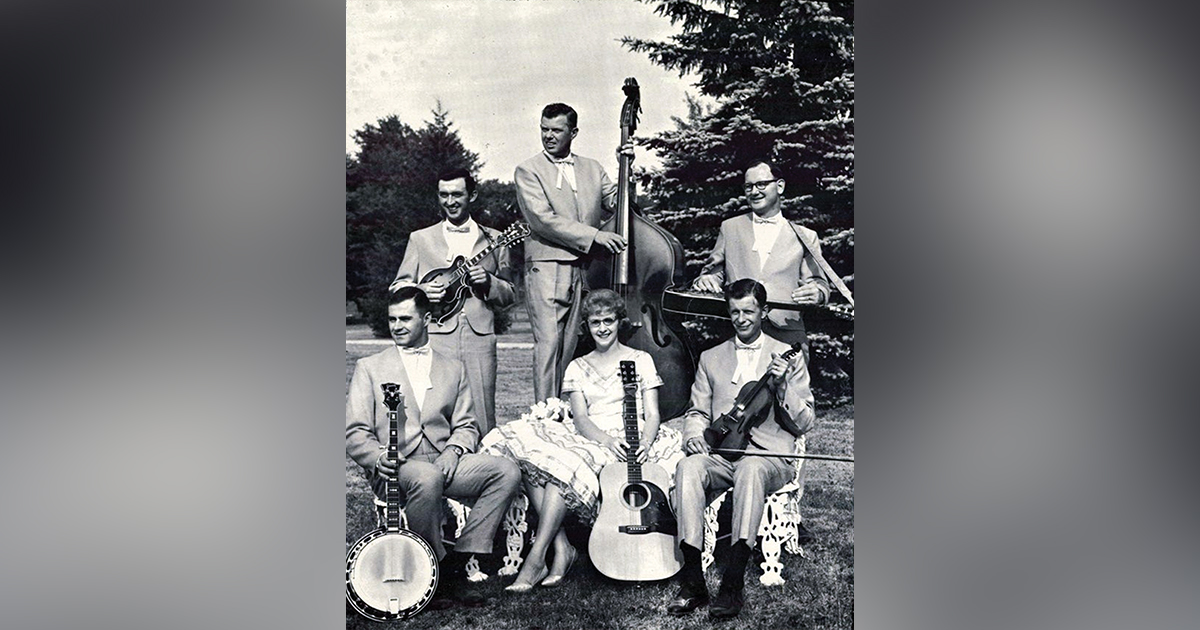
The Mac-O-Chee Valley Folks trace their roots to Ohio, specifically the Mac-O-Chee Valley, a region named after the Mac-O-Chee Indian tribe, a branch of the Shawnee Indians. Jim Greer, the leader of the group, was born on September 3, 1942, in West Liberty, Logan County, Ohio. His musical journey began at an early age, inspired by his older sisters, Bonnie and Valeda. The siblings performed as the Greer Sisters on various radio stations in the 1950s, including the Renfro Valley Barn Dance on WLW in Cincinnati. Jim learned to play the mandolin to support their vocals, and by the age of five, he was already singing on the radio. By eight, he had mastered the mandolin and later expanded his repertoire to include the banjo, twelve-string guitar, and virtually any instrument he could get his hands on.
After Bonnie decided to step away from the traveling lifestyle, Jim and Valeda continued their musical journey by forming the Mac-O-Chee Valley Folks in 1961. The original lineup included Jim, Valeda, and Bob McPherson, who played guitar and mandolin and contributed original compositions to the group. They were later joined by Dalton Burroughs on bass and Aaron Hicks on fiddle. Valeda’s husband, John Wentz, played dobro. The group’s name paid homage to the Mac-O-Chee Creek, which flowed through their native Logan County.
Musical Style and Performances
The Mac-O-Chee Valley Folks were known for their old-time bluegrass music, characterized by close three-part harmonies and authentic instrumentation. Jim Greer sang baritone and acted as the master of ceremonies during their performances, while Valeda sang high tenor, played guitar, and harmonica. Bob McPherson provided lead vocals and wrote many of the group’s original songs. Dalton Burroughs played bass, and Aaron Hicks contributed his skills as a fiddler. John Wentz’s dobro playing added a unique touch to their sound.
The group’s charm and personality captivated audiences wherever they performed. They were known for their warm interactions with fans, often shaking hands and chatting with friends before and after shows. Their performances embodied the true spirit of bluegrass, as evidenced by Jim’s humorous response to a question about stage equipment: “We don’t need [plugs], we come already wired.”
In 1963, the Mac-O-Chee Valley Folks made their first appearance on the WWVA Jamboree in Wheeling, West Virginia. Shortly thereafter, they became regular members of the show, known as the World’s Original Jamboree. Between 1965 and 1969, they played weekly on Jamboree USA, alternating Saturdays at WWVA and traveling to other venues on weekends. They frequently performed in Lancaster, Pennsylvania, at the indoor Shindig in the Barn and the outdoor Shindig at Cripple Creek. Summers were spent playing at fairs, festivals, and country music parks, sometimes even on weeknights.
Recordings and Albums
The Mac-O-Chee Valley Folks recorded extensively during their active years, producing four singles and five albums. Their first recordings, dating back to 1963, were for the Cincinnati-based custom label Rite. These included two singles and the album Bluegrass in Ohio, which featured original compositions by Bob McPherson, old-time songs like “Banks of the Ohio” and “The Girl in Sunny Tennessee,” and popular tunes such as “The Ballad of Jed Clampett.” Jim also contributed original instrumentals to the album.
The group later recorded for Starday’s Nashville label, producing four sides, and for Uncle Jim O’Neal’s Rural Rhythm label, which resulted in three widely distributed albums: Log Cabin Songs (1965), Memories in Song (1966), and Country Favorites (1967). These albums showcased their dedication to old-time tradition, featuring songs that were no longer under copyright, allowing O’Neal to avoid royalty payments. After leaving WWVA, they recorded an all-Gospel album for Rite’s Golden Shield subsidiary, titled Gospel Singing Time (1970). This album included tracks where Jim played the twelve-string guitar.
Critics praised their recordings for their smooth yet authentic sound. Their albums were filled with well-chosen material, including obscure old-time songs deserving of revival and original compositions of superior quality. The group’s music was described as “pure unadulterated bluegrass like your mother used to like.”
Challenges and Disbandment
By the early 1970s, the Mac-O-Chee Valley Folks faced a common dilemma for semi-professional bands: balancing their musical careers with full-time occupations. Jim had opened a clothing store in West Liberty, and the other members also held regular jobs. Constant traveling became increasingly challenging, and the group ultimately decided to disband rather than pursue a full-time professional career.
Despite their disbandment, the members remained in the Mac-O-Chee Valley area, with the exception of fiddler Herb “Sonny” Collins, who passed away. Jim Greer continued to operate his clothing store and expressed interest in reuniting the group for a concert if the historic opera house/theater in downtown West Liberty were to reopen.
Legacy
Jim Greer and the Mac-O-Chee Valley Folks left an indelible mark on the bluegrass music scene. Their visits to fairs and festivals won them a host of fans and friends across several states, who eagerly anticipated their shows. Their recordings continue to provide hours of listening pleasure, showcasing their warm and ingratiating musical style.
While the group may no longer be active, their contributions to bluegrass music remain significant. From their early days as the Greer Sisters and Little Brother Jimmy to their decade-long run as the Mac-O-Chee Valley Folks, they brought joy to audiences with their talent, charm, and dedication to old-time bluegrass. Whether or not they are inducted into the Bluegrass Hall of Fame, their legacy as one of the finest bluegrass bands in the Midwest is secure.
Over Jordan
Daniel Brosius “Danny” Shipe (October 13, 1955 – August 22, 2025) was a fabulous singer, guitar player, and all-around bluegrass musician who was well-known throughout the Northeast. He was born and raised in the Philadelphia area and later attended college at Mansfield State in Northern Pennsylvania. It was there, in the middle 1970s, that he began to discover his talents in singing and playing guitar. He joined the bluegrass band Cold Spring and subsequently began a long musical career. His playing encompassed folk, bluegrass, and Americana music with a number of bands based mostly in the northern Pennsylvania area.
Shipe credited the band North Fork Alliance for helping him develop his bluegrass roots. He joined the group in 1978, playing guitar and singing lead. He stayed with the band for 14 years. While with them, he participated in the recording of two cassette releases: Stories (1988) and Fresh Tracks (1990). The earlier release contained the song called “Ol’ Dan Shipe,” about “a river man who might rival Mike Fink.” Coincidence? At least one reviewer hailed the group as “probably one of the best bluegrass bands in the country not affiliated with a professional record company.” Shipe said of the group that “those guys had some great original material and four-part harmony. It was the band I learned to play bluegrass with.”
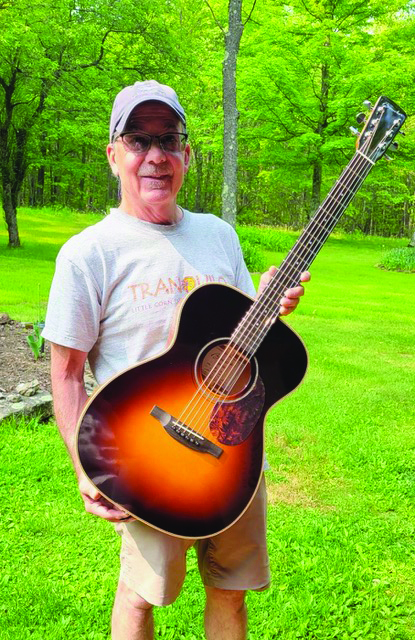
In 1990, Shipe helped to form the band Burnt Toast, a precursor to modern jam bands. He noted that the “band opened me up to the new acoustic style of music and really helped me improve my instrumental skills. It also gave me my first chances to play abroad in Ireland, Scotland, and England.”
By 2003, Shipe was part of a group called The Hickory Project. Their debut CD, Polaris, garnered a highlight review in Bluegrass Unlimited. The review noted that “this is one fine newgrass band that can pull off older styles of bluegrass and fiddle tunes when they want to.” Performing with the group allowed for travels throughout the United States as well as Australia, Ireland, and the United Kingdom. In later years, Shipe played with the local band Drowsy Maggie.
Danny had a rich and sonorous baritone voice, which was very unique, and he sang primarily the lead vocals. He was fond of the songs of the Canadian folksinger Stan Rogers, but his tastes in music were quite eclectic. Singers such as Peter Rowan and Nanci Griffith also informed his own style. When Shipe wasn’t touring, he was a UPS driver for 35 years in the northern Pennsylvania area.
A memorial service for Shipe was held on October 5, 2025, in Wellsboro, Pennsylvania. It was attended by hundreds of locals, as well as musicians from Utah and Colorado. A jam session circle in honor of Danny featured 25 musicians from all over who individually contributed tunes to the session. Danny Shipe was a wonderful singer and a great guy who will be missed by all who knew him.
William Edmond “Bill” Stanley (July 3, 1949 – October 9, 2025) was the second child born to bluegrass legend Carter Stanley and his wife, Mary. Unlike his father and uncle, Ralph Stanley, Bill chose a non-musical career in the insurance industry. Closer to home, he served as a co-executor of his late father’s estate, often tending to the financial side of the songs, music, and legacy that Carter Stanley left behind. Bill was also a keeper of memories of a life shared with bluegrass legends.
Although Bill chose a life that was not of the music, he couldn’t help but be shaped by it and its culture. For starters, his very name was a combination of two bluegrass legends: William, after Bill Monroe, and Edmond, after his uncle Ralph Edmond Stanley. Early on, his upbringing was not unlike that of his father and uncle, making the trek on foot every day to attend the one-room Big Oak School. Although Carter built a new home for his growing family shortly after Bill was born, the youngster was no stranger to drawing water from a well.
Bill often spoke of his father’s remarkable talent as a songwriter, recalling how Carter would silently compose songs while riding in the car, occasionally humming a tune to himself. Bill remembered how his father’s songs, such as “The Lonesome River” and “The White Dove,” were deeply personal, reflecting the life and landscape of the Appalachian region. He described how Carter’s songwriting was ahead of its time, filled with raw emotion and authenticity.
In 1959, the Stanley family pulled up stakes and moved to Live Oak, Florida. Bill recalled the move as a bright spot in the Stanley family’s history. He remembered how his father taught him to drive on dirt roads, sharing quiet moments together in the woods. He spoke fondly of their hunting trips with family friend Mr. Peppers, where they would coon hunt on a thousand-acre farm. Bill recalled his father’s coon dog, Herb, who was so skilled that when he barked and treed, there was always a raccoon up the tree. He also shared a humorous memory of Paul Mullins, a Clinch Mountain Boy, who would take off his shoes and hunt squirrels in his socks, slipping silently through the leaves.
Any thoughts Bill might have had about a life on the road were quashed when, as a young teenager, he spent several weeks traveling with his father, uncle, and band members. He recalled traveling in a cramped Mercury Monterey, often driving long distances between gigs in Kentucky, Ohio, and other states. Bill shared how the band dreamed of owning a bus, but financial constraints made it impossible at the time. He vividly recalled the toll of the road, recounting how the experience convinced him at the age of 17 that he wanted no part of being an entertainer.

Bill also reflected on the profound impact of his father’s death on Ralph Stanley, who carried on the Stanley sound and fulfilled Carter’s dream of taking their music worldwide. Bill believed Ralph was living his father’s vision, and he took pride in seeing the Stanley Brothers’ music resonate with new generations, even decades after Carter’s passing.
Bill Stanley was a storyteller and guardian of his father’s legacy. His memories served as a powerful reminder of the enduring influence of Carter Stanley and the Stanley Brothers on bluegrass music and Appalachian culture. For those fortunate enough to have known him well, his stories will continue to inspire and connect others to the rich history of a legendary Stanley Family musical tradition.