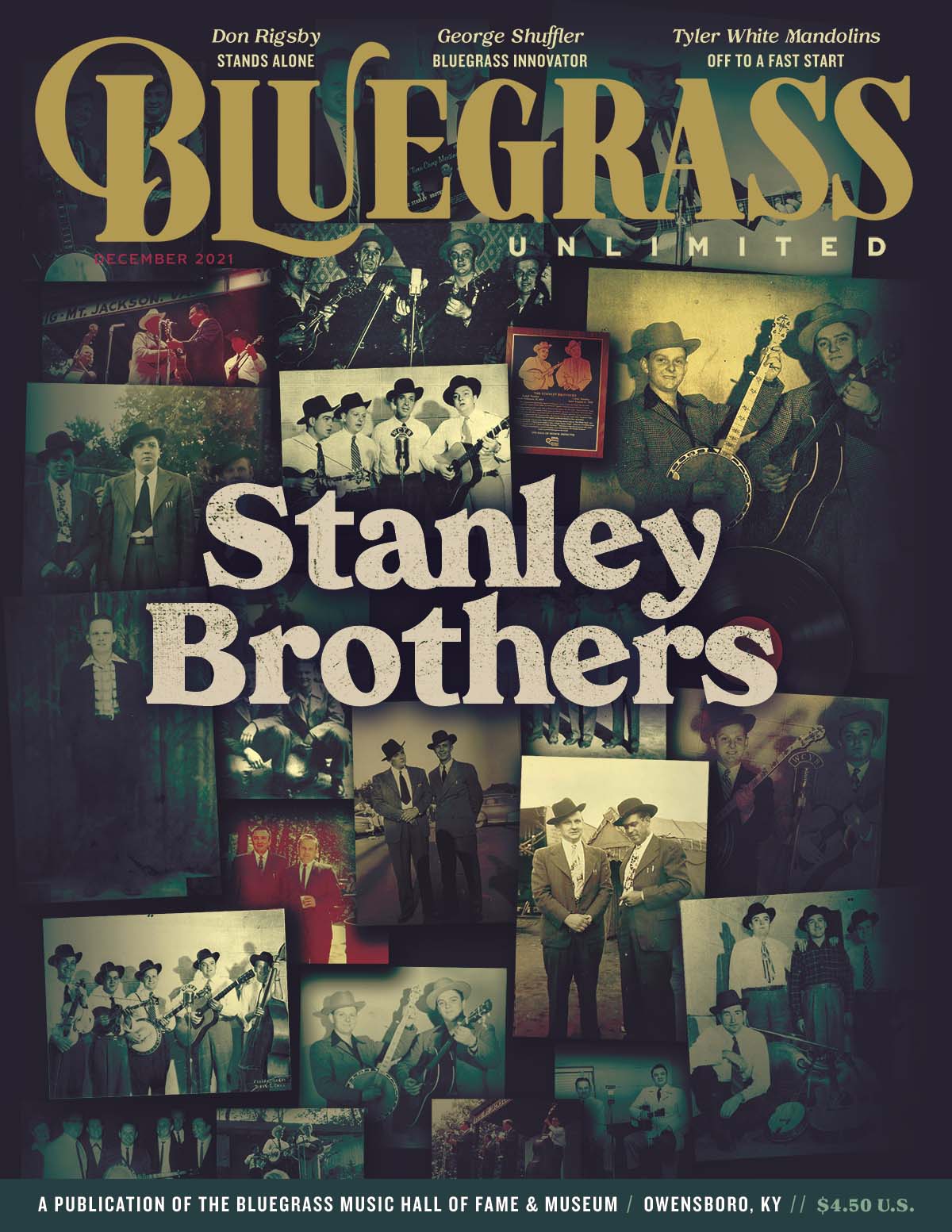
Notes & Queries – December 2021
Queries
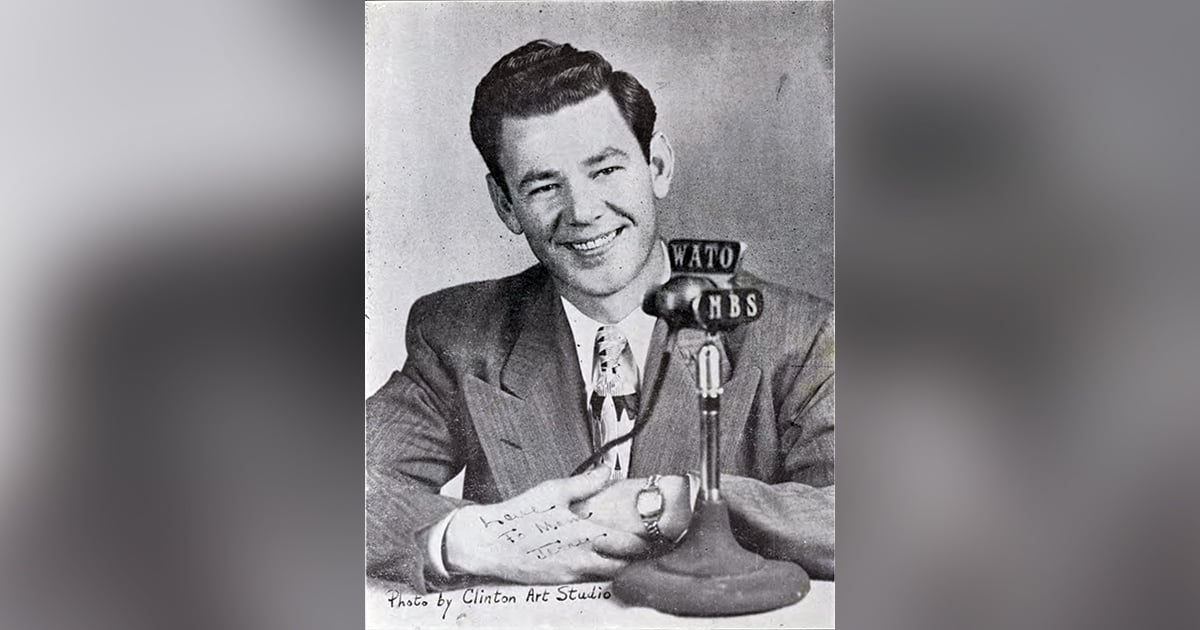
Q: I recently sold off some of my bluegrass memorabilia, including a 1951 Stanley Brothers song and picture folio. The booklet contained a photo of a disc jockey by the name of Jerry Donovan. Just curious as to who he is/was and why he’s included in a Stanley Brothers booklet? Tom Adler, Lexington, Kentucky.
A: Jerry Donovan was a broadcaster on WCYB in Bristol, Virginia, and was an announcer for the station’s Farm & Fun Time program, of which the Stanley Brothers were longtime cast members. Born Jerry Donovan Garrett in Graham, North Carolina, on March 9, 1919, he spent his early days on farms in South Carolina and California. He served eight and a half years in the Marines, three of which were overseas as part of the First Division. He landed in Bristol, Virginia/Tennessee, as a recruiting sergeant for the Marines. It was there he met his future wife, Eleanor Ruth Cassell; the couple married on December 16, 1949, at which time Jerry’s occupation was listed as an insurance agent.
At some point around this time, Jerry began work in radio, apparently as an announcer at WATO in Oak Ridge, Tennessee. The station went on the air in February 1948 and took its call letters from the moniker for Oak Ridge, Atomic City.
Jerry began at WCYB in 1950 as the station’s farm director, which also included hosting the noontime Farm & Fun Time program. He was very active in agricultural activities in the area and was awarded seventeen honorary chapter degrees in Virginia and Tennessee of the Future Farmers of America. Throughout most of 1952, Jerry hosted a Saturday evening Farm and Fun Time Jamboree, which morphed into the Tennessee Hillbilly Hayride.
At the start of 1953, Jerry left WCYB to accept a position at the radio division of the Virginia Extension Division (at Virginia Polytechnic Institute) in Blacksburg, Virginia. The program lasted for only a few years and by 1957 Jerry was listed as being back on the air at WOPI in Bristol, Tennessee. He also logged time at WFHG in Bristol in the early 1960s.
Jerry suffered a heart attack in 1962 and another one, which proved fatal, on January 9, 1964. At the time of his passing, he was an announcer on WOPI. He was forty-four years old.
Q: I’ve always liked the Stanley Brothers recording of “I’ll Be True to The One I Love” which was written by Ike Cargill. He was a Texan that recorded some and was a good song writer. Ike’s songs were not blue grass, but Carter Stanley had an ear and he made this song blue grass. Any idea how the Stanley Brothers picked up this song? – Jerry Steinberg, Salem, Virginia.
A: The Stanley Brothers moonlighted from their parent record label, King Records, to produce an album of barebones bluegrass for Baltimore disc jockey and Wango label owner Ray Davis. Recorded in April 1964, Davis asked that they perform “just the old, authentic, original sound” to which Carter Stanley replied, “I’ll be proud to give it to you.” The album was released a short time later and was sold by mail order only to people who listened to Ray Davis on the radio. The albums were sold in white paper sleeves without cardboard jackets and because the labels on the albums were printed on green stock, it became known as “the green album.”
When the Stanley Brothers recorded “I’ll Be True to the One I Love” for Davis, Carter Stanley couldn’t recall his source for the song. Sometime after the album’s release, Ray Davis conversed with country music entertainer (and former governor of Louisiana) Jimmie Davis, who told him “that’s my song.”
Jimmie Davis did record the song in 1941 but he didn’t own it, nor was he the first to record it. As Jerry Steinberg noted, Ike Cargill was a composer. He shared songwriting duties with one E. Settlemeyer. The first recording appeared in 1937 by a duo billed as Frank and Buddy Ross. In truth, they were actually Fred Rose (one half of the prestigious Acuff-Rose publishing concern) and Frank Luther (a country music singer, dance band vocalist and songwriter). Other recordings of the song appeared by the Prairie Ramblers (also in 1937) and Bob Crosby’s Bob Cats. There’s even a rare radio performance by Hank Williams that was made in 1942 at a station in Montgomery, Alabama.
So, which one of these releases/performances influenced the Stanley Brothers? The answer is . . . probably none of them. The “Radio Highlights” from the August 4, 1942, edition of The Bristol Herald Courier (Bristol, Tennessee) reported that “Curly King, popular WOPI ballad singer, appears on his regular 12:45 program this afternoon with the following songs, ‘I’ll Be True to the One I Love,’ ‘Zeb Tourney’s Gal,’ ‘You’ll Be Sorry,’ ‘What’s Gonna Happen to Me,’ ‘Always Alone,’ and ‘Doghouse Blues.’ Shorty Morris and Pee Wee will be on hand to lend vocal and instrumental support.” Carter Stanley, who was getting ready to enter his senior year of high school, was easily within ear-shot of the station. Perhaps more importantly, four years later the Stanley Brothers and Curly King logged time together on the Farm & Fun Time program from WCYB in Bristol, Virginia.
Over Jordan
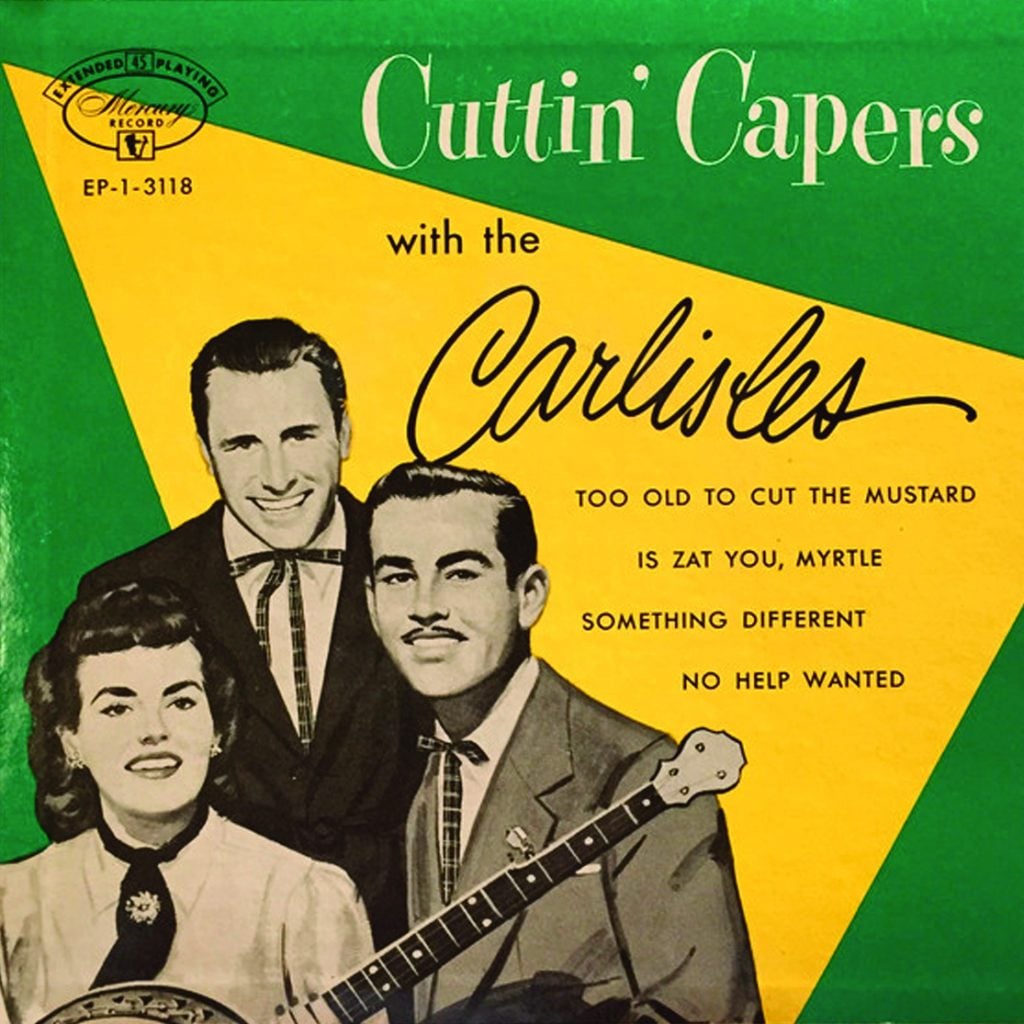
Judging by her recorded output, Betty Ann Amos (July 22, 1934 – September 30, 2021) was primarily a mainstream country music performer who was active from the early 1950s through the middle 1970s. Her only recorded connection to bluegrass was a couple of songs that were made for Starday in the middle 1960s. “Eighteen Wheels A Rolling” and “Franklin County Moonshine” both featured her driving five-string banjo work.
Born and raised in the area of Roanoke, Virginia, Betty began her performing career at age eight (ca. 1942) when she appeared in her family’s band on WBLT radio in Bedford, Virginia. She later spent five years performing on WDBJ in Roanoke, presumably in her father’s band, the Buck Mountain Ramblers.
In the early 1950s, Betty’s banjo-playing brother, Edmond “Ed” Amos, introduced her to Bill Carlisle who was then recent addition to the Grand Ole Opry. For several years, she toured with Mercury recording artists The Carlisles as a guitarist and singer. As a nineteen-year-old single female in a group comprised of men, any appearance of impropriety was avoided by re-naming her Betty Carlisle and introducing her as Bill’s cousin. She appeared on some of the group’s better-known releases from that era including “Too Old to Cut the Mustard” and “Is Zat You, Myrtle?”
In December 1953, while still working with the Carlisles, Betty was signed to Mercury Records as a solo artist. Over a two-year period, she recorded nearly two dozen songs for the label.
With her solo career on the rise, Betty left The Carlisles in May 1954 and soon joined the cast of the KWKH Louisiana Hayride in Shreveport. In addition to appearing on the show’s Saturday evening program she also participated in a number of Hayride package tours. One memorable high at the Hayride occurred when Elvis Presley made a guest appearance on her portion of the program! She even appeared on a week’s worth of June 1955 performance dates that included Elvis. A later bit of spinoff work from the Hayride included appearances on a weekly television program that aired from Tyler, Texas, and which was hosted by Johnny Horton. Betty’s last work with the Hayride came in September 1957.
After a hiatus of several years, Betty resurfaced in the early part of 1960 with a new group called The Rhythm Queens. They were billed as an “All Girl Band.” Over time, the group became known as Betty Amos and the Rhythm Queens. Other members included Betty’s sister Jean on bass and Alice Schreiber, who took the stage name of Judy Lee, on electric lead guitar. By 1962, bluegrass was a featured part of the act and advertisements for show dates frequently mentioned “Betty Amos and her 5-String Banjo.” For those numbers, Judy Lee switched from electric guitar to acoustic rhythm guitar. A 1963 advertisement touted the group as “The World’s Only All Girl Bluegrass Band.” For a period of time, the act was booked by the Barbara Martin Agency and a number of shows featured the Rhythm Queens with Jimmy Martin and the Sunny Mountain Boys.
Despite the obvious success of bluegrass as a part of Betty’s act, the group seldom featured it on any of their recordings. They signed with Starday Records in 1964 and over a several year period recorded sixteen songs, two of which were bluegrass. Betty wrote “Franklin County Moonshine” with a bit of first-hand knowledge; Franklin County, Virginia, is situated next to Roanoke County, Virginia, as is often billed as the “Moonshine Capitol of the Nation.” “Eighteen Wheels A Rolling” was a collaborative effort between Betty, Jean, and Judy Lee.
In addition to recording for Starday, Betty was also signed to Starday Music as a songwriter. In 1964, she provided Jean Shepard with the hit song “Second Fiddle (To an Old Guitar).” Broadcast Music, Inc. lists the song in their catalog as a “BMI Award Winning Song.” Valerie Smith recorded the song in bluegrass style in 1997. In all, Betty published fifty songs, many of which she recorded herself. Others, such as the Willis Brothers, Bonnie Owens, and the duo of Ernest Tubb and Loretta Lynn also made use of Betty’s songs.
In the early 1970s, Betty turned her attentions to writing and cranked out a romance novel called Wayward and Searching. She publicized the release with book signings, radio interviews, and performances with a band called The Nashville Kit Kats.
Throughout the 1970s, Betty remained active with her own Betty Amos Show and in an act with Judy Lee. After a series of moves and a marriage, she landed in the Nashville area in the middle 1980s. Aside from a 2003 Louisiana Hayride reunion that included Betty, Jean, and Judy Lee, most of Betty’s musical activities took place near her Hendersonville home. Betty’s last recorded work was on the 2019 disc called Nate Gibson and the Stars of Starday; it featured spirited remakes of two of her best-known works: “Eighteen Wheels a Rolling” and “Second Fiddle (To an Old Guitar).”
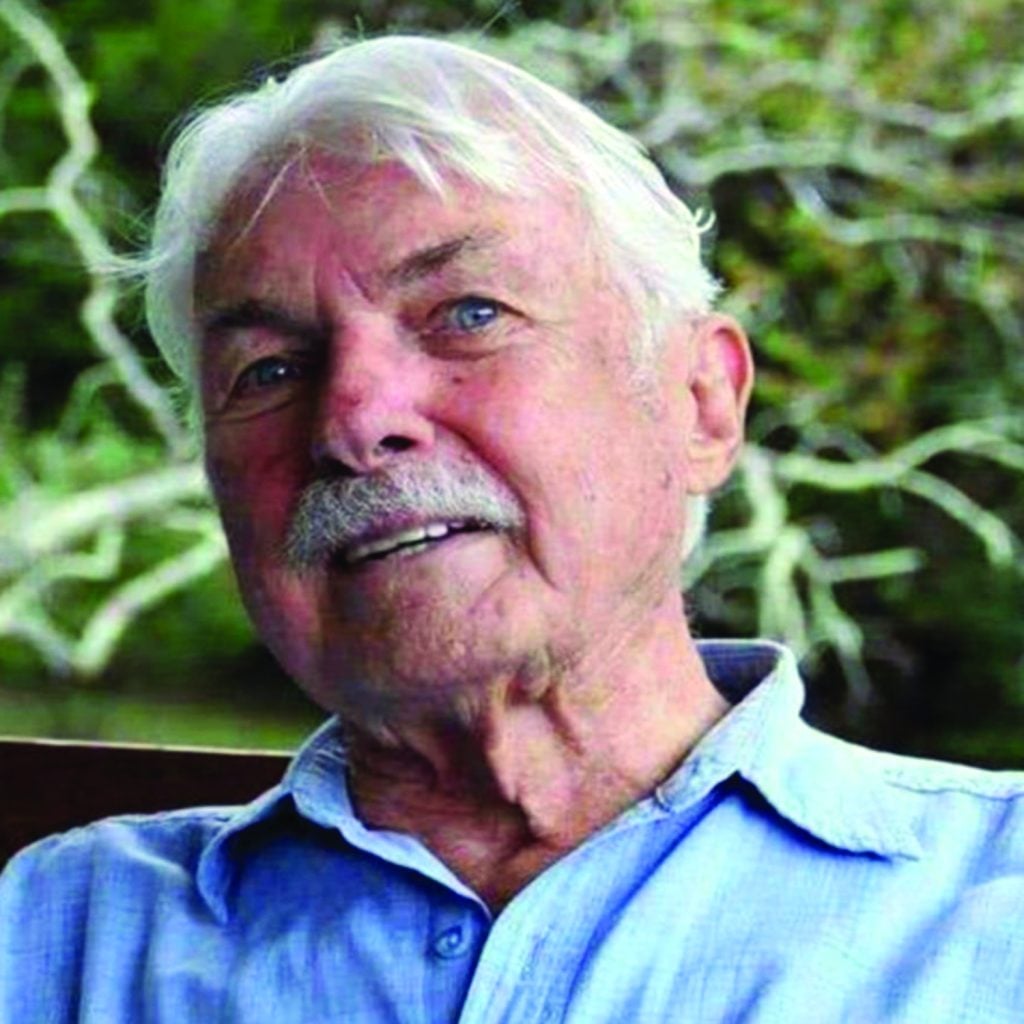
Kerry Lafonne “Fonne” Hay (February 5, 1932 – October 13, 2021) was a co-founder/owner of Blacksburg, Virginia-based Hay Holler Records. Born in Dickenson County, Virginia, a short distance from the Stanley Brothers, one of his fond childhood memories was seeing Carter and Ralph Stanley in action when they appeared at his community’s Turner School in about 1947. In his professional life, Kerry served in the Air Force from 1949 to 1953, was a 1957 graduate of Virginia Polytechnic Institute and State University with a degree in Electrical Engineering, and worked at Poly-Scientific and Electro-Tec (both of which were located in Blacksburg). Taking advantage of an early retirement offer, Kerry obtained an auctioneer’s license and operated Hay Holler Auction Sales during the late 1980s and early 1990s.
Hay Holler Records was formed in 1990 as a vehicle to market bluegrass via mail order television advertising. To that end, a select group of pickers who were billed as The Bluegrass Band (Butch Robins, Rickie and Ronnie Simpkins, Wyatt Rice, Wayne Henderson, Larry Stephenson, and Arnie Solomon) recorded faithful reproductions of classic bluegrass songs for release as Once Again, From the Top (Volumes One, Two, and Three). The package was advertised over The Nashville Network (TNN). Keeping everything in the family, daughter Rebecca was the set’s graphic designer and daughter Susan processed credit card orders. A second package, the three-album Shine Hallelujah Shine, added guest musicians Dudley Connell, David McLaughlin, Blaine Sprouse, Rob McCoury, and Bill Lux and was likewise advertised on TNN.
Following the success of the television packages, Hay Holler went on to release nearly seventy-five CDs through more mainstream distribution channels. Under Kerry’s direction, groups such as the Gibson Brothers, the Gillis Brothers, and the Goins Brothers gained nationwide attention. Other notable artists included Herschel Sizemore, Wayne Henderson, the Sand Mountain Boys, 5 For the Gospel, Big Country Bluegrass, and Lost Highway.
In the midst of a robust release schedule, Kerry carved out time (1994 to 1997) to serve as a board member of the International Bluegrass Music Association.
For Kerry, bluegrass and old-time music were more than a professional pursuit. Attendance at fiddlers conventions was a family activity where the Hay site was always a hub of picking, fellowship, and good eating. Those good times extended to Hay Holler, the family’s 25-acre home in Blacksburg, where proceeds from the sale of their homemade molasses were used annually to host a weekend Pick In which culminated in a pork bar-b-que spread (cooked on the premises) with all the fixins.
Longtime friend Barry Brower characterized Kerry Hay as “a wonderful human being, blessed with a generous, caring, kind soul, but who also stated what he believed. I will greatly miss his hearty laugh and twitching mustache whenever he wanted to impart something important.”
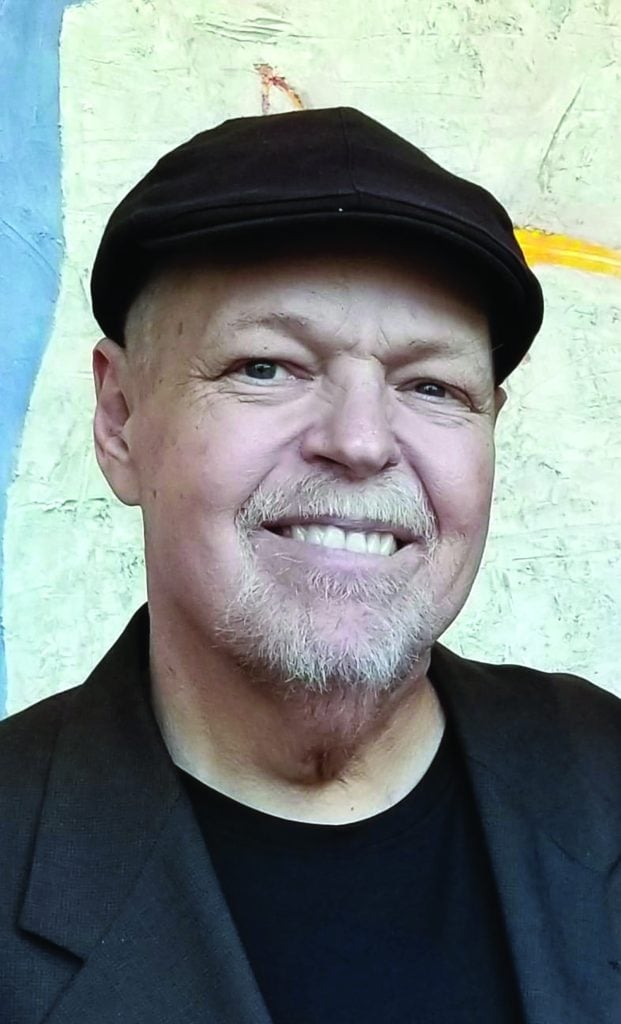
Philip Mathew “Phil” Leadbetter Jr. (March 31, 1962 – October 14, 2021) was a Knoxville, Tennessee, native who made his mark as a world-class resophonic guitar player. He was a three-time winner of the IBMA award for Dobro Player of the Year and was instrumental in the formation of several high-profile bluegrass bands.
Phil got his start on the dobro around the age of twelve (ca. 1974). The following year he was in on the ground floor of the Knoxville Newgrass Boys. A highlight of the group’s time together was an invitation to perform at the White House as part of the nation’s bicentennial celebration. Membership in a later group, New Dawn, netted a string of performances at the 1982 World’s Fair, which was held in Knoxville.
Throughout the late 1980s, Phil logged time with two legendary country acts: Grandpa Jones and Vern Gosdin. It was after working with the latter that Phil realized a career highlight by spending 1990 through 2001 with J. D. Crowe and the New South. Phil appeared on Crowe’s 1994 album Flashback (which was nominated for a Grammy) and 1999’s Come On Down to My World.
Phil left J. D. Crowe in 2001 to help organize Wildfire (Robert Hale, Scott Vestal, Darrell Webb, and Curt Chapman) and appeared on the group’s first three Pinecastle releases: Uncontained, Where Roads Divide, and Rattle of the Chains.
In addition to recordings with other groups, Phil also released a series of solo projects, the first of which appeared in 1997, Philibuster. Later CDs included Slide Effects (IBMA Instrumental Album of the Year, 2005); The Next Move, 2014, and Swing For the Fences, 2020. Phil’s award for Slide Effects coincided with his 2005 nod for IBMA Dobro Player of the Year; he received the award again in 2014 and 2019.
As a testament to Phil’s prowess on the dobro, Gibson introduced the Phil Leadbetter Signature Dobro Guitar. The instrument remained an integral part of the Gibson catalog from 2003 until 2018, at which time production was taken over by the Recording King Company.
From 2007 until 2010, Phil partnered with Steve Gulley, Jason Davis, Alan Bibey, and Lee Sawyer to form Grasstowne. Two CDs were released during Phil’s tenure with the group: The Road Headin’ Home and The Other Side of Town.
As Jerry Douglas had done in the early 1980s, Phil brought the sound of the dobro to The Whites. Phil’s time with the Opry act spanned 2010 and 2011 and was sidelined when he was diagnosed with Hodgkins Lymphoma. A variety of treatments eradicated the disease, only to have it return four more times throughout the decade.
In between bouts with cancer, Phil logged time with Dale Ann Bradley, participated in a J. D. Crowe reunion tour, performed with former Crowe sidemen in a group called Flashback, and organized his own Phil Leadbetter and the All-Stars of Bluegrass.
In addition to his musical talents, Phil was known as being very personable, both on stage and off, and possessed a witty sense of humor.
Robert Loyce “Bob” Moore (November 30, 1932 – September 22, 2021) was a Nashville-based bass player who was a part of the city’s well-known A-Team of ace session musicians; he is reported to have worked on over 17,000 different recording sessions. While he never toured as a bluegrass musician, his bass is heard on numerous bluegrass recordings.
A native of Nashville, some of Bob’s first professional work involved two summers of touring in the middle 1940s with the Grand Ole Opry duo of Jam Up and Honey. In 1948, he landed a spot with Paul Howard and His Cotton Pickers and soon afterwards experienced his first trip to a recording studio; the group recorded in Cincinnati in January 1949 for King Records.
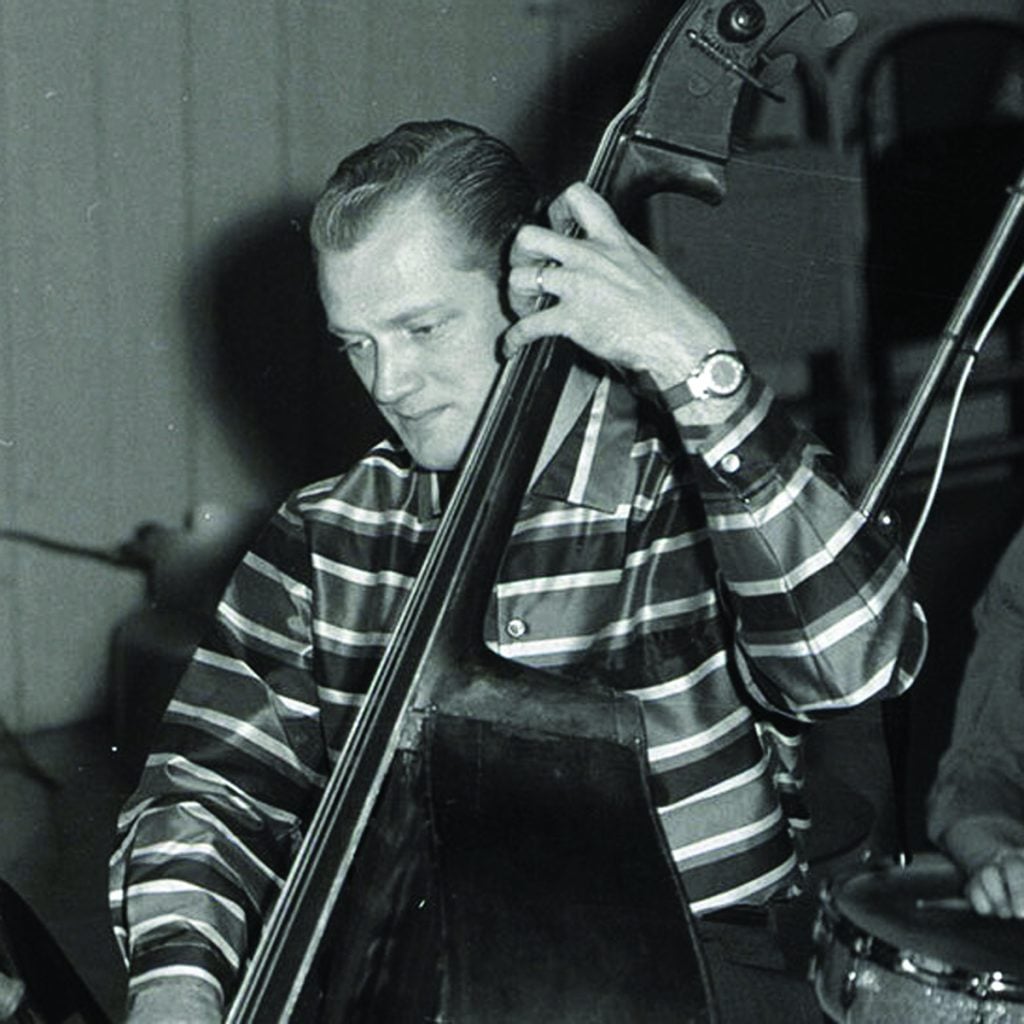
Throughout the early and middle 1950s, Bob rotated through several groups including the duo of Curly Fox and Texas Ruby, Little Jimmy Dickens, and Red Foley. Along the way, he found time to work on sessions for Jim & Jesse (with whom he appeared on sixteen of their twenty songs for Capitol in 1952 and 1953) and Flatt & Scruggs (where three sessions in 1953 and 1955 produced “I’ll Go Stepping, Too,” “I’d Rather Be Alone,” “Your Love Is Like a Flower,” and a four-song gospel session that included “Gone Home” and “Bubbling in My Soul”). Bob also participated in some of the earliest Flatt & Scruggs Martha White radio shows that were broadcast over WSM starting in mid-1953.
Tiring of life on the road with Red Foley, Bob accepted a position from Owen Bradley to appear in his big band, which played locally around Nashville, and to also do session work where Bradley was the producer. Bob likened the association with Bradley as “going to college.”
Moore went on to become one of the most sought-after bass players for session work in Nashville during the late 1950s and into the ‘60s and ‘70s. He appeared on many of the chart-topping songs of the day. The A-Team that he worked with helped to define what became known as the Nashville Sound.
Among Bob’s bluegrass recordings were some of the last sessions that Flatt & Scruggs recorded together in the late 1960s, Jim & Jesse’s 1969 Saluting the Louvin Brothers, and the Osborne Brothers’ 1978 Bluegrass Collection. Japanese picker Kazuhiro Inaba, a fan of Bob’s work, characterized his work on Bluegrass Collection as “the greatest performance for bluegrass bass on that album.”
It was with Inaba that Bob likely recorded some of his last bluegrass sessions. Kaz wrote that “I was so fortunate to have recorded with him twice, for Teardrop on A Rose (2002) and Country Heart (2009). He was my most favorite bass player. He was so solid and reliable even though he was retired from recording at that time. He was a big sweet guy.”
Kenneth Eugene “Ken” Seaman (June 8, 1942 – September 23, 2021) was a long-time fixture of the Colorado bluegrass music scene where he was known for his banjo work with the Bluegrass Patriots and as the promoter for the Midwinter Bluegrass Festival.
Ken began his bluegrass journey in West Plains, Missouri, where programs such as the Grand Ole Opry and music from radio stations KWTO, WCKY (with host Wayne Raney), XERF (with performances by the duo of Don and Earl and the Bailes Brothers) informed his musical tastes. Closer to home, Salem, Missouri’s Mitch Jayne spun a lot of bluegrass recordings over the airwaves.
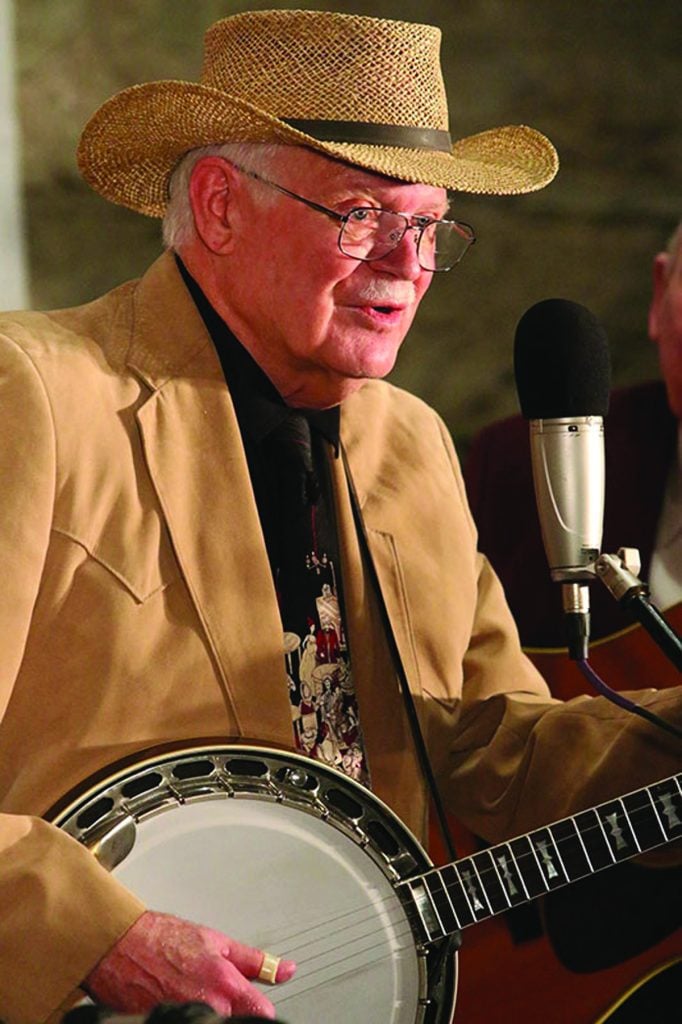
Around the age of ten (ca. 1952), Ken started learning to play guitar and also had the opportunity to see Bill Monroe perform as part of a Grand Ole Opry package show in nearby Eminence, Missouri. But it was recordings by Flatt and Scruggs that shifted Ken’s focus to the banjo. He traded a rifle for a tenor banjo but was perplexed when he couldn’t make it sound like Earl Scruggs. It wasn’t until he got to college that he discovered the 5-string banjo and obtained a Gibson Mastertone banjo which he had outfitted with Scruggs tuners.
A group headed by Urel Albert provided Ken with his first professional work in 1965. That same year, Ken’s father, Carl Seaman, launched a variety show called the Current River Opry; Ken performed there every summer for the next nine years. In 1970, Ken got the entrepreneurial bug and launched the Ozark Mountain Bluegrass Festival in Eminence; the festival ran there for fifteen years.
In 1975, Ken and his wife Mary relocated to Fort Collins, Colorado. For a brief period of time, Ken had an interest in the Red Garter night club, a venue that featured bluegrass. After quickly realizing the meager payouts from life as club owner, Ken fell back on his chosen profession, a school teacher.
The Colorado-based band The Bluegrass Patriots added Ken to its roster in 1980; he stayed with group until it disbanded in 2011. During that time, the Patriots toured throughout the United States and Europe and recorded six albums/CDs.
In 1986, Ken started his Midwinter Bluegrass Festival at the Holiday Inn which was located in Fort Collins. In time, the event was moved to a suburb north of Denver and currently scheduled for February 2022. When not playing the banjo, Ken enjoyed outdoor activities and spending time with his grandchildren.
George Theodore Wein (October 3, 1925 – September 13, 2021) was a co-founder of the Newport Folk Festival that, starting in 1959, presented bluegrass to large New England audiences. A number of seminal bluegrass groups (including Earl Scruggs – and later Flatt & Scruggs, Hylo Brown, the Stanley Brothers, Bill Monroe, Mac Wiseman, the Osborne Brothers, the Kentucky Colonels, and others) all played there and received national exposure.
Wein came to folk music in a circuitous manner. Born in Lynn, Massachusetts, but raised in the south Boston suburb of Brookline, he was a third-generation descendant of Eastern European Jewish ancestors who had emigrated to the United States. He started playing jazz piano while still in school and was exposed to the music of Cab Calloway, Duke Ellington, and Tommy Dorsey. After World War II, he played jazz in the Boston area. Realizing slim monetary rewards as a musician, Wein turned to concert promotion and by the early 1950s was running two night clubs: Storyville and Mahogany Hall. It was at Storyville that he was asked to produce the first Newport Jazz Festival in 1954. In 1958, a successful string of performances at Storyville by folk singer Odetta sparked the idea for a folk festival.
The first Newport Folk Festival was staged in conjunction with Albert Grossman, Odetta’s manager, and attracted between 12,000 and 14,000 attendees. By 1964, attendance mushroomed to 70,000 and presented the Stanley Brothers with the arguably largest single audience of their career.
Wein went on to produce other festivals in New Orleans and in Nice, France. These, and the festivals in Newport, set the stage for others to follow, including everything from the first multi-day bluegrass festival in 1965 to Woodstock. In 2005, Wein sold his company, Festival Productions, Inc., and took a less active role in the Newport festivals. He maintained an avid interest in music until his passing at age 95.