Notes & Queries – December
NOTES
In the September 2020 column, there was a discussion of legendary fiddler John Ashby of Warrenton, Va., and the Ashby clan of Fauquier County. One member of the clan is J. Ashby Rollins, a singer and mandolin picker who worked with Charlie Smith’s Potomac Valley Boys. This writer saw the band a number of times over the years at the Old Schoolhouse in Lucketts, Va.
QUERIES
Q: My favorite gospel number is “The Model Church” by J.D. Crowe and the New South. It has the most beautiful harmony of any song I’ve ever heard. My question is about some of the lyrics, which refer to a hymn entitled “Coronation.” Can you tell me anything about it? JK, via e-mail.
A: I found “Coronation” in an old hymnal, The Baptist Hymn and Praise Book, published in 1904 by the Sunday School Board, Southern Baptist Convention, Nashville, Tenn. It’s also known by the title, “All Hail The Power of Jesus’ Name,” one with which this writer is more familiar; it was sung in church when I was a kid. Composed by Edward Perronet and Oliver Holden more than 100 years ago, it is a well-known hymn found in many standard hymnals.
Q: On the Carter Family CD, Their Complete Victor Recordings, 1928-1929, on the song “Sweet Fern,” it sounds like a Hawaiian guitar. I didn’t know they used a Hawaiian guitar on any of their recordings. JE, via e-mail.
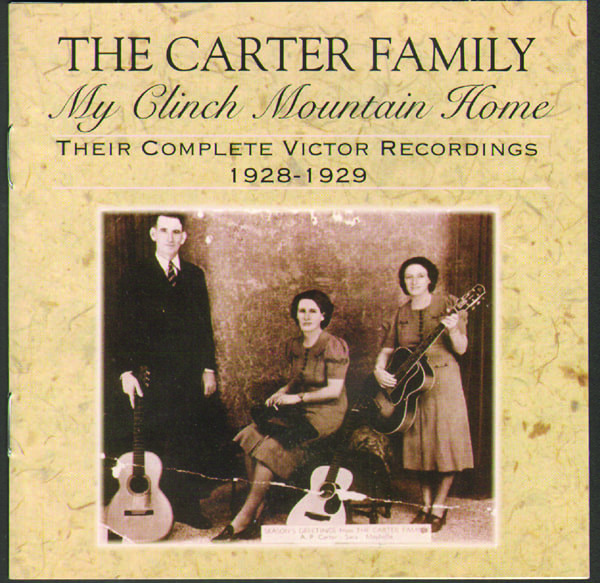
A: What you hear is the slide guitar work of Maybelle Carter. The original Carter Family cut at least 14 sides with slide guitar, between May 1928 and November 1930 for Victor. Maybelle played slide guitar by raising the nut of her Stella. After the November 1930 session, Maybelle apparently abandoned the use of slide guitar. Although generally audible, the presence of this instrument on Carter Family recordings does not appear to be widely known.
Q: Have you ever heard of Charlie and Mary, The Bluegrass Sweethearts? They appeared on Radio Station WMUR, Manchester, N.H. in December 1945. DG, Great Britain.
A: Sorry, but the couple is unknown to us. If there’s anyone in our readership who remembers Charlie & Mary, we’d like to hear from you.
Q: I’m looking for the words and music to the gospel song “I’ll Meet You In The Morning.” BT, Pa.
A: This is one of the great compositions of Albert E. Brumley, a prolific gospel songwriter and publisher with over 800 songs to his credit. Many of his numbers lend themselves well to bluegrass, including “Camping In Canaan’s Land,” “I’ll Fly Away,” “Rank Strangers To Me,” and “Turn Your Radio On.” I recommend the songbook The Best Of Albert E. Brumley. Brumley Music, P.O. Box 27, Powell, MO, 65730.
Q: I was listening to the Ricky [Skaggs] and Tony [Rice] recording of “Will The Roses Bloom (Where She Lies Sleeping)” and really enjoyed it. I imagine you have already discussed J&I Bevins [the authors] but I would enjoy hearing about the Bevins and their songs. JE, via e-mail.
A: I’ve heard of the Bevins Brothers (mainly because of the above song), but otherwise have found no information on them.
Q: Who does the song “May The Bird Of Paradise Fly Up Your Nose”? Is there a bluegrass version of this song? OJ, Mich.
A: The only artist I recall who performed this song was Little Jimmy Dickens. It’s a novelty piece, written by Neal Merritt and recorded by Dickens for Columbia Records in 1965. I understand that the song was inspired by one of the many comic putdowns that Johnny Carson used on The Tonight Show. I’m not aware of a bluegrass version.
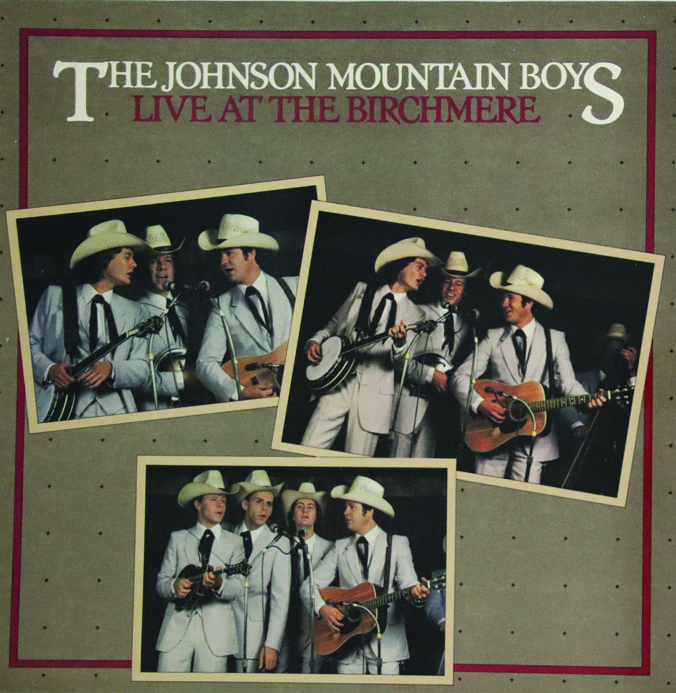
Q: What country artist used to do the song “Wasted Words” that the Johnson Mountain Boys recorded? MB, Md.
A: It was a hit for Ray Price in 1956, written by Don Gibson. The JMB’s version appeared on their Live At The Birchmere album, Rounder 191, which should still be available on the Internet.
Q: I ran across a recording by Bob Wills of the song “Smoke On The Water.” What are the lyrics all about? VG, Tex.
A: It’s a World War II song, from 1945, which went to #1 on the Billboard chart. Red Foley also had a #1 hit with it in 1944. The number describes a battle at sea between our navy and the enemies’ ships. Wartime songs were all the rage during this period.
Q: On Jimmy Martin’s recording of “My Walking Shoes,” I’m having trouble deciphering the lyrics to the third line of the second verse. LP, Pa.
A: Other folks before you have had trouble with this same line. It goes “I thought you were worth it once, but I was crazy.”
Q: Do you have any idea who wrote the gospel song “When My Time Comes To Go”? I’ve heard it by the IIIrd Tyme out, and it’s a first-rate number. WC, W. Va.
A: The song was written by the late Molly O’Day, who recorded it for Columbia Records in 1950, and again for the REM label in 1961. The former version can be found on a Bear Family two-CD set, Molly O’Day And The Cumberland Mountain Folks, BCD 15565), which is available in CD or vinyl format online. In her day (the 1950s and early ’60s) Molly O’Day was considered by many—including yours truly—to be the greatest female singer in country music.
You didn’t ask, but I’ve found versions by Bob Paisley, Gloria Belle, Wilma Lee & Stoney Cooper, Bill Grant & Delia Bell, Larry Sparks, and the Brickey Brothers.
Q: When I was a kid, I recall my mother singing a song about The Martins and The McCoys. “The Martins and the McCoys, they were reckless mountain boys.” Do you know of any recordings of this song? RB, N.Y.
A: You’re thinking of the pop/novelty song, “The Martins And The Coys.” It was popular in the 1940s, probably sung by pseudo-hillbilly singers such as Judy Canova. Some years ago, we fielded a similar query. Our contributing editor and music historian, Dick Spottswood, said, “It was a pop song from around 1936. It seems to me that there was a Disney cartoon short built around the song too. Judy Canova, the Hoosier Shot Shots and similar types would’ve performed it, but not real country groups.” We found a bluegrass version, by Hylo Brown on the Rural Rhythm label, album RRY-194, Hylo Brown and the Blue Ridge Mountain Boys, 20 Old-Time Favorites, which is available on the Internet.
The song, which tells of a fictitious mountain feud, pokes fun at the real-life feuds which occurred in eastern Kentucky and along the Kentucky-West Virginia border in the late 19th Century and early 20th Century. There were many such feuds (or clan wars) throughout the southern mountains—and elsewhere too—but it seems the Kentucky feuds are the best remembered. During the 1880s alone, the hills of eastern Kentucky were rocked by the Hatfield-McCoy, Martin-Tolliver, Turner-Sizemore, Jones-Hall, Turner-Sowards, and French-Eversole wars.
The song gets its name from two of them; the bloody Martin-Tolliver feud in the Morehead area of Rowan County, Ky., and the most famous, bloodiest one of all, the Hatfield-McCoy feud, which raged for years along the Tug Fork of the Big Sandy River, mainly in Mingo and Logan Counties, W.Va., and Pike County, Ky.
There were other pop songs about mountain feuding, and the entertainment world (especially Hollywood) had a field day with the subject, helping to paint a degrading caricature of illiterate, bare-foot hill folk, dressed in pointy hats and bib overalls (some of us call ’em “bib over-hauls” here in the southern U.S.), drinking corn liquor or similar adult beverage—from earthenware jugs—and shooting at one another with long-barreled squirrel rifles.
It’s a stereotype that for years refused to die. Early bluegrass bands—and country bands too—were beset by promoters who wanted them to dress in bib overalls and floppy hats (much to the disgust of most artists), and producers who would place jugs and straw bales around the sets of TV shows (a practice equally annoying). TV programs such as The Beverly Hillbillies, and some scenes from Hee Haw! and occasionally even The Andy Griffith Show, were examples of this persistent image.
Q: I was hoping you could help me remember a song my Aunt Martha used to sing when I was a kid. Here is what I recall:
“Like the mountain laurel in the grove dear, my love is forever green.”
That’s it. I wish I could remember more. Any chance you can help? RH, Va.
A: The song your aunt sang is titled “Mountain Laurel.” It was written by Chilton Price, who worked as the music librarian at WAVE radio in Louisville, Ky. She was best known for some country songs she co-wrote with Pee Wee King and Redd Stewart, such as “You Belong To Me,” and the huge 1951 hit “Slow Poke.”
Some friends of mine (who I occasionally worked with), the Bailey Brothers, Charlie and Dan, used to perform “Mountain Laurel” when they were working out of WWVA in Wheeling, W.Va., 1952 thru 1954, on the World’s Original Jamboree. According to Charlie, “It was one of our most requested numbers at Wheeling, and we did it regularly. It’s the state flower of Pennsylvania, and the song was really big with those folks. As I recall, we learned it from Grandpa Jones and Ramona.”
Q: I’m wondering who played the lead guitar break on Bill Monroe’s recording of “Cheyenne”?
A: That particular guitar break was the work of the Jackie Phelps, a talented multi-instrumentalist and former Blue Grass Boy, best known in his later years as a comic personality on the Hee Haw! TV show.