Nick Chandler’s Fight with Cancer and His Message for Others
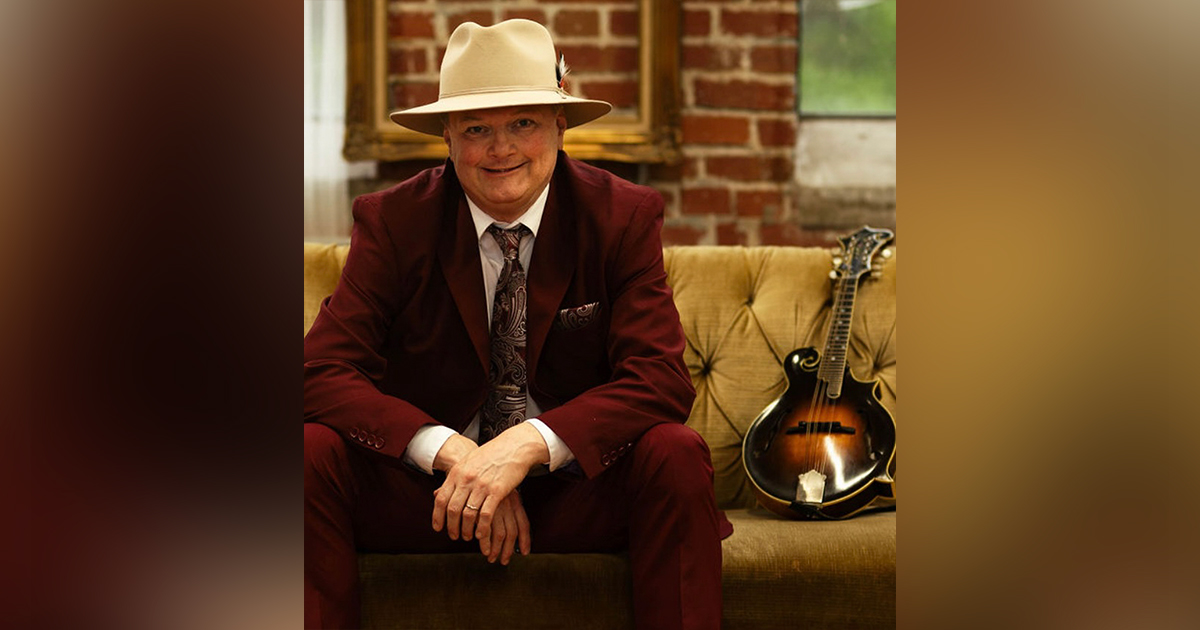
Photo by Jessica Lance
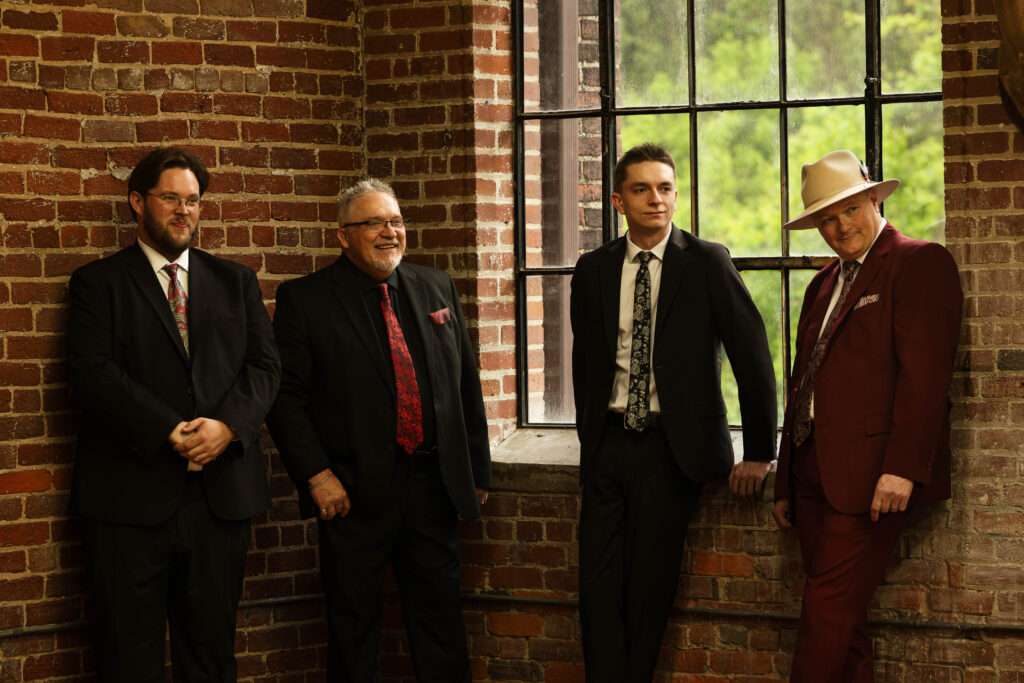
Nick Chandler & Delivered is a hard-driving traditional bluegrass band from western North Carolina that is recognized for tight harmonies and impressive musicianship. The band’s leader and mandolinist has taken the high road and tried to make the best of a bad situation. He is telling his story to possibly help someone else.
“What’s a little embarrassment if it might help someone else? It’s worth it!” He began. “I’m one of these stubborn guys that absolutely hates to go to the doctor. I don’t go until something is definitely wrong. I’m one of those guys.” Chandler admitted after his colon/rectal treatment.
The touring musician went in for his first colonoscopy after experiencing some issues, and with the urging of his wife, Trudy. Nick explained, “It used to be 50 that was recommended for you have one. Now it’s 45. I was 53 at the time. It’s just one of those things that I put off and shouldn’t have. I had some bleeding, but I wrote it off as something else. I thought I had hemorrhoids. We travel a lot on the road and ride a lot. I just ignored it until it got where I couldn’t ignore it anymore.
“I traveled all the summer of 2024 with it because I thought it’d clear up. I don’t cancel shows. I’ve been on stage sick as a dog. Walk off stage, throw up in a bucket, and walk back on stage.”
He eventually made an appointment for a colonoscopy. “It got our slow time, and it takes a little while to get one scheduled. By this time, I knew something actively was going on. I was doing all the home remedies I knew, but nothing was clearing up. I didn’t have any pain, but I had the bleeding.”
Immediately following the procedure, Nick received the results that no one wants to hear. “They came out and woke me up and gave me the news that I had colon-rectal cancer. Trudy had more of a reaction than I did. I think I was a little more prepared. It was not a surprise. The journey started from there.
“I walked over, and they took a lot of blood from me. I didn’t even have any tumor markers. Fortunately, they found out that I had a real slow-growing one. I was told it is one of the silent killers. Colon cancer of any kind, if you catch it, you’re fine, but most of the time, people don’t get checked, and it’s too late, or you have to go through a bunch of stuff like I did.”
Chandler saw an oncologist. “I asked him how long I had had it. He told me, ‘at least a year and a half.’ I had Stage 3 A, which means it had barely gotten outside the area of the tumor.”
He went the same day to get a CAT scan. “I got nervous because they said, ‘We’ll call you no later than tomorrow morning with the results from your CAT scan.’ Two days later, I was still waiting on it. In 2021, I had COVID and was in the hospital for a month. It scarred up my lungs real bad, and I’ve got little cysts. They had to make sure that was what that was.”
Fortunately, when he received the call, he learned that his cancer had not spread. “That was a good sign. They felt that I was very curable.”
There was a history of cancer in the Chandler family. “I had cancer one time before, when I was 18 in 1989. It was rare back then. My dad died of lung cancer, but he was a smoker. I had an uncle die from lung cancer, too, from smoking. It has been around me my whole life.”
His treatments began. “Within two weeks, I started taking radiation and was on chemo pills. Then, after radiation, I had about a two-week break before I started eight rounds of chemo every 14 days. I had to get a port.”
The western North Carolina mandolinist talked about balancing his treatment regimen with a traveling band. “We usually take the winter off and start back about SPBGMA (late January). For some reason, last year I did not have any shows in March. That was totally odd, but it worked out because I had to go for radiation five days a week. Along with that, I had to take eight chemo pills a day. I had to take four an hour before my session and four at night. I didn’t have to take them on the weekends. I did that for a month.
“It wasn’t too bad starting out. When I got around halfway through the 30 days, I started to feel the effects. The radiation really took it out of me. It wore me out. I had no energy. I didn’t feel like doing anything. I never got burned, but I had stomach issues. People have different views on this, but the radiation was worse than the chemo. I had a wonderful doctor, and he said that happens sometimes.”
The professional picker kept going, pushing himself to perform. “I do a trio every Wednesday night unless we’re traveling (as Nitrograss) with Shawn Lane and Charles Wood in Highlands, North Carolina (Ugly Dog Pub). I was still going and doing these shows. And there were times I would get off chemo on a Wednesday, hop in a vehicle (with my band), and travel so we could get to a festival on Thursday. One instance, we were playing this festival in Rockingham, Virginia on a Friday. On our way up, we got a call to see if we could headline a festival in Ontario because something happened to one of the bands, and they couldn’t make it. So we played that festival on Friday, hopped in the van, drove 14 hours, and played a two-day festival that we didn’t know we were going to have. Doctors couldn’t believe that I kept that kind of schedule. It totally blew them away.”
Nick found that touring and playing was therapeutic, “My thought on it was I can lie here at home and feel bad, or I can go out here and do something I like and it will totally take my mind off it for a little while.
The father of two kept the whole diagnosis and treatment under wraps. “I kept it low-key. No one in my family knew: my brother, my kids didn’t know. I didn’t want them to worry until there was a reason to worry. The guys in the band (Gary Trivette, Jake Burrows, and Spencer Atkinson) knew. I had to tell them that they were going to have to pick up a little more of the slack. There were things that I couldn’t do. I was too weak and wasn’t going to be able to carry things that I normally did. I’m usually a hands-on person.”
“He just didn’t want to worry everyone. It was hard,” Trudy expanded. “There wasn’t anything our kids could do. He didn’t want anybody to pity him. We rarely get to see the kids in person anyway. We’re gone almost every weekend, so we were able to avoid them. That’s what he wanted, and I had to respect that. I probably would have told them. I have to advocate for what he wants. That’s a nurse’s job and a wife’s. He did lose some weight during treatments. I don’t think it was very noticeable.
Once the chemo started, Chandler faced another issue that wasn’t good for a mandolinist. “It had a bad side effect of causing neuropathy in hands and feet. I told the doctors, and once they realized that I did this at a different level, that it wasn’t just a hobby, and it was a huge part of my life, they figured out a plan for me. They could have put me on a medicine where I’d only go every three weeks, but you get more of the medicine at one time. They came up with a treatment plan for me where they’d send me home with a pump. I’d go in for chemo on a Monday and sit in a chair for three or four hours. Then they’d send me home with a pump for two days. That allowed for the medicine to come in slower rather than fast. Instead of it taking three or four hours, it took almost 48 hours for it to go in. I’d go back in on Wednesday; they’d unhook the pump and give me an IV. A lot of times, as soon as I had that IV, I’d hop in a car and drive up to Highlands and do that Wednesday show. Anybody that I played music with knew. Charles (Wood) knew initially because he hired me, and then after a while, I told Shawn (Lane). God bless those guys for keeping it under their hats.
“I did end up with neuropathy in my feet. If anybody has that, I feel for them. It is just horrible, but I didn’t end up with it in my hands. They attribute that to being because I played and maybe kept the nerves lively.
“That second medicine they sent me home with had some crazy side effects. I couldn’t drink cold drinks because I had such a cold sensitivity that it could literally cause your windpipe to spasm. You’d have to go to the hospital because you can’t breathe. I couldn’t touch anything cold. I messed up one time and touched something cold, and it felt like my hands were on fire. I had really weird side effects.
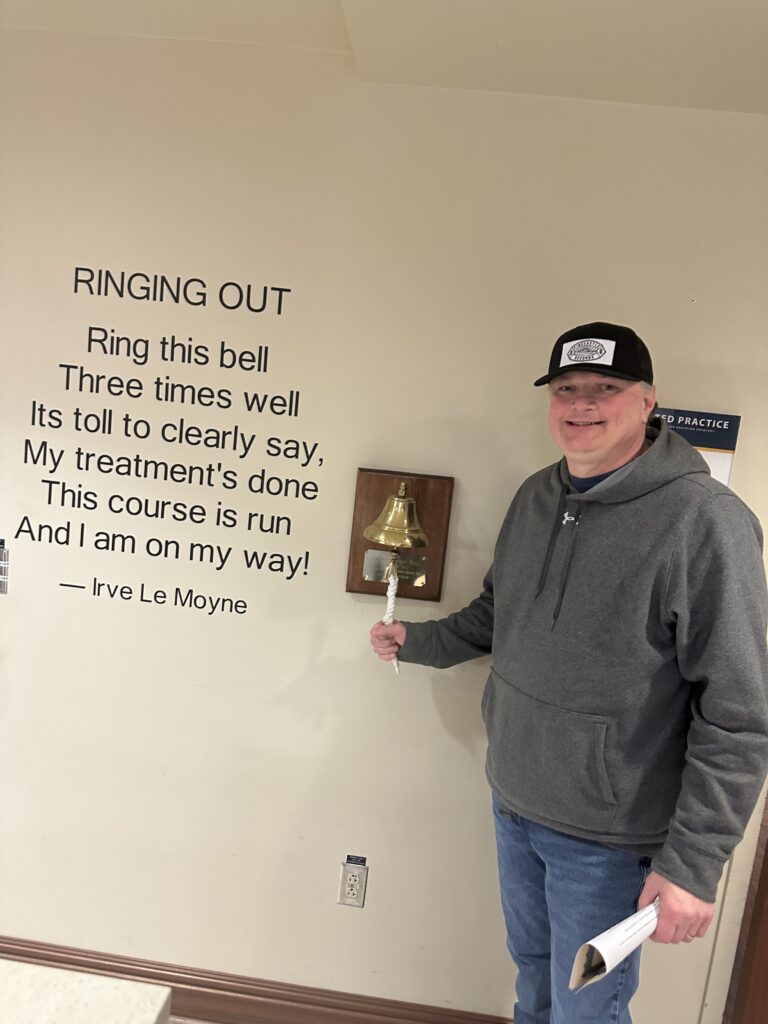
“I actually had my last round of chemo on September 11, right before IBMA. I was down there all week, and nobody knew. Then I came back and had all my first round of scans done after I had all my treatment. Everything was clear. The surgeon really keeps an eye on things.”
As a follow-up, Chandler had a sigmoidoscopy, which is a medical procedure used to examine the rectum and the lower third of the colon. A biopsy was planned, but even though the surgeon knew the location of the spot, he could not see anything. “I was going to opt for surgery since we had some downtime, because if you have surgery, it really throws you ahead of the curve for years. It’s a very invasive surgery. I would have had to wear a (colostomy) bag for two months. Now I have to have an MRI, see the surgeon, have a CAT scan, see my other doctor every three months, and have a colonoscopy at least once a year. I will probably be on that schedule for the next five years. Once you reach five years, they consider you pretty well cured. I’m in remission now, but five years is the goal. They really stay on top of it. The odds are really good. That’s why I have to go so often.
“I had a few ordeals on the road. I played a few festivals that were super hot. The chemo that I was on is really affected by heat. There were two places I about passed out on stage. I almost went down. I stood there and did my job.
“We went to the Bahamas twice last year. Trudy and I went, but I couldn’t go snorkeling because I had my port in. Then we played Larry Efaw’s cruise the week before they took my port out. That’s the kind of schedule we kept. Most people don’t realize if you’re playing 40 days on the road, you’re really playing 80 because you’ve got to travel back and forth. I drove a lot of it. It was relaxing to me.
“I used to set behind the wheel eight hours at a time. That’s changed. I can’t drive eight hours overnight. I can still drive four, but then I’ve got to rest. That’s a difference I’ve seen, but my energy is starting to come back. They say the radiation takes a year plus to get over. Chemo is about a year or sixteen months before you feel like yourself again. I can tell a change in my energy levels. They’re getting better.
“2025 was a very weird year, and I’m glad to get it behind me. One thing I want people to take away from this is when you get middle-aged, you need to go get yourself checked out. I put it off. If you have a little persistent problem, don’t go a year with it. I went a year knowing something wasn’t right. I just don’t go to the doctor unless I absolutely have to. I had the physical because I have high blood pressure, so I could have medication reinstated. Go to the doctor. When you’re dealing with cancer, six months is a huge window. Go get checked. Cancer isn’t left, right, or in the center. Everybody is fair game. It doesn’t pick and choose.”
Nick praised his wife. “God love her. She fussed and fussed at me. She was a champ. She was very protective. We are truly partners.” Trudy, his wife, a professional nurse and the manager of the band, admitted, “People ask me how it is to manage your husband’s band? It’s two separate lives, but it all comes together.”
However, her role dramatically changed with his diagnosis and treatment plan. “On the road, I’m a manager first and a wife second. During treatment, I was a nurse first, making sure he had everything he needed and making sure he rested. He loves talking, and he loves doing that, but during this time, he had to protect himself more and rest.
“I had to make sure that he was well enough to go. He did not want to miss a show. I don’t think he’s ever missed a show, honestly. He doesn’t want to let anybody down. When he says he’s gonna be somewhere, he’s gonna be somewhere.
“I also think it was really good for him to have those shows to look forward to during treatment. That’s why we really worked hard to plan his chemo around shows. I think mentally has a big thing to do with any kind of recovery. If you’re determined, it can make a big difference.”
Nick was apologetic, too. “It was still very fresh at IBMA. I felt absolutely horrible on that stage. I try to talk to everyone. I hope this will explain if I seemed a little short at times. I was physically a wreck.”
Trudy agreed. “It’s been a little stressful, but he’s so tough. I did have to compartmentalize shows. I had to make sure he was hydrated and that he ate while still making sure he was OK to play. The boys in the band were really helpful, too. They were very supportive and made sure that he didn’t have to carry anything and made sure he rested. He never fought me on anything. He wasn’t a bad patient.
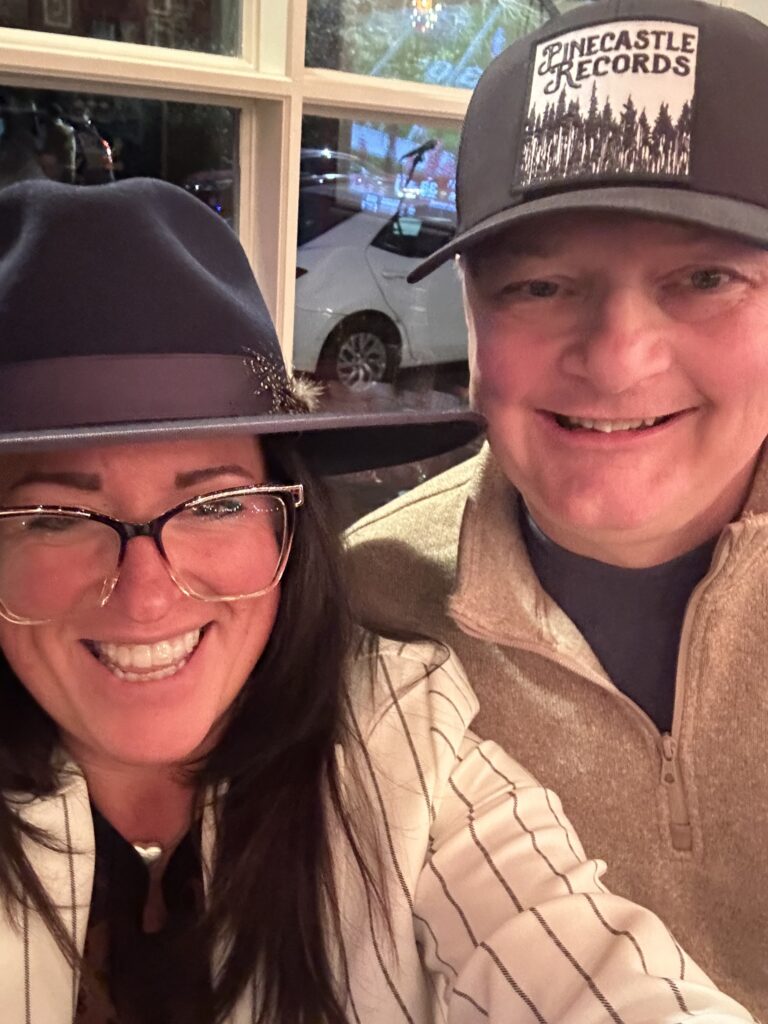
Photo by Trudy Chandler
“On the managerial side, there’s things he can’t know about as an artist. I do a lot of business stuff that he’s not really involved in. When he was sick, the radiation was worse than the chemo. It took a lot out of him. He was pretty tired and had some side effects. I had to wear a couple different hats at once, and as a nurse, watching his coloring.”
Nick was adamant. “I want people to understand the seriousness of this. I have a lot of friends that still don’t know in the bluegrass community. I kept it quiet because we’re in a fickle business. If somebody thinks you’re sick, they’re not going to hire you for the next year. I’m kind of a private person, but this is more about getting it out there. Hopefully, people will get checked and not have to go through as much as I had to go through.”
Even though his health is improving, he is cautious, “When they say you’re cured, and you’re about to go in for those three-month check-ups, there’s some sleepless nights. I have a great team of doctors: William McCullough, radiation oncologist; Martin Palmeri, oncologist; and Colin Byrd, colorectal surgeon. They had great bedside manner, but they were forward. They told me, ‘If it’s spread to your liver or a lung, that’s a hard row to hoe. If it’s not, you’ve got a good outlook. There were a couple of tense moments waiting on those scans to come back.”
Nick relied on his faith and optimism to get him through the tough times. “You just deal with it and go on the best you can. The Lord’s been good to me and better than I deserve. He’ll never give us more than we can handle. You’ve got to have faith. I’m a glass-half-full guy. I’m always upbeat. I feel that’s a good outlook to have.”
Trudy affirmed, “Everything looks good so far. I want to thank the band for sticking with us and helping take care of him while we were on the road. It was really sweet that they cared for him so much. We’re like a big family. This year’s going to be even more fun.”
The nurse in her concluded with an important message to us all. “Take your health into your hands.” Nick stressed, “Go get a colonoscopy, or if you have any issues that are persistent that don’t go away that causes you to have a poor quality of life, there’s probably something going on. Go get checked and have regular health screenings.”
As of right now, Nick Chandler is in remission and his doctors project a full recovery. Heed his advice and make daily health a priority.