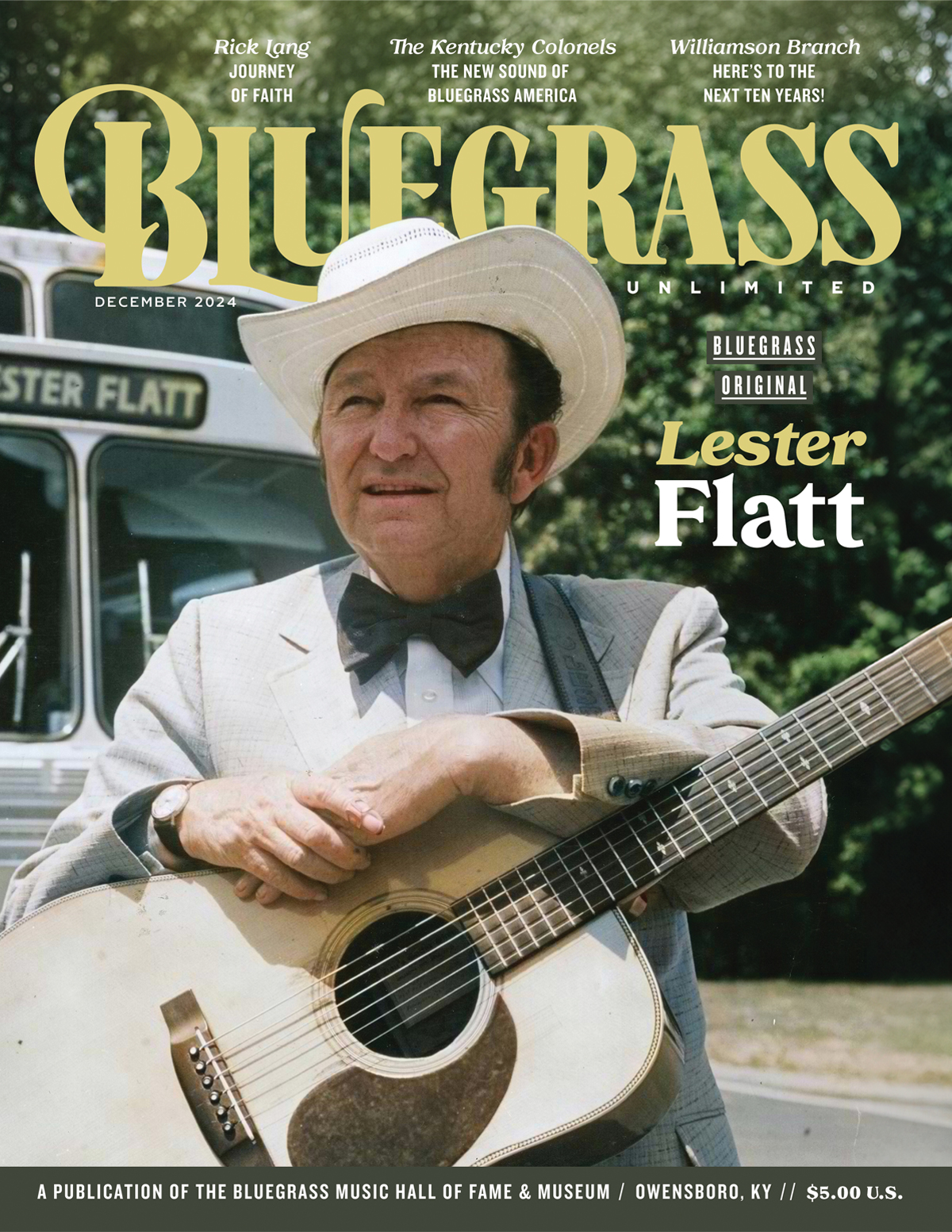
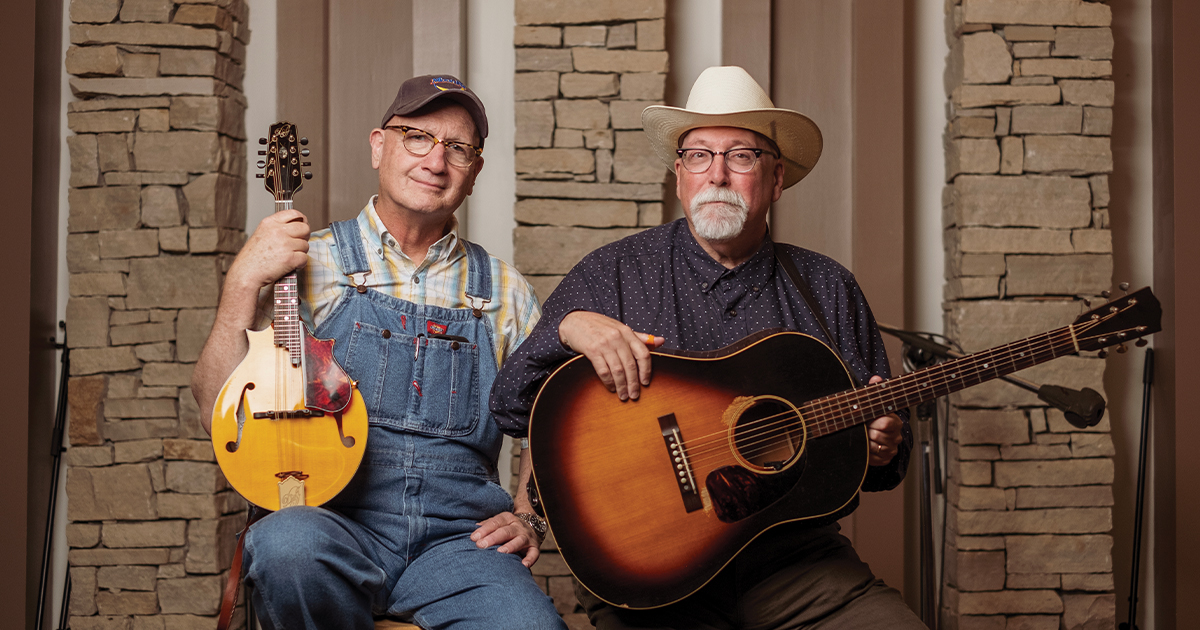
Mike Compton and Joe Newberry
Photo by Scott Simontacchi
After fifteen years playing together, Mike Compton and Joe Newberry are releasing their first studio album Home in My Heart. The project combines new arrangements of old standards and original songs with a traditional flavor, delivered clean and spare. The result showcases their unique blend of vocal harmony and instrumental virtuosity.
Both men have enjoyed long, successful solo careers, as well as successful collaborations. From regular appearances on The Prairie Home Companion, involvement with The Transatlantic Sessions, andfeatures in such iconic music-inspired movies as Songcatcher and O Brother, Where Art Thou, the duo has played a role in bringing traditional music to wider audiences. Known for his Bill Monroe mandolin style, which he teaches as well as performs, Compton played with Nashville Bluegrass Band and with John Hartford, as well as appearing on countless recordings with others. Newberry, renowned clawhammer banjo player and guitarist, also teaches those instruments, as well as singing and songwriting, at camps and festivals.
The pair’s collaboration began after the two engaged in several enjoyable phone conversations while planning a music camp. When a performer scheduled to play a show with Newberry in Charlotte, North Carolina, was called out of the country, he decided that rather than performing solo, he would ask Compton to join him for the performance. “We put together a couple of sets of music before the show, and it sounded pretty much like us now,” said Newberry. “We just looked at each other and decided, ‘Well, we should probably do this again.’” With Newberry based in Raleigh, once Compton relocated from Nashville to Johnson City, Tennessee, to teach at ETSU, the collaboration got easier, with the two living in the same time zone.
As their website notes, the music of Compton and Newberry “honors the past” and “forges a path to the future.” On a Venn diagram of bluegrass and old-time music, they would land comfortably in the middle. Compton noted that after his time with Hartford, he has been “playing more old-time things and not thinking so much about Bill Monroe,” which was his passion earlier in his career. He says he “turned the corner into being a lot more familiar with old-time music and appreciating how much skill was involved. For me,” he added, “it’s the straightforward primal aspect of it, its raw and emotional content.
Newberry, who came more from the old-time branch of music, noted that since he started playing with Compton, he has been investigating the bluegrass side and writing more bluegrass songs. He said, “We’ve both been playing a long time, and we play what we like. That works for me certainly. I think if you play what you like, you’re never going to go wrong.” He agreed with Compton about the music they have been making together, noting, “People react to the forms we write in, the tradition we honor. When we say we are forging the future, we’re trying to add to the music that came before.
Compton points out that they have, in part, an old attitude, not culturally, but toward the way the music is presented. “We’ve reached an age where we don’t try to sound like somebody else. We play and work it out to see what sounds like us.” He remembers Hartford saying, “Do what’s in your heart. At least you won’t have wasted your time.”
The pair note that traditional music—as hard as that might be to define—is in good hands. Compton observed that at ETSU, the music is more Appalachian-flavored than even some of the other schools noted for music programs. “Most of those kids can play like crazy. They’re full of life, and they’re all raring to go and play music. It seems like those folks have an extensive base of friends and acquaintances who all play well.”
Recognizing that even traditional music is subject to change, Compton noted, “It seems like an organic thing that changes as it goes along, but the art form is in good hands.” He has observed a lot of the young people not only play the old styles well but are knowledgeable about where a lot these that music came from. “They’re like walking encyclopedic volumes. They can tell you who was on the sessions and probably even what they had for lunch.”
Newberry added, “I’m seeing young people play with an astounding surety and a facility. I can sure appreciate heart, and I can sure appreciate ability. There are some young folks carrying this on, so I’m not really worried about the future of traditional music, knowing, of course, that it’s going to morph and it’s going to change.” Reluctant to name names, for fear of leaving anyone out, he pointed out the number of successful bands with young musician who, he said, “know all of the back story stuff.”
When he was starting out, around age fifteen, Compton said the music landscape “was just a wasteland.” He explained, “I knew a few older men about my grandfather’s age that kind of beat on mandolins and guitars a little bit and scraped on fiddles, but there wasn’t nearly the community there is at this point in time for younger players. I felt like an odd ball. Nobody around who went to school with me played hardly anything.” His grandfather didn’t play, he. noted, but he was “a great appreciator.” His Scots-Irish ancestors, though, were pickers and singers, traveling and playing much like he does now.
Newberry says he was lucky to have family that played music, but at fifteen, at the county fair in Columbia, Missouri, while walking around on the midway, he heard fiddle music that stopped him in his tracks. “I literally pivoted,” he said, “walked into the tent where they were having the Boone County fiddle contest, and there were all my future heroes up on stage.”
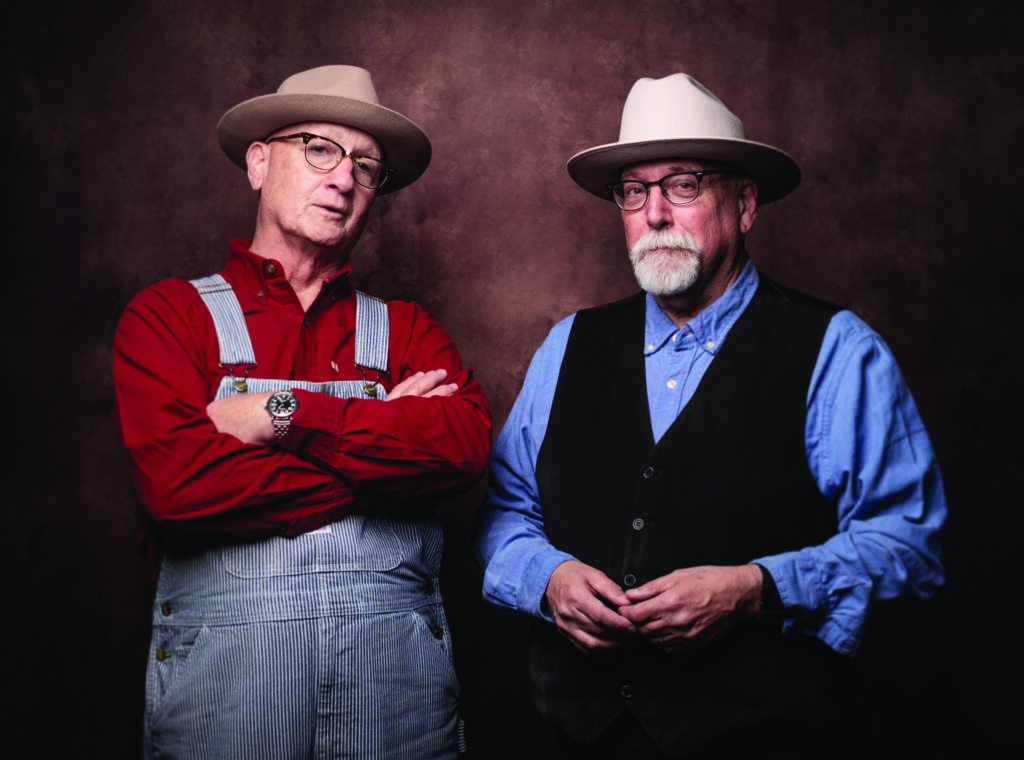
Because the music that captured their attention was “honest sounds and an honest message,” Compton said, “it felt safe to your family.” Younger players learned from older players and, Newberry added, “they never asked me about my politics. They just asked, ‘Did you bring your music?’”
Sometimes called a “traditional troubadour,” Newberry said that one thing he likes best about the kind of music they play is that it started small—in homes and on porches. “It was not performance music.” While touring together recently in Montana, they played a variety of settings of all sizes, but they most like to play where people can see what they are doing—larger venues, intimate theatres, listening rooms, and house concerts.
Home in My Heart, the new album, includes two songs they wrote together, the title song and “The Vacant Chair.” They wanted to include these songs as a way of adding to the ongoing tradition. Newberry also co-wrote the tender song “Sweet Shadows” with John Lowell of the duo Growling Old Men, who joined Compton and Newberry for some of the performances on their recent tour. The nostalgic imagery of old pictures, rocking chairs, and front porches fit well with the other tracks drawn from traditional sources.
They chose “Cherry River Line” as the first single release from the album. Compton said, “We were trying to avoid putting out something that sounds like we’re playing as fast as we can go. It starts real strong, and it’s just straight to the point [with] a hypnotic effect.” Newberry said that while there are lots of versions of the song, once they started whittling away at the song, they couldn’t put it down. “Something about that song was compelling to us, and we had to make it our own. For better for worse, that song hits all of the marks and punches all of the buttons” with its haunting refrain, “It’s lonesome here; it’s lonesome all the time.”
“It had not been an intentional rewrite,” said Compton. “We didn’t set out to make it sound different from everybody else’s. We just played a song the way we hear it, and it usually evolves and tells us where we should go.”
“—and what it needs to be,” Newbery added. He said the song particularly resonated with Adam Engelhardt of EMG, who recorded and produced the album.
The single highlights the vocal blend of the due. While Compton says he sang a high tenor at first, but as his voice changed, he dropped to a lower range rather than standard bluegrass harmony, resulting in a darker sound. Newberry noted, “You understand why The Stanley Brothers are so hard to sing a third part to because Ralph would be singing all over. If he wanted to go below the lead, he would do it and then go above, so that’s a pretty good model to keep.”
When the pair played their first show in Charlotte, Newberry said their original blend “was pretty cool to hear,” and it has gotten better as they’ve worked together. They also swap out the lead, sometimes depending on who brought the song to the duo, but sometimes when they listen themselves, they admit it is hard to tell who is singing.
The instrumentation has been picked out for the same reason,” Compton said. “Sometimes I play mandola on songs that Joe has tuned down a little bit on the lower end, and it fits the range of the banjo real well. It’s a good mix that way. Sometimes I’ll do the unforgivable and put a capo on the mandolin. It’s all for the sake of finding the right blend and the right voice.”
“And the right note,” Newberry added, “and the way the notes fall.”
On the album, the duo keeps the instrumentals stripped down, with Newberry on guitar and banjo and Compton on mandolin or mandola—no studio band. Compton recalled that back when he was playing with Hubert Davis, someone suggested bringing in extra musicians for a recording. Davis said no, Compton explained, “because, he said, if they hear it on the record then when they see us in person, it doesn’t sound that way, sometimes people feel like you’re lying to them. It’s not the Nelson Riddle orchestra in the background. It’s two guys.”
They also recorded the album old school, Newberry noted. “When you listen to the project, there are no overdubs here. Adam [Engelhardt] had us in the studio far enough apart where he got good separation, but we didn’t do punches.”
Compton added, “If you have a false start, you just do it again. ‘Okay—take fifteen.’”
The best way to listen to Home in My Heart is from beginning to end, just as it’s put together. The song balances nostalgia and tenderness with flat-out fun. They selected songs that had been a part of their set list for the past year. The album opens with their arrangement of the old standard “Careless Love,” a medium temp song that Compton says “hits like a sledge hammer.” Amid the songs, they include some instrumental tunes—“Old Melinda,” “John Brown’s Dream,” and the Hobart Smith tune “Last Chance” that closes the album. These tunes play like an invitation to dance, evoking the staccato of shoe taps on the boards. After all, they note, these were dance songs from the beginning, sometimes played with just a banjo.
Fittingly, they wrote the title song while driving through Montana. At first, Newberry said, they were working hard to try to figure it out, “but when we stopped working so hard, it came to us.” The lyrics speak of building a home –“in my heart…in my soul…in a song,” suggesting, as Compton noted that “happiness is a choice.” Throughout the song, they repeat the phrase “be it ever so humble” from “There’s No Place Like Home.”
While awaiting the album release, Compton and Newberry completed their tour of western states and headed back home. Then these troubadours headed back out on tour, through the Midwest, keeping the tradition alive, while adding contributions of their own to the music they love.