
Mike Clark Memorial Scholarship and the Oklahoma International Bluegrass Fest Help Bluegrass Students Achieve Their Dreams
Photos By Cassidy Wayant Photography
In many parts of the country, the wonderful roots music genre known as bluegrass continues to flourish due to targeted efforts to keep the music alive and flowing into the future.
In some states, it is the Junior Appalachians Musicians program that facilitates the teaching of over 1,000 students in over 60 small towns and cities in six states that keeps the bluegrass and old-time music flowing through the veins of young folks.
In other parts of the world, college level classes and even degree programs also give budding bluegrass musicians a chance to seek a higher level of musicianship. Other events, like the Bela Fleck’s Banjo Camp, Bryan Sutton’s Guitar Camp, and Casey Driessen’s Fiddle Camp, all happening in Brevard, North Carolina, are places where bluegrass students can get to that next level.
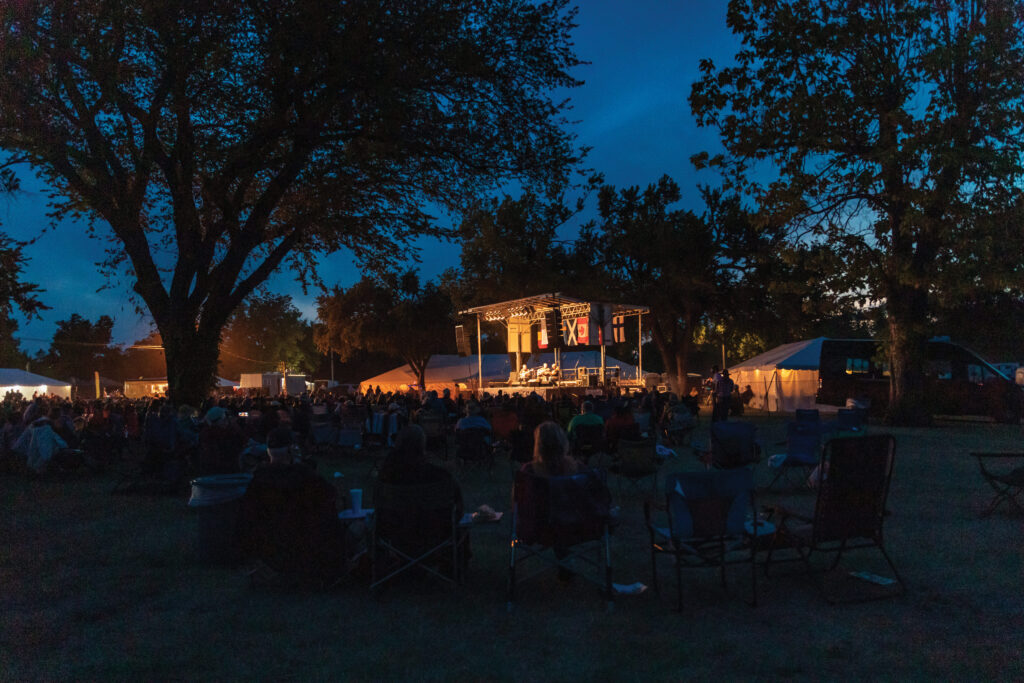
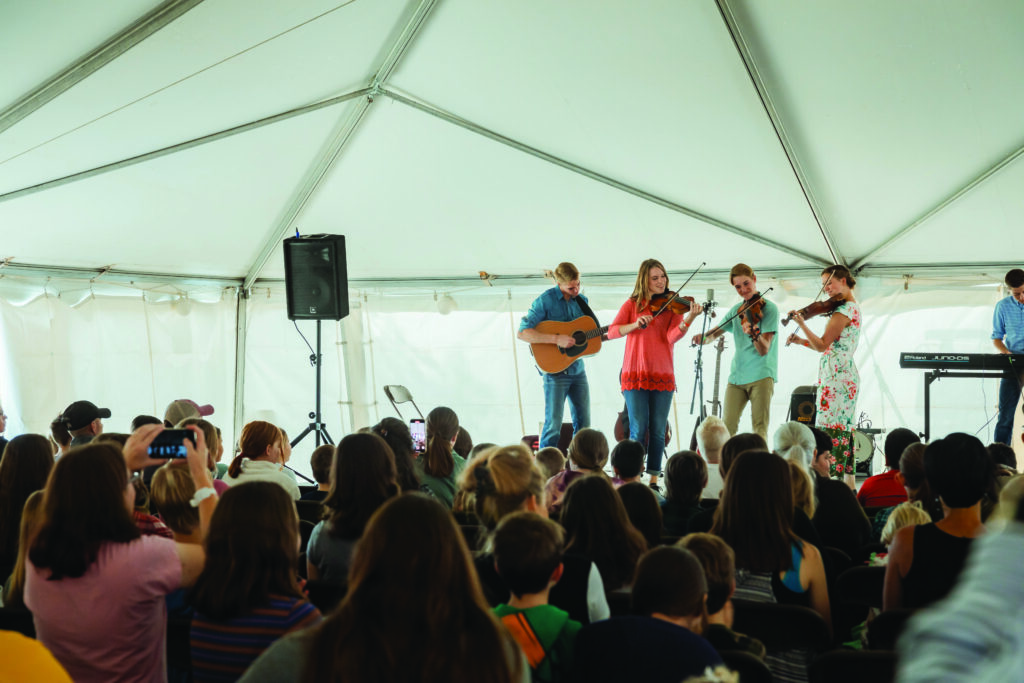
Throughout the country, many bluegrass festivals also step up to help the cause as well with many scholarships funded and stages set aside for younger performers. The Bluegrass Hall of Fame and Museum in Owensboro, Kentucky, also opens up its doors to folks who want to take an instrument off of the wall and play it for the first time ever, and lessons are provided in the building as well.
All of this combined helps out the bluegrass genre, which is a unique brand of music that is often different than the popular music of any given time. Occasionally, however, bluegrass influences will bubble up to the surface on the bigger stages of the world, but that does not happen in a vacuum.
In Oklahoma, the legendary homeboy fiddler Byron Berline and friends created the Oklahoma International Bluegrass Festival with the goal of “Organizing an annual world class festival to support the bluegrass industry in Oklahoma, to educate the people of Oklahoma and beyond about bluegrass music, its history and dominance in Oklahoma, and to promote the annual festival throughout the state, creating an on-going state resource that serves Oklahoma’s economic development. As a 501(c)(3) nonprofit corporation, our primary goal is to support youth through music scholarships and continuing music education opportunities.”
One of the main focuses of the educational outreach of the festival is the Mike Clark Music Foundation.
For those of you not aware of the Oklahoma bluegrass scene back in the day, Mike Clark is the brother of Bobby Clark, and they were a part of a local bluegrass scene that included a young Vince Gill and bluegrass veteran Byron Berline.
Bobby Clark and Vince Gill were famously in the bluegrass band Mountain Smoke and they were asked to be the opening act for the rock group KISS one night when the original first band couldn’t make it. Predictably, the KISS crowd relentlessly booed their bluegrass music, which prompted the teenage Gill to famously bend over with his backside facing the crowd as he told them what to do with their boos. At that point, the rockers in the audience cheered them on, albeit after their set had ended.
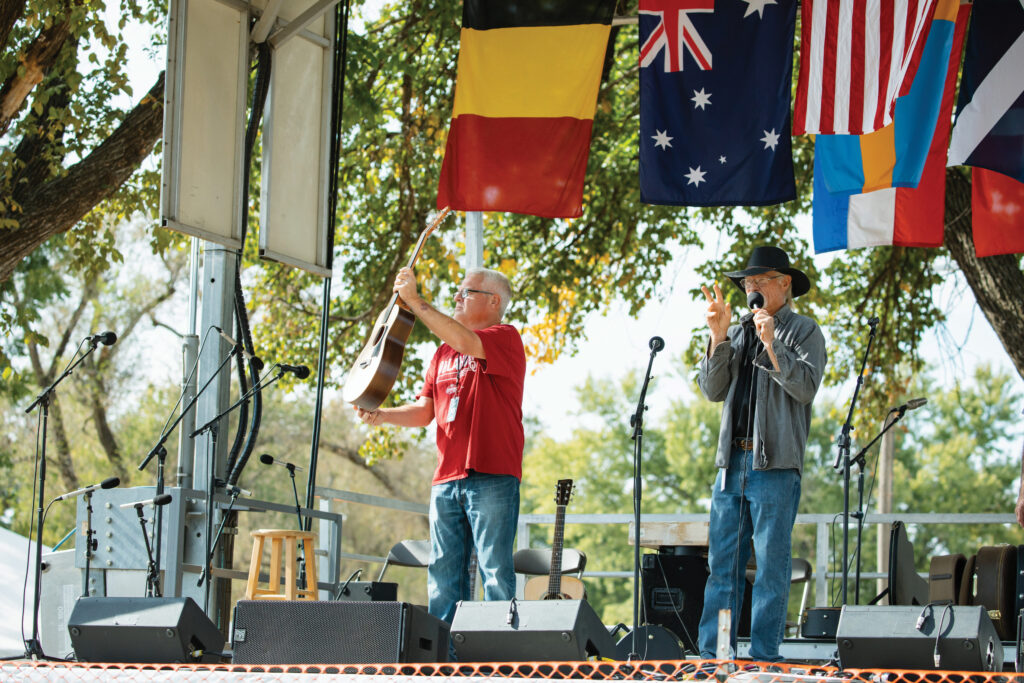
Ultimately, Byron Berline was the star bluegrass fiddler that came out of that Oklahoma scene. Berline played the fiddle on an early album by The Dillards and then joined Bill Monroe in the mid-1960s after meeting the Father of Bluegrass at the Newport Folk Festival. Berline would record an instrumental tune with Monroe called “Gold Rush” that would light up the bluegrass world and become his signature song. Then, after an impressive career, winning IBMA Awards with the group called California, Berline would move to Guthrie, Oklahoma, in 1995 to open his music store called the Double Stop Fiddle Shop. Two years later, Berline created the Oklahoma International Bluegrass Festival and that event would later spawn the Mike Clark Music Foundation and its scholarship program.
The Double Stop Fiddle Shop burned down in 2019, but it was rebuilt as the Double Stop Fiddle Shop and Music Hall. Berline would pass away in 2021, and he was thankfully given an IBMA Distinguished Achievement Award in 2012.
The Scholarship Chair of the Mike Clark Music Foundation is Andrew Hunt, a musician that grew up in Oklahoma and that spent many an hour playing music with Berline. Hunt, though he lives in Oklahoma, actually works for the University of Tennessee as a Proposal Coordinator with the Institute of Agriculture side of the college.
“I have been into bluegrass music for, pretty much, my entire life,” said Hunt. “My Dad was a banjo player since he was just a kid and when I got older, I began to play as well. I really wanted to play the fiddle, so when I was seven years old, I began to take fiddle lessons. My Mom’s side of the family is very musical as well when it came to singing and playing, so it all developed within me as a result of those traditions. That means I have been into bluegrass music for way over 20 years now. When I was about 12 years old, my family moved from Kansas City down to central Oklahoma where we got to know Byron Berline and John Hickman once we got there. John was a wonderful bluegrass musician who played in various bands with Byron for over 40 years.”
Now hooked up with the preeminent bluegrass artists of Guthrie, Oklahoma, and also a regular fixture at the Double Stop Fiddle Shop, Hunt experienced many years of spending time with those two local legends. Eventually, the Hunt Family Band was formed and they would tour often within the region.
“That all lasted to about 2021 when Byron passed away and my brother Jonathan and I were asked to step into his Byron Berline Band so the group could finish out the gigs that were already booked that year,” said Hunt. “After that all stopped, my brother and I formed our current group, which is the Hunt Brothers Band featuring Samuel Grounds on guitar and Henry Burgess on the mandolin.”
What is special about Andrew Hunt’s journey as a bluegrass musician is that he and his brother Jonathan were beneficiaries of those scholarships given out by the same Mike Clark Music Foundation that he would run someday.
“We were actually able to get those scholarships through the Oklahoma International Bluegrass Festival when we were young and I used that money to take lessons from Jim Garling, who is a western swing and cowboy music performer who is also a fiddle player,” said Hunt. “Jim would teach me about playing the fiddle, and when our lessons were over at the Double Stop Fiddle Shop, we would go downstairs and jam with Byron Berline. So, for years and years, we would take lessons and then pick up things from jamming with our legendary fiddler. Byron wasn’t really a teacher when it came passing down knowledge about the fiddle, as he didn’t give lessons or sit down with folks who wanted to know what notes to play. Instead, he was all about exposing you to that higher level of playing the fiddle. He never said, ‘Hey, play these three notes,’ but he did say, ‘Here, sit next to me.’ He didn’t keep anybody away, and he pulled my brother and I into his circle so that we could see up close people playing at a really elevated level.”
While a lot of famed musicians get stuck with being known for a particular song, with folks expecting them to play that signature cut at every show, Berlin seemed to be happy that he was known for his landmark recording of “Gold Rush” with Mr. Monroe.
“Byron liked to play that tune pretty often and show it to people,” said Hunt. “That is the one tune that he showed to me saying, ‘This is exactly how you should play it.’ A lot of folks play ‘Gold Rush,’ but when it is played right, you can notice it. That became very helpful when we played with the Byron Berline Band for those few months after he passed away. Byron was also my next door neighbor. I bought the next door house and I still live next to his wife Betty. The last time I ever spoke to Byron, ironically, was when he came over to my home while some guys were doing some tree work there and he wanted to chat, telling me that his long-time band member John Hickman was not doing well and was on the verge of passing away. That was the last thing that we ever talked about and soon later, John did die and Byron passed away a few months afterwards.”
Hunt began to facilitate the Mike Clark Music Foundation in 2021. “It has been a great experience,” said Hunt. “The scholarship idea was really Byron’s brainchild. The Oklahoma International Bluegrass Festival is a cool event in and of itself, because we really do bring in a lot of international bluegrass acts. But, they also wanted the festival to help to produce new generations of musicians through education who would push bluegrass and the other traditional roots music forms forward. Since I came onboard, I have tried really hard to streamline the administrative side of it and to digitize some of our application processes. One thing that I am proud of is that we have had twice the number of applications for scholarships turned in now than in the year I started working on it. We want as many young people to be aware of the program as we can, so they can take advantage of it and begin the journey to becoming a musician. It is a very cool thing and it is an honor to give back to something that helped me when I was a kid learning how to play.”
More information can be found at www.oibf.com.