Memories of Paul’s Saloon
San Francisco’s Bluegrass Home
In 1969, a man bought a bar in San Francisco. The man was Paul Lampert and the bar was a run-down joint called the Paragon, located at 3251 Scott Street in San Francisco’s Marina District. After a remodeling job, the bar reopened, reborn as Paul’s Saloon, with seating for slightly more than 100 people.
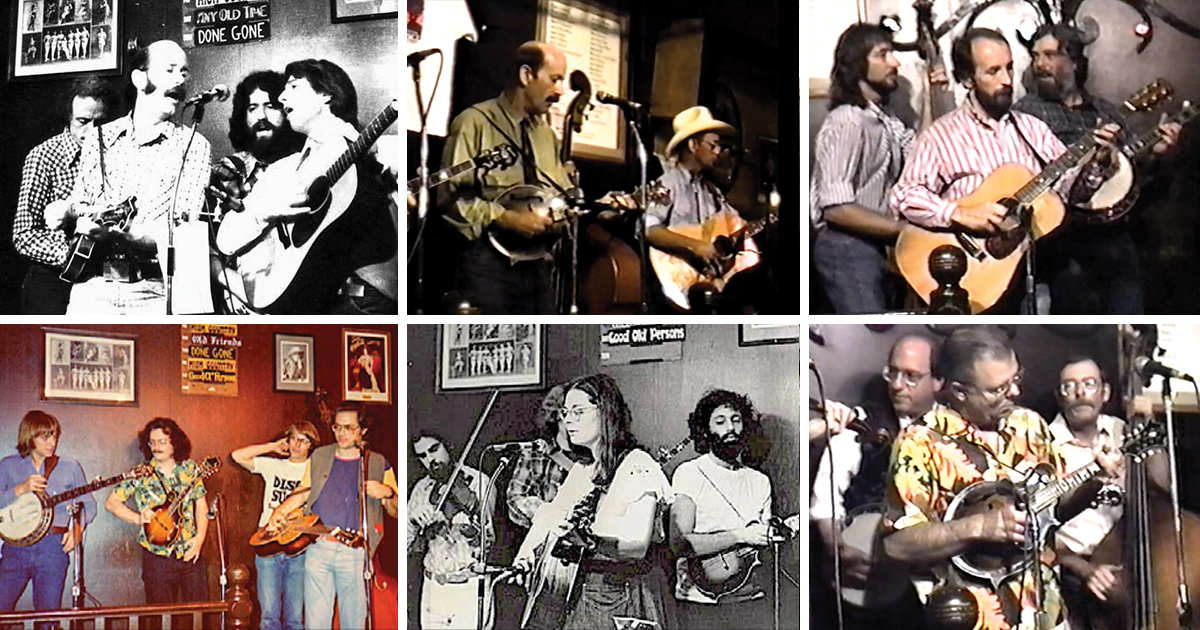
Music was not on Lampert’s mind as the bar was being remodeled, as the location of the stage facing the women’s bathroom clearly indicated. Even so, over the next twenty-two years, Paul’s Saloon would come to be the premier bluegrass club in the Bay Area, a training ground for countless musicians and the launch pad for dozens of bands.
Paul’s also gave Bay Area audiences the chance to catch touring bands like J.D. Crowe and the New South, the Seldom Scene, Alison Krauss & Union Station, the Bluegrass Cardinals, Ralph Stanley & the Clinch Mountain Boys and Don Reno, and unscheduled drop-in performances by Bill Monroe, David Grisman, Frank Wakefield and many others.
Paul’s Saloon closed in 1991, primarily because its original clientele was aging out of the club scene and no younger cohort had appeared to keep things going. The Loma Prieta earthquake in 1989, which had heavily damaged the city’s Marina District, was also a factor. There’s a cool video on YouTube called “The Last Days of Paul’s Saloon,” featuring performances by High Country, Blue Plate Special, Scott Hambly and Friends and the Rhythm Rasslers, the last band to perform on Paul’s stage.
What follows is a collection of reminiscences by some of the people who made Paul’s Saloon the happening joint that it was. Those taking this stroll down memory lane include Paul Lampert, owner of Paul’s Saloon; Anne Merrifield, bartender at Paul’s Saloon; Sonia Shell, banjo player in Pick of the Litter and Sidesaddle, bartender and cocktail waitress at Paul’s; Steve Pottier, guitar/bass player in High Country and Done Gone; Randy Pitts, frequent patron, Artistic Director/talent buyer at the Freight & Salvage Coffeehouse; Tom Diamant, frequent patron, bluegrass disc jockey at KPFA, co-founder of Kaleidoscope Records; Kathy Kallick, guitar/bass player in Good Ol’ Persons and the Frank Wakefield Band; Butch Waller, mandolin player and leader of High Country; Ray Edlund, frequent patron, bluegrass disc jockey at KPFA; and Chris Lewis, mandolin player in the Fog City Ramblers and the All Girl Boys.
Paul Lampert* One day Bob and Ingrid Fowler of the Styx River Ferry bluegrass band came by and asked if they could play. I had thought about having a swing or jug band or other acoustic music, so we tried it out. At first, if six or twelve people showed up on a Saturday night, that was a good night…The first five years were not prosperous, but things gradually got better. We’re the most popular underground bar in San Francisco.
Anne Merrifield: In 1971, I stopped at a bar in my neighborhood to have a drink, where I met Paul Lampert, the owner of Paul’s Saloon. I asked him to teach me how to bartend and ended up being there for 12 years. I worked during the day as a secretary and several nights a week as a bartender.
Sonia Shell: I was a bartender and cocktail waitress at Paul’s for about three years in the late 1970s and early 80s. I was very young when I started working there—not even 21. I had a fake ID. I would often open the bar in the afternoon and work until the music started, then I was off. But I wouldn’t go home, because the music had started. I spent way too much time in that bar!
Steve Pottier: I moved up from southern California to San Francisco about 1973. I heard about Paul’s and went to check it out. SRO on a Thursday to see Phantoms of the Opry. I still remember Pat Enright singing “Waltz Across Texas,” and he was just blowing the doors down!
Merrifield: Bluegrass was not familiar to me when I started work there. The first band I heard was Styx River Ferry (Bob and Ingrid Fowler), and some of the other early bands were Phantoms of the Opry (Pat Enright) and of course High Country (Butch Waller). I was hooked right from the first note, and as I got to know the various musicians over the years, I realized how special bluegrass folks are. There is a close-knit community that exists the world over, as the music seems to attract genuine and unique sorts of people.
Shell: When I first started working there, it was packed. You cannot imagine how many people were in there, listening to bluegrass and having a great time. It was crazy. People would smoke reefer in the back. It was pretty wild and very popular. It had dark wood paneling and a fire place. It was atmospheric. It was a dark, cave-y, Victorian place. It was a great place to play.
Randy Pitts: When I first started going to Paul’s, in late 1976 or early 1977, the small enclosed stage faced the door to the women’s bathroom, which couldn’t have been more than about fifteen feet from the microphones. Awkward? Extremely. The sound system, which was fairly rudimentary, was off to the right, and was generally set by the band before the musicians started playing and left that way.
Pottier: Lots of big-name bands went through there: Vern Williams, Don Reno, Frank Wakefield, even Bill Monroe came by, and Paul closed the doors for an after-hours jam. The New South came to play there when Tony Rice had just joined the band. Then there were the regulars—Phantoms, High Country, Any Old Time, Good Ol’ Persons, Done Gone and more.
Tom Diamant: One show there that sticks in my memory was J.D. Crowe and the New South—the classic band, with Ricky [Skaggs] and Tony [Rice] and Jerry [Douglas]. The place was packed. It was a memorable night for everyone.
Kathy Kallick: The most memorable show for me was the night J.D. Crowe brought his new band there on the way to Japan. The excitement in the smoky air that night was palpable. It was the first time I’d ever seen any of those people, and that was also true for a lot of other people who were lucky enough to be there. Everything—the singing, playing, stage patter—was all so great.
Butch Waller: Larry Cohea and I ran the jam on Mondays at Paul’s for several years. It was almost always well attended. Our usual format was to jam around a table for starters and then put a band together out of the participants, who would then play a set on stage.
Shell: Butch Waller’s Monday-night jam was where I learned to jam. The people there were so encouraging to me. Butch and Larry and all the guys were really encouraging and just super nice.
Pitts: Paul himself was a large, hulking, brutish lout who sported long, hippie looking wavy hair and beard, greying into white. I think he must’ve worn bib overalls most nights, since that is all I ever remember him wearing. He made the rounds before the music started and on breaks, often with what I remember as a coffee can in hand, wiping the tables and standing over the patrons, saying stuff like “What’ll ya have? Drinkin’s the name of the game, ya know.”
Ray Edlund: In all the years I went to Paul’s, I think I saw Paul smile maybe twice. Or maybe just once.
Kallick: Paul was a very grumpy, antisocial, unwelcoming host to our seven-nights-a-week home of Bay Area bluegrass. He didn’t particularly like the music, he resented how little the audience drank alcohol, and he was ferocious about his timetable for the sets and breaks. It was hard to like the guy, honestly. But somehow, I did. I had some good talks with him over the years, between the times he made me so angry I could’ve slapped him.
Shell: Paul was hard to work for. I feel like he had a complicated personality, because he could be great, and fun to talk to and interesting. But on the other hand, he was just terrifying, really. He was a giant, scary-looking man. He could be dreadful. Paul was huge and wore bib overalls and had a long beard. He was scary. He only hired women to work there. In this age of the Me Too movement, I think Paul might have met with some obstacles, but back then we didn’t know any better.
Pottier: Paul had bluegrass seven nights a week (!!!) and I went there pretty often. It felt like a clubhouse to me—go there, see your friends, listen to some bluegrass.
Kallick: I started my long relationship with bluegrass in that place, going to see the bands several times a week. As I was absorbing, listening, misunderstanding, and beginning to play bluegrass, Paul’s Saloon became the place I could try everything. I was learning to play bass and bluegrass rhythm guitar, learning enough songs to play four sets, learning how to perform, develop a style, add nuance, and build stamina—all on that shallow stage that faced a wall and the women’s bathroom.
Chris Lewis: As a female and performer, I felt the atmosphere was no different for me than the guys that played there. It was more humorous than offensive to be surrounded by Paul’s cheesy artwork of women in racy positions on the walls. But I also felt pretty safe.
Pitts: The bands were expected to play four sets a night and take fifteen-minute breaks. Paul lived in an apartment upstairs, and if the breaks ran long, I am told, and he was in his domicile, he would stomp on the floor until the music started up again.
Pottier: Paul was nothing if not cheap…Lost John Hutchison played there for $15 a man. When Done Gone auditioned, we quickly decided we wouldn’t take less than $100 for the band. He came in and offered $85, and we backed down and took it. He eventually gave us a raise.
Merrifield: Paul always booked the bands, and the musicians played for love of the music, surely not the money. Paul Shelasky once referred to Paul Lampert as “a very frugal man”—quite an understatement. Other, less tactful terms have been used. However, in spite of the “cantankerous old rapscallion,” he made it happen, and it was the place to meet friends, have a drink, and hear the best bluegrass music around.
Pitts: The food was limited to chili, burbling in a crock pot behind the bar until evening’s end, when—and this was a nightly ritual—it was flushed down the commode in the women’s bathroom. It had to do with some restaurant code, I think…food had to be available. Nobody ate it, though.
Pottier: Paul seldom tended bar himself. He trained smart, attractive co-eds to run the bar and to waitress. It kept the bar pretty civil, with only an occasional incident. Like the time someone threw his shoe at the band. Guitar player Jim Silvers whipped out a knife, cut it in half and tossed it back.
Edlund: The most fun night I ever had at Paul’s was when I walked in there for the first time. I’m not really a ‘bar person, and I stepped in there and said, ‘Wow. This a refuge for people just like me.’ Paul’s was an island in the sea of San Francisco bars and nightclubs. It was always fun.
Kallick: It was an unlovely environment in many ways, but it was completely safe in every way. Paul actually cultivated a bar scene that was safe for women, safe for every fledgling musician, safe for anyone getting over a heartbreak or a hangover; his club was the anti-fern bar.
Merrifield: Starting out, it was easy—one bartender and one cocktail waitress. As the crowds grew over the years, we sometimes had two bartenders and perhaps three cocktail waitresses. At its height, it was hard to get in the door. People were stacked to the walls, and there were never enough seats for everyone. It was hard work, but it was the most fun I’ve ever had in my life.
Lewis: I have fond memories of playing for very diverse audiences, lots of tourists (including lots of Japanese patrons), and I relished the opportunity to play in such a cool neighborhood as the Marina District, with its great restaurants and shops. It was also a great gathering spot for our bluegrass community of friends. I remember the day that Jerry Garcia sat with friends in a back table while I was performing. He seemed to be listening to us.
Kallick: As a performer, I’ll never forget the night the Good Ol’ Persons were playing Paul’s while across town Bill Monroe was at the Great American Music Hall. As we were in the middle of our fourth set, in walked Bill Monroe and the rest of his band, along with David Grisman. They watched us finish up and then we all sat in a big circle and started playing together. Paul locked the door at two am and called it a “private party” to comply with the law.
Merrifield: [The coolest thing that ever happened to me at Paul’s] was when Ralph Stanley and the Clinch Mountain Boys visited. Everyone was just chatting after hours, and Ralph, Jack [Cooke] and Roy Lee [Centers] decided to go downtown, but Curly Ray [Cline] and Ricky Lee decided they were hungry, so a few of us went down the street to my apartment, where I cooked up some spaghetti, and all of us just visited and had a fun time. I didn’t have too many glasses for company, so Curly Ray had his drink out of a measuring cup.
Diamant: I went to Paul’s a lot, saw a ton of shows there. There was rarely a cover charge. You could walk in there pretty much any night and you’d know someone, either in the audience or on stage. It was a hangout for bluegrassers, the place to be. It was ‘our’ bar.
Waller: It was a great scene—more than a gig. It was home to bluegrass in San Francisco and a comfortable hangout.
Kallick: Paul’s was the place to try out new material, hone an arrangement and develop a “band sound.” It was many people’s introduction to bluegrass, and a big community grew out of that, local and far beyond. People came from all over the world, literally. Anybody coming to San Francisco who had any interest in bluegrass knew about this little place in the Marina and found their way. There’s never been another place like it. It was precious.
[*from “Paul’s Saloon: San Francisco’s Bluegrass Haven,” BU, November 1983]