Lovin’ of the Game
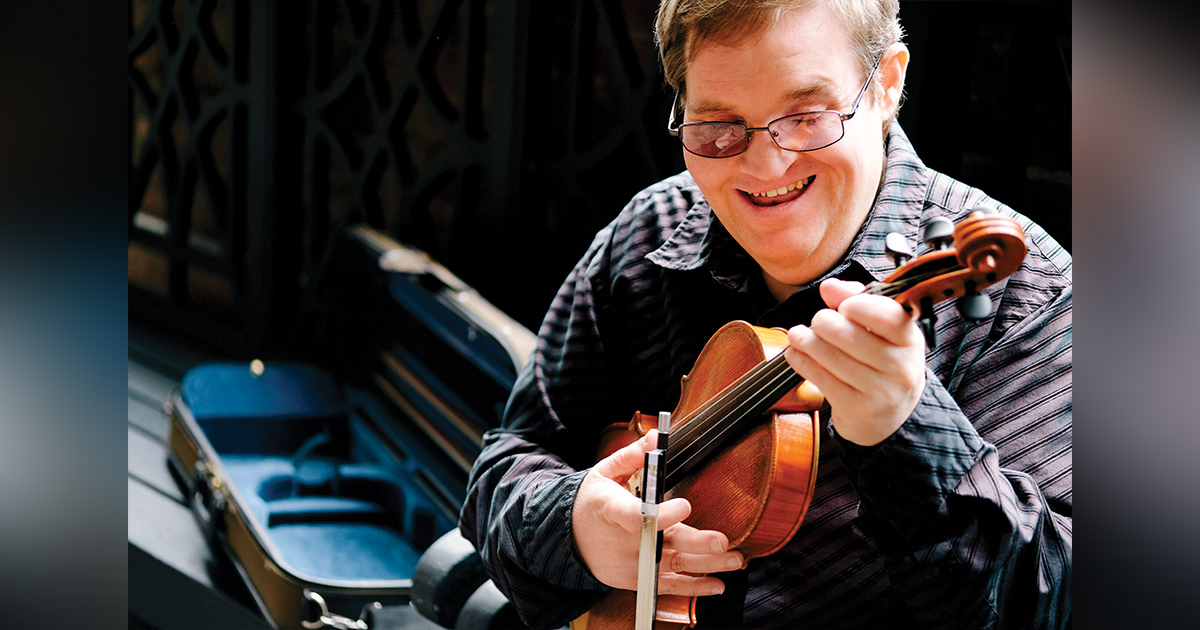
Photo by Amy Richmond
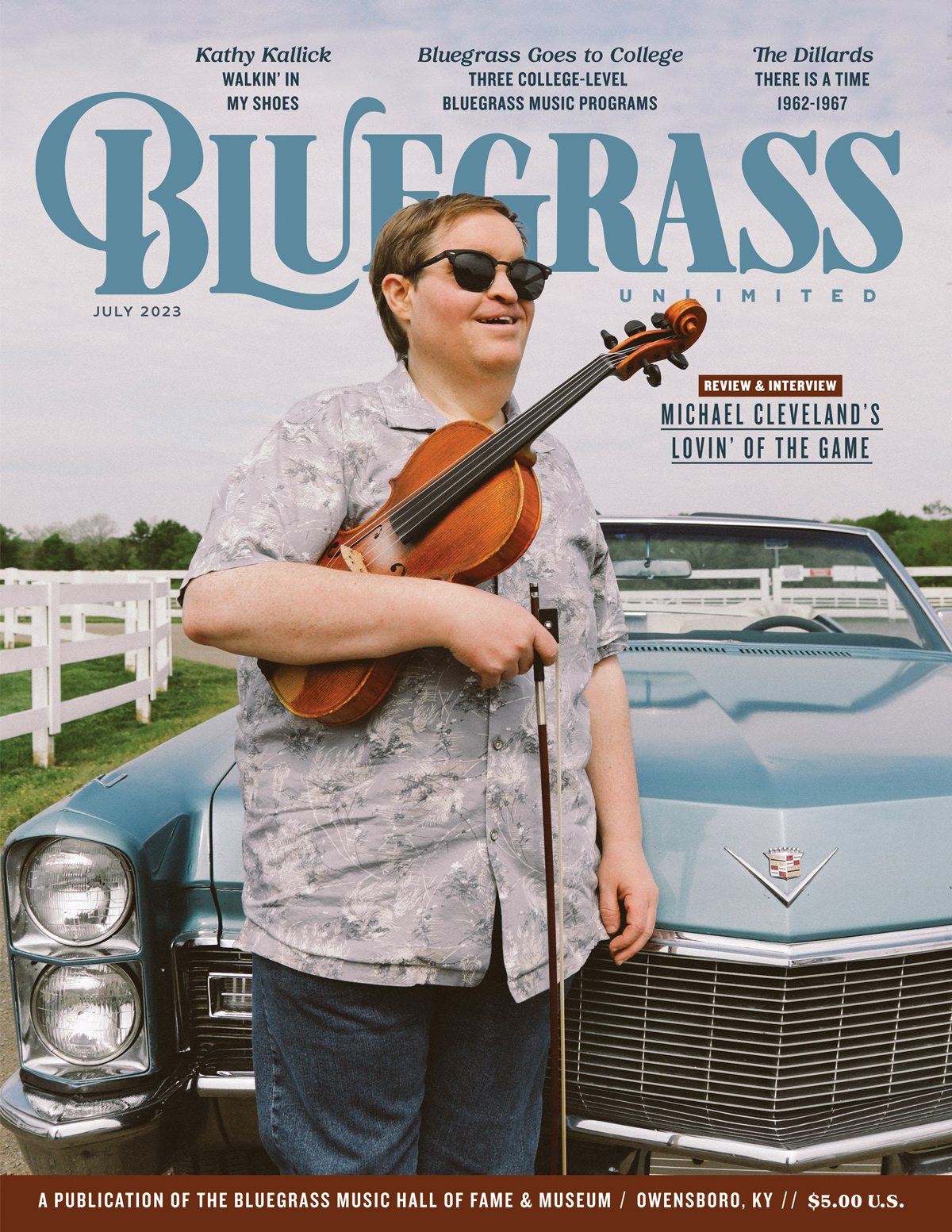
Michael Cleveland is a well-recognized bluegrass fiddle master. Originally from Henryville, Indiana, Cleveland was born completely blind. Later, a childhood ear infection caused him to lose 80% of his hearing in his left ear and some in his right. Even with this diminishment in hearing, to paraphrase Vince Gill, Cleveland hears better than most people, maybe even most musicians.
While planning this article, I reached out to a few of Cleveland’s peers and fellow players via email. Acclaimed fiddle player Bronwyn Keith-Hynes wrote to me saying “Mike Cleveland is my hero. There’s nothing he can’t do on the fiddle; his playing is endlessly inspired, and soul driven, and I could listen to it forever.” In addition to fiddle, Cleveland plays guitar, mandolin, and banjo. When I reached out to Peter Rowan, he said, “I sat down late one night at Tex Logan’s 87th birthday party with Michael. We played for a long time into the wee hours. Michael and I were playing guitars! I was amazed in that jam session just how deeply Michael has listened to a wide range of music and just how deep his roots really are!”
Michael has been awarded International Bluegrass Music Association (IBMA) Fiddle Player of the Year an impressive twelve times. He is also a six-time winner of the IBMA Instrumental Performance of the Year. Michael’s band, Michael Cleveland & Flamekeeper, has won Instrumental Group of the Year seven times. His album Tall Fiddler was awarded the Grammy for Best Bluegrass Album in 2020. Michael was inducted into the National Fiddler Hall of Fame in 2018. And he received the National Endowment for the Arts National Heritage Fellowship in 2022. He was also voted the Favorite Fiddler Player by Bluegrass Unlimited readers in the 2023 Reader’s Poll. Michael’s life and career were documented in the film Flamekeeper: The Michael Cleveland Story (2019). In addition to chronicling the history of Cleveland’s career, the challenges he has faced and his incredible achievements, this is an important documentary for anyone interested in bluegrass history.
Michael’s new album, Lovin’ of the Game, was released by Compass Records on March 3, 2023. I’ve been listening to it over the past few months. Lovin’ of the Game is certainly steeped in bluegrass tradition but is also infused with the influence of innovators like Béla Fleck. What I love about the album is that it simultaneously honors the bluegrass tradition, while offering some fresh sounds outside of the tradition. From the moment you drop the needle on the first song “Thousand Dollar Holler,” it comes exploding out of the speakers, like a stable of horses let loose. Cleveland invites a host of players to join him, like Béla Fleck, Bryan Sutton, Vince Gill, Charlie Starr, Tim O’Brien, and also includes songs with his group Flamekeeper. In the end, we get the best of both worlds: An album brimming with newness, that also rings with bluegrass to the core. In an email from Darol Anger he wrote “Michael Cleveland currently stands as both our baseline and polestar among bluegrass and contemporary fiddlers. His unfailing joy, humor, and musicality are an inspiration to everyone. He’s knowledgeable and capable in every style of bluegrass fiddling and is always listening and laying it down with that fiddle from his brain, heart, and soul. He’s taken everything from the most basic straight-ahead bluegrass Chubby Wise fiddling to the wildest Scott Stoneman/Richard Greene licks, and digested it through his earthy, joyful hands. It all sounds like Michael; just the way you want bluegrass fiddle to sound.
I had a chance to chat with Michael over the phone in late January 2023.
I learned from watching the documentary Flamekeeper: The Michael Cleveland Story, that you hear only 80%. How do you manage to listen, play, and record?
It’s hard to explain. I’ve gone to various ear doctors over the years. My ears are things I don’t like to mess around with, but at the same time I absolutely hate going to ear doctors. A few of the doctors have said that they don’t know how I hear, but somehow, I can. And I’m very grateful for that. I have two perforated ear drums. I’ve been told that the hole in my right ear is bigger than the one in my left and yet I can hear more in my right ear. There’s a bunch of hearing loss in my left ear; I think I have twenty percent hearing in that ear. Pretty much everything I hear is coming from my right ear. It has always been that way. I had tubes in my ears when I was a kid. I had to be careful not to get water in my ears. I still have to be careful. I used to play on stage standing to the left [stage right to the audience] so I could hear better. But nowadays, I’ve been using ear monitors. Elliot, our sound guy, has gotten us on ear monitors which has helped a lot. Years ago it was routinely hard to hear on stage. As a matter of fact, I used to play much harder. In the last few years, I’ve been able to lighten up, play more subtly. In general, stage sound has gotten better. We don’t have to fight to hear each other, or to find the timing or establish timing.
In Flamekeeper: The Michael Cleveland Story, Béla Fleck says you can play any kind of music “there’s a lot in there” (rock, jazz, etc.); do you consider yourself a bluegrass only musician?
No, but bluegrass is mostly what I do. In the last few years, I’ve been able to branch out and play a few different kinds of things. I guess Andy Statman might have been the start of that. He approached me about doing a record with him and Tim O’Brien called Super String Theory. I had known of Andy and was pretty surprised that he knew me. I had heard Andy on a record with Peter Rowan & The Red Hot Pickers. Peter Rowan, Andy Statman, Tony Trischka, Richard Greene and Roger Mason. They did a couple of records, I think, for a label in Japan. A friend of mine played me a version of “Wild Bill Jones.” Andy played the wildest mandolin solo of all-time on this song. This is classic Andy Statman, so many different crazy ideas and licks and he’s humming and singing while he plays. I’ve asked Andy about that: Where did the humming come from? Andy said that he doesn’t realize he’s doing it most of the time. That’s how I became aware of Andy.
Years later, Andy’s manager emailed me and asked about doing a project. Of course, I was all about it. I came to Brooklyn and recorded it for about a week. It was a lot of fun and challenged me to not worry about abandoning form and tradition, to lose all. The way Andy plays, he holds no bar. It took effort for me to let myself have all that freedom. Not too long after that, some friends of mine from Louisville, Kentucky, the Bibelhauser Brothers, had a country rock band. I went to see them play. I talked to Aaron Bibelhauser and said that I’d love to play with the band some time. We wound up playing a few shows together and making an album with the band. That was way different than anything I had done before. I found that I can find a place in that music. In recent years I’ve been doing a lot of sessions. I have a recording studio in the house, and people send me tracks to play on. I’ve had that going for four or five years. I enjoyed teaching, but we don’t have very good internet where I live. It was so inconsistent, so I had to stop doing that. I was able to figure out a way to record. I get a lot of country, rock-n-roll, Americana, and bluegrass too. My thing is to find something and play what fits the song.
Then the stuff with Béla. The main thing I’ve seen from playing with Béla is that he’s all about a challenge. Now, I don’t mean this in a bad way, it’s like what people said about Bill Monroe. Monroe had a competitive personality. Béla likes to challenge people musically. I really think that one of the things that Béla just feeds off is let’s see if so and so can play this. I heard Béla talking in an interview about the song “Slippery Eel” on My Bluegrass Heart and he was talking about Chris Thile. He wanted Chris Thile, Billy Contreras and Billy Strings and all of them to come down to play on another song. And he said, you know, Chris Thile and I have already played this song. He knew that everybody pretty much knew this song. And he got to thinking, well, Chris shouldn’t have such an easy time when he comes over here. I need to write something else. And that’s how he wrote “Slippery Eel.” And it’s that kind of thing. He’s also constantly challenging himself. And if it’s too easily playable, he doesn’t want to stop with that. He’s always pushing the envelope, seeing where it can go musically and what’s possible. And getting the best out of people. That has really impressed me. He’s such a good musician and such a perfectionist. There have been times where I’ve screwed up something and thought, man, I’m going to hear about this, and I should hear about this. But he’s not that way at all.
Last January, we played the Ryman Auditorium and then we played Carnegie Hall two days back-to-back. At the Ryman show we played “Our Little Secret,” very intricate, and lots of pizzicato. There’s a lot of fiddle in the intro. Where you’re plucking the strings, picking the notes rather than using the bow, and it’s a real oddball series of notes. It’s one of the hardest things to memorize for me, for whatever reason. I made it most of the way through it, but there were like a couple notes that I dropped. It wasn’t super noticeable, but you know, there were a couple notes in there that I didn’t quite get. The next day at Carnegie Hall, a little bit before the show, all of a sudden, I get a text from Béla and it says hey, Mike, I know we didn’t have time to rehearse “Our Little Secret,” but maybe you can run that intro a couple times. He hears all that stuff.
You play fiddle, guitar, and banjo, right?
And mandolin. I mainly play the fiddle. I started playing the mandolin when I was about nine. Guitar around the time I was twelve. I’m a closet banjo player. I mainly play the banjo where nobody can hear me. I’ll get a track or something to play banjo on and if I have, you know, three or four hours in Pro Tools, I can play banjo. If I was actually going to play live, I’d have to really practice. But it’s that way with all the instruments, other than fiddle, because I don’t play them usually, unless I’m home.
I heard you play guitar, and you know, you’re no slacker for sure. Peter Rowan raved about your guitar playing.
I enjoy it.
You play guitar at a level that most people would aspire to play.
As far as bluegrass goes, man, there’s nothing more fun to me than playing rhythm guitar in a good bluegrass jam.
I saw you playing “Orange Blossom Special” as a kid in the documentary. You said that song really got you going in bluegrass. What was it about it that really gripped you?
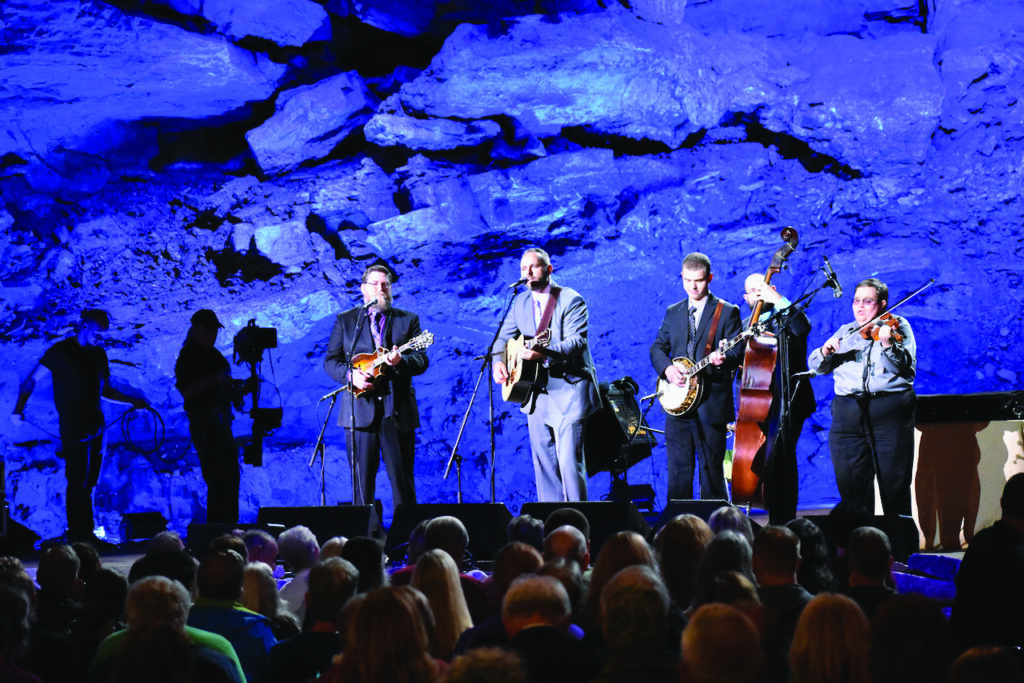
That’s a very good question. For one thing, it’s fast. I’ve always liked fast songs. Also, I loved all the train sounds. I’ve always really liked the energy of bluegrass in general. The energy and intensity, which a lot of people play. My favorite bluegrass music, or any kind of music for that matter, has that. To give you a little background, none of my family ever played any music. My grandparents had gotten into bluegrass a few years before I was born. They started a bluegrass association at the American Legion Hall in Henryville and had shows every 2nd and 4th Saturday of the month, and there were a few other shows going on in the area. And my grandparents, when they weren’t doing their shows on the 2nd and 4th Saturdays, they usually went to the other ones. They were open stage shows where bands could sign up. It started at 7:00 o’clock. People would sign up for thirty-minute slots, and I’m telling you the show would go from 7:00 to about 11:00 every night, every Saturday night. You wouldn’t see the same band twice. I mean, there were that many people, that many bands. And folks would jam until it was time for the show to start. And when the show started, while the stage show was going on, there’d be an audience of people who just came to listen to music. The shows were free. Just donations. They would sell concessions and things like that, but there wasn’t an admission. And so you’d have a stage show and you’d have people watching the show. If you went down in the basement of this legion hall, there’d be people jamming. And if the weather was nice, you’d see a bunch of people jamming outside.
I was just always around bluegrass. I don’t remember too much about that time. But I do remember being four years old and hearing a fiddle player play “Orange Blossom Special” and that just captivated me. I think I was really into “Rocky Top” before that. I would listen to “Rocky Top” constantly and there was a neighbor of my grandparents who knew and got in touch with Boudleaux and Felice Bryant, who wrote “Rocky Top.” Me and my mom and dad went to Rocky Top, Tennessee. We stayed at the Rocky Top Hotel and then they took me to meet Boudleaux and Felice Bryant. I remember Boudleaux gave me a tape with a ton of different versions of “Rocky Top.”
Once I heard “Orange Blossom” I really started paying attention to the fiddle. I was obsessed with that song. I would drive people nuts with it. Not too long after that, I started school at the Kentucky School for the Blind in Louisville. They had a classical music program that taught the Suzuki method at the School for the Blind. And so, I started taking lessons. And I remember walking into the classroom and the music teacher, Miss Nolan, asked me, “Well, what do you know? What do you know about the violin? Why do you want to learn how to play the violin?” I said, well, I don’t know much about the violin, but I know a lot about the fiddle. I said, I want to learn how to play bluegrass. And I want to learn how to play “Orange Blossom Special.” And she said, well, that’ll be awhile before you can do that. It was probably about a year and a half, two years before I started making any progress. It was slow going at first. Miss Nolan at school wasn’t too crazy about me playing bluegrass. She wasn’t a big fan of bluegrass. Maybe she’d heard bad examples of bluegrass.
At school, they had these books which had simple versions of bluegrass fiddle tunes that the classical students would learn. I was able to talk Miss Nolan into teaching me simple versions of “Boil Them Cabbage Down,” “Old Joe Clark” and things like that. At that point I started taking my fiddle around to local shows in the area. I was also able to learn from some really great players in this area. People would make tapes for me. “Listen to this guy, or you need to listen to Flatt & Scruggs with Paul Warren playing fiddle or Benny Martin playing fiddle. Here’s Kenny Baker.” And there were these compilation albums you could find at places like Walmart. Things like thirty fiddlers greatest hits on K-tel Records. You could hear different fiddle players play the same songs and get a sense of their style. That’s kind of how I got started.
What are some of the things that would be different that you learned at the Kentucky School for the Blind that someone might not learn elsewhere?
I think the big thing was, you know, we were playing classical music, but nobody was reading sheet music. There was Braille sheet music, but we learned everything by ear. We learned how to listen and imitate. And you would have to learn how to distinguish bowings.
Why do you think you started getting so much better?
I was listening to music every day. I was listening to bluegrass. I was determined to do it. And my parents never pressured me. When I was about seven years old doing my first fiddle contest, my dad said to me, “We’re really proud of you but don’t think that you have to do this for us. If you get interested in something else that’s fine too. We’ll take you to as many shows, contests or whatever but don’t feel you have to do this.”
To me, if I committed to do something, I was going to do it for sure. But I never did feel the pressure that a lot of these kids get from their parents. I’ve seen it firsthand at fiddle contests and so forth. I see it even more today and I hate it for the kids because you can just tell it’s the parents who are living through the kid. When the kid has a little bit of talent, some parents go absolutely nuts. I may not have ever practiced every day but all I thought about constantly was thinking and listening to music.
How has technology changed your approach to playing and recording?
Using the voice memo app on the iPhone, I’ve been able to record a ton of songs. I’ve recorded my shows pretty much every time. It’ll be a bad pocket recording most of the time. I’ll turn that voice memo on and record song ideas. A little idea for a part of a song and sometimes that’s all I get. But I have these voice memos, I’ve probably got thousands of voice memos saved on my phone. When I first started doing sessions from home, I was recording on my iPhone and an audio interface.
Your latest album Lovin’ of the Game is very optimistic in message and song choice.
There are less killing songs on this album [laughing]. But they are mostly positive songs.
The whole album, from the moment it starts, it comes screaming out of the speakers from the get-go. Like an ambulance kind of tearing out of the station house. I’m talking about the song “Thousand Dollar Holler.” Would you say that this album is a departure for you and, if so, why?
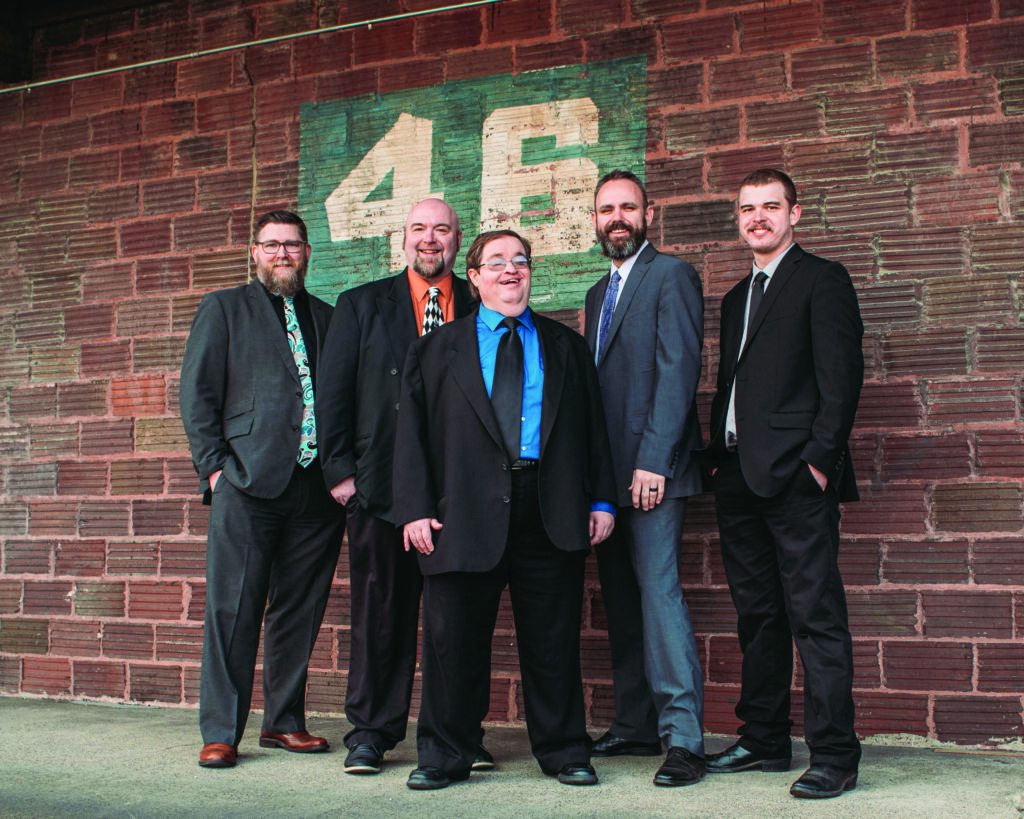
It definitely has a lot of traditional bluegrass on it, but, for example, the song with Billy Strings, it goes into this jam grass thing in the middle of it. You know, it starts out traditional bluegrass and then after this wild fiddle solo I play, it breaks down and goes into this kind of psychedelic jam thing. I pretty much was a traditional bluegrass fiddle player and I have put myself in that box and a lot of people see me that way. When I first met Béla, when he came over to do the filming for the documentary, we hadn’t yet really played much. We played a couple tunes that he had suggested. I had a day to learn them. And he said, “Well, I can’t believe you’ve learned these tunes.” I said “Why wouldn’t I? I’m playing with Béla Fleck.” He asked me if I liked to learn tunes. And I said, yes, of course. Béla said that he liked to write complicated stuff. I told him I’d be willing to learn the songs. I then saw an interview where he said that he didn’t think I’d be interested in playing with him. I think a lot of people think I wouldn’t be into doing something other than bluegrass. Something that I wanted to show on this album is that there’s a lot more to me than just being a traditional bluegrass fiddle player. My goals are to still play bluegrass with Flamekeeper, but I also want to sit in with jam bands. I also want to play more with folks like Béla Fleck and Tommy Emmanuel and musicians like that.
Regarding the song “Thousand Dollar Holler” I think the original title is “Indian War Whoop.” I had heard this song originally on a Byron Berline album, but he called it “Lost Indian.” There is another song titled “Lost Indian” that has an entirely different melody. One of the things I like about this song, other than it’s just a great song, is that it’s in the same fiddle tuning, it’s called cross-tuning, as “Black Mountain Rag.” If you listen to Byron’s version, it’s got the hollering in there too. That’s why I called it “Thousand Dollar Holler.” I got Tim O’Brien to holler on it!
Then there’s the song “Luxury Liner.” You’re a fan of Graham Parsons?
Oh yeah. That was another song suggested by my producer, Jeff White. I was familiar with Emmylou Harris’s version. I’m a telecaster nut and I love Albert Lee’s guitar playing. His solo on that song is just wow.
You trade riffs with Jason Carter on this song?
We do twinning and at the end of it, we’re trading riffs back and forth on it. Jason is the twin fiddle guy for me. So many times, you’ll have two or three fiddle players on a stage, and someone will yell out “play twin fiddles” and that can have varying degrees of success. To get two fiddle players to come up with perfect harmony on something is virtually impossible. I’m talking about perfect harmony. I’ve been a fan of Jason’s playing for a long time. Jason and I share a lot of the same fiddle influences—like Benny Martin, Bobby Hicks, Kenny Baker, and Vassar Clements. All that school of fiddle playing. It’s effortless to twin with him maybe because we play so much the same. It’s easy for me to play harmony to whatever Jason is playing. For the longest time, we never rehearsed anything. When we’d meet up, he’d say come up and play a few with Del and we would on the fly play these tunes. Anytime I get to play with him is amazing. We’re going to work on a twin fiddle album. We’ve got a few tracks already recorded. He’s not only a great fiddle player, but he’s also a great singer. He’s got a new record out called Lowdown Hoedown, which is a great album.
The song “I Wish I Knew Now What I Knew Then” featuring Vince Gill is a lovely waltz ballad. It’s more country than bluegrass, I think. Of course, Gill’s singing is impeccable. Also, I love the dialog between Jerry Douglas on Dobro and Justin Moses on mandolin.
Jerry overdubbed later; he wasn’t there when we recorded the track. Vince wasn’t there either. Jeff White played with Vince, in his band, singing trios (the high part). While we were getting songs together for the album, I remember talking to Jeff, who said he was playing golf with Vince and he mentioned that we were going to start a new album. Vince said that he had a song that would be great for me. A new song. Vince had been on other albums, singing songs that we had picked out, maybe older songs. But this was a new song that he had written. Jeff said that he would get a recording of it. When he sent it to me, I knew it was going to be a great song and that I would like it. But when I heard it, it wasn’t only a good song sung by Vince Gill, it was a good song for the album. “For Your Love” and this song make me think about a relationship that I was in a few years ago. Those two songs evoke those feelings, things that I’ve thought about. When you’re in a relationship, people say you can learn and grow from it. I learned a lot about myself from this relationship. I learned a lot about myself during that time. We’d been split for about a year. “I Wish I Knew Now What I Knew Then” is something I think about often. There was no way Vince could have known my feelings at that time. It was very ironic and it took me by surprise. I don’t think I’ve even had a chance to tell Vince that.
Maybe he’ll read about it in Bluegrass Unlimited [laughing]. But seriously, music goes deeper than language. It can transport you. You can revisit memories and emotions from different times in your life. Maybe you remember a difficult time or a happy time. It really covers the gamut. If you could say it in words, you wouldn’t need music.
“Sunny Days (Are Comin’ Once Again)” is a great song. And it’s extremely uplifting. Why did you include this one for the album?
I do a lot of sessions from home. I first heard “Sunny Days (Are Comin’ Once Again)” when the writer, Greg Poulos, contacted me about playing on his original version of the song. He played guitar and sang, and he was looking for bluegrass instrumentation on it. I had never worked with Greg before. This actually came from a website called airgigs.com, where session musicians can post their services and people can hire them remotely to do recording. And so, Greg contacted me. We didn’t know each other. A lot of the stuff I get on airgigs is not bluegrass. It’s more country and Americana type stuff. This was during the COVID pandemic, when everything was shut down. We weren’t touring at all. And we weren’t able to play any music with anybody in person. Everything that I was doing at that time was due to all the sessions that I was playing on. If it wasn’t for that, I probably would have gone out of my mind. And so I heard this song when he first sent it to me, and I immediately liked it. It’s got a real bounce and a real swinging groove to it. It also has a very bluesy sound and melody, which is what I like. But also, the subject. The song says:
We’ve been hiding out for much too long
What seemed right now feels so very wrong
Such a cruel wicked twist
The way we’ve been apart like this
Sunny days are coming once again
The song is talking about the COVID pandemic and what we were all facing at that time. It really stuck in my mind. I did that original version for him. I played all the instruments except for bass; Barry Bales played the bass. On Greg’s version, I played the mandolin, banjo, fiddle, and I think some guitar as well. After doing that song, it stuck in my head. I knew it was a relevant song for what we were going through at that time and I knew I wanted to record it.
The song “Temperance Reel.” It’s a traditional Irish tune. Luke Bulla wrote lyrics for it, right?
Luke Bulla, Guy Clark and Jon Randall put words to the song. When Jeff White married Laura Webber White, he asked me to be best man. The night before the wedding, there was a big jam at Ronnie McCoury’s house. Everybody was there. I remember Luke Bulla being there and singing this song. And while we were working on this album, Jeff had been doing some dates with Lyle Lovett and Luke was in the band for those shows. Jeff mentioned that Luke was doing this song. I asked Jeff if he had a version of the song recorded. Jeff said yes, but it hasn’t been released. I asked Jeff if Luke would be up for doing it on my new album. I wanted the song to be just fiddle players. Luke, Tim and I are playing fiddles and Luke and Tim are singing. Such a cool arrangement of that song.
In the song, “Empty Pocket Blues,” featuring Bryan Sutton, there’s a breakdown around 2:04, where everyone is playing in and around each other. I wrote in my notes “hot damn!”
That’s another jam thing that might be a little different than I’ve done before, influenced by some of the stuff I’ve done with Béla. It’s almost like composing another part to a song. And Flamekeeper’s on that. They are about the only ones who can keep up on that one. Not only keep up on it but drive it. The energy those guys have. Not only can they play fast, but they also bring the groove and intensity at speeds like that. I’d heard that tune originally done by Hot Rize. They recorded it on one of their studio albums and then I heard it on So Long Of a Journey, a live album. It’s really hard to play. Took a while to learn it. But it’s one that I’ve known for quite a while and one I wanted to record.
I liked that you had the songs with folks like Béla, showcasing some of the new sounds you’re getting into but there’s no doubt that the recordings with Flamekeeper reflect the stage time and playing you’ve done with them. Those songs are very tight and integrated. There’s a practiced quality to the songs with Flamekeeper. Anything you want to say about that?
It comes back to the songs. I had a list of people I wanted to play with and I wanted to find songs to play with those artists. I also wanted to pick songs that showcase the players in Flamekeeper and what they’re capable of doing. Flamekeeper has won many awards from IBMA, but I’d love to see these guys get more recognition for their abilities individually. Like Josh Richards as a guitar player and singer. He’s an incredible singer. Nathan Livers is as good a mandolin player as I’ve ever heard. Jasiah Shrode on the banjo and Chris Douglas on the bass. They’re all just powerhouse players. One thing I hope for this album is that the Flamekeeper players get visibility. They’re up there with Béla, Bryan Sutton and Billy Strings, Ronnie McCoury.
Lovin’ of the Game straddles the world of bluegrass and the music outside of that tradition. It is a significant contribution to a musical form that continues to evolve while it rotates around the core of what brings people to bluegrass in the first place. Bill Monroe said to Peter Rowan that he didn’t want his players to emulate him. Monroe wanted players to find their own voice and reinvent his sound. Cleveland has shown that, in loving the game, the game of music and its dance, he has achieved Monroe’s vision in this album.