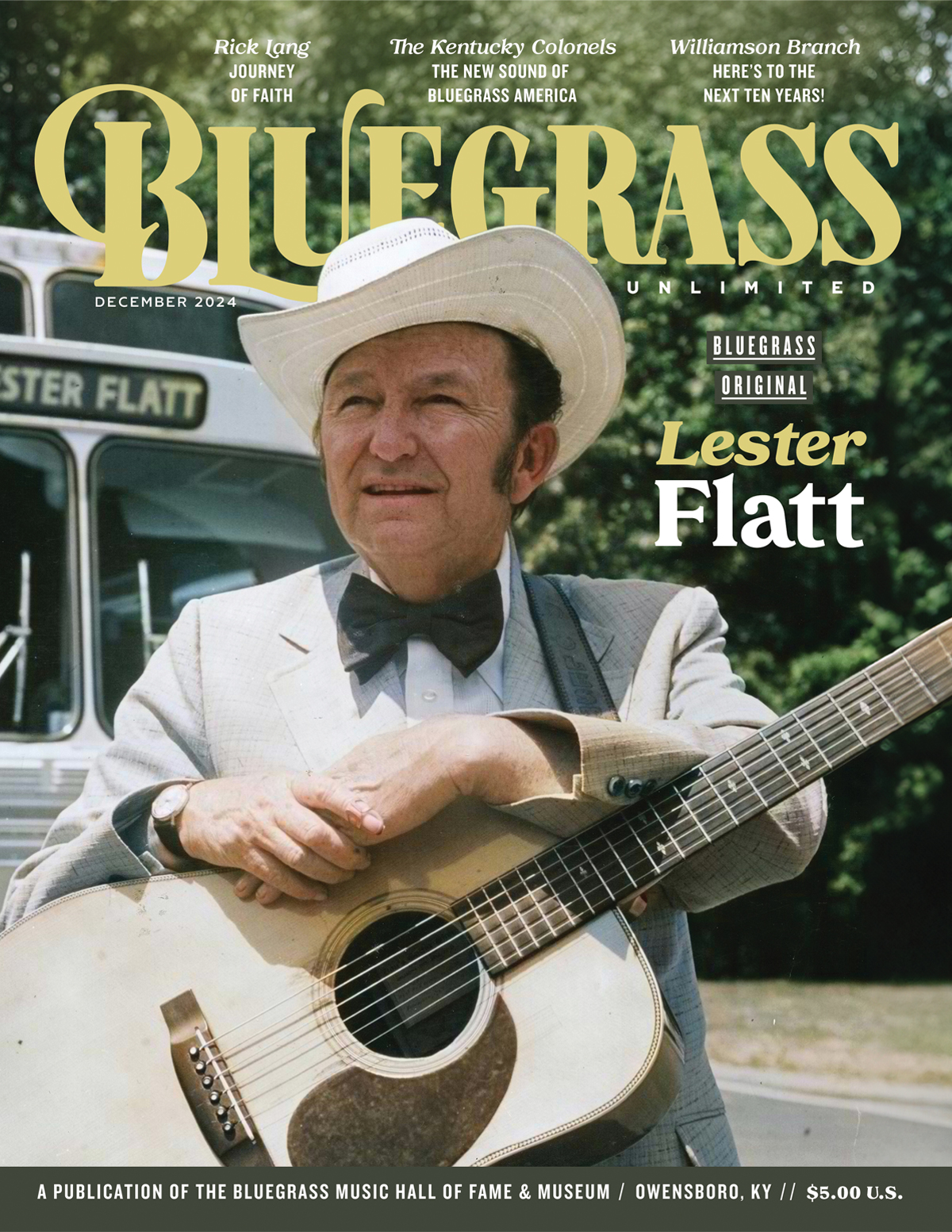
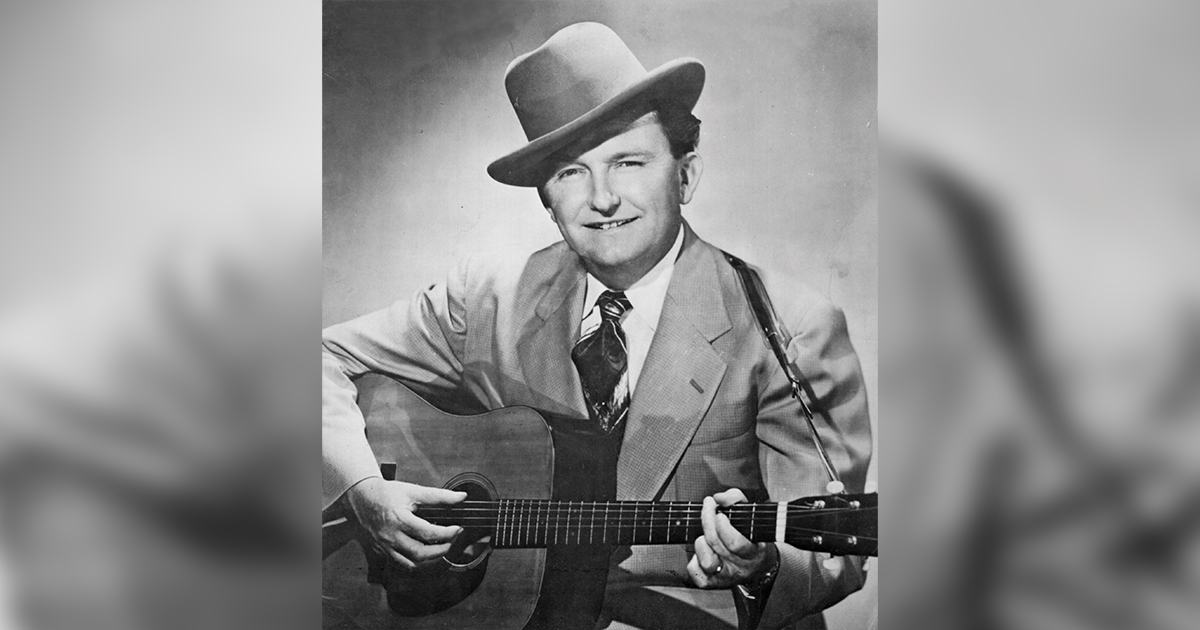
Lester Flatt
Bluegrass Original
Photos from Bluegrass Unlimited Magazine archives
Some bluegrass enthusiasts like to argue about how and when bluegrass music, as we know it today, was founded and by whom. Some will say that it was founded and developed by Bill Monroe. There is certainly a good solid argument for that point of view. Regardless of who was in the band, Monroe was the band leader and put the band together. He had been searching for a particular band sound and he found it when he brought together the musical elements that created the music that was later defined as bluegrass.
Others contend that the sound of the music that we now call bluegrass really didn’t come together until Earl Scruggs and his five-string banjo—played with a driving three-finger roll—came into Monroe’s band. Thus, they say that Earl had every bit as much to do with the founding of the sound of bluegrass music as Monroe did. In an interview Curly Seckler conducted with Lester Flatt shortly before Flatt’s death (which was later printed in the May 1986 issue of Bluegrass Unlimited Magazine), Seckler asked Flatt what he thought when he first heard Earl play, Lester said, “Well I was thrilled. It was so different. I had never heard that kind of banjo picking. We had been limited, but Earl made all the difference in the world.” In an interview with Pete Kuykendall in the January 1971 issue of Bluegrass Unlimited, Lester said, “When Scruggs came into the outfit, it completely changed the sound. There’s no way to compare a dropthumb to what Earl was doing.”
Long-time Bluegrass Unlimited Magazine General Manager Pete Kuykendall said, “It was a time of musical change and innovation, especially in country music. Most of it, or a lot of it, was attributed to Bill Monroe and his Blue Grass Boys, which is where the name [bluegrass] came from. And part of that band that Bill put together had Lester Flatt and Earl Scruggs in it. And one of the most significant parts of that was Earl Scruggs’ banjo work.”
Earl’s hard driving, fast and smooth “fancy” banjo picking received a lot of attention when he joined Monroe. It was something that most music fans had not heard prior to Earl joining Monroe’s band and it certainly excited the crowd and added a very distinct element to Monroe’s music.
No matter what side of the argument relating to the origins of bluegrass music that you land on, it is true that what we now call bluegrass did not really coalesce in its full form until 1946 when Monroe brought Earl Scruggs, Howard Watts (Cedric Rainwater), Chubby Wise and Lester Flatt into the band that he had been calling The Blue Grass Boys since 1939. My feeling is that every member of the Blue Grass Boys configuration that Monroe brought together in ‘46 helped make the magic happen.
Monroe not only brought to the band his legendary high lonesome vocals, powerful mandolin rhythms and blazing fast tempos, but as a band leader he brought the band together and taught them how to make “his” music. Monroe knew that he had something special in this band and he worked them hard to tighten them up. In Tom Ewing’s book Bill Monroe—The Life and Music of The Blue Grass Man, Scruggs is quoted as saying, “He [Monroe] would spend a lot of time just tightening up the band. Some rehearsals we wouldn’t sing a song. We would just concentrate on the sound of the band.”
Lester Flatt’s mellow voice matched and complemented Monroe’s high-pitched lonesome vocals and his guitar style was a bit different than Monroe’s previous rhythm guitar players. Lester’s songwriting created legendary standards such as “Will You Be Loving Another Man,” “Sweetheart You Done Me Wrong,” “How Would You Like Being Lonesome” and “Little Cabin Home on the Hill,” to name a few. Although Flatt was known more for his songwriting and singing than his guitar playing, in his book Bluegrass Bluesman, Josh Graves said, “Lester Flatt was the best rhythm guitar player for our stuff that’s ever been.”
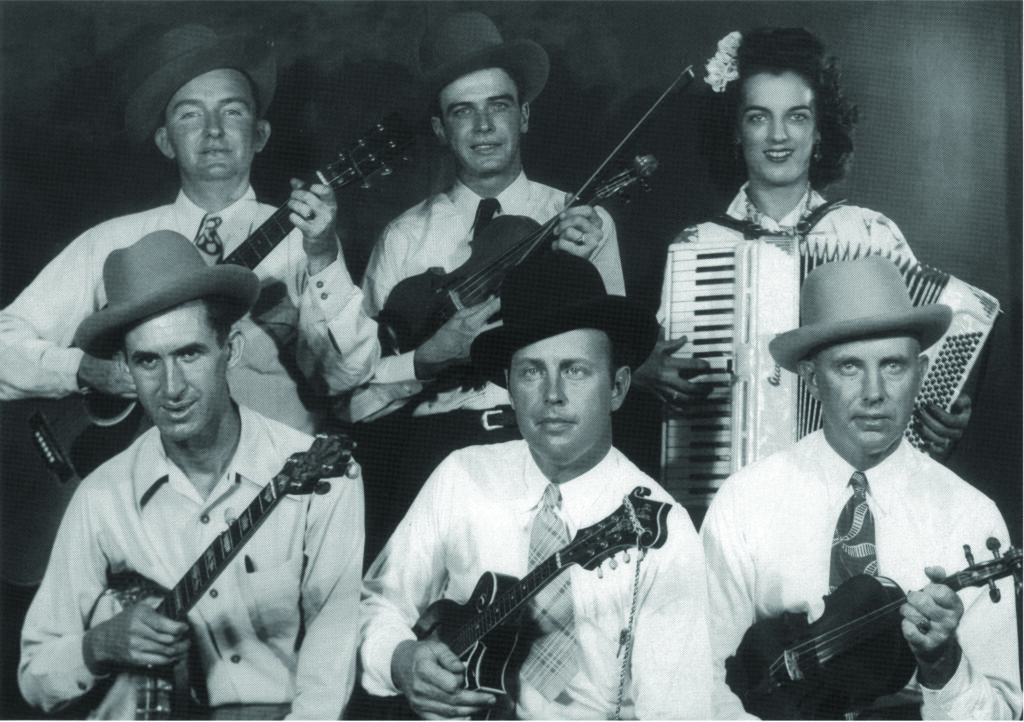
Although Bill Monroe, Lester Flatt and Earl Scruggs have always garnered a lot of attention, the other two members of the band also made noteworthy contributions. Jim Rooney’s book Bossmen—Bill Monroe & Muddy Waters Rooney points to the importance of Chubby Wise, stating, “Chubby [Wise] was to become one of the most soulful fiddle players bluegrass was to see. He would put in a lot of blues licks and he had a sweet tone that meshed beautifully with Lester and Bill when they sang.”
Many bluegrass bass players look to Howard Watts as one of the best bass players in the business. In an article written about Watts by Tom Ewing for Bluegrass Unlimited Magazine (May 2002), Ewing states, “He was an exceptionally talented bass player who made a significant contribution to the development of bluegrass as we know it today.”
Regardless of exactly how the music we call bluegrass came together, or who was responsible for it, the fact is that between the day in December 1945 when Lester Flatt and Earl Scruggs first stood together on stage with Monroe—and January of 1948—when Flatt, Scruggs and Watts left the band—Bill Monroe with his Blue Grass Boys defined a genre of music that continues to thrive today. One of the individuals who played a big role in defining that sound was Lester Flatt, and he continued to do so for the remainder of his life through his work with Flatt & Scruggs and the Foggy Mountain Boys and with Lester Flatt and The Nashville Grass.
Lester Flatt The Early Years
Lester Raymond Flatt was born on June 19, 1914, in Overton County, Tennessee. He was the seventh of nine children born to Isaac and Nancy Flatt. Isaac Flatt married Nancy Haney in 1898. Lester was the youngest of the four boys (Andrew, Leonard, Simmie and Lester). Of the five girls (Sarah, Clara, Dora, Edna and Eunice) three of them were older than Lester. Isaac Flatt was a sharecropping farmer and when Lester was still very young, his father moved the family to Sparta, Tennessee, in nearby White County (86 miles from Nashville). The elder Flatt would also spend time working as a logger and sawmill hand. When Lester was still a teenager, he and his brother Sim also spent time working at the sawmill working ten hours a day at 15¢ per hour.
In a 1978 interview with Don Rhodes, Lester said, “My mother was never interested in music that much, but my father played the fiddle. I tried to learn it, but I made so much racket I gave it up. That’s a very noisy instrument for a beginner. I also tried to learn the banjo, but one of my sisters could play it better that I could. She played good drop-thumb style, yet she would only play it around the house. That made me mad she could play the banjo and I couldn’t, so I switched to guitar.”
In a 1970 interview with Pete Kuykendall of Bluegrass Unlimited Magazine, Lester remembered, “My daddy played the fiddle and the banjo; I started out trying to play the banjo. I didn’t see any of this three-fingered style though. I got to where I could play one pretty good but I wanted to play this Stringbean-drop-thumb/clawhammer style. I’d sit and watch my daddy play it for hours. It was so easy for him and I never could get my thumb to work right on that drop-thumb business and I just gave it up.”
Lester began playing the guitar by the age of seven and was singing at home, in the church choir and at social gatherings. In a 1972 interview with Bill Vernon conducted at Bean Blossom, Indiana, Lester said, “I grew up in a musical family. My daddy was a banjo player and fiddler, just for his own amusement, of course; there were five girls and four boys; when we were all at home, we’d get a pretty good little choir singing, and just about every night, we’d gather around and sing a few songs—mostly hymns, you didn’t hear as many songs when I was growing up as you do now; there’s not too much difference in that singing and what we’re doing today.”
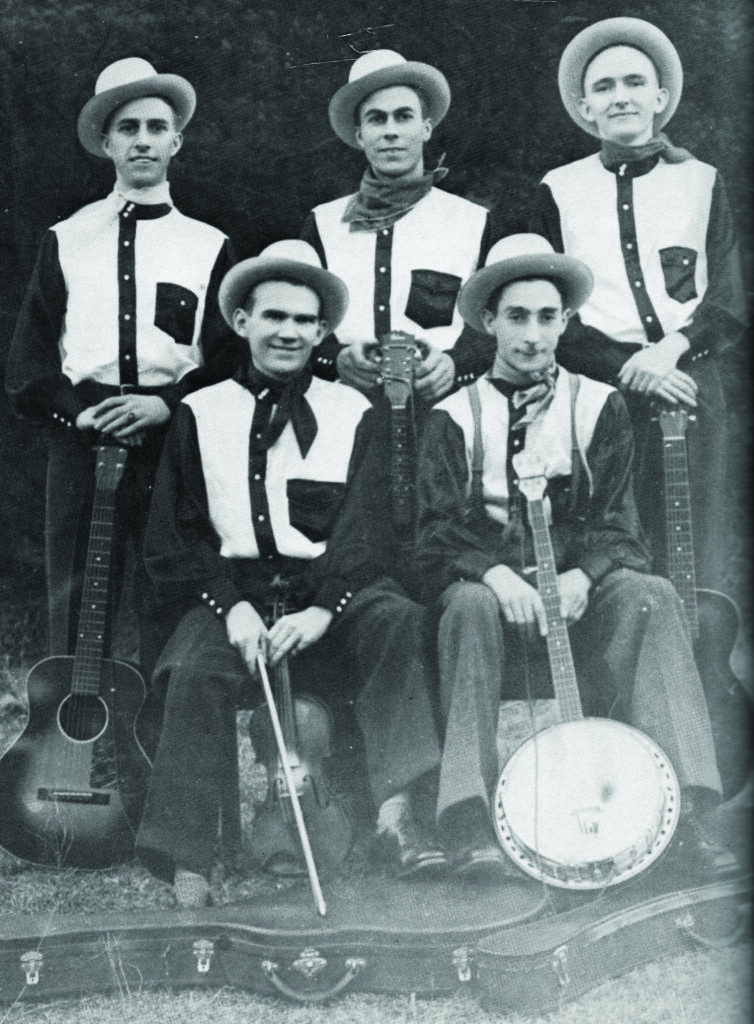
Lester went to work in the Sparta Silk Mill in Sparta, Tennessee while he was still a teenager. A young woman named Gladys Lee Stacy who was working at the mill helped him get the job. Gladys had been working there since 1927, when she was twelve. She had lied about her age, telling them she was sixteen. By the time Lester came to work there, she held a supervisory position.
At the age of seventeen Lester married the sixteen-year-old Gladys on October 31, 1931. Gladys carried their child in 1933, however the child was stillborn. Gladys also played the guitar and sang and the couple would sometimes perform together. Their marriage lasted from 1931 to 1976 when it ended in divorce. They would never have a child of their own, but raised Lester’s niece, Brenda, as their daughter.
By 1934 Lester and Gladys had bought a home in Sparta. However, when the mill shut down in the fall of that year, they moved to McMinnville, Tennessee and later that same year they moved to Johnson City to work in a silk mill there.
In 1935, when Lester was 21 and Gladys was 20, they moved to Covington, Virginia to work at the Burlington Mills rayon plant. Lester worked as a weaver at the mill and Lester and Gladys occasionally performed as a duo. It was while living in Covington, Virginia that Lester first met Bill Monroe. He said, “Bill came to the area to do a show. I just went up and invited him to dinner after the show. I had no thoughts about getting into the music business. I just felt like I knew him, because I had listened to his records for many years and also to him on the radio. I have people come up and say that to me; that they have been listening to me for so long, they think they already know me. So, Bill didn’t seem like a stranger to me.”
In 1939, Lester started his career as a professional musician by joining Charlie Scott’s group The Harmonizers. The group was made up of other men who were from Tennessee and they managed to get a radio show at WDBJ in Roanoke, Virginia. While in Covington, Lester suffered a bought with rheumatoid arthritis and had to quit work at the mill and, as a result, started playing more music.
A couple of years later, Lester and Gladys moved to Burlington, North Carolina where Gladys went to work for Burlington Industries and Lester joined Clyde Moody and performed at WBBB. Lester played mandolin and sang tenor to Moody’s lead vocal. When the war broke out, some of Clyde Moody’s band went into the service, including Moody, and the band broke up. Flatt also spent time working with Jim Hall and the Crazy Mountaineers.
In 1943 both Lester and Gladys joined Charlie Monroe’s band the Kentucky Partners. Lester sang tenor and played the mandolin. Gladys played guitar and sang, using the stage name “Bobbie Jean.” Another woman, Helen “Katy Hill” Osborne was also in the band playing the banjo. Lester said, “I never played the mandolin again after I left Charlie.” He also said, “I sang tenor with Charlie, and my wife and I were also doing some duets at the time on Charlie’s show.”
By the time that Lester and Gladys joined the band, Charlie Monroe had established himself in North Carolina by working the Man-O-Ree radio network. Lester said, “Charlie had a hook-up over several radio stations in North Carolina mostly, and we would generally play school auditoriums having 1000 to 1600 seats. He never did work on Sundays, though until just before he died. Me and Scruggs did some good business in North Carolina, but we couldn’t touch the drawing power of Charlie Monroe, at his peak.”
Lester had traveled from Virginia back to Sparta, Tennessee and received the call from Charlie Monroe while he was visiting there. In the interview with Don Rhodes, Lester said that he didn’t like working with Charlie because he was singing tenor. He said, “I worked with Charlie for a year. I didn’t particularly like working for him, though, because I was singing tenor with him, and he sang everything so high; almost out of this world.” But he added, “I admired him in a lot ways. If there was anybody I copied in my setting of a show, it would be Charlie. I loved the way he did a show. Like him, I don’t allow anyone in my group to use alcohol or drugs on my touring bus or have such around when we do our shows.”
In the Don Rhodes interview, Lester said that he and Glady’s only worked with Charlie Monroe for about a year because they got tired of life on the road. In the Pete Kuykendall interview, when asked about the style of music that he played with Charlie Monroe, Lester said, “Well it was probably pretty close to the Monroe Brothers. I had worked with Charlie in 1943 and before that I worked with Clyde Moody. I don’t know whether you remember it or not but Clyde was in a group called the Happy-Go-Lucky Boys. I worked with Clyde around 1940, 1941 or ’42. My first radio work was at WDBJ in Roanoke, Virginia in 1939 when I was in textile work and we had a group of guys that played around town.”
When they left Charlie Monroe, Lester and Gladys went back to Sparta and Lester bought a truck and started working as a truck driver, not intending to go back to playing music. He put his guitar in the closet and expected it to stay there gathering cobwebs. However, that only lasted a few months before he got it out and started playing again.
Lester then joined up with some friends to perform at WBBB in Burlington, North Carolina. When he got to the station he found a telegram waiting for him from Bill Monroe saying that he wanted to hire Lester to work with his band. Since Bill was a member of the Grand Ole Opry, and Lester had always admired Bill’s music, he decided to join Monroe’s group. In the Pete Kuykendall interview, Lester said, “My first experience with this type of music was from the Monroe Brothers (Bill and Charlie). I used to listen to the early morning radio program they had. They were singing good country and gospel songs and it was the kind of music that we had been raised to. So when I went to work with Bill it was no problem to sing about any song he knew. It would just fall into place.”
In the same interview, he also said, “Actually when I went to work with Bill Monroe in early 1944 he had a different lineup. I had been working with his brother Charlie…I sang tenor with Charlie. So when I went to work with Bill, I decided I wouldn’t do any more tenor. I wanted to get solid on lead and so from that day on I never sang any more tenor. Of course, down through the years I may have sung tenor on the chorus of some of our records but I felt like, if I stuck with lead, I would be better off that try to switch off and do both.”
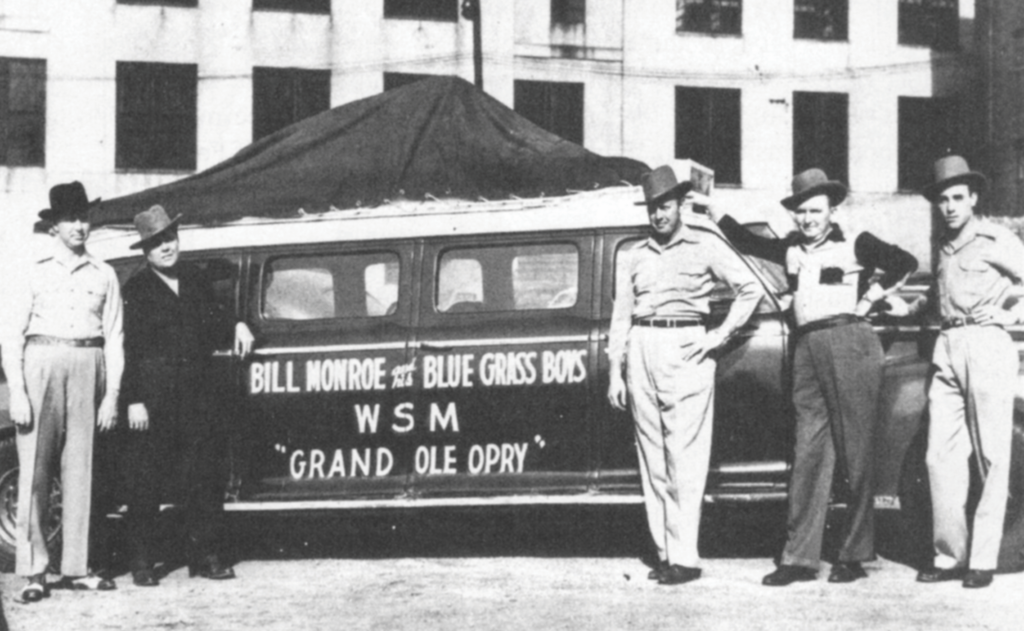
Although in the Kuykendall interview, and in several other biographical sources—including the Flatt & Scruggs songbook from 1948—Lester states that he started with Monroe in 1944, it is likely more accurate to say that he started with Monroe in 1945. The guitar player who Flatt replaced in Monroe’s band was Tex Willis. Willis appears on a Monroe Columbia recording session in February of 1945. For that session, Monroe’s band included Stringbean Akeman (banjo), Chubby Wise (fiddle), Sally Ann Forrester (accordion), Howard Watts (bass) and Tex Willis (guitar). A few weeks after the session, Watts took leave to be with his family following the death of his father. Tex Willis and Chubby Wise went to Florida with Watts as they also both knew Watt’s father. Watts, Wise and Willis planned to rejoin Monroe a few months later. After these three left the band is when Monroe sent the telegram to Flatt.
Lester Flatt, the Blue Grass Boy
In Tom Ewing’s book Bill Monroe—The Life and Music of The Blue Grass Man, he states that early in 1945 Flatt had traveled to Nashville, stayed with his former bandmate Clyde Moody and had intended to audition for Monroe. However, he found that Monroe was out of town and that Willis had already been hired. So, Flatt returned to North Carolina.
When Flatt did later receive the Monroe telegram, he was on a bus headed for Nashville within an hour of receiving the message and was on the Opry with Monroe that Saturday night. Stringbean met him at the bus station when he arrived in Nashville. To replace Chubby Wise and Howard Watts, Monroe hired fiddler Jim Shumate and bass player Andy “Bijou” Boyett. In addition to playing the guitar and singing, Flatt also became the band’s master of ceremonies. Some sources state that this occurred in March of 1945.
Over the years, Lester became famous for his casual and smooth master of ceremonies work. Bill Vernon told Lester that he was generally recognized as the finest M.C. in the business and then asked Lester how he developed his M.C. style, Flatt said, “I did a lot of M.C. work for Bill. I’ve had people tell me what you said — I have to M.C. my own way. People will say to me, I see you on television, and you’re the most relaxed guy I ever saw — I just can’t do it any other way. I have to be like I am at home if I can’t, I can’t, I might as well forget it.”
In early November, 1945 Dave “Stringbean” Akeman decided to leave the Blue Grass Boys to tour with Lew Childre. Bill Monroe wanted to replace Akeman and turned to fiddler Jim Shumate for suggestions. Shumate said that he knew a young banjo player in North Carolina, named Earl Scruggs, but his style was not the same as Akeman’s. Monroe asked Shumate if he could get in touch with Scruggs. Shumate thought that Scruggs was still living in North Carolina, but soon discovered that Earl was in Nashville playing with Lost John Miller. In Jim Rooney’s book Bossmen—Bill Monroe & Muddy Waters, Earl Scruggs is quoted as saying, “We still lived in Knoxville and worked there, and we would come over to Nashville to do the Saturday show. I was friends with Jim Shumate who worked with Bill then. Each Saturday Jimmy would want me to quit Lost John and work with Bill. Then towards the end of 1945 Lost John disbanded, and I told Shumate that I was out of a job and would probably go back home so he set it up for Bill to listen to me. Bill came over to the Tulane Hotel and listened to a few tunes.” After Akeman left the band, Lester was not keen on getting another banjo player. He didn’t think any banjo player could adequately keep up with the fast tempo tunes.
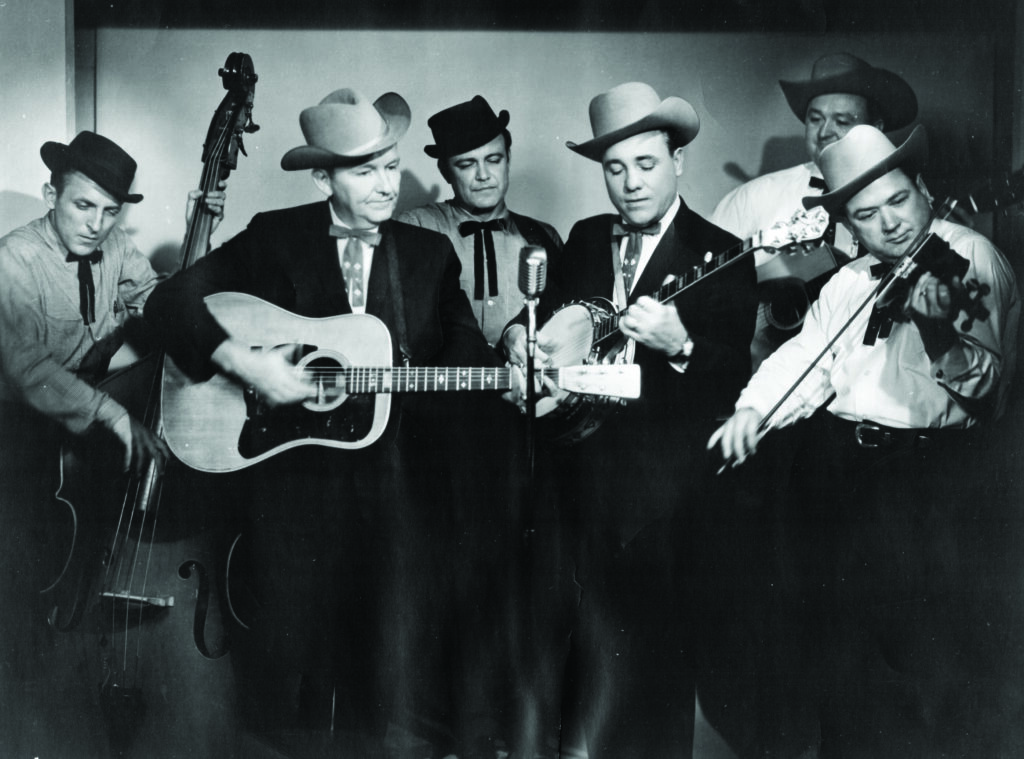
Monroe met with Scruggs on December 5th, 1945 in Jim Shumate’s hotel room. Earl picked “Sally Goodin’” and “Dear Old Dixie” for Monroe. When Monroe heard Scruggs play, although he did not show it, he was impressed with the young 21-year-old banjo picker. He asked Earl to audition with the whole band that night at the Opry. Earl did not join the band on stage, but played with them in the dressing room. When Flatt heard that Monroe was thinking about hiring a new banjo player, he told Monroe to tell the boy to keep his banjo in the case. But, after hearing Earl play “Dear Old Dixie,” Flatt changed his mind. He said, “If you can hire him, get him. No matter what it costs.”
That Earl Scruggs audition night at the Opry was Jim Shumate’s last show with Monroe. Howdy Forrester had returned from Naval service and came back to the fiddle slot in the Blue Grass Boys that he had occupied prior to going into the service. Monroe agreed to also hire Howdy’s brother, Joe, to play the bass. Howdy’s wife, Wiline “Sally Ann” Forrester was already in the band playing the accordion.
When Bill Monroe and his Bluegrass Boys stepped on the stage of the Grand Ole Opry on December 8th, 1945 with Lester Flatt, Earl Scruggs, Howdy Forrester, Joe Forrester and Sally Ann Forrester the audience knew that they were witnessing the start of something new and very exciting.
By March of 1946, Howdy, Joe and Sally Ann had decided to leave the band. For the March 23rd Opry date Monroe brought back Howard Watts to play bass. The next month, Chubby Wise also returned to the band. Monroe had finally established the sound that he had been searching for since 1939 and with the Blue Grass Boys line up of Lester Flatt, Earl Scruggs, Howard Watts and Chubby Wise, they would make history by creating the bluegrass sound that most fans recognize today as the beginning of bluegrass music.
Bill Monroe and the Blue Grass Boys kept up an intense touring schedule. In Rooney’s book, Scruggs is quoted as saying, “We were working all the time. Sometimes we wouldn’t see a bed from one end of the week till the other. In theaters we would do four of five or six shows a day from eleven in the morning until eleven at night… It was a must then to make it back to the Opry on Saturday night. Sometimes we were on the East Coast somewhere, it was all we could do to make it back… It was hard traveling then on bad roads in a stretched-out car with no place to lie down.” Between September 1946 and October 1947, the band recorded four sessions for Columbia. Monroe’s sound had evolved and people noticed.
In addition to writing many of the songs that the Blue Grass Boys recorded while Flatt was with the band, Lester also started becoming known for his famous “G-run” on the guitar. In the Pete Kuykendall interview, Lester said, “Well, it was around before I started using it but I really didn’t use it until I went with Bill on the Opry. At that time we were playing almost everything so fast that it was hard to keep on the beat and that run worked out good for me to get me back on the rhythm. It worked out good and I just kept on using it.”
In an interview in Muleskinner News, with Bill Vernon, Lester said this about the G-Run, “That little run you hear on the guitar, and hear so many people doing today — I used that for a time setter; we were playing so fast we had to have something to come back in on, and it fit perfectly. We could start out driving across the country the next week, and every act we’d hear, they’d be using it. I never dreamed of it being something that somebody would pick up — actually it was something I was protecting myself with, to come back into the song.”
In his book A Biography of Lester Flatt—The Good Things Out Weigh The Bad, Jake Lambert wrote, “Much of Flatt’s guitar picking style came from Charlie Monroe and Clyde Moody. All three men used a thumb pick and a steel pick on the index finger.”
Flatt & Scruggs and the Foggy Mountain Boys
By January of 1948, Flatt and Scruggs had decided to leave Monroe’s band and Howard Watts soon followed. Chubby Wise also left to join Clyde Moody. Scruggs was the first to turn in his notice to Monroe. In the Don Rhodes article Lester stated, “When his [Scruggs] two week notice was up, I turned in mine. Bill always later thought we had framed it up to leave him and start a group on our own, but we hadn’t. We both just got tired of being on the road. Sometimes we would go three days without taking our shoes off. Earl and I had done most of the driving for Monroe’s group, and we were just tired of traveling. Before my notice was up though, Cedric Rainwater [Howard Watts] turned in his notice with Monroe and proposed that Scruggs and I start our own group. He told me, ‘Why don’t you and Earl form a band and let me work with you?’ We went to Danville, Virginia, and stayed there a few days to get organized. We went from there to Hickory, North Carolina where we knew a fiddle player named Jim Shumate. While we were in Hickory, Mac Wiseman joined us, and we all went to Bristol, Virginia to work on radio station WCYB playing on ‘Farm and Fun Time.’ We struck it right when we went to WCYB. It was one of the hottest listening audiences I have ever seen. It seemed like we could do nothing wrong.”
In the Pete Kuykendall interview, Lester described leaving Monroe like this, “Well, I feel like actually maybe Bill might have always had the feeling that we had planned it but actually we hadn’t. Earl, he had to take care of his mother, she was living over in Shelby (North Carolina) and he didn’t like the idea of staying away from home all the time with nobody there with her. To make a long story short it was a rough life. I had made it up in my mind to quit but I hadn’t said anything about it. Earl was going to go home just to get off the road. We had it rough back then. It wasn’t anything to ride two or three days in a car, we didn’t have buses like we do now, and we never had our shoes off. Earl had a textile job before he came to Nashville so I think he was just planning to go back to and take care of his mother and work at the mill. After Earl turned his notice in to Bill, you know he was giving his two weeks notice, we got to talking and I told him I was going to quit too. We decided we might go to Knoxville and work as a team or go to work with Carl Story or some group that might need us. I turned my notice in then and before my notice was up, fellows like Cedric Rainwater (Howard Watts) said “let me join in with you and we’ll form a band.”
The first iteration of The Foggy Mountain Boys began performing about 30 days after Flatt, Scruggs and Watts left Monroe. They took their name from an old Carter Family song “Foggy Mountain Top” and they used that song as their theme song when they first started performing.
At first, the band was a trio with Lester on guitar, Earl on banjo and Howard Watts on bass. When they performed in Danville, Virginia, Jim Eanes joined them on guitar and sang lead. That lasted for only a few weeks because Eanes got a job offer from Bill Monroe and took it, staying with Monroe for about nine months. When the band left Danville, they went to Hickory, North Carolina and played at WHKY. They picked up Jim Shumate to play fiddle. Shortly thereafter, they hired Mac Wiseman and started working at WCYB in Bristol, Virginia. They stayed at that location for eighteen months.
In the fall of 1948, Flatt & Scruggs started recording with Mercury Records. The musicians who appeared on that first recording included Flatt, Scruggs, Wiseman, Shumate and Watts. The songs recorded on that first session included “God Loves His Children,” “I’m Going to Make Heaven My Home,” “We’ll Meet Again Sweetheart,” and “My Cabin in Caroline.” With these recordings, Flatt & Scruggs moved away from the sound that they had developed with Monroe. There was no mandolin, and Wiseman’s tenor vocals did not have the “high lonesome” sound that was prevalent in Monroe’s music. Earl played lead fingerstyle guitar on the gospel numbers. Although their live shows included some material they had performed with Monroe, they recorded all original material during their first recording session.
Wiseman and Shumate left towards the end of 1948. Shumate was replaced by Art Wooten and he recorded with Flatt & Scruggs in the spring of 1949, along with Curly Seckler on mandolin. Wooten left the band in 1949 and was replaced by Benny Sims, who recorded sessions with the band starting in late 1949 through November of 1950.
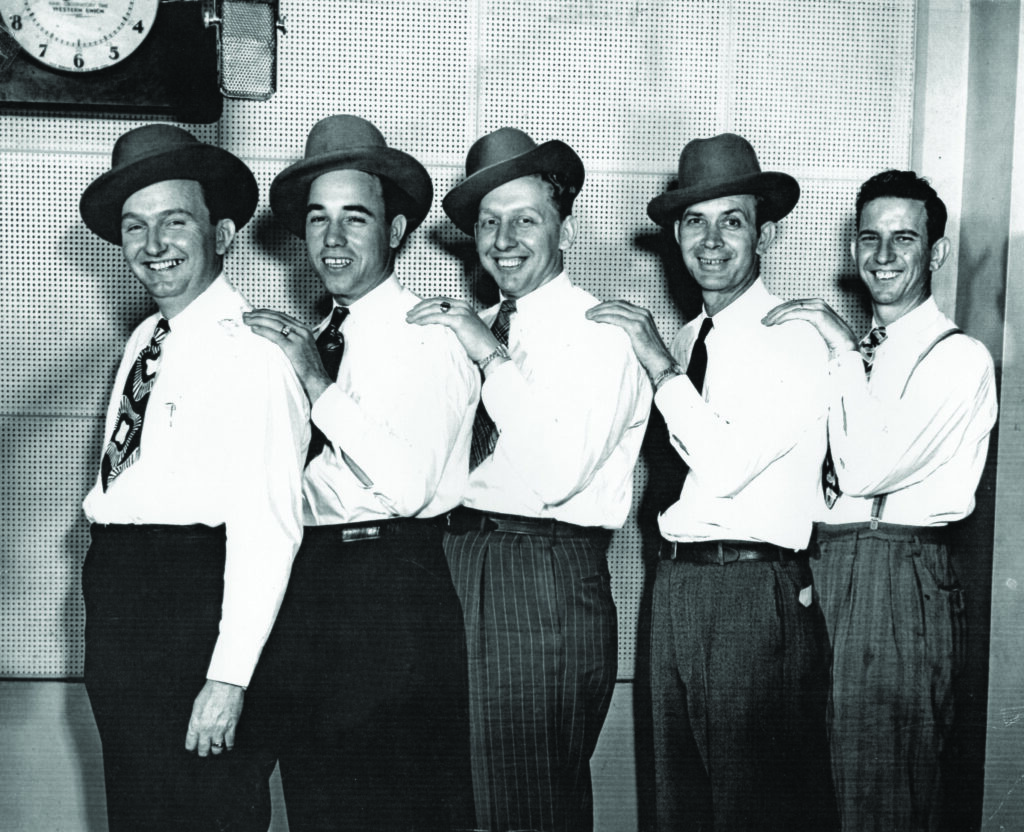
After Mac Wiseman left the band, Lester was looking for a new tenor singer and remembered hearing Curly Seckler with Charlie Monroe. In March of 1949, Lester tracked down Seckler, who was working with Hoke Jenkins at the time, and offered him the job. Seckler accepted and put in his notice with Jenkins. Seckler joined the band in Bristol, Virginia, but within a few weeks they moved to WROL in Knoxville. (Curly Seckler was born John Ray Sechler on Christmas Day in 1919, but preferred to go by Curly Seckler.)
In the interview that Seckler conducted with Lester Flatt late in Lester’s life, he asked, “Did that change the sound of the Foggy Mountain Boys when I came to work?” Lester replied, “Yeah, your mandolin playing! No, you certainly did, there’s nobody in the business Curly, that’s got a sound in tenor like you.”
About two years after forming as a band, Flatt & Scruggs had their first big hit with “Foggy Mountain Breakdown.” This tune was recorded during their third Mercury session in December 1949 and released on March 15th, 1950. By this time the band had moved from Knoxville to WVLK in Versailles, Kentucky. This is where a young J.D. Crowe first saw Earl Scruggs play live as Crowe’s father would occasionally take him down to the radio station to watch the band play.
Howard Watts left Flatt & Scruggs towards the end of 1949 to go to work with Hank Williams. Charles Johnson (Jody Rainwater) replaced Watts. By the summer of 1950, the group was back at WCYB in Bristol, but soon moved on to WDAE in Tampa, Florida. They only stayed in Tampa for eleven weeks and recorded their last Mercury session in October of 1950. In November of 1950 they made their first recordings for Columbia. The band members for that recording were Flatt, Scruggs, Sims, Seckler and Rainwater. Seckler left the band soon after to work with the Sauceman Brothers and was replaced by Everett Lilly. Lilly stayed with the band for about two years. In March of 1951 the band moved back to Kentucky. By this time Chubby Wise had replaced Sims on fiddle.
In October of 1951 the band recorded again for Columbia. By this time Chubby Wise had left the band and Art Wooten had come back, but Wooten was not included in the recording session. The fiddler for this session was Howdy Forrester. The band continued to move around to various radio stations in Virginia, West Virginia and North Carolina. When Lilly left the band in January of 1952 (to perform with his brother Bea Lilly, Don Stover, and Tex Logan), Seckler returned and Benny Martin came in to play the fiddle. In November of 1952 the band recorded their ninth session for Columbia.
The “station hopping” that the band did during this time period was typical of band activity of the day. The band would stay at one station until it the area was “played out” and then move to another station in another area of the country.
In his Lester Flatt biography, Jake Lambert describes the band’s schedule during this time period: “A typical day’s schedule for a group like Flatt & Scruggs would be: up at 4:30 A.M.; off to the station for a fifteen to thirty minute show (usually no later than 6:00 A.M.); back home to an apartment, rooming house, or house trailer for a couple hours rest; and then back to the station for the noon show. As if this weren’t enough, they would return home in time to tie the bass fiddle on top of the car, put the sound system in the luggage compartment, pile the instruments into the car (with at least five people) and head out some fifty or sixty miles for a two hour stage show. After the show, you piled everything back in the car and headed home. Arriving about midnight, you got about four hours sleep and then repeated the entire procedure over again.”
In June of 1953 the legendary Martha White Flower sponsorship of Flatt & Scruggs and the Foggy Mountain Boys began and facilitated Lester and Earl coming back to the Grand Ole Opry after being away since leaving Monroe. In the Don Rhodes Pickin’ Magazine interview, Lester remembers, “We were enjoying what we were doing away from Nashville, and we had not given the Grand Ole Opry any more thought. In 1952, though, a salesman for Martha White Company, Efird Burke, saw our show in Celina, Tennessee. He quickly headed for the office of the company’s president, Cohen Williams, and said, ‘This group is what you need to sell your flour.’ They were a $200 to $250 a week broker business when we started advertising for them, and not long ago the company was sold to Beatrice Foods for stock valued at $25 million.
“Martha White paid us scale for doing the radio programs, and that was it. Some people think they bought our bus and everything else, but they didn’t. I read somewhere that Cohen Williams said Flatt and Scruggs changed Martha White from being a small broker business to being a multi-million dollar operation. We started working a morning show for them in Nashville over WSM Radio, because Bill Monroe succeeded in keeping Scruggs and me off the Opry. Gradually we worked our way back onto the evening show.”
In February of 1954 Paul Warren, of Hickman County, Tennessee, joined Flatt & Scruggs to replace Benny Martin on fiddle. In the spring of 1954 Jake Tullock joined the band on bass. Tullock replaced Joe Stuart. The band made their first recordings with Tullock on bass in May of 1954. Unfortunately, Tullock’s first stint with the band didn’t last very long because Jake began to have health issues which stemmed from his having had malaria during the war. He quit the band and moved back to Knoxville.
In January of 1955, Flatt & Scruggs were finally invited to become members of the Grand Ole Opry. The Opry had yet to invite Flatt & Scruggs to be members out of loyalty to Bill Monroe. But, Martha White’s Cohen Williams threatened to pull advertising unless Flatt & Scruggs became members. It was during that year that Josh Graves joined the band.
Initially, Josh Graves joined the band on bass. During the past few years, Flatt & Scruggs had gone through a series of bass players since Jody Rainwater had left the band to become a DJ, and they initially hired Graves to fill that role in the band. But they told him “Bring that ol’ Dobro guitar along.” In the Curly Seckler interview, Curly asks, “Back in 1955, when Josh Graves came to work with the ‘Foggys’ he didn’t come in as a Dobro player did he?” Lester remembers, “No, we hired him as a bass player and to do a little comedy. We got to running him in for a tune on the “hound dog” [Dobro] and it sounded so good that we went on and switched him to the “hound dog” altogether. A few people criticized us for doing it, but now they would criticize us if we left it off.”
In his book Bluegrass Bluesman, Graves recalls joining the band, “I had met Flatt & Scruggs while working with Esco Hankins down in Kentucky. So when we got to Nashville, I got a call from Earl Scruggs. Earl said, ‘We’re needing a man, and I wonder if you are interested.’ I went ahead and worked my notice with Mac Wiseman.
“We stopped at the old Tulane Hotel. There was a place there called the Pepper Pot; all the musicians hung out there. Stoney Cooper tried to hire me to come back, and I said, ‘No, I got another job.’ I called Earl and nobody knew where I was going or nothing until that big Lincoln pulled up and there was Scruggs.
“Anyway, I went to work with Lester and Earl and them. I went to play bass, you know, and that was in May of ’55. They told me to bring the ol’ Dobro guitar along. They wanted to change their sound, make it a little different, but I didn’t know what was going on.
“I came in to try out, and after two weeks nobody had said anything, whether they liked it or if they didn’t like it. I told the boys in the band, ‘Well, I guess I’ll be going home next week,’ because they hadn’t told me nothing and the two weeks was up.
“They called me where I was staying and wanted to meet with me down at the old Clarkston Hotel, down at the coffee shop, and I thought, ‘Well, this is it.’ So they come in, and they sat there for ten minutes and said nothing. Finally, Flatt asked me which I would rather play, the Doro or the bass. I said, ‘Well, that’s silly. That’s like throwing Br’er Rabbit into the briar patch. I’d rather play the Dobro.’ He said, ‘Well, we was hoping you’d say that, because we want to try and get away from Monroe’s sound.’ I said, ‘Well, I’m willing to try it.’”
When Graves decided to play Dobro instead of bass, the band hired Onie Wheeler and then Hylo Brown to play bass. When Martha White Mills decided to sponsor Hylo Brown with his own band late in 1957, the band was, once again, in need of a bass player. Scruggs called Jake Tullock, but Tullock opted to stay close to home in Knoxville. Early in 1958, Scruggs called Tullock again and this time Tullock accepted because it had been a hard winter and jobs working as a bricklayer were scarce. In an article written about Tullock’s career by Penny Parson’s for Bluegrass Unlimited Magazine (July 2015) Parsons states, “Perhaps another factor in Jake’s decision to return to the band was the presence of his long-time friend Josh Graves. Their on-stage chemistry would prove to be a popular element of the Flatt & Scruggs stage and TV shows for the next 11 years.”
Besides performing a lot of live dates and playing on the radio show, Flatt & Scruggs was one of the first bands to take advantage of the newest entertainment outlet—television. In the interview between Curly Seckler and Lester Flatt, Curly asked, “When television came along, you and Scruggs started doing that as well as radio, but you did all of those shows in different towns and they were live, right? Lester responded, “Right. They didn’t have video tape then. So we had to travel to do them. We rode 2500 miles each week doing six television shows. Plus we would play a personal appearance at night somewhere in the radius of the television station.” Curly then asked, “How long did that 2500 miles a week last?” Lester replied, “I believe about two years. Then videotape came along, and we danced a little jig because then we could tape them here in Nashville and send them out to the station.” With Martha White Mills and the Pet Milk as co-sponsors, Flatt & Scruggs were being seen on 40 television stations. They were one of the first acts in the country to have a syndicated television program.
With the line up of Lester Flatt, Earl Scruggs, Curley Seckler, Paul Warren, Josh Graves and Jake Tullock and their exposure on television, the band hit their full stride. For the most part, this was the band configuration for the remainder of the time the band was together, although Curly Seckler left for about seven months in 1959 and was replaced by Everett Lilly. He returned later in 1959, but was then let go again in 1962.
For the next eleven years Flatt & Scruggs and the Foggy Mountain Boys would bring bluegrass music out of the south and into the folk boom scene, on to college campuses, to Carnegie Hall, to Japan, to the President of the United States’ inaugural parade and to Hollywood television shows like The Beverley Hillbillies, Green Acres and Petticoat Junction and movies like Bonnie and Clyde.
By the mid-1960s, the band’s sound began to change. They added studio musicians, Earl’s son’s Gary and Randy joined some sessions and they added drums. Columbia also pushed them to update their material by adding tunes by writers like Bob Dylan. Flatt was not happy. After recording their 1968 album The Story of Bonnie and Clyde, Lester Flatt and Earl Scruggs parted ways. Columbia enticed them to come back together to record one more project in 1969, but that was the end of the Flatt & Scruggs era. Earl went on to form The Earl Scruggs Revue with his sons and Lester Flatt formed The Nashville Grass.
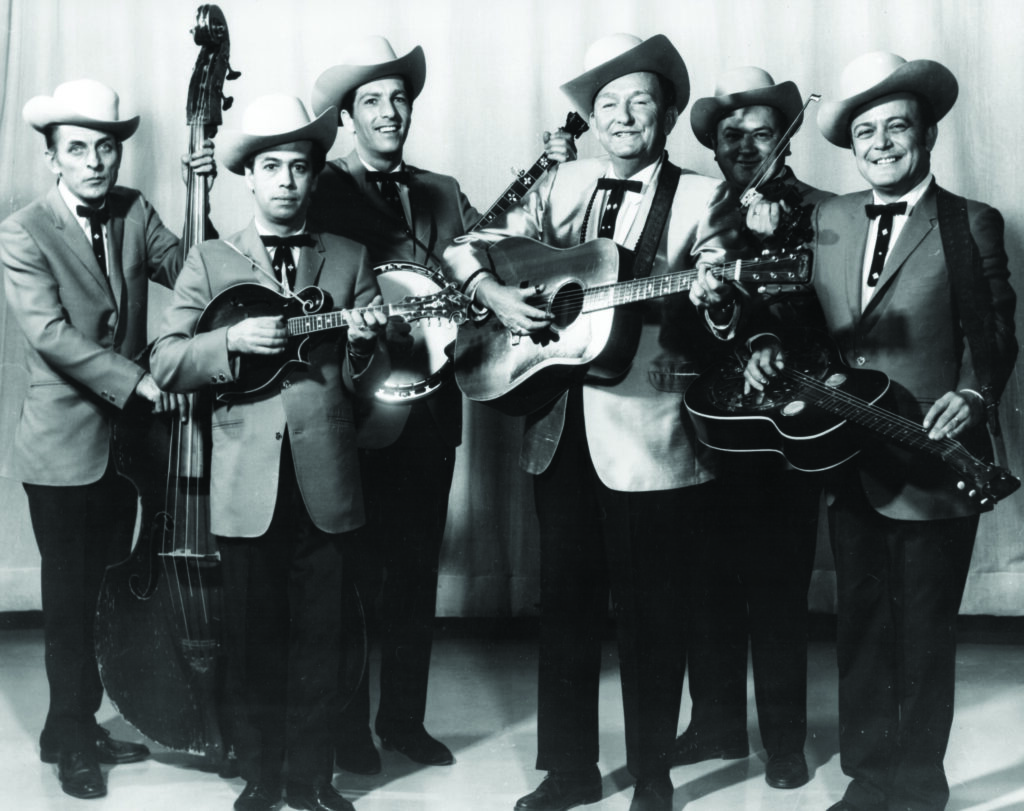
In the interview with Don Rhodes for Pickin’ Magazine, Lester recalled that he was done after they had performed in Washington, D.C. for Richard Nixon’s inaugural parade. Flatt said, “I was not decided we would break up until we went on the Opry one night in early 1969. We were doing an 8 p.m. show when I decide if I got through that show, I would not do another with Earl Scruggs. We were just not playing right together. We couldn’t even get through the Martha White Theme song. I sent word to the Opry management that I was not going to do the 10:30 show with Scruggs and I left.” In the same interview, Flatt also said, “Recording those Bob Dylan songs had as much to do with me wanting to quit doing records with Scruggs as anything.”
In an interview conducted by Don Rhodes for Bluegrass Unlimited Magazine in 1974, Lester was asked if he and Earl parted with harsh words. He said, “No, it wasn’t that bad.” He was then asked, “Then you parted as friends?” Lester replied, “Well, not exactly. When the press called me and asked me about the split, however, I wouldn’t talk about it. All I would do would be to verify it. Earl and I never quarreled, though. We were close friends until the last few years together. It was kind of like a house that is not big enough for two families.”
When Pete Kuykendall asked Lester about the breakup, Lester said, “I guess the best way to put it is that it happens in the best of families. Earl has got a couple of boys coming along. They’re working the Opry I notice and maybe they’re doing the kind of music they want to do. I wish him well but we cannot work together anymore. We tried real hard over the past years and it just didn’t work out.”
Lester Flatt and The Nashville Grass
In the Don Rhodes Pickin’ interview, Lester also recalls forming his new group. He said, “A week and a half after we busted up, I had a date with my new group. The boys in the Foggy Mountain Boys came with me, and so did Martha White. We ran a contest over the Opry and out of 20,000 letters, three judges picked the name “Nashville Grass.”
The Foggy Mountain Boys who remained with Flatt were Paul Warren, Josh Graves and Jake Tullock. Lester then hired Vic Jordan to play banjo and Roland White to play mandolin. Lester and Earl’s last appearance together on the Opry was on February 22, 1969. By March, Lester was tapping radio and television shows and performing on the Opry with the new band. By May they had hired Lance LeRoy as a booking agent and manager and they hit the road.
In 1971, at Bill Monroe’s Bean Blossom Festival, a famous event in the history of bluegrass music occurred when Bill Monroe and Lester Flatt appeared on stage for the first time since 1948. Monroe had resented Flatt and Scruggs leaving his band and had famously held a grudge. Monroe did not speak to Flatt for 18 years. At the 1971 Bean Blossom event, Monroe approached Flatt and said, “Welcome to Bean Blossom” and held out his hand. Flatt said, “Hi, Bill. Good to see you.” Flatt recalled the incident in the Pickin’ Magazine article by Don Rhodes, “When I came out on stage with Bill, the crowed gave us a standing ovation as soon as we shook hands. It was the greatest thing I had seen since I have been in show business. Even a lot of the other entertainers where crying. I didn’t think that anyone would even remember that I had played with Bill.”
Josh Graves recalls this historic moment in his book Bluegrass Bluesman, “When Lester and Earl went out on their own there was some jealousy there, and they didn’t speak for years. Bill Monroe was that way, too. I knew him before that, and when I came with Flatt and Scruggs, Bill wouldn’t speak to me. But the boys in the band talked. They didn’t want us to, but we did. James Monroe and Joe Stuart talked a lot with me, and that’s how Lester Flatt and the Nashville Grass got booked into the 1971 Bean Blossom festival. I’d go tell Lester good things that Bill had said about him, and James would tell Bill the same things about Lester.
“When Lester was asking about the June schedule, I told him we were going to Bean Blossom. He said, ‘You’ve got to be kidding.’ That’s when Flatt and Monroe sang together for the first time in twenty years. Monroe came in backstage, and he came straight for me and says, ‘Where’s my boy?’ and picked me up. Flatt was standing there and looking out the window, and Bill just wheeled around and said, ‘Welcome to Bean Blossom, Lester.’ It was like they had never left. Monroe said, ‘Some people want us to do something together.’ Flatt looked over at him with those beady eyes and said, ‘Can you still hack it?’ Bill said, ‘We can try it.’ They walked out there and it happened. When they hit the stage with those old songs, I don’t think there was a dry eye.”
In addition to work with the Nashville Grass, between 1971 and 1973, Flatt recorded three successful albums with Mac Wisemen. They also performed together many times during this period using the Nashville Grass as their backing band.
By 1971 Vic Jordan had left the band and was replaced by Haskel McCormick. Jake Tullock had suffered a heart attack in May of 1970 and in the summer of 1971 he decided to leave the band. Johnny Johnson, who had been playing rhythm guitar with the band, moved over to the bass spot. In early 1972 Josh Graves left the band and was replaced by Jack Martin. Martin only stayed a few weeks and was replaced by Charlie Nixon. So, by early 1972 there were no members of the Foggy Moutain Boys remaining in the Nashville Grass. But that would soon change because when Roland White left the band in 1973 to tour with his brother Clarence, Curly Seckler would come into the band.
Marty Stuart joined the Nashville Grass in 1972 when he was thirteen years old. Stuart had met Lester Flatt at the Bean Blossom festival in 1971. In an interview for Flatpicking Guitar Magazine in November of 1999, Roland White recalls how Marty Stuart got the job. He said, “Marty came up to the bus at the festival. I remember that he was very energetic and had a lot to say. He wanted to meet Lester and we got to talking. He said, ‘Do you think I could come to Nashville sometime and go out for a weekend show?’ I asked, ‘What would your parents say?’ He assured me that they knew of Lester and wouldn’t mind. I didn’t think much more about it until Marty called later and said he wanted to come up. He put his mom on the phone and she said it would be all right. I asked Lester about it. Lester had enjoyed Marty when he met him at Bean Blossom because he was polite and respectful. He said Marty could come on the trip as long as I would be responsible for him.”
In the bus on the way to a Labor Day festival in Delaware, Marty and Roland started picking together and Flatt was impressed with what he heard and asked Marty to come up on stage during the show and perform a number or two. Roland White recalled, “Lester heard Marty and liked that he had a true, clear voice and was right on. After Marty performed on stage with the band, Lester just loved him. Lester wanted Marty to join the band and said he would make sure that Marty got his schooling.”
About a year after Marty joined the band, Curly Seckler came back to work with Lester. When Roland White left the band, Stuart slid into the mandolin spot, so when Curly came back into the band he played second rhythm guitar. In Penny Parson’s book Foggy Mountain Troubadour—The Life and Music of Curly Seckler, Marty Stuart is quoted as saying, “Curly came in, and it was like a train came back in the band. There was just this oak-tree-like presence that Curly brought back to that band. It would have been kind of like had Babe Ruth come back to the Yankees and could really do it again. When Curly came back, it brought a piece of [Lester’s] architectural sound, and put it back in focus. ‘Seck’ brought that traditional Foggy Mountain Boys spark, the original fire, and it was a welcome thing. Lester took a lot of pride in having Curly back, and I think Curly was glad to be back. And, boy, he hadn’t lost an inch of ground musically. He just sounded rested and revived and charged up, ready to go. They fell right back into their old brotherly routine.”
In the fall of 1973 Haskel McCormick left the band and was replaced by Kenny Ingram. By this time multi-day bluegrass festivals were becoming popular and Lester started a festival in June of 1973. The event was originally held in Mt. Airy, North Carolina, but the following year moved to a campground near Pilot Mountain and was called Lester Flatt’s Mount Pilot Bluegrass Festival.
In July, 1975 Lester Flatt underwent open-heart surgery to clear three obstructed arteries. A famous story related to the doctor’s advice to Flatt after his surgery was told in the Curly Seckler interview, Curly asked, “What was it that you told the doctor after your surgery when he told you that you needed to either walk or jog one to three miles a day?” Flatt replied, “I told him that I sure would—in my car.”
Around this time, Paul Warren’s health had also started to decline and by January of 1977 he was too ill to travel and perform with the band. Warren passed in January of 1978. Warren was initially replaced by Benny Martin, but after a few months Martin left and Marty Stuart filled in on fiddle until Tater Tate joined the band.
In June of 1978 Kenny Ingram left the band to join Jimmy Martin and was replaced by Blake Williams. When Blake was in the band, the line up consisted of Lester Flatt (guitar), Curly Seckler (guitar), Marty Stuart (mandolin), Tater Tate (fiddle), Blake Williams (banjo), Charlie Nixon (Dobro) and Pete Corum (bass). Blake said that fellow Sparta, Tennessee native Benny Martin helped him get the job with Lester. Williams had actually filled in for a few shows in 1976 when Kenny Ingram was sick. Benny Martin recommended Blake as a fill-in for Ingram. Later when Ingram left the band, Lester remembered Williams and hired him to fill the banjo spot.
Williams remembers Lester Flatt fondly and recalled several stories from his time with the band during a recent phone conversation. He said, “We were back stage at the Ryman and it was cramped and hot because there was no air conditioner. Lester said, ‘I’m going to go to the office and talk with them about getting air conditioning put in.’ When he got to the office he told them ‘Me and the boys are going to take up a collection to put air conditioning in the Ryman.’ They told Lester that it would cost a million dollars to install air conditioning. Lester replied, ‘It ain’t near as hot as I thought it was.’”
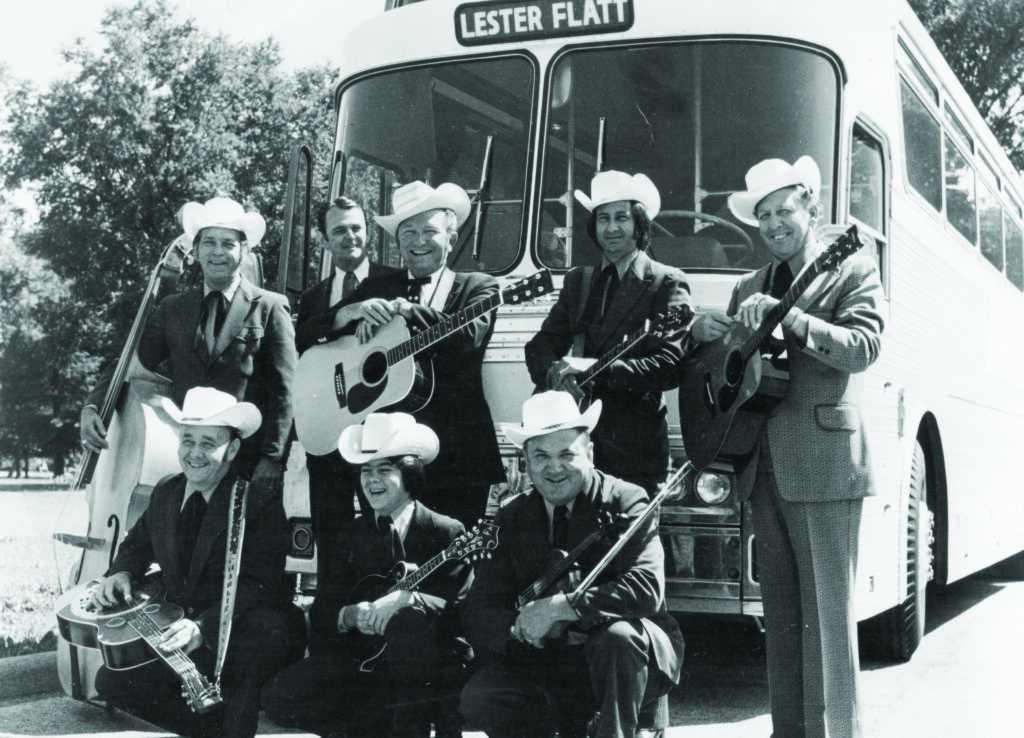
Another story Williams heard about was when Roland White was driving the bus onto the festival grounds before a show and Lester told him to park close to the stage. Roland said, ‘I don’t know, the ground looks soft.’ Lester told him to give it a try and the bus got stuck up to the axels in the mud. Flatt said, “Well, we might as well put up a mail box.”
A third story that Blake Williams told was about the time someone gave Charlie Nixon a vintage Dobro. Nixon was thrilled that this man had given him such a fine instrument for free. He came onto the bus very excited about this Dobro and told Lester the story about the fan who had given him the Dobro. Lester said, “Did it come with a case?” Nixon replied, “No,” to which Lester replied, “I don’t think I would have taken it without a case.” Williams related these stories as examples of Lester’s sense of humor. For the past twenty-one years, Blake Williams and his wife Kimberly have been involved with promoting a Lester Flatt festival in Lester’s home town of Sparta, Tennessee.
In the early part of 1978 Lester developed pneumonia, which created additional health problems. After this bought with pneumonia, Flatt was too weak to stand on stage. He would perform the shows sitting on a stool. Then, in November of 1978, Flatt suffered a cerebral aneurism and was admitted to Baptist Hospital in Nashville.
At this point, it had been a long time since Lester and Earl had spoken. In her book about Curly Seckler, Penny Parson relates the story of Earl visiting Lester in the hospital: “On December 2, while Lester was still in the hospital, Bob Dylan played at Nashville’s Municipal Auditorium. After the show, Marty went backstage to talk with him. Dylan asked about Lester and Earl, and Marty replied, ‘Well, Lester is dying, and they don’t speak much anymore. They’re always talking about getting together, but it never seems to happen.’ Dylan responded, ‘That’s really sad. Abbott and Costello were going to do that, but they never got around to it.’
“Marty later recalled, ‘When he said that, it was like a bag of rocks fell on me. I left Bob’s dressing room, went to a pay phone, got Earl’s number, called Earl, introduced myself. I said, “Can I come out and speak to you?’ He said, ‘Well, sure.’ And I sat there with him and Louise, and I stated my case: ‘Lester’s dying, and I know that he don’t want to die without saying goodbye to you, because he loves you.’ I wrote the [hospital] room number down, and the phone number. He said, ‘I’ll think about it,’ and he left it at that. And the Nashville Grass had to go out and play a couple of concerts. When we came back, Lance [manager Lance LeRoy] met us where we parked the bus, and he had tears in his eyes, and he said, ‘Earl went and saw Lester.’ And when he said that, it was like a green light went off in my heart. I knew I [could] move on. But Curly, beyond anybody else, stuck it out to the bitter end. Lester kind of bequeathed it all to him.’”
In an interview with Traci Todd for Bluegrass Unlimited (February 1993), Lester’s long-time manager Lance LeRoy said, “One of my most memorable moments throughout it all is when Earl came to visit Lester in a hospital room a short while before he died. The excitement and yearning in Lester’s eyes afterward when he tried to raise up in his bed—he couldn’t talk above a rather faint whisper—and tell me about his conversation with Earl, is something that will live with me from now on. Earl stayed with him for an hour or more and no doctor or medicine could have done for Lester what Earl’s visit did. I said this to so many newspaper reporters and NBC radio who phoned me during this period and I’ll say it once again: ‘Earl gave Lester his flowers while he was living.’ Any fellow Flatt and Scruggs fan will know immediately what I have reference to.”
In his book America’s Music Bluegrass, author Barry Willis, quotes Earl Scruggs recollections of that last visit with Lester that was part of an interview conducted by Doug Hutchens, “Earl described the visit to Lester’s bedside, ‘I went to see Lester—I don’t know how many days it was before he passed away, but he was in real bad shape. He was in the Baptist Hospital in Nashville. He could hardly talk loud enough for me to tell what he was sayin’. He wanted to know if we could play some reunion dates together. And my answer immediately was, ‘Lester, number one, I want you to get well. Number two, yes we’ll play dates together when you get well. But my biggest concern now is for you to get more strength and get to feelin’ better; then we’ll talk about doin’ reunions. So that was kind of the way it was left.’”
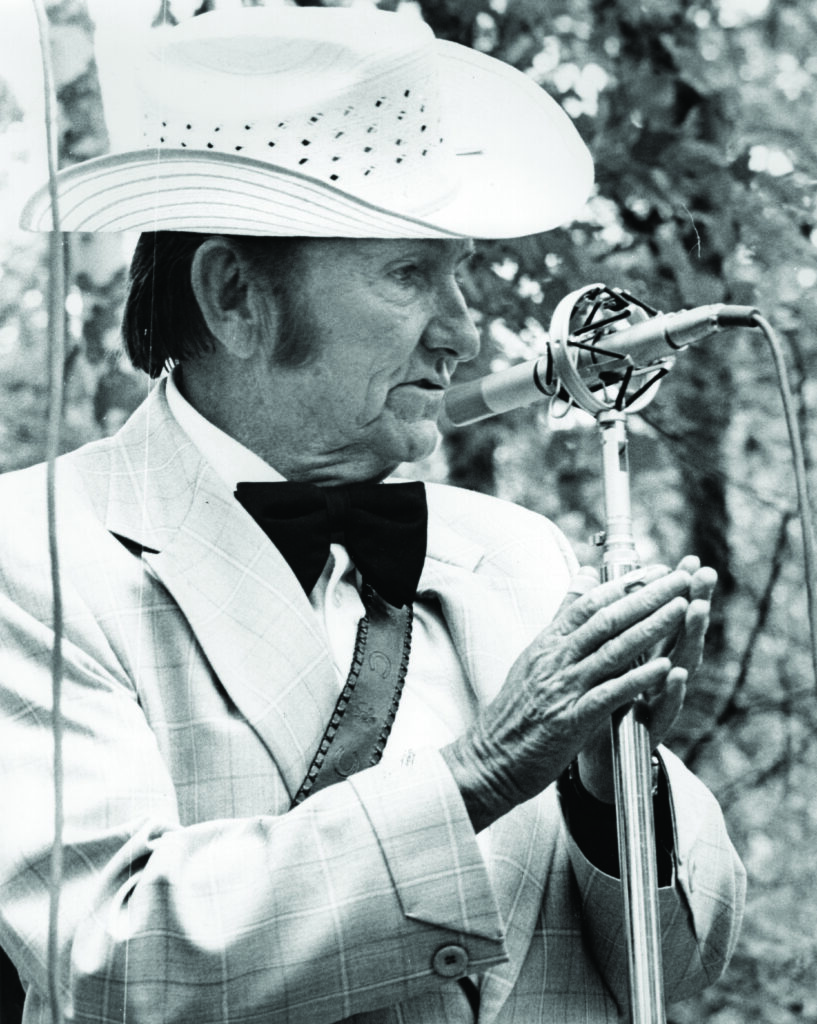
By March of 1979, Flatt was weak, but was able to play the Grand Ole Opry for Old Timer’s Night on March 23. He would then make his last Opry appearance on April 6. On Friday May 11, 1979 Lester Flatt suffered heart failure and passed. He was sixty-four years old.
In the Don Rhodes’ Pickin’ interview, Lester stated, “As for me, I’d like to be remembered as someone who tried to play it straight right to the end with the sound he started with. I also want to be remembered for giving people a good clean show.”
Lester Flatt stands today as a giant in the world of bluegrass and his recordings with Monroe, Flatt & Scruggs and the Nashville Grass continue to influence bluegrass fans of all ages—and he always “played it straight with the sound that he started with.”