John McEuen releases book to celebrate 50th anniversary of Will the Circle Be Unbroken
Around jam session circles and festival campfires the conversation sometimes turns to bluegrass “conversion” stories. Among the baby boomer generation unless a bluegrass fan grew up in a family that played music at home, chances are good that the first time he or she heard the music was either Flatt & Scruggs on The Beverly Hillbillies or the Nitty Gritty Dirt Band’s Will the Circle Be Unbroken album, released in 1972 on United Artists Records. No recording since then—perhaps other than the O, Brother Where Art Thou? soundtrack in 2000—has had such an important impact on popular culture in the genres of bluegrass and traditional country music.
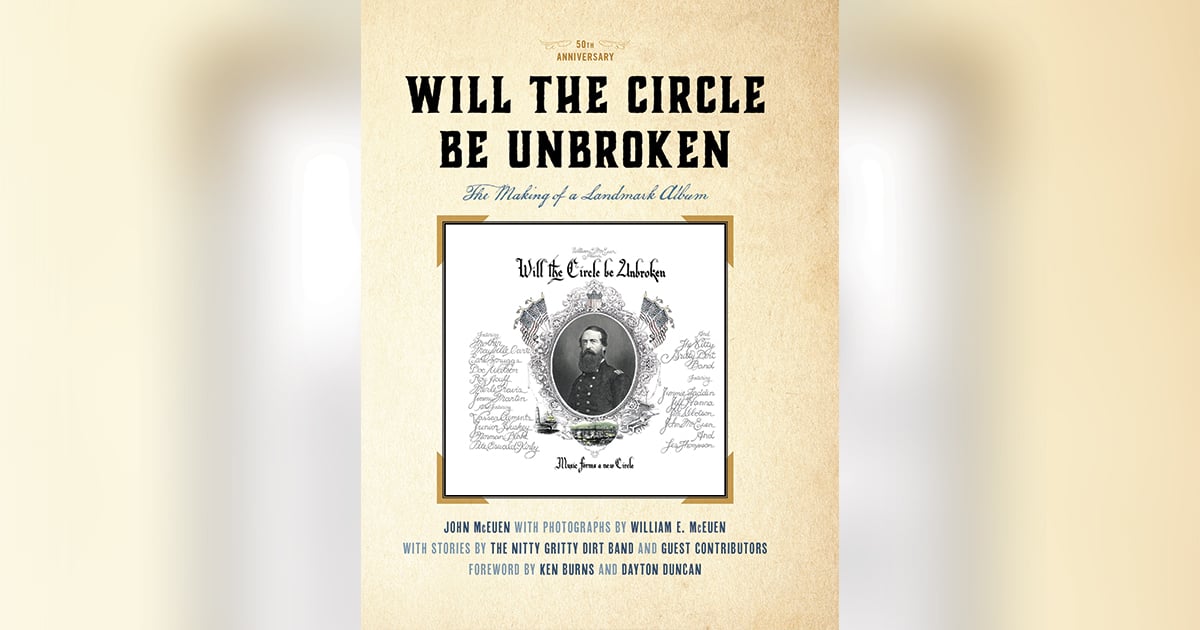
In August 2022, a new book from banjo player John McEuen will be published by Backbeat Books to celebrate the 50th anniversary of the Circle album. Entitled Will the Circle Be Unbroken: The Making of a Landmark Album, the book includes 104 photos from Dirt Band producer and manager William E. (Bill) McEuen and stories from all the Dirt Band members who appeared on the album: Jeff Hanna, Jimmie Fadden, Jim Ibbotson, Les Thompson and John. There’s a forward by Ken Burns and Dayton Duncan, full discographies, and the inside scoop on every aspect of recording the songs, designing and pressing what KDFI radio veteran Orin Friesen in Wichita, Kansas calls “the most important album in the history of country music.” Comments and stories from a number of artists and industry folk are presented, including Rita Forrester (A.P. Carter’s granddaughter), Jim Messina (Poco, Loggins & Messina), Gary Scruggs, Sam Bush, Marty Stuart, Vince Gill, Alison Brown, Ranger Doug, T Michael Coleman, Steve Martin, Tony Trischka, Rhonda Vincent, Peter Wernick, Dean Torrence, Terry Smith, Stuart Duncan, Del Bryant, and more.
Readers who enjoy LP liner notes will be in hog heaven, reading this book while listening to the Circle album, maybe followed by Volumes II and III. For those who have not experienced being lost in a set of good liner notes while listening to a life-changing record, suffice it to say that it’s better than falling down a YouTube rabbit hole.
Why a book now? “There’s only one 50th year,” John McEuen smiled. “Since the airing of the Ken Burns documentary on country music two years ago, the Circle album has been in the top 20 on three different Amazon charts, sometimes in the top 5. It’s still of interest! My brother, Bill gave me all 104 photos he took from the session, and 102 of them are in the book. Only 45 of them have been seen before, and 35 of them are early Dirt Band shots.”
The idea, McEuen said, is that “the book would tell the story of this early group that started as a jug band, made some records, and ended up being able to be in the studio with their musical heroes. How did that happen? I’ve been asked that question so many times in interviews over the years; it seemed like there were a lot of details that people would want to hear who loved the album, and that it would take them back to a better time.”
McEuen is amazed that so many people have carried this particular album with them through their lives, continuing to think about it and play a cut now and then—25 or 35 or 45 years after buying it.
Young Gary Scruggs, still a student at Vanderbilt University in Nashville in 1971, played some of the Dirt Band’s Uncle Charlie and his Dog, Teddy album for his parents, and he talked the whole family into going to see the band when they played at his college, rather than appearing with the Earl Scruggs Revue on the Opry that night. “There are a lot of reasons why the Circle album exists,” McEuen said. “Earl Scruggs is one of the main ones. He said ‘yes’ when I asked him if he would record with us. Then I asked Doc Watson a week later, and he said, ‘Well, if Earl’s gonna be there, I want to pick.’ So he joined us.”
With the help of Earl and Louise Scruggs, a powerful line-up of country and bluegrass pioneers were committed to record: Doc Watson, Merle Travis, Maybelle Carter, Jimmy Martin, Roy Acuff with Pete “Oswald” Kirby, Vassar Clements, Roy Huskey and Norman Blake—complemented by appearances from Randy, Gary and Steve Scruggs; Jimmy’s son, Ray Martin; Doc’s son, Merle Watson; and bassist Ellis Padgett.
“Fast forward 50 years and why the book?” John asked. “Maybe I can quit doing so many interviews!” he laughed. “I took a couple of years putting it together so it could be a companion to the album, so you could read the stories and look at the pictures of the recording. Since it became such a part of people’s lives, I wanted to give them a bigger piece.”
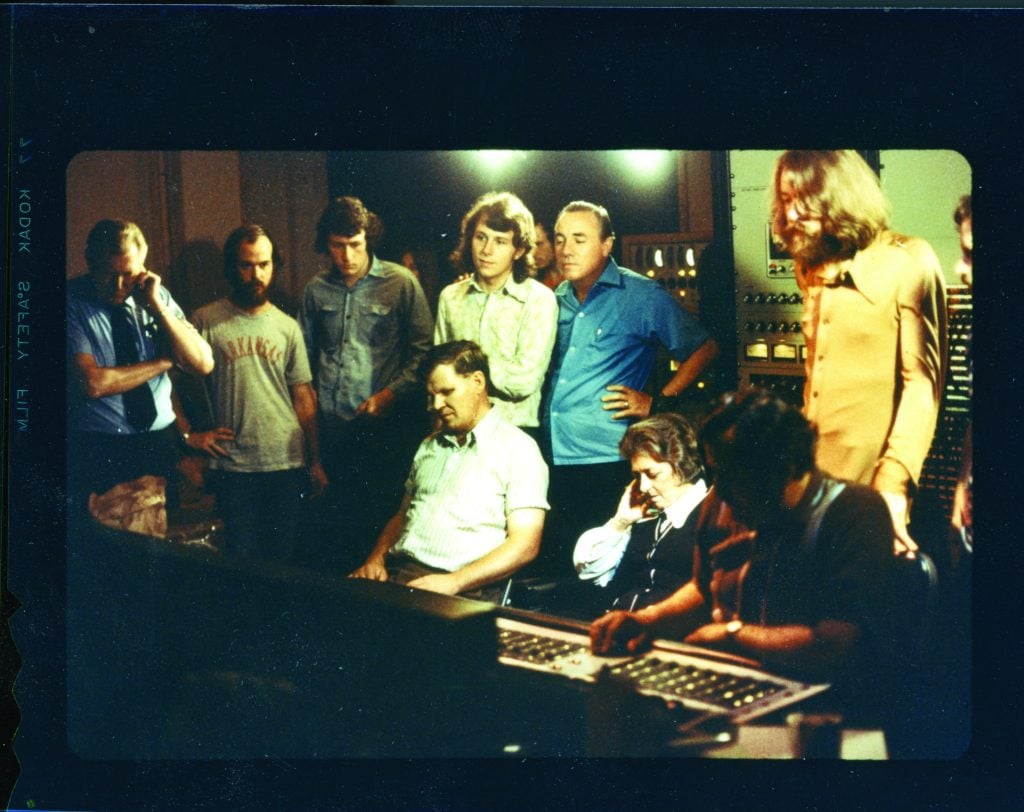
Those who come back to the first Circle album or discover it for the first time through the book will not be disappointed. Recorded live in a circle to two tracks with no overdubs, with a few conversations left between the songs as they occurred, the music is as powerful as ever 50 years later. Doc Watson’s staccato guitar notes and Merle’s Travis-style finger picking pop off the grooves of the album with clarity and punch, Bashful Brother Oswald’s Dobro wails and weeps, Vassar Clements’ fiddle is as other-worldly as ever, and Earl Scruggs is—of course—Earl Scruggs. Impassioned, authentic, vocals from Roy Acuff, Maybelle Carter, Jimmy Martin, Doc Watson, Merle Travis and the rest still grab the listener’s heart. This music inspired, changed lives, and started career paths for many folks 50 years ago, and it still has the same magic.
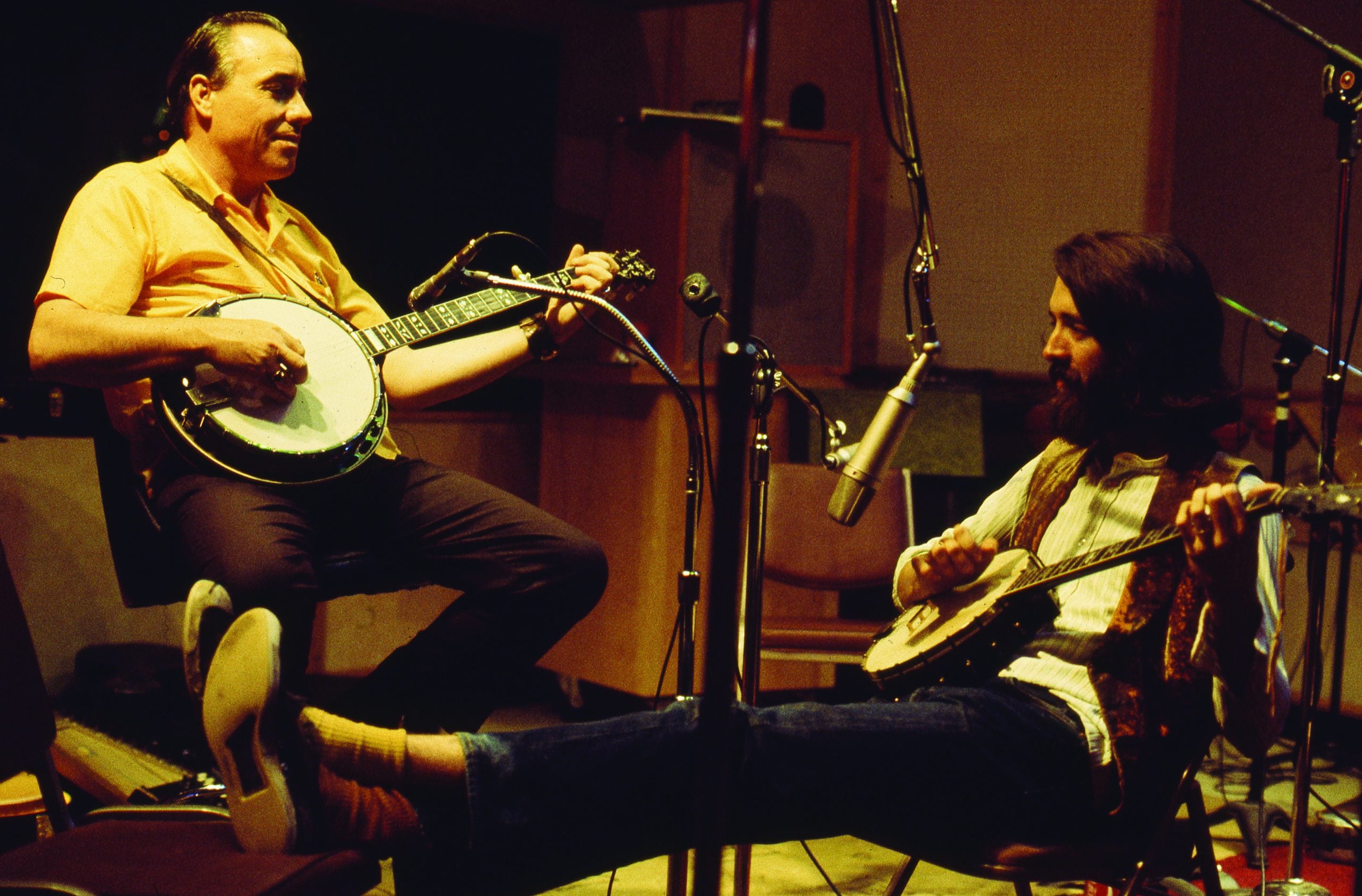
In the studio, the long-haired “Dirty Boys” from California, as Maybelle Carter jokingly called them, were alternatively filled with immense joy, gratitude, or scared to death, standing in high cotton with revered heroes. “It depended on the song,” McEuen said. “‘Soldier’s Joy’ was a breeze because Earl and I had rehearsed it a few times and we just played it. I was playing Uncle Dave Macon’s banjo. On ‘Tennessee Stud’ I didn’t have to think at all. But on ‘Lonesome Fiddle Blues’ and ‘Down Yonder,’ I was sweating bullets.” John was playing in D minor on the banjo in G tuning on the former song, and he had only five minutes in the studio hallway to learn it from Vassar Clements. John admits to a “push beat” mistake at one point that left in the recording because it worked, but then he had to learn it later so he could repeat it. Ditto for another place in “Down Yonder,” where John went high and then low out on a limb on his banjo break. He was worried, but again, it seemed to fit.
Jimmy Martin is heard on the album instructing John to drive the banjo, and he whipped the harmony vocalists into shape so they would be Sunny Mountain Boy-worthy. The California boys loved it. John played the banjo—a new one that he wasn’t entirely happy with—so hard that he broke a bridge. The instrument now sits in a Rock and Roll Hall of Fame exhibit.
The Circle album “came about the way it was supposed to,” McEuen said. He and his brother asked all the guest artists to pick out five songs they wanted to do, making only a couple of suggestions. The secret to the success of the album is that the legendary country artists were not asked to play with the Dirt Band. The Dirt Band wanted to play with them, and back them up on their own songs. It was an enormous sign of respect. “We wanted our audience to get to know them,” John said. It was also a career risk, after just having three hit songs on the radio with their previous album, to record a three-album set of acoustic country and bluegrass music which was not likely to generate any airplay.
The Uncle Charlie album generated “Mr. Bojangles,” “The House at Pooh Corner,” and “Some of Shelly’s Blues,” and the Nitty Gritty Dirt Band was taking off. As expected, the Circle album was slow to catch on at radio, if at all. It was played on college stations, and there was a grassroots wave of sales similar to what happened to O, Brother Where Art Thou? a few years later.
Producer Bill McEuen had to threaten to erase the tapes from the session because the label was not wild about a three-album set. It was a hard sell. Ironically, Will the Circle Be Unbroken stands out 50 years later as the most important record of the Dirt Band’s career. The double-platinum selling recording has been inducted into the U.S. Library of Congress and the Grammy Hall of Fame.
The new book which marks the anniversary is as much of a tribute to John’s brother, Bill McEuen, as it is a tribute to the music and the artists who collaborated to make the magic happen. Before Bill’s death in 2020 John said, “I told him I wanted to put a book together. He said, ‘Good luck. I’m not interested.’ My brother liked to make things and then leave them alone. But he happened to take all the pictures, so he happened to get the credit,” John smiled. “It’s been a way to showcase another aspect of the story of what Bill did—the story of keeping the Dirt Band together, loaning us money, and managing without commissions that he didn’t collect until years later.” In 1978 he booked 28 shows for the Dirt Band, the first American band to tour in Russia. He managed and produced Steve Martin’s first albums and movies, and he worked with Pee-Wee Hermann, Steve Landesburg, and several others as an award-winning record, television and film producer. Bill called the Circle album “my masterpiece,” his younger brother said. “Someone meeting him for the first time might be told that. I told him, ‘Bill, there were other people involved.’ It took me years to put my ego aside and realize he was saying our masterpiece and your masterpiece, as he was saying ‘my masterpiece.’”
At the time John says they didn’t realize they were recording something historic. “We just wanted to play with Maybelle Carter,” he smiled, and Doc Watson, Merle Travis, Jimmy Martin, Roy Acuff, and all the rest. “When I was recording ‘Tennessee Stud,’ I felt like we were on a 1935 record—a genuine, cool record of traditional mountain music. It wasn’t a Nashville recording.”
The reason the album expanded from a two-LP concept to a three LP set, John said, is because there were too many songs they couldn’t bear to leave out. “We recorded 36 songs and used 34 of them,” he said. “Foggy Mountain Breakdown” with John on banjo—which the band played onstage often, was left off the set, along with a song from Doc Watson called “Will You Remember Me” that only had one verse and a chorus on the tape. On the re-mastered CD version of the first Circle album John added a funny conversation between Vassar Clements and Jimmy Martin, and another conversation with Maybelle Carter.
McEuen works as a solo artist now, and he is currently booking a presentation of music and stories based on the 50th anniversary of the Circle album that includes two previous members of the band. His most recent studio album is the critically acclaimed Made in Brooklyn (2016), on Chesky Records, which was recorded live around one microphone. He is joined on the project by David Bromberg, Steve Martin, John Cowan, John Carter Cash, Martha Redbone and Jay Ungar, among others.
John’s hope is that bluegrass fans will see themselves in the new book commemorating the 50th anniversary of Will the Circle Be Unbroken, and that they will remember why they liked it. He also hopes the next generation who heard it mentioned on the recent Ken Burns documentary will find their way to the album. It was important to McEuen to include the unedited stories from his former band members in the Dirt Band based on their own memories and perspectives. “That’s how it needed to be,” John said. “Everybody had a part. It was also important to have contributing writers like Rodney Dillard. I wouldn’t be in the music business if it weren’t for Rodney being funny and good, and his brother, Doug inspired me with his banjo.”
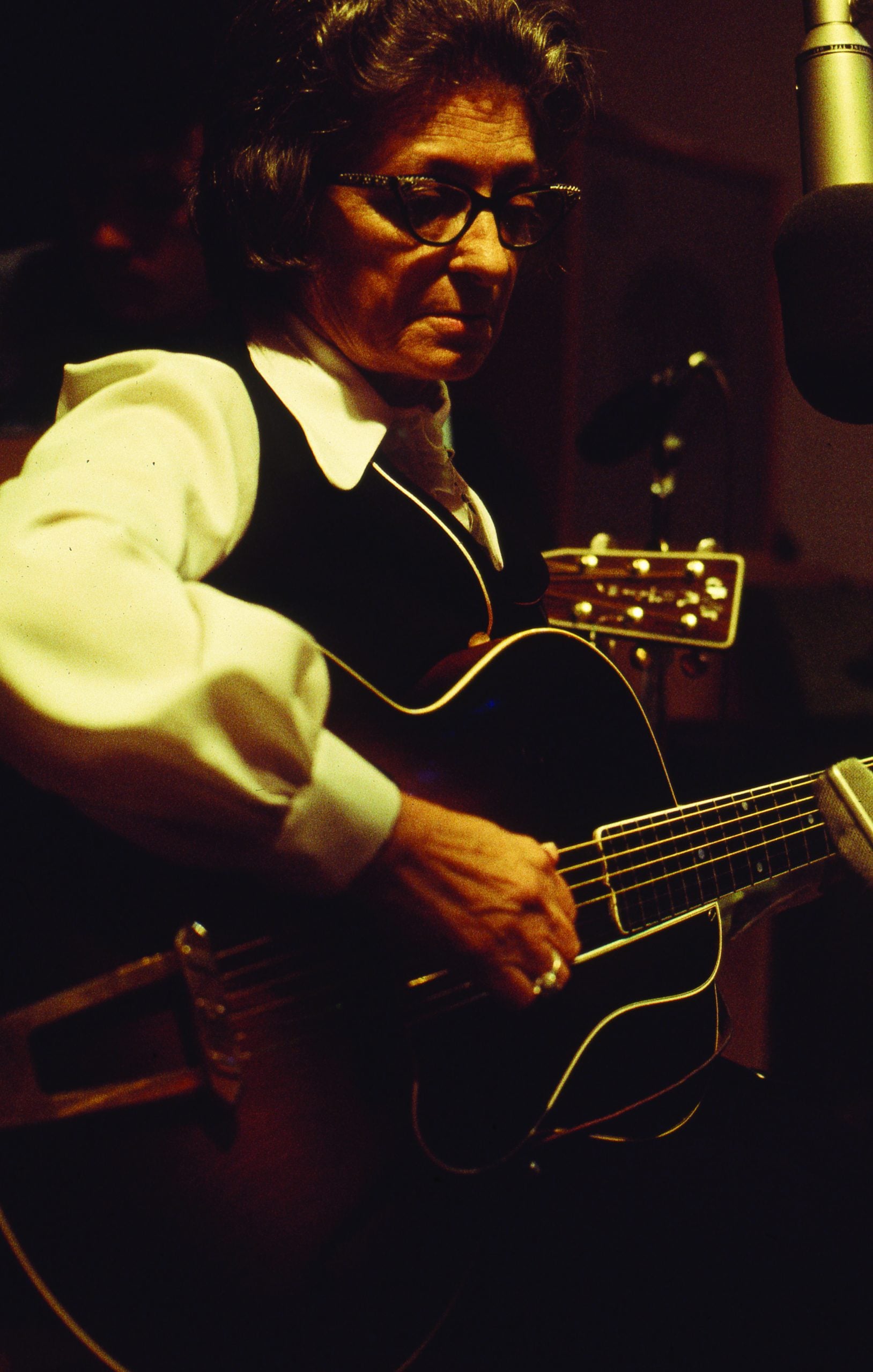
As a recording artist, John said he has been motivated to try for more first takes in the studio after his experience with the Circle album, noting what Acuff said about how in his opinion a little something is lost every time a song has to be repeated in the studio. Some good first takes since then for John include “Opus 36,” “Long, Hard Road,” and eight tracks on his String Wizards albums.
What has it been like for John to travel back in time while writing the book? “It feels like I never left,” he joked. “I’ve been asked about it so many times over the years. I was glad to get as much as I could into the book, hear the other guys’ versions, and to hear other people talking about it. Marty Stuart wrote a great piece, and Gary Scruggs’ viewpoint was really interesting.”
Fifty years later most of the artists who sat in a circle with Nitty Gritty Dirt Band members John, Jeff, Ibby, Jimmie and Les have passed away. We’ve lost Earl, Louise, Gary and Randy Scruggs; Doc Watson; Merle Travis; Roy Acuff and Bashful Brother Oswald; Maybelle Carter; Roy Huskey; Vassar Clements; and Jimmy Martin. Still, the circle remains unbroken thanks to good recordings, good books, and our efforts to remember what needs to be remembered in order to inspire the next generation of bluegrass musicians and fans. Happy 50th to all the “Dirty Boys,” their heroes, and friends who collaborated on the Circle album. They will not be forgotten.