
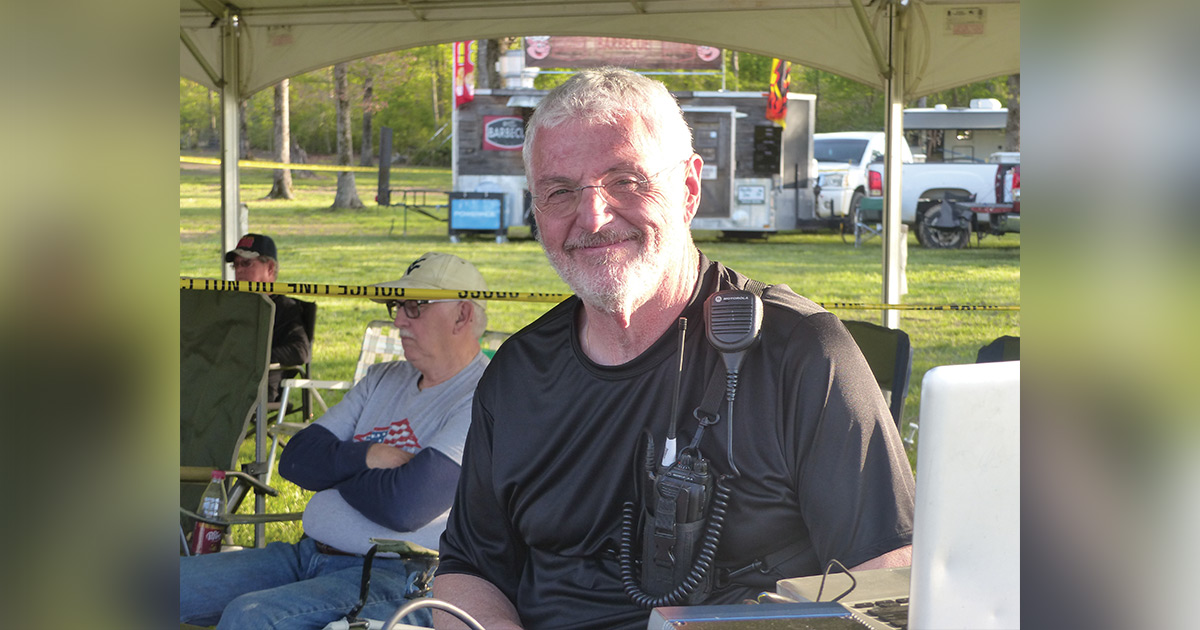
John Holder’s Good Ears Are Apparent In Blue Ridge Sound
Sound systems are an integral part of any musical event. No matter how talented the musicians, they are dependent on competent sound engineers to make sure their instruments and voices are heard in the best possible way. North Carolina’s Blue Ridge Sound, owned and operated by John Holder, is a valuable commodity for promoters and bands in the bluegrass genre. He is known for his good ears.
“Bluegrass sound persons are a rare breed,” the 65-year-old BRS CEO stressed. “Bluegrass and acoustic music are absolutely the hardest of all the forms of music to do live sound. Musicians have tens to hundreds of thousands of dollars invested in their instruments, and they want them to sound a certain way. They are very picky about it. So you have to be able to make it sound correct at concert or rock-n-roll volume. I know plenty of sound companies that won’t even consider trying to mix a bluegrass show because they know how difficult it is. You have to have it sound great with a bunch of live microphones. That’s the trick.”
“I just happened to fall into that category. I’ve been lucky. As a sound engineer for bluegrass, I’ve worked with some of the very best in this industry over the past 25 years.”
“To make live bluegrass music sound good, it’s a combination of things such as choosing the right microphone that behaves itself under stressful conditions and we’ve gone through a bunch! Some current bands want to use a single ‘gather around’ microphone in live performances. The problem is that if someone is slamming on a guitar and singing lightly, that microphone is going to hear more of the guitar. That’s the nature of what it is. You get groups that see old videos of Tony, JD, and the New South doing a one-mic thing in a studio TV broadcast, and they want to do that, too. Current bands don’t consider that those guys knew how to work that one microphone and rehearsed the correct way to use that setup.”
The western North Carolina native shared the nuts and bolts of his operation.
“The first thing we had to learn is that not all microphones are the same. They’re not made to do the same job. Microphones that are used for studio are not necessarily good to use for live sound. You have to find the right ones for the right job.”
“What you do in the studio is different than what you do in live performance. In a studio, you’re working in the most controlled environment that you can be in. Live sound is the most uncontrolled environment you can be in. In live music, you’ve got one chance for it to sound great. It’s trial by fire. If an A-list performer tears your head off because it sounds bad, you quickly learn the hard way! Luckily, I’ve never had that happen specifically, but I know the stories – like a 30 minute sound check for a 45 minute performance.”
“Whenever we started, we knew that Shure SM57s and 58s were a mic standard that everybody used. We wanted to do better. We tried several different brands. Originally, I moved to a group of microphones called Earthworks. They were really great. They are my favorite brand. However, they aren’t the best for every festival situation. They pick up super great, but they’re a condenser mic and pick up much better than a dynamic microphone. We always look for the best thing for a job. We are always upgrading from one to the next one. You have to think of it in festival situations. You have so many different performers.”
Next Holder discussed speakers and mixers.
“The last analog mixer in 2006 that I had was about six feet long, weighed several hundred pounds, and had 48 channels. We had heavy copper snakes that we had to pull from the stage to the front of the house. Plus, I had two big racks of gear that was as tall as my head that were EQs, compressors, effects, whatever we needed. You could only use one device per what you wanted it to be. If you wanted it on several channels, then you had to have gobs of compressors, EQs, and stuff to do it, but it sounded great.”
He ran into some difficulties, “I had two or three channels go down in about six weeks.”
John’s good friend Myron Surber (who’s mixed many Blue Ridge show) shared some sage advice on purchasing a new digital technology mixer.
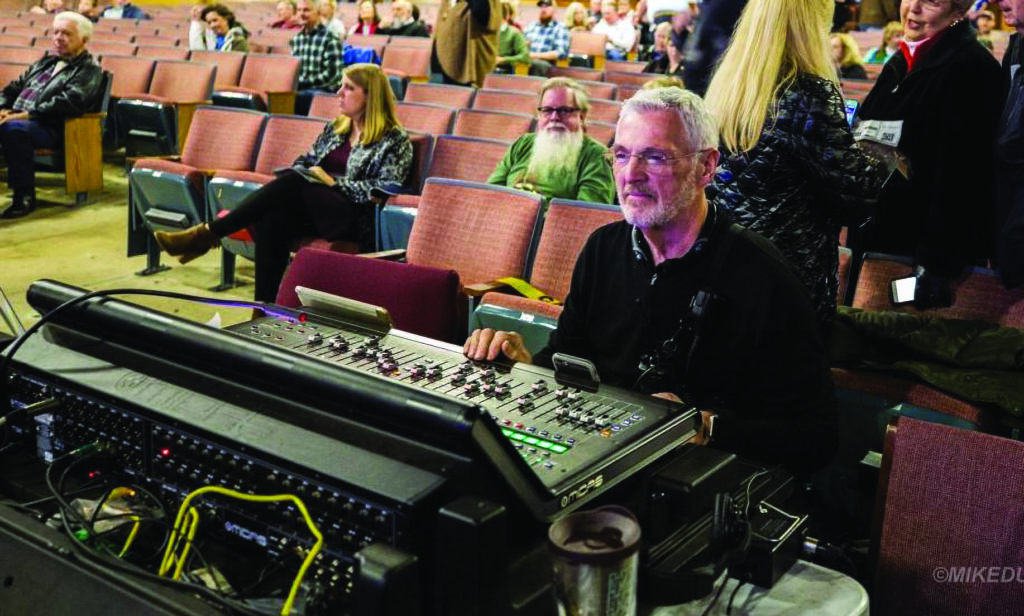
Holder recalled, “He said, ‘These new Yamaha digital consoles are pretty affordable now and they work great.’ The manufacturer of the console I had gave me my money back. I had bought it brand new for the festival season and it was just not road worthy. We bought our first digital console, a Yamaha M7CL, in 2006. I sold off all my rack gear. The first show that I used it I could see the writing on the wall because it was smaller, lighter, and still had 48 channels as well as lots more effects and processing.”
On his first outing with his new equipment, Holder rehearsed with all four of the bands during the day prior to their evening concert.
“At the end, I reached up and hit a little button that said ‘Save this scene’. It was done and all I had to do was hit recall when they came on stage. It changed me that day. We’ve never turned back. Since then, I’ve had all digital consoles.
The same thing happened with speakers. He made the discovery of why to use powered speakers over non-powered speakers.
“All speakers have problems in them. There has never been a perfect speaker built in my estimation. You have to EQ the system. When you get a powered speaker, they control all the tone. The power amp is specifically for that speaker. The system is built all together to be the best it can be. Powered speakers are optimized to do that. Powered speakers are what most everybody uses now for everything. They do a better job and are easier to sound good. That’s why 90 % of all monitors are powered speakers.”
The professional sound man then explained the difference between line array and traditional point source speakers.
“We use line array speakers most of the time. Point source boxes try to cover a lot of ground from one position. The problem is the laws of physics for sound tell us that every time you double the distance you are losing x amount of volume. Up front where the speakers are extremely loud, but the people in the back can’t hear. You can use those boxed speakers, but you must put one every 30 or 40 feet. You have to delay them. The sound initially comes from the front. We know what the speed of sound is at a given time. You delay the sound from the second speakers until the sound from the first speakers has gotten right beside them. You’re just giving them a kick in the pants to lift up that volume. You can do that, but most of the time people don’t.
“What column array does, it has individual slices of sound. In most point source boxes, you have 90 degrees wide and 60 degrees vertical. It is covering from the speaker 60 degrees out. That is standard. Line array are 10 or 15 degrees boxes vertical so when you’re sitting up front, you’re only hearing the bottom speaker. As you go back, you start hearing the bottom and a little of the second. As you go back further, you’re hearing both of those speakers at full volume. Go back a little further and you hear the third box come in so you are continuously adding more volume by the amount of speakers you are hearing at that seat. That smooths out the problem. If you’re at the back of the room, you’re hearing all the boxes. The volume from front to back does not have near the decrease that you have with point source boxes. Line array gives you much smoother volume front to back of any space. That’s why we use them. The larger the space, the more boxes we hang. Powered line array is the best way to go. Each speaker has its own little amplifier in it. If you have six boxes, you’ve got six amplifiers hanging there. Each you can control to make the very best sound.”
As with all technology, you have to stay up-to-date and Blue Ridge Sound does. It is an expensive process.
“As sound systems have developed to the point where they are now, I’ve grown with them. You’re constantly changing to keep up with the technology. You have to decide is it worth investing in. We don’t change with the drop of a hat.”
“We have gone through a number of large diaphragm microphones to get it to sound good. We used an old one, an AT3035 that Paul Williams used to use. We have a friend that has a secret sauce that he uses to build large diaphragm microphones that are amazing. He only builds a few. That old Paul Williams’ mic has been retired because I can blow down the trees with this new single microphone. It’s a game changer.”
Some artists bring personal sound engineers for their shows. BRS assists.
“If bands have their own sound person and in-ear system, we don’t have to use monitors for them. We work with them as much as we need to ensure that the sound is as good as it can be. Even now I get calls and performers ask, ‘are you doing sound, if so I don’t have to find an engineer to take with me’. That’s the reason Balsam Range hired me.”
Ten years ago, after a bad sound experience during their performance at a festival, Balsam Range noted another band sounded great on the same show because they had brought their own sound engineer. They realized if they were going to be professionals, they needed a sound engineer with good ears. They needed John.
“That was a turning point for them. They came home and hired me,” Holder stated.
Banjoist Marc Pruett shared, “John Holder has been a blessing to Balsam Range. Ten years ago, we realized we needed a great sound man as part of our team … a knowledgeable, dependable person who cared about the quality of his work, plus a person who could learn our music and know how to best present it. We found those qualities in John. In addition, John stays current with technical advancements, and he brings good aspects of new developments to our work together.”
“John gives full attention to the technical needs of each one of us, and we can always count on him to give our audiences the best music we can offer. John has that rare ability to stay ahead of problems with a room or a system, and his advance work for us is stellar. Sound systems are different, and John knows what to expect ahead of time, and, how to deal with it. As tough as the music business can be, John Holder adds a wonderful sense of ease to our shows by removing PA problems from our travels.”
The western NC resident has maintained a long love affair with music.
“I’ve basically been involved in music all my life, as a musician and/or a sound man. I showed an aptitude for music at an early age.”
Growing up attending Grandview Park Baptist Church in Lenior, Holder’s affinity for music was apparent. “Even when I was four or five, everybody could hear me singing at church on pitch and on key. I could even pick out the little harmony parts naturally.”
“My family is musical. My mom put me in piano lessons when I was eight because they could tell I had musical ability. After a year, my piano teacher told her that I was playing more by ear rather than reading sheet music. I would embellish a little on the piano. My grandmother sang and played guitar. She was the first to show me how to hold an old-timey G chord when I was ten.”
The music man began playing organ and guitar in his first band at age 12. Holder maintains a strong affection for the six-string.
“My real love was playing guitar. I played for many years and am still a guitar player. I taught guitar and bass lessons for 20-30 years in local music stores after I toured with a group called the Blues Other Brothers. It was a hotel circuit band that played all over the country in the Sheratons and Marriotts. I was their sound guy.”
It was there Holder really saw the need for sound craft.
“Sound people that were any good were always really in demand. Just because I could do it, understand it, and had good ears, I got more calls to come do sound than playing guitar. There’s an old saying that guitar players are a dime a dozen. I got into sound out of necessity.
“My dad was an electrician so he helped me purchase my first little sound system, a Bogen, and learn how to run it correctly. Anybody that is my age will know that was a piece of junk, but it was the best we could do at the time. It was for one of the first little bands that I had. That’s how I got into sound. I could just understand how to plug stuff in and take the time to make it sound as good as it could.”
In his early twenties, Holder got more serious about sound engineering. “My first real sound system was a Peavey. It had a 16 channel board with it and a pair of SP5 speakers. Even though I originally wanted to be a musician, the Lord opened doors for me to follow the path of becoming a sound man. I started my own little company (Jam Productions) in the mid 90’s, but changed the name to Blue Ridge Sound in 2006 when we incorporated to a LLC.”
Sound engineering became his livelihood.
“I decided I was going for it. I laid down the guitar-playing when Blue Ridge got so busy and touring with Balsam Range began. I realized that bluegrass festivals were hiring big production companies to get quality sound and the equipment needed for festivals, but they came at a premium cost. My vision for Blue Ridge Sound was to have a smaller company than the big guys, but to provide the same level of engineering and equipment needed to have quality bluegrass festivals or concert events. We are always looking for the next best technology to help us achieve that. I try to do it in such a way that I can keep the cost down where we are still a good value for festivals.
“My goal is to make it affordable for promoters. SE Systems (Greensboro based sound company that does large events such as Merlefest) is who I try to model my company after on a much smaller scale. (CEO) Cliff Miller is the icon for bluegrass sound. He’s the GOAT.”
Doors continued to open.
A family man with two daughters and two granddaughters, he admitted. “I was doing so much music, when I was home I didn’t want to hear any music. I didn’t want to be around it because I had to let my ears recuperate from weekend to weekend.”
Holder didn’t do it alone. He praised his past and current employees.
“I’ve had the privilege of working with most of the bluegrass sound people in the business at one time or other in the last 25 years, but have to give Scotty Bolen, Myron Surber, Geoffrey Keyes, and Jackson Bethune recognition for years of hard work and friendship with Blue Ridge Sound (Zach Shatley gets an honorable mention). Currently, two awesome guys are working with us: Mike Ford and Aaron Bolick, who are invaluable to me at this time in my career.”
Under Holder’s guidance, several of his former apprentices have moved on to other impressive sound jobs. Scotty Bolen is sound engineer for Dailey & Vincent. Geoffrey Keyes does sound for his wife’s family, Williamson Branch, and Jackson Bethune is sound guy for the Malpass Brothers.
Former Blue Ridge Sound associate Myron Surber, who opened his own successful audio/visual business, ONAVS, shared, “John has had a big impact on the way Bluegrass Festivals hear music in the southeast. I often talk to musicians who say that when he is there it will be good, and how festivals that no longer use him are much harder to play.”
Jackson Bethune is grateful to Holder. “Growing up I spent many weekends with my grandparents attending bluegrass festivals, particularly Norman Adams’. It was there I learned about Blue Ridge Sound and often sneaked to look closely at the equipment and enjoyed watching stage changeovers. In 2016, I saw on Facebook where Blue Ridge Sound was advertising for help and summer internships. I immediately reached out. I met with John in Palatka, Florida and jumped on the opportunity to help and observe.
“The summer of 2017 I got to work with so many different artists: Connie Smith, Daryle Singletary, The Oak Ridge Boys, Diamond Rio, and many more. I will forever be grateful to John Holder for giving me the chance to make my dreams come true. He showed me the ropes and shared his knowledge on acoustic live sound. I truly believe Blue Ridge Sound has set the bar on how good the sound can be at a bluegrass festival.”
Holder also is grateful to promoters who paved the way in finding his niche in bluegrass music.
“I also have to give a lot of credit to Norman and Judy Adams as well as Gary Leonhardt for helping Blue Ridge Sound get entrenched in the bluegrass festival world.”
Holder recalled his first experience working sound for bluegrass.
“I worked with Red, White, and Bluegrass festival before it was Red, White, and Bluegrass. Gary and Mike Ramsey spearheaded a big festival in Morganton. It started off small. He decided he wanted to do a real festival and I started with him. That’s really what got me into bluegrass.”
Leonhardt, Director of Red White and Bluegrass Festival in Morganton, N.C. explained, “The Festival started in 2003 as a small one day Bluegrass Event. By 2005, the festival had grown to three days and the festival grounds had to be expanded to accommodate the large crowds. With this growth we needed professional staging and sound to create the best experience for the audience and the performing artists. I contacted Blue Ridge Sound and they presented a plan to accomplish what we needed. This was a great boost to the festival. Blue Ridge Sound helped make this festival successful. The bluegrass bands and spectators always complimented the great sound quality at the festival grounds.”
Holder is appreciative.
“From there, I would get a call from this one and that one to do bluegrass events. Then we got the call from Norman Adams.”
Norman and Judy Adams hired Holder to do sound for their eight festivals across the eastern US. He worked their events until they retired.
“We went to Dailey and Vincent,” Judy recalled. “Their advice was to get John. That was good advice! John is a great guy and was very professional. He was always on time, had everything set up, and did a great job. We never had a complaint when John ran the sound.”
Holder was set. “Between those two (jobs) that lead to a lot of other festivals contacting us from Ohio to Florida.”
Sound isn’t the only thing Blue Ridge Sound does. Holder and company also supply stages for events. “We bought our first stage in 2016. We have set stages at Red White and Bluegrass, Big Lick, Boomerang, Uncle Dave Macon, Musicfest in Sugargrove, Carolina in the Fall, Camp Springs, and numerous other non-bluegrass events.”
Holder is part of a small, specialized, elite assembly of sound engineers.
“All the sound guys in bluegrass I can almost count on two hands. It’s a small, specialized high tech group of very capable engineers. We‘re like a brotherhood and we all know each other. We work with each other. I’ve learned from all of them. Recently at Joe Mullins’ festival, I learned a new technique from one of the sound guys there. Hopefully, I have passed it on to others.”
As if he isn’t busy enough, Holder also works at a local church as their sound engineer. It seems everybody knows he has good ears.
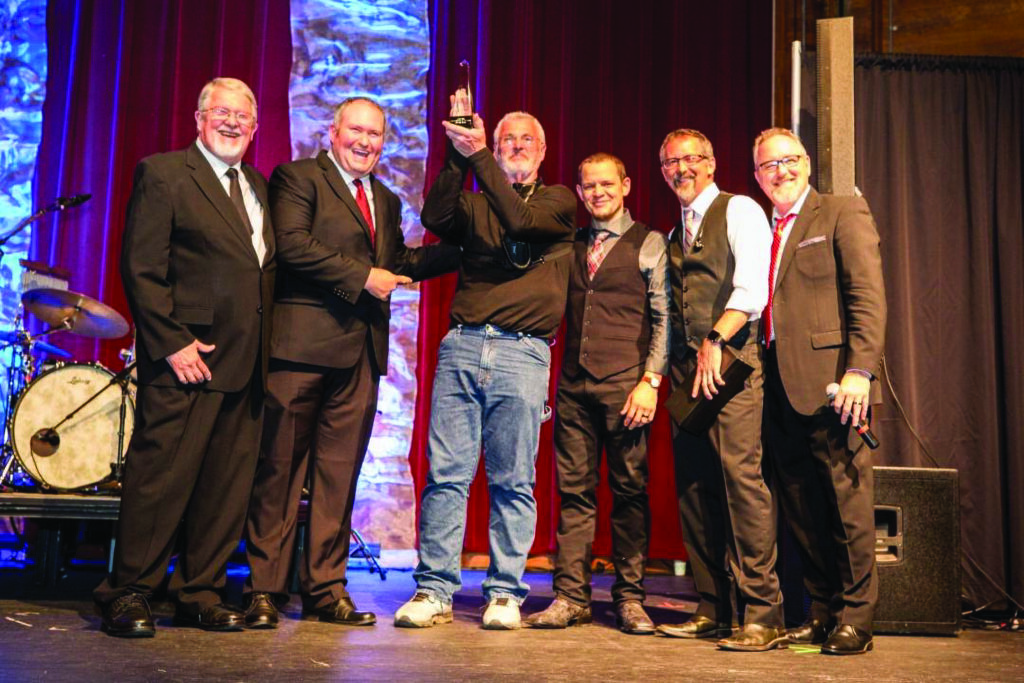
“I’m proud of some of the achievements that we have done. I did sound for Joe Mullins’ festival and they won IBMA’s Event of the Year. We did sound for Pickin’ in the Parsons. They won Event of the Year. We do Carolina in the Fall. Their first year back, they won the Momentum Event of the Year. And the first year I was with Balsam Range, they won Entertainer of the Year. Blue Ridge Sound has had a good run. We will continue to work closely with friends.”
Mullins concurred, “When Joe Mullins & the Radio Ramblers arrive at any event and Blue Ridge Sound is in charge of audio, we’re going to have a good show! John Holder’s team knows what to do and how best to help each band. The audience will be able to hear everything we do and that makes it so enjoyable. John has traveled to Ohio and brought his equipment and expertise to our Industrial Strength Bluegrass Festival many times. It’s an indoor event in a convention center, not designed for acoustics. The festival was the 2022 IBMA Event of the Year and John’s quality sound was a crucial contribution.”
Holder drives home his point, “We look for the best thing that we can use to make the best sound we possibly can for a band or bluegrass festival. We’ve always sorted our way through different problems and tried to solve them as best we could.
“I feel very fortunate. I’m slowing down a bit. I’m pulling back from going to the far reaches of the planet. I still do NC festivals for Karen Miller (Denton FarmPark) and Cody Johnson (Camp Springs) and Jeff Branch (Big Lick).”
Holder concluded: “God has truly blessed me with all this; I feel very fortunate and honored to be part of the bluegrass genre.”