John Hartford
Headwaters of a Legend
Born December 30, 1937, in New York City, John Cowan Hartford grew up in St. Louis, Missouri where he cultivated a passion for the Mississippi River and music. Upon seeing Flatt & Scruggs perform live at the Chain of Rocks Amusement Park in St. Louis in 1953, John was immediately drawn to the sounds of Earl’s banjo and Benny Martin’s fiddle. He honed his musical chops during the late 1950s and early 1960s with regional bluegrass bands, including the Dixie Ramblers which featured future Hall of Fame members Doug and Rodney Dillard. By 1965, Hartford made his move to Nashville to work for radio station WSIX. Almost immediately, he was signed as a songwriter by the publishing firm Glaser Brothers which led to a recording contract with RCA.
After several record releases, Hartford found modest success with the recording of his classic, “Gentle on My Mind.” When Glen Campbell recorded it in 1969, it became the most played Country song of the year, earning Hartford two Grammy Awards. From there, he worked for the Smothers Brothers variety television show, and later the Glen Campbell Goodtime Hour.
Confluence of Creativity
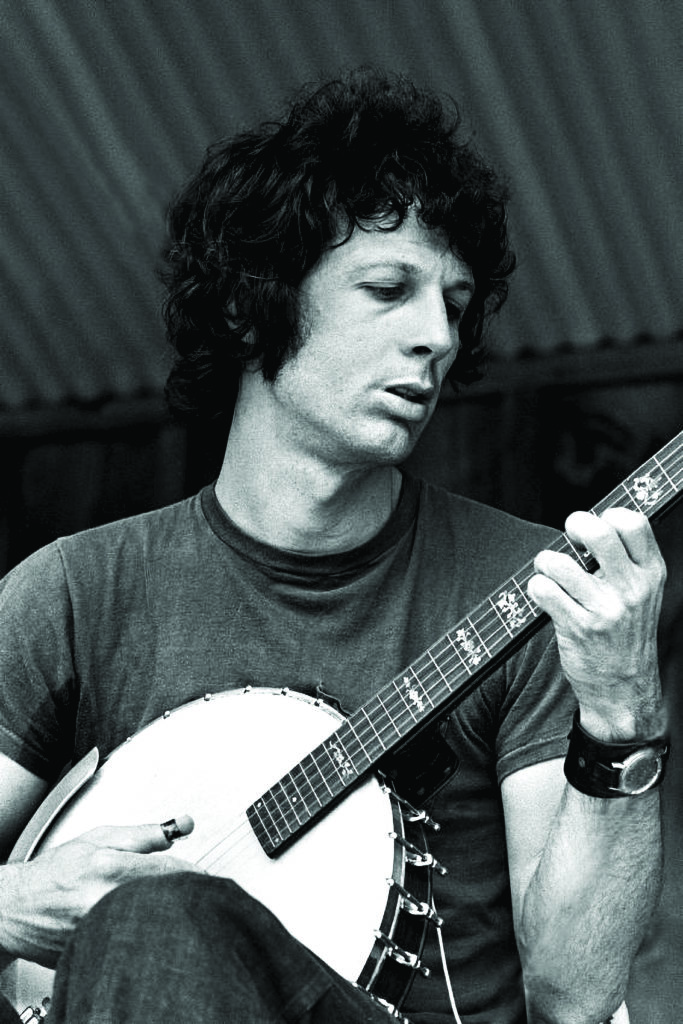
By 1971, Hartford had accomplished major achievements in songwriting, television, and music. He had the confidence and freedom to record the music he wanted to produce. Hall of Fame member Norman Blake stated in Andrew Vaughn’s book John Hartford: Steam Powered Aereo-Plain, “He was a genius, I’d say. He marched to his own drum, he created his own musical universe, and he lived in it, and he believed in it.” The belief in his vision, and the foresight to assemble an all-star cast of musicians, led to what is considered a landmark album with Aereo-Plain. Deviating from the traditional bluegrass script laid out by Bill Monroe, Hartford introduced a new sound in bluegrass and acoustic music which were the beginnings of what came to be known as newgrass. His impact reached a young Sam Bush who stated, “Without the Aereo-Plain album or band, there wouldn’t have been any New Grass Revival. It was the first time where people truly used acoustic bluegrass instruments to create original contemporary music…It was the origins of what some people might call newgrass.”
During the 1970s, Hartford also tended his passion for the Mississippi River. After several stints working on riverboats, he obtained his pilot’s license. While music was his creative outlet, piloting steamboats on the Mississippi River fed his passion for the water, spending his summers working on several boats.
In a clip filmed by PBS while Hartford was piloting the Twilight on the Mississippi River, he humbly commented “I don’t know how I came to sound like John Hartford. Style is created by limitations, and I think I do the very best I can with what little I’ve got, and that’s how it comes out. I haven’t ever tried to manufacture anything. My life in music has been a steady thing of trying to teach my hands, feet, and my mouth to reproduce the sounds that I hear in my head.” He continued about the influence of river travel on music, “The only way culture could get into the backwoods was by river. They already played fiddles in the backwoods, and then they made banjos out of gourds after hearing minstrels. The ancestral music of bluegrass was generally a slow loping vocal over a 90 mile an hour rhythm section.”
Preserving the Legacy
When an artist leaves a lasting impact, it’s important to preserve and protect their legacy for future generations. Hartford’s daughter, Katie Hogue, her husband Eric, and brother Jamie Hartford, have embraced the task of maintaining Hartford’s gift to music by keeping his life’s interests at the forefront. “Dad was passionate about collecting old-time songs and fiddle tunes he feared would be lost to history. He was a historian in his own way. The idea to create a website and projects about Dad came out of necessity, but we wanted to honor his music and influence by curating the content.” In 2018, his estate released John Hartford’s Mammoth Collection of Fiddle Tunes,a fiddle anthology that culminated from his personal journals and features 176 original compositions. In Down from the Mountain, a film documenting the live presentation of music from the Coen Brothers film, O, Brother Where Art Thou?, Hartford commented “I’m a frustrated librarian. I’ve got a house full of books. Rather than being a banjo picker or a steamboat pilot, I would like to be some guy who sits behind a desk and goes ‘shhh!’”
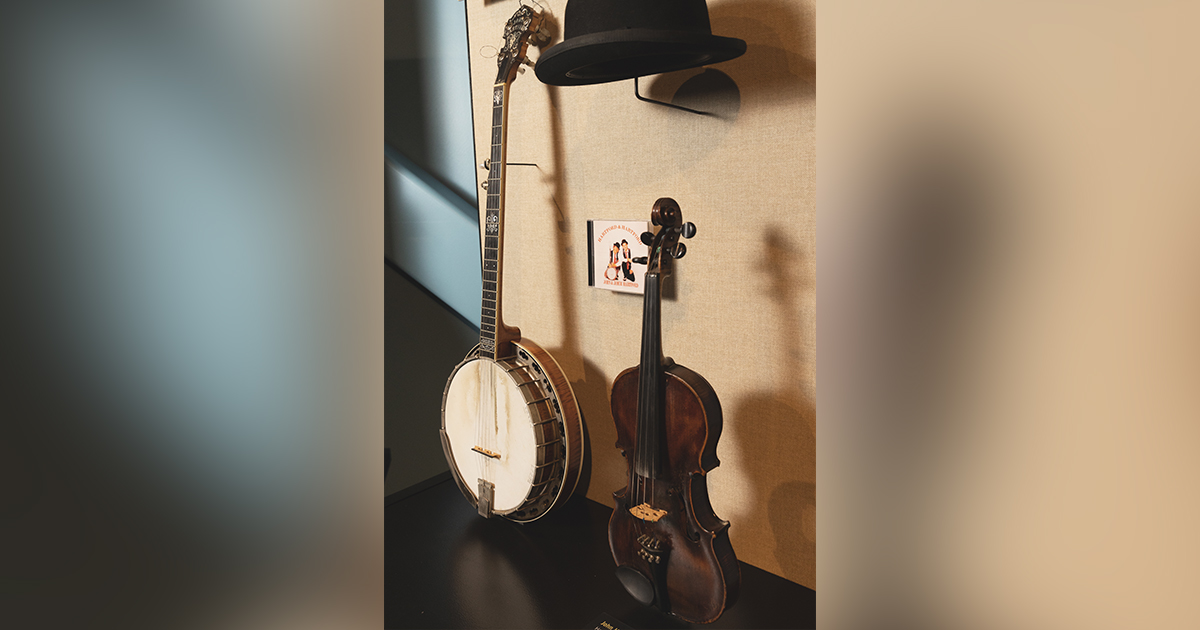
At the Bluegrass Music Hall of Fame & Museum, a special case honoring John Hartford is located outside the Hall of Fame exhibit, which displays his induction plaque. The exhibit case features one of his banjos, a Deering “G Banjo” with a maple neck and resonator with a wooden tone ring, his signature Stetson derby hat, and one of his fiddles. These artifacts offer visitors a glimpse into the legacy of John Hartford, a unique artist with an exponential impact on bluegrass and acoustic music.