
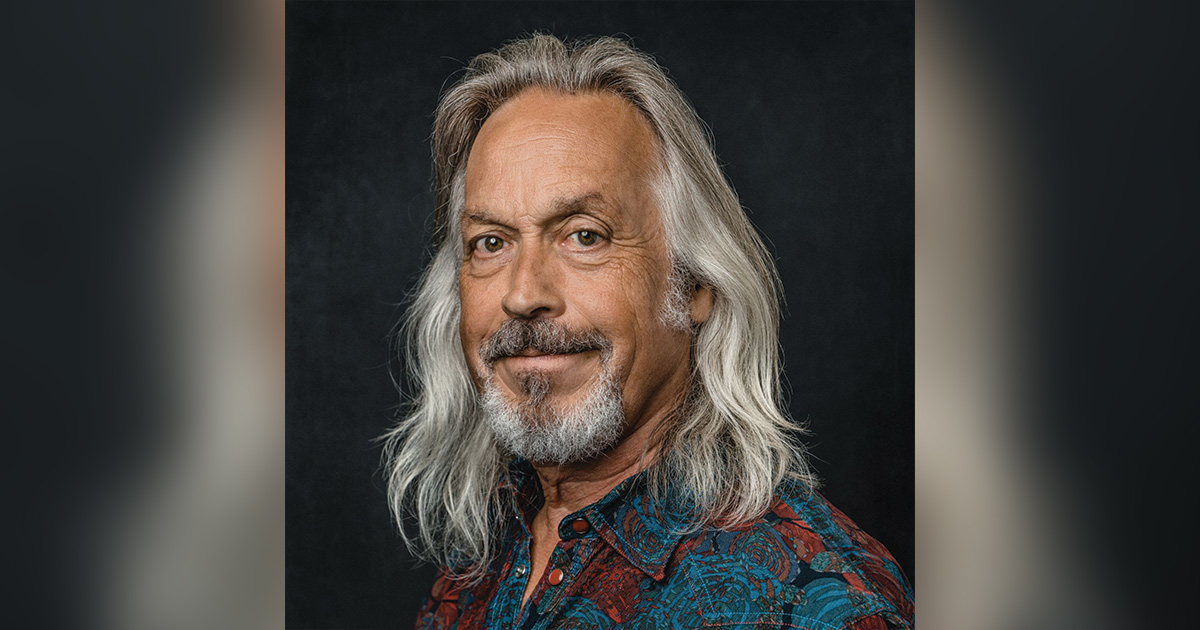
Jim Lauderdale
Songwriter & So Much More
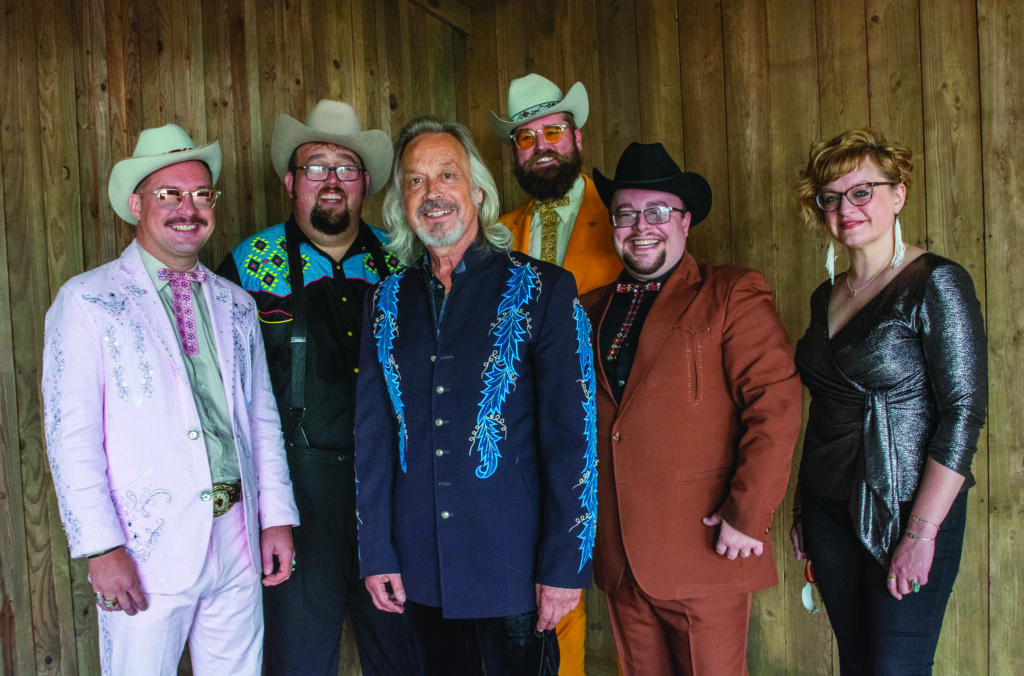
North Carolina-born and raised, Jim Lauderdale has devoted his life to music. Not only is he a singer, he is a prolific songwriter. For his eleventh bluegrass album, he collaborated with the Po’ Ramblin’ Boys. The Long and Lonesome Letting Go (2023) features twelve powerful bluegrass tunes that Jim Lauderdale co-wrote with several individuals.
The musical master explained its origins. “I met the Po’ Ramblin’ Boys (PRB) and I was really taken with them. They are so great. When I first heard them, I thought it was a mixture of the Stanley Brothers and Jimmy Martin rolled into one. I had the good fortune to do several gigs with them. We really hit it off and it just came together to record some stuff. We went to the Tractor Shed. Mark Howard, the owner, a great engineer and musician, worked on the project with us. It all really just clicked.”
“When he came to ask about making an album, we were seriously blown away,” said PRB’s CJ Lewandowski. “It was really validating—Jim Lauderdale calling US to do a bluegrass album. He fits so well into so many different genres, but especially bluegrass.”
Lauderdale knew how to start the project. “I had a couple of songs that I had written: one with Becky Buller called the ‘Last Resort.’ I also had a song that I’d written with Logan Ledger, called ‘When We Were Together.’ Logan is a big Clarence White fan.” Who wouldn’t? So the Po’ Ramblin’ Boys and I recorded those two songs first. Before we went back in to the studio, I knew Josh Rinkle wrote so I thought we’d try to write one. It went so well that we ended up writing six of the twelve songs on the album. We traded off ideas. When we got together the second time, Josh said, ‘I’ve got this title, “I’m Only So Good, at Being Good”’ I thought was terrific. When somebody has a title like that, that’s a huge part of the song already done and makes it easy to finish.”
Rinkle praised his co-writer. “Writing with Jim for this record was a whirlwind of creativity! Once it started there was no stopping it. I remember specifically having a casual conversation with Jim after a writing session and him grabbing his notebook mid-sentence. Something I said sparked an idea, and then another. ‘Drop the Hammer Down’ and ‘You Fell Off the Face of the Earth’ came from that quick conversation. The opportunity to co-write with Jim is something I don’t take for granted, and I’m thankful to call such a legend my friend.”
Detailing the idea behind “You Fell Off the Face of the Earth,” Lauderdale explained, “I’ve known friends who just disappeared for a while, then they finally come back. I realized that sometimes I fall off the face of the earth. It’s because I get so sleep-deprived working on the road and in the studio. Sometimes a friend might just disappear and you don’t know why, but be glad they’re back.”
Recalling another song on this project, Jim said, “I also wrote with Bob Minner. I met Bob at IBMA and we talked about writing. We wrote the title track, ‘The Long and Lonesome Letting Go,’ and ‘Mrs. Green’ that will be on my next country album.”
“I’ve been a fan of Jim for many, many years,” said Minner. “Among those of us who have been in Nashville for a long time, he’s considered the consummate songwriter. And as a songwriter myself, he was always on my bucket list to write with. So I reached out to him and we made a plan to get together. And out of that first writing session came a song called ‘Mrs. Green,’ which is on Jim’s newest country album. Jim is a real bluegrass guy at heart, so it made sense that we should write something in the bluegrass vein our next time around. I had the hook and a little bit for the chorus melody for ‘Long And Lonesome Letting Go’ in my head, and I sang it to Jim as we were walking out of the first writing session. He said ‘Man, we gotta do that one next!’ So the next time we got together to write, we really honed in on it, and to be honest it just sort of fell out. Some songs do that. It was an honor to have him cut it with the Po’ Ramblin’ Boys and Del McCoury. I even got to play guitar on the track.”
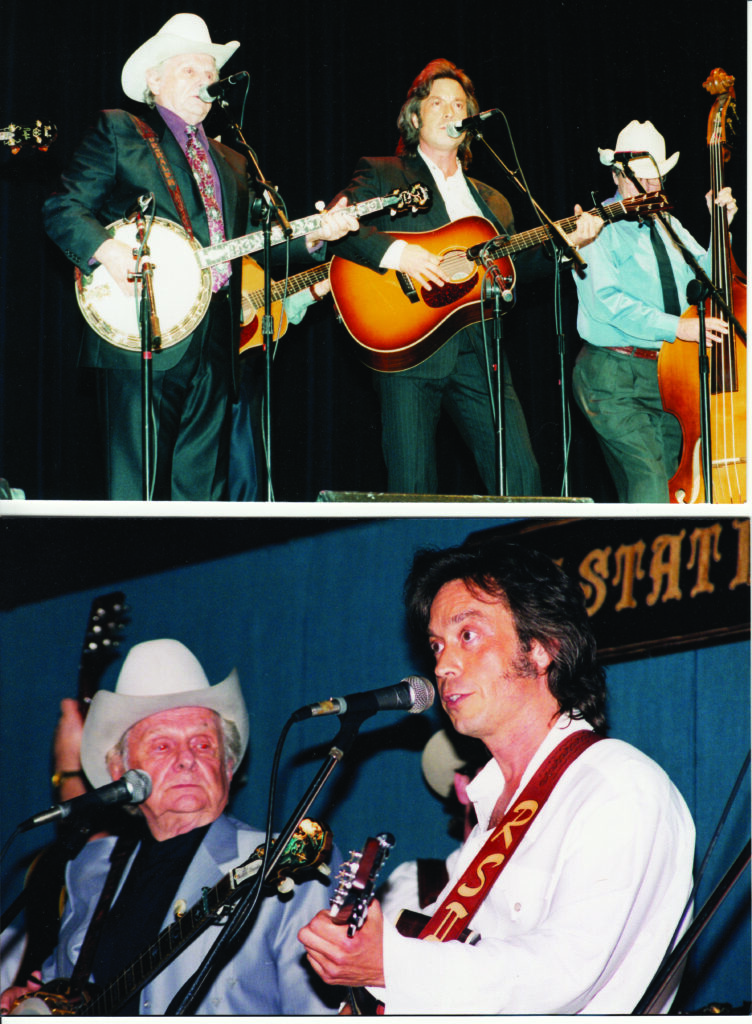
Lauderdale loved the idea. “When we started recording the title song, the Po’ Ramblin’ Boys said, ‘You know who would sound great singing part of this song, Del McCoury!’ I thought that would be great. I had done shows with Del, but we had never recorded together. He was very gracious, came in, and sang. We swapped out lines and harmonized. It seemed like a good title song for the project.”
Minner summed up his friendship with Lauderdale: “Jim is one of my favorite people and one of my favorite writers, as well as a fellow fan of Collings Guitars, and I count it as a great privilege to have him in my life.”
Lauderdale also collaborated with fellow songwriter and multi-instrumentalist Joe Newberry for the project. “I’m a big fan of Jim Lauderdale,” said Newberry. “It’s a treat to write with him. It’s like two old friends tossing a baseball back and forth. I feel like we’re supporting each other. It’s a great feeling. He’s got such a big well to draw from. Jim is a master of the bridge. I enjoy our time together creating new music.”
Though Lauderdale had a hand in penning all twelve songs for the record, he wanted to acknowledge all of his co-writers on the project. “There are three more writers I want to mention. I got together with Alex Leach and Jon Weisberger to work on a song for Alex’s 2022 album, ‘She’s On a Different Train.’ I loved it so much, I thought, ‘I need to record that one.’ Another one was ‘Ghost of a Rose’ that I wrote with Jimmy Richie, a country singer and songwriter who cut his teeth on bluegrass. That was a real treat.”
Another co-writer, Charles Humphrey III (bassist with Songs of the Road Band), collaborated with Lauderdale on one of his previous bluegrass albums, Carolina Comes Home Again (2020). Charles’s band and Jim have performed many shows together and hope to lay down some of the numerous tunes they have written.
Humphrey reflected, “Jim Lauderdale is one of the first writers I worked with in Nashville when I began writing in Music City. Jim loves all styles of music and is truly a kind and patient person. He has been an integral part of some of the historical times in bluegrass, country and Americana music. He’s blessed with one of those golden voices where you know exactly who it is within 2 to 3 seconds of singing and is also a very talented writer. I believe Jim Lauderdale is a national treasure and any credit he receives, he certainly deserves. I can’t say enough great things about the man. It is always an honor to work with him and I’m proud to have collaborated with him on several songs that have been recorded by various bands.”
Lauderdale shared how he works his musical magic. “I get my inspirations in writing in several different ways. Sometimes somebody will say something on the news or I will read something. It may be something you have heard a billion times, but when I hear it at that time it hits me and time stands still for a minute. It’s like turning on a light switch. Then I get into this zone and know that should be a part of the song. Another inspiration to write is the structure of going into the studio. It’s the pressure side. There never seems to be enough time in my schedule. I write a lot with self-imposed pressures. That’s the only way that I can get things done because I’m on the road a fair amount.”
When asked which comes first—the lyrics or melody for a song—Lauderdale responded, “The melodies come more frequently. Melodies just come to me without planning.”
Lauderdale’s Early Life
“I grew up in Troutman and Charlotte, North Carolina. Then my family moved to Due West, South Carolina. I worked summers in Flat Rock, North Carolina, while in high school. I had gotten a banjo and became obsessed with it. I got the Earl Scruggs book. There was no one to teach around home. While in Flat Rock, I found a place called the Mountain Folkways Center and a banjo teacher named Marc Pruett. That was a big game changer for me! I practiced a whole lot.”
The first bluegrass event that he attended was in the spring of 1972. “My folks let me go to the Union Grove Fiddlers’ Convention. I got a collection of recordings with Clark Kissinger on fiddle.” He returned the following year as a musician. “Jamming was a real treat and I met the founding Rounder folks: Ken Irwin and Marian Leighton Levy.” Lauderdale wanted to expand his bluegrass record collection. “I asked, ‘What do you recommend? I’ve got ten dollars. What two records should I get?’ He recommended The Seldom Scene’s Act II and Don Stover’s Things in Life. They were great for me to listen to for the banjo. I had a Dobro, too. During this time, I also got my first Stanley Brothers record.”
Lauderdale began playing solo gigs switching between the guitar, banjo and Dobro. During his senior year, Lauderdale went crazy over J.D. Crowe & the New South’s Rounder 0044 album. “I loved it so much. I hitchhiked from Flat Rock to Wise, Virginia, just to see J.D. Crowe that summer.”
Lauderdale attended his last two years of high school in Durham and lived in Chapel Hill. He attended festivals with Rick Bouley who owned a store called Oxbow Music. The young high school student would help sell merchandise at music festivals. “That’s when I started going to Camp Springs—a big, real important place for me. Carlton Haney would have such a wide variety of people. It was such a great time for bluegrass.”
Lauderdale continued to expand his record collection. “I got into Country Gazette and reissues of the White Brothers and Kentucky Colonels. When I was about 16, I was visiting in Troutman, North Carolina, and an old-timey song came to me. I really appreciate old-timey music.”
Lauderdale began seriously composing songs at age 18. “Near where I was living, there was a lady named Ellen Scouton who on Sundays would host bluegrass jams at her place. I would walk over. There I got to jam with Tony Williamson and a bunch of great players.”
His Career
After college, Lauderdale relocated to Nashville in 1979. “Roland White was very kind to me. He was one of the reasons why I went (to Nashville). I was such a huge fan of Roland and his brother Clarence, and their work together. It was a real dream to hang out with him.
“I was really immersed in bluegrass. I roomed with two of Wilma Lee Cooper’s band members, Gene Wooten (Dobro) and Gary Bailey (bass). I would sit in with them at the Station Inn. I learned a lot as a songwriter there. I wasn’t accomplished enough to make a mark and stay there. I couldn’t get things going in Nashville so I decided to move to New York City. Before I moved, Roland asked, ‘Why don’t we record together?’ So we did an album together. Marty Stuart played lead acoustic guitar on it. The band also included Gene Wooten (Dobro), Stan Brown (banjo), Johnny Warren (fiddle) and Terry Smith (bass). I was just thrilled. I thought, ‘Finally, at age 22, after all these years trying, I’m going to have an album and it’s with my hero, Roland White!’ We finished right before I moved. I sent cassette copies of it and a little letter to all the labels. I didn’t hear back from some, but the bigger ones did write back. They said, ‘We like it, but you’re not on the circuit as a performer. We can’t take that chance right now, but stay in touch.’ I was pretty disappointed.”
Several years passed and Lauderdale spent his time playing country music in NYC clubs. “He still maintained his bluegrass ties, playing with Marty Cutler on banjo, Greg Root on mandolin and Mikal Shapiro singing. He performed with another band with his friend Ollie O’Shay on fiddle, Malcom Rule on bass and Akira Sotoka on banjo. A door opened.
“Then I got into a play. Harry Chapin had written the music and Tom Key had adapted this play from Clarence Jordan’s books. It was called Cotton Patch Gospel. I picked banjo and guitar with Pete Corum on bass, Scott Ainslie on banjo and fiddle and Michael Mark on guitar. We played off Broadway, and then we went to Dallas and Atlanta. I ended up in LA and played more country. Brownlee Ferguson of Bluewater Music in Nashville signed me to a publishing deal when I was still living in Los Angeles. My first cut was ‘Blind Alley’ by Tony Trischka & Skyline. Then Vince Gill on his breakthrough album called Pocket Full of Gold recorded a song that I wrote with John Leventhal called ‘Sparkle.’ George Strait recorded ‘Where the Sidewalk Ends’ and ‘King of Broken Hearts’ and put them in his movie called Pure Country (1992).
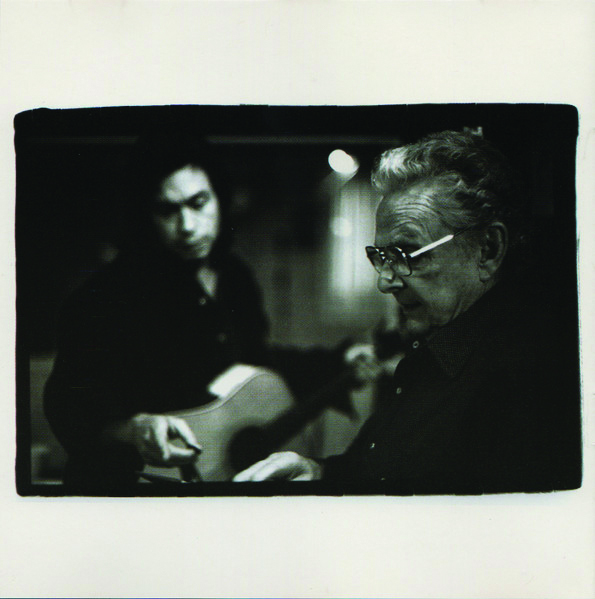
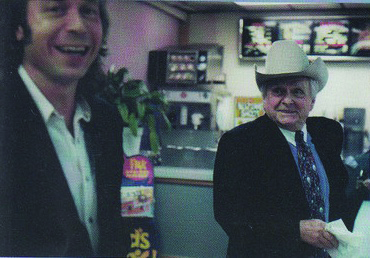
“After that, things started opening up for me as a songwriter. Patty Loveless began recording my material. One of the greatest things to ever happen for me was when she and George Jones recorded my song, ‘You Don’t Seem to Miss Me’ and various other artists started recording my stuff, folks like Kathy Mattea, Gary Allan, Mandy Barnett and Elvis Costello. George Strait has recorded about 16 of my songs and has got one coming out this fall. Patty has done about five. I got to do a television show called Ricky Skaggs Live at the Ryman. Patty Loveless was on the show and she had a hit with one of my songs, ‘Halfway Down.’ Vince Gill was on it and so was Ralph Stanley. I was such a huge fan of Ralph.”
He asked Stanley if he could write a song for him to close Lauderdale’s upcoming country album. He agreed and the two became friends. Bill VornDick, who was producing Ralph at the time, approached Lauderdale. “He said, ‘The next day after we do your song, we’re working on this record called Clinch Mountain Country’ so I got to be on that and sang, ‘If I Lose.’ Then I got to sit in with Ralph whenever I could.”
In the late 1990s, Lauderdale attended Merlefest for the first time. James Allen Shelton invited him to play with the Clinch Mountain Boys because Ralph II wasn’t feeling well. Lauderdale readily agreed. “I got to perform a couple of sets with them. They also invited David Grisman and I was a huge fan of him. That was a life changing experience to get to play with Ralph.”
The talented singer/songwriter petitioned Stanley to do an album together. He agreed. Lauderdale wrote and produced two bluegrass records with his hero. Their first collaboration, I Feel Like Singing Today, was nominated for a Grammy. Lauderdale recalled, “I ended up doing a couple of albums with Ralph. I wanted to do them near Ralph’s home so he wouldn’t have to travel. We did them in Big Stone Gap. Those records did well. That was a huge thing for me to get to work with Ralph. The band (the Clinch Mountain Boys) was so kind to me. I ended up producing an album on Jack Cooke (Ralph’s bassist) because he had not had a solo album. I really loved Jack a lot.
“I sang with Elvis Costello at Merlefest. He did a stripped down, acoustic thing and then we did a whole album with Stuart Duncan, Jerry Douglas, Mike Compton, Dennis Crouch and Jeff Taylor on accordion. It was basically a bluegrass band. These were incredible giants that I had looked up to for so long and we toured a couple of years. That was a really good experience. A lot of good things have come out of Merlefest for me.
Lauderdale did another album with VornDick and Randy Kohrs. “ I did five more bluegrass albums in Randy’s studio. He was a great producer, and I was lucky to have him play Dobro with me live for many years. He is an amazing musician and was a huge help to me.”
His Bluegrass Revival
“Even though I wanted to be a bluegrass banjo player when I was a teenager, it didn’t happen. Then I was disappointed that I couldn’t get a deal worked out with the Roland White record. Roland and I each thought the other had the master copy, but we didn’t and it was lost! A few years back, one night Roland was sitting in with me at the Station Inn. As he was leaving the stage he said, ‘Oh, by the way, my wife found a tape at the bottom of a box with our names on it.’ We found a reel-to-reel copy of the record we had recorded. Randy Kohrs cleaned it up and we got it mastered. I had started getting major country deals so I thought, ‘Someone will put this out now.’ I was with a label at the time called Yep Roc Records in Hillsboro, North Carolina, and I told them about the recording. I said, ‘It’s there, if you’re interested.’ So they put it out. So what would have been my first album became my 30th album (Jim Lauderdale & Roland White, released in 2018)! I couldn’t be objective about it over the years, but listening back it really stands up. It was really meaningful for it to finally come out.”
Lauderdale not only has his material played on the radio, he co-hosts a radio program as well. “I have a weekly radio show with Buddy Miller on Sirius XM’s Outlaw Country called The Buddy and Jim Show. I frequently play bluegrass on the show.”
Lauderdale’s Epiphany
“As I started writing songs, I realized that I had kind of reached my limit of where I could go playing banjo. I thought, I’m never going to be as strong as my heroes. After I finished ‘Cotton Patch Gospel,’ I didn’t pick it back up. It’s something I’ve wanted to do through the years, but I haven’t had the time.”
Though he doesn’t plan to pick banjo professionally, he has another bluegrass album in the works. “It will be fun to write another bluegrass album. There’s no shortage of great bluegrass writers and I’m happy that there are so many writers out there making new classics. I think bluegrass music is really healthy and the songwriting side of bluegrass is really healthy.”
Lauderdale doesn’t know how many tunes he has composed, but he has recorded 37 albums. For 35 of the records, he wrote or co-wrote all the material. On the other two (including the Roland White album), he composed some of the numbers. He has a storehouse of between 800 and 1,000 songs that have never been cut.
“It’s not as many as I wish I had written. I haven’t slowed down yet. I really enjoy writing alone and co-writing. I write a little bit every day. I get ideas that come to me on a daily basis, but to sit down and finish it takes longer. It is an on-going process.”
His favorite self-composed bluegrass song is “Lost in the Lonesome Pines” (2002). Notably, Lauderdale was one of the speakers during Ralph Stanley’s funeral at the Hills of Home in 2016. “I wrote that for me and Ralph to sing. That one stands up. Ralph was so loved and had such big impact on our lives as bluegrass listeners. There was never anybody like him and there never will be. His voice was other-worldly. When I first heard ‘Rank Stranger,’ it was stunning and so memorable. He was a great guy, kind and funny.”
Lauderdale wants to be remembered musically as a singer and songwriter. “I hope as I get older and wiser, that I am becoming a better person and able to leave something in this world that makes it better. It took so long for me to have any releases in bluegrass and luckily, the first two were with Ralph. I was in my early 40s. That seemed so late in life, but it was worth the wait. I want to keep writing and performing bluegrass for as long as I can. It’s so important to my life and musical make-up. I can’t ever perceive not doing it. I just want to pursue it more and more.
“You set goals. For anyone writing or recording, you have to set a standard for yourself. You try to make the new recording as good as or better than the last recording. It is a relief to finish a recording. It is not always easy or pleasant. There’s a little bit of self-imposed pressure and nervousness. You never know how it will turn out until you get there. I am slowly doing recordings in Bristol. I want to use some folks from the region and write songs with them, kind of a different type of Bristol Sessions. I’m hoping to go in and try to record another bluegrass album to be out in time for IBMA.”
Knowing Jim Lauderdale with his drive and determination, he will make it happen.