Jerry Garcia
A Bluegrass Journey
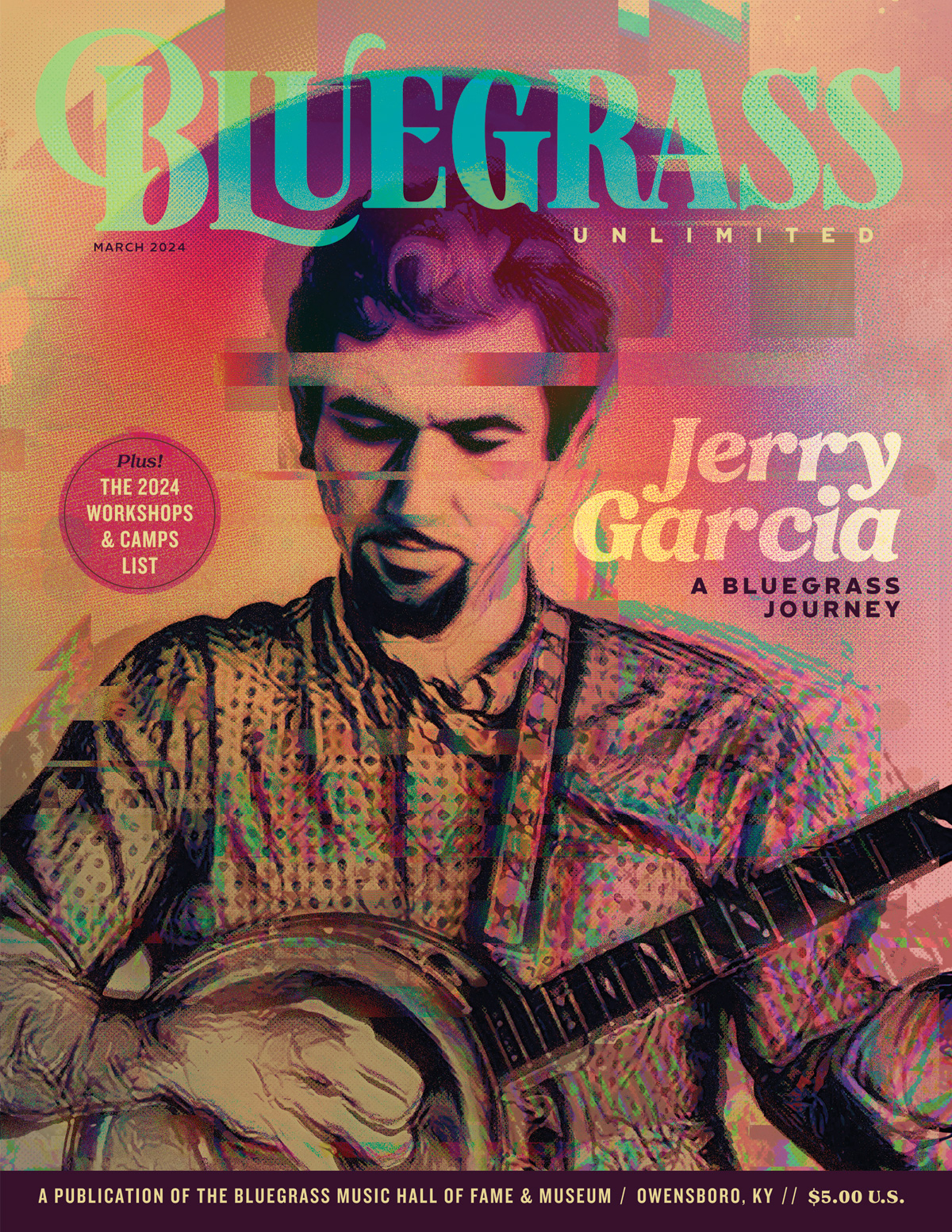
On March 28, 2024, the Bluegrass Music Hall of Fame & Museum opens its largest and most interactive temporary exhibition to date—Jerry Garcia: A Bluegrass Journey. The exhibition traces the bluegrass career of Jerry Garcia, a music icon known as a founding member of the Grateful Dead. Born out of the counterculture landscape of 1960s San Francisco, the Grateful Dead has often been described as a truly American band that fused the band members’ musical backgrounds of folk, rock, bluegrass, blues, classical and country into their own brand of improvisational music. Garcia, the Grateful Dead’s lead guitarist and vocalist, built his musical foundation on bluegrass music and his dedication to the banjo. In the early 1960s, Garcia was at the core of the Bay Area bluegrass scene, carefully studying bluegrass legends Bill Monroe, Flatt & Scruggs, Jim & Jesse, The Stanley Brothers and The Kentucky Colonels, while honing his banjo skills influenced by new styles introduced by Bill Keith. After the Grateful Dead formed in 1965, Garcia maintained a dedicated interest in bluegrass music throughout his career including his work with Old & In the Way, the Jerry Garcia Acoustic Band and his many collaborations with David Grisman.
The Bluegrass Music Hall of Fame & Museum’s new $15M facility, opened in 2018, includes a 1,000 square foot temporary exhibit gallery in the design. While the core exhibit space presents the history of bluegrass music and the foundations of the genre, the rotating galleries offer an opportunity to explore stories beyond the foundational components of the genre. What is an exciting link to bluegrass that would encourage casual, or new bluegrass fans to visit? There are many answers to that question, but one that stood out is an idea that has been discussed for over a decade: an exhibition that unpacks Jerry Garcia’s roots and links to bluegrass. Before and especially after his passing in 1995, Garcia was a mythical figure in rock music. The Grateful Dead were never radio stars, but they developed a die-hard fanbase, which placed them at the top of North American touring lists every year. Deadheads travel, and they are fervently devoted to the music. For many, the Grateful Dead was their gateway to discovering bluegrass music, starting with the Old & In the Way live album released in 1975 on the Grateful Dead record label, Round Records. Old & In the Way was an all-star group composed of Garcia, Hall of Fame members David Grisman, Peter Rowan, and Vassar Clements, and longtime Garcia collaborator John Kahn on bass.
In early 2019, the idea for an exhibition grew beyond just an idea when jamgrass pioneers Leftover Salmon played a concert at the Hall of Fame in Owensboro. Vocalist and guitarist Vince Herman, a student of the history of bluegrass music, toured the museum with his friend Cliff Seltzer and inquired about what was planned for the temporary exhibit galleries. When they heard the idea of a Jerry Garcia exhibition, they both offered their full support and quickly became collaborators on the project. The exhibition planning, like many other things, was placed on hold during the pandemic. Coming out of that in 2021, planning resumed on the Jerry Garcia exhibition when the Bluegrass Music Hall of Fame & Museum received grant funding from the Daviess County Fiscal Court. Seltzer, a former artist manager with Gold Mountain Entertainment in Nashville, has been a devoted collaborator on the project, making connections, conducting interviews and more. He commented, “At the last Romp Festival produced by the museum, I got to interview quite a few of the artists who were playing at the festival. My first question to all of them was ‘How did you first get involved in bluegrass?’ To my surprise, almost everyone who didn’t grow up immersed in bluegrass told me they became interested in bluegrass because of Old & In the Way.”
In the beginning, the museum knew it needed to connect with those closest to Garcia: his family, musical friends and the close-knit circle that continues to honor Garcia and his work with the Grateful Dead. While this inner circle consistently fields inquiries related to the late icon’s work with his iconic band, they were enthusiastic to collaborate on a project that explores what many view as one of his primary musical passions, bluegrass music.
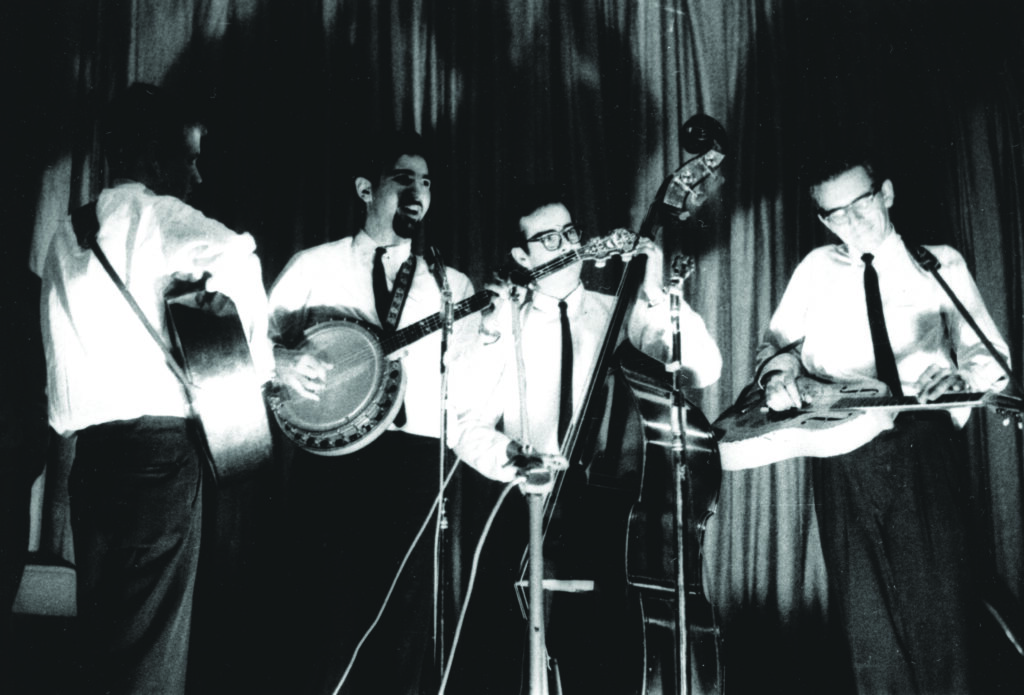
Early on, one of the most important connections the museum made was with Garcia’s first wife, Sara Ruppenthal Katz. The two shared an early connection with folk music and the music of The Weavers and studied landmark works like Harry Smith’s Anthology of American Folk Music, a three-album compilation released by Folkways Records in 1952. Performing together as Jerry & Sara, the two were married in 1963 and were devoted to Garcia’s career as a folk and bluegrass musician. Sara commented, “We met at Kepler’s Bookstore in Menlo Park, where he was playing bluegrass with David Nelson and Robert Hunter. He was such a hot picker, always looking to play and learn and play some more. That was his identity in those days—banjo picker extraordinaire, although he also played guitar really well, and sometimes mandolin, and even tried picking up the fiddle for a bit. He studied every note of the masters, learning a line by playing it over and over on the record player, listening, picking, listening again, picking it out again, over and over. He was always on the lookout for good players to play with and learn from. If any fancy pickers came to play anywhere in California he would go to their performances and hang on every song, every lick, and then come home and practice what he’d heard. People would trade tapes of performances from around the country, it was like gold. He was totally immersed in bluegrass and old-timey music in general. And he wanted to be the best, wanted to play with Bill Monroe, and thought he could make it in that world. He worked on his singing voice too, inspired (I suspect) by Ralph Stanley’s singing in particular. If you listen to the quality of Stanley’s early singing, I think you can hear where Jer got a certain sound in his singing voice. You ask me to describe his dedication to bluegrass in those days. I’d say it was his life. If he couldn’t practice four hours every day it would put him in a funk that nothing could get him out of except getting back to play.”
Through Sara, the museum further connected with other family members and early collaborators of Garcia’s in the folk scene, including Eric Thompson, David Nelson of New Riders of the Purple Sage, and former Blue Grass Boy Sandy Rothman. All provided insight into the early days of the Bay Area bluegrass scene and how Garcia maintained a passion for the banjo throughout his career.
With additional funding from Visit Owensboro, the museum has transformed a large gallery into an homage to a global icon filled with interactive displays, images, exclusive video interviews, and many relevant artifacts from the museum’s collection. A major milestone in Garcia’s pursuit of bluegrass occurred in 1964, when he and Sandy Rothman followed their friends Roland and Clarence White and The Kentucky Colonels out of Los Angeles traveling east to seek out their bluegrass heroes, namely Bill Monroe, Reno & Smiley, The Osborne Brothers, and Jim & Jesse. Traveling in Garcia’s 1961 Chevrolet Corvair, they brought along a Wollensak reel-to-reel recorder to document the music. After a stay at the home of Neil Rosenberg in Bloomington, Indiana, the duo crisscrossed the eastern side of the country, eventually ending up in Sunset Park, Pennsylvania, for a Bill Monroe show, where Garcia met David Grisman for the first time. A replica of the Corvair is featured in the exhibition to highlight their bluegrass journey.
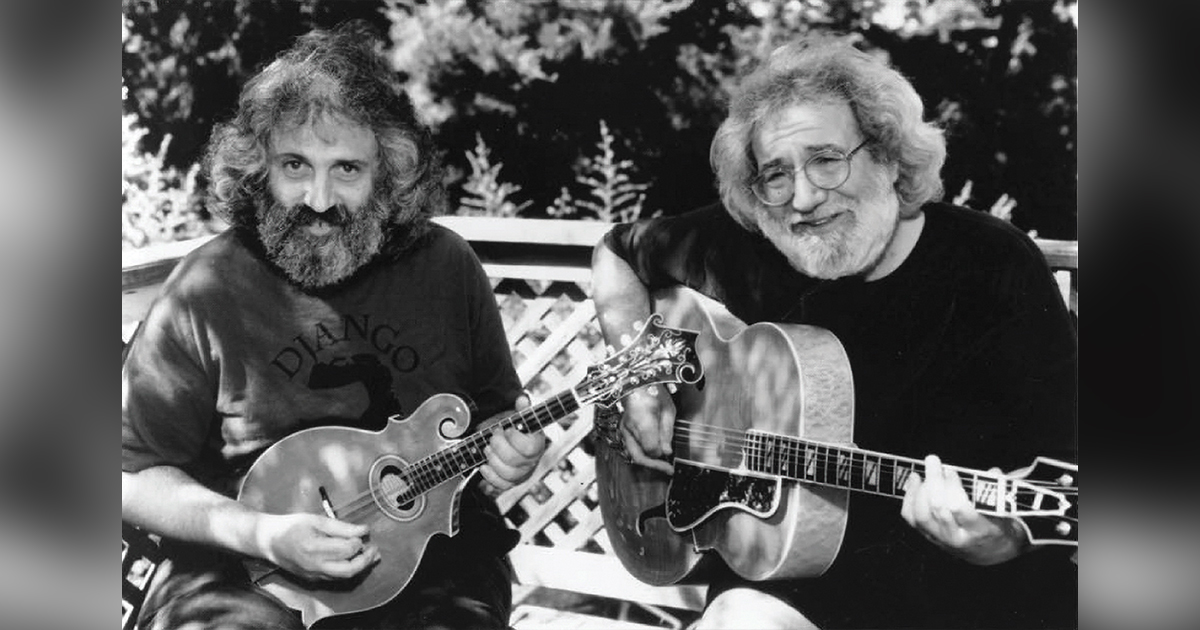
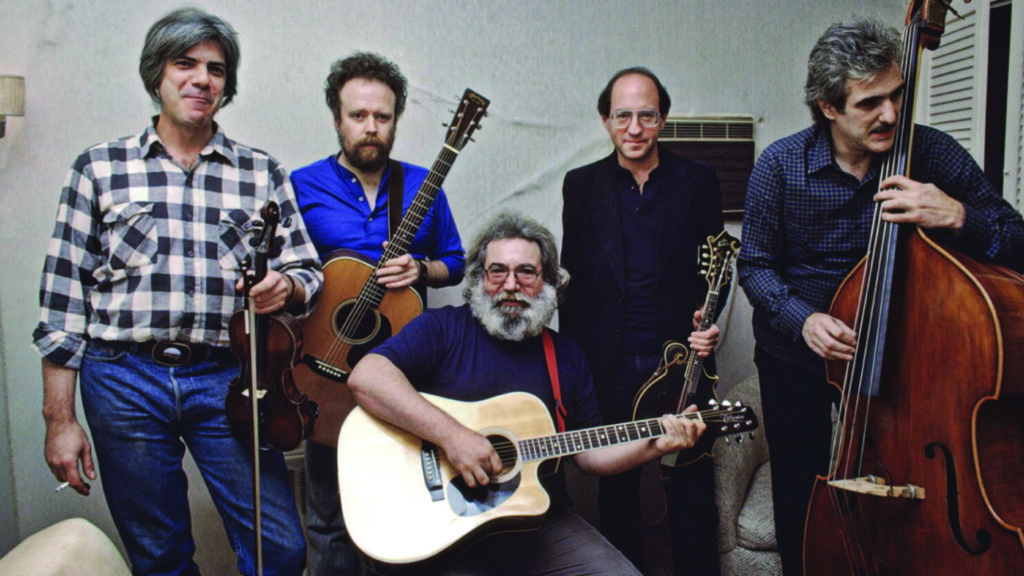
Also on display are twelve of Garcia’s instruments, including seven banjos, a mandolin, a 1904 Martin guitar, an autoharp and a pedal steel guitar. Throughout Garcia’s career, he maintained a keen interest in bluegrass, from his time with Old & In the Way, to producing the Pistol Packin’ Mama album featuring Don Reno, Chubby Wise, David Nelson, Frank Wakefield and Pat Campbell. Garcia’s second wife, Carolyn “Mountain Girl” Garcia commented, “He loved his banjo, and it was hard to go out on the road with the Dead and do a tour. He’d come home and put the guitar down and go get his banjo. He’d pick for while sitting on the couch and look out the window.” In the 1980s, Garcia assembled the Jerry Garcia Acoustic Band, with Garcia and David Nelson on guitar and vocals, Sandy Rothman on mandolin, Dobro, and banjo, Kenny Kosek on fiddle, John Kahn on bass and David Kemper on drums. The band played extensively in 1987 and 1988, including a two-week run on Broadway at the Lunt-Fontanne Theatre in New York. Garcia soon reconnected with his old friend David Grisman, who recorded many of their sessions at his home studio which turned into multiple album releases. The Pizza Tapes, released in 2000—five years after Garcia’s passing—featured Grisman and Tony Rice, and is also celebrated as an entry point for bluegrass fans. In the liner notes of The Pizza Tapes, Rice commented, “I wish there were words that would express my gratitude for being a part of it. Perhaps just knowing that Garcia might be smiling somewhere saying, ‘Dawg can we hear that take again?’ will suffice.”
Jerry Garcia: A Bluegrass Journey will be on display for two years at the Bluegrass Music Hall of Fame & Museum. It would not be possible without a connection to Garcia’s family, and their knowledge of his devotion to bluegrass and the banjo. “We are very happy to contribute to the exhibit in any way possible, to share whatever we have left from those long-ago times. Not everyone is aware of how deeply immersed Jerry was in bluegrass music at the start, and how this depth influenced his musical creativity. I think it’s so cool that the museum is making these connections along the trajectory from past to future—between the original bluegrass masters and Jerry and the Dead and now what’s happening in modern bluegrass as a result of this deep fermentation. It is so satisfying!” commented Sara.
Beyond the Grand Opening celebration March 28-30 in Owensboro, concert events will take place during the two-year run celebrating the loving connection between a global musical icon and bluegrass music. Part of the Bluegrass Music Hall of Fame & Museum’s mission is to present the global history of bluegrass music through an educational experience, and this new exhibition will undoubtedly introduce a dedicated fanbase to the genre. The work of Old & In the Way is often cited as the gateway for many bluegrass fans since the album was released in 1975, and the Bluegrass Music Hall of Fame & Museum hopes to do the same with the new exhibition. Visitors can learn more about Jerry Garcia: A Bluegrass Journey at: bluegrasshall.org.