Jan Johansson
Follow Your Dreams
Photos Courtesy of Jan Johansson
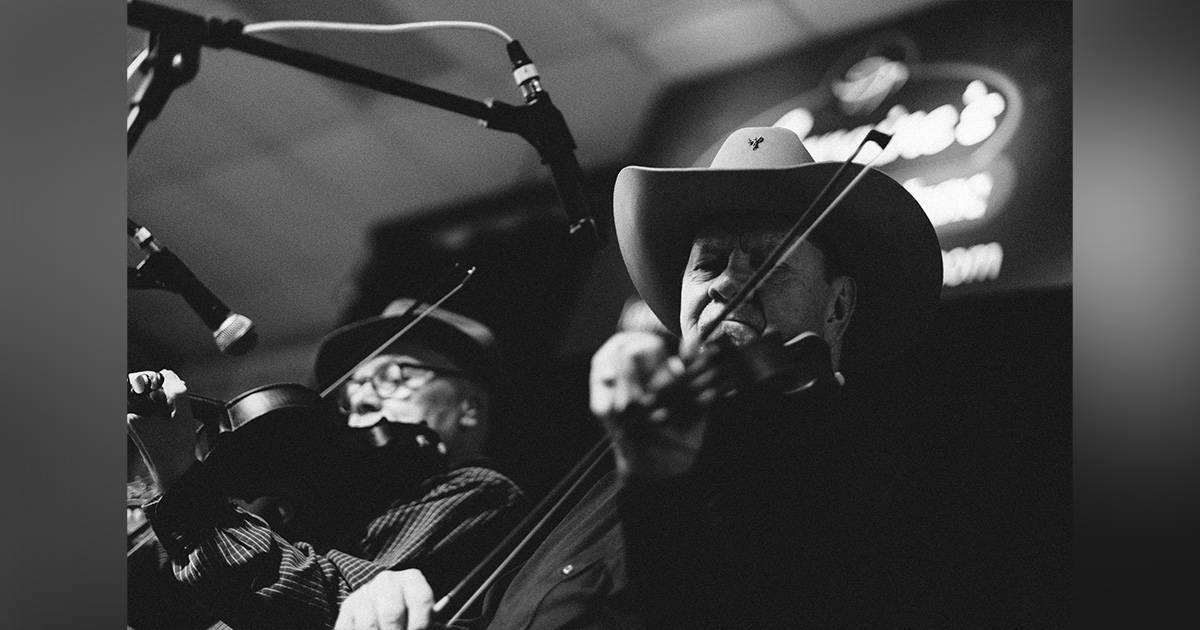
Jan (pronounced “Yahn”) Johansson is a man who has defied all odds. A true connoisseur of bluegrass, he is a player, teacher, historian, collector, and much more. What makes him truly amazing is that he achieved all this by overcoming huge obstacles along the way: being born and raised in a foreign country, relocating to the US and immersing himself in bluegrass culture and becoming an active and engaged member of the bluegrass community, surviving a heart attack, followed by a heart transplant, and so much more. He is a foremost authority on our genre and has befriended many of the movers and shakers within the industry.
Jan, 67, fondly recalled his youth in Sweden. “I can remember always being drawn to music and having a fascination with guitars. As a very young child, I had a toy guitar with fishing line for strings. I didn’t start playing guitar until Easter 1972. By the time I got into the guitar, I had had a few years of BBC English, but I couldn’t relate to a lot of the lyrics. It was like they were singing in Hebrew. Allegories you could hear in the blues lyrics, I had no clue what those meant.” His wife, Theresa, interjected, “Jan is more into the music than the lyrics; he’s fixated on the melody. (In Sweden), He had to hunt for (bluegrass) albums.”
Jan elaborated, “I had several life-changing events when I heard bluegrass. It was the summer of 1973. I was 15 and had played guitar for about a year. There was a radio show, I woke up and heard this music with banjo, and then I heard a fiddle. I thought it was so good. I had one of those 1970s cassette recorders, so I activated it immediately. It was the recording of Eric Weissberg, Marshall Brickman, Clarence White, and Monroe alumnus Gordon Terry, on Elektra Records (EKL-238). Gordon Terry’s fiddle break on ‘Shucking the Corn’ caught my attention. It was recorded in 1963. Clarence White was 19 at the time. They had met at the UCLA folk festival earlier that year. I identified that because a few weeks later, I saw this album called Dueling Banjos. It was reissued in 1972 on Warner Bros. Records as the soundtrack for the movie Deliverance. I would buy anything that had a banjo on it. Sometimes it would end up being Dixieland or Scottish music, which is okay, but not when you’re wanting bluegrass.”
Theresa noted, “He would order an album and have to wait for it to come to the record store.” Jan agreed, “It was complicated. We would get Bluegrass Unlimited and the County Sales newsletter. I would go to the city library and look for any information about bluegrass music. When I started (my quest for bluegrass), my neighbors were into the old Delta blues. In school, I immediately became a favorite of my music teacher. She wanted me to bring these 1920s blues recordings to music class and talk about this music.
“We lived in the very far north. There was some bluegrass around the Stockholm area, but it was before the internet. Finally, we hooked up with some other guys, but we had to drive five hours to them, and in the winter, it could even take a longer time. I formed my first band, called Grassy Licks, after Roger Sprung’s album. One of my neighbors had been in the army in Sweden and had a good stash of Flatt & Scruggs and Doc Watson tapes. In 1974, I heard Doc Watson play ‘Black Mountain Rag’ on the triple Will the Circle Be Unbroken album. It changed my life because it had such a profound influence on me (along with) ‘Way Down Town’ and ‘Down Yonder.’ I still listen to it.
“All the memories…I met Hot Rize in 1980 when they were playing two nights in Stockholm. We got to hang out with them, and they were friendly. Then I saw them a few years ago in Raleigh with Bryan Sutton replacing (the late Charles Sawtelle). When he (Sutton) was a teenager, I played in his family band near Asheville. It was so emotional because I have experienced so much since I bought that first album. I was all teared up during most of their show. Even out in the lobby, there were some people from PineCone (a nonprofit music preservation group), and I was weeping. It was great.”
The first time Jan came to America was in 1981. He traveled with two friends and stayed for seven weeks. “We decided we should go to some festivals. We flew to New York and then on to Roanoke. We arrived late at night and took a taxi. I asked the taxi driver, ‘So where’s the bluegrass?’ He had never heard of it. We all looked at each other. We thought it was more well-known. The next morning, we looked in the Yellow Pages, a telephone catalog, under music stores and found the Fret Mill that said it specialized in bluegrass. We went into the store with backpacks and instrument cases. We only stayed in the hotel one night. We couldn’t believe the hospitality in the bluegrass community. We hung around the Fret Mill as our home base and stayed with the owners, Ken and Debbie Rattenbury.”
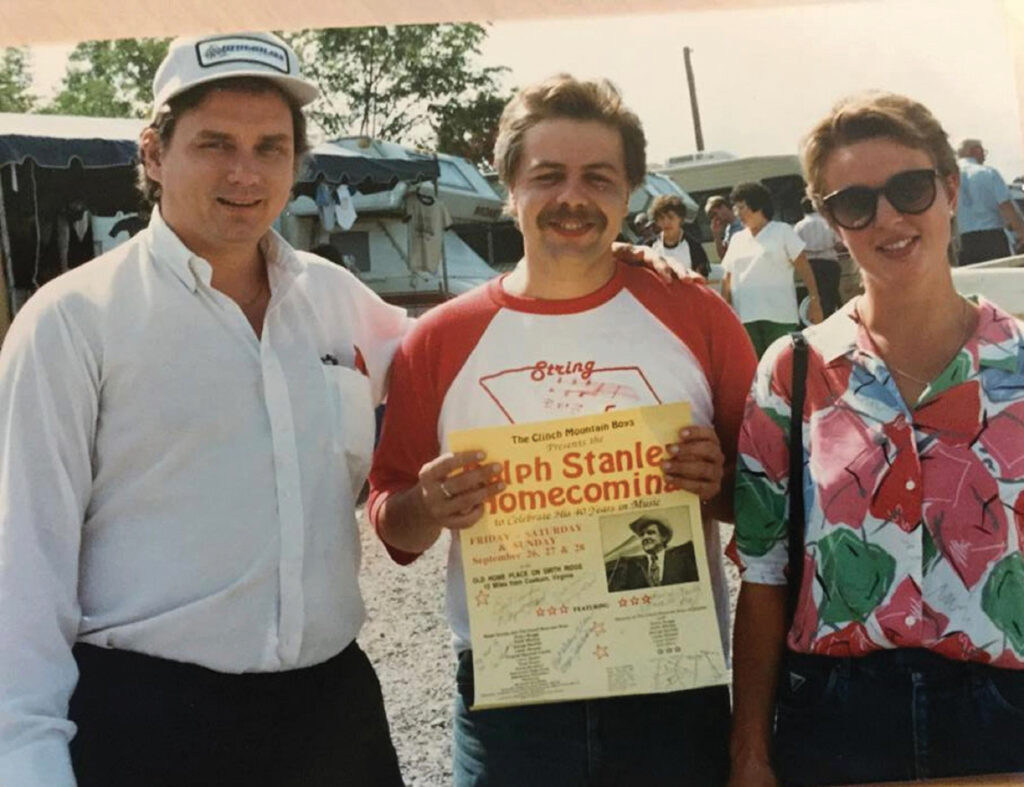
Ken recalled, “That was a fun summer. Jan came through the door and said, ‘We are here for the bluegrass.’ He and two friends camped out in my yard for a while. It wasn’t long before they made a lot of friends. They hung out at the store. We were their base of operations. They spent a lot of time picking. There were a lot of open mics. We had jam sessions going all day long. I was into it myself. Jan was a fine musician and probably as good or better than the musicians around here. He has become a pretty big figure in the bluegrass community. I am happy that he is getting the recognition that he should get.”
Jan had an amazing time while there. “I met Jimmy Martin, John Duffey, and Jim Eanes. I met Curly Seckler. It was like meeting a rock star to me. I taped everything.”
Jan returned to the US in 1983 when he received a scholarship in linguistics to attend UCLA to work on his PhD, but he never completed it because of his focus on bluegrass. “In 1985, I decided, ‘I’m going to take six months and immerse myself in the bluegrass culture.’ In 1986, I traveled back to Roanoke and stayed with Ken and Debbie and a week with Bill Evans, who was based out of Charlottesville at the time. He was with Cloud Valley.
“I wanted to go to Cliffside, North Carolina, to the Snuffy Jenkins festival. I took a Trailways bus from Charlottesville (Virginia) to Charlotte (North Carolina). You talk about hot! It took heat to a totally different level. Something I had never experienced really. I had no way to drive. I see a taxi who I guarantee never listened to bluegrass. I showed him the map from Bluegrass Unlimited, and he said, ‘Man, that’s out there, but he took me to the festival. I was new in this country and was probably wearing a flannel shirt. I was sweating profusely.” Theresa laughed, “He pulls up at this bluegrass festival in a taxi with blue jeans, a flannel shirt, and clogs with a fiddle and a backpack. That image to me is just unforgettable.”
Jan continued, “Immediately, people said, ‘Hey, man. Do you need a drink?’ John and Barbara Powell became longtime friends. They told me that I was wearing too much. They gave me some shorts and a t-shirt to wear and asked where I was going next. I said, ‘Dahlongea, Georgia. Both Bill Monroe and Tony Rice were going to be there.’ They said, ‘We know Milton Harkey. His sound company is doing sound there. You can ride with his crew.’ So I rode down in a big panel truck with Mark Keller and his girlfriend through the mountains of Georgia, while listening to Tony Rice live on tapes. It was pretty awesome.”
To hear the music first on recordings and then experience it live was a dream come true for Jan. Once there, Jan got to meet Bill Monroe, but not in the manner that he would have liked. “A gang from around Atlanta stayed up late, jammed, and consumed large quantities of cold beer. I go to bed about 5 am in my little pup tent. A new friend comes in around 8 am, and I’m not in good shape. He says, ‘Hey, man. Monroe wants to see you.’ I didn’t know much slang, but I might have used some harsh words with him. I thought it was a joke. He says, ‘No, I’m serious. Go take a shower. Monroe wants to meet you.’
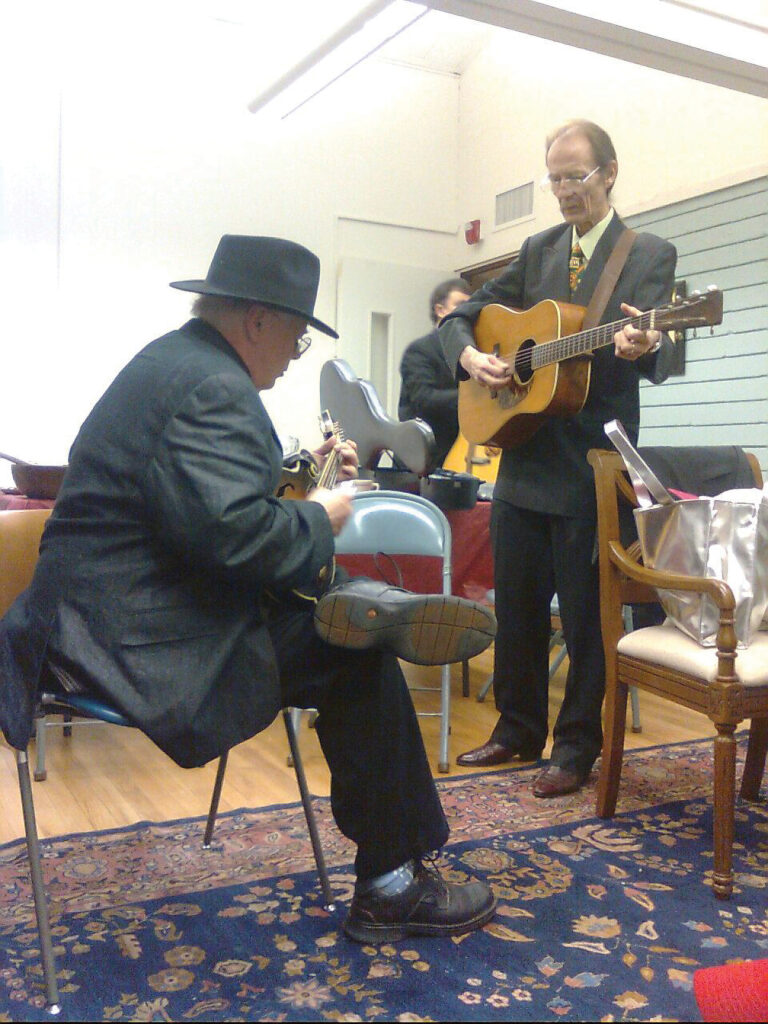
“I shower, but I have nothing to wear that would really be presentable to the Father of Bluegrass, probably just John Powell’s shorts. I opened the door and I see the Bluegrass Boys. The bass player was probably Johnny Montgomery with Tater (Tate) and Tom Ewing. They were all dressed up and looked like a formidable army. I walked in, and Monroe started asking, ‘You know any of my numbers?’ It was so intimidating. I said, ‘Yes, sir.’ I wasn’t feeling good and was shaking. He named a few numbers, and I played them. Then it was time for him to go. If I had only known, I would have practiced and been in good shape for something like that.”
After the festival, Jan returned to North Carolina. “Mark drops me off at Milton’s house in Asheville in the middle of the night. He’s asleep. We exchange a few pleasantries, and he tells me to go to the bedroom in the basement. I stayed between there and the Bluegrass Center (a record shop in Asheville) from 1986 to 1988. We’ve remained good friends. When things have been difficult, Milton has always been there.”
Harkey led Jan even deeper into the bluegrass world. “We first went to the Threshers’ Reunion (in Denton). The Easter Brothers from Mount Airy played that year. Milton asked, ‘You want to meet Bobby Hicks?’ I thought he was just kind of full of it. I said, ‘You mean THE Bobby Hicks?’ Forty-five minutes later, we pull up at Bobby’s on Tucker Street in Greensboro. We knock on the door, his wife answers, we walk in, and I hear Album Band Vol 4 playing in the background. That was pretty powerful. Bobby was like my teenage idol. I worked countless hours on his music. Then you walk in and here’s Bobby playing along with the record. Bobby became a dear friend of mine, but he could be stern. He played along on ‘Cheyenne’ and then he handed me his 5-string fiddle and said, ‘Now, let’s see what you can do’ in a not particularly friendly tone. I don’t even know what I played. I was so shocked.
“The next day, we go to a festival in Stuart (Virginia). Another hero of mine is Kenny Baker. Milton asks, ‘You want to play on stage with Kenny Baker?’ I thought, ‘This is just insane. It can’t be real.’ I remember Baker from record covers and a few videos I had seen. He was so little. I thought he was a giant. I asked, ‘Is that Kenny Baker? He looks so normal.’ He was as friendly as they come. We played some numbers on stage. I wanted to share these stories, so I called someone back in Sweden on a pay phone.”
Baker gifted Jan one of his hats. “He wears it on Bill Monroe-Working on a Building. That’s the hat he gave me, and I still have it.” Theresa elaborated. “It’s small. Jan can’t wear it, so he puts it on his students.” “Yeah, I had two little brothers that dressed up like the Monroe Brothers for Halloween. Nobody knew who they were. They were kind of disappointed,” he laughed.
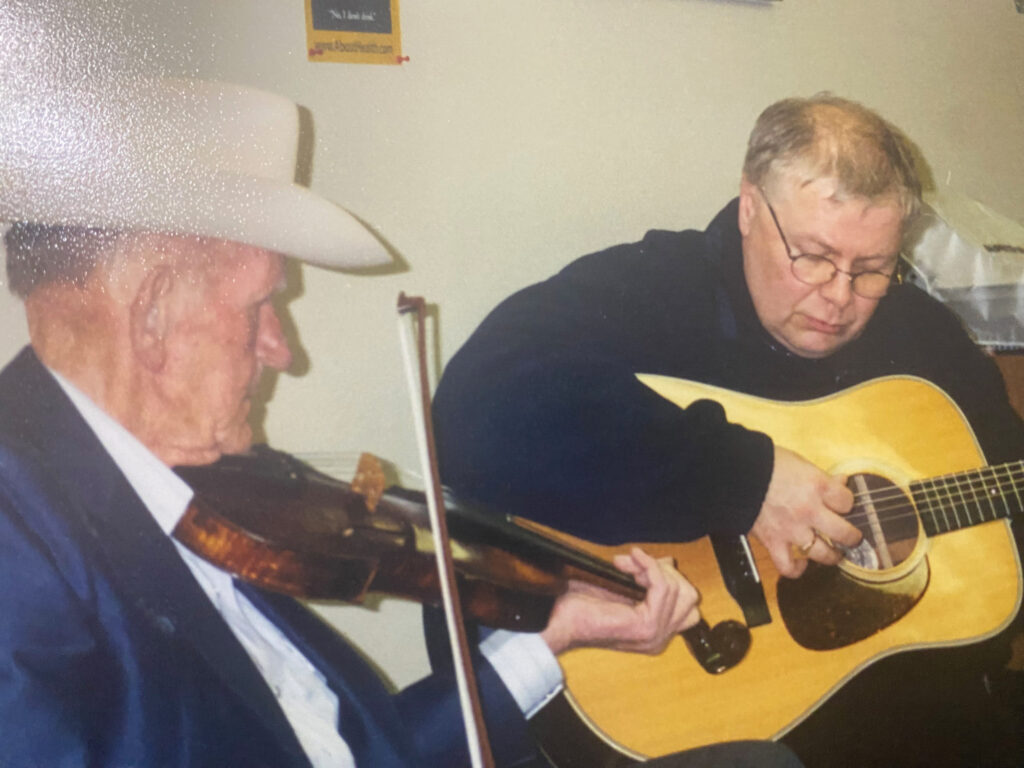
Jan’s musical adventures with Harkey continued. “The Album Band did a program for Ralph Emery in 1988. They did ‘Cheyenne’, ‘Age’, and ‘Devil in Disguise.’ I’m sure you’ve seen the video. Milton and I drove to Nashville and hung out with the Album Band that day. We had a good time. Now I see it on YouTube, and I was right there! Many times I’ve had to pinch myself. I didn’t really have any sports heroes, but people like the Album Band were my heroes. I developed a relationship with Tony Rice. If he didn’t hear from me, he’d call Theresa and just check in. He was a good-hearted guy.” Theresa explained. “They were kindred spirits. They both would stay up all night. They would have philosophical discussions about life and music at 2 am. If Tony couldn’t get Jan, he’d call me. This was during the time of Jan’s (heart) transplant. They made such a connection.”
Jan’s mood softened. “That morning we lost him was terrible. It was Christmas morning during COVID. Milton called me and said, ‘Have you heard anything about Tony?’ And I said, ‘No, what do you mean?’ He said, ‘I’ve heard some rumors that they’ve seen the coroner’s car there.’ I said, ‘OK, I will see what I can find out.’ I think I contacted Tim Stafford. I asked if it was true. There was no Christmas after that.
“I couldn’t believe that I’d lost him. He was a big part of my life during those years. I laid on the bed. There were no windows open, and the (bedroom) door was ajar. All of a sudden, it just slammed shut. We (Theresa and I) both said, ‘What was that?!’ I believe it was spiritual. Tony was very spiritual. He could get so sad and so depressed. Towards the end, he said, ‘Jan, all I do is talk about the negative things, and I bring you heartaches. I’m not going to call again.’”
Just talking about his relationship with Tony Rice brought Jan to tears. Theresa stressed, “It was a blessing to have known him. The same with Bobby (Hicks).” Jan readily agreed. “Bobby was one of my idols. That one day he would be cooking breakfast for me in his house…the idea was just so foreign. Or that Tony would call when I had students. I’d say to the student, ‘OK, wait. This is Tony Rice!’ They would say, ‘OK, right’ (in disbelief). Then I would put him on speaker phone. I wish I could retrieve some of the texts and voice messages that Tony would leave. They were precious. He had a flip phone, and it was (written) in all caps. It was a big pain for him to send a text.”
Next, Theresa shared how she and Jan met. “We met at Bass Mountain (Festival) on Memorial Day weekend in 1988. I grew up in bluegrass and had been going to that festival for years. Some friends and I were camping. Somebody said, ‘There are some Swedes playing bluegrass!’ They were playing between two cars. So we listened, and I found out his camp was right next to us. We visited. There was a lot of picking. I asked him later, ‘Are you hungry?’ I say, ‘I got him with an egg salad sandwich.’ We hung out and then got together at Denton.” Jan recalled, “I had to go back to Sweden. I was in the reserve in the Army, and I had to go back for a month in the middle of the fricking winter.”
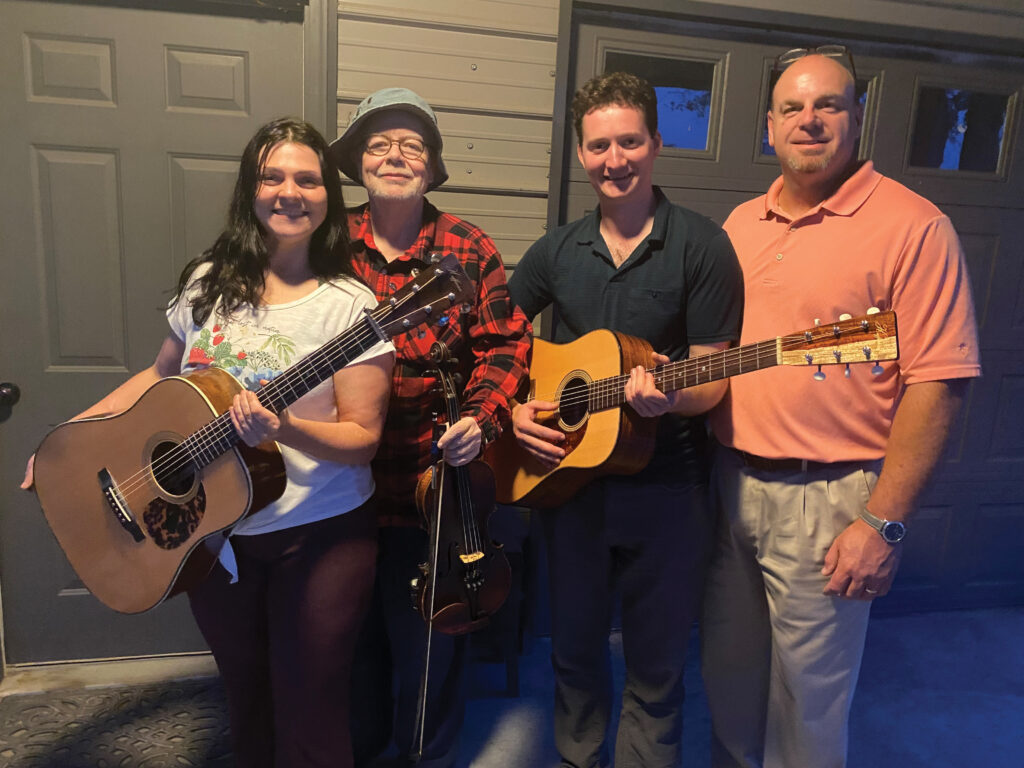
Theresa smiled, “He came back and we’ve been together ever since. We’ve been married 36 years. After eight years, we wanted to adopt from maybe Sweden or the Baltic countries. Somebody said, ‘Do you know Lorraine Jordan? She adopted from Russia.’ We got together with Lorraine. She was instrumental in us eventually adopting four children from Russia. She is godmother to the first child that we adopted. We were only going to adopt one child. But I say, ‘If you want to see God laugh, tell Him your plans.’ We ended up adopting four! We made three trips to Russia. Three are biological siblings. Our son is in the Navy on an aircraft carrier in the Red Sea. One daughter works with Lorraine, and we have seven grandchildren.”
Jan became a music instructor and more. “I’ve always been interested in sharing things with people. I taught my first lesson in Sweden in 1980. Then I taught people in Asheville at the Bluegrass Center. I became a substitute teacher in the schools. Then I taught phonetics at the university (level) for students that were going to be speech therapists. When I moved to Raleigh in 1989, I started teaching music there: fiddle, mandolin, guitar, and some bass. I have no idea how many I have taught. I taught John Teer with the Chatham County Line. They started as a bluegrass band and have expanded into so many different genres. There was a band called Mandolin Orange, now called Watchhouse. (Band member) Emily Frantz was my student. She would come every week through high school. A lot of times, we would sit on the floor and play fiddles. I taught the Sheffields that play for the Tennessee Bluegrass Band.” Jacob Sheffield praised his mentor. “There are few people I’d rather be around than Jan Johansson. Anyone who knows him can only testify to the great blessing he is in their life. I can’t say I’d be where I am today musically if it weren’t for him.
“He has a wealth of musical knowledge and is just an extremely wise man in general. I can’t tell you the amount of hours I’ve spent at his place just soaking up every minute. I’ve learned so much from him, and he really is one of my biggest inspirations. Although older and much wiser than me, Jan has never treated me as an inferior, but as a friend and mentor. He can be brutally honest, but never is so in a way that’s degrading or mean. He loves seeing the younger generation take an interest in music and always has an encouraging word to those who need it. He is genuinely one of the kindest people you’ll ever meet.
“Jan loves bluegrass, but more than anything, he is a lover of music. That’s what he has taught me more than anything. If music is good, it’s good. It doesn’t matter what genre it is. He has taught me how to be a musician: someone who can examine any given musical context and add to the overall beauty of the art. A good musician adapts. We have studied everything from jazz to classical pieces to blues, and much more. He has taught me about dynamics and musical tension as well.
“Music aside, he has given me great advice about life in general, and is someone I know I can always talk to without judgment. He has dedicated his life to music and inspiring a love for it in others. A heart transplant survivor, Jan is a fighter. His creativity in music is inspiring, and he has shown me how to be more creative in my own musical expression, as music is just a language where we express ourselves by note. If there’s anyone I could be when I grow up, it would be Jan Johansson.”
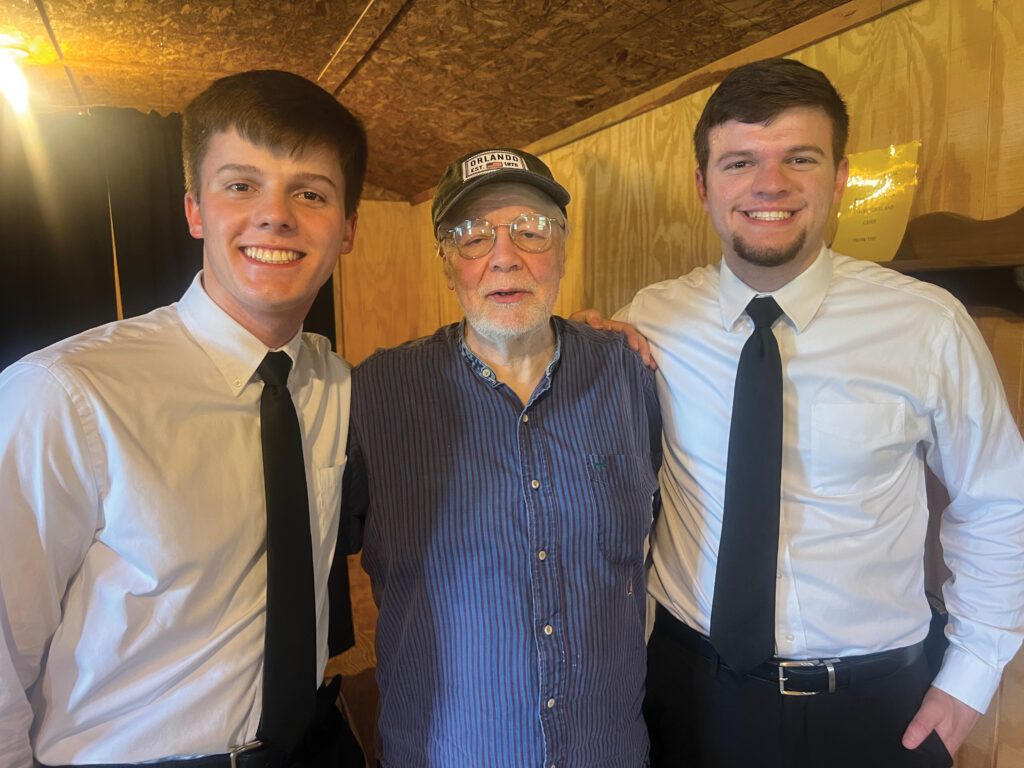
His older brother, Josiah, added, “Jan is one of the most gifted and inspirational teachers that bluegrass has ever had. Most of my ability to play bluegrass is owed to his teaching. He taught me how to sing baritone and taught my brother (to sing) tenor. Not only did he make me listen to good music, but learn to enjoy it. Jan is a good teacher and I am happy to call him a good friend. I always love listening to the many stories he told of the Bluegrass Album Band, Tony Rice, Kenny Baker, Vasser Clements, and Bobby Hicks. Jan is such an inspiration to me and my playing, and I can say that Jan is truly one of the greatest teachers in bluegrass music.”
Hugh Moore, a multi-instrumentalist from Raleigh who has performed with Jan in a band, lauded his teaching ability. “I don’t know anyone who has taught more successful young musicians than Jan. He has a bunch of young kids now that are going to be really good, and a whole bunch of adult players that he taught. All are playing Bill Monroe and Kenny Baker tunes. It’s pretty amazing.”
Jan makes friends wherever he goes, young and old. Fiddler Nathan Aldridge, 26, is a regular visitor in the Johansson household. “My first remembrance of Jan was when I was young, standing beside my dad in Al Batten’s band at a Lorraine Jordan festival in Burlington (North Carolina). He was playing with Russell Johnson. Now Jan and I hang out often. I think a lot of Jan musically and personally. He has a lot of patience with students. We just live 45 minutes apart. That’s nothing to a bluegrass musician! We have become good friends and I love him like a brother.
“As a historian, he makes time to explore or visit. I like that because on some trips I get to go! We went to see Bobby Hicks about three months before he passed. While we were there, I got him to sign my fiddle case. That’s a trip I’ll never forget! Then we took another trip to Roanoke to get like 500 albums and a sack full of 45s.” Jan added, “Nathan and I have a relationship where we sit down and play with every outfit. I play guitar a lot. I might teach him a lick here or there, and I might pick up some of his music.”
He has had many other memorable moments. “I played for the Osborne Brothers’ introduction into the Bluegrass Hall of Fame with John Hartford and the Nashville Bluegrass Band. I played fiddle on ‘Rocky Top’.”
Along the way, Jan has faced some difficult challenges with his health. “It has a lot to do with bluegrass. I used to play in this band called New Vintage that included Russell Johnson and Gena Britt. We played the Fanfest in Owensboro in 1994 after Alison Krauss. That was an out-of-body experience because everybody was so stressed out. The audience was like the best players out there. We were nervous. I could look down the line before we started, and everyone’s knees were shaking, but actually, we got an encore.”
“I was 36 and I thought I was in good physical form. I could feel a little tightness, but I thought it was just nerves. This is really a miracle. We were going to leave Saturday night and go through the mountains back to Raleigh. It’s really a long drive. Then we heard some music from this room: Butch Robins, Peter Rowan, Bill Harrell, and Mike Ramsey. Butch said, ‘Come join us on fiddle.’ I told Russell, ‘I don’t think we should leave tonight. This is too cool.’ So he agreed. Randy Howard came. We played until late and then went to bed. I woke up a few hours later with textbook heart attack symptoms: pain, nausea, and I threw up. I said, ‘Russell, I’m having a heart attack. You need to take me to the hospital.’ He didn’t believe me. I said, ‘I’m serious as a judge.’ It was September 11, 1994.”
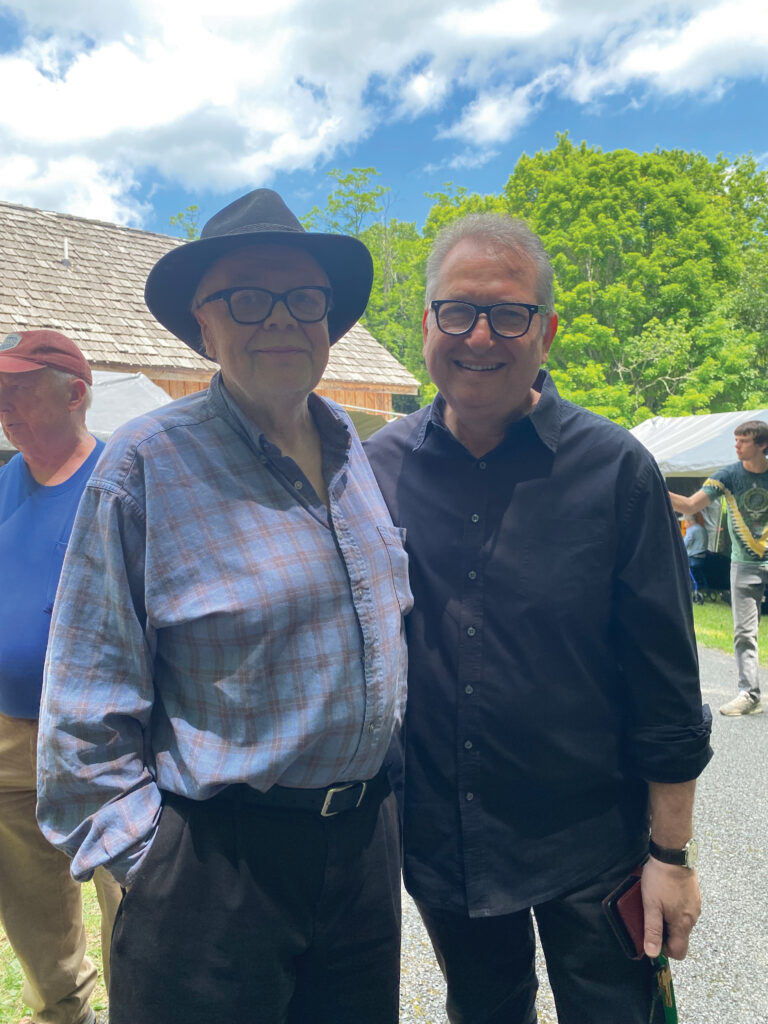
Fortunately, there was a trauma center in Owensboro. “I remember this nurse asked, ‘Does this green thing hook up to this red thing?’ Then I passed out. They probably gave me some morphine. So that all happened during IBMA. I spent a week in the hospital in Owensboro. Bill Evans and Dan Hayes would come and visit every day.”
Theresa recalled, “I was in Raleigh. Someone called and said Jan had a heart attack. I said, ‘That’s impossible.’ He had seen a cardiologist who said he was fine.’ The doctor took him off his meds, and then not even a week later, he had the heart attack.” Jan admitted, “After that, I had heart health problems. I remember when the congestive heart failure got so bad that when playing gigs, I had to lean against the wall. On instrumentals like ‘Salt Creek’, I could play the A part, but then I’d just nod (for someone to take over) because I couldn’t breathe.”
On June 28, 1999, Jan had open heart surgery where doctors performed a triple bypass. “In 2008, my cardiologist, Daryl Emory in Raleigh, told me, ‘Jan, we’ve done all we can for you with medicine. We need to think about the T word—Transplant. There are two hospitals in this area that do transplants: Duke and UNC. I went to Duke myself. I can call Duke, and they might call me back. I can call UNC and they will call me back.’ I had a good friend, David Tate, who is a banjo-playing cardiologist from Chapel Hill. I knew him from the bluegrass. I said, ‘I’ll go see him.’ He saved my life, literally. He was the director of the Cath Lab at UNC. He would work for twelve hours, and then he would come up and sit with me until midnight. He’s as good as they come. He will talk about Tony and Garcia and start crying. He’s so intense.”
Theresa added, “About Easter, his kidneys started to fail. They had not found a heart for him. So the doctors asked if he would be willing to have a heart pump, and we agreed.” Jan admitted, “It’s been defibrillators and heart pumps. I’m glad I had music that I can focus on and have an obsession for. I can get into that world and not get disturbed (by my heart issues).”
Theresa continued, “When he was waiting for his heart transplant, there was only a certain distance that we could travel from UNC. He was asked to play a benefit, but it was further than we were supposed to go. Jan liked this man and wanted to help (but declined). Jan took a nap. The phone rang, and they had the heart.”
On March 19, 2011, Jan underwent a heart transplant. “My heart came from a young African American man, 24 years old at the time, and also a musician,” Jan shared. Theresa was visibly moved. “He saved five people’s lives with his donations. When his family contacted us and wanted to hear from Jan, he wrote a beautiful instrumental, recorded it, and sent it to them.”
Jan called his tune, “Going Home.” Theresa recalled, “He basically lived in the cardiac intensive care unit at UNC for four months because his heart was so weak.” Jan interjected. “Christmas to Easter.” She smiled. “He had what they called the corner suite, and he had his musical instruments. David Tate and his band, Fescue 911, would all gather in his room and play music.”
Jan laughed, “One time I was in my room, pretty sick, and I woke up and heard bluegrass. I thought, ’What the hell is going on?’ I thought maybe I had died and they’re playing bluegrass in Heaven. But here’s David and his band playing music in my room. Within seconds, David handed me a mandolin. I was in no shape to play. He nodded at me to take a break, but I was hooked up with pulse oximeters and everything. He just cut it off, and it set off some alarms. The nurses came running and said, ‘Oh, it’s Tate!’”
Theresa related another incident. “He was going to play the fiddle, and he had a swan catheter.” Jan elaborated. “I started playing, and this thing just pulled out of my aorta, and blood was squirting like a garden hose. Even my doctor yelled, ‘Oh, my God!’
Since moving to America, Jan has been a part of many bluegrass bands. In addition to New Vintage, he played with Roby Huffman & the Bluegrass Cut-Ups, Lorraine Jordan & Carolina Road, Bluegrass Gentlemen, and Jan Johansson & Friends. Former bandmate, Russell Johnson, shared, “I know how much he has done to preserve and educate folks about bluegrass. You just have to look at the folks out playing that have had lessons with Jan to know how valuable a teacher he is. I’ve known Jan since the summer of 1991. He sat in with an early incarnation of New Vintage that was playing at The Upper Deck in Cary. He was playing with Roby Huffman at that time, but would make some shows with us, too. I believe Jan joined full-time, along with Greg Corebett on banjo, around January 1992. (Greg left Memorial Day to join the Country Gentlemen.) Then Gena Britt and Zack McLamb joined the band, Earl Lewellyn switched from banjo to guitar, Jan played fiddle, and the band clicked. In 1993, we went on to win the SPBGMA National Band Championship in January and the Pizza Hut International Bluegrass Showdown in Louisville, Kentucky, in September. Jan played with us until August 1997.
“He was instrumental in the ‘sound’ we had back then. A very traditional-sounding fiddler who played exciting solos, but was exceptional at backing the vocals. He and I both had a love of Monroe’s music, and there were countless hours spent during those early years at home and travelling, listening and talking about Bill Monroe. During the course of his tenure, he played some mandolin on gospel pieces and even sang some baritone. He recorded (with us) on Timeless, No Time For The Blues, and Sands of Time CDs (the latter two for Pinecastle).
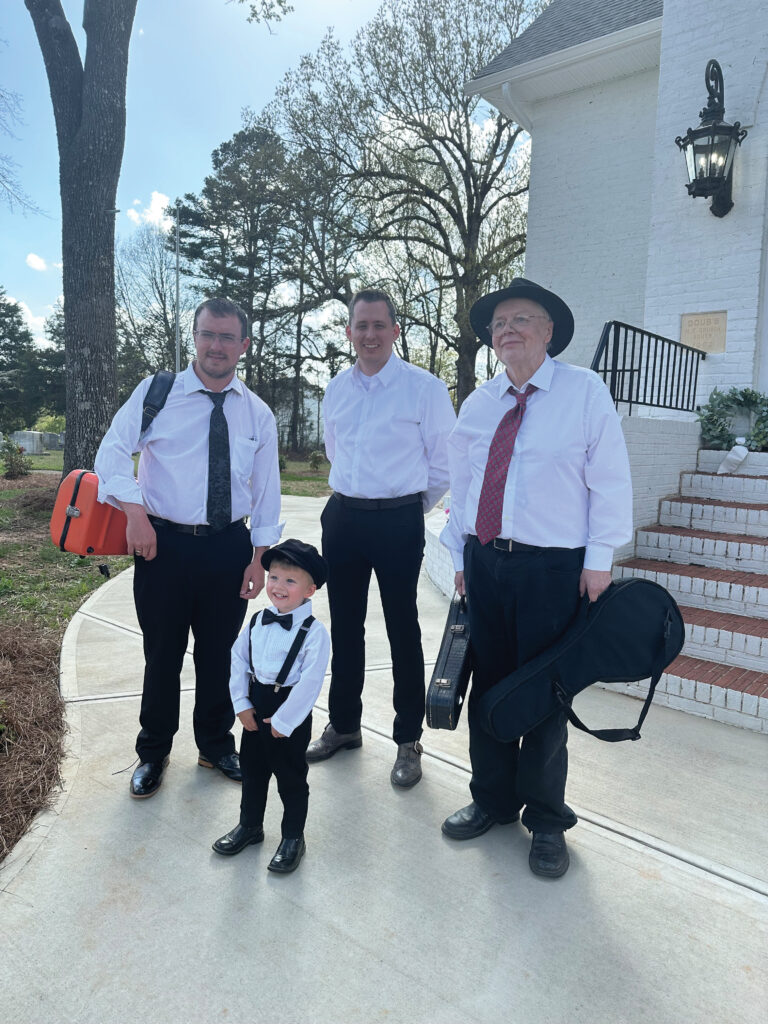
“Jan was a historian even back in those days. He had a very large LP collection of early bluegrass. He has befriended many of the music’s important players, contemporary and pioneers, and with his YouTube channel, he has been able to share so much with the general public. There’s no substitute for talking with the actual folks (like Baker, Hicks, Rice, etc.).
“Jan had an active teaching studio even in the early days of New Vintage. It would be interesting to see just how many folks he has taught. Being able to teach mandolin, guitar, along with fiddle (and bass) also gives him the ability to explain and share with his students the role of each of those instruments in the context of playing in a bluegrass band. Jan has been instrumental in sharing, teaching, and performing bluegrass music in central North Carolina for over thirty-five years. With the scope of his YouTube channel, he has shared his knowledge and love of bluegrass with people all over the world.”
And Jan has participated in musical tours throughout the world. “I went to Sweden to play several times with different bands. Once I was there for 18 hours. It seemed a little short! I went to Europe with Lorraine and played in Denmark, Germany, Switzerland, and Holland. I did two stints in Japan with a local group there, Bluegrass 76. The first time it was six months, and the second was three months.”
Promoter Milton Harkey praised his long-time friend, “Let me rave about Jan, a true gem in the world of bluegrass teaching! This talented individual journeyed all the way from Sweden, diving headfirst into the bluegrass scene—no small feat, considering he studied the genre before setting foot in the States! Imagine mastering the art of bluegrass in a land far away and never even having the luxury of late-night YouTube tutorials in the ‘80s! Jan’s primary instrument is the fiddle, but he’s also a whiz with the mandolin and guitar. His knowledge of bluegrass music is so deep, it could probably fill a book—or at least a very entertaining podcast! He knows every song, every nuance, and every artist like the back of his hand.
“As someone who’s dedicated his life to teaching, Jan has been a guiding light for countless students eager to learn the ins and outs of this beautiful genre. Want to soak up the essence of bluegrass and how it was originally recorded? Jan is the ultimate teacher for that journey! He’s made a significant impact while playing with New Vintage, where his outstanding breaks, timing, and backup work added a unique flair to the band’s sound. While the rest of the band brought their own creativity, Jan’s contributions were simply out of this world! Taking lessons from him isn’t just about learning to play notes; it’s about gaining the confidence to join a bluegrass band and truly shine. He knows how to play it, he knows how to teach it, and he’s undoubtedly a treasure for the bluegrass community.”
Jan was honored with an award for his contributions to bluegrass music at the Granite Quarry Fiddlers’ Convention on October 11, 2025, near Salisbury, North Carolina. Vivian Hopkins, former North Carolina Bluegrass Association president, shared. “I am honored to be included in Jan’s vast circle of friends. He is so talented and humble. The library of interviews and music that he continues to build is immense and so important. I am thrilled to be honoring him and have hopes that this is just a springboard for further recognition.”
Jan expressed, “I am deeply honored to have been named This Year’s Honoree at the 59th Annual Granite Quarry Civitan Fiddlers’ Convention. It means a lot to me personally. When I was in high school at Nordanåskolan in Skellefteå, Sweden, we were asked to write a brief visionary paragraph about ‘Where Do You See Yourself 30 Years from Now?’ I wrote: ‘I will hopefully be somewhere in the Southeastern United States playing bluegrass music.’”
And despite all the odds, that is just exactly what happened! “Follow your dreams, if there is a will, there is a way,” he concluded. May we all be so fortunate.