
Jake Howard
Mandolin Ambassador
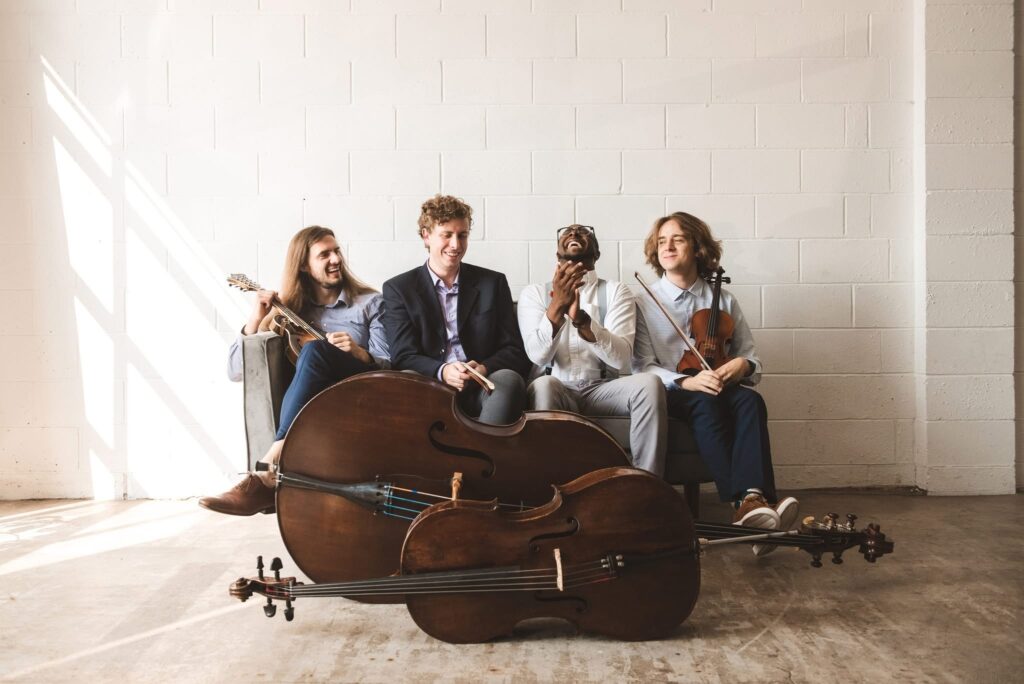
While I was browsing YouTube a while back, I ran across a video titled “Mandolin (small…but MIGHTY).” At the opening of the video, Jake Howard of Henhouse Prowlers was blazing through a mandolin solo. Rob Scallon, the video’s host and interviewer, was sitting next to Jake and playing the guitar. Two members of Henhouse Prowlers, Jon Goldfine on bass and Ben Wright on banjo, were in the background. The solo ended, and the host comments, “That was too fast for me!” Jake turns around to look at his bandmates in the background and says, “Let’s see what we can do.” They proceed to play the same break, but crank it up to an even faster tempo. It was impressive to me how clean and fluid Jake’s mandolin solo was at that speed. I was inspired to do some digging into Jake’s background and find more about him, such as how long he had been playing mandolin, when did he join the Henhouse Prowlers, and if he offered any online content to help aspiring mandolin players learn to pick. I found Jake’s story to be as interesting and captivating as his mandolin playing.
Background
A native of Akron, Ohio, Jake said that he did not grow up in a musical family; however, he did have an uncle who played the guitar, who was the inspiration behind his becoming interested in music. He said, “I think it was sixth grade when I got my first guitar. I kind of learned a few chords, and then I stored it away for years and never really picked it up again. The guitar never really spoke to me.”
When Jake was in high school, his uncle started playing the banjo. Jake said, “He wanted to start a bluegrass band. He had a bass player and a guitar player, but no mandolin player. He picked me up one day after school and asked if I was interested in learning how to play the mandolin and being in a band. I’d never heard bluegrass before in my life. That day, in his white Ford F-150 pickup truck, he put in a compilation disc. The first song was Earl Scruggs’ ‘Foggy Mountain Breakdown.’ I thought, ‘That is really cool. I think I like that.’ The next song was ‘Port Tobacco,’ a Tony Rice recording. I heard the mandolin and thought, ‘Wow! That is amazing!’ The sound and the technical ability all spoke to me right then and there. We went to a local music store and picked up a Kentucky KM-150 mandolin, and I fell in love with it. It was an immediate connection. Through high school, I would come home and play for five to eight hours a day. It was love at first sight.”
Jake got his first mandolin in about 2009 when he was a sophomore in high school. Not much time passed between him getting that Kentucky mandolin and starting to perform on stage with his uncle’s band. Jake said, “For a band that didn’t play out that much, we practiced every Friday night and every Sunday night until I went to college. Our first show would have been about a year into my learning how to play. There was a little bit of a gap, but there was a lot of practice.”
When asked how he started to learn how to play, Jake said, “I was one of the YouTube kids. I watched all of the Chris Thile, Adam Steffey, and Sierra Hull videos I could find. I’d slow them down, watch what they were doing, and try to pick up some of it. I didn’t have a teacher until my first lesson in college at the Berklee College of Music. I remember walking into a classroom and having Joe K. Walsh sit across from me, and that was my first official lesson. I think part of the reason that I play the mandolin the way I do is that I was somewhat self-taught. I had to figure out ways that worked for me…but lessons would have helped.”
Learning how to play from watching YouTube videos, many students miss some of the important foundational skills. When asked how he developed a good foundation on the mandolin, Jake said, “There was no David Benedict back then. He would have really helped my playing. YouTube had a function that allowed you to slow down the video. I would pick my heroes, slow down the videos, and watch how their left hand worked and how their right hand worked technique-wise. I would watch them at quarter speed and soak it in. You name a Chris Thile video, and I’ve probably seen it. It became obsessive. I think you have to be a little obsessive to get to the next level. I probably took it to the extreme; maybe five to eight hours a day is not healthy, but it worked.
“I do remember learning how to do alternate picking. It is a really simple rule—downstrokes on the downbeats, upstrokes on the upbeats. I remember that really changing my life once I sat down and decided that I was going to figure this out. The first song I learned was ‘Bill Cheatham’ from tab. I spent a whole month learning this tune, and I didn’t understand down-up picking, so I could not get it fast. Once my uncle suggested that I should use alternate picking and sent me a video of someone doing it, after that, it just clicked. I thought, ‘This is major.’”
Starting to learn how to play the mandolin by first learning Chris Thile’s arrangements is a lot more difficult than starting with simple arrangements of songs like “Cripple Creek” or “Old Joe Clark.” When asked about jumping into some of the most difficult arrangements on the mandolin right off the bat, Jake said, “I was really stubborn. I really wanted to learn how to play the mandolin, and I didn’t have any context for bluegrass. I didn’t grow up in a community where I would pick with people and learn the repertoire. I thought, ‘I’m going to learn this Chris Thile stuff,’ because that is what resonated with me right away. The technicality of it, the tone, the speed…it was like, ‘This is it! This is cool!”
Jake’s approach to learning songs that his uncle’s band was performing was to first learn the melody by ear and then learn how to throw in simple phrases to embellish the melody. He said, “Nothing was improvised. It was set. I would learn the melody and then learn a solo, which was basically the melody, and I would practice that until I couldn’t mess it up. When I got on stage, I was hoping that the training of nailing it every time in practice would pay off.” Although the band only played out about once a month, Jake said that they did open for bands who were touring through Ohio, like The Infamous Stringdusters, Lindsey Lou and the Flatbellys, and Pert Near Sandstone. They also entered the DelFest band contest in 2011.
When asked if he ever had the opportunity to meet Chris Thile, the person whom he spent so much time watching on video, Jake said, “I did meet him when the Punch Brothers performed at the Beachland Ballroom & Tavern in Cleveland. It was right after I had auditioned for the Berklee College of Music, so it must have been 2012. He was hanging out with people outside after the gig, and I had my mandolin with me. I played him ‘Attaboy’ from The Goat Rodeo Sessions. That album had just come out, and I used that song for my audition piece. I played it for him and, as you can imagine, I was the most nervous person on earth at that moment, and he was really great. He gave me words of encouragement and told me to keep on picking.”
Berklee College of Music
Not long after Jake started to learn how to play the mandolin, he decided that he wanted to study music when he went to college, and he wanted to play music for a living after college. As he approached the end of his high school years, some friends recommended that if he was interested in studying music in college, he should go to the Berklee College of Music. He said, “My friends told me that if I was really interested in being a musician, I either needed to join a band after high school or go to college to study music. I didn’t feel like I was ready to join a band yet because I still had a lot to learn. I was really green. I didn’t feel like I could apply to Berklee because I had only been playing for two years at that point, and I thought there was no way that I was going to be able to learn beside the kids at Berklee. They were the cream of the crop. I thought that those kids had lived with music their whole lives and really understood it. I was just this kid from northeast Ohio who fell in love with bluegrass and learned from YouTube. So, I was not going to apply for Berklee.”
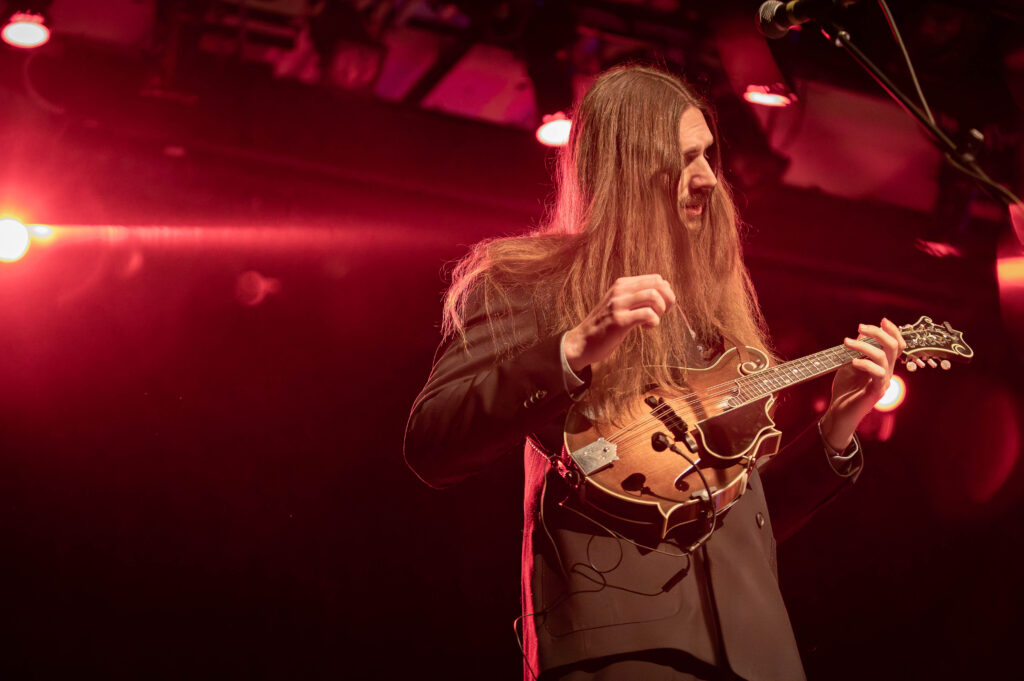
Jake’s mother and his friends had other ideas. He said, “It was January of 2012, and I was a senior in high school. My mother walks into my room and hands me a piece of paper that had my audition date for Berklee, and it was the next week. My mom and my three best friends from high school got together and decided that I needed to apply, so they applied for me. I had an audition date and a week to prepare. That whole week was mind-numbing and nerve-racking.”
Auditions for Berklee happen around the country in certain cities. Jake was able to travel 40 minutes to Cleveland and take his audition. There is a fifteen-minute audition process followed by a fifteen-minute interview. Jake said, “For the audition, you prepare a piece, which for me was ‘Attaboy.’ Then they do some improv sessions where they clap rhythms and you clap them back. Then they will pick a key, and you have to improvise over that key. They do sight reading, which was hilarious, because I didn’t know how to read or write music. I didn’t know anything. They set me down to sight read, and I told them that I couldn’t read. I felt like that was the crushing moment of defeat.”
After finishing the interview portion of the audition, Jake had to wait and hear if he was going to be accepted. He said, “I was expecting nothing…absolutely crickets from Berklee. I got a letter in the mail congratulating me on making it into Berklee. On top of that, they gave me a scholarship. I was blown away.”
After taking a year’s deferment after high school, Jake started at Berklee in the fall of 2013. When asked about how he was able to handle the intense learning process at Berklee after only having been playing the mandolin for two years, Jake said, “I have lessons that I recorded when I was there that I am still going back to and learning from. It was almost too much information for someone who was just getting into music theory and trying to put all of the pieces together. But it was a really good experience. Any information that I wanted to have in relation to music was there. There were no limitations. I didn’t know how to read, I didn’t know what a triad was…all of this fundamental stuff I was learning in the first semester. That first semester was a whirlwind. I was all sorts of hurting. My mind was blown in every moment.” Jake spent four years at Berklee, graduating in 2017.
Life on the Road
Towards the end of his time at Berklee, Jake performed in a duo called The Page Turners. In 2016, they won the duo competition at the Fresh Grass Festival. The duo consisted of a mandolin with fiddle, plus vocals. Later, the group would sometimes add a guitar and/or bass.
The day after Jake graduated from Berklee, the duo drove from Boston to Ohio. Waiting for them in Ohio was a 2004 Sprinter Van that his uncle had sold to them. Jake said, “We spent one day working on the van and then booked it to the West Coast and started touring heavily for a year and a half. We hit it hard and started to learn how to start this music career. I couldn’t have asked for a better start.” While most of the shows they performed were duo shows, occasionally a friend would sit in on bass or guitar.
By 2018, the duo was living in Austin and ended up going their separate ways. Jake recalls, “2018 and 2019 were interesting years in my life. I moved to Nashville for two weeks and decided it wasn’t the right time for that. I moved back home to Akron for about a year and then figured that I should maybe not live with my parents my whole life. My best friend was living in Los Angeles, so, in the summer of 2019, I moved to LA and stayed with my best friend for six months, and tried to figure out what I wanted to do with my life. I almost gave up playing music at that point.”
Henhouse Prowlers
In December of 2019, just when he was about to give up music, Jake saw an advertisement on the mandolincafe.com website. A band that played 150 shows a year and played internationally was looking for a mandolin player. The ad did not list the band name. Jake said, “I was looking for any opportunity to get me into music again. The band ended up being the Henhouse Prowlers, the band I’m currently in right now.”
Henhouse Prowlers were interested in hiring Jake, so they brought him out on the road with them for a three-day run to get a feel for whether or not he would be a good fit for the band. Jake said, “I remember that I talked them into having me play a whole month with them. I said, ‘I know that you don’t have a mandolin player, why don’t you let me play the whole month and we’ll see how it goes.’ There was an awkward silence on the phone, but they eventually agreed to it. When you are out on the road, you have to make sure that the personalities mesh. That is the biggest thing. The first gig was in Grand Rapids, Michigan, in early 2020, right before the pandemic, and I came prepared. I learned all of their original tunes and all of the international tunes that they picked up traveling for the State Department. I wanted to be prepared for anything that they would call, and I think that impressed them.”
Joining a new band a month before the COVID shutdown is not an ideal situation. Recalling that time, Jake said, “We played about 14 gigs and then total shutdown. It was an interesting time to join a touring band that travels the world…I wouldn’t recommend it. But it ended up working out because we cut a record during the summer of that year.”
One of the things that the Henhouse Prowlers are well-known for is traveling the world as part of the U.S. State Department’s cultural outreach efforts. The Chicago-based band has been together for 20 years, and during that time, they have traveled to more than 30 different countries around the world.
The band’s most recent trip abroad—where they not only share bluegrass music with people in foreign countries, but also perform with musicians in those countries and absorb some of the musical vocabulary and repertoire from those countries—was to Kazakhstan. Because of their work abroad, the band has its own non-profit called Bluegrass Ambassadors with a mission to educate and inspire through the cultural exchange of music. Jake said, “Through the non-profit, we try to do the same work that we have done with the State Department, but fund ourselves through the non-profit. We did our first official trip that we funded last November when we traveled to the Czech Republic.” You can learn more about their work and music education at bluegrassambassadors.org
Teaching Mandolin
As you may have come to realize by reading this article so far, Jake is kind of a mandolin fanatic. As passionate as he is about playing the mandolin, that passion also carries over to teaching others how to play the instrument. The vehicle that he mainly uses to help others learn how to play is Patreon. Currently, he has over 1900 Patreon members who can join his Patreon for free or provide a donation. He said, “I put out mandolin content as much as I can. The stuff that really interests me is the stuff that I did when I first started learning how to play—transcribing and learning solos. So, a big part of what I do on Patreon is what I call ‘artist month.’ I will take one of my favorite mandolin players, and I will transcribe 30 or 31 pieces, depending on the length of the month. I’ll do a video and I’ll post free sheet music along with it that people can look at to learn a solo. The first one I did was Ronnie McCoury. I don’t know where I got the idea, but I just thought it would be interesting to do thirty solos of Ronnie’s playing.”
Since posting that first month of Ronnie McCoury transcriptions, Jake has done the same thing for Tim O’Brien, Chris Thile, Sam Bush, Adam Steffey, and Sierra Hull. He also includes lessons on other topics such as double stops and harmonizing fiddle tunes. Additionally, he has a section titled “Transcription Tuesdays” where he posts a new mandolin transcription each week. As of July 2025, he has posted 106 transcriptions in this section. Another feature of Jake’s Patreon site is a section titled “Transcription Books.” In this section, he either pulls together all of the transcriptions that he has produced by a particular artist into one place, or he transcribes certain albums, like the transcription book for mandolin from the Tony Rice Plays and Sings Bluegrass album. In this book, Jake transcribed Tony Rice’s guitar solo on the mandolin.
If you are a mandolin player, I highly recommend that you check out Jake’s Patreon page. Everything on his Patreon is free to anyone. However, if you find it helpful, I recommend that you donate some money to the cause. It is well worth five dollars per month.
When asked about his offering all of this material for free, Jake said, “It is a dumb business model. But, when I look back and think, ‘Would I rather have a community of highly educated mandolin players, or not?’ I’m going to choose to want people to be highly educated. One of the ways to do that is to offer free material.”
While the majority of Jake’s Patreon content is transcriptions, he also has a section that he calls “Mandolin Minute,” where he addresses a subject related to playing that mandolin and takes a couple of minutes to briefly go through it. Some of the topics here include playing tremolo, improvising on fiddle tunes, and playing double stops. In addition to Jake’s Patreon page, he also maintains a YouTube channel that currently includes over 300 video lessons. Jake also teaches private lessons over the internet and has taught at a number of music camps (jakehowardmusic.com).
When working with private students, Jake likes to allow the students’ goals to drive the lessons, and he emphasized that he is willing to work with anyone at any level for any number of lessons. He said, “I want people to have passion, and so the first thing I do with students is ask them who their favorite players are and what they love about their playing. That gives me a good idea about how we need to approach the instrument. We have to figure out what makes the student tick—what will make them so excited about the mandolin that they will want to pick it up every day.”
When asked what skills he finds that students who have been trying to learn on their own typically need to work on, he said that for those who are interested in improvisation, they need to build a knowledge of the fretboard and increase their repertoire. He said, “I think to be good at any genre of music, you have to learn songs from that genre, and you have to learn a lot of them. General fingerboard knowledge, like finding your octaves or knowing where your arpeggios are located—this is good fundamental stuff that I also had to learn myself. I had to go to college to figure that stuff out. Not that you have to go to college, but that is the way my journey worked.”
Jake adds, “Another thing that I tell everyone is that if they can nail alternate picking and get really good at that, their future on the mandolin is going to be super bright. Thile is a master at that. He is flawless at down-up picking. He has moments where he does not do that, but he first studied for years how to get good at that. It is a fundamental, foundational thing.”
Something Jake also recommends to his students is that they first work to play everything very slow, even when working on improvisation. He said, “If I’m learning something new with improvising, I am taking it so slow. I’ll ask a student to play a C major arpeggio, or a C major scale, over this, this, or this, and they go right up to speed and try to do it. I would rather they play slow and get the stuff down. People just want to play fast, and I don’t blame them, but you have to play it slow. When I’m working on something, I’ll slow it down to death march slow and play along with it. That way, I can hear what is happening and make sure that it is fundamentally all good.”
Jake also has a conversation with students to make them aware of the fact that reaching their goals with the mandolin is going to take time and that if they can have patience with it, they can avoid becoming frustrated. He said, “The people who you listen to who play mandolin, the ones that you are amazed by, have been playing their whole life, and they are still practicing hours a day. You have to put it in perspective if you are an adult who has a day job and just plays the mandolin on the side. At some point, you have to be realistic and ask how much time can you put into the mandolin? That is never a fun conversation.”
If you are a mandolin player or interested in learning how to play the mandolin, I suggest you check out some of Jake’s videos online. His passion and excitement for the mandolin are infectious. You will find yourself wanting to spend more time with your mandolin by just watching him play.