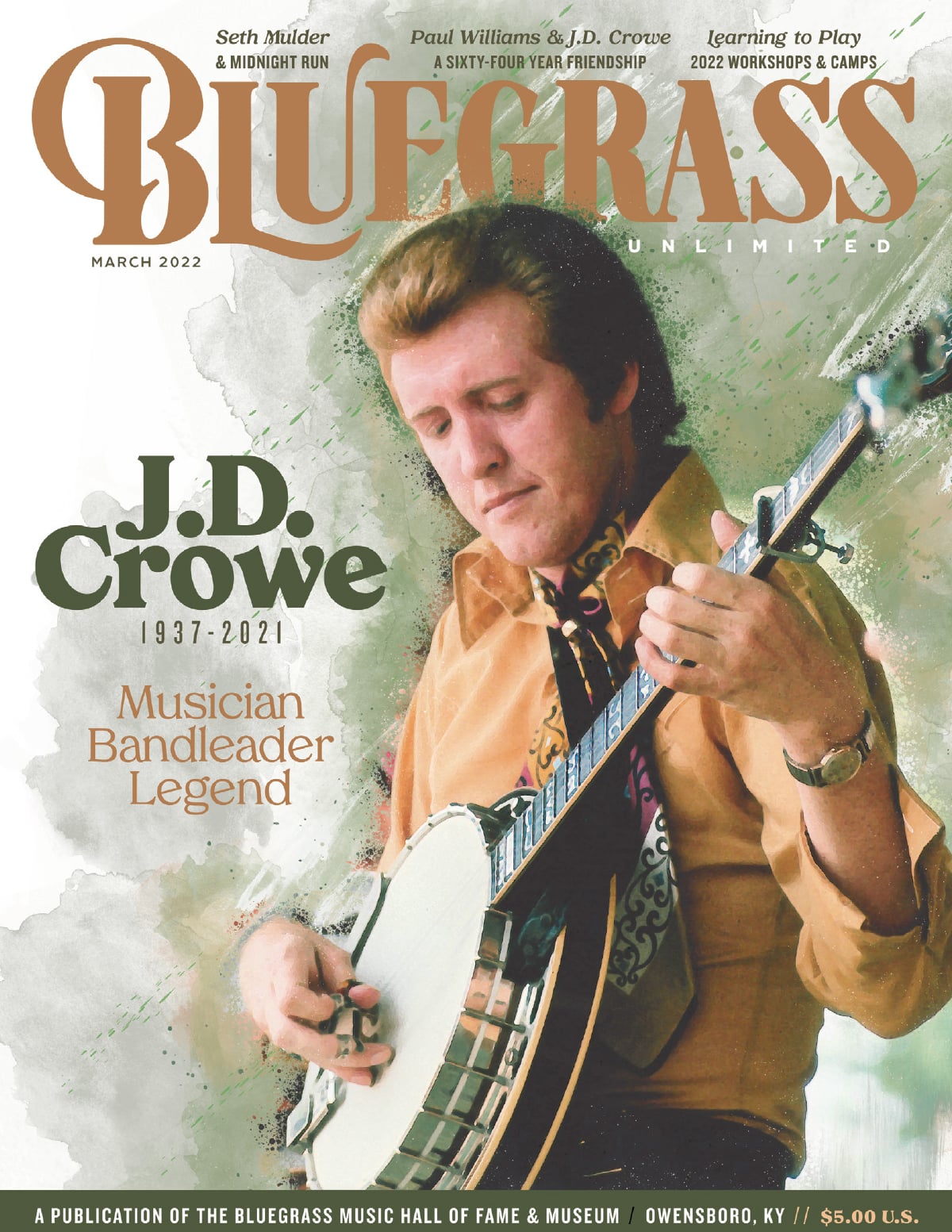
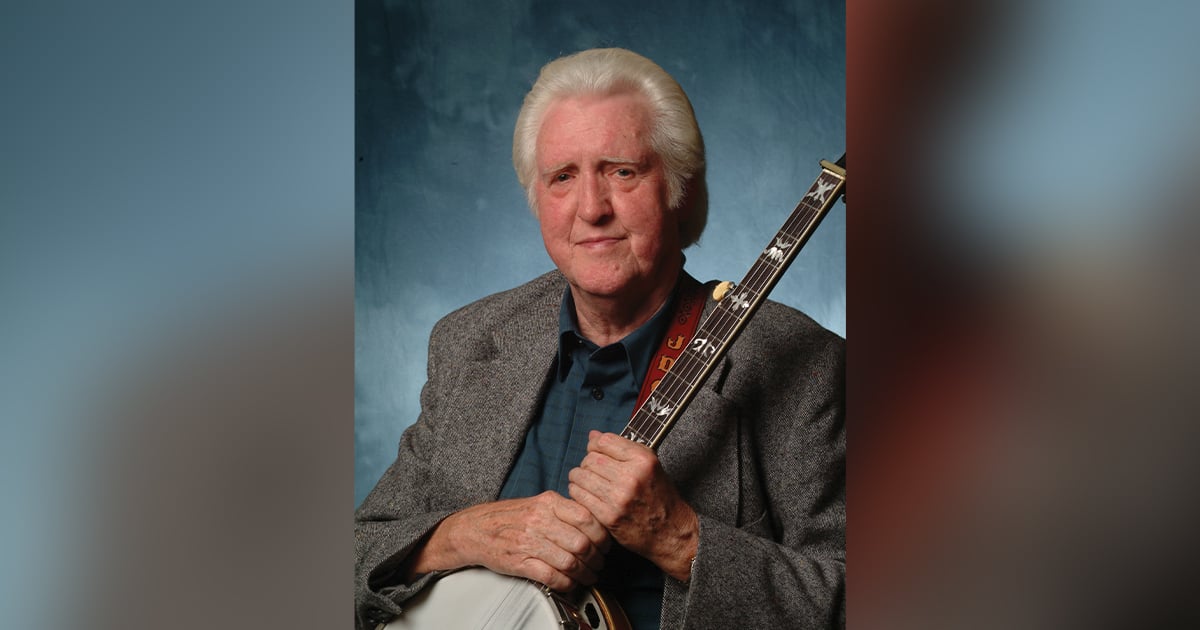
J.D. Crowe
Musician, Bandleader, Legend
An uncountable number of bluegrass fans regarded J.D. Crowe as a preeminent banjo player. His impeccable instrumental work on the banjo has been frequently and alliteratively characterized in superlative terms, emphasizing his drive and his masterful combination of taste, touch, tone, and timing. Many former bandmates and personal friends also knew Crowe to be one of the most innovative bluegrass musicians and bandleaders ever. To those privileged to know him personally, he was a man of integrity, honor, and unfailing humor. Under his own gentle guidance, all the members of his bands through the years worked toward J.D.’s high standard of musical excellence, and all acknowledged the depth and breadth of what they had learned at the J.D. Crowe school of music-making.
While Crowe’s roots in tradition were as solidly grounded as those of his own mentors, he has been rightfully recognized as well for the considerable progressive influence he brought to bluegrass. Over decades, he exerted that influence in his own careful way, via his broad welcoming into his bands’ repertoires of other musical styles, from country and folk to rock and blues. It could all be good music to J.D., as long as he and his band members together played it to his high standard of vocal and instrumental perfection.
Background, Musical Training and Apprenticeship
Most of the biographical details that follow are more fully chronicled in several key sources, principally: Marty Godbey’s 2011 book Crowe on the Banjo: The Music Life of J.D. Crowe; the Bluegrass Hall of Fame and Museum’s video oral history interview of J.D. at the University of Kentucky’s Nunn Center for Oral History (nunncenter.net/bluegrass/items/show/61); H. Russell Farmer’s 2009 video biography on Kentucky Educational Television (KET), entitled A Kentucky Treasure: The J.D. Crowe Story; and archived articles from 1969 and 1974 at Bluegrass Unlimited (www.bluegrassunlimited.com).
J.D. Crowe was born on August 27, 1937 in Lexington, Kentucky—the heart of the Inner Bluegrass region of the Bluegrass State—and, though ultimately widely traveled, he lived in or near Lexington nearly all his life. He grew up in a farm-based family that loved and appreciated music, and young J.D. took in the sounds of many musical forms. He especially treasured instrumental country music, notably the prominent electric guitar leads played by Billy Byrd in Ernest Tubb’s band, and young Crowe intended to play guitar. But then, as a 12-year-old music lover, he heard, saw, and was transformed by the banjo playing of Earl Scruggs.
For several years after September 1949, Lester Flatt, Earl Scruggs and the Foggy Mountain Boys intermittently lived in a Lexington trailer park, and were featured cast members of the nearby Kentucky Mountain Barn Dance, a live weekly WVLK radio show emanating from the Clay-Gentry Arena, a livestock sales venue. At their first show the young J.D. Crowe was immediately enthralled by the new band’s presence: their powerful vocals, microphone-centric choreography, and especially the electrifying banjo work of Earl Scruggs. As Crowe later put it interviews, “I never heard a sound like that.” “It hit me like a ton of bricks!”
Once he had a banjo of his own, the slender young red-headed J.D. devoted himself to learning to play the songs of Flatt and Scruggs in Earl’s own style. J.D. positioned his right hand in a way that let him strike each string clearly, and while the high arched position of his picking hand may have looked awkward to others, it became a defining look of his playing, which observers later dubbed “the Claw.” Like his own hero, Earl Scruggs, Crowe focused always on (as banjophiles say) “pulling tone” as well as imparting his recognizable perfection in the timing of his right-hand’s work in actually sounding the strings.
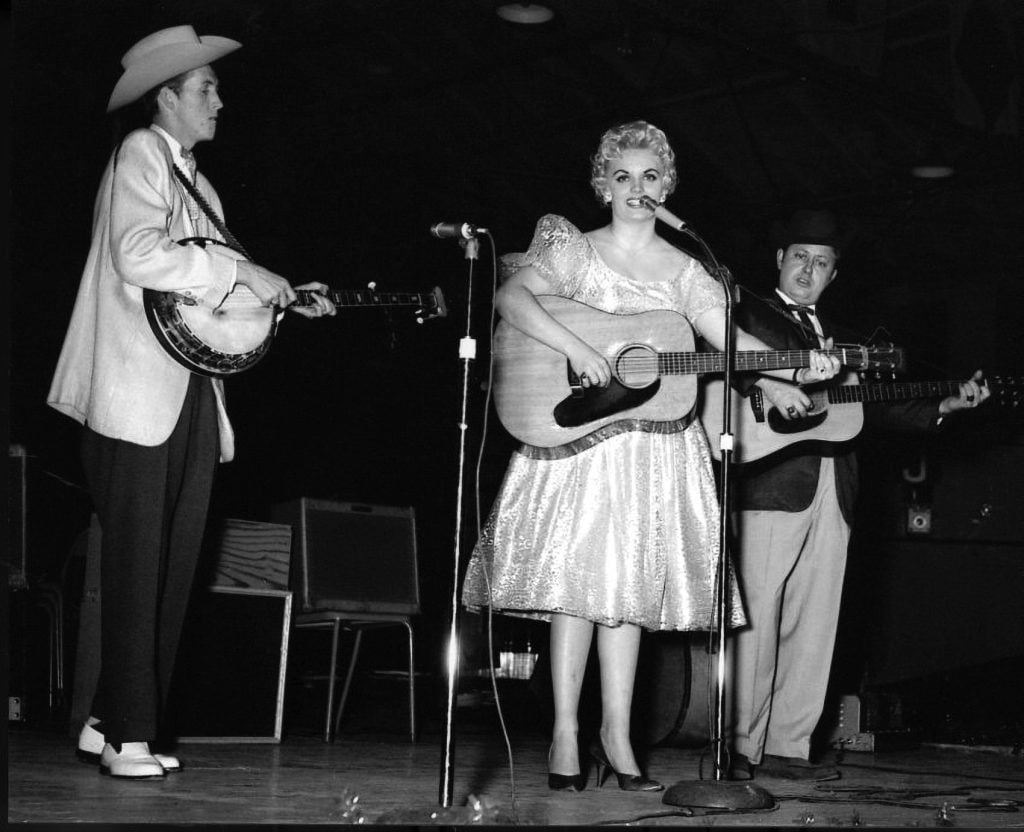
By 1951 fourteen-year-old J.D. was sufficiently accomplished to begin to work regularly with an important country music star and deejay based in Lexington, Esco Hankins. In two years, while working shows with Esco, Crowe met numerous other musicians with whom he later developed important working relationships. These included locals like Charlie and Bobby Joslin as well as musicians he met in passing, like Red Allen and—crucially—Jimmy Martin. After playing with Esco Hankins, Crowe served briefly in groups with Benny Williams, Curly Parker, and Pee Wee Lambert, but his musical development reached a higher level when he began to work intermittently with Jimmy Martin beginning in 1954 in Middletown, Ohio.
In their first brief time together, Martin encouraged J.D. to develop his own approach to banjo playing and to emphasize his timing. Martin also helped him learn to sing the tricky low part—baritone—in vocal trios. In Martin’s band, Crowe and the others professionally wore suits and string ties onstage. More importantly, J.D. constantly met and befriended even more bluegrass musicians, and learned what he could from each of them.
In the summer of 1955, while still in school, J.D. played regularly around Richmond, Virginia with Mac Wiseman. But in 1956 he returned as a regular member of Jimmy Martin and the Sunny Mountain Boys. Crowe worked and traveled with that important group which included mandolinists Earl Taylor and, later, Paul Williams, until 1961. Recording for Decca, they waxed some enduring classic bluegrass songs and tunes, including: “Bear Tracks,” “Hold Whatcha Got,” “Sophronie,” “Rock Hearts,” “You Don’t Know My Mind,” “Ocean of Diamonds,” and more. Both Martin’s solo recordings and the powerful and carefully worked-out trios featuring Martin, Williams, and Crowe have all become ageless masterpieces of bluegrass music. Martin’s Sunny Mountain Boys worked clubs in Detroit, then the Louisiana Hayride in Shreveport, Louisiana, and then the WWVA Jamboree in Wheeling, West Virginia.
While in Detroit, J.D. acquired a legendary banjo: a 1933 flathead Gibson style 3—originally a plectrum banjo—which he owned and played for decades. Though numerous other desirable pre-war Gibson banjos passed through his capable hands, J.D.’s responsive 1933 Gibson instrument was a great one; it became known familiarly to banjo aficionados as “The Banger.” In later years, Crowe also owned and recorded with several more outstanding Gibson banjos, notably an RB-75 and an RB-3.
During those late-‘50s years, J.D. Crowe’s name became known more and more widely in bluegrass music circles, as he was featured nationally on Jimmy Martin’s widely-traveled live shows, radio broadcasts, and the Decca recordings. He met and interacted with every other bluegrass musician he encountered, constantly broadening his own Scruggs-inspired musical development and adding to his appreciation for bluegrass as well as other musical styles he had also absorbed: country, honky-tonk, folk, blues, and the emergent sounds of rock’n’roll.
Becoming a Bandleader
After leaving Jimmy Martin’s Sunny Mountain Boys, Crowe returned to the Lexington, Kentucky area, where he got what he called a “regular eight-to-five job.” But he soon began to pick and sing three nights a week with old friends, the Joslin brothers, and other local musicians. They played at the “rough” downtown Limehouse club as the “Kentucky Mountain Boys,” and the band also soon became regular entertainers at another Lexington venue: Martin’s Place. Martin’s was a small tavern near downtown, to which the Kentucky Mountain Boys increasingly attracted many University of Kentucky students as well as a regular fan base of central Kentucky bluegrass music fans.
Over time, other local musicians joined the Kentucky Mountain Boys. Around 1964, left-handed fiddler and bassist Bobby Slone came into the band, staying with Crowe for over twenty years; in succeeding versions of the Kentucky Mountain Boys he was joined by Red Allen, Doyle Lawson and Larry Rice. Through this period, the band recognized the special drawing power of their banjo player’s name, with Crowe as the nominal leader of the band. The advent of Bluegrass Unlimited as a national “fanzine” in 1966, with its important regular column “Bluegrass In The Clubs,” began to inform traveling fans that the group was playing at Martin’s. Crowe’s name was featured; it was “J.D. Crowe & the Kentucky Mountain Boys.” Subsequent advertising—and later, recordings made at the local studio of Lemco Records—followed suit. Between 1969 and 1971, Lemco released three long-playing albums of the band.
In 1968 the regular exposure and growing reputation of the group at Martin’s led to a new phase: constant work at a new, higher-toned, local venue, the Red Slipper Lounge at the Holiday Inn, on Lexington’s north side, close to the interstate highway. By moving to the new club, J.D. became the true bandleader of the group; he ran the business, and his name was featured from then on.
The Holiday Inn was a much classier venue than Martin’s or the Limehouse, and that prompted the band to adopt fancy stage clothes: brocade dinner jackets they called “the slicks.” Audiences grew constantly, with local fans complemented by travelers who journeyed to Lexington from afar just to see and hear the group. Performing at the Holiday Inn five or six nights a week, the band members were able to give up their “day jobs” to focus on their always-tight yet increasingly diverse repertoire.
In need of new material to supplement their core bluegrass repertoire, the Kentucky Mountain Boys began (especially after Larry Rice’s advent) to explore a variety of other musical forms, covering songs like the Flying Burrito Brothers’ “Sin City,” “Devil in Disguise,” Bob Dylan’s “You Ain’t Going Nowhere,” and Fats Domino’s “I’m Walking.” They often included such new songs at the Holiday Inn, and continued doing so when they moved to an even larger Lexington venue, the Sheraton Inn. The song lists and setlists of Crowe and his bands expanded constantly and tastefully for the rest of his career. They wowed audiences with songs penned by artists like Gordon Lightfoot, Ian and Sylvia, Merle Haggard, and many more, and the new material quickly was adopted by festival parking-lot pickers all across the bluegrass music world.
J.D. Crowe and the New South: The 1970s
In the early 1970s, it was not only the band’s repertoire that underwent momentous transformation. Personnel changes—among the first of many—included the departure of Doyle Lawson and the addition of Tony Rice as guitarist and lead vocalist. Partly due to Tony Rice’s addition, but also building on his own longstanding convictions, J.D. decided to change the band name to J.D. Crowe and the New South, reasoning that the change would reflect the broad adaptability of the group to increasingly diverse musical approaches. In Crowe’s own words:
“‘Kentucky Mountain Boys,’ or any ‘mountain boys’—that really labels you. I wanted a name to where it would pertain to whatever music you were playing. It could be country, rock, don’t matter. It would work.”
For the rest of Crowe’s life, his band name remained the “New South.”
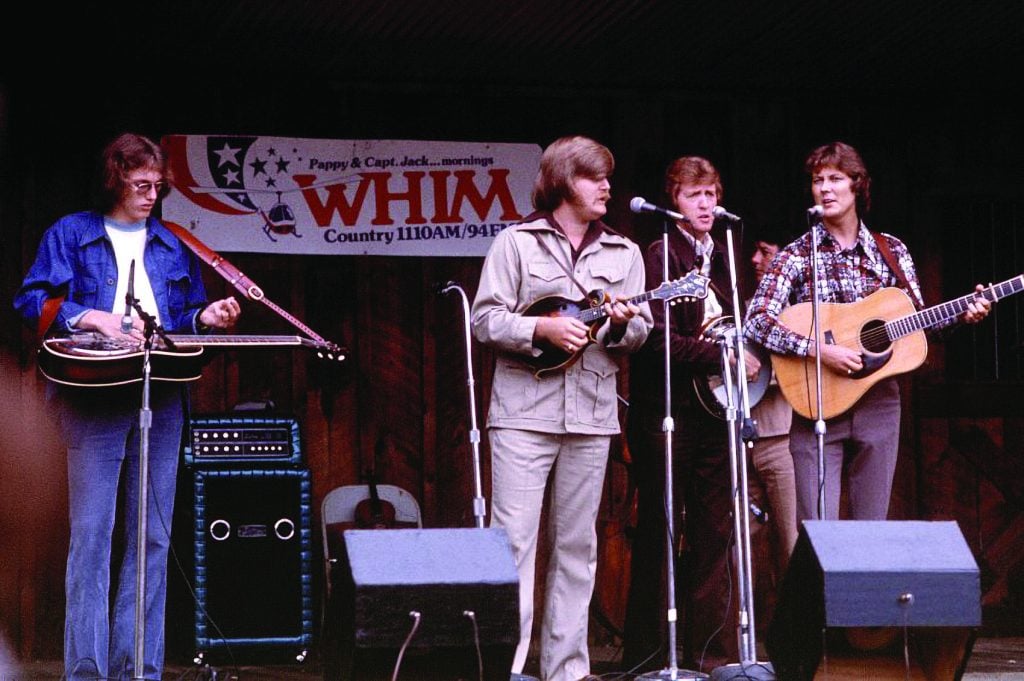
Crowe began also to experiment with changes in instrumentation, including at various times drums, pedal steel, electric bass, and pickups added to the acoustic instruments. Increased volume allowed the musicians to hear themselves over loud audiences at the Holiday Inn and other large clubs. Some tradition-minded bluegrass music fans objected to such changes, as they had when the Osborne Brothers and the Dillards began to perform at music festivals with drums and electrified instruments. In 1973, Crowe’s New South recorded a Starday album featuring the regular band members singing their impeccable leads and trios, but the album also included prominent drums, piano, and pedal steel played by some of Nashville’s best session musicians. Crowe even played some of the cuts on Bluegrass Evolution with a 6-string banjo, sporting an extra low G string; it added an unmistakably novel sound on songs like “You Can Have Her,” and Paul Simon’s “Leaves That Are Green.”
For the most part, the band relinquished its “plugged-in” phase in 1974-75, when Ricky Skaggs and Jerry Douglas became the newest members of the New South, with Skaggs on mandolin or fiddle and Douglas contributing amazing Dobro sounds.
With the new band members brilliantly complementing the vocal and instrumental chops of J.D., Tony Rice, and Bobby Slone, this version of the New South recorded a ground-breaking 1975 album, initially called The New South. Later it was reissued with a new cover and the full band name. But devoted fans and insider aficionados quickly referred to it simply by the label and release number: “Rounder 0044.”
For new legions of young bluegrass music fans, the sound of Rounder 0044 defined what bluegrass could and should be. At Crowe’s request, it was a full band album, not the instrumental album that Rounder had originally envisioned. On the liner notes, John Hartford rhapsodized about Crowe’s music: “… there’s nothing like a five string banjo…on a car radio on a mountain road at night…pouring out of that little old speaker, smooth as spring water, even as a clock.” Focusing specifically on Crowe’s timing, he added “Ah, yes… the distances between the notes…that’s where it’s at.”
Rounder 0044 was a generational milestone, as important to the bluegrass fans of the 1970s and beyond as the sounds of Bill Monroe, Flatt & Scruggs, the Stanley Brothers and other first-generation artists had been when the genre first emerged into public view in, and soon after, the late 1940s.
The Rounder 0044 version of J.D. Crowe’s band stayed together only a few months, yet fortunately during their term they were videotaped by Kentucky Educational Television (KET). They also traveled to Japan, where they were enthusiastically welcomed by legions of Japanese fans. That trip led to another recording, Holiday in Japan. Though they were already familiar to bluegrass audiences in Japan and America, all the band members were increasingly recognized throughout their tenure as great artists in their own right, and they went on, later, to reach ever-greater heights of musical success.
The later 1970s saw Crowe welcoming a new generation of outstanding musicians into his group, notably tenor-singing Jimmy Gaudreau on mandolin and lead singer Glenn Lawson on guitar. While Crowe, as always, demanded excellence from his sidemen, he never tried to force them into re-creating the sound and style of his earlier groups. Each version of the band, under Crowe’s measured direction, continued to broaden the group’s repertoire and setlists while performing hundreds of shows—at the Ramada Inn in Frankfort, Kentucky, at numerous other hotels, and in Louisville clubs as well as at shows all around the burgeoning festival circuit.
While it was immediately clear to fans that this was no longer the New South of Rounder 0044, the band was always tight and exciting, and always supportive of J.D.’s compelling driving banjo work. In 1977 Rounder Records recorded another album, You Can Share My Blanket, with numerous Nashville sidemen on piano, drums, harmonica, and pedal steel. Some cuts even offered Crowe’s sound on the “Crowe-jo,” a five-string dobro. Utilizing a similarly progressive (and for some, debatable) sound that had debuted on the Starday Bluegrass Evolution LP, the New South performed on KET’s 1977 “Bluegrass Bluegrass” television miniseries with hot pedal steel, electric bass, and drums. That show, distributed beyond Kentucky by several PBS affiliates, included several new songs brought into the band by Gaudreau (Don Gibson’s “Sea of Heartbreak”) or by Lawson (Gordon Lightfoot’s “Did She Mention My Name?”).
In late 1978, Glenn Lawson left the New South, and Crowe welcomed one of his finest lead singers: Keith Whitley, who as a teenager had sung Stanley-style duets with Ricky Skaggs and then with Ralph Stanley, and who had been Stanley’s lead singer before joining Crowe. Whitley was a gifted country singer, impressive in any musical context, and during his four-year tenure with J.D., the band once again had a different sound. Their appearance changed as well, from the flowery rayon shirts of the Rounder 0044 era to a more western look, with cowboy hats, boots and vests. This band traveled and performed together all over the bluegrass festival circuit. Their 1979 trip to Japan eventually produced yet another album, Live In Japan.
Keith Whitley was also blessed with a sense of humor that complemented Crowe’s and Bobby Slone’s—a good thing, since light humor and pranking can be critical to a small group who travel widely in one another’s constant company. Where J.D. delighted in hiding explosive “loads” in the cigarettes of his band members, Whitley was a mimic who could amusingly imitate the familiar vocal styles of Lester Flatt, Lefty Frizzell, or Merle Haggard. Most of the later members of the New South followed suit with pranks and tricks—never malicious, but socially important.
With Whitley and Gaudreau in Crowe’s band, supported by Bobby Slone on fiddle and hot electric bassist Steve Bryant, 1979 saw the recording of Rounder 0103, My Home Ain’t in the Hall of Fame. The album included drums and pedal steel, yet its focus was on the formidable trio singing of Whitley, Gaudreau, and Crowe. The ten tracks on the album included diverse and powerful songs; some were familiar to died-in-the-wool tradition-minded bluegrassers, like Flatt & Scruggs’s “Will You Be Lonesome Too?,” but there was also novel country material, like Harlan Howard’s “She’s Gone, Gone, Gone” and the classic country song recorded in 1966 by George Jones and also by Kitty Wells: “I’ll Be Your Stepping Stone.”
In the summer of 1979, Jimmy Gaudreau left the New South. His replacement was Gene Johnson, formerly part of Eddie Adcock’s II Generation. Johnson traveled with Crowe’s band for two years, and recorded with Crowe only on one album, focused on Keith Whitley. Initially released by Rounder in 1982 as Somewhere Between, it was eventually reissued under Whitley’s name as Sad Songs and Waltzes. When Gene Johnson moved on, the mandolin player who engagingly filled his place was Kentuckian Wendy Miller.
The 1980s and 1990s
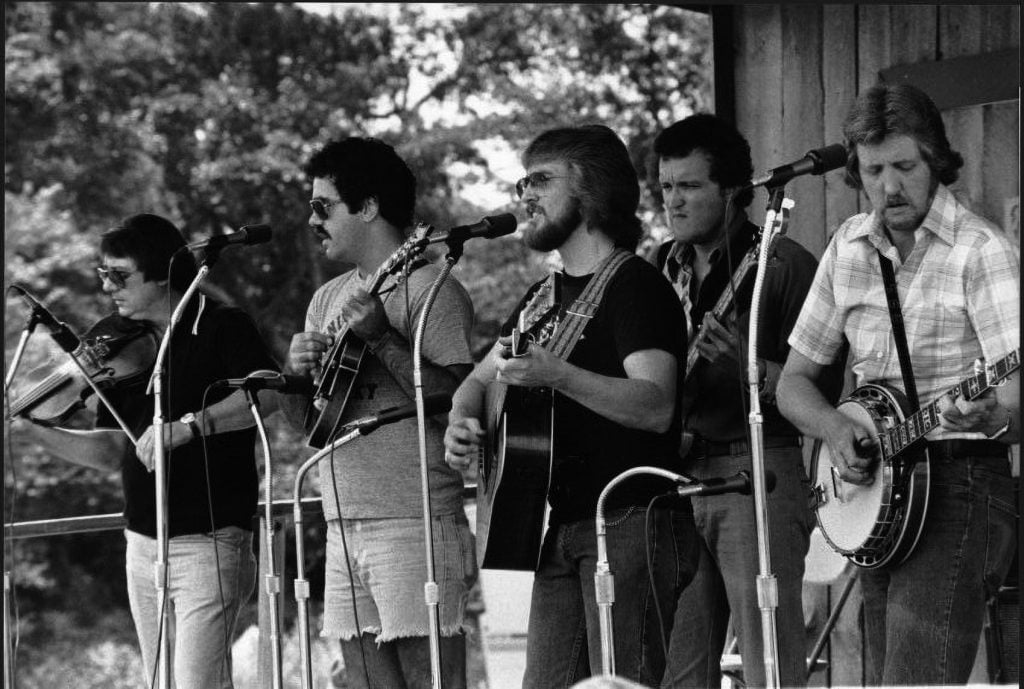
Though Crowe’s principal commitment was to his own New South band and their ability to bring novel songs and styles to their shows, in 1980 Tony Rice asked him to be part of a Rounder Records production featuring traditional bluegrass. That eventually led to six albums by “The Bluegrass Album Band,” featuring J.D., Tony, Doyle Lawson, fiddler Bobby Hicks and (later) Vassar Clements, and bassist Todd Phillips and (later) Mark Schatz. The albums were astonishingly successful, and led to well-received national tours and shows.
After 1980, personnel changes seemed to accelerate. For nearly two years, guitarist Paul Adkins was the New South’s lead singer. When he left he introduced his successor: Tony King, a North Carolinian who loved Crowe’s music. After Steve Bryant moved on, Wendy Miller recommended another Kentuckian, Randy “Cosmo” Hayes, who played electric bass, and also sang tenor parts and played drums on the band’s 1986 album: Straight Ahead.
As its name implies, the new album offered a more traditional bluegrass sound than its predecessors. Crowe and Tony King handled the banjo and guitar parts, and the album also included Jerry Douglas on Dobro and Sam Bush, who shared the mandolin duties with Wendy Miller. There was novel material on Straight Ahead, too, though some of it was actually years or decades old—like “Sugar-Coated Love,” Walter Hensley’s “Stony Mountain Twist,” Stephen Still’s “Helplessly Hoping,” the Amazing Rhythm Aces’ “Say You Lied,” and “God’s Own Singer,” by Bernie Leadon of The Eagles.
In 1983, J.D. recorded the instrumental “Fireball” with the temporarily re-united 1975 New South, and won the Grammy award that year for “Best Country Instrumental Performance.”
The change-over of band members seemed to quicken for a time, with mandolinist Terry Johnson taking the place of Wendy Miller. Randy Hayes left, Bobby Slone moved to upright bass, and with Tony King on guitar, the four-piece version of the New South carried on. Next, Tony King left and was replaced by Robert Hale on guitar and vocal leads. In order to let Bobby Slone return to fiddling, another Kentuckian, Curt Chapman, was called in by Crowe in 1987.
While Chapman’s eventual tenure with the New South was lengthy, J.D. was feeling “burned out” by the constant travel and demands of being a bandleader. So, from 1988 until about 1994, Crowe stayed in his home region, running a daily mail route. It was never a complete retirement, since during that period J.D. recorded again with The Bluegrass Album Band, took part in occasional reunion shows, and also participated in a KET television concert, the “Lonesome Pine Special.”
Still, in the late 1980s, Crowe again felt an urge to play with a band of his own. With Curt Chapman on bass, Crowe first enlisted another Kentuckian, Wayne Fields, to join him playing mandolin and singing tenor. Richard Bennett, an excellent singer and guitar picker in a style reminiscent of Tony Rice came in as well, and they were soon joined by Dobro player Phil Leadbetter. By 1992 that combination were comfortable enough to perform together, yet Fields, who was really a great banjo player, and never completely comfortable playing mandolin, soon left and was replaced by another tenor-singing Kentucky mandolinist: Don Rigsby.
In 1994, that version of the New South recorded Flashback, with some classic Flatt & Scruggs and Jimmy Martin songs as well as traditional material, plus two banjo-centered instrumentals, a Merle Haggard number, and four new songs written or co-written by Richard Bennett. The album was enthusiastically hailed as a success, and nominated for a Grammy award. But only a year later, Richard Bennett left the band and was replaced by Greg Luck on guitar, and at about the same time Don Rigsby left. The mandolin work and tenor singing were next carried on by Dwight McCall, son of bluegrass guitarist Jim McCall.
With guest fiddlers Buddy Spicher and Glen Duncan, the band was next featured on a 1999 release, Come On Down to My World. Though Greg Luck was the featured lead vocalist, his guitar work on the album was supplemented by that of yet another Kentucky musician: Rickey Wasson.
Towards the end of the 20th century, J.D. was either playing too often or too infrequently to hold on to all the members of the New South, so for a time Robert Hale returned on guitar and Darrell Webb picked up the mandolin slot. Yet soon the core musicians spun themselves off into another group, called Wildfire. With Curt Chapman’s departure, a young university-trained bassist, Harold Nixon took his place, and Crowe rehired Dwight McCall and Rickey Wasson.
The Last Decades: 2000 to 2021
In 2001, the judge-executive of Jessamine County, where Crowe lived, persuaded Dean Osborne to establish the annual J.D. Crowe Bluegrass Festival. Dean—a banjo-playing cousin of Sonny and Bobby Osborne— had developed and promoted the annual Osborne Brothers Hometown Festival in Hyden, Kentucky. Always an admirer of Crowe’s music, Dean later spoke of J.D.’s warmth and helpfulness after Crowe agreed to speak to my own 1982 University of Kentucky class on the history of bluegrass music. So Dean took on the festival development job, and for ten years the J.D. Crowe Bluegrass Festival was a success and a wonderful venue for J.D. It was only a few minutes from his home, and he enthusiastically appeared there with his powerful New South, doing shows and visiting with his many friends and admirers.
In 2003 J.D. added Ron Stewart to play fiddle in the New South as well, and—after too long a hiatus—in mid-2006 Rounder released an album entitled for its gripping lead-off song: Lefty’s Old Guitar. The song, supported by tasteful pedal steel as well as the superbly-tight sounds of the New South, was narrated from the point of view of Lefty Frizzell’s guitar. The undeniable power of Crowe and his band were on display once again, with the sort of always-fresh country/bluegrass blend that had been the New South’s trademark since the 1970s. In 2007 the album tied for IBMA “Album of the Year.”
During and after 2007 the band’s makeup once again changed; Ron Stewart and Harold Nixon left, and were replaced by fiddler Steve Thomas and John Bowman on bass. In turn, those new members of the group left in 2010, and in their place Crowe brought in Matt DeSpain on Dobro and Kyle Perkins on bass. As Marty Godbey accurately noted in her indispensable book: “there is always a long list of musicians who are eager to work with Crowe; all he needs to do is make a telephone call.”
Musically, J.D. Crowe kept moderately active after 2012, when he had decided to retire from constant touring with the New South. He continued to appear occasionally, especially with his old bandmates Doyle Lawson and Paul Williams, with whom he recorded an album in 2010 called Old Friends Get Together. In 2017 and 2018, along with several other New South alumni, he recorded one more album at the Clay City, Kentucky studio of his always-supportive guitarist/lead singer Rickey Wasson. At the time, Crowe wanted to hear the recorded sound of a fabulous banjo he had traded for: Gibson Granada #9584-1—a “litter-mate” to Earl Scruggs’s #9584-3 and Sonny Osborne’s #9584-2.
During his seven decades in bluegrass music, J.D. Crowe was repeatedly recognized for his unsurpassed artistic excellence, his band leadership, and his exemplary willingness to pass on to others his clear understanding of tasteful music-making. Many awards were publicly known and celebrated: his recognition in 1971, 1994, and 2004 as IBMA “Banjo Player of the Year”; his 1983 Grammy for the instrumental “Fireball”; his 1991 induction into the SPBGMA Preservation Hall of Greats; his three Grammy-nominated albums; his 2003 induction into the IBMA/IBMM Bluegrass Music Hall of Fame; his 2001 Kentucky Governor’s Award in the Arts; his 2012 University of Kentucky honorary doctorate; his 2016 Lifetime Achievement honor in the Lexington Music Awards. There were abundant other awards, too.
Though in his last decade J.D. tended to stay fairly close to home, he was always warm and welcoming to guests. Many bandmates and friends visited him at his home in Nicholasville, Kentucky, and all were treated with unfailing warmth and camaraderie by this humble paragon of music. The whole bluegrass world, new fans and old colleagues alike, will forever treasure J.D. Crowe’s immense legacy of remarkable music. Just as memorable was his fidelity to those he met during the seven decades of his musical life. As his bandmate Doyle Lawson so aptly said: “More than anything—all the good music I got to play with J.D. over the years—the thing I value the most is my friendship with him.” I couldn’t agree more!