International Bluegrass Music Association Hall of Fame Class of 2022
Peter Rowan, Norman Blake and Paul “Moon” Mullins
When the International Bluegrass Music Association (IBMA) announces its list of new Hall of Fame inductees every year ahead of the annual Awards Show in Raleigh, North Carolina, the names always garner attention, discussion and respect. In the year of 2022, the Hall of Fame inductee class includes Peter Rowan, Norman Blake and Paul “Moon” Mullins.
While it is always important to add early bluegrass innovators to the potential Hall of Fame name pool and other great talents that are dead and gone, it is also important to honor worthy musicians while they are still with us. When I interviewed Peter Rowan and Norman Blake for this article, I mentioned the popularity of them being chosen while they are still breathing on the planet earth. When I mentioned the “Give Me My Flowers While I’m Still Alive” angle to this IBMA Hall of Fame announcement, they both laughed heartily and appreciated the sentiment.
Paul “Moon” Mullins
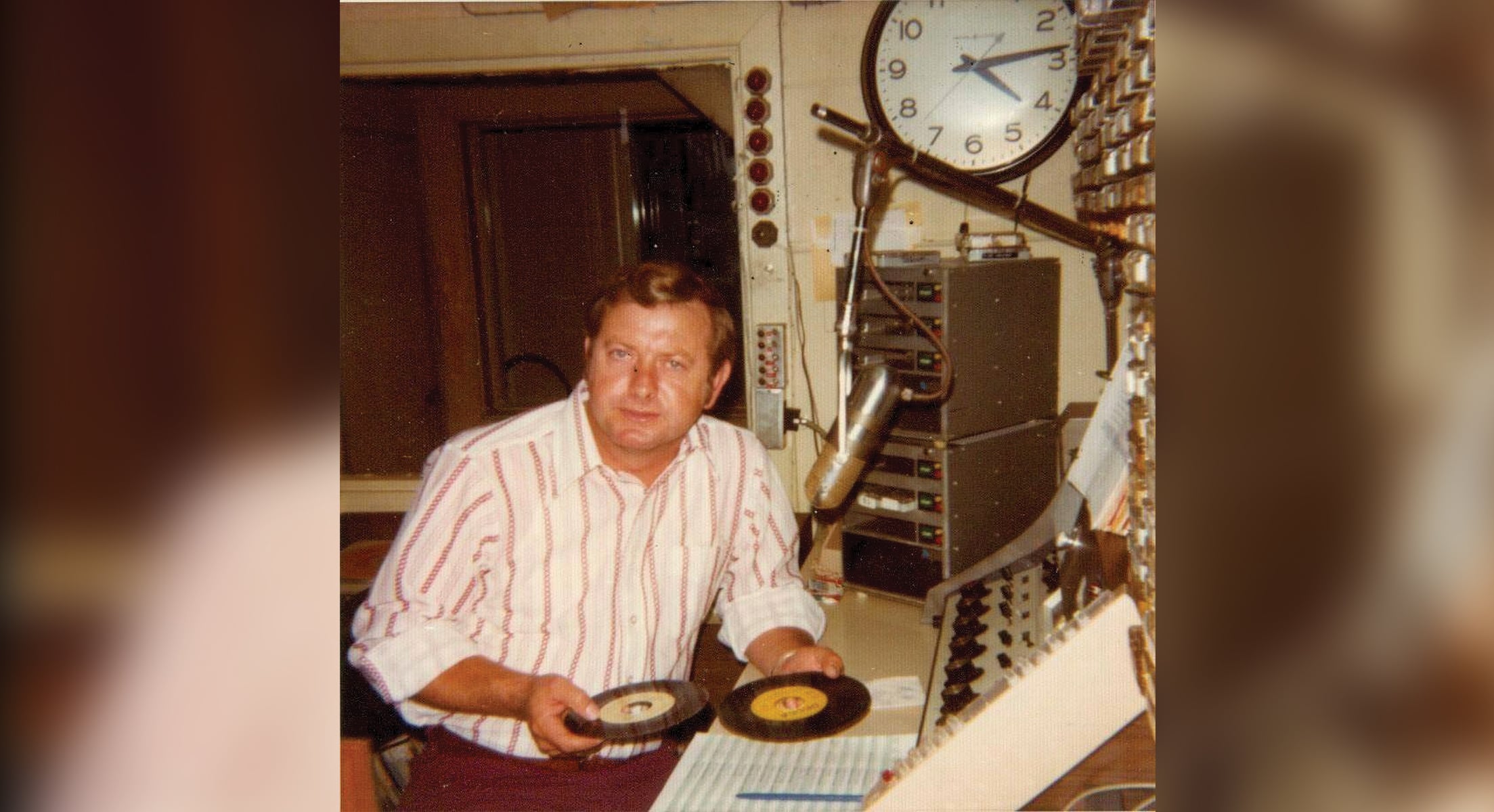
As for the late and great Paul “Moon” Mullins, the family would have loved to see him get the honor before his death in 2008, but they are thrilled that it is happening now. In the case of Mullins, if the whole country had been able to hear his personality behind the radio microphone as a 40-year bluegrass and old school country radio DJ, he would have been the biggest thing since the invention of self-rising flour.
After my family left our native state of West Virginia and moved to Ohio during last century’s Great Migration—made by many in Appalachia who headed north looking for factory work and a better life—I ended up living on the north side of Cincinnati. My neighborhood was just 18 miles from the small steel mill city of Middletown, and that is where Paul “Moon” Mullins spent many years broadcasting on WPFB-AM. Being an AM radio buff from a young age, I would tune in to Mullins’ show often. Sometimes I would find his program while just perusing the radio dial, eventually coming across his unique on-air personality and live antics.
Joe Mullins, of course, is the son of Moon Mullins and he is also an IBMA Award-winner in his own right as the head of Joe Mullins and the Radio Ramblers. Back in Ohio, he also owns three radio stations that fill the airwaves across the southern half of the Buckeye State with bluegrass, gospel and old school country music. Christy Mullins Jones is Moon Mullins’ daughter and a friend to many in the bluegrass world, and Joe’s son Daniel Mullins has also made his mark in the bluegrass industry in recent years, winning the IBMA “Liner Notes of the Year”award in 2016.
Joe Mullins happily reminds us of his father’s legacy while seeking to spread the word about Paul “Moon” Mullins to those bluegrass fans around the world who may have not been within radio range.
“My dad, Moon Mullins, was on full service commercial radio,” said Joe. “He was on the air during drive time twice a day. He did a morning drive time show at 6 a.m. for years, because that was right at shift change at the factories. Recently, we have been lucky enough to have a hit with the book, album and festival called Industrial Strength Bluegrass (which won the 2021 IBMA “Album of the Year” award), which is about the Appalachian migrants who came to Ohio in the last century and brought banjos and fiddles with them, and my Dad was one of them. If those people worked on day shift, then they had to be there at 7 o’clock. Tens of thousands of them in every town along the Great Miami River of Ohio that worked in a steel mill or a paper mill, or worked at General Motors, National Cash Register or Frigidaire, the folks that had to be there at 7 a.m. to punch that clock; they all heard my Dad on the radio on the way to first shift. I have had thousands of people tell me during my whole life, ‘Your Dad rode to work and back with me every day.’”
The reason why folks would say that Moon Mullins rode to work with them and back was that for a long period of time, the elder Mullins was on the radio in the morning and was on the air again in the afternoon for drive time on the same days.
For a big portion of his career, my dad was back on the air from 2:30 p.m. until 5 p.m.,” said Mullins. “Why? Again, because of the shift change as usually they’d get off at around 3 o’clock, and he was right there. By being on the radio until 5 p.m., other drive timers and folks picking their kids up from school and more; they all heard Moon Mullins.”
Moon Mullins was old school when it came to being on the radio. WPFB wasn’t an NPR or listener-supported radio station, all of whom are wonderful, but instead, it was a full-service commercial station. That meant Moon Mullins’ over-the-top entertaining personality was also used to do the commercials on the air.
“His daily radio show, which was on Monday through Friday, had a list of major sponsors that he did the advertisements for, doing them in the style of the Golden Age of Radio, as in live, endorsement-style advertising,” said Mullins. “And, he didn’t just talk about how Ford trucks were on sale at the dealership, he’d talk about the guy who owned the place and what kind of bird dog he had. And if he was a Ford dealer that had any roots in the mountains, if he identified the guy as one of us, he was going to sell that Ford truck that week after Dad talked about it on the radio.”
On top of being on a local radio station that dealt with local news and national breaking news as well as sports and more, Moon Mullins kept bluegrass music as the heart of his broadcast.
“To put bluegrass music in the mainstream of a radio station in-between the news, the weather forecast sponsored by the local Ford dealer and the commercial for the big local bank, meant that the listener would also hear J.D. Crowe or Doyle Lawson,” said Mullins. That gave our music the same weight and validation as Willie and Waylon and the Oak Ridge Boys back then, and he would play them, too. But he would make a big deal out of a new record released by the Lost and Found or the Country Gentlemen just as much as a new record he liked by Merle Haggard or George Jones. He was fiercely independent when it came to his playlists.”
When it comes to the bluegrass story of Moon Mullins, however, there is a lot more to the legend. Moon Mullins grew up in Frenchburg, KY, just west of Sandy Hook and began his radio career at WGOH in Grayson, KY, and spent time perfecting his on-air craft on WTCR in Ashland, KY.
On the music side of the equation, Moon Mullins was an excellent bluegrass fiddler who also wrote the old bluegrass standard “Katy Daly,” which continues to be played to this day. Over the years, Mullins performed with bands such as the Stanley Brothers, the Bluegrass Playboys, The Boys From Indiana and The Traditional Grass. He was also known for his expert music festival emcee work, including being the Master of Ceremonies for many years at Bill Monroe’s Bean Blossom Bluegrass Festival in Southern Indiana.
Moon Mullins was also given an Ohio Heritage Fellowship award and was honored by an IBMA Distinguished Achievement Award as well.
Norman Blake
When Bluegrass Unlimited gave Norman Blake a call at his house in rural Georgia after his IBMA Hall of Fame announcement, the usual southern countenance in his speaking voice was still strong. That is a good thing, considering he suffered a stroke ten years ago. While the effects of that event make traveling hard for Blake, causing him to send a recorded video of thanks for his IBMA Hall of Fame induction presentation in Raleigh, his guitar playing is still at a high level. He has recorded several albums in recent years including the Grammy-nominated Wood, Wire and Words, Brushwood Songs and Stories, Gallop to Georgia: Mike Compton & Norman Blake Play the Tunes of Narmour & Smith, and Day By Day released in 2021.
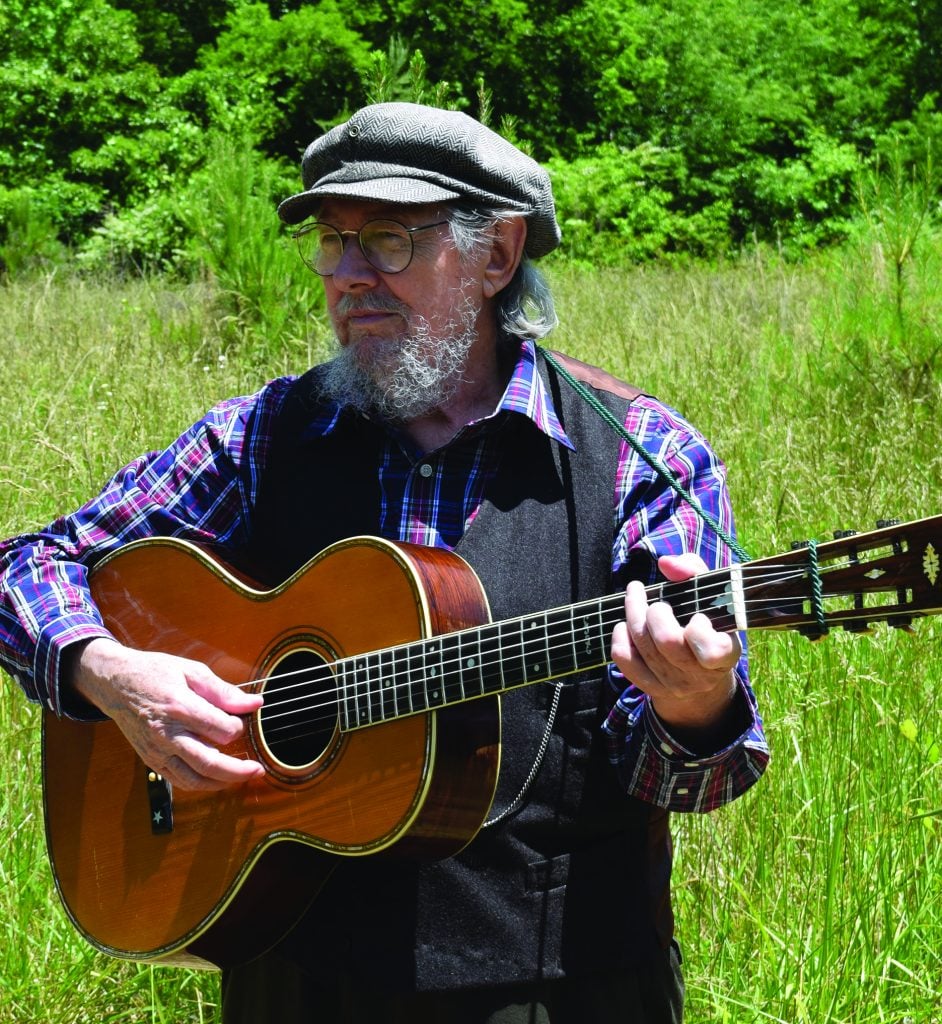
In the 1960s, Blake was known for his studio work with the great Johnny Cash. In the 1970s he was appreciated for his groundbreaking work with John Hartford, and from the 1980s on, he was loved for his collaborations with Tony Rice and many others.
Along with John Hartford, Tut Taylor and Vassar Clements, Blake was a part of Hartford’s Aereo-Plain album, which greatly influenced the burgeoning newgrass movement of the 1970s. It is a recording that is still beloved 50-plus years later. Blake also appeared on the highly-influential Will The Circle Be Unbroken album released by the Nitty Gritty Dirt Band in 1972, which was a landmark project that helped to turn a new generation onto bluegrass music.
The late Tony Rice’s version of Blake’s “Church Street Blues” continues to hold the heart of Rice fans. But, it was the duo’s two Blake and Rice albums that they recorded together in the 1980s that lifts up many roots music lovers as well. Those Rounder Records sides include Blake-penned songs such as “Greenlight On The Southern,” “Last Train From Poor Valley,” “Lincoln’s Funeral Train” and “Bright Days.” Throughout the years, Blake also recorded and performed around the country with his talented wife Nancy Blake.
When told that the prevailing sentiment in the bluegrass community is that folks are thrilled that he will be getting his Hall of Fame flowers while he is still living, Blake gives out a hearty laugh, happy to be walking the earth and still playing music at 84 years of age. “The people in charge of the IBMA called me and told me about the Hall of Fame, and it makes you feel a lot of ways,” said Norman Blake. “It makes you feel kind of old in a way, but it is very good to have people recognize your work to that degree. It is certainly an honor.”
Although Blake is known for his guitar playing, he has always been an impressive multi-instrumentalist throughout his long career. “People like to ask me, ‘How did you get into show business,’ and I like to tell them that I was about eleven years old when I was sitting in the back seat of my daddy’s car playing the mandolin while at a filling station,” said Blake. “The door of the car was open and a fellow walked up and said, ‘I’ll give you a quarter if you’ll play the tune ‘Down Yonder.’ I said, ‘Give me a quarter,’ and I played it for him and I’ve been in show business ever since. I first started writing my own songs in Nashville right around 1969. We were recording with Johnny Cash during that period, and we had to move over to Nashville to do his TV show in the summer of the first year they did it. I had a sideman position with that project, but I was making a living.”
Blake describes his following years this way, saying that being a part of Hartford’s Aereo-Plain album was “a time in the scheme of things that won’t happen again,” and he is thankful that Tony Rice’s rendition of his songs “were well received.” When asked if he had a favorite cut from his own recordings, Blake gets to cyphering about it. “Oh golly, I’d have to think on that for a long time,” said Blake. “I don’t know what song that would be, off hand. I think we recorded over 500 tracks, so figuring that out would be going into a lot of remembering. As for now, I still pick the guitar up every day. I don’t have to go far to find one. I have probably seven or eight guitars here, and I always like to say that my favorite one is the last one I got. The last guitar I bought was a Martin Ditson Triple One (III). This one is about 16 years old and it is a re-issue of the first dreadnought that Martin ever built. In 1916 and 1917, Martin built them for the Ditson Company in Boston and did not build them on their own until the 1930s when they began making the 12-fret D models. So, they did a reissue of about 148 guitars made with the old Ditson pattern around 2004, 05 or 06, somewhere in there.
“As for the oldest instrument we have here, we’ve got fiddles that go way back 200 to 300 years,” continues Blake. “We just picked instruments up throughout the country as we travelled. Years ago, we got a lot of fiddles out in Kansas when we were doing the Winfield Festival. I also remember trading fiddles at a fiddle shop in Lawrence, Kansas as well. We used to find good instruments in pawn shops. But, I don’t play the fiddle much anymore because it’s not physically comfortable, so I mess around with and trade on mandolins, guitars and banjos mostly these days.”
Peter Rowan
“Did you say ‘Norman?’ Who else is being inducted? Norman Blake? Oh, that is so good. Yes!” responded Peter Rowan, after finding out Blake would be going into the Bluegrass Hall of Fame and Museum in Owensboro with him. Bluegrass Unlimited was able to get a hold of Peter Rowan just minutes after the announcement of his IBMA Hall of Fame induction broke. Rowan’s happy response to the news was one of gratitude.
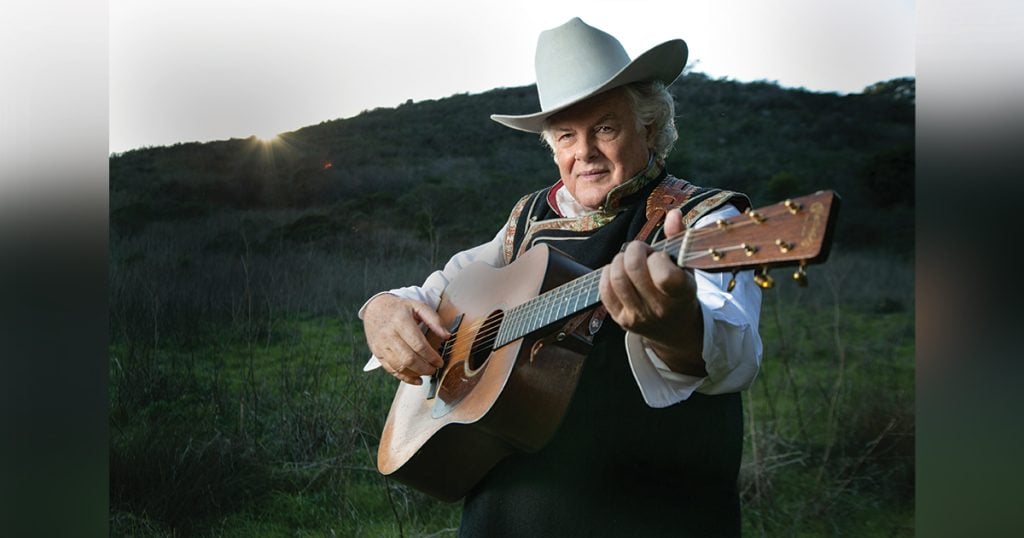
“All of a sudden, all of the years of doing this come back to me and really, what strikes me most of all is the people that really encouraged me,” said Rowan. “I go all of the way back to Joe Val, my first band leader Bill Keith, Jim Rooney, Tex Logan, and Bill Monroe. I won’t say they were stepping stones, but they were the ones who paved the way for me to become who I am in music. These are the elders that I revere because they saw a young kid with potential. I had no confidence or potential, but I just loved doing it. I was willing. That might be on my epitaph (laughing). ‘I was willing.’”
Going back to his up bringing in New England, thankfully Rowan was taught to respect and hopefully learn from the older generations. “I think it was instilled in me as a child to respect your elders,” said Rowan. “But truthfully, the people that really had the goods in those days were 15 and 20 years older than me. When I was in my 20s, Joe Val was 35, Tex Logan was 35, and at that time Bill Monroe was 48 or so. These were the guys who paved the way and plowed the field and I was a little sprout that was planted. Bill Monroe took me to meet Carter Stanley when Carter was about 40. All of those guys, whether they would give you a look and a nod or they would take you under their wing; they were the elders. I just think that is a part of the tradition. If anything, I was looking at it from a Daoist point of view, in that the lineages of music are what is really important. So, I think that for me to be recognized like this with the Hall of Fame allows me to have my own lineage.”
As Rowan grew older, he further established himself in the music business. He went from his time with Bill Monroe to being in the band Muleskinner with Clarence White, in the group Earth Opera with David Grisman, and joining the amazingly influential Old and In The Way band with Grisman, Jerry Garcia, Richard Greene, Vassar Clements and John Kahn. As a result, he would be respected by younger musicians for the rest of his life, up to and including now.
Rowan’s latest Rebel Records album titled Calling You From My Mountain is a perfect example, with his backing musicians and guest artists on the project all being younger ace pickers. This excellent recording features Rowan teaming up with Billy Strings, Molly Tuttle, Lindsay Lou, Chris Henry, Max Wareham, Julian Pinelli, Eric Thorin, Shawn Camp and Mark Howard.
“When I think of the musicians that are younger than me like Sam Bush, Jerry Douglas, Mark O’Connor and all of these folks, I realize that I kind of grew into the role myself of being an elder,” said Rowan. “The person who made me realize that was Tony Rice. I thought Tony was the musical leader of our efforts. But, Tony would never make any decisions and would force me, like Bill Monroe, to be the guy who made decisions about this or that.
“I mean, I didn’t do a great job of being Bill Monroe’s appointee manager, but I tried,” continues Rowan. “But hey, it got off the ground. The main thing we were trying to do with Bill Monroe in the mid-1960s was to make it a ‘Bill Monroe comeback.’ I didn’t realize until later, however, that Mike Seeger and Ralph Rinzler had conjured up a band of skinny, young guys to back Monroe until I just read a chapter in Tom Ewing’s book (Bill Monroe: The Life and Music of the Blue Grass Man). Four skinny, young men was what they were looking for because they wanted a group that looked like The Beatles. I didn’t know it during the time I was in the band, but according to Ewing’s book, it was an actual plan. I was the guy who (unknowingly) facilitated that plan because that age group was my people. They wanted somebody to bring Bill Monroe to a younger audience, so they needed a young band, and I did not know this.”
Before the conversation ends, Rowan is asked about what advice his departed friends Tony Rice and Bill Monroe would give to him from the Heavens about handling this Hall of Fame honor. “Bill Monroe would say, like he always did, ‘Sing it like Pete Rowan,’” said Rowan. “Tony Rice would tell me, as he always did after playing a solo, ‘Go wild, man.’ I hope Tony is there in spirt. I am joining the greats and that is really nice.”
A lot of things have been said about being given a prize for playing music and the whole notion of folks playing in a certain way or lobbying so they can win awards. But ultimately, the IBMA Hall of Fame inductions and the Bluegrass Hall of Fame and Museum are about honoring legends in a deserving way that will hopefully be recognized centuries from now.
“The IBMA Hall of Fame is a very elite group,” said Joe Mullins. “We need to celebrate our hall of famers now and forever. The cool thing is that 100 years after I’m gone, when nobody is here to tell my dad’s story, his plaque will be in Owensboro.”