

Hembree Remembers
Touring With The “Father of Bluegrass”
In many ways, Mark Hembree’s new book about life on the road with Bill Monroe was an account he needed nearly 40 years to write. He actually started work on the book while still a Blue Grass Boy and got so far as to draw up a rough draft of an introduction. But he quickly recognized there was something lacking. Looking back now, he can sum up that missing element in one word: perspective. “I didn’t know my way around,” Hembree says. “I didn’t know the people. I didn’t know a lot of the background. I could write, but I didn’t know what I was writing about. Later on, maybe I could contextualize it a little bit better. Back then, I was just trying to get it down.”
In the years between Hembree’s leaving the Blue Grass Boys and his taking up his book again, a lot happened. He helped found The Nashville Bluegrass Band, a group with its own storied history and backlog of recordings. He sat in with Bela Fleck, Roland White, Blaine Sprouse, Pat Enright and Jerry Douglas for the Dreadful Snake sessions, contributing his bass playing to a much-loved album. And he eventually moved back to Wisconsin—he grew up near Green Bay—to work as a writer and editor for various publications in the Milwaukee area.
All these experiences, he’s convinced, have helped make On the Bus With Bill Monroe a stronger book than it would have been had he stuck with his original plan. Hembree recently sat down with Bluegrass Unlimited to talk about those years on the road, his reasons for resuming his writing project and the lessons he learned from spending so much time with the “Father of Bluegrass.” (This article has been edited for clarity and brevity.)
BU: Why did you decide to write this book?
Hembree: Well, I knew when I went to work with Bill Monroe, I was going to work with a legend. I thought it was notable, so that’s why I started keeping a journal. And I did that sporadically all those years, partly because it was just something to do. But also, I had the idea that I had a rare opportunity to write a firsthand account, up close.
Also Blake Williams, the banjo player, he and I would talk about all these old stories fairly often. And somebody would always say, “Somebody ought to write a book about this.” At the time, Blake would say, “You’re going to have to wait until everybody dies.” But I wasn’t really worried about that because I never had the idea of writing an exposé.
BU: Bill Monroe was notoriously a hard man to work for. But you caught him in his later years, when people say he had mellowed a bit. Do you think you were fortunate to be a Blue Grass Boy when you were?
Hembree: Yes. Bill Malone (a country music historian) said Monroe got to be a much nicer person after he accepted his patriarchal role in the music and stopped thinking that everyone else was stealing from him. He became much more comfortable with everything and he began to see that this music he had started was going to proceed and to accept that people were going to find their own ways of playing it. Also, by that time, he knew he had been pretty rough on some of his band members, and he began to appreciate whatever stability he could bring to his group. So, it became easier to work for him. Also, by that time, he had encountered so many different personality types, he just generally became more tolerant. There was less and less of anything he hadn’t seen before.
BU: What about your band mates? How were they?
Hembree: Well, being able to play with Kenny Baker, let alone Monroe, was a terrific privilege. And that has pretty much spoiled me for almost any other fiddler. Of course, there are a lot of other good fiddlers out there. And I don’t compare them with Kenny. There is no shame in not being as good as Kenny Baker. Because nobody is.
BU: Did you hear of other sidemen having it easier in other groups?
Hembree: Yes, there were other bands that were easier to work for. Jim and Jesse’s would be one example. Ricky Skaggs actually set up benefits for his band. They could get health insurance. That was never going to happen with Bill. There were other people who paid their sidemen more equitably. That was something Bill never came around to.
BU: You write in your book about the hazing you suffered from Monroe. Do you think that was just him having fun at the new guy’s expense? Or was there a greater purpose?
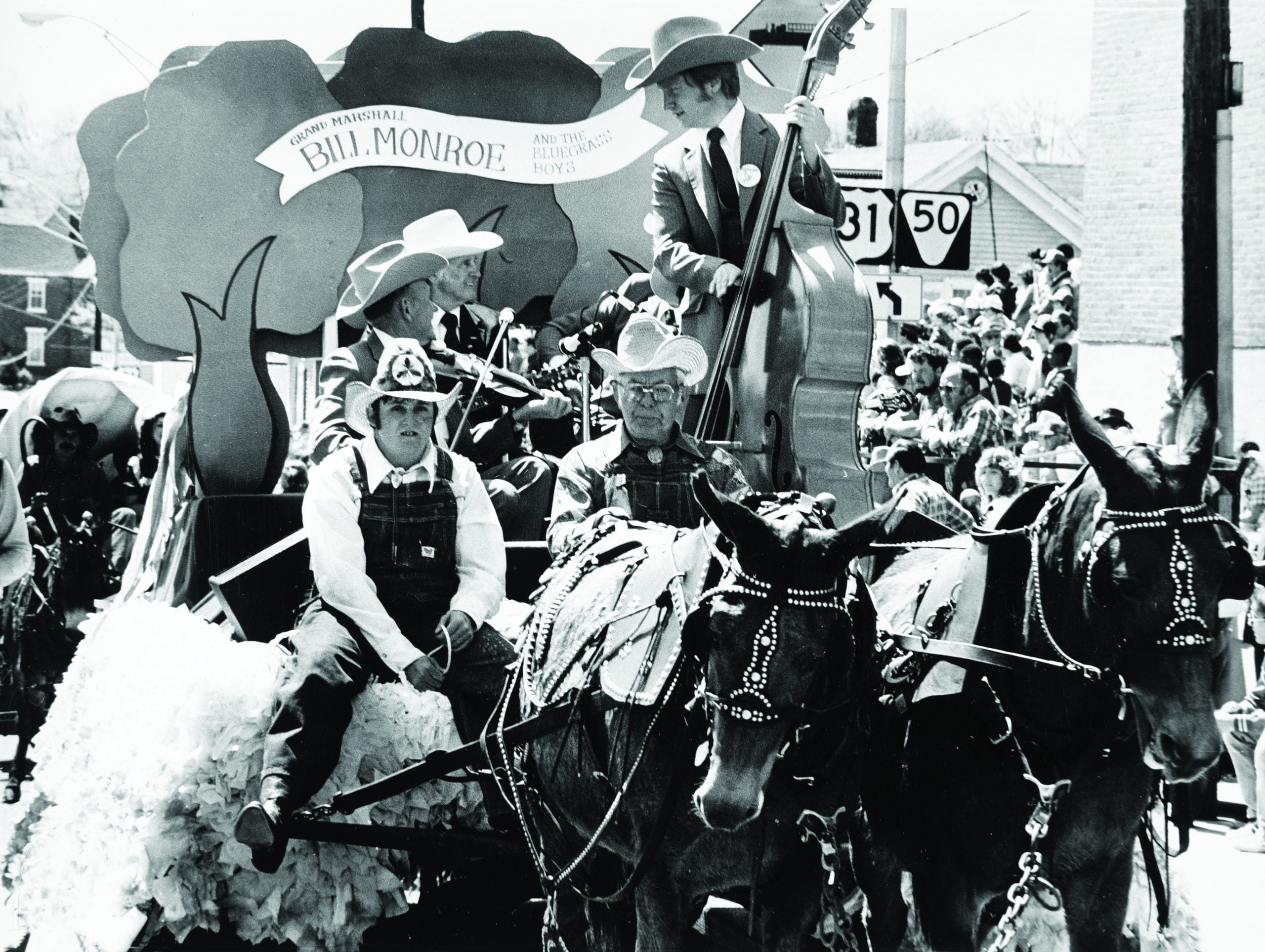
Hembree: A certain amount of it was that was just his idea of a good time, to make somebody miserable. But to a certain extent, it was also a character test. And he would be that way with everybody. As Ricky Skaggs said, “He would never respect you until you got up in his face and let him know otherwise.”
He would just keep pushing you. He judged the character of a man by how far he could push you. You had to stand up for yourself at some point. And how you did that I think was important too. But as Baker once told me, “He wouldn’t keep messing with you if he didn’t like you.”
BU: Eventually, though, life on the road began to wear on you?
Hembree: At the root of it was not being able to plan your own life. It was one thing when I started and wasn’t married. But by the end, I had kids and I had daycare and doctor’s appointments. And suddenly, this isn’t funny anymore. And of course, you were welcome to stay a Blue Grass Boy as long as you knew your place. And it’s hard to argue with that. That was a big part of his stage presence. The rest of us boys would dress alike and he would be up front in a different suit. And your job was to not get into his way. And I had no problem with that at all because getting in the way of Bill Monroe was about the dumbest thing you could do.
BU: What finally drove you to quit?
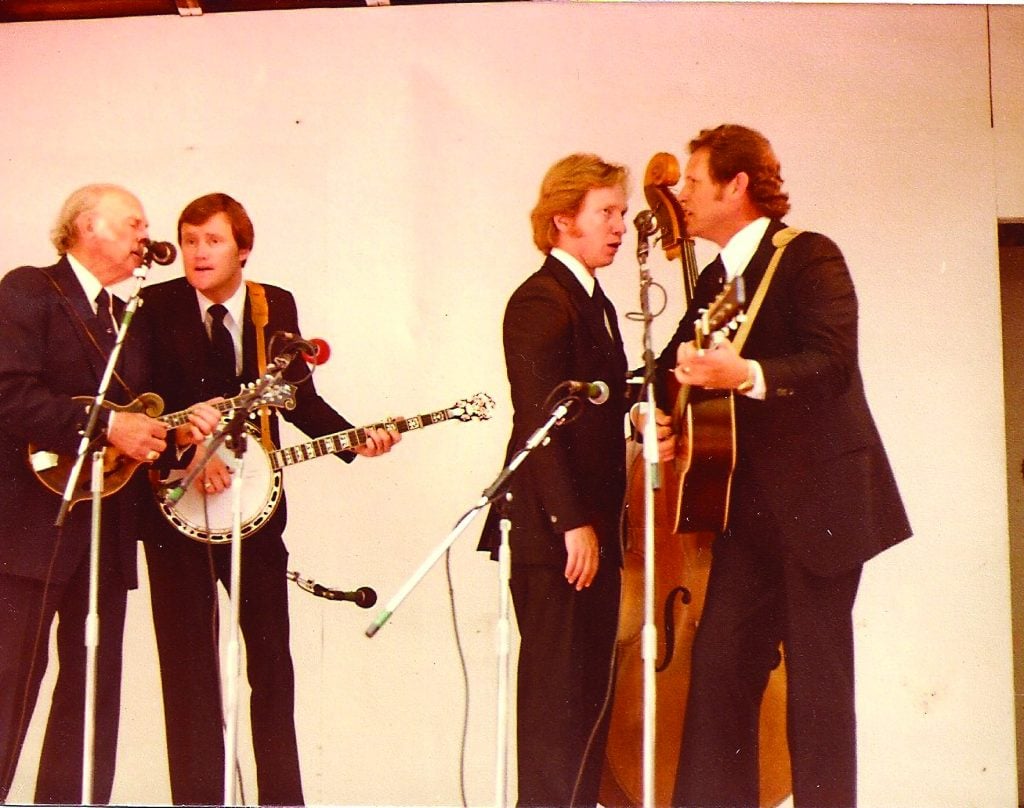
Hembree: I mean, not knowing when to work or what he might be singing at the next recording session—that gets old after a while. I even had to cut my honeymoon short because he didn’t mention a TV show appearance in Toronto. That sort of thing happened all the time.
When we recorded his song “My Last Days on Earth,” I had never heard that before we got into the studio. I didn’t know anything about it. At one point in the session, everybody started laying their instruments down, so I started laying my bass down. And Bill said, “No, no, you stay.” Then Norman Blake walks in and starts taking his guitar out of the case. And he looks up at me and says, “You don’t know what we’re doing, do you? And he sorted of giggled that high-pitched giggle he had. He thought it was funny.”
BU: Even with all the frustrations, quitting the band couldn’t have been easy?
Hembree: It was a funny thing. They had this tour of Japan coming up. And at some gig after I announced I was quitting, Baker said, “Why don’t you drop by my room on your way out?” Baker had been pretty rough on me at times. But now he had a mason jar with some moonshine in it and offered me a drink. And he told me it’s a shame I was quitting because we had some pretty good work coming up. I told him I was committed to my decision, and I couldn’t back out of it now. And he said, “Well, it’s just too bad you can’t say until the fall at least.” And I thought it was just odd. Baker had never been that friendly with me. It made me wonder, when he said “Stick around to the fall,” if he was going to be around much longer. And then when I heard he had quit that September, I thought back to the conversation. I thought, “Uh huh, I guess my instinct was right.”