Hayde Bluegrass Orchestra Ends First Full US Tour with Plans to Return
Many bluegrass fans trace their introduction to the music to films such as O Brother! Where Art Thou? and Cold Mountain, or to Nitty Gritty Dirt Band’s Will the Circle Be Unbroken? recording project. For Norwegian band Hayde Bluegrass Orchestra, their first taste of bluegrass came just as they had formed a band. Ten years ago, after their first show, having fun playing covers, they saw the Belgian film Broken Circle Breakdown. Rebekka Nilsson, one of the band’s founding members, said that after they saw the movie, they said, “Okay, this is what we’re going to do.”
Hayde’s lead vocalist, Nilsson, said, “We were just a bunch of friends wanting to do something for fun when we came across the genre of bluegrass. We were quite familiar with broader Americana music and folk music, but then, discovering bluegrass, we thought, ‘Okay, that would be fun. Maybe we should try to play this—especially since nobody knows anything about it.’ I don’t know if we intended it to be a long-term thing. It was going to be just for fun.”
They started locating people who could play the instruments they were lacking. They found Moa Meinich to play fiddle. “Then,” Marqvardsen added, “We got a double bass player. We forced our friend to change from guitar to banjo, and then it just started rolling. The week after, we recorded ‘Wayfaring Stranger’ in the violin player’s living room.” In short order, they had racked up millions of views and knew they were on the right track.
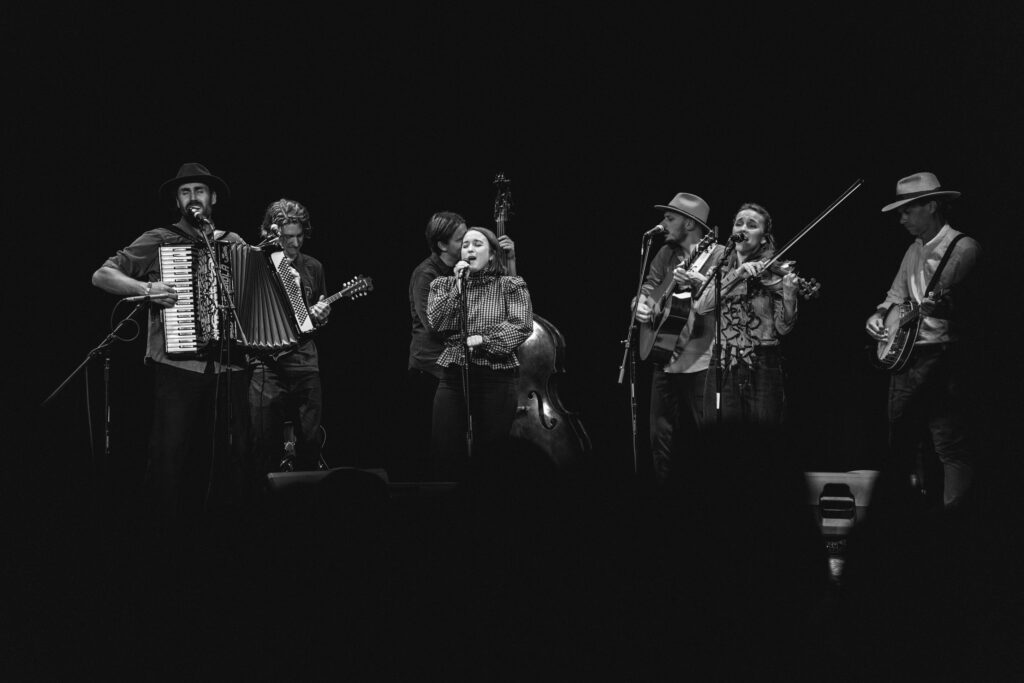
When naming themselves, the band landed on Hayde (pronounced Hide) and added Bluegrass and Orchestra, he said, “because we have the bluegrass instruments, but we have also added the accordion, and it’s a 7-piece band now.”
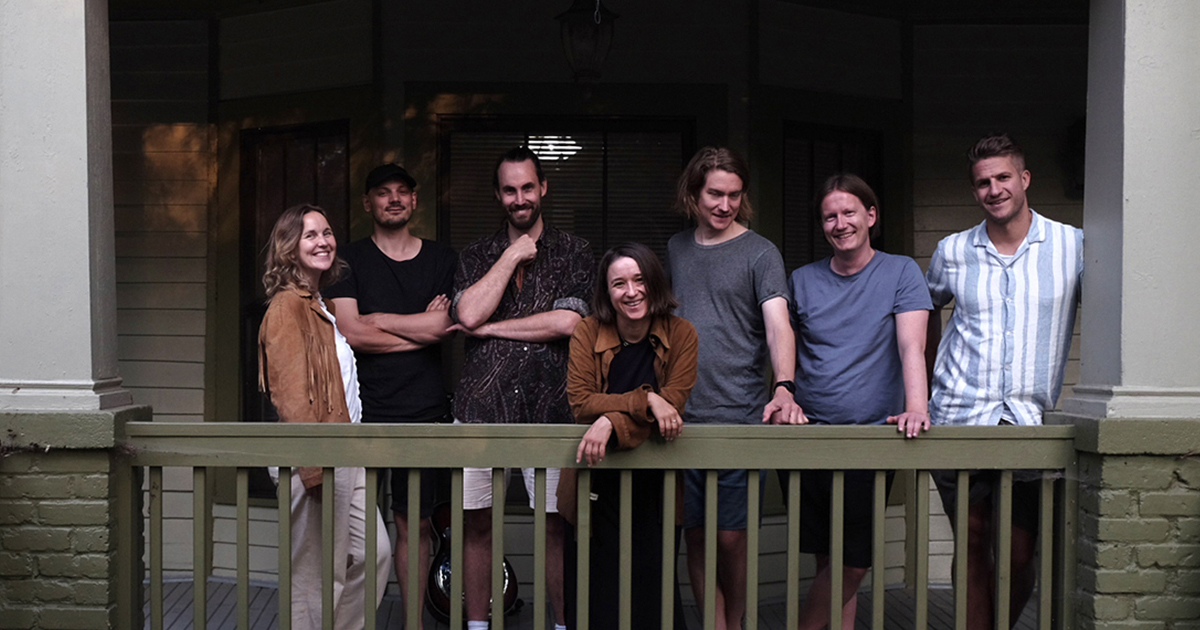
In addition to Marqvardsen, who plays accordion for the band, the group includes Nilsson on lead vocals, Meinich on fiddle, Ole Enggrav on guitar, Magnus Eriksrud on banjo, David Buverud on upright bass, and Emil Brattested on dobro and mandolin.
“We didn’t know exactly how to do it right, but the way we did it wrong was appealing to people,” Marqvardsen said. “There are a lot of rules in bluegrass. Some of them we break on purpose, some of them we break by chance, and I think it’s a fresh take for a lot of people.”
In a way, their lack of familiarity with what he calls “the rules of bluegrass” has given the band the freedom to find their own way to approach what was to them a new, even foreign, form of music. Their interpretation got overwhelming feedback from their listeners.
Recognizing that the traditional bluegrass audience is aging, particularly in America, Hayde Bluegrass Orchestra is devoted to reaching out to a younger audience. While the band’s audience extends far outside of Norway, thanks to technology, they see a growing interest in roots music there as well.
The band’s online presence, which has grown their fan base far from their Oslo, showcases their big sound and big talent. Even without the distinction of their international status, their performances earn them a place in the bluegrass community. Nilsson, who sings lead on most of the songs, has a voice that is both clear and textured. Recordings of their collaboration with The Petersons in Branson, Missouri, on their recent tour on “Emmylou” and “The Boxer” also highlight her harmony vocals, a strong point for the entire band.
Marqvardsen noted that after twenty years of electronic dance music dominating the charts there, and now with AI music that doesn’t hit a nerve, they see people leaning more toward acoustic music.
“There’s a growing interest in the music, but it’s not so far away from our music. It’s just a circle just repeating itself.” The band members pointed out that a huge percentage of the Norwegian population migrated to the U.S. centuries ago and brought their music, which then blended with the music the immigrants encountered, eventually evolving into bluegrass.
“It relates to the music we know,” said Marqvardsen. “We just bring kind of a different Nordic vibe. Bringing that back to the US is the second circle.”
The band has worked to develop their own flavor of bluegrass. Calling themselves “kids of the 90s,” Marqvardsen noted that they were influenced by bands like Arcade Fire. They like playing big ballads, he says, so their music falls “more on the emotional and on the arranged side.”
With a growing audience in Europe, their largest fan base is still in the United States, so the members of Hayde Bluegrass Orchestra embarked on a three-week tour of the US in the fall of 2025 to tap into that demographic.
They opened to a huge crowd at the Bluegrass Island in Manteo, North Carolina. The festival organizers said their set at 2 PM was the biggest crowd they had seen at that time of day. Hayde signed CDs afterward for two hours. Opening for Dan Tyminski, they knew they could expect a crowd, but they learned that many in the audience came specifically to hear them.
After the Manteo show, Tyminski told them, “I don’t think I would have the time to do what you did on stage there,” talking about the arrangements. “We work a lot with the arrangements, since we have so many parts and pieces, and we’re very focused on harmonies,” said Marqvardsen.
The band continued their tour with a number of sold-out shows across the country. They played several shows in North Carolina before heading to Tennessee, playing one night in Nashville with a stop in Kentucky to play at the Bluegrass Music Hall of Fame. Meinich noted that the biggest contrast was playing at the Heritage Center in the Smoky Mountains, an area that reminded them most of Norway. She added that at almost all the concerts, there was somebody who had Norwegian heritage. The band then headed west to Missouri, Kansas, and Oklahoma before finishing the tour with shows in Florida.
Meinich says, “The response was much better than we could have expected. We got to meet so many nice people after the concerts, people who had traveled from California to Florida to see us, and people who had traveled from Canada. We had conversations after the concerts when people told us how they discovered our music, most of them on YouTube during COVID.” She said that while talking to people after the shows, they heard stories of how the band’s music had helped people through tough periods in their lives.
As Hayde has been building an American fan base in the United States through YouTube, the band has also attended the International Bluegrass Music Association’s World of Bluegrass twice. In 2022, they were nominated for Band of the Year, the same year Nilsson won the IBMA Momentum Award for Vocalist of the Year. There, they forged new friendships with others in the bluegrass community.
Due to their reception on the recent tour, they feel they are on the brink of a new level of success. This first full tour provided an opportunity to play for a larger audience than those back home in Norway, even with their growing popularity.
During their fall tour, they had the opportunity to play Dee’s Country Cocktail Lounge, a favorite East Nashville spot. During the tour, they were joined by Nashville banjo player Charles Butler, sitting in for Eriksrud, who was unable to make the tour. With just a brief time in Music City, they say they still have the Grand Ole Opry and the Station Inn on their bucket list, as they make plans for another tour in the next year.
Hayde’s first album, Migrant, released in 2021, was nominated for Spellemannprisen, the Norwegian Grammy, and debuted at #4 on the Billboard Bluegrass Album Chart. They also recorded a live album, The Broken Circle Session, in 2023. During the tour, they produced a special US edition of their upcoming album, which they called To the Dust, and played several new songs to a great response. This new album, they say, will be a more modern take.
“We don’t know what rules we’ll break on that way, but we have begun to embrace that a little bit more.” The response has built the band’s confidence that they can take their music in a new direction and see how more traditional fans feel about it.
On this album too, says Marqvardsen, they will have songs written by at least four of the band members—he, Nilsson, Enggrav, and Brattested. On the earlier album, Nilsson collaborated with Joachim, a former band member, but she says, “Now more people are comfortable bringing sketches and compositional ideas, so it’s more of a collaborative process where everyone’s more involved in arranging. I usually do the melody and lyrics, but again it’s more of a process now where everyone partakes and contributes with their ideas and their suggestions.”
That shared ownership, Nilsson said, is part of the culture they have created as a band, resulting in a broader range of music and the types of songs.
With the first big tour under their belts, Hayde Bluegrass Orchestra has no intention of resting. With a new album projected for 2026, they have plans to return to the U.S. in 2026. Hayde is already scheduled to play MerleFest in North Carolina and Parkfield in California, with plans to return for a couple of weeks in July, along with other trips in the fall.
What started as an opportunity to have fun playing with friends has grown into something bigger. “We feel like a family, or a marriage sometimes,” says Meinich. “Everybody plays a part, especially when we travel. We need all the different personalities to function.”