
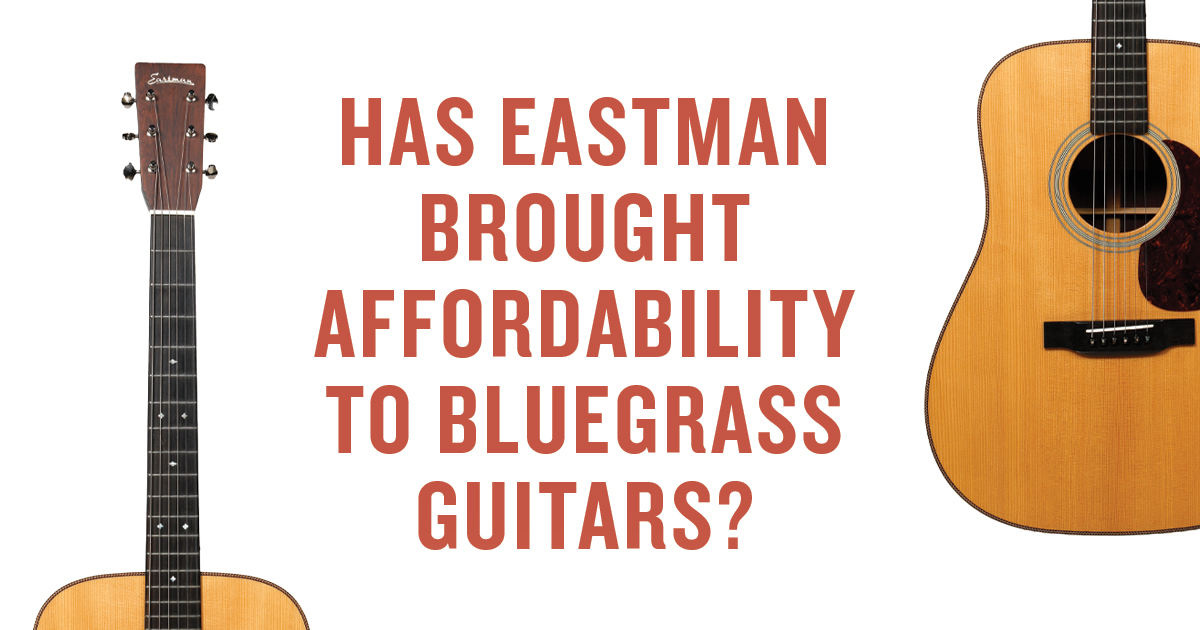
Has Eastman Brought Affordability TO Bluegrass Guitars?
Photos by Bud Osborne
Eastman Music Company, over the last decade or so, has quietly but unmistakably risen to the challenge of building guitars that can satisfy discerning bluegrass players, while retaining the affordability that is the hallmark of APAC (Asia-Pacific) instrument manufacturing.
Case in point is the well-crafted and luxuriously appointed guitar under review here, the Eastman E20D-TC-MR. Featuring a torrified Adirondack top (Thermo Cured or TC in Eastman parlance) over a fine set of Madagascar rosewood (MR) back and sides, this E20D is aimed at buyers who might gravitate to a guitar from the legendary workshops in Austin or Lewiston or Nazareth but are unable to afford those high-end instruments. Just pricing out one elite, boutique US dreadnought in the exotic tonewoods found here rang up at well over $10,000.
At a list price of $2,769 and selling for a street price around $2,200 depending on the dealer, Eastman has set this guitar up to contend with the best of the best at an attractive price point. But can it match up?
Objectively, this instrument certainly provides the buyer with a professional-level guitar. Eastman has used top-quality materials throughout. The top has a surprising amount of silking, and the torrification process was expertly managed to prevent the ungainly “skunk stripe” seen down the center of so many early roasted tops. The Madagascar rosewood adds visual appeal to the guitar, even if it’s impossible to say whether the upgraded tonewood actually sounds better than the standard East Indian rosewood. The finish – something Eastman calls Truetone gloss – is even and properly sanded and buffed out.
The build quality can’t match the craftsmanship of a top boutique instrument. But it comes close. This Eastman features a small maple bridge plate similar to those found in pre-war Martins. Checking under the hood reveals a most pleasant surprise: no tone-killing tongue brace under the fingerboard extension. The E20D features advanced X, hand-scalloped Adirondack bracing, another upscale touch.
The binding is meticulously mitered and seated, and the fit and finish overall are above average. The guitar plays easily, and intonates well across the fretboard with good string to string balance. Players at IBMA who tried it out praised its volume and projection. Other notable features include a nice traditionally-styled hardshell case with aged brass hardware, top-shelf Gotoh 510 butterbean tuners in polished nickel and a hand-cut pearl logo in the ebony headstock overlay. About the only upgrade a buyer might wish for here is animal protein glue instead of Titebond in its assembly.
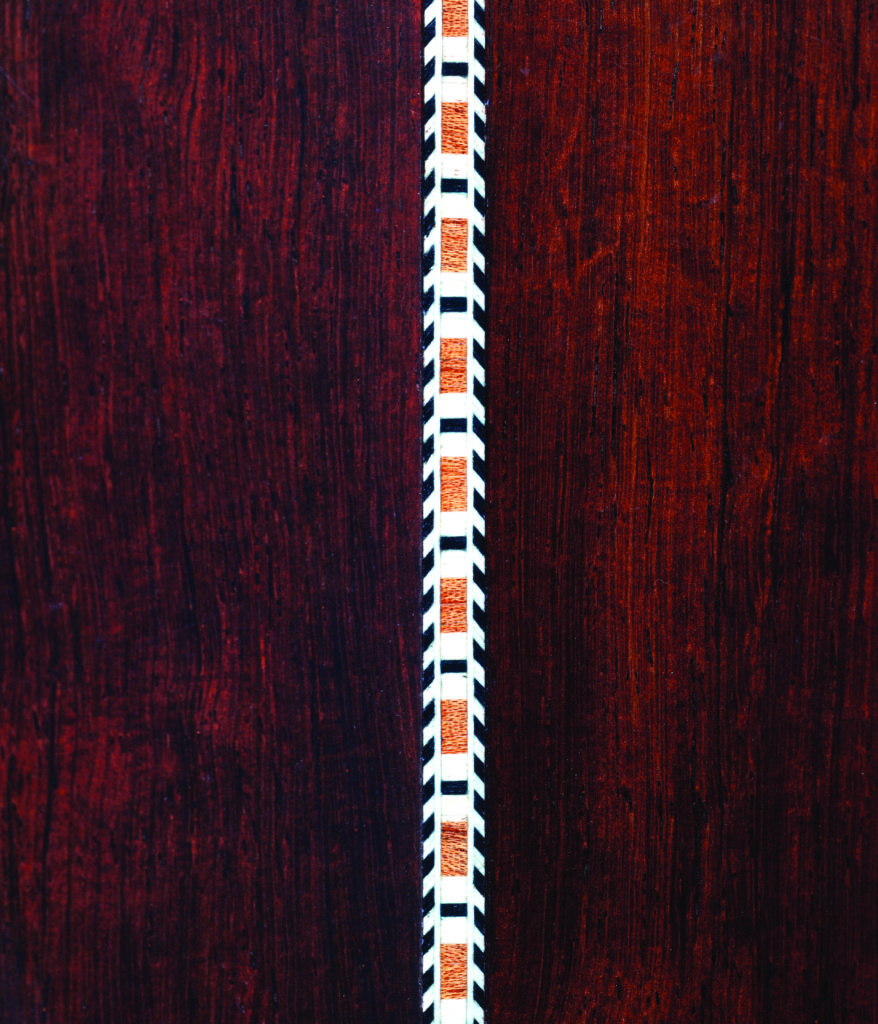
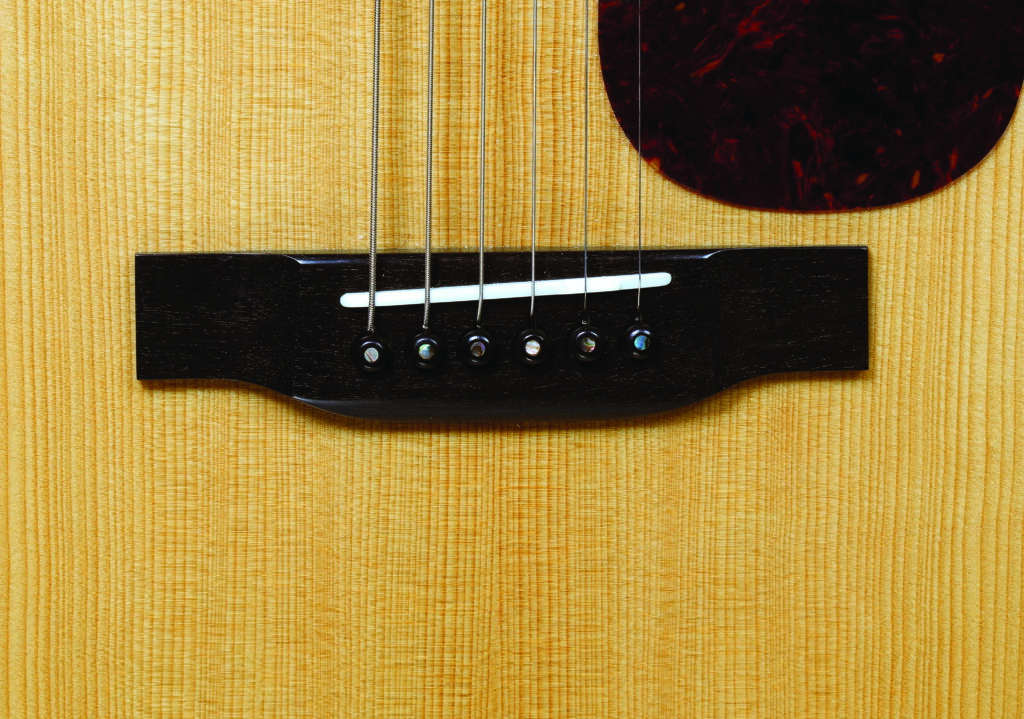
One intriguing note about this guitar is that Eastman did not feel compelled to recreate a D-28-style guitar down to its rigidly traditional appointments. That’s a sign that the company recognizes it is establishing a presence in the high-end acoustic guitar market and needs to set itself apart. So instead of white bone bridge pins with redeye dots like most D-28s, we find nicely crafted unslotted ebony pins with abalone dots seated in the ebony bridge. The herringbone top purfling eschews the rather dowdy black/white traditional chevron pattern, adding a third element of brown wood—maybe dyed mahogany—to create a subtle bit of arboreal bling. Likewise for the marquetry in the backstrip, where the same brown material is added to introduce a bit more color and individual style to the pattern. It’s a very nice look, but might take a bit of getting used to. It clearly shows how Eastman has absorbed the best elements of traditional American guitar design and then branched out to create a subtly unique aesthetic here.
Playability, of course, plays a critical role in any stringed instrument. Eastman has paid some attention to what bluegrass players will look for here, if not exactly catering to their needs outright. The review guitar includes an ebony fingerboard with tasteful slotted diamond abalone inlays over 20 Jescar FW43080 nickel-steel frets. The nut width is 1 3/4” with string spacing at the bridge measuring 2 5/32”. The fretwork is clean and comfy here. All good so far, but many traditional players will have issues with this Eastman’s neck shape. A slim, rounded C shape, there’s no trace of a V or tapered V style carve here. It feels more like a Taylor neck than a Martin Authentic or Collings Traditional. It’s a modern accommodation to players looking for ease-of-play many buyers will love. But if you like that full-handed feel of a traditional dreadnought neck, this might be a deal-breaker.
When it comes to sound, the E20D-TC-MR impresses. More than just volume, the guitar exhibits ample harmonic crunch and sparkle in the upper harmonics, with a solid if not overwhelming bass response. Keep in mind, though, this is a new guitar with a stiff Adirondack top that will improve as it’s played in. It quickly became my go-to guitar for big bluegrass jams, where it thundered out fat open chords and bass runs.
Leaving aside any geopolitical issues around where it was manufactured, the Eastman E20D-TC-MR offers bluegrass guitarists a surprisingly high-end dreadnought in desirable tonewoods at a price far below what it would cost from any US-based builder. Modern flatpickers with big ears and shallow pockets will find a guitar here that isn’t just a “bridge” instrument until they can afford something better. It might well be their Holy Grail guitar, inspiring them forever in the musical quest. And for that, Eastman deserves a ton of credit.