
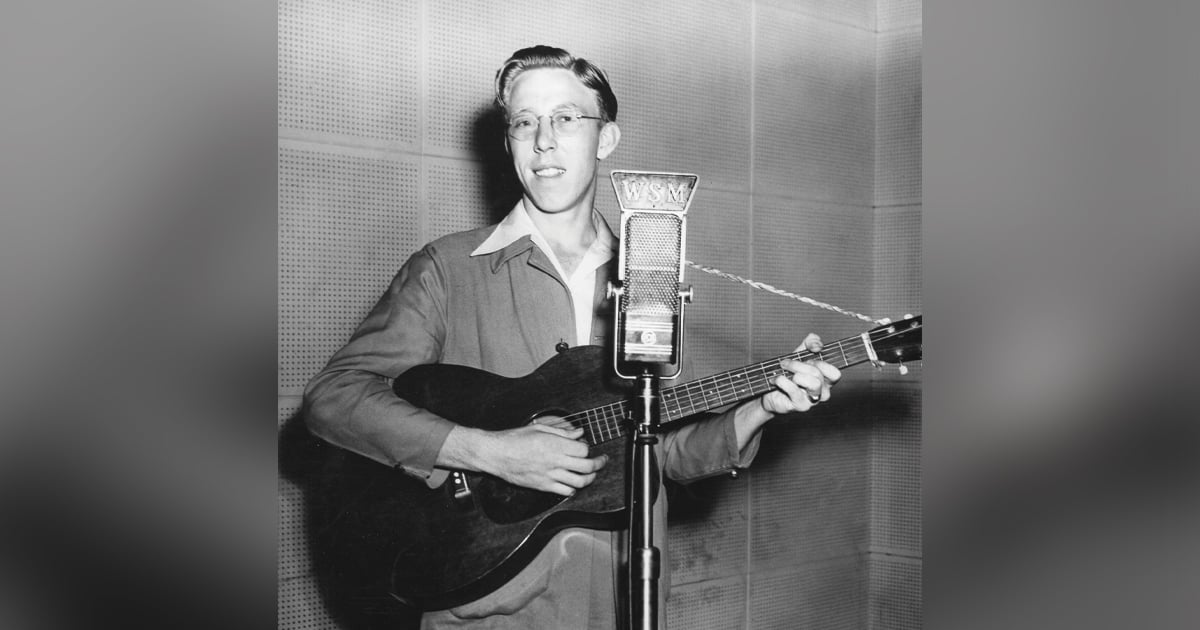
George Shuffler
Bluegrass Innovator
Seventy-five years ago the Stanley Brothers developed a distinctive sound in country music (a music that would later become known as bluegrass). Carter’s lead voice, sparse rhythm guitar style and songwriting combined with Ralph’s soulful tenor voice and distinct approach to the five-string banjo to deliver a unique style of bluegrass music that strongly endures to this day. Starting in the early 1950s, another unique musical voice was added to the Stanley sound in the form of George Shuffler’s walking bass, baritone vocals, and signature crosspicking guitar technique.
When asked to comment on George Shuffler’s guitar playing in the context of the Stanley Brothers’ music, flatpicking guitar master Dan Crary said, “I may be the most enthusiastic fan of the Stanley Brothers with George Shuffler alive today, have been for decades. Their harmony singing was darkly beautiful, eerily ‘lonesome; and ironic, visceral, unforgettable. If there is a more brilliant tenor line in bluegrass than Ralph’s singing on ‘The Harbor of Love’ I can’t imagine what it would be. They were superb. But another, lesser known reason they were superb, is that they had George Shuffler heroically singing baritone and playing guitar.
“In those days ‘playing guitar’ in bluegrass almost always meant playing rhythm behind the lead instruments of banjo, fiddle, and sometimes mandolin. But in the case of George Shuffler, it often meant flatpicking, meaning George also played lead breaks along with the other solo instruments. So as you go back fifty years or so and listen to these rough-edged virtuosos of high lonesome bluegrass, listen to the guy who was the only solo flatpicker at the time regularly backing a bluegrass band, and realize that his playing and singing were essential to the Stanley sound. His tone was fat and earthy and mellow, his lines were usually deliberate and strong and straight, but sometimes he also delved into what the pickers call ‘crosspicking.’
“Typically ‘flatpicking’ means you use the single pick to play a tune or a melody or a run, a succession of single notes arranged, you might say, horizontally along a melodic line. But ‘cross picking’ is a flatpicking sub-category; it means that the pick moves sorta’ vertically and in eighth notes across three strings of a chord, rather like a banjo roll or something like what a finger picker would play. Crosspicking requires the player to move fast across three strings of a chord with just the single pick; it’s challenging, a very advanced technique, and has its own unique sound and affect. Not every flatpicker can do this, but George was a master of it as early as the 60’s. He was featured for years and on multiple records back then playing lead and crosspicking on the Stanley Brothers King Records. So treat yourself to some historic moments in bluegrass when the guitar came out of the shadows, when one of its earliest and greatest innovators, George Shuffler made bluegrass and flatpicking and crosspicking history. It was very beautiful. And thanks to the old recordings, it still is.”
Although George Shuffler is most famously known for his guitar technique, especially amongst bluegrass guitar players, legendary bluegrass bass player Tom Gray said, “George Shuffler is my hero as a bass player. When he played his walking bass behind the Stanley Brothers, and the way Ralph played his back up, it really matched very well. Ralph had a very instinctive and powerful rhythm in his right hand. He played more simply than Earl Scruggs did, but he had a groove about him. George’s busy bass line complimented what Ralph did on the banjo. When George became known as a lead guitar player, John Duffey said to me, ‘George Shuffler had a greater impact on the Stanley’s music when he played bass than he did when he played the guitar.’ George’s bass gave a whole dynamic to the music that most other people would not have been able to provide.”
Shuffler’s Early Years
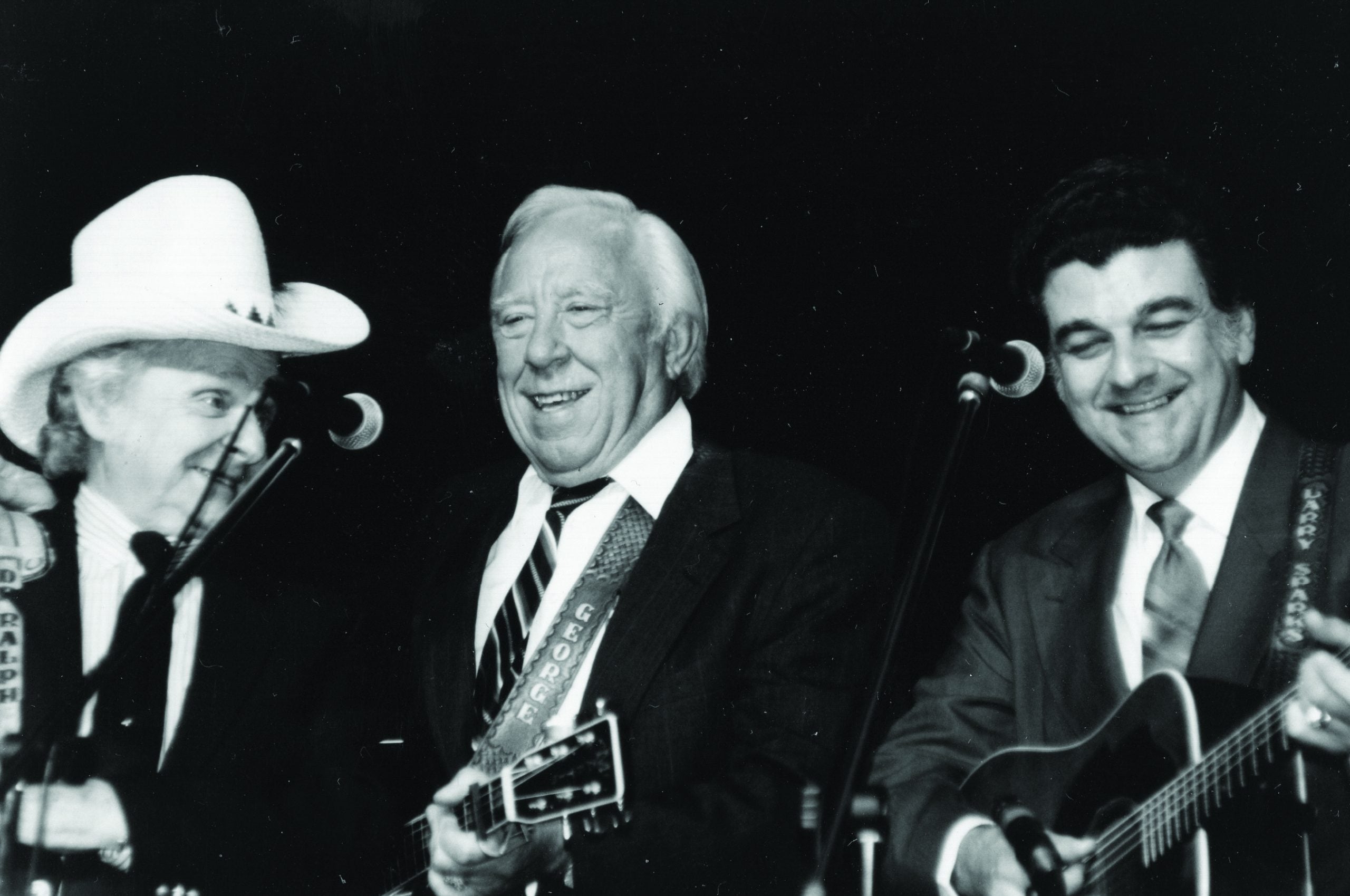
George Shuffler was born in Valdese, North Carolina in April of 1925. He was the second oldest of nine children—three girls and six boys. His first musical instrument was the guitar. In an interview that I conducted with George in 1997, he said, “I got my first guitar when I was twelve years old. It was a Gene Autry model that my mother bought using money she had earned crocheting doilies. I didn’t know nothing about it. There was an old guy across the creek over there who knew a few chords and he showed me three chords on the guitar. I came back home and, Lord, I practiced on those things until my fingers were so sore I couldn’t even look at them or they would hurt. I didn’t want to lose those chords. My mother sat by the fire and sang ‘Birmingham Jail’ until she got so hoarse she couldn’t talk that night. I was picking behind her singing so that my time would come out right.” (Author’s Note: In the interview that George conducted for the Bluegrass Oral Histories Project he recalled that his first instrument was a Kalamazoo guitar that his father had obtain through a trade for a pistol.)
When asked about further development on the guitar, George said, “Daddy worked the second shift at the mill and after a long twelve hours he didn’t want to be disturbed until it was time for him to get up at about nine o’clock to go back in at twelve. So I would take the cows way off down by the creek there and sit under this apple tree and pick that guitar and practice them three chords. After a while I got to thinking that there must be more to it than this, and I got to making up chords. I put my fingers in a place where the strings would sound and blend with the others. I got to where I was into barre chords and things like that.
“There was a guy down below us there who was a powerful guitar picker and his daddy played the fiddle. My daddy had told them about me playing the guitar and they sent word that they wanted me to come down to pick with them on Saturday night. I was so anxious to go, and I was scared to go. I said, ‘My Lord, every chord I make is going to be wrong!’ When I got there I turned my back with my guitar away from him and looked over my shoulder at the chords. I saw that he was getting the chords just like me. I got brave then. I turned around and laid it to him. He picked a little bit of lead guitar and I would play rhythm for it and the old man would play the fiddle. After that I got a little bit more confident and started experimenting more on the neck and doing a little lead myself.”
George continued, “When I was about sixteen there was a little band there and they invited me to come pick with them and play lead guitar. I’d gotten to where I could pick a few little things. I had an old Stewart guitar, got me a little pick-up to put on it and someone else had an amp they run it through. I’d kick-off and turn-around a little bit for them and do a little singing. It evolved from that. I went on to meet other pickers and eventually went to Nashville with the Bailey Brothers.” Before joining the Bailey Brothers, George had actually performed with two local bands, The Carolina Boys and the Melody Mountain Boys.
The Melody Mountain Boys included George playing guitar, George’s brother John on bass, Curly Williams on lap steel guitar, and a neighbor Lester Woodie on fiddle (Lester would later join the Stanley Brothers on fiddle). The group did not have their own original songs, but played covers of popular songs of the day by country artists such as Red Foley, Eddie Arnold, Merle Travis and Western swing artists such as Bob Wills and Spade Cooley.
George’s work with Danny and Charlie Bailey began in the mid-1940s when the brothers were performing in Granite Falls, North Carolina and their bass player, Junior Huskey, didn’t show up for the engagement. George was attending the show and Charlie Bailey asked him if he knew how to play the bass. George remembered, “I had had a bass in my hand about three times and never really played one, but I said, ‘I’ll try it.’” George played the show with the Bailey Brothers that night and afterward they asked him if he would be willing to finish out the week with them. George agreed to play the shows that they had booked that week in North Carolina. At some point during that week Charlie Bailey asked if George would be willing to move to Nashville and join the band.
Regarding the decision to move to Nashville, George told Charlie, “Let me go home and talk to my momma and daddy and my boss man at the bakery.” He said, “I went and talked to them about it. I was making about twenty dollars a week at the bakery and daddy was making about twenty and my sister, who was spinning in the cotton mill, was making about the same thing. Well, they offered me about sixty dollars a week with all my road expenses. That was as much as all three of us was making. That was my plea. It sounded good to them and they consented.”
George played on the Grand Ole Opry with the Bailey Brothers until the band left the Opry late in 1946 and moved to a radio show in Knoxville. George moved back to North Carolina, went to work in a textile mill, and rejoined the Melody Mountain Boys. The group performed on several regional stations, including WKBC (North Wilkesboro), WMNC (Morganton), WIRC (Hickory), and WJRI (Lenoir). Between the 1946 and 1952 (when he joined the Stanley Brothers) George worked for several bands. The first was the black-faced comedy act Mustard and Gravy from Wilson, North Carolina. When Charlie Slade—who, at the time, was one half of the Mustard and Gravy act—split off to form his own band, George went with him. George performed with Charlie Slade at the Carolina Theater in Spruce Pine. George also spent some time with Jim & Jesse (with banjo player Hoke Jenkins) and then later joined a band that Hoke Jenkins formed. The band worked on the Liberty Network until that folded and then played the original “Farm Hour” in Asheville, North Carolina.
When asked about joining the Stanley Brothers, George said, “I worked with Hoke in Asheville for several months. It was a real bad winter and about snowed us out. The car just sat there for several weeks and we had to walk to the radio station. We had to call and cancel most of our dates because of all the snow up on that mountain. I came home on the 23rd of December. On the 28th of December, Carter Stanley called me and asked if I would like a job with them. They were leaving Bristol and going to WBLK in Versailles, Kentucky where Flatt and Scruggs had just left to go to Raleigh, North Carolina. Jodie Rainwater, who was booking for Flatt and Scruggs, gave us his date book with all of the schools, and courthouses, and theaters that they had played. It was a sent blessing because we would just call them to set up the dates. We played that out and then went to WOAY in Oak Hill, West Virginia, and worked a good long time there.”
The Stanley Brothers Years
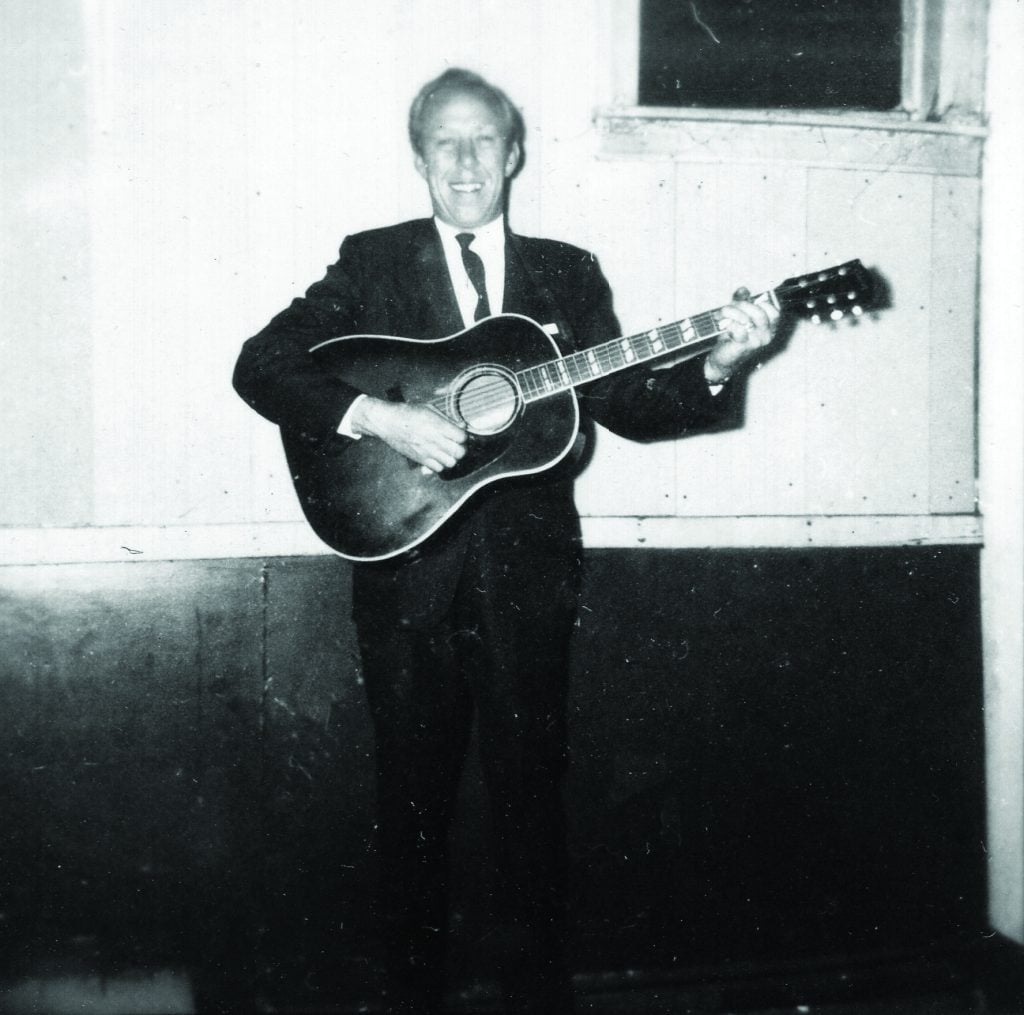
George Shuffler worked with the Stanley Brothers (with some breaks here and there) until Carter Stanley passed away in December of 1966. When he first joined the Stanleys he played bass for several years. The style of bass playing he used became known in bluegrass circles as the “Shuffler walking bass.” Regarding the development of that style, George said, “At the time, everybody was just ‘boom-boom-boom.’ I figured that every time I hit down here with my right hand, there was a place for my left hand. On the bass scale, it might be a tenor note, it might be a baritone, it might be lead. But there is a drive there and there is a position on that neck every time you pick it down here with your right. So I kind of created that, they call it the ‘Shuffler bass.’ I was just looking for something that fit and something that everybody else wasn’t doing. My philosophy all along has been that you just go by gut feeling. If you create you a little lick, try to adapt it to what you do. Don’t go out and grab what other people do. If you got you something going, don’t mess it up with someone else’s thoughts and ideas.”
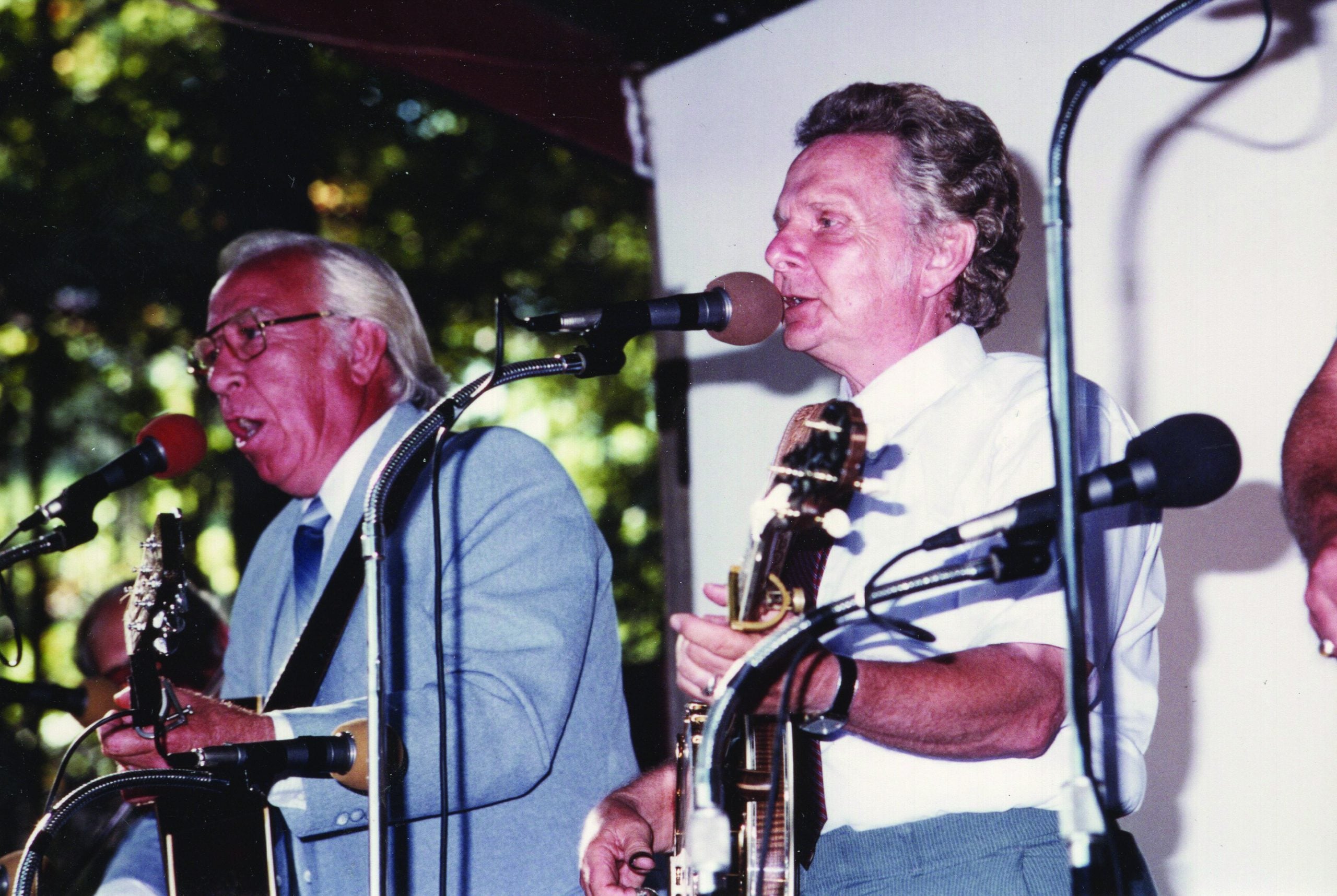
The development of George’s crosspicking technique on the guitar was also a result of his wanting to find something that he felt best fit the music. Lead guitar playing was introduced into the Stanley Brothers music at the request of Syd Nathan, the founder of King Records. Nathan was a fan of the Delmore Brothers and liked the lead guitar work on their recordings. He suggested that the Stanley Brothers add lead guitar to their music. At the time, Bill Napier was playing mandolin and Shuffler was playing bass. When the band recorded “Old Mountain Dew,” Napier provided the lead guitar work. His lead guitar playing was what George referred to as “quick wrist mandolin licks.” George said, “When I took over on the guitar, that is what Carter wanted me to play, but I wouldn’t do it because that didn’t fit the guitar as far as I was concerned.”
Suffler explained, “When we went out a lot of times it was just the three of us, Ralph, Carter, and myself. Back then all there was on lead guitar was Maybelle Carter and Merle Travis, and neither one of those styles fit what the Stanleys sang. They sang those slow, mournful mountain songs with long dwells at the end of a line. That crosspicking roll filled in when they stopped to swallow and get their breath. Little single string stuff just wouldn’t fill it in. The crosspicking roll would make it full and solid. Since it was just the three of us, God knows we needed all the help we could get. We had to make every lick count.”
Regarding Carter Stanley’s reaction to the crosspicking technique, George said, “Carter didn’t like it. He said, ‘Is that all you can do?’ I said, ‘Well, that is what I want to do.’ He wanted me to use that quick wrist single string stuff and I said that if he wanted that he needed to get him a mandolin player. I like to play what I like, and I didn’t like to play that. Soon after that we went to record and Chuck Sikes was the engineer. We were in there doing something and I was doing some crosspicking in the background. Chuck said, ‘George, my God, what are you doing there!’ I said, ‘I’m messing up I guess. I don’t know.’ He said, ‘Well I like that. That is filling in, put some more of that in there.’ After they liked it and the records came out, it got to catching on. If I had of known it was going to catch on like that, I would have tried to have done it a little better!”
When asked how audiences responded to his style of lead guitar playing, George said, “Oh, Lord ‘O Mercy, they ate it up. I remember we played the big festival in Newport, Rhode Island, and we would do things like ‘Little Glass Of Wine,’ and by then my crosspicking was working, and I would take a break on that and there would be an uproar. They would scream and holler and applaud more than you ever saw. Then they would quiet down and listen to the verse and want me to pick another one. I would do it and here they come again. I didn’t know whether they was liking it, making fun of me, laughing, with me, or at me. But I was having fun and come to find out that they were more serious than I was. They accepted it from the very start.”
Innovative bass and guitar playing were not the only unique components that George Shuffler brought to the Stanley Brother’s music. His singing was also a big part of the Stanley sound. George recalled, “When I first went with them, Peewee Lambert had been singing with them and he was just about a Bill Monroe carbon copy. When he left they brought in Curly Seckler for a little while, but he didn’t stay long and they said, ‘What are we going to do?’ I said, ‘Well, we can sing these things. Let’s just drop it down. Ralph you sing a tenor and I’ll sing a low baritone instead of a high baritone.’ We started singing it that way and people liked it.”
George added, “Ralph Stanley said, ‘You roll with me better than anyone I ever sang with.’ I appreciated that about as much as any compliment I ever got. You know Ralph, he is like an elevator. I learned to roll with Ralph. I could tell if he was going to roll one up or roll one down and I would stay right on his back all the time.”
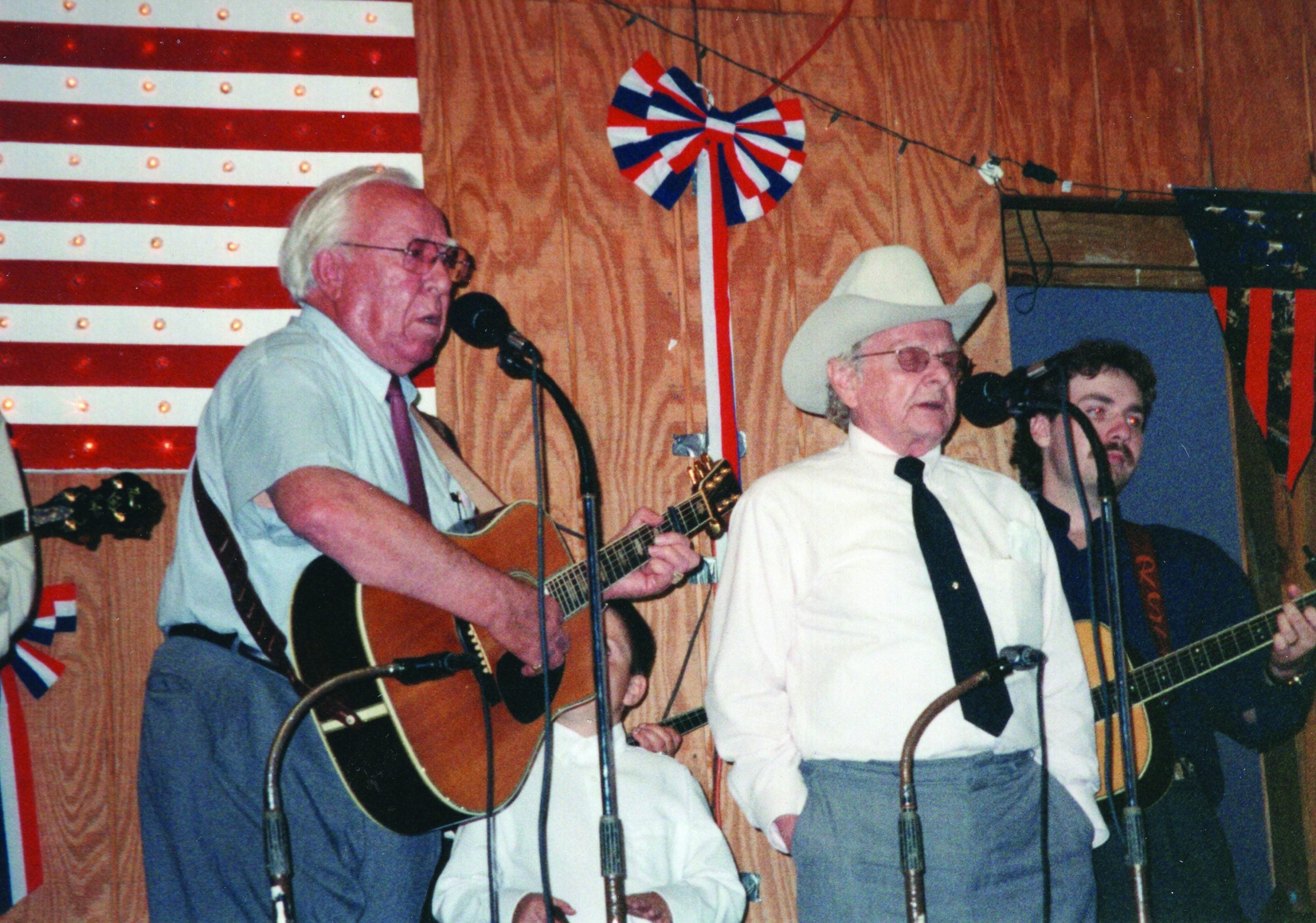
After Carter Stanley passed, George worked with Ralph off and on several times over the remainder of his life. Sometimes he spent a short period as a band member, other times he would just fill in when Ralph needed a bass player. I saw George perform with Ralph as late as the early 2000s when Ralph’s bass player was out sick. For a good portion of his post Stanley Brothers life George was also involved in The Shuffler Family Band with his children. In addition to playing music, George also bought and sold livestock, particularly horses and, later, goats. George Shuffler passed away in April of 2014.
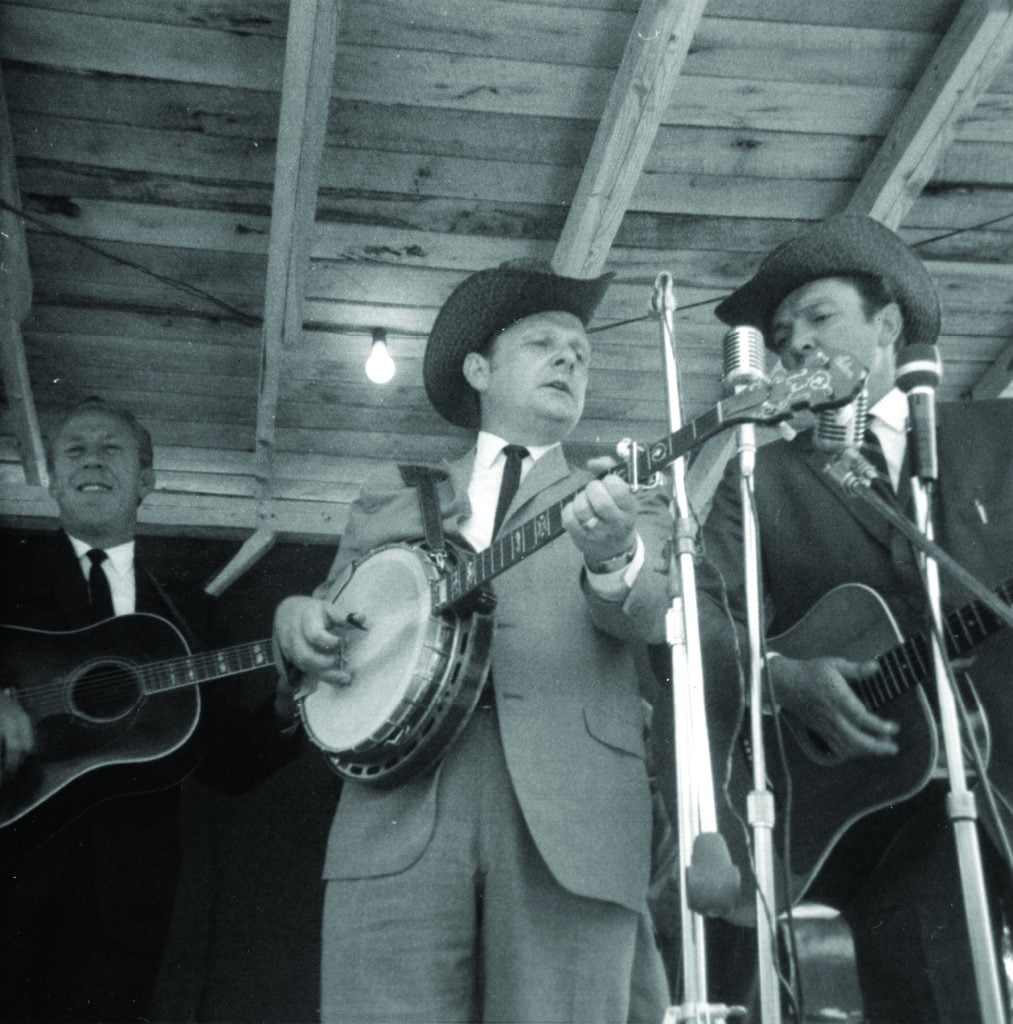
In Traveling the High Way Home: Ralph Stanley and the World of Traditional Bluegrass Music, author John Wright said, “For an extended period during the 1960s George Shuffler was such a vital part of the Clinch Mountain Boys that the act might well have been called a trio rather than a duo.” George’s innovations on the bass and the guitar, and his baritone vocals, were certainly a distinct part of the Stanley Brother’s sound and he helped establish new ways of playing the bass and guitar in bluegrass music that are evident to this day. When ten-time IBMA “Bass Player of the Year” Missy Raines was asked about George Shuffler’s bass playing, she said, “My bass hero is Tom Gray and his bass hero was George Shuffler.”
Missy added, “Many artists will be remembered as a master of one instrument but few of them will be revered for their impact and influence on two instruments. George Shuffler is one of those musicians. As a bass player, George was grounded by a keen sense of timing along with a clear respect for supporting the soloist. The notes he gathered for his pioneering walking lines landed big and fat. George’s bass playing, as well as his crosspicking guitar style, reflect his natural finesse for that often overlooked space between the notes.”
When asked about the development of any part of his music, George would typically say something like, “I played it the way I felt it.” When Alison Krauss gave her Bluegrass Music Hall of Fame induction speech at the 2021 IBMA awards show, she thanked the founders of Rounder Records by saying “We want to thank you for, as George Shuffler said, ‘Always letting us play our feelings.’” George did play his feelings and bluegrass fans connected with the way that he felt it.
At the end of my 1997 interview with George, I asked, “What do you want to be most remembered by in your bluegrass career?” He replied, “It has nothing to do with music. I would want to be remembered as a fellow who was well liked and had friends who respected him.” He certainly achieved those goals, and much more.
I messaged you 3 days ago about problems reaching Gary at [email protected]. My e-mail returns all messages at that address.
Could you please advise what might be wrong, or tell me hoe to address Notes& Queries.
Thanks
Dick Richards