Grateful Dead
And the Culture of Roots Music
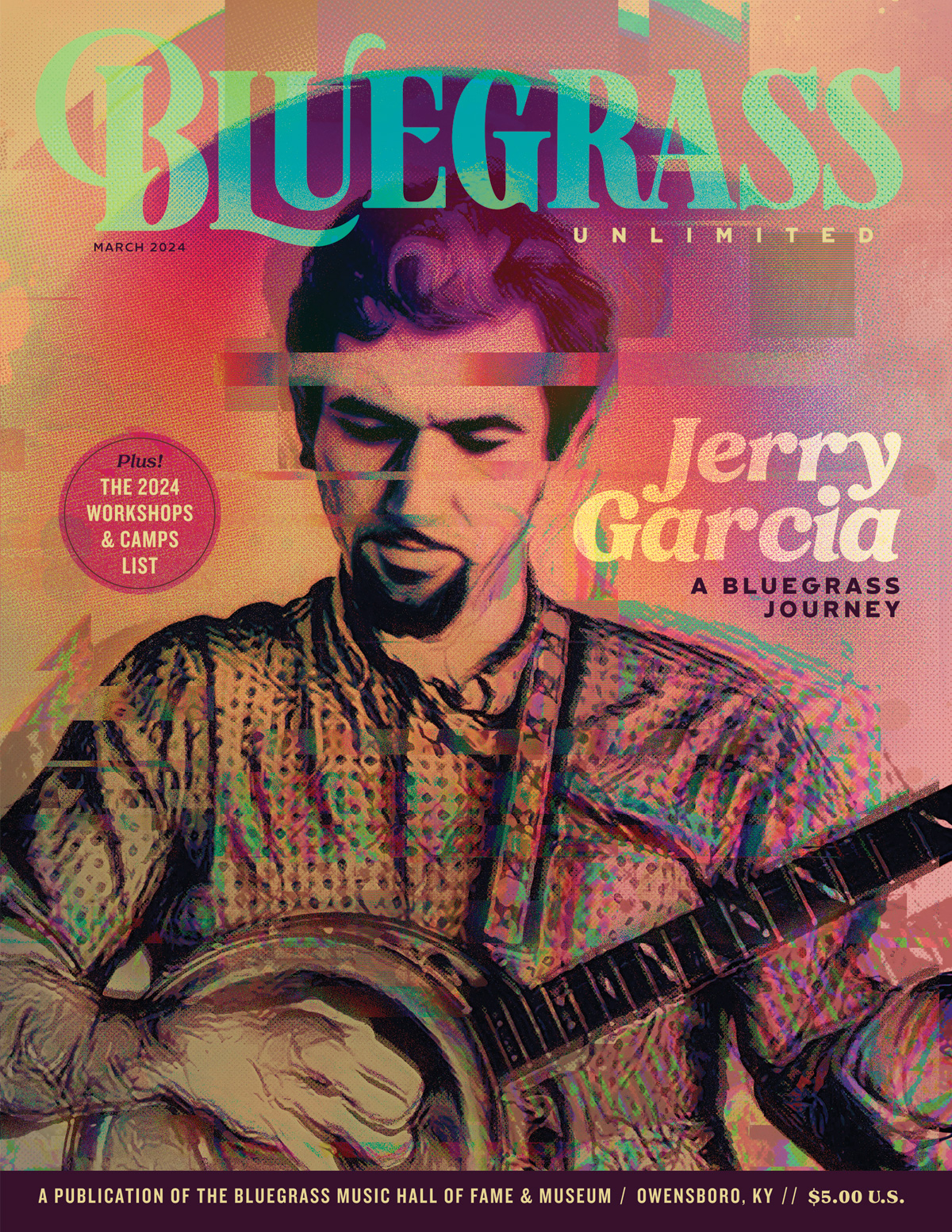
Throughout their career the Grateful Dead loaded their song repertoire with American roots music traditions from top to bottom. The Dead were interested in roots music largely because of Jerry Garcia and Robert Hunter’s (the Dead’s lyricist) early exposure to Harry Smith’s Anthology of American Folk Music. This anthology is a compilation of American roots music from the 1920s and 1930s that was compiled by Harry Smith in 1952. Garcia and Hunter couldn’t afford the anthology, but their friend owned a copy. The boys would break into her apartment and listen to the records when she went to work. Garcia was captivated by the music.
To speak about The Dead’s involvement in the rich tradition of American Roots Music it’s important to understand how “roots music” is defined. The term “roots music” refers to genres of music, primarily originating in rural areas of the United States—such as bluegrass, country, jug band, folk, old-time and blues.
Merriam-Webster defines country music as, “Music derived from or imitating the folk style of the southern US or of the western cowboy, especially popular vocal music characterized by simple harmonies, accompaniment by stringed instruments (such as guitar, fiddle, banjo, and pedal steel), repeated choruses, and often narrative lyrics.” According to BBC Music, “Blues originated in the Deep South after the US Civil War in the 19th century, evolving from the oral tradition of African American work songs and spirituals, which featured the call-and-response patterns that are still prominent in blues today. It came into mainstream popularity in the 1920s when it also developed its common AAB lyric pattern.” The seeds of the name “bluegrass,” as a genre, were planted when Bill Monroe, in 1939, called his band the Blue Grass Boys. At first Monroe’s music was not distinguished from the country music of the day. But later, in the 1950s, when many country musicians began using electric instruments and the bluegrass bands maintained their acoustic roots, the distinction between country and bluegrass was formed. Bluegrass bands are normally made up of a flattop guitar, banjo, upright bass, fiddle, mandolin and, more contemporarily, the resonator guitar.
Jug band music dates back to the ’20s and the first recorded jug bands were the Louisville and Birmingham jug bands. A jug band lineup was often kazoo, guitar, banjo, harmonica, fiddle, and a jug in place of, or sometimes in addition to, the upright bass.
All of these genres have interacted since their inception and the creators of these genres all played each other’s tunes. For example, “He’s in the Jailhouse Now” was written by foundational country musician Jimmie Rodgers in 1928, and in 1930 it was recorded by the heavily-influential jug band called The Memphis Jug Band. Another example of this communal attitude towards tunes within the culture lies within the famous “Nine Pound Hammer.” Bluegrass and blues artists such as Frank Blevins, Al Hopkins, Bill Monroe, Lead Belly, Flatt & Scruggs, Reno & Smiley, and The Country Gentlemen are all on record playing this tune. (Erbsen) Members of The Grateful Dead were participating in this tradition long before the date in 1965 when they first used the name Grateful Dead.
Jerry Garcia, Pigpen and Bob Weir would go on to create The Grateful Dead but from 1962-1965 they would play in a jug band that had many names, such as, Mother McRees Uptown Jug Champions, The Black Mountain Boys, The Sleepy Hollow Hog Stompers, The Wildwood Boys, The Hart Valley Drifters, and how could one forget, The Thunder Mountain Tub Thumpers. They created a recording in 1964 at Top of the Tangent Coffee house under the Mother McRees moniker. (Silberman) They played tunes like “In The Jailhouse Now” and “Cocaine Habit Blues,” which was first recorded by the Grant Brothers in 1928. This shows an early interest from members of the Dead in playing old tunes with rich histories.
The Dead’s love for historically significant tunes didn’t stop with Mother McRees. The Grateful Dead officially formed in 1965 and released their self-titled record in March 1967. On this album only two of the nine tracks were originals. In the chart below are the covers on this album, and some information about their origins.
The Dead played these tunes, but they did not play them with the traditional instrumentation associated with the genres, nor did they stick to the conventions generally associated with the tunes. They used electric guitars, electric basses, electric keyboards and hard-hitting drums.
One of the songs with the most interesting history on this record is “Cold Rain and Snow.” Interesting because reliable information on the tune is very hard to come by. In a 1967 interview with Ralph Gleason, Jerry Garcia says, “‘Cold Rain and Snow’ is a fragment that I learned from a banjo player named Obray Ramsey, a traditional singer from someplace like Indiana. It’s in the same kind of mode as it originally was, but the melody is different. And we’ve added a harmony line and of course it’s us, it’s our rhythmic structure and our ideas.” (Blackman)
Obray Ramsey was from Madison County North Carolina, which is corroborated by his second cousin James Ramsey, whom I talked to while performing this tune at the Old Depot in Marshall, North Carolina. Obray Ramsey recorded “Cold Rain and Snow” in 1963 which is the first available recording of the tune. Ramsey’s version of the tune consists of a 19-bar melody, whereas the Grateful Dead’s version of the melody is 18 measures with an 8-bar turnaround. The lyrics differ slightly between the two recordings. The dead’s second verse reads: She’s coming down the stairs, combin’ back her yellow hair, Well I’m goin’ where those chilly winds don’t blow, winds don’t blow, I’m goin’ where those chilly winds don’t blow. Whereas Ramsey’s version says: Well, she came down the stairs, Combing back her long yellow hair, And her cheeks just as red as a rose. The Dead also leave out several verses that give it the context as a murder ballad. The versions do share the main chorus which is sung as follows: Well I married me a wife, she gave me trouble all of my life, Ran me out in the cold rain and snow, Rain and snow, oh Lord, Ran me out in the cold rain and snow.
Another pre-dead recording of this tune is found with Dillard Chandler. This version was recorded in 1965, and has no instrumental accompaniment. It’s hard to notate the melody, because Chandler sings the tune in an out of time style, and takes a lot of liberties with the melody. The lyrics of this song are much darker than that of the Ramsey recording. This version describes the story of a man who kills his wife. The Chandler version has a final verse that reads: I shot her through the head, And I laid her on the bed, And I trembled to my knees with cold fear, With cold fear, with cold fear, And I trembled to my knees with cold fear.
The very first documentation of this tune comes from ethnomusicologist Cecil Sharp in 1916. It was published in 1917 in the compilation of tunes known as English Folk Songs from the Southern Appalachians. Sharp reportedly heard this song from Mrs. Tom Rice in Big Laurel, North Carolina. (Sharp)
Although I’m unable to find any information on Mrs. Tom Rice I did find an interview from Grateful Dead historian Patrick Blackman with Berzilla Wallin. Wallin is a member of a famous folk family, and is the cousin of Dillard Chandler. In an interview with Berzilla Wallin, Patrick Blackman documented this quote: “Well, I learned it from an old lady which says she was at the hanging—which was supposed to be the hanging, but they didn’t hang him. They give him 99 long years for the killing of his wife. I heard the song from her in 1911. She was in her fifties at that time. It did happen in her girlhood … when she was a young girl… She lived right here around in Madison County. It happened here between Marshall and Burnsville; that’s where they did their hanging at that time, at Burnsville, North Carolina. That’s all I know, except they didn’t hang the man.” (Blackman/Wallin)
It’s impossible to say if Berzilla heard the story from Mrs. Tom Rice, but it seems as if this is a true story that took place in Madison County, North Carolina. Interestingly enough there are songs that predate this tune by many years that have very similar themes. Sabine Baring-Gould was a priest from the mid-1800s to the early 1900s. He also was a collector of folk tunes. Think of him as an older English version of Cecil Sharp. According to The Penguin Book of English Folk Songs, which was released in 1959, Gould discovered a song called “On Monday Morning.” Gould claims this song was dated in 1760. The tune is set to the melody of English folk song “Turpin Hero.” “On Monday Morning” is the story of a husband who murders his wife, with the first lyric of the tune being On Monday morning I married a wife, Thinking to live a sober life. (Mainly Norfolk: English Folk and Other Good Music) It’s impossible to say if this song was an inspiration for “Cold Rain and Snow,” because there is no documentation of the writing of this song.
Interestingly enough, the tune “Never Be As Fast As I Have Been” by Grayson and Whitter was recorded in 1928, and has the lyric I married me a wife, She makes me tired all my life, makes me strive and do all that I can, I can, (makes) me strive and do all that I can. The fiddle and vocal melody from this tune is very similar to “Rain and Snow,” and shares the same repetition at the end of phrases from the song we’ve been discussing. This recording predates the recording by Obray Ramsey. Grayson and Whitter were from Fries, Virginia, which makes it very unlikely that they heard the same story from Marshall, North Carolina. (Brennan)
In a song called “Sporting Bachelors,” published in the song book Music of Ireland: 1850 Melodies, some lyrics match parts of the versions recorded by Grayson and Whitter and Dillard Chandler. The lyrics in question are
I married me a wife, makes me tired of my life / Let me strive and do all that I can, can, can / Let me strive and do all that I can. / She dresses me in rags, in the worst of old rags / She dresses like a lady so fine. / She goes into town, both by day and by night / With a gentleman who drinks wine
The first verse is identical to the chorus in “Never Be As Fast As I Have Been,” and the verse is identical to one of the verses in Dillard Chandler’s recording of “Cold Rain and Snow.”
All this is to say, the Grateful Dead were adding to a very long tradition by recording this tune. This type of information is available on other tunes from the Dead’s first album. Tunes such as “Viola Lee Blues,” “New Minglewood Blues,” “Good Morning Little Schoolgirl” and “Sitting on Top of the World” also have rich and storied histories.
The Grateful Dead continued to record roots music songs throughout their career. They covered songs like “Deep Elem Blues,” “Going Down the Road Feeling Bad” and “Dark Hollow.” In 1970 The Grateful Dead released their hit album Workingman’s Dead. On this album there was a tune called “Casey Jones.” Casey Jones is a story of a train engineer who crashed a train while under the influence of cocaine. This song contributes to multiple bluegrass, historical and blues traditions.
Casey Jones has been the subject of many songs. In 1966 Mississippi John Hurt wrote a haunting tune called “Talkin’ Casey.” This tune is from a narrator’s perspective, and details a conversation between an engineer named Casey Jones and his wife and children. Casey’s wife and children were begging him to not go to work because of the poor conditions on the railroad, and Casey went anyway and gave his life. Mississippi John Hurt also wrote another tune called “Casey Jones” in 1964. This tune paints Casey in a much more heroic light, and is less tragic. In 1911 Joe Hill wrote the tune “Casey Jones the Union Scab” in support of a nationwide strike by railroad workers. This tune is meant to be very funny, and is meant to act as a warning to those who decide to keep working during a strike. The story is about an engineer who “scabs” during a strike and crashes his train because of poor working conditions. He then goes to heaven, scabs on the angels who are striking in heaven, and then gets thrown to hell. This song is set to the tune of “The Ballad of Casey Jones” by Wallace Saunders.
“The Ballad of Casey Jones” was written in 1909, and has been recorded by Collins and Harlin in 1910, Furry Lewis in 1912, and many more such as Johnny Cash, Burl Ives, Bing Crosby, and The Golden Gate Quartet throughout the years. Wallace, the author of this tune, was a personal friend of Casey Jones. Not Casey Jones the fictitious action hero from folksongs, but the real railroad worker named Jonathan Luther Jones. He was nicknamed Casey Jones because of his upbringing near Cayce, Kentucky. Jones was born in March 1863 in Missouri and died early in the morning on April 29, 1900. Casey was a train engineer, and he met his fate by crashing into another parked train. He tried to stop but was unable. Wallace was aboard the train with Jones, but was able to survive because Jones slowed the train down a lot. Wallace wrote this song in his honor. It was a huge success, although he never recorded it himself. (Pollenberg 165)
This history is significant because The Grateful Dead pulled from a long tradition of songs about this man and added to the story. The part about illicit drugs is not historically accurate, but it does make for a compelling narrative. There is a long history of cocaine songs in jug bands and country music completely separate from the history of Casey Jones songs. For example, legendary country musician Roy Hogsed recorded “Cocaine Blues” in 1944. A jug band called The Grant Brothers recorded “Tell It To Me” in 1928, about the dangers of cocaine. “Cocaine Habit Blues” was recorded in 1930 by Memphis Jug band. Legendary bluesman Leadbelly recorded “Take a Whiff On Me” in 1935, and a song with the same name but different lyrics was recorded by a group known as The North Carolina Ramblers in 1927.
The Dead combined two historic tropes in the writing of their “Casey Jones,” as they often did in their original tunes throughout Workingman’s Dead and American Beauty.
Whether or not it was intentional, because of Garcia, Hunter, Pigpen and Weir’s obsession with American roots music, they honored the traditions that were set in place before them. They modified and sculpted these tunes and tropes to fit their own aesthetic, and they brought them into the ears of a new group of people, and a new generation. The Dead were great perpetrators of a centuries-old tradition that brings many people great joy and connection.