
Full Cord Bluegrass Cambium
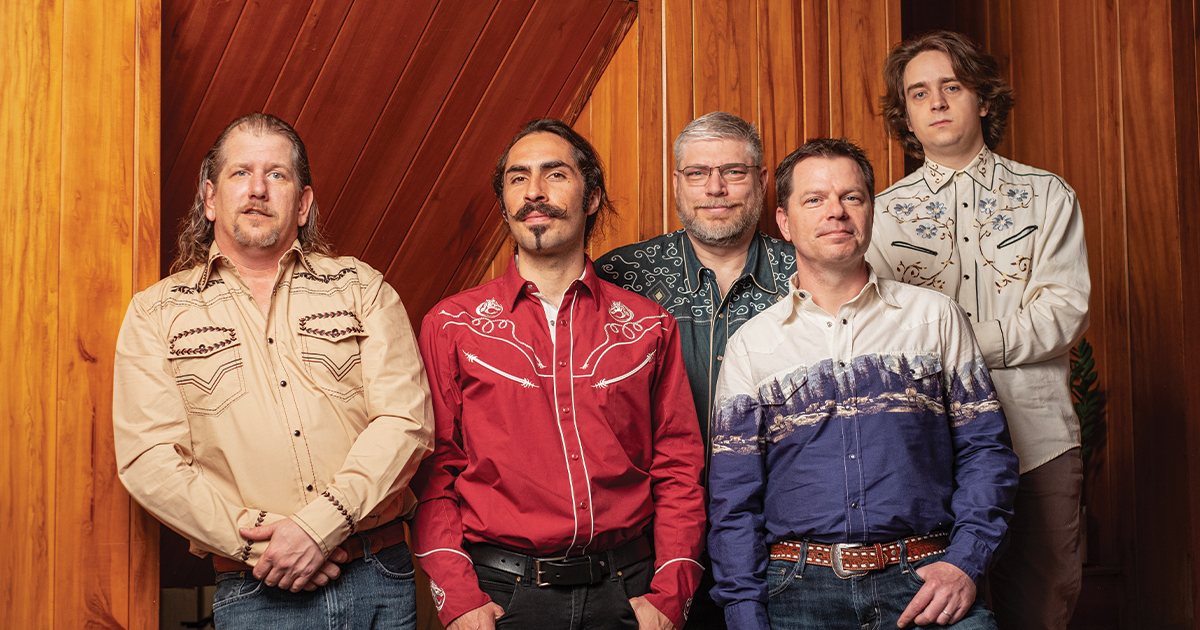
With the release of Full Cord’s new album Cambium, fans may have to turn to the dictionary to learn that the title refers to the layers of plant cells that promote growth. But wordplay is nothing new to Full Cord, the Michigan-based bluegrass band. Their earlier EP was entitled Choreomania, a reference to the fit of uncontrollable dancing that struck citizens of Strasbourg in the sixteenth century. That too caused fans to educate themselves. Their band name, often misheard as Full Chord, resulted from a tongue-in-cheek observation: Someone spied the bass, fiddle, mandolin and guitar piled in the corner of a run-down bar and said, “Looks like they’ve got a full cord of wood sitting there!”
Eric Langejans, the band’s guitarist, worked for twenty years as a sawyer and previously played in a band called Woodpile before joining Full Cord. He pointed out the name’s relation to wood-shedding as well, a metaphorical term for serious practice related to hard work.
Langejans met bass player Todd Kirchner and his wife Katie at a bluegrass festival the week before the two married. Mandolin player Brian Oberlin, whom they have known since the early days of the band, joined when he moved back from Portland in 2018. When original guitarist Luke Gitchel left the band to play at Dolly Parton’s Stampede, they regrouped. Kirchner’s father played on the banjo with the band for a while until he declared he needed to retire.
Kirchner said, “I think the band gelled when Grant joined us.” The band members had known Grant Flick, who now plays fiddle, since he was young, when they met him at the Cooper’s Glen festival in Kalamazoo. Flick also plays in the band Westbound Situation when not touring with Full Cord. They continued playing as a four-piece band for a year or so before deciding to add a fifth member. Lloyd Douglas joined them on banjo but bowed out when his job conflicted with touring. He still joins them for some shows, including their sold-out CD release at the world-famous Station Inn in Nashville. They met Ricky Mier while playing at Telluride and he rounded out the band on banjo.
The members of Full Cord all have deep music roots, planted firmly in bluegrass. The individual members, however, bring a variety of flavors to the mix. Langejans came from a family of conductors, band teachers and luthiers. He says that since his father listened to bluegrass, he leaned more toward rock and roll until a friend gave him the Old and in the Way CD at a Grateful Dead concert. He first picked up the mandolin, but joined the band as their guitarist after Gitchel left.
Brian Oberlin has a background in swing music. Versed in music from the last century, he is also considered an aficionado of the classical mandolin of Italy and Russia.
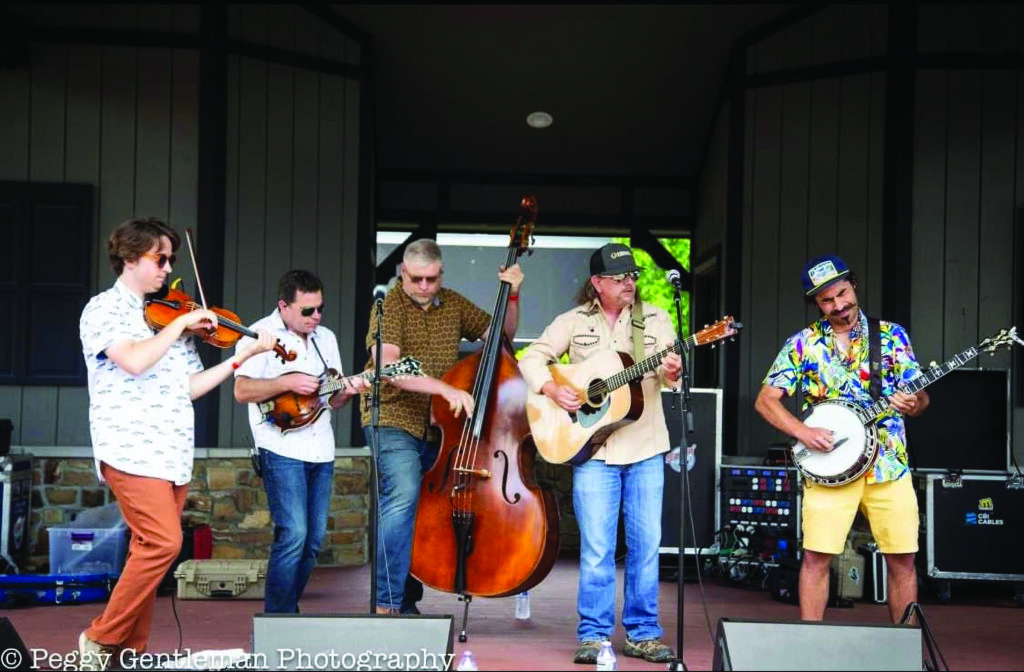
Flick is also competent in other styles as well, allowing the band to go in some different directions from a standard bluegrass band. Among his instrument collection, Flick plays a nyckelharpa, a Swedish instrument similar to a hurdy-gurdy. He also plays gypsy jazz and, Oberlin notes, “bluegrass and gypsy jazz are not as dissimilar as people might think.”
While the band began primarily playing around Michigan, opportunities began to pick up after Paul Schiminger of IBMA met them as they left a festival stage. He encouraged them to enter the band contest at Telluride.
“You’ve got it,” he told them. “Just go there and win it.” He also made some calls after hearing them—one to Stephen Mougin of Dark Shadow Recording, who signed them and produced this latest album. Mougin first met them in Raleigh during the IBMA conference but noted that they were already on his radar.
The band considers their new project Cambium the “real true sound of Full Cord.” On their previous two albums they played songs carried over from playing with other people, but this project is a collection of tunes written with and for this band.
Oberlin, who carries lead vocals on much of the album, wrote or co-wrote four of the songs on the album, sharing writing credits with Langejans on “Blue Trail.” Langejans started the song about memories of his dad and said he “hit a wall.” On a songwriting retreat, he shared it with Oberlin, who helped to complete the tune. “I don’t know if it would have ever been finished if not for Brian.” Oberlin had come up with a melody that suited “Blue Trail” perfectly. Otherwise, says Langejans, “It might have stayed in the dresser drawer somewhere.”
“I’m my own worst critic,” he added, noting that he didn’t think much about his song “Lincoln River” until Billy Strings performed it.
On stage and on the album, the two trade out lead vocals. As Kirchner noted, Langejans, with his “gravelly and gritty” voice takes the lower melodies, while Brian with his “clear, snappy voice” sings lead in a higher range. Despite their different singing styles and ranges, their harmonies are a signature part of the Full Cord sound.
When they try to pinpoint the theme of their lyrical content, they admit that half of the songs “have a love gained or love lost vibe, pretty standard bluegrass.” But they also see a theme of growth in this album. They aren’t recycling old things. The album title Cambium, then, makes perfect sense—the reference to the new growth in a tree, the layer that changes, between the bark and the heartwood.
Langejans, after years working as a sawyer, continues to do custom woodworking, while keeping the band a priority. Kirchner refers to his work for a Grand Rapids company as “all the geeky stuff,” traveling to remote warehouse locations all over the country on projects.
Oberlin is interested in all things related to the mandolin. He says the first mandolin he heard was on a Diamond Rio CD.
“I said, ‘What is that sound?’ and I read the liner notes.” Two years later he heard Rounder Records’ Bluegrass Class of 1990, featuring a stellar lineup of bluegrass greats. While living in Portland, Oregon, for 13 years, he started a successful mandolin orchestra. When he returned to Michigan in 2017, he started another one. He also puts on mandolin camps and teaches lessons, while doing some carpentry work with Eric on the side.
The opening track on the album, “Ghost of Good Times,” written by Glenn House, was the first single release from the project. In a narrative mode, the song is a look back at the past through a smoky, “high proof spirit.” The banjo-driven tempo thinly veils the nostalgic longing for “the ghost of good times.”
They next released the old Bob Wills western swing number “I Laugh When I Think How I Cried over You.” Oberlin says he is usually the one to bring in the swing because, he says, “as acoustic musicians, it’s important to stretch out, not only with our own style of music but other genres. Let’s be honest,” he added, “there are people who don’t know what bluegrass is. If they hear a banjo, a fiddle and a mandolin playing a swing song, they’re going to call it bluegrass, but folks who do know swing will think, ‘This is different—a bluegrass band doing swing.’”
He added, “Another reason (we added this single) is I just love swing music. It’s more harmonically interesting than most of the music out there, other than some classical. Some of my favorite mandolin players play swing mandolin—the great Tiny Moore, Jethro Burns and Johnny Gimble. Bill Monroe and all the great bluegrass mandolin players are wonderful but give me some Johnny Gimble all day long.”
The album balances the upbeat tunes with the more melancholy “Yellow Leaves of Autumn.” A western swing ballad written by Kay Traywick, the song strikes a more bittersweet note. The opening mandolin notes give way to the plaintive fiddle that sets the mood throughout the song.
The decision to record someone else’s song depends, says Oberlin, on how it flows vocally. He said there are some songs he loves but doesn’t feel are right for him, such as New Grass Revival’s “Can’t Stop Now.” Perhaps one of the most surprising tracks on the album is the Steely Dan cover “Reeling in the Years.” The song translates so well to bluegrass instrumentation that one wonders how Steely Dan failed to add the banjo. The track offers an opportunity for all the band members to showcase their instrumental talent, particularly in the break midway through the track.
The album also carries some Carter Family influence, with A. P. Carter’s “Dixie Darling” and Oberlin’s original, “Mace’s Spring,” written on the front porch of the Carters’ home place near Clinch Mountain. He had just read Will You Miss Me when I’m Gone, the biography of the Carter Family written by Mark Zwonitzer with Charles Hirschberg.
“I was down there in southwest Virginia, and when I get deep into a subject, I’ll also listen to the music. I really went down the Carter Family hole and got two songs out of it,” said Oberlin. He also wrote “Wild Mountain Rose,” inspired by the scenery near Telluride and, he points out, “it proves that not all minor chords are sad.”
The instrumental “Logan’s Farewell” was written by Mier after he moved to Boston to attend Berklee College of Music, inspired by a friend who decided to leave after a short time there. “Sallie’s Dancing,” the other instrumental track on the album, was written by Oberlin for his wife. The marked old-time influence of the tune evokes images of jam circles with flatfoot dancers alongside.
With the release of Cambium, Full Cord is gaining wider recognition, particularly after winning the Telluride band contest and the IBMA Momentum Band award in 2022 They have been invited to festivals they’ve always wanted to play. They are traveling more widely too, visiting the Grand Canyon for the first time, playing along the East Coast, and enjoying being on the road together.
Full Cord is making the most of that growth their album title Cambium implies. Their blend of original compositions and well-chosen songs by other songwriters is the perfect vehicle to showcase their first-rate talent.