From the Bluegrass Cardinals to Carolina Road
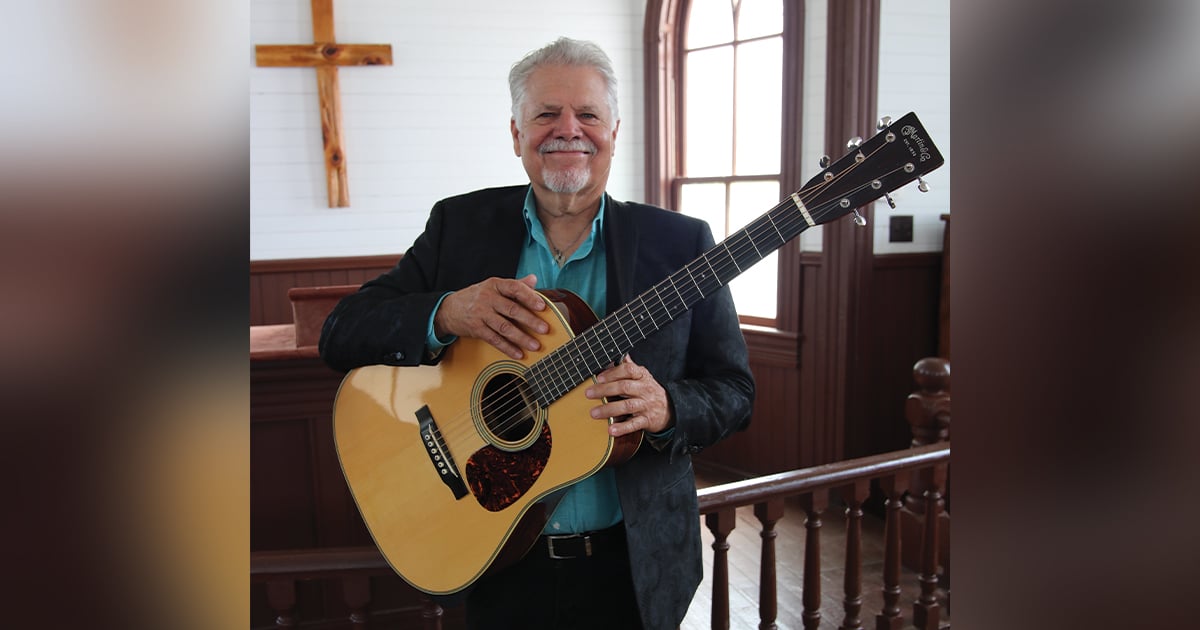
Photo by Laura Ridge
On the cover of the May 1976 issue of Bluegrass Unlimited there appears a group of unknown bluegrass musicians along with the words “Bluegrass Cardinals.” The title of that cover story, written by Frank Godbey, was “Who in the World are the Bluegrass Cardinals?” The world would soon find out.
The group’s mandolin player, Randy Graham, explains, “We were a southern California bluegrass band and had recorded an album in 1976 on the Briar/Tacoma label. We booked an East Coast tour to support the record and one night we were playing at this place called the Fifth String in Columbus, Ohio. We knew a lot of bluegrass songs and we’d put out a ‘stump the band’ challenge to the audience during our show. We said that if someone was to call out a bluegrass song that had been recorded and we couldn’t play at least a verse and chorus, that we’d buy that person a drink. At the show in Columbus, there was a guy at the bar that kept yelling out these really obscure songs. At the break we wanted to meet this guy. It turned out to be Frank Godbey, a writer for Bluegrass Unlimited.”
In the article, Godbey explained that he went into the joint not expecting to hear much from a band playing at the collegiate bar. Godbey sat down to listen to the band and later wrote, “But then a funny thing happened. Funny because it was so completely unexpected; they were playing hard bluegrass—old Red Allen songs, Bill Monroe tunes, Flatt and Scruggs standards, fiddle tunes and a lot of good sounding things that I didn’t recognize. Wait a minute, this wasn’t a run-of-the-mill ‘Hey let’s get together and form a bluegrass band ‘cause banjos are keen and I’ve had six lessons’ type group. These people knew what’s happening, they knew the whys and wherefores of bluegrass past, bluegrass present, and even bluegrass yet to come.”
At the break Godbey approached the band and asked, “Who in the world are the Bluegrass Cardinals?” The banjo player, Don Parmley, answered, “We’re probably the only regularly working straight bluegrass band in the L.A. area, but no one east of Death Valley knows anything about us.”
Godbey, through Bluegrass Unlimited, was about to change that. Godbey wrote a story for Bluegrass Unlimited and the Bluegrass Cardinals were placed on the cover. Soon after, the group moved from southern California to northern Virginia and started playing seven days a week, sometimes up to two and three shows a day. Graham said, “The move really paid off. The DC area was the bull’s eye of bluegrass music in those days. It was a very robust community and there were a lot of places to play.” It wasn’t long before everyone in bluegrass knew about the Bluegrass Cardinals.
California Days
Randy Graham was born in 1946 in Hawthorne, California back in the days when oranges still grew in Orange County. His father worked in the aircraft industry for Northrup Aviation. From Hawthorne, the family moved farther inland to the rural community of Sleepy Hollow in Carbon Canyon, near Chino. Randy’s sister and mother both played the piano and his father played the guitar and fiddle. When Randy was ten, he went into the hills surrounding his home at Christmas time and picked the mistletoe that grew there. He then set up a stand in front of the local road house and sold mistletoe to the patrons so that he could earn enough money to buy a Silvertone guitar.
Randy became interested in country and bluegrass music primarily from watching a television show called Cal’s Corral, hosted by Cal Worthington. The show was broadcast for three hours every Sunday afternoon between 1959 and 1972. In addition to country acts—such as Johnny Cash, Glen Campbell, and Roger Miller—the show also featured bluegrass groups such as Bill Monroe, the Country Boys (later the Kentucky Colonels), and the Golden State Boys. Randy said, “I saw a band called the Golden State Boys play and I really liked them.”
In about 1965, when Randy was nineteen years old, he was invited to a picking party at Don Parmley’s home. Don, a native of Kentucky, had been a member of the Golden State Boys and The Hillmen. Randy said, “Don liked the way that I sang and played rhythm and we became fast friends. We started playing together a lot. We became like family and played every chance we got. I’d go over to his home after work at about five or six o’clock and stay until two or three in the morning, then I’d get up early for work and we’d do it again the next day.”
Don and Randy formed a band with Larry Rice, Bobby Slone, Scott Hambly, (and others) and, under various band names, started performing shows. Randy said, “There was a huge acoustic music scene in Los Angeles…Bernie Leadon, Byron Berline, the White Brothers, the Dillards, Vern and Rex Gosdin, Herb Pedersen, Chris Hillman, John McEuen, anyone from the Byrds, the Eagles, or the Nitty Gritty Dirt Band…we knew them all and played with most of them. There were a lot of venues as well…the Ice House in Pasedena, the Ash Grove, the Troubadour, the Palomino Club, the Sundance Saloon, and Sunday jams in Venice. In the early 1970s we were playing with Byron Berline at the Sundance Saloon and Don Everly and Crosby, Stills and Nash’s drummer, Dallas Taylor, came and sat in with us. It was a great place, musically.”
By the time Larry Rice and Bobby Slone left Los Angeles to play with J.D. Crowe, Don’s son, David Parmley—who was about fifteen years old and playing bass—was showing interest in playing the guitar. Don suggested that Randy move over to the mandolin and they brought in Bill Bryson to play bass and Dennis Fetchet to play fiddle. Randy said, “The vocals were there because David had grown up singing with us. He started with us when he was nine or ten. We got to where we were singing together like brother harmony. We got to know each other so well, we knew where the other was going…like a school of fish that turn the same direction together. Don was a stickler for the harmony being correct. He would stop us if he heard anything that was wrong.”
David Parmley concurs with Randy’s recollection, he said, “Randy is my brother from a different mother. I can’t remember a time in my life when Randy wasn’t there. He is my very favorite person to sing with because we’ve done it so long, starting back in the kitchen when I was a kid. You can’t replace that. You can take the best singers and musicians and put them together, but they are not going to sound like a band until they spend time doing it.”
When asked about his father being a stickler for the right harmony, David said, “If I had a nickel for every time my dad said, ‘Whoa…that is not it!’ I’d be a rich man. A lot of bands get together and play their instruments and sing and don’t pay as much attention to the harmony. With all of the instruments, you can’t hear the imperfections. We would have one person lightly play a guitar when we were working on harmony parts until all of the parts were the way we wanted them. Then we would bring out the instruments.”
The Move East
When the Bluegrass Cardinals decided to move to Virginia, Bryson and Fetchet did not want to make the move across the country. Randy said, “Don and I had a warrior ethos. We left good jobs and economic security in California and moved to the monetary unknown.” Once in Virginia, in 1977, the Cardinals added John Davis on bass—who had been with Charlie Moore—and Warren Blair on fiddle. Randy stayed with the Bluegrass Cardinals until 1979. He said, “I got burned out and I moved to Phoenix, Arizona to run a business that bought and sold other businesses.”
Regarding his early years in bluegrass with the Bluegrass Cardinals, Randy recalls some of the band’s innovations. He said, “I think we were the first to record a cappella gospel songs in bluegrass. Other bands were performing them, but Lance LeRoy said that we were the first to put them on vinyl. Musically, we had a lot of great ideas…like the call and answer format on secular songs. Gospel bands were doing it, but I think we were the first to do it on secular songs like ‘Are You Missing Me,’ ‘I Wonder Where You Are Tonight,’ and ‘Mountain Laurel.’ This is where the lead line holds the call and there is an answer behind that. Everybody else just did that on the gospel songs.”
Post-Cardinals Work
After moving to Phoenix, Graham’s exit from bluegrass music did not last long. In early 1982 he got a call from Doyle Lawson. Lawson was looking for a bass player and tenor singer. Randy told Doyle, “I don’t play the bass.” Doyle told Randy, “You play the guitar and we use an electric bass, which is just like the top four strings on the guitar.” Randy was skeptical. Doyle sent Randy some of his music. Randy gave it a listen and said, “When I heard Rock My Soul that was a game changer. I borrowed a bass and told Doyle, ‘If you think that I can do it, I’ll come on board until you can find someone else.’” Randy’s first show with Lawson was at the Bass Mountain Festival in 1982. He said, “I liked the guys and I liked the music.” Randy stayed with Doyle Lawson and Quicksilver from 1982 until May of 1985.
In about 1985 Randy joined his fellow Quicksilver bandmates Terry Baucom and Jimmy Haley and, adding Alan Bibey on mandolin, formed the group New Quicksilver. This group, who recorded the critically acclaimed album Ready For the Times, stayed together until 1987 and then, in 1989, Randy found himself back with the Bluegrass Cardinals. However, before rejoining the Cardinals, he toured Asia with the Johnson Mountain Boys. Randy explained, “The Johnson Mountain Boys had recently broken up, but they had booked a USIS tour to South East Asia. David McLaughlin didn’t go, so I filled in on mandolin for that tour. We played in China, the Philippines, Burma, Malaysia, and Indonesia.” During this time frame Randy also played a number of fill-in gigs with bands such as the Lonesome River Band. Randy’s second stint with the Bluegrass Cardinals lasted from 1989 to the early 1990s.
While he was performing with Doyle Lawson, Randy also started working in radio as a side job. He started in sales at WLVA in Lynchburg, Virginia and worked his way up to station manager. When that station was bought out, he moved on to work at WLNI and WROV, both in the Lynchburg-Roanoke market. Randy stayed working in radio until about 1998. He said, “When they passed the Telecommunications Act of 1996, everything changed.” With those changes, Randy decided to phase himself out of the radio business. During the mid-1990s, Randy was not an official member of a bluegrass band, but was doing a lot of fill-in work for various bands.
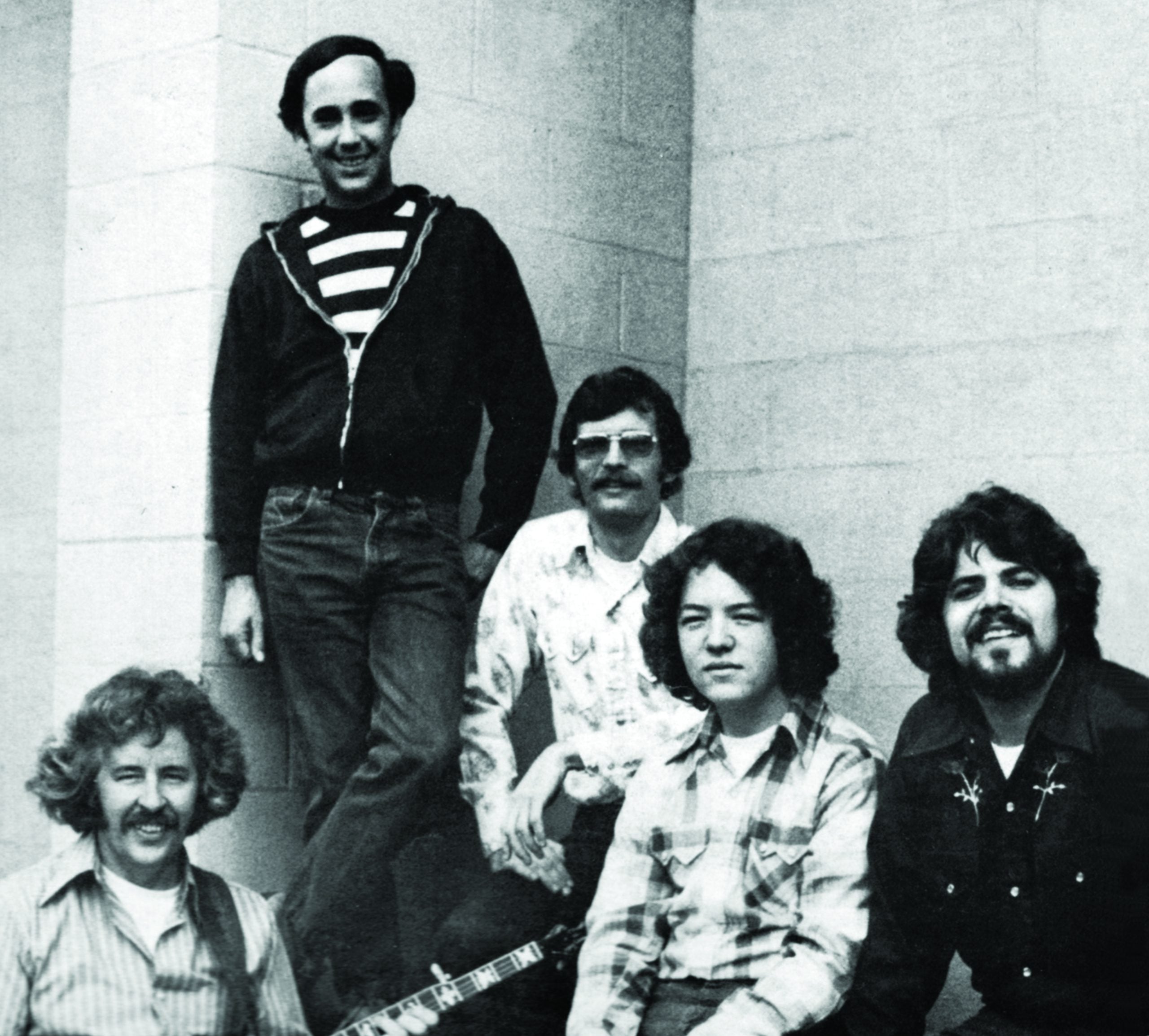
Starting in the late 1990s, Randy got together with his old New Quicksilver bandmates—Terry Baucom, Alan Bibey, and Jimmy Haley—and formed the band BlueRidge. In 1999 they released the album Common Ground on Sugar Hill Records with Wayne Winkle on guitar and Ron Stewart on fiddle. In 2000, Randy left the band to rejoin his old Bluegrass Cardinals bandmate David Parmley in Continental Divide. In 2001, Blueridge changed their name to Baucom, Bibey and Blueridge.
Regarding his time in the band with Randy, Alan Bibey said, “I was a big fan of Randy’s mandolin playing when he was in the Bluegrass Cardinals. He won’t admit it, but after we started playing together he showed me some stuff on the mandolin. He is a super guy and I think the world of him. There are a lot of people in bluegrass who can sing high, but there are not many who can get the tone that Randy gets. Everywhere we went, people flipped out over his singing.”
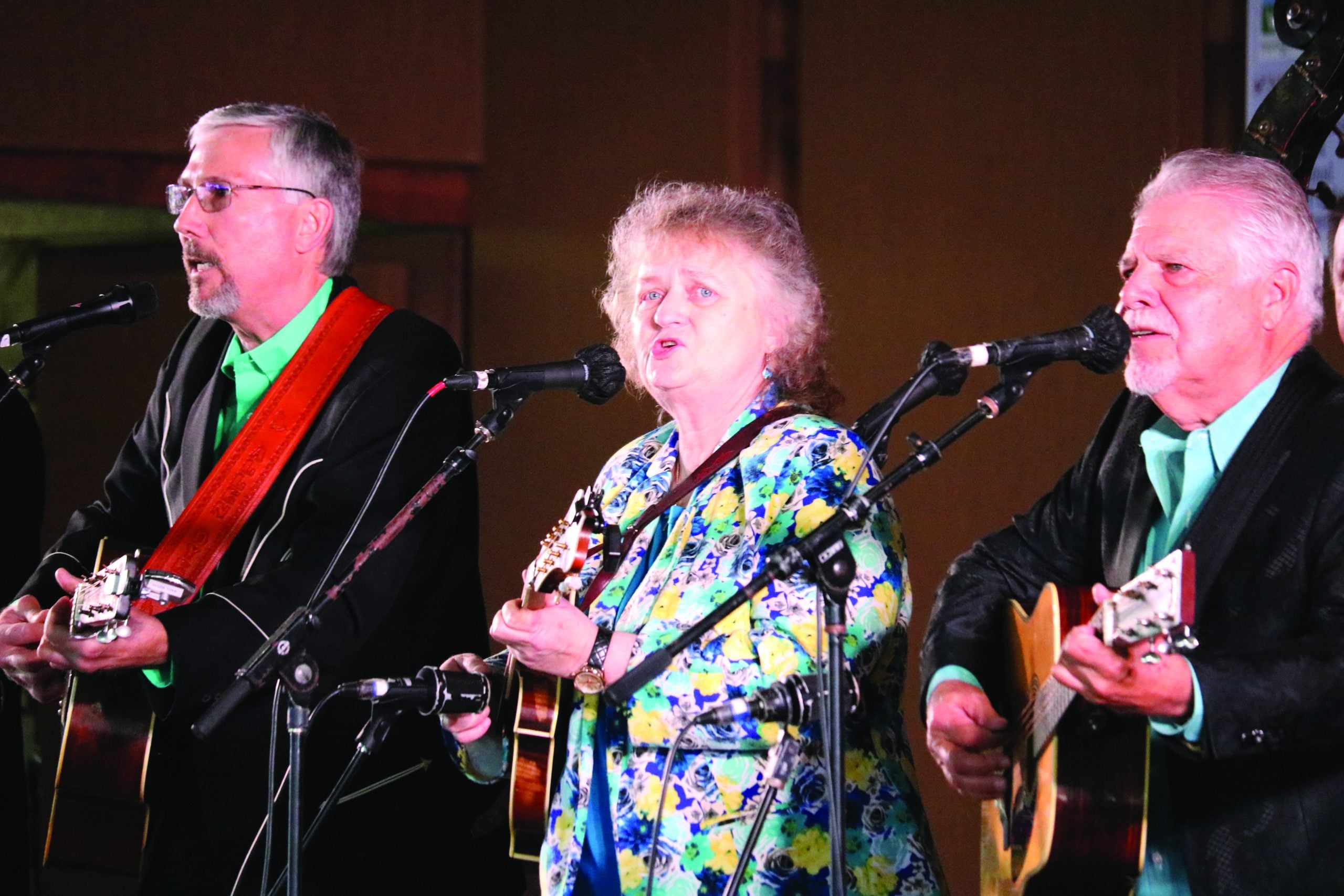
In April of 1992, David Parmley left the Bluegrass Cardinals and formed David Parmley, Scott Vestal and Continental Divide. The original band consisted of David Parmley (guitar), Scott Vestal (banjo), Rickie Simpkins (fiddle), Jimmy Bowen (mandolin), Mike Anglin (bass) and Randy Kohrs (Dobro). In 1998, Vestal left the band and, after several personnel changes, Randy Graham joined the group in 2001. At that time the group consisted of David Parmley (guitar), Ben Greene (banjo), Mike Anglin (bass), Steve Day (fiddle) and Randy Graham (mandolin). In 2008, Parmley took a break from performing due to health problems, but put the band back together in 2011, now with Parmley (guitar), Anglin (bass), Elmer Burchett (banjo), Danny Barnes (mandolin), and Steve Day (fiddle). In about 2013, Graham was asked to rejoin the band.
When David Parmley took a break in 2008, Randy started his own booking agency, Graham Talent Group. Since his early days with the Bluegrass Cardinals and their first east coast tour, Randy had been the guy who booked the band. He said, “I kept an address book of all of the venues that we played. Over the years it turned out to be a huge book. Other bands would occasionally ask me to share some of the information and I would help them out.” Offering help to other touring bands looking for places to play turned into a business for Randy between 2008 and 2020. Randy said, “Originally, I specialized in booking traditional bluegrass bands like Audie Blaylock’s band and the Crowe Brothers. I also booked Nothin’ Fancy, Marty Raybon, Feller & Hill and the Po’ Ramblin’ Boys. I had started winding that business down in 2017, just prior to relocating to North Carolina, and then when the pandemic hit, I shut it down. However, I recently opened back up in January of 2022. I’m working with artists such as Nick Chandler & Delivered, Starlett & Big John and the Woods Family Tradition.”
Carolina Road
In May of 2018, Randy went to work for Lorraine Jordan at Jordan Entertainment. Randy said, “I started to book the talent for Lorraine’s Coffee House and helped her with festival promotion. When the bass player in her band [Lorraine Jordan and Carolina Road] left, she hired me to play bass and then later I moved over to play guitar. I stopped working for Jordan Entertainment in 2019, but I’m still in the band.”
The banjo player in Carolina Road, Ben Greene, has played in several bands with Randy Graham over the years. In the early 1990s they worked together in the Bluegrass Cardinals, later they also played together with David Parmley in Continental Divide, and today they both perform with Lorraine Jordan and Carolina Road. When asked about Randy, Ben said, “Randy is a very likeable guy and great to travel and work with. He can play bass, guitar, or mandolin equally well and is one of the best high lead and tenor voices in bluegrass. He is an asset to any band.”
The Bluegrass Cardinals Tribute
In addition to running his booking agency and performing with Lorraine Jordan, Randy has been booking a limited number of performances for a Bluegrass Cardinals Tribute Show that includes David Parmley (guitar), Larry Stephenson (mandolin), Randy Graham (bass), Mike Hartgrove or Steve Day (fiddle), and Josh Hymer or Derek Vaden (banjo). Randy explained that at first they were hired to play one show for Darrel Adkins at the Musicians Against Childhood Cancer festival in July of 2022. When other venues and festivals found out about that booking, Randy was flooded with more offers to book the band. Randy said, “The scheduling is tough because everyone is also playing in other bands, but we have a few dates booked in 2022—like Thomas Point Beach and Lake Cumberland Bluegrass Festival.”
Although Randy Graham has never wanted to be the guy with his name out in front of the band, he has maintained a consistent presence in top-tier bluegrass bands for fifty years. When I think about high-quality bluegrass harmony singing, Randy Graham is one of the names that immediately comes to mind. Think about it…when a guy like Doyle Lawson (whose band is known for their vocal perfection) calls a man and asks him to move across the country to join the band—playing an instrument that he has never played before—you know that there is something very special about that man’s singing voice. It is a voice that has helped define the sound of bluegrass music for the past five decades.