
Friends Don’t Let Friends Start Bluegrass Festivals…Or Do They?
The Challenges of Running and Starting a Bluegrass Festival
After over thirty years of attending bluegrass festivals, more than once we have heard the saying, “Friends don’t let friends start bluegrass festivals.” While it is meant playfully, we wondered if there is some truth in it and decided to look at the complexity of starting and sustaining a popular festival. To do that, we contacted bluegrass festival promoters in the industry, veterans and novices, to find out what kinds of challenges they faced when they began their festivals and how those challenges have shifted over the years. These challenges include all aspects of running a festival and highlight the stark differences in starting a festival in the 1980’s versus starting one 2023. At the end of the day, we might say that it takes the support of a lot of really good friends and family to start a bluegrass festival! You decide.
The first promoters we spoke with are now in their 43rd year of running The Thomas Point Bluegrass Music Festival where The Music Meets the Sea. The festival began in the 1979 and was the brainchild of Pati Crooker. At the time, Crooker was working for her parents popular Thomas Point Beach Campground in Brunswick, Maine. One of Crooker’s goals was to bring family friendly events to the campground. Friends told her that the most family friendly event she could hold was a bluegrass festival. She attended a few bluegrass festivals on their recommendation and agreed. So in 1979, Crooker began what is now a premiere New England bluegrass festival.
The first year she hired local and regional bands and made a $3.16 profit. By the 3rd year, she had Bill Monroe on the main stage and the festival took hold. One huge advantage for Crooker in starting her festival was its idyllic location on the Maine coast and that it is a venue owned by her family. The campground offers a variety of camping sites, shower/bathroom facilities, as well as a handful of employees to help run the event. However, with no hired help to turn too, those employees have their hands full with taking care of those facilities, bathrooms, trash, etc. Fortunately for Pati, she also had loyal family and friends to help her launch her dream.
Since her untimely death in 2016 the festival is now operated by her son Michael Mulligan, his wife Jen and one of Pati’s closest friends, Shari Elder. Their deep commitment to Crooker’s vision of a family friendly bluegrass festival remains today, but Elder says that they are always faced with the difficult challenge of balancing the festival’s traditions and culture with the shifting culture of bluegrass and the ever-increasing costs of running a festival.
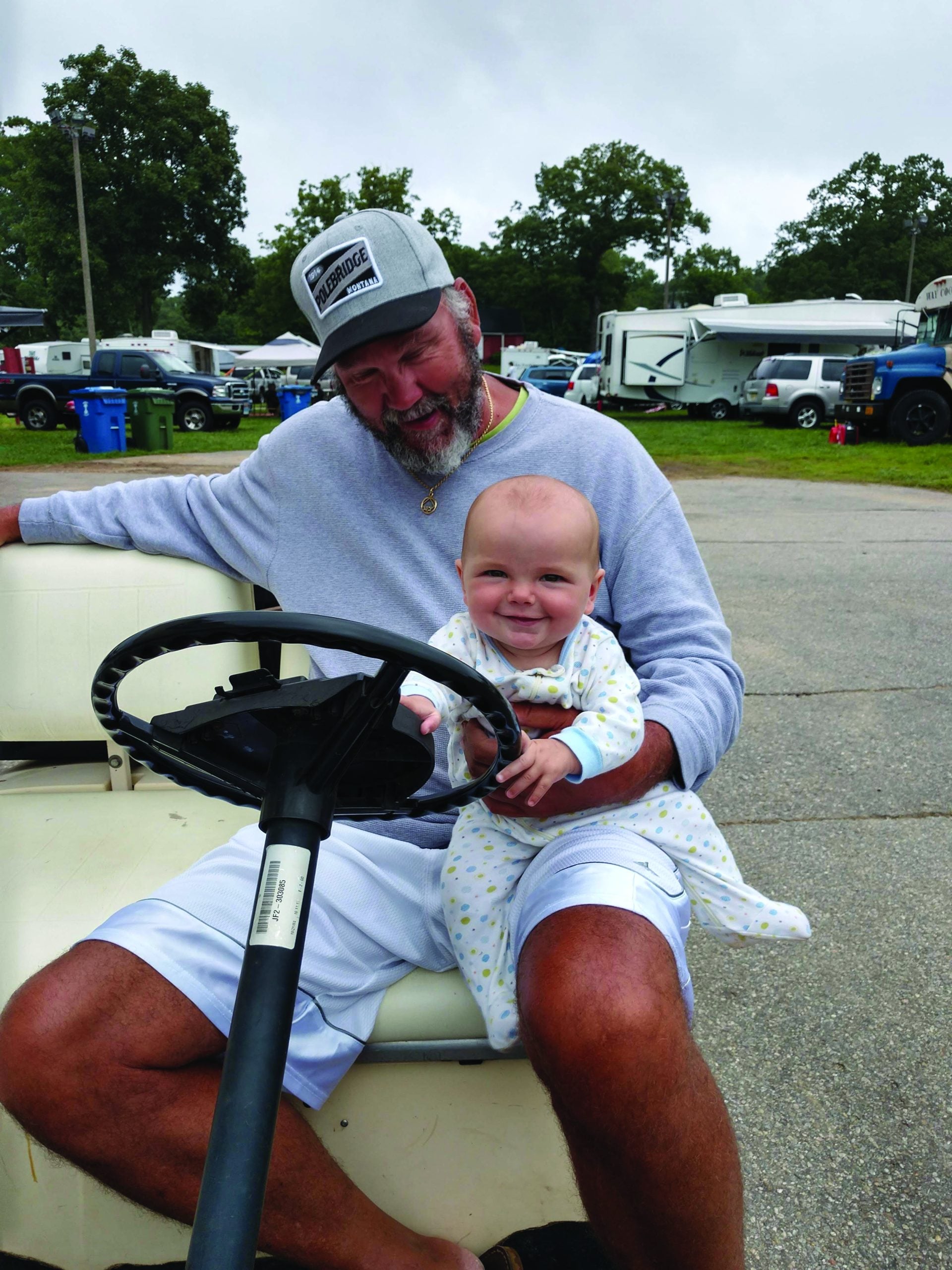
Festival goers probably have a good idea of some of the major costs of running a festival like providing an excellent sound system and paying artists, but what they may not know is that the sound budget will more than likely cost the same as the biggest headliner. And the biggest headliners are well paid. Rich James, a longtime member of the Podunk Bluegrass Festival board of directors now in its 27th year, explains that there are basically three ranges of payment for artists. The first range is for emerging bands which runs from two to four thousand dollars. The next group of artists, and he says that there are a lot to choose from in this range get paid between six and eight thousand. The top tier runs from ten to fifty thousand dollars. Promoters also need to know the hidden costs of running a festival. Elders and Candi Sawyer, who with her husband Seth started and runs Jenny Brook Bluegrass Festival, gave us some insight into some of those. The list includes the ever-increasing price of renting golf carts, providing kid’s activities, printing the festival program, renting chairs and tables for workshops. The list goes on.
Sawyer also says that her and Seth’s biggest obstacle is not owning the venue where they hold their festival at The Tunbridge World’s Fair Grounds. She says, “We work really hard to make our event affordable and the venue controls the fee for utility sites which keep rising.” The other obstacle she says is finding quality vendors. She explains, “We manage to do it every year, but it is definitely the hardest task for us in putting together the festival.”
James couldn’t agree more heartly with Sawyer and Elders about how important it is to know about all the festival’s costs. He has seen those costs double since the end of COVID restrictions. Some of the other intangibles, James explains, is the thousands of hours spent organizing the business of running a festival which includes working with the local authorities in the town where the festival takes place as well as developing a good relationship with the community in which the festival takes place. While Podunk has been running now for 27 years, the festival has had four different locations, all of which required hundreds of hours devoted to learning each town’s unique ordinances, complying with them, and building relationships with the community including government employees, the police departments, the waste and sewage departments etc. James made it very clear when he said, “Don’t think that all you have to do is find a great location and then hire the artists.”
Other major decisions to make early in the process of starting a festival is deciding whether to be a non-profit or for-profit festival and whether to hire employees to work the festival or find volunteers to do the heavy labor during the festival. Elder and James have had long talks about the advantages and disadvantages of both decisions. Whereas Thomas Point Bluegrass Festival is a for-profit festival which has just a few employees at each festival, Podunk is a non-profit festival run by more than 100 volunteers. Not surprisingly, the decision to rely on volunteers or paid employees comes down to money and time. James says that the amount of time it takes to vet volunteers, assign them duties that they want to do, and support them on the ground at the festival is incredibly time consuming. By his estimation, James and one of his colleagues spend two to three hundred pre-festival hours finding volunteers, vetting them, choosing them, and assigning them their duties. James explains, “Much of that time is spent on the phone and the computer.”
Aside from logistical issues, Elder and James agree that hiring and working with artists has dramatically changed over the past twenty plus years. During the 70’s and 80’s promoters could hire artists at the yearly IBMA World of Bluegrass. Elder recalls how Pati used to see an artist at that event, ask them if they would come and play at her festival and then set up the contract with them as individuals. She often sorted out the details of what they needed on the spot and one time even wrote out a quick contract on a napkin.
Those days are long gone. Instead, most bluegrass musicians use agents to set up contracts, some who are easy to work with and others who bury promoters in paperwork with pages of artist requirements and riders that delineate exactly what each artist wants on stage and in the hospitality tents. Some of those things include different beverages for everyone in the band, Johnny Walker Red for one, a selection of local beers for another, rosemary infused kombucha for another. Food requirements are also specific and can be costly.
Despite hundreds of time-consuming, expensive, and often exhausting duties, there are people who dream of holding festivals and decide to go for it. One of those is Jen Turpin, who with her husband John started The Green Mountain Bluegrass and Roots festival in Manchester, Vermont five years ago. This year, because of the interruption of COVID lockdowns, they held their third festival and began organizing their fourth festival hours after their third festival ended.
So, what inspired them to take the risk of starting a bluegrass and roots festival? Jill chocks it up to ignorance and exuberance. She and her husband, both musicians, have attended festivals since they can remember, on the east coast, west coast and in Colorado. They brought their children to these festivals when they were just babies and during those years collected a long list of what worked at each festival and what, if they had a festival, they would do differently. In 2010 they began holding house concerts and met some artists who encouraged them to go for it. They both held full time jobs so the idea of holding a festival in Jill’s words became a passion project. In the spring of 2017, they decided it was time to begin planning for their very own bluegrass festival.
Although passion drove them, being businesspeople, they knew that they were up against a long list of basic logistical challenges to even begin the process of holding a festival. Once committed to the idea, they began looking for a location. After much time searching for the perfect spot, they decided to hold the festival in Manchester, Vermont, where they had spent many summers. The first thing they did was contact Manchester’s town manager and the chief of police and convince them that bluegrass music lovers were typically positive, orderly people who would benefit the town rather than create chaos. The Turpins also had a clear goal. They wanted to provide high quality music where families felt taken care of and the artist did too. Turpin says, “If bands are happy, those good feelings permeate the whole festival.” Key to that happiness Jill says is providing the musicians with the best sound system available and setting up a generous and comfortable hospitality area where they can relax, talk with other musicians, and simply enjoy themselves.
Early on, the Turpins decided to not go through the time-consuming process of becoming a non-profit event or relying on many volunteers. Instead, they hired a group of experienced crew members from other festivals who helped them set up a well run and welcoming festival. They listened to their suggestions and always welcomed their feedback, positive and negative. The first year they hired a combination of quality local bands and a few big names including Peter Rowan, Mandolin Orange (now called Watchhouse), Molly Tuttle and others. A major rainstorm hit the festival on Saturday, but that did not stop the musicians and led to some spontaneous remedies that Jill says created those magical moments every promoter hopes to see.
After the first festival, they concluded that running a festival is both incredibly demanding and incredibly rewarding. They were ready to do it again. They consulted with their crew members and in the end made no major changes for the following year. Instead, Jill says, “We made about 200 tweaks!” One of those tweaks was adding glamping sites for the 2022 festival, a popular way for people who want to attend a festival but do not want to set up their own camps. Glamping comes at an extra cost that many are willing to pay to hear great music without the hassles of setting up tents or driving an RV. Other tweaks we have seen tried at festivals, some that remain and others that just didn’t work as expected, include beer tents, dance tents, tiered pricing, VIP tickets, workshops, and kid’s academies.
The things that have worked for all of them over the years and keeps on working is attending other festivals, talking to other promoters, and attending the IBMA World of Bluegrass. There is little to no time to get to know artists, hear new bands and catch up with anyone when in the throws of running a festival. The IBMA World of Bluegrass offers a time and place to do that and to simply sit back and enjoy some of the bands that have played your festival, but you missed because of some crisis that needed your attention. It is also a great time to problem solve with other promoters who have faced similar issues including maintaining affordability, or whether to keep a festival capped at a specific number or increase in size.
So, are you going to do it? James’s advice is, “If you are thinking of starting a festival, forget about it!” But if you go ahead and start one anyway, he says, “Know exactly what you are getting into!” Know too that ticket sales will not pay all the expenses so finding innovative ways to mitigate and cover costs is a must.
Between all four promoters we talked to, none have regretted getting involved with organizing and running their festivals. The Turpins call their festival a “passion project.” Which means that they have kept their day jobs and pursue their passion with every bit of spare time they have. But for them it is worth it. Turpin says, “This is the most fun I have had working this hard!” For Elders, James and Sawyer who have a collective 91 years in the business of running bluegrass festivals, they too have experienced enough magic moments at their festivals to keep on plugging. They all love bluegrass music, bluegrass culture and the families who attend their festivals. Without whom they could not survive.