Fiddler Mike Barnett
Longs For Return To Playing
Photos By Stacie Huckaba
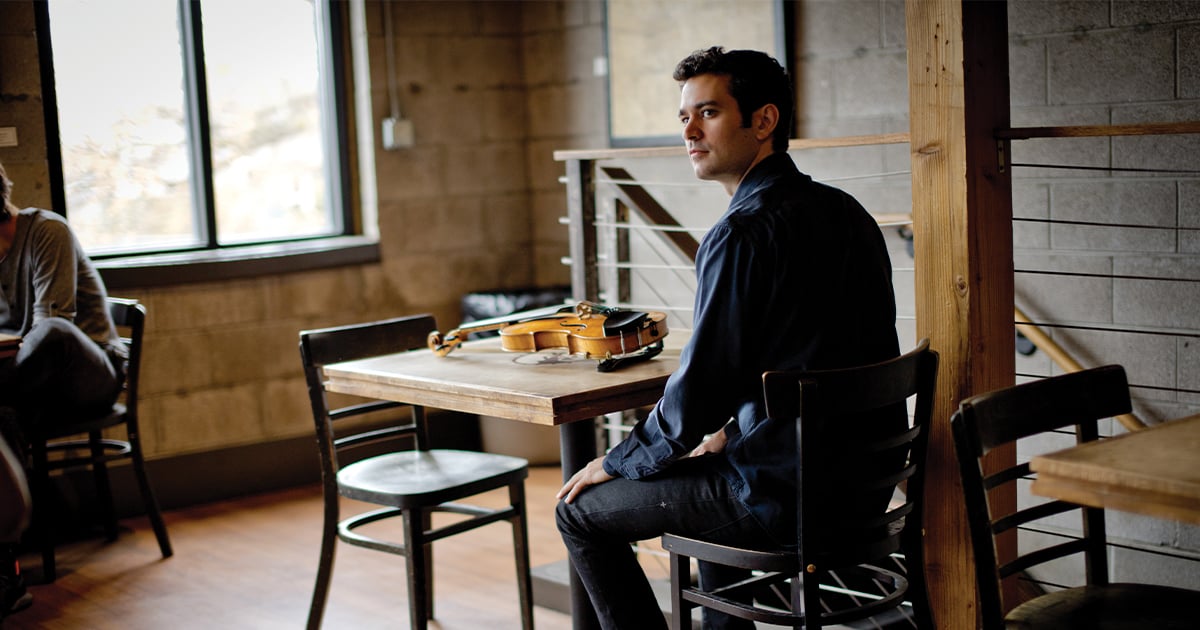
After four years of hard work, Grammy-nominated fiddler Mike Barnett was pumped to release his dream duets project when tragedy struck. Two days after celebrating his July 23 birthday last year, the now 31-year-old musician was cleaning house with his wife when he tried to tell her something. No words were coming out. Initially Annalise Ohse thought her husband was demonstrating part of his goofball personality, but she quickly realized the situation was serious and called the ambulance. Doctors soon discovered a cerebral hemorrhage that lead Barnett to undergo two successful surgeries and an intensive round of rehabilitation.
“Sometimes I just sit on the porch with my coffee and pretend like nothing ever happened,” Barnett, a former sideman for Ricky Skaggs’ Kentucky Thunder band told Bluegrass Unlimited via an email interview. “Bit by bit, I’m getting stronger. It’s very slow, but I AM recovering. It’s hard to believe it has already been a year. I’ve come so far, but I still have a long way to go.”
While Barnett continued to work on his speech and the mobility on his left side, the fiddle prodigy decided to move ahead with the release of his new album of 14 duets titled, +1. “People seem to really enjoy it. It’s cool to see which tracks resonate with different people. Everyone seems to be drawn to a different tune, which is great. That makes me proud.”
The music began taking shape during the time Barnett performed in duos in NYC. “Ohhhhhhhh those were the days! Out till the early hours of the morning… Mona’s! Many of the NY venues are not much bigger than a hallway, really tight spaces with room for only about 2 musicians anyway. And splitting the tips only two ways is more cost effective. Most of the gigs were bar gigs which really took the pressure off. Nobody was listening that closely so there was lots of room to take risks and make mistakes. NYC duo gigs are some of my fondest memories.”
Barnett decided to packs his bags for Austin, TX when his then-girlfriend and talented violinist, Ohse, got a job offer there. That’s when the idea of a duet’s album took root. “Honestly, it was a project to keep me sane after moving away from NYC. I was pretty lonely in my new city, so I scheduled duo projects in order to travel and spend time with my friends.”
Barnett teamed with Ricky Skaggs, guitarist Stash Wyslouch, multi-instrumentalist Ric Robertson, mandolinist Dominick Leslie, singer-songwriter-guitarist Sarah Jarosz, Scottish harpist Maeve Gilchrist, banjo-guitar master Molly Tuttle, cellist Nathaniel Smith, singer-instrumentalist Sierra Hull, saxophonist Eddie Barbash, banjoist Cory Walker, and cross-genre violinist Alex Hargreaves. “Some people were good friends; others were people I just really wanted to make music with. The answer is always “no” until you ask, right? There really wasn’t a formula for picking artists. Sometimes I chose the song based on the musician, and sometimes I chose the musician based on the song.”
Barnett enjoyed the creative collaborations with the other musicians in the studio. “It’s all about taking turns, having input and output. Just the right blend. There were a few times when I wasn’t happy with my part, so I went back later and did more takes on my own. On “Bucharest,” I went back in to redo my solo, but ultimately I ended up using the original track, tweaking just a small section here and there. Funny how that happens.”
Inspired by some of his favorite duet albums including two other Compass duet recordings—Darol Anger’s Diary of a Fiddler and The Duo Live: At Home and On the Range with Mike Marshall, the sideman wanted to savor the musical freedom of a duo configuration. “A duet requires way more focus than playing with a band,” Barnett explained. “With a duet, you have more freedom, but it comes with a price—pitchy-ness, super exposed, feel, etc. It’s one of my favorite contexts to play music in, but it’s a challenging context to record in, especially for a fiddle, which in general, in band context, plays the role of the melodic instrument. In a duo context, when another person is soloing, you have to fill out the music in a different way and get creative there. It was something I thought would be nice to write some music specifically for.”
One of those tunes was “Fire in the Hole,” with guitarist Stash Wyslouch that they used to perform during his Boston days with the newgrass outfit, The Deadly Gentlemen. “Getting to record that tune with him was such a great throw back. His style is unlike anyone else’s, and his feel is incomparable—flowing, not too loose, not too tight. You just go with the flow. He puts it right in the middle. “Fire in the Hole” is one of the first tracks I recorded. Recording with Stash was good for my soul.”
Barnett also laid down the track, “Anna Marie,” with another talented friend, Sierra Hull. “I immediately loved this piece when Mike sent it to me,” Hull said. “At first, it was just an instrumental without any lyrics and he was trying to figure out how to finish it. I suggested that he just write a simple vocal melody in there somewhere and this is what he came up with. He has a real vision for what he is going for and that is something you can’t teach. He is also a perfectionist, as am I, so I feel a real kindred spirit working with him and the desire he has to make something the very best it can be. I always know if I work with Mike, it’s going to be special.” The two first met during their days in Boston.
Sierra continued, “I immediately knew he would go on to do great things because not only was he such a great musician, but he had real drive. I have long appreciated his desire to make solo records and write his own music. He’s stood out to me among our peers in that way. This past year has made me realize just how amazing his ambition really is in life, not just music. I’m so ridiculously proud of him.
“Since those days Mike has joined me on the road from time to time for my live shows and was also a part of recording Weighted Mind: The Original Sessions (my EP) that finally came out in January of this year. He’s such a great spirit to have in the studio or on the road. Mike has long been one of my favorite musicians! He has such personality to his playing. He’s that perfect combination of traditional and modern—always serving the song while still being fresh and inventive. Any situation I hear him play in, he always sounds right at home. That has always inspired me about him.”
Just Fiddling Around
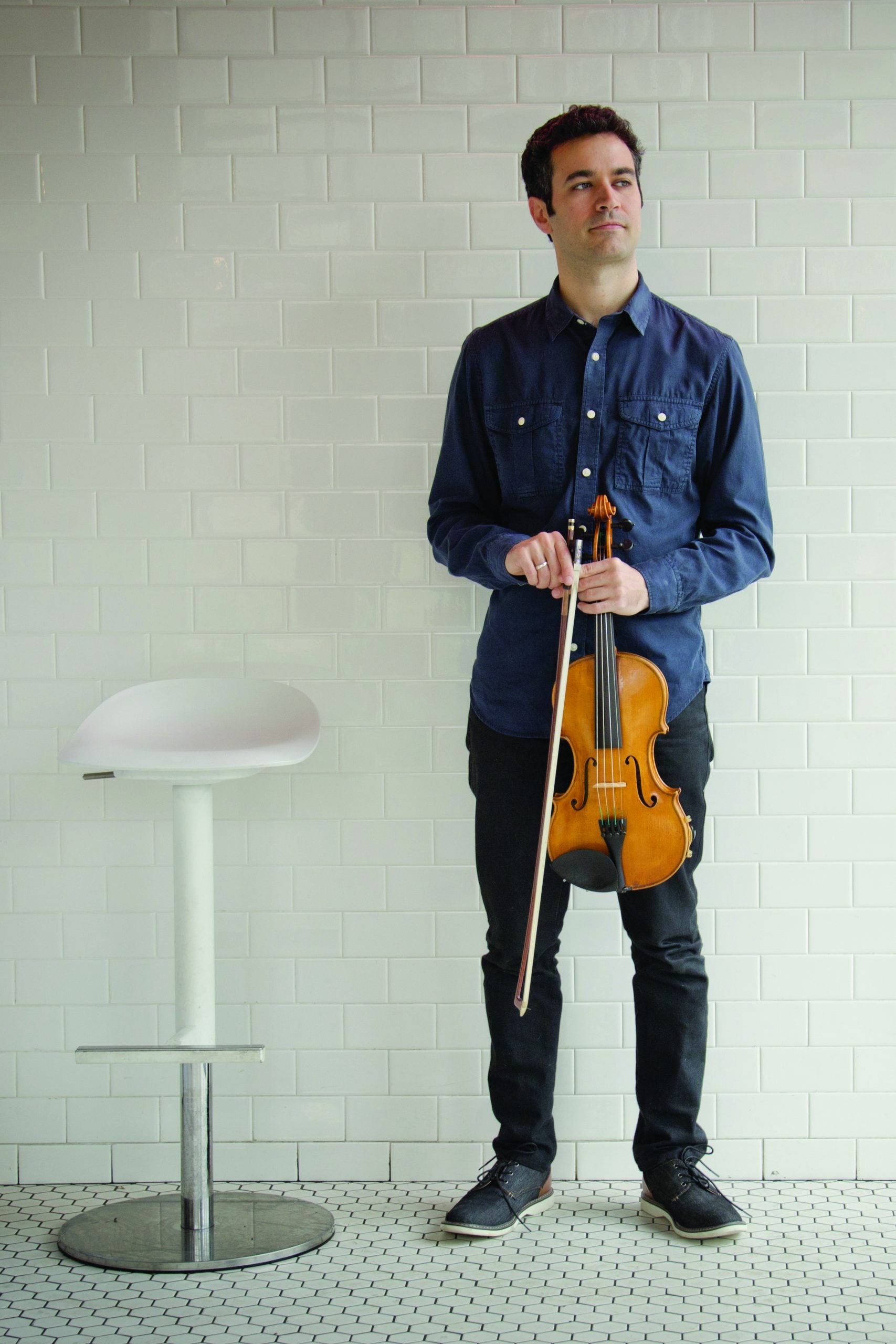
The Nashville native grew up in the home of a father who was a classical pianist. He was just fiddling around when he started playing violin at age 4. Serious study didn’t actually happen until he met his fiddle teacher, Crystal Plohman six years later. “When I took violin lessons as a really young kid, I wasn’t really into it, and I wasn’t very good. My mom found Crystal, a new rising fiddle teacher, in an attempt to keep me in music lessons. She really lit a fire in me and I never looked back. Crystal Plohman gets all the credit for inspiring my love for fiddle. I wouldn’t call it a gift—more like an obsession. I fell in love with fiddle tunes and folk music and started practicing hours a day. I was so hungry to learn more tunes. I was obsessed. I still am.”
Barnett found additional inspiration attending fiddle camps and listening and watching influential fiddle giants including Stuart Duncan, Bobby Hicks, Aubrey Haney, and Buddy Spicher. Within four years, the 14-year-old Barnett was in the studio recording his first album, a collection of traditional fiddle tunes titled, Lost Indian. “I was just a kid. Recording was a learning experience. Any time I would play the recording back, it sounded out of tune to me, so I had to redo a lot of things until I got it right.”
A year later Barnett’s teacher invited him to teach alongside some of his fiddling heroes at the Vanderbilt Blair School of Music International Fiddle Camp. “I had already met Buddy Spicher and knew about Bobby Hicks, but I didn’t know Vassar Clements. I’m not really sure what I felt at the time. I was so young, and it was so long ago. I’m sure I was probably too naive to even be nervous. I was just excited to be part of it and excited to share what I loved about the fiddle.”
The gifted fiddler landed his first professional gig with Jesse McReynolds and the Virginia Boys. Then, Barnett put his traditional playing into the musical blender with his bandmates in The Deadly Gentlemen from 2011 until 2014. “I love genre hopping and mixing musical styles. But I also have a deep reverence for traditional folk, bluegrass, and country music. I’m a strong advocate for learning and studying traditional styles along with finding creative ways to meld them.”
While at Berklee College of Music in 2009, Barnett joined the David Grisman Quartet. He also has toured with banjo whiz Tony Trischka, the Gordon Stone Trio, Northern Lights—one of New England’s renowned folk bands, and guitarist Bryan Sutton. In 2017 he got the call to replace longtime fiddle sensation Andy Leftwich in Ricky Skaggs’ Kentucky Thunder band. “I was so nervous. I had some big shoes to fill. I learned so much playing with that band.”
A couple of years later, Mike’s album, Portraits in Fiddles,” received a nod at the 2019 Grammy awards alongside Sister Sadie II, Special Consensus’s Rivers and Roads, Wood and Wire’s North of Despair, and the self-titled The Travelin’ McCourys, the winner for “Best Bluegrass Album.” “A Grammy nomination is a huge validation for anyone. I was especially honored that I was nominated as myself rather than as part of a band! I couldn’t believe it. My phone was blowing up. I was snoozing the morning that it happened, so when I finally turned my phone on, I was overwhelmed. It’s an experience I’ll never forget.”
Life was going great for Barnett with the prestigious nomination and playing with one of the nation’s top bluegrass bands, and then, in 2020, he was hit with two major obstacles, the pandemic followed by his medical emergency. “COVID was tough. And now with my injury, I cannot play fiddle at this time, so the band has found another fiddler. A good friend of mine, Billy Contreras. I saw the band play their first performance since COVID at the Ryman. I loved hearing them play again. I miss it so much.”
Barnett longs to make a comeback with his fiddle playing, but he’s unsure what the future holds. “I just want to play fiddle again. I have good days and bad days. It’s like, “Why did this happen to me?” I don’t know. But whether I can play fiddle or not, I don’t know. I really just don’t know. I’ve got a lot of support, and I’m trying to stay positive, but it is not easy. The future is unknown. That could be good or not so good, depending on how you look at it.”