Festival Lessons Learned
During a Pandemic
Written By Dale and Darcy Cahill
The pandemic has now been with us for almost two years. While it completely shut down the 2020 festival season, its grip loosened in the Spring of 2021 and festival promoters were faced with tough decisions. Should they have their festival at all? If yes, what changes would they need to make to hold a safe event? How would they respond to the unpredictable state mandates? Some promoters did indeed decide to cancel their festivals this summer, but others found creative ways to handle the constantly evolving COVID protocols and regulations. We spoke with some of those promoters, and they shared with us the challenges of pre-festival planning, the real time execution of those plans and how they will apply lessons learned to the 2022 season ahead. Here is what they had to say.
Summergrass San Diego
Yvonne Tatar and her husband Mike are promoters for Summergrass San Diego, held in San Diego for the past eighteen years during mid-August. Tatar says that as she and her husband kept a close watch on California’s evolving state mandates over the winter. When COVID cases began to drop across California during April and May, they felt optimistic and decided to go for it, knowing that the state could, at any time, shut them down. Fortunately, on June 15th, California’s governor lifted mask requirements for vaccinated residents. At that point, almost all the festival’s bands—most roll overs from the cancelled 2020 festival—planned on attending and it looked like the pandemic might be in the rear-view mirror. What the organizers did not know is that the window of lifted restrictions would only last a short time, enough time it turns out for them to hold their festival.
This narrow window of greater freedom and lifted restrictions in southern California worked in Summergrass San Diego’s favor. Tater says that after strict lockdowns bluegrass fans in the Southwest were hungry for a festival experience. The festival drew people from California, Arizona, Central Utah, Nevada, and Oregon, many of them first timers to the festival. Tater explains, “Our festival was bursting at the seams.” Ticket sales were strong from the start, and they had more campers that ever before. Their day sales also soared, and the festival broke all attendance records on Friday night.
Looking back now, Tatar sees that several factors aside from the momentary lifting of COVID restrictions contributed to the festival’s success. One of them was the way that they kept their festival goers informed about state safety mandates and how they planned on running a safe festival for everyone. Another is the fact that Northern California’s popular Father’s Day Bluegrass Festival held in Grass Valley was canceled for a second year. This brought festival goers down from the Northern Valley, many who have never attended Summergrass San Diego. Summergrass’s large open camping area also contributed to the festival’s success. Promoters used this space to spread their campers out, requiring all sites be six feet apart. Tartar also credits California’s initially strict covid restrictions for educating the state about good COVID practices. Finally, she praises their cooperative festival goers who she says, “treated the festival as a non-political event.”
Telluride Bluegrass Festival
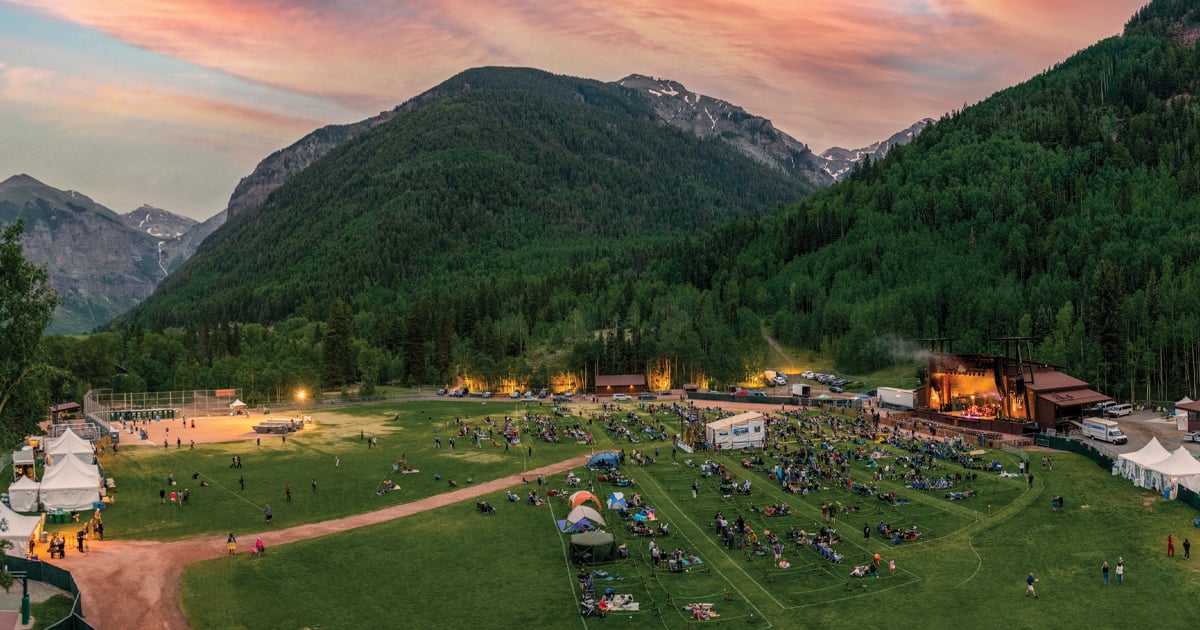
Like Tatar, over the winter months of 2021 the Planet Bluegrass staff, who organize, run and promote the festival, closely watched what looked like a possible return to normal. As they planned for their Telluride Festival held each year in the middle of June, they erred on the side of caution. Despite Colorado’s loosening restrictions, they planned for total social distancing.
To do this successfully, they reduced their ticket sales. In the past, their attendance hit about 11,500. For their 2021 festival, they split the festival into two separate weekends and reduced their ticket sales to allow only 2,500 per weekend. They also sold tickets in groups of ten people who were all restricted to a 12’ by 12’ “corral.” Whereas in the past children were allowed to attend free, this year they were not. The cost for one of these groups of ten cost 4,000.00 dollars and those same ten attendees were required to camp together as well. At that point, promoters did not offer any single ticket sales. Grace Barret, Planet Bluegrass’s Director of Media, Communications and Marketing, says that this was the only way that the town of Telluride would approve the festival.
It took Planet Bluegrass less than forty minutes to sell out both weekends and during the rush, Barrett says their computers crashed. Despite many disappointed fans, she says that the feedback they got was positive. “Our festival goers were grateful and understood that we were doing the best we could given the unusual circumstances.”
Key to that understanding is that with every change and development, Planet Bluegrass emailed surveys to their returning customers with specific questions about the decisions they made in response to the evolving state restrictions. Most questions began with, “Would you attend the festival if………” Fill in the blank. This steady communication and the feedback helped the Bluegrass Planet team make decisions that were transparent and driven by a desire to keep their festival as safe as possible. When all restrictions lifted two weeks before the festival, single ticket sales were made available. That day the Planet Bluegrass team blasted their mailing list with this message: “Tickets Available Right Now!”
Looking back, Barrett says that the planning stages for the festival was a wild and exhausting experience. She says, “We were flying by the seat of our pants but the constant decision making in response to COVID bonded us as a team.” She also says that reducing the number of festival goers made for a uniquely intimate festival. Many of those in attendance said that they felt like the musicians were playing just for them, an unusual experience for a festival that is normally teaming with bluegrass fans.
In sharp contrast to the need for constant adjustments to the Telluride festival, Planet Bluegrass’s Rocky Grass which takes place in Lyons, Colorado at the end of July went ahead without much commotion or changes. By then the state allowed full capacity for the event, but Planet Bluegrass decided to still reduce ticket sales by a thousand to give their festival goers a greater sense of distance and safety. They did the same for their Rocky Mountain Folks Festival held mid-August in Lyons. Two weeks after this festival, the delta variant moved into the state, and everything changed once again.
Thomas Point Bluegrass Festival
Thomas Point Bluegrass Festival, held over Labor Day weekend in Brunswick, Maine, is run and organized by Shari Elder and Michael and Jen Mulligan. Fortunately for them, the state of Maine lifted mask mandates and began loosening COVID restrictions at the end of May. Despite this good news, Mulligan remembered the chaos caused by the previous year’s postponement and was eager to have a safe and fully attended festival.
To achieve this goal, Mulligan decided to keep close control over attendance numbers. While Thomas Point Campground has acres of space for social distancing, he and his team knew that the pinch point for safety concerns meant keeping the crowds safely distanced at the main stage. To do this, they decided to release their tickets in batches or in limited runs. As each block sold out, Mulligan would consider the current state’s public health and safety considerations and then, if appropriate, release an additional block of tickets.
Placing tight scrutiny and control over ticket sales helped guard against the potential challenges which would ensue if the state closed all gatherings. But it also allowed him and his team time to first notify their long standing and loyal festival supporters about any new COVID developments and give them a chance to purchase tickets in the initial releases. Many of these veteran attendees directly purchase tickets from Mulligan himself over the phone rather than use computers, and he wanted to give them a chance to secure their tickets the old-fashioned way before he announced ticket sales on their website. Mulligan also encouraged people to sign up for the festival newsletter or follow on their website and Facebook to learn about when to expect the next batch of tickets to go on sale.
One result of this approach is that Mulligan saw a much higher volume of presales, which while encouraging made it harder to estimate total numbers. However, it is hard to pin down exactly why their pre-sale numbers came in so high for 2021. Like Summergrass San Diego, Thomas Point Beach Bluegrass Festival did benefit from other New England festivals that decided to cancel for a second year in a row. Bluegrass fans in the east, the west and in-between were all equally hungry to get out to a festival and festival cancellations and postponements only increased that desire.
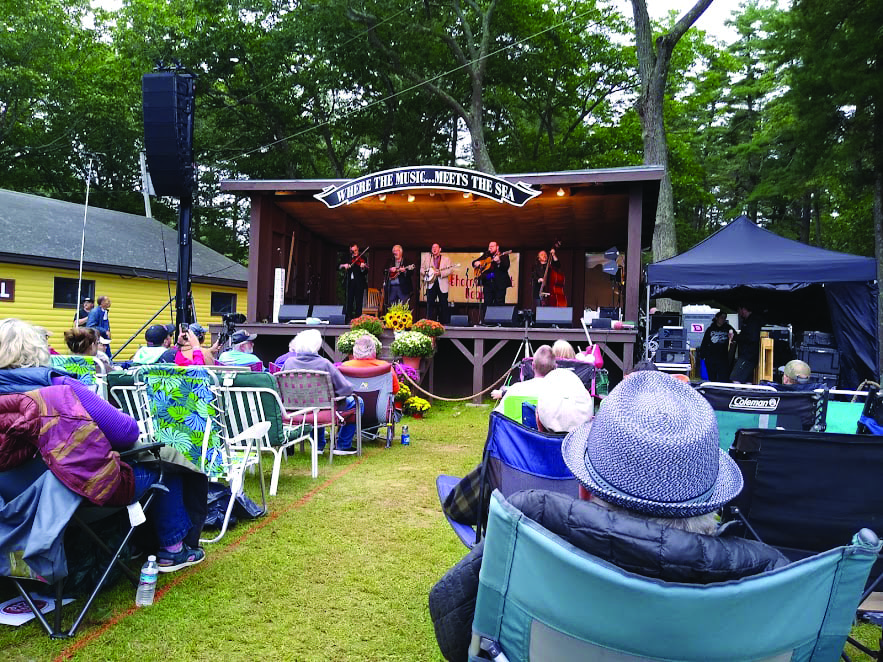
In the end, Elder and the Mulligans did reach what they considered a safe number of attendees and to maintain those numbers decided to limit day ticket sales. For many in attendance, this year seemed like the largest Thomas Point gathering ever, but in truth, it was simply more spread out. With 84 acres of camping, there was plenty of space for campers to social distance. Main stage chairs, normally confined to a smaller area, spread out across the main stage lawn and beyond. As the Mulligans and Elder look back over the 2021 festival, there are lessons learned small and large that they will carry into the next season. One of them is setting up artist merchandise tents with tables where musicians can meet their fans without being closely surrounded by them. Another is how to keep closer track of attendance and other important statistical information that will help them manage the festival and develop more pre-sales in the seasons to come. Probably the most obvious lesson that they have learned concerns their northern border and the importance of their Canadian festival fans both in the audience and as pickers. Mulligan is eager to see them return in 2022.
Podunk Bluegrass Festival
As spring came alive in New England, promoters for the Podunk Bluegrass festival in Goshen, CT were cautiously but enthusiastically moving forward and planned to hold their festival as usual in mid-August. Rich James, a member of the Podunk board of directors says that the state lifted all COVID restrictions on May 19th and with that their pre-sales began and held steady. While everyone organizing the event had a heightened sense of covid awareness, Rich says that the planners only had to make a few adjustments to ensure a safe festival where attendees were free to make their own personal decisions about masks and social distancing.
Given the abundance of space for camping at the Goshen Fair Grounds, attendees had the option to camp as close or as far away from others as possible. Masks were not mandated, but the festival provided an abundance of hand sanitizer and kept their facilities just as clean as always. Vendors parked a healthy distance from one another, and the audience was asked to use only the chairs they themselves brought to the main stage and not “poach” seats. In real terms, Podunk Bluegrass Festival felt very much like it has in the past.
The greatest difference for them this season was the 60 percent increase in attendance. Like other promoters, the combination of a long winter of isolation and near by festival cancelations at Grey Fox and Jenny Brook, brought a large group of first timers to the festival. The question for the Podunk Board of Directors now is, will those first timers return in the future. They hope that the answer is yes!
It is always exciting to receive the Bluegrass Unlimited festival edition in January. We page through it and begin to imagine setting up camp at our favorite festivals, seeing friends, and breaking out our instruments. We suspect that after the past two summers life may will return to normal, but there is no doubt that festival promoters have learned valuable lessons thanks to the pandemic. Hand sanitizer will not be disappearing any time soon, poaching seats may still be frowned upon, and finding beer on tap may be tough, but there is a good chance that none of us will take the freedom to attend bluegrass festivals for granted again! So, let’s start planning for the 2022 festival season ahead and cross our fingers!