Fast Track
Has Bluegrass In Their Blood
Photos by Kelle Daggett Perry
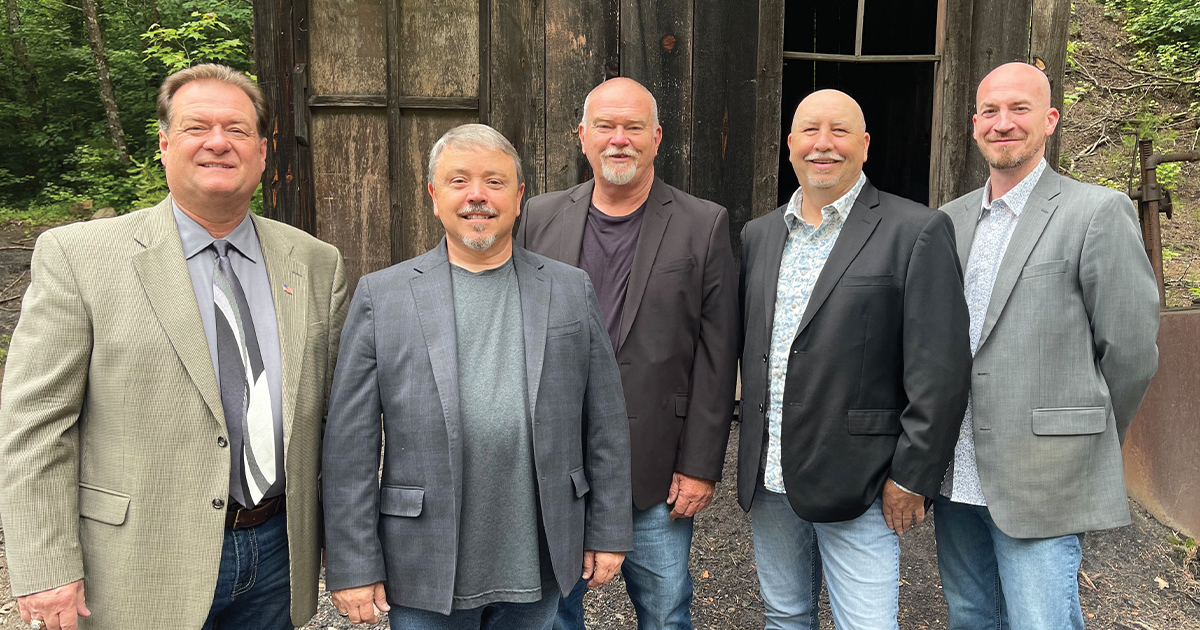
Fast Track is a band with a musical lineage. Each of its five members evolved from a musical heritage. No strangers to the bluegrass community, they are all veterans of the stage and road. Dale Perry, Steve Day, Duane Sparks, Shayne Bartley, and Randy Barnes grew up playing music since their youth, offsprings of relatives who picked in generations before them. With a bloodline like that, you know exactly what you’re getting and they are sure to deliver. “Once bluegrass gets in your blood, you can’t get a transfusion to get rid of it. It’s always there,” admitted Fast Track founding member, Dale Perry.
Collectively, the band has 170-plus years of musical experience and members have been nominated for four Grammy awards. “I can’t say enough good about the guys in this band. Everybody gets along like family. When you’re on a 40-foot bus for days or weeks at a time, if you can’t get along that bus gets really small. We love being together and love picking and fellowshipping together. That’s hard to find in a band. We’re very fortunate and our spouses are so supportive.
“Steve, Duane, and I have been there since day one. We were fortunate enough to snag Duane Sparks from the word go. The guy’s a great singer. I think he’s one of the best lead singers in bluegrass today. Shayne and Randy are team players. We’re all on the same page as far as the music goes. All five guys have input to contribute to the band. It takes everybody to make Fast Track sound like Fast Track. We try to do a majority of our own material. We wanted to do something that made us different and separate from other traditional bands.”
Day stressed, “Dale and I surround ourselves with good musicians, good people to travel with who you can get along with and trust. We give everybody the rein. We rarely do any cover songs.” Sparks chimed in. “Fast Track is rough and raw, good traditional bluegrass music, high energy, and lots of fun.”
Bartley agreed. “We’re all close to the same age and we’ve all played with each other in different settings. We all think the same way, musically. It makes it easier traveling together. We all came from the same school of music. It’s fun to ride up and down the road with them on the big blue bus. Fast Track is a pretty traditional-based, hard-driving band. We also throw in a country ballad now and then. We’re no frills. On stage, we only use three microphones and no floor monitors, only in-ear monitors. It makes it easier. It’s a little bit of a throwback thing, but it works for us.” Barnes added, “No one set person sings a certain part. It’s everybody’s effort. Anyone can bring a song to the band. It’s one unit. It’s like a well-oiled machine.”
The group has a unique story behind the band’s name. It was named after one of Steve Day’s bulls. Perry explained, “Steve is a cattle farmer. He raises Charolais. Years ago, he had a bull named Fast Track. Steve’s son, Austin, said that would be a good name for the band. When we first started, we had every band member submit five potential band names. That’s 25 names. We voted and picked the one we liked the best. Fast Track was pretty much a unanimous decision. It stuck out above everything else. It’s kind of catchy.
“We did have a couple of band changes, but fortunate that we’ve not had a lot. We lost our bass player, Ron Spears, to sepsis on March 22, 2022. It was heartbreaking. I promised his wife that as long as there is a Fast Track band, we will always record Ron Spears’ music. We have a whole lot of his songs that have never been recorded and a lot of people have never heard them. We have a pretty good wealth of material to draw from. After Ron passed, we hired a young man, Zack Collier from Indianapolis, Indiana. He filled in when Ron had his surgery. Then Ron’s recovery time never came to be and Zack took the job.”
Following a bluegrass cruise in January 2023, bands swapped bass players due to proximity. Collier went to Joe Mullins & the Radio Ramblers and Randy Barnes came to Fast Track. Perry said, “We were fortunate enough, with just very few auditions, to find Randy. It works out really well. He lives about 30 minutes from Shayne and they usually ride together when we’re going to meet the bus. I honestly didn’t know Randy sang tenor. He just blew me away. He’s a quick study and a hard-working guy. He learned all the songs. When he showed up, he knew his bass part and his vocal part. Jesse Brock left us after two years (to form Authentic Unlimited). We were fortunate enough to snag Shayne Bartley. He’s a great musician. He’s a Doyle Lawson-type player which fits us to a tee.”
Each of the members shared their musical heritage.
Dale Perry
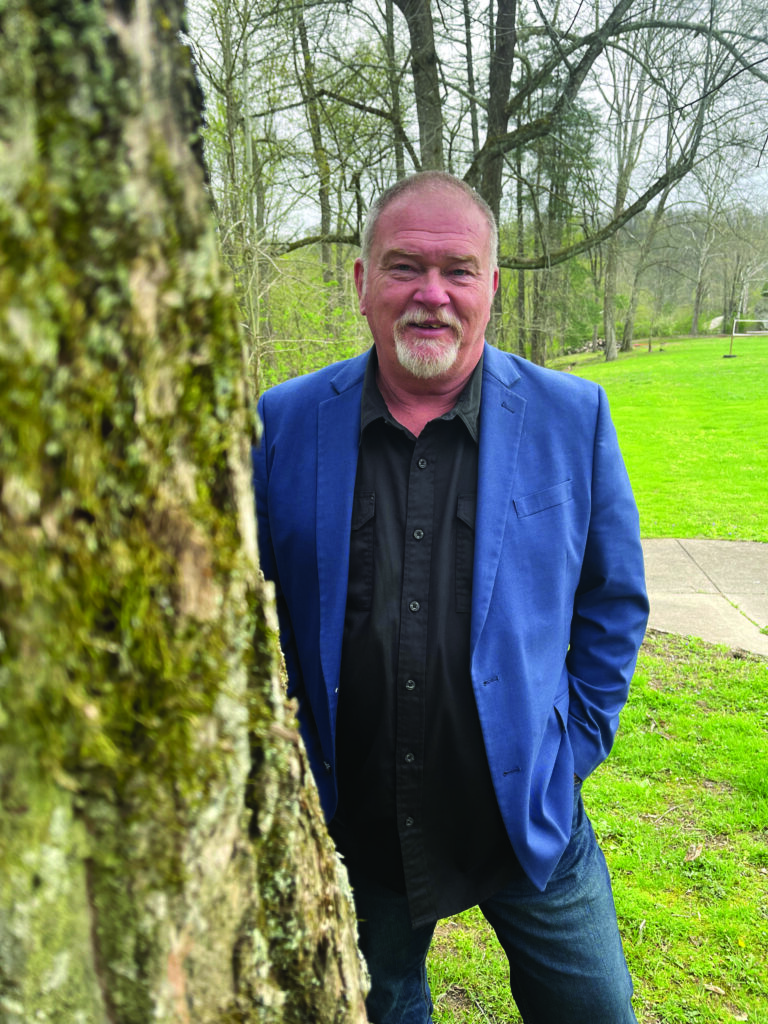
63-year-old Perry reflected, “I got interested in bluegrass music when I was about eleven or twelve years old. My father, William Henry Perry, and a wonderful banjo player in Crum, West Virginia, Lowell Varney, had a recording studio together, Riverside Recording Studio. They started it in 1972. It was four tracks and that was a pretty big deal. At that time, that was about unheard of, there weren’t a lot of studios that you could multi-track in. Dad was the engineer and ran the studio. He was an electronic whiz. I think I got some of that passed down to me. He took me to the studio a few times and that’s where I actually heard people that came into record. The first group I played with was a gospel group from Crum called the Traveler’s Quartet. I played upright bass at twelve years old. That’s how I got started.
“Lowell wanted me to learn how to play rhythm guitar. I learned and practiced, but I wasn’t interested in it. I wanted to play a lead instrument, so my dad bought me an old Kay banjo. That’s what I started learning on. Lowell was a great player but had no patience with kids. He showed me how to do a forward and backward roll. He got me started. I learned by ear. I don’t read music. I don’t read tablature. My dad would buy me old LPs of Flatt & Scruggs, Ralph & Carter, and Ralph & the Clinch Mountain Boys. We had an old console TV with the picture tube in the center. One end had an AM/FM radio and an 8-track tape player and the other end had a turntable. I’d take the records and put them on the turntable and turn the record player down from 33 1/3 to 16 which was basically half the speed. I’d tune my banjo to the original speed then at 16 it was an octave lower. I learned by listening. I wore those albums out with my head stuck up in those speakers. I drove my mother crazy trying to learn to play the banjo.
“After about six months or so, I went back to Lowell and showed him what I had learned. A lot of people start with ‘Cripple Creek’ or something fairly simple. Well, the first song that I learned was ‘Foggy Mountain Breakdown.’ I wasn’t playing it right. I was playing the right notes, just in the wrong position. He showed me what position to play the song out of. That’s how I got started.
“From there, I went to playing with Jerry Williamson & Red Wing, based out of Huntington, West Virginia, when I was 18 years old. I got to travel a lot with Jerry and I learned a lot. Jerry also ran a sound production company and did a lot of major sound jobs back in the day. He did some really big festivals: Summersville, West Virginia; Dahlonega, Georgia; Lexington, Kentucky. We would always get there a day before the festival started. Promoters would let us play, but we hardly ever played prime time. We’d play on a Wednesday or Thursday afternoon. I got to meet a lot of musicians and really prominent players at that time. I met the Country Gentlemen. That’s how I met Doyle Lawson, the Bluegrass Cardinals, and anybody who was on tour in the early 80s.
“In 1985, I started playing bass and singing bass with the Bluegrass Cardinals. They’d seen me running sound, singing bass, and playing banjo with Jerry at a festival. I’m a pretty country, backwoods, and bashful kind of guy. They remembered me. I auditioned and took the job playing bass and singing bass. I played with them for a total of almost nine years. I left them for a time in ‘89 or ‘90 to pick banjo with the Lonesome River Band. I played about a year and a half with them and did one album called Looking for Yourself.”
Perry returned to the Cardinals and played bass for a couple more years. In 1994, he took a job with Doyle Lawson & Quicksilver as their bassist, recording about a half dozen albums. Then he moved to banjo in 1999. “Nothing against Doyle, but we were playing a lot…about 200 dates a year. That’s a long time to be away from home.”
In 2003, Perry moved to David Parmley & Continental Divide to become their banjoist. In 2009, he returned to Lawson again on banjo. “I played with Doyle a total of eleven years.” Perry then rejoined Parmley to play with Cardinal Tradition in 2016. In September 2019, Parmley announced his retirement. “It kind of took the rest of the guys in the band by surprise. About a week later, I called Steve Day and Ron Spears and said, ‘I’m not really ready to quit. You guys want to start a band?’ So we all convened in Bowling Green at a Bob Evans and had a meeting about how we wanted to run the band.”
Those three musicians (Perry on banjo, Day on fiddle, and Spears on bass) were joined by two others: Duane Sparks on guitar and Jesse Brock on mandolin. “Our first show was Woodsongs in Lexington, Kentucky. Our first audience was 6.1 million people worldwide! A week later we did a show in Gallatin, Tennessee at the Palace Theatre. Glen Duncan and Adam Engelhardt of EMG Records were there. Adam had done country music but hadn’t done a lot of bluegrass. So we were his first touring band that he had on his label. We are working on album number five for EMG Records and hoping to get it out this summer. We’ve got other credits.”
Outside the bluegrass family, Perry has recorded (banjo) with Paul Simon and sung (bass) with a Fleetwood Mac member. “I have a full-blown recording studio at home. I can go on location and record for bands. If they can’t come to me, I can go to them and multi-track. I also have a sound production company, Red Roof Productions, where I do live sound indoors or outdoors. I just love music, in general. I like being on both sides of the glass either as a performer, as a studio engineer/producer, or as a sound engineer for live sound.”
Perry builds microphones, too. “I got into that with Cardinal Tradition. We wanted to use a single mic, but have an old look to it. I bought an old empty shell, a replica of an old RCA 77. I bought a microphone off the shelf and rewired it like Tim the Tool Man. I kind of hot-rodded it up a little bit. That’s what we used with Cardinal Tradition. I went a different route with Fast Track. The ones we use, and I sell, I just buy empty shells that look like the old Shure Elvis mic and then I build what’s inside of that. I don’t advertise them. They sell themselves by word of mouth”.
Perry is a humble man. “The way I’ve always tried to look at my music career is when someone needed a band member I just happened to be available. I’m not an icon or a star. There’s a thousand others out there that do what I do.” He relies on his faith. “Ain’t none of us getting out of here alive. Make sure you’re ready.”
Steve Day
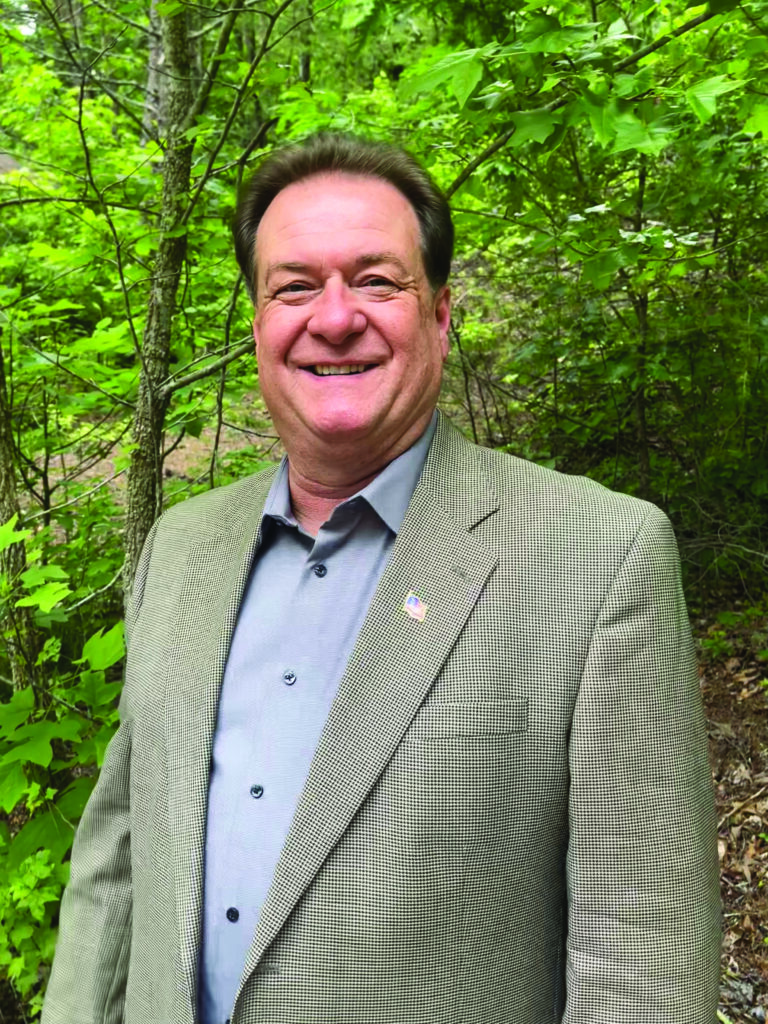
“I started on the guitar when I was eight years old and then I went to the fiddle when I was twelve. I come from Grayson County, Kentucky. They had a big orchestra program there. I learned classical music and it’s produced a lot of fiddle players from that area. One you might know would be Jimmy Mattingly. He was about three years ahead of me. We were friends.
“My dad and uncle had a band called the Kentucky Bluegrass Band. I played with them, doing regional stuff in the late 80s. We traveled to a lot of bluegrass festivals and met a lot of people. I met David Parmley there. When he moved back to Nashville, he said he was going to put a traditional band back together. That band consisted of me and David, Mike Anglin, Elmer Burchett, and Danny Barnes who is Randy’s brother. That’s when we recorded for Pinecastle and our first album was The Rocking Chair.
“I was with David for right at twenty years. We made a lot of good music back then. I learned how to sing more and sing better. I learned how to sing harmony parts. I picked up a lot through the years traveling with Continental Divide which turned into Cardinal Tradition.
“When David retired, we weren’t ready to stop. It was the best move that Dale and I made to start Fast Track. A lot of people asked me through the years of being a side man, ‘When are you going to start your own band?’ I always thought, ‘No, I am a side man.’ When this came along, I said, ‘Yeah, let’s give it a try.’ In the fall of 2019, we put Fast Track together and surrounded ourselves with some good musicians.”
Day is also a cattle farmer. “It’s always been a thing that I do on the side. We run around 50 head. That’s a lot when you’re gone a lot because somebody’s got to be there. I have lowered the number down from what it used to be. It’s a lot of worry when you’re on the road.
“Just as quick as we got the band going, we put some videos on Facebook to let people know what we were doing, who we were going to be, and how it was going to sound. We got a call from EMG Records and we’re still with EMG Records. Adam Engelhardt is the owner and is now the executive director of the Bluegrass Music Hall of Fame and Museum in Owensboro. It is a pretty hefty job. He’s a great engineer and he took a liking to us since day one. We’re so proud to have somebody that likes our music and gets it out to radio. He’s been really good to us.
“Dale and I are pretty satisfied with the way things are going. We’re trying to get into newer festivals that we have not played. Our schedule is fairly good. Dale and I have played so much. We don’t want to do 80-100 dates. We’ve done that before. We try to keep it around 50-60 dates and that makes everybody happy.
“I have been at this bluegrass a long time. I’ve been teaching private lessons for over 22 years in Bowling Green. I teach fiddle, mandolin, and guitar. I need to begin working on another solo project. It’s a process. I have two.”
Duane Sparks
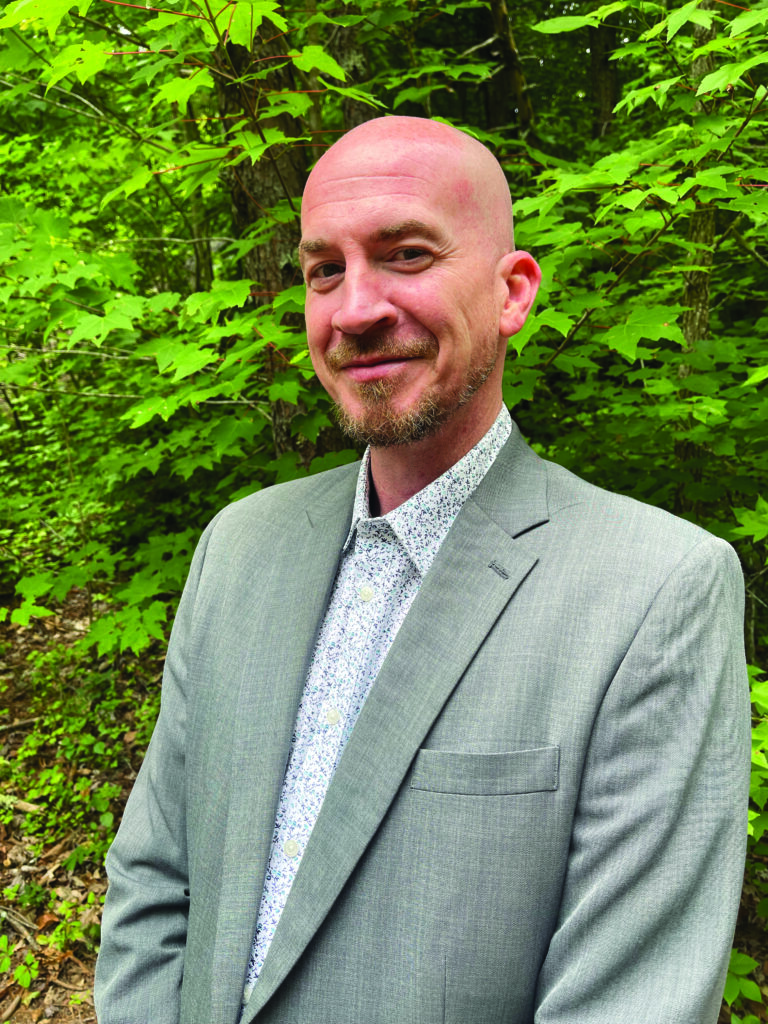
“Both sides of my family played growing up so I just thought everybody played music. I started singing as soon as I could talk at about two and a half years old. By the time I was three, we started going to church and singing gospel music. At about twelve, I began attending bluegrass festivals with my uncle and my cousin. I fell in love with the atmosphere, and the people, and I was glad that gospel was part of bluegrass.
“At 17, I started in a regional band called New Rendition with Marvin Davis, a multi-instrumentalist who wrote ‘Boot Leg John’ and ‘Rain’ and others. After about two years, I got a call from a band that played a little more based out of Kentucky called Blue Night. Then I got a call from Gerald Evans and decided to hit the road with him. We ended up becoming partners. He passed away from cancer in 2010. In Fast Track, we do his songs. As long as I’m playing music, I’ll make sure I’m always doing some kind of Gerald Evans song.
“After that, I played with the All-American Bluegrass Band. We made regular appearances and hosted our own shows at Renfro Valley. Then I started with Joe Mullins in January 2013. It was too busy. Joe was playing about 43 weeks a year plus recording in the studio. I was gone all the time. I decided to get off the road and slow down a bit. After about five months, Dale Perry called me out of the blue about putting Fast Track together. He said that I might be the missing piece. I jumped at the chance and of course, I liked it. We agreed a lot on the business side of things. We didn’t want to keep ourselves gone. I wanted to be home more so it was just the perfect fit for me.”
Shayne Bartley
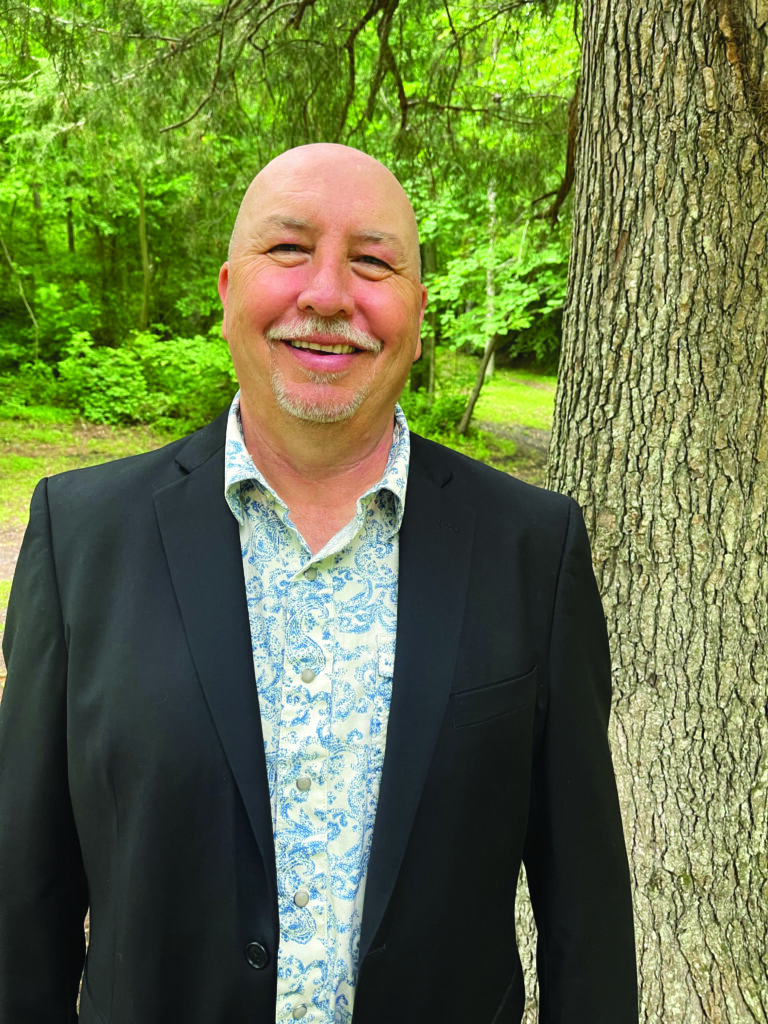
“I started wanting to play when I was young. My older brother, Rick, who is 14 years my senior, plays multiple instruments and my dad played upright bass. Music was always around the house. We had all the record albums of the first generation bluegrass: Flatt & Scruggs, Monroe, Stanley Brothers, Country Gentlemen, and Osborne Brothers. Music was always around from as far back as I can remember.
“I grew up in the little town of Ezel, Kentucky. I started going to bluegrass festivals when I was a kid with my dad and mom. The first instrument I really played was the guitar when I was eight or nine years old. I was around my brother and my dad and I would pick up their instruments and mess with them.
“My professional career began about forty years ago. The first band I was ever in was New Ground with my brother and my dad when I was sixteen years old. Jimmy Jones played banjo. Then when I was a senior in high school, I started playing with some guys the next county over: Don Rigsby and John Lewis. We started a band called the True Grass Band.
“One night, my brother went to a music show in Clay City, Kentucky where Dave Evans & Riverbend were playing. Rick was talking to Dave and he said, ‘I need a mandolin player.’ Rick suggested me. A couple of days later, Dave called, I went and auditioned and got the job. I played for about a year and a half for Dave.
“Charlie Sizemore called so I went to work playing mandolin for him. I stayed there for about a year. One of my favorite bands of all time was the Lost & Found. When I was 21, I heard that Ronnie Bowman was leaving. I called up Allen Mills and told him that I was interested in the job. He said, ‘Why don’t you come on a trip with us?’ So I rode along with the band up in the New England area. Allen would get me up and let me sing a couple of songs. A couple of weeks after that, I went to their show in eastern Kentucky and Allen and Dempsey (Young) offered me the job playing guitar and singing lead with Lost & Found. That would have been late September 1989. I still had shows to play with Charlie Sizemore. We played the Early Bird on the Grand Ole Opry for the deejay convention and that was my last show.”
The Bluegrass Cardinals were on the same show. Bartley told David Parmley that he was going to have to relocate to Virginia as he was taking a job with Lost & Found. Parmley offered him a place to rent. “I basically moved in with the Parmleys in Ferrum, Virginia, and was with them for almost two years. In 1991, I returned to Kentucky and went back to work for Charlie Sizemore and recorded one album, Singing with the Angels.
“In November 93, I started playing mandolin with Southern Blend (Ricky Wasson and the late Wayne Fields). We had several bass players and then in 1994, Randy Barnes came into the band. That’s when we first worked together, 30 years ago. In 1996, I went with a band called Unlimited Tradition which included Ray Craft, Jack Hicks, and Scotty Sparks. That band lasted until about 2000 and then I went to work for the band, Rarely Herd, out of Ohio. Ned Luberecki was the banjo player. I worked with them a little over two years and during that time we won two Entertainer of the Year awards from SPBGMA which was pretty cool.
“In February 2003, I got a phone call from David Peterson & 1946. I went to work playing banjo but decided it wasn’t for me. Less than a month later, David’s manager called and said, ‘David wants you to come back and play mandolin. The reason we need you is we’re going on tour with Brooks & Dunn.’ I said, ‘Sure, that would be interesting to go on a major country tour.’ We did a 40-city tour with Brooks & Dunn, Brad Paisley, and Rascal Flatts. I was only contracted to do the tour. As soon as that ended, I got a call from Karl Shiflett and went to work playing mandolin for him.
“My current wife’s son, Jesse Baker, came into the band playing banjo. He went on to play with Michael Cleveland, Doyle Lawson & Quicksilver, and Dailey & Vincent. Then he had to come off the road because he was having nerve issues in his right hand. Now he’s raising four kids and doing really good. That’s how I met Jesse’s mother. We ended up getting married and have been married ever since.
“In 2009, Rick and I started our own band called the Bartley Brothers and recorded one album for Rural Rhythm. I had a lot of fun touring with my brother for about two years. Then Darren Beachley and Barry Scott needed someone to play banjo and sing bass in their quartet numbers. We worked like 100 dates our first year. After that I went to work playing banjo for American Drive, all the guys that were in the New South when J.D. retired. I’m a big J.D. Crowe fan.
“My wife and I went to the Station Inn to hear David Parmley & Continental Divide. I told David, ‘This is the kind of music I like. If you ever need anybody, give me a yell.’” It wasn’t long until Parmley called.
“I started working with David in Feb 2018. Dale Perry was on banjo, Steve Day on fiddle, and Ron Spears on bass. In September 2019, David informed us he was going to retire. None of us wanted to quit. Things were going great. So we started rehearsing as Fast Track. I was playing guitar and we got Jesse Brock on mandolin. I had some personal issues come up that forced me to leave the band. I told them, ‘Before we ever start to record a song or play a show in public that way you can get someone from the start’. I suggested Duane.
“In December 2022, I heard that Jesse was going to leave to join the Unlimited guys. I called Dale and Steve and went back to work with them. I was so happy to be playing music again with Steve and Dale. My very first two shows with those guys were at SPBGMA on Friday night and Sutton’s Old Time Radio Hour on Saturday night. That was the last two shows that Ron (Spears) got to play with us. He was a great guy.”
Bartley shared his idols. “My two favorite mandolinists were Doyle Lawson was number one and Dempsey Young was number two. There’s two mandolin players that don’t get a lot of credit that are two of my favorites also: Hershel Sizemore and Bobby Osborne.”
In addition to being a multi-instrumentalist, Bartley is also an avid golfer and works as an assistant golf professional at a golf club in Wilmore, Kentucky. “I’m on the golf course a lot, giving lessons and running the pro shop. That’s my other passion besides music.”
Randy Barnes
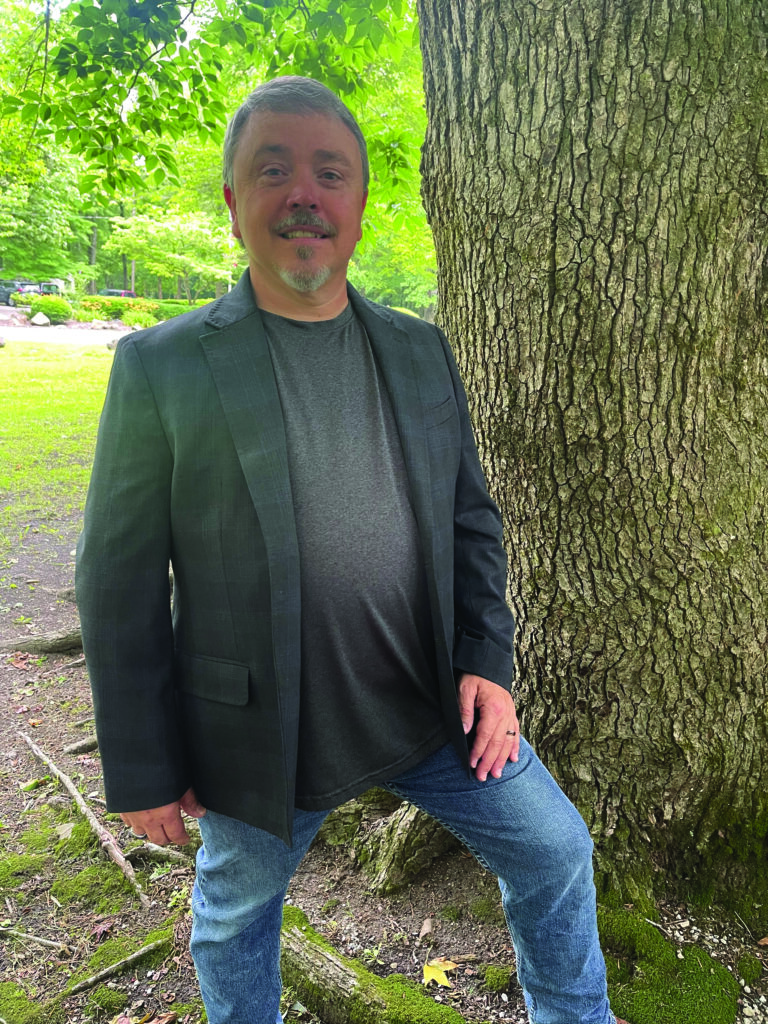
“My dad, Earl Barnes, played music and gave (stringed instrument) lessons at home or at the local music stores around Richmond, Kentucky. He always told my brother, Danny, and me to not touch his instruments. You know how kids are. We went ahead and picked them up. I was actually a banjo player first when I was six years old. My brother was seven and he learned the guitar. We were already playing before my dad knew it. He came home early from work and there we were playing. He wasn’t angry. He was happy.
“I got my brother started on the banjo. He showed me chords on the guitar. I was on stage playing banjo at nine years old. The banjo was bigger than I was! We had a family band and played a lot of churches. I played whatever was needed. I taught myself mandolin. We were self-taught. We had no lessons. Then my dad traded an old Chevrolet van for an upright bass. I was 14 years old and taught myself how to play and it’s been stuck with me ever since. I was intrigued. I had other instruments, but it grabbed ahold of me and it became really, really easy. I enjoy playing it, so I became a bass player.
“I got hooked up with a band called Southern Blend in 1991 which consisted of Wayne Fields, Ricky Wasson, and Shayne Bartley. Then I got a call from Lou Reid, auditioned, and got the job. I played with Lou Reid & Carolina for three and a half years that included my first trip to Europe. We went to Germany, Switzerland, and Holland.
“I filled in with the Dean Osborne Band, Richard Bennett, Wanda Barnett, and the band called Blue Town, playing local stuff. Then I got a call from Rhonda Vincent. We got together the first time in 1999 at SPBGMA. We rehearsed that day and then went to the Grand Ole Opry on Friday and Saturday. That was my first show with her. I played with her for about two years.
“Then I had a short stint with Tim Graves & Cherokee. Larry Stephenson called and I hooked up with him. I was there three years and then I got the opportunity to go with Newfound Road. I looked at that job as a way to get to go home more and visit my mom and dad.
“I got to playing with a group called the Mashville Brigade that played the Station Inn every Tuesday night plus I traveled with the Josh Williams Band. I was also his road manager and sang tenor. I had never sung tenor at all.
“Josh returned to Rhonda Vincent so I got a job with Marty Raybon, but he soon decided to do something else so I called Joe Mullins & the Radio Ramblers. He asked me if we could meet in Lexington. I got the job and was with him for ten years. That’s the longest run I’ve had with anybody. It was a good run. We played the Opry a lot and went overseas twice. I wanted to sing more so on this cruise, we switched around. I had filled in for Zack Collier with Fast Track. I knew all the guys. I worked with Duane in Joe’s band. I started with Fast Track in May of 2024. Everything clicked. I didn’t know I could sing that high of tenor! I’m singing a lot more: lead and tenor.
“Dale told me, ‘You took us to the next level.’ I’ve been doing this for some thirty-odd years and it takes everybody to make a go of it. I was tickled to death to get this opportunity to pursue music with these guys. It’s been fun so far and I’m really looking forward to seeing our next level with Fast Track.”
EMG Records
Adam Engelhardt of EMG Records shared, “Right before COVID, I had my own record label, EMG Music, and we were looking for a great road band. Dale Perry and Steve Day are two of the finest musicians in the bluegrass world. We checked them out before they even did any of their gigs. I was impressed by everything that they did. I thought, ‘Hey, this is a good one to start in.’ So we did a record called Fast Track, self-titled. Since then, we’ve done four records and we’re starting our fifth. They’re one of the highlights of our label.
“You can tell they’re professional. When they play on stage, their music is tight. Their harmonies are tight. They share lead vocals. It’s nice that you get a little bit of a difference when you’re listening. We always reflect that when we make records, too. We’ll have everyone in the band sing lead on one or two songs. They work hard and it really shows. I’m proud to be their label. I’m proud to be their producer. They’re a really a joy to be around all the time.”
Thankful
Perry is grateful. “Our Lord and Savior has put us where we are for a reason. We are all on the same page musically and spiritually. I thank the Lord for allowing me to do something I love to do and scratch out a little living doing it.”
To book Fast Track, contact Dale Perry: [email protected] or Steve Day: [email protected].