Early Los Angeles Bluegrass
Golden State Boys Blue Diamond Boys The Hillmen
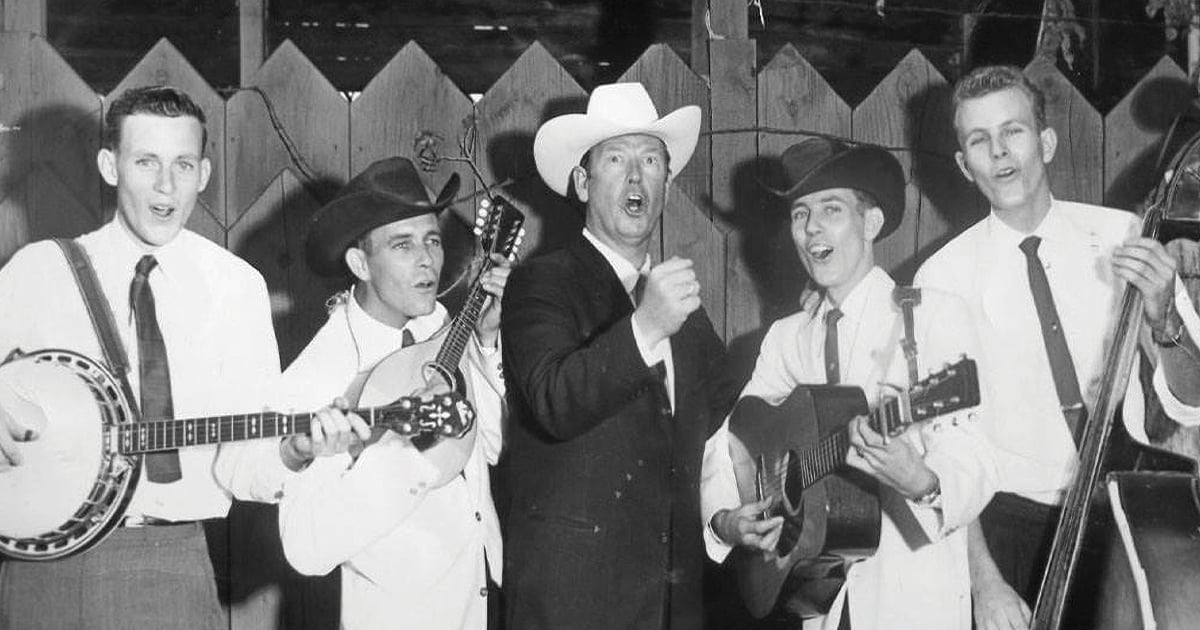
In 1954, Herb Rice and his wife Louise Poindexter packed up their three sons—Larry, Tony and Ron (in utero)—and left Danville, Virginia, for the Los Angeles area, settling in Downey. Herb was a master welder following the work and soon had a good job at Douglas Aircraft. He was also a mandolin player, and he wanted to start a bluegrass band. There weren’t that many pickers around, but that problem was solved when three of Louise’s brothers—Leon, Walter and Hal, Jr.—came out west and started picking and singing under Herb’s tutelage.
That was the original line-up of the Golden State Boys, one of the first two bluegrass bands in southern California; the other was the Country Boys, which became the Kentucky Colonels. Herb played mandolin, Hal Jr. played guitar and did the lead vocals, Leon alternated on Dobro and bass and Walter played banjo. “They played hootenannies and coffeehouses,” remembered Louise Rice. “It was just music, all the time.”*
Herb patterned himself as a singer after Hylo Brown. “I enjoyed singing with Herb,” said Hal Poindexter. “He was a good tenor singer. He could go from bass to a real high tenor. He had more range than Tony or Larry.”
“Hal Poindexter did the lead singing, I sang the baritone, and Herb sang the tenor,” remembered Don Parmley. “[Herb] sold his mandolin playing better than most people that was really well-known…He was never a very good player, just mediocre, you know, but he sold it real good.”
Herb Rice’s son Tony heard a lot of the Golden State Boys growing up. He spoke later of Hal Poindexter, who he called Uncle Junior, “One of my early heroes, maybe the very first hero I ever had as a guitar player, was my Uncle Junior. He was a real good rhythm player, and he had a real good G-run. He did it the right way.”
The band did not actually have a name to this point. One hadn’t been needed. As Tony Rice recalled, “They went on the radio [in 1957 or 58], and they had to be introduced as some sort of band. My mom said, ‘Hey, just call yourselves the Golden State Boys,’ because the milk we had [at the house] was Golden State Milk.”
In addition to the coffeehouse gigs, the Golden State Boys made regular appearances on two wildly popular country music television programs, both on KCOP, Channel 13, in Los Angeles: “Country Music Time,” a live one-hour program on Saturday night, and “Cal’s Corral,” a live three-hour program on Sunday afternoon. “Cal’s Corral” was broadcast from the Huntington Park Ballroom. The Country Boys/Kentucky Colonels also appeared frequently on both shows.
Those TV shows were the brainchild of Cal Worthington, a legendarily flamboyant car dealer and a ubiquitous presence on Los Angeles television starting in the 1950s. Cal used country music to sell cars, and he was tremendously successful at it. Southern California was a country music hotbed at that time, and the shows attracted the top talent from Los Angeles and Bakersfield.
It’s unclear if or how much Cal paid these entertainers. The coin of the realm was exposure, and the shows provided a huge amount of that. There were hundreds of country bars and clubs in the region that hired bands, and this was often the best way of “auditioning” for them. Plus, as Chris Hillman recalls, Cal gave the artists free cars to use as long as they were affiliated with the shows.
The band also appeared regularly on the “Squeakin’ Deacon” radio program. Carl “Squeakin’ Deacon” Moore was one of the top country DJs in Los Angeles, and, in addition to his daily programs, he hosted a live radio program and talent contest on KFOX every Sunday morning, broadcast from the Southgate Eagle’s Hall in Long Beach.
Don Parmley (1933-2016) was a native of Monticello, Kentucky, who had made a name for himself around the state as a banjo picker working with Carl Story and Hylo Brown. He and his wife moved to southern California after Don was discharged from the U.S. Army in 1956. He started working with the Golden State Boys in 1961. Prior to that he had played in a band with bass player Roger Bush called either the Smoggy Mountain Boys or the Green Mountain Boys (accounts differ). When Bush left to join the Kentucky Colonels, Parmley moved over to the Golden State Boys.
In addition to his work with the Golden State Boys, Parmley recorded an album of instrumental versions of popular folk songs in 1963 with Billy Strange for GNP Crescendo. Oddly enough, I’ve seen two different covers for this LP; one is titled Blue Grass and Folk Blues…5 String Banjo, with a photo of Parmley and the copy “Don Parmley with 12 String Guitar! Billy Strange”; the other is titled Folk Blues & Blue Grass…12 String Guitar Billy Strange with a photo of Strange.
Beginning in 1964, most of the incidental banjo music heard on the hit television show The Beverly Hillbillies was played by Don Parmley, who left the band to take the job. Many people assume that Earl Scruggs played all the banjo music heard on the show, but Flatt and Scruggs performed only the theme song, “The Ballad of Jed Clampett” (with Jerry Scroggins singing instead of Lester Flatt), which was played during the opening and closing credits of the show. The rest of the banjo was Parmley, a gig he held until the show ended in 1971.
Vern Gosdin (1934-2009) and his younger brother Euqen Manuel “Rex” Gosdin (1938-1983) were born and raised in Woodland, Alabama, a tiny town an hour or two away from Sand Mountain, home ground for the Delmore Brothers and the Louvin Brothers. Vern and Rex loved the close harmonies of the Louvins and the Blue Sky Boys and worked hard to develop their own distinctive vocal duet style. Vern, Rex and another brother gained some professional experience singing gospel music on Birmingham radio station WVOK.
The Gosdin brothers moved to southern California in 1961 and joined the Golden State Boys shortly after that. Vern was a wonderful lead singer with a sound somewhat like that of Charlie Waller of the Country Gentlemen, while Rex had a soaring tenor reminiscent of Ira Louvin. Vern initially played mandolin in the band (replacing Herb Rice), until Hal Poindexter left and Vern moved over to guitar. Rex played the bass.
The Golden State Boys made its recording debut in 1962, with a single on Shamrock Records, based in the Los Angeles suburb of Artesia. The single paired “Always Dreaming” (written by Hal Poindexter) with “Wicked Woman” (written by Don Parmley). A review in one of the industry trade papers, gave a grade of B+ to the A-side, saying: “Cashing in on the current popularity of the bluegrass style, the Golden State Boys come up with a smart, rousing, hand-clappin’ affair. The side has enough good stuff in it to take off in the sales department.” Spoiler alert: it didn’t.
An undated (but probably 1962) item in a trade paper column announced that “The Golden State Boys, recently signed to record for Hi-Lee Records, have as their first release an album titled Bluegrass from Hollywood. The boys appear weekly on ‘Country Music Time’ and ‘Cal’s Corral’ on KCOP.”
The band that recorded this album included Hal Poindexter, Vern and Rex Gosdin, Don Parmley, Dobro player Skip Conover and Bobby Slone. The album was recorded at radio station KFOX with involvement of some sort (maybe producing) by renowned country DJ Hugh Cherry. Bluegrass from Hollywood apparently vanished into a bluegrass Bermuda Triangle; it was never released and no test pressings or tapes have been found. I would doubt its existence, but I’ve read that somebody knew somebody who has heard a tape of the album and swears it exists. It would be great to hear it.
At some point in 1963-64, there was a rift in the band, and it split into two factions, Hal Poindexter in one camp, and Vern, Rex, Don in the other. Hal reportedly purchased the rights to the Golden State Boys name from his sister Louise for $60; since she had suggested the name in the first place, it was felt she “owned” the name. Hal rebuilt the Golden State Boys, while Vern, Rex and Don (and new recruit Chris Hillman) rebranded briefly as the Blue Diamond Boys before going with the Hillmen moniker.
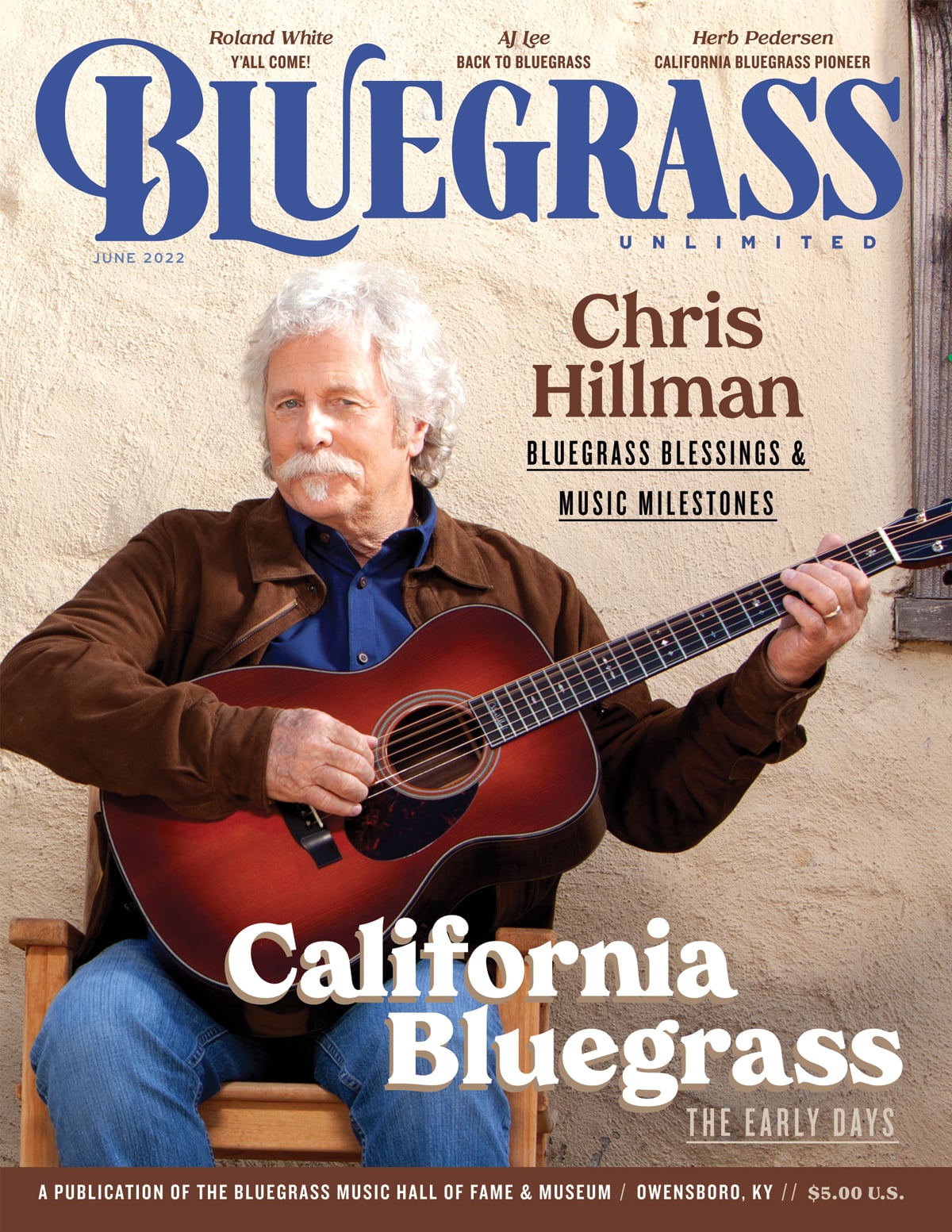
Mandolinist Chris Hillman joined the Golden State Boys in 1963, when Vern Gosdin moved to guitar. Hillman was born in 1944 in southern California and started playing mandolin when he was about sixteen. His favorite bluegrass band was the Stanley Brothers, because he admired their intensity and soul. While he was still in high school, he joined his first band, the Scottsville Squirrel Barkers.
The Barkers didn’t last for much more than a year, but did record an album, called Bluegrass Favorites. More of what we would call an EP today—10 songs, 18 minutes—the album appeared on the Crown label and was meant to be sold for budget prices in supermarkets, drug stores and other such retail outlets. Crown Records was a budget subsidiary of Modern Records, a label famed for its blues records by B.B. King, John Lee Hooker, Elmore James and dozens of others.
As Hillman recounted in a recent phone interview, “I religiously watched the Golden State Boys on ‘Cal’s Corral,’ so I was very familiar with the band and its music. I had just moved to San Francisco, and I heard from a friend that Don Parmley was trying to reach me. I called Don and he asked if I’d like to audition for the Golden State Boys. So, I headed right back to L.A. and auditioned. Don hired me, and the next day we drove to Jackpot, Nevada [for a gig].
“Don was a very fair boss. From day one, I got an equal cut, and I was just a kid. But man, did I learn the music. I can’t tell you what an incredible experience that was for me working with those guys. Vern and Rex were like big brothers to me. I was extremely lucky to be in that band. You couldn’t ask for a better education in bluegrass. They were my window on authenticity.”
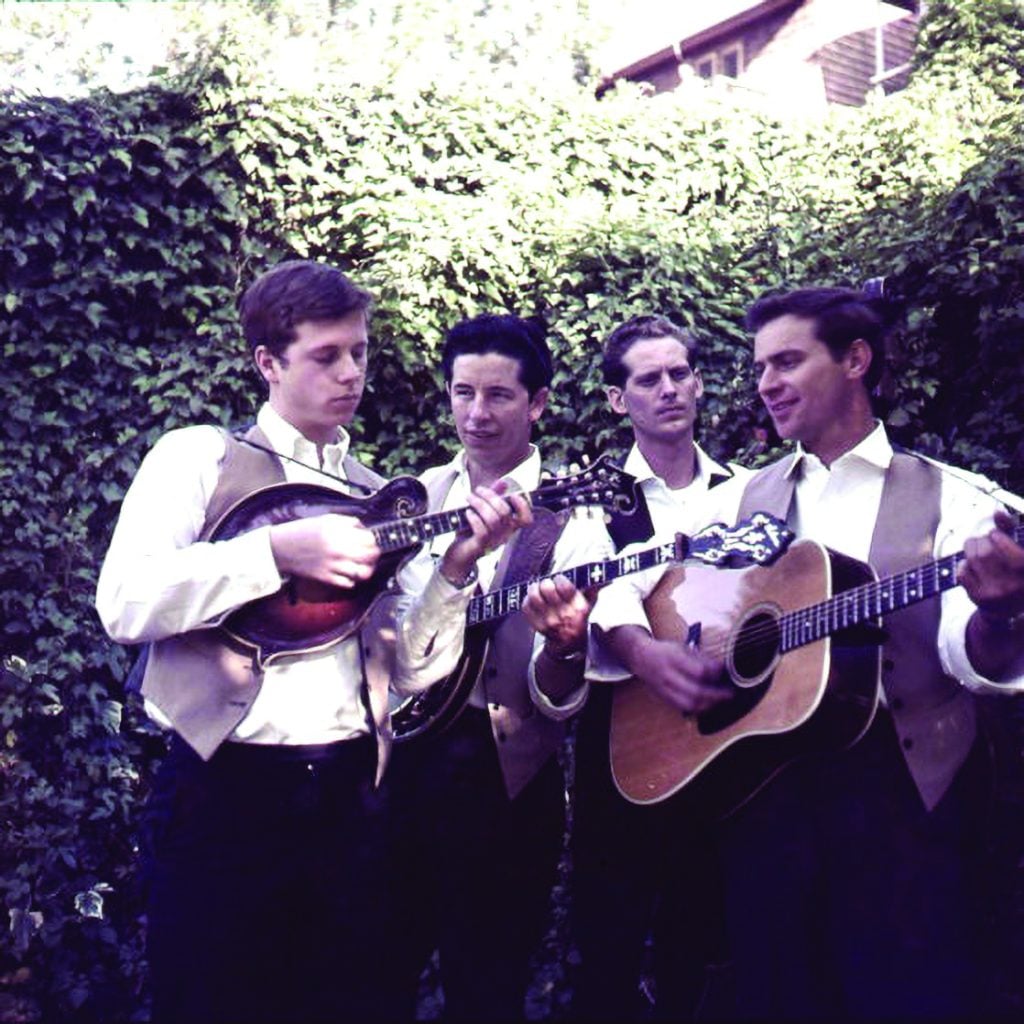
The most famous line-up of the Golden State Boys was a short-lived grouping the world knows as the Hillmen—Vern Gosdin (guitar, lead vocals), Rex Gosdin (bass, tenor vocals), Don Parmley (banjo, baritone vocals) and Chris Hillman (mandolin). This was the band that recorded the album The Hillmen in 1963-64.
Producer Jim Dickson had a deal with World Pacific Studio in Los Angeles where he could have free use of the studio late at night to rehearse and record demos on bands he was working with. He took the Golden State Boys into the studio and recorded a really good album featuring the band’s peerless vocal trios and some fresh new material.
Dickson had convinced the band to change its name to the Hillmen (not in honor of its new mandolin player, as the story is usually told), because Dickson felt it was “folkier” and more likely to appeal to a younger audience. Plus, there was the issue with Hal Poindexter and his ownership of the Golden State Boys name. It’s unclear how long the band worked as the Hillmen; I’ve seen only one notice for the band under that name, for a “Hootenanny Tonite!” show at Disneyland.
Elektra Records had the right of first refusal on Dickson’s productions, and Dickson must have felt confident as he approached the label. But Elektra president Jac Holtzman turned the record down for unknown reasons. The Hillmen was finally issued in 1969 by Together Records, a short-lived Los Angeles label started in 1969 by three partners, one of whom was former Byrds producer Gary Usher. The label lasted a couple of years and released roughly ten albums and a similar number of singles. Its only other bluegrass release was The Banjo Album by Douglas Dillard.
The album was later reissued by the Dutch record label Negram, with a previously unreleased track added, “Copper Kettle,” an ersatz folk song recently popularized by Joan Baez and the Country Gentlemen. It was next reissued in the U.S. by Sugar Hill Records in 1981, with yet another unreleased track, “Back Road Fever,” an original instrumental by Vern and Rex Gosdin.
It’s a shame the album wasn’t released in 1964, because it is a great album that might have caused fortune to smile more fondly on the band and maybe even changed the development of bluegrass in the 1960s. The band’s vocal trio was as good as any in bluegrass—Parmley was one of the all-time great baritone singers—the instrumental work was first-rate (check out the hip, driving arrangement of “Wheel Hoss”) and the material was fresh. Vern and Rex contributed two original songs, both of which have become standards, “Goin’ Up” and “Roll On, Muddy River.”
Dickson encouraged the band to broaden its repertoire and introduced them to the songs of Woody Guthrie (“Ranger’s Command”) and Bob Dylan (“Fare Thee Well” and “When the Ship Comes In.”) For what it’s worth, the Hillmen was the first bluegrass band to record a Dylan song—one year before the Dillards, three years before the Country Gentlemen and four years before Flatt and Scruggs.
The Hillmen fell apart in 1964. The gigs didn’t pay very much, no matter how many of them you played. Vern, Rex and Don all had families, and playing bluegrass just wasn’t paying the bills. Don took a job with Continental Trailways as a bus driver and played on The Beverly Hillbillies. In 1975, he started the Bluegrass Cardinals with his guitar-playing son David and mandolinist Randy Graham.
Vern and Rex Gosdin began performing as a duet and often opened shows for the Byrds. In 1966, they recorded an album with the former lead singer of the Byrds, Gene Clark with The Gosdin Brothers. The brothers signed with Capitol and cracked the country Top Forty in 1967 with “Hangin’ On”; their only LP, Sounds of Goodbye, was released in 1968, with backing from the band Nashville West, which included Clarence White and Gene Parsons. Vern re-emerged in the mid-1970s and became a country superstar so well respected he was known in the industry as “The Voice.”
Chris Hillman had an especially fruitful post-Golden State Boys career, joining the Byrds in 1964. Five years later, he formed the Flying Burrito Brothers with Gram Parsons. Subsequent ventures include Stephen Stills’ band Manassas; Souther-Hillman-Furay; a long stint in the great country group the Desert Rose Band; solo records; duet records with Herb Pedersen; records with Herb and Tony and Larry Rice; and more. Chris was inducted into the Rock & Roll Hall of Fame in 1991.
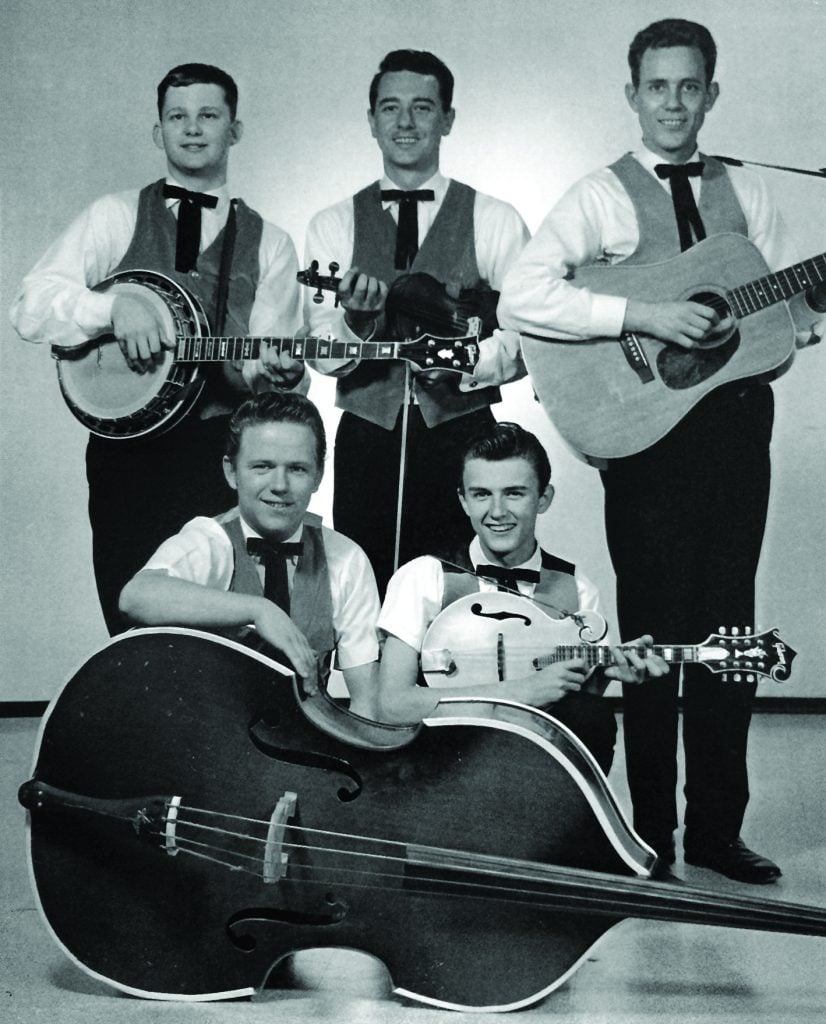
By the early spring of 1964, the Golden State Boys was a five-piece band. The line-up included Hal Poindexter (guitar and lead vocals), Bob Warford (banjo), Eric White (bass), Larry Rice (mandolin) and Bobby Slone (fiddle), returning after a few months playing with the Kentucky Colonels. Larry Rice was under-age, so he didn’t play bar gigs and the band played as a four-piece
Later that year, the Golden State Boys did a nine-day tour in Idaho, Wyoming and Oregon opening for country star Marty Robbins. But the times were tight for a bluegrass band in the mid-1960s, especially one based in California. The folk music revival that had showcased bluegrass to a national audience was mostly dead. Bluegrass festivals, the economic lifeblood of successful bands, had not yet taken hold.
Two notable later members of the Golden State Boys were guitarist/singer Del McCoury and fiddler Billy Baker (cousin of Kenny), who joined the band early in 1964. McCoury and Baker had both been working for Bill Monroe (McCoury as a Blue Grass Boy and Baker as a stand-in) and decided to stay in California after Monroe’s tour ended at the Ash Grove in Los Angeles.
They flew their wives out, and they settled in Downey. Homesickness doomed the venture, however, and the two couples headed back east after about six months. Other musicians associated with the Golden State Boys at one point or another include Tom Kuehl, Floyd Poindexter, Lee Casteen, Red Ashley, Harry Kniss and Roland White.
It was all over by 1965. Herb Rice took his family back east, settling in the Clearwater, Florida, area. Just as they had followed Herb west a decade earlier, the Poindexter brothers followed him to Florida. A 1966 item in the St. Petersburg Independent noted that the Golden State Boys, “from California,” were now based in the town of Safety Harbor.
Sixty years ago, there were two professional bluegrass bands in all of Los Angeles, the Kentucky Colonels and the Golden State Boys. The Colonels received international acclaim in their day and have attained an almost mythical status among modern bluegrass fans. The Golden State Boys never experienced that level of success and would be all-but-forgotten today if not for The Hillmen album.
Both bands had considerable influence upon later generations of bluegrassers in California and beyond. From around 1957 until 1966, the Golden State Boys (and the Blue Diamond Boys and the Hillmen) expanded the parameters of the music, being one of the first bands to look outside the bluegrass canon for material. With a few breaks, the band could have been in the vanguard of “progressive” bluegrass, West Coast kin to the Country Gentlemen. Those breaks never came for this band, but the Golden State Boys blazed a glorious trail that many would follow in the coming years.
*The quotes from Louise Rice, Hal Poindexter, Jr. and Tony Rice are taken from Still Inside: The Tony Rice Story by Tim Stafford and Caroline Wright.