Driving Down the Road of Her Dreams
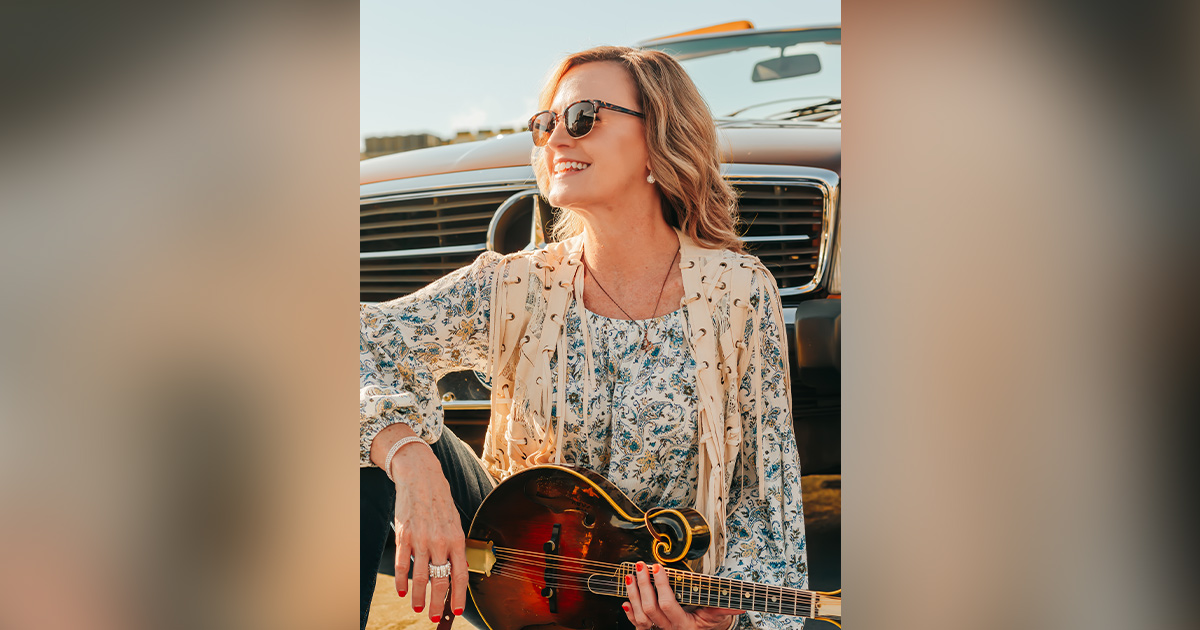
Photo by Laci Mack
Ashleigh Graham is a new source of inspiration in the bluegrass music world that has been a lifetime in the making. Originally, her desire was to follow her heart in music, but life took a detour, sending her on the practical journey of marriage and motherhood. Along the way, she battled some inner demons. A few years ago, though, she found her true self-identity, and she’s now headed down the road of her dreams with the debut bluegrass music project, I’ll Just Drive (Pinecastle Records). Landing in Bluegrass Unlimited’s Top 15 Album chart in its first month out, Graham’s 12-track collection offers a variety that taps into the well of relatable life experiences that have shaped her, but is accompanied by fun numbers that bring joy to listeners.
“I want to inspire people to be the best versions of themselves,” Graham said. “I want to tell my stories because nine times out of ten, there’s going to be somebody in the audience that shares a similar experience, and they need to know how you got through it. I wanted the album to be inspiring, and I also wanted it to be fun. I didn’t want every song to sound the same or to be only about struggles. I also wanted the album to make people smile and be drawn to turn up the volume on the open road.”
Her current single, “Soldiers of Heaven,” that she wrote with Mark Brinkman, pays tribute to her story of the hope she found in addiction recovery. “I had gone through a real tough time,” Graham tells Bluegrass Unlimited. “I was battling addiction, and being a perfectionist and an analytical thinker, I was really hard on myself. I recalled the stories in the Bible of how God used broken people to help broken people. God called many to be prophets to build his kingdom here on earth.
“Just knowing that gave me hope to press forward in the addiction recovery journey, so I wanted to pay tribute to that experience. I know that many people struggle with addictions of all forms, and I wanted them to be able to have that hope that you can still be a ‘soldier of heaven’ even though mistakes have dusted our path. What you have to do first is to put on the Armor of God. That’s where that song comes from. It comes from deep down in my soul.”
Ashleigh had wanted to share her story of addiction recovery when she released a Christian CD a few years ago, but COVID halted plans for any concerts or motivational talks. “‘Soldiers of Heaven’ gives me the opportunity to complete the 12th Step. I want to let everybody know you’re not alone, and you can get through addictions and other struggles just like I did, and these are the tools.”
Beginning Days
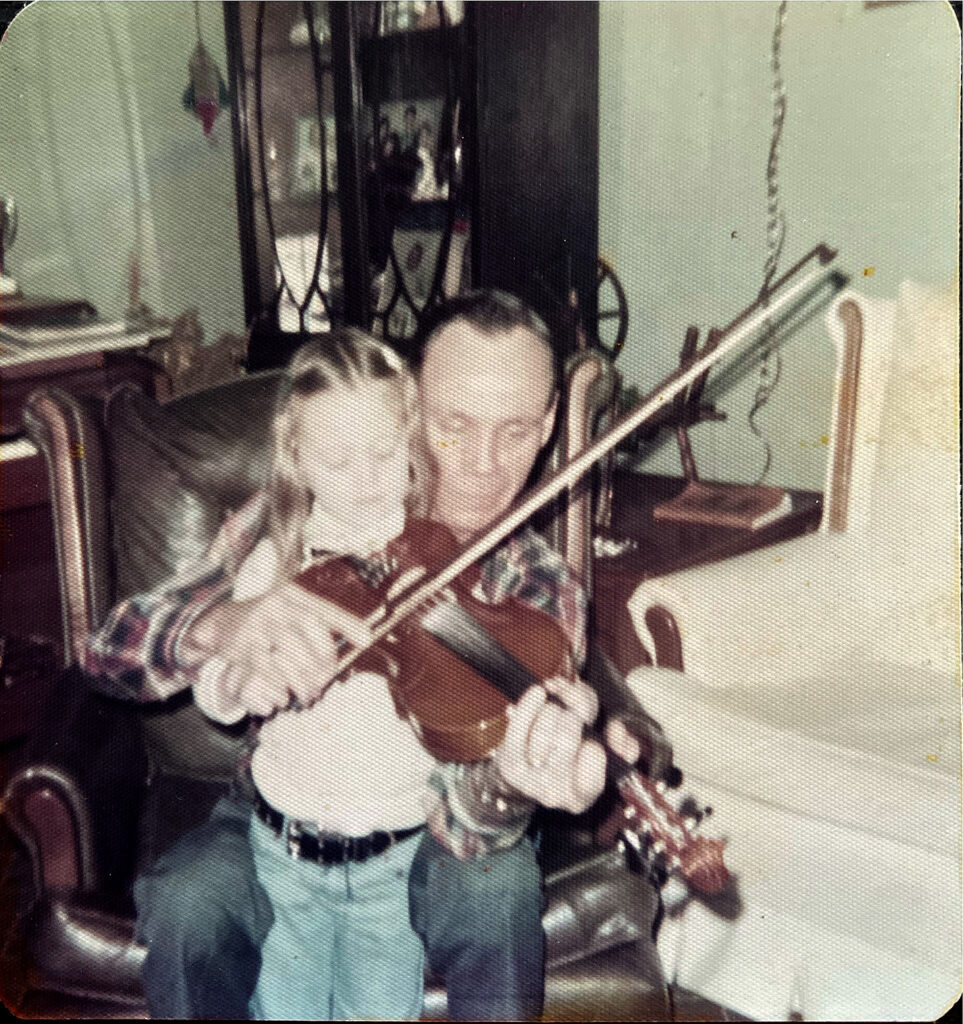
Ashleigh’s life in North Carolina began in sweet innocence with the sounds of the bow sawing across the fiddle strings. Graham grew up watching her dad play fiddle in the Muddy Creek Bluegrass Band. She still has a picture from when she was 3 or 4 years old, checking out dad’s prized instrument. “He’s holding the fiddle, and he’s holding me tight. He was so afraid that something was going to happen to that precious fiddle that he was holding on to me for dear life.”
Graham wrote a tribute to her father titled “Fiddle and Bow” for the album. In doing research for writing the song, Ashleigh asked her dad about his family history. “I knew they were poor as the sand the cotton grew in, but the thing they did have was music, and that’s what brought them together in the evening. My dad learned to play the fiddle from his dad. As my daddy got older, he developed Parkinson’s disease, so my daddy aged and the fiddle was left in the case; it’s been sitting there for years. “Some of the fondest memories I have of my dad are when he played. I would love to hear him play again, but I know that’s not going to happen again any time soon. The song is ultimately about the longing to hear Daddy play those notes with ‘Fiddle and Bow’.”
While her dad was still in a better frame of mind and memory, Ashleigh played the song for him. “My daddy said, ‘You didn’t mention my name in the song’. So I told him, You’re my daddy, that is your name in the song.”
It wasn’t the fiddle, but the banjo that Ashleigh first started learning to play at 8 years old, taking lessons from WTQR DJ Melanie Michaels in Winston Salem, North Carolina. “Melanie was a great banjo player and lover of bluegrass music, but the strings hurt my fingers, and I didn’t want to practice. We had a rented banjo, so when it came time to make the payment for the next month, my mother said, “If you’re not going to practice, we’re going to take this banjo back. I was relieved.”
In a year and with a little more maturity, the young girl was feeling left out with everyone else in the family playing in the band. She picked up the mandolin and taught herself her first song (“Woody’s Rag”). “I used one of those instruction books that had a 45 record and a booklet that went along with it. I was tickled. I could never get through that first banjo song, but with the mandolin, I had notes to follow along with, and I had the record that I could play over and over. When I learned that song, I was pretty confident that this was what I wanted to do.”
Her older brother knew Alan Bibey, who was willing to give the little girl weekly mandolin lessons. “We met in Alan’s front living room every Wednesday night for 30 minutes at a time, and he only charged me $5 a lesson. I learned a new song every week. He taught me how to do the mandolin chop, some techniques on how to hold my pick, and other things like that.”
A few years later, Graham joined with her brother and dad, playing at fiddlers’ conventions practically every Saturday night. But in high school, Ashleigh’s attention turned to cheerleading, dating, marching band, and other extracurricular activities while the bluegrass music took a back seat. Later in college, she tied the knot and raised a family, stashing her mandolin and guitar under the bed for years. Music intersected with her life through singing in church and community theater at various times over the next several years, but her muse called out to her when the pandemic hit. She branched out and tried songwriting.
“I had always thought that I didn’t have the gift to write music, and I finally said, ‘I really don’t know why I can’t write music. Let me just give it a try. At least I can prove myself right or wrong.’ I had always written poems that I hoped would eventually one day become songs. I wanted my first try to be a song that would make me laugh and hopefully others too, so I flipped through the book that I kept my poems in, and the page that contained ‘Bless Your Little Heart’ stuck out the most. It was a phrase I had always heard growing up when the ladies would gather and gossip. I always thought the phrase was complimentary and endearing. However, I learned as an adult that the phrase meant something entirely different. And that’s where ‘Bless Your Little Heart’ came from, which was the first bluegrass song that I’d ever written.”
Needless to say, with the success of that single, Graham silenced the voice of her inner critic. Her next attempt at writing was inspired by an unfortunate memory, playing “Woody’s Rag” in a 4th-grade talent show. Some of my friends made fun of me that day and for a long time after that. They called me a ‘country hick’ because of the music I loved so much. My mandolin was always there for me as I was growing up. When I had a bad day at school or when things were chaotic at home, I would just play my mandolin. I would get lost in the melodies, fretted notes, and open strings. Hence, the story behind ‘Me and My Mandolin’. It wasn’t until I was a junior and senior in high school before I ever played again in front of my friends. I was crowned Miss South Stokes in 1990, and for my talent portion of the contest, I played my mandolin and sang Alison Krauss’ ‘Here Comes Goodbye’.”
Ashleigh’s angelic voice was also influenced strongly by bluegrass music, thanks to Doyle Lawson, Alison Krauss, Rhonda Vincent, and Ricky Skaggs. “As a teenager, I used to listen to a lot of Doyle Lawson and Quick Silver. I learned to sing harmony actually by matching my voice to Doyle’s. I could at least hear the pitch. I listened to a lot of Alison Krauss. I think every young girl in bluegrass at that time wanted to be Alison Krauss. I would try really hard to sing like her. I never had any formal training. I always did what felt natural to me.
“But I do think dabbling in those different genres from church music to Broadway, especially the Broadway, helped to develop that muscle memory in your voice, and it builds up the strength in your vocal cords too. I developed my own style from that. I try not to think about my style too much because I’m afraid that if I overthink it, I’m going to stray from it.”
Graham has had to cope with the perfectionistic standards that were ingrained during childhood. “The whole time I was growing up, I heard, ‘That’s great! But, it could have been a little bit better.’ Even on spelling tests. I’d make a 98, and mom and dad would say, ‘Can’t you make a hundred?’ I know how to deal with that now.”
So, when she was recording YouTube videos during the pandemic, it wasn’t an easy task. “Through all of the YouTube videos, I would look at the clips on my phone, and I would be like, ‘Gosh, that took me 60 tries to get that right!’ But over a period of time, those ‘takes’ were less and less, so I kind of eased up on myself. ‘Ashleigh, you’ve not done this for several years; you’ve got to cut yourself some slack. ’”
Graham adapted for the recording of her new album with a lot of preparation before going into the studio. “I’m able to get that vocal map, so to speak, at home before I ever go into the studio. I pre-plan how and where to build the song and how I want the song to feel. Vocally, [I’ll do] three takes through the song, and I’ll go all the way through. I don’t like taking one verse at a time. I don’t like chopping it up because to me, that takes the emotion and the feeling out of it. If you really want to relay a message from a song to an audience or a listener, you’ve got to feel what you’re singing.
“I’m a perfectionist to a point where I like to be prepared so that my time is used most efficiently in the studio because I know that if I’m not prepared and you mess up over and over and over, you don’t ever get a really good take, and that’s going to deplete your confidence, and then you’re going to go backwards instead of forward.
Authentic Unlimited’s Stephen Burwell and Eli Johnston, who produced Graham’s album, kept her momentum going. “Stephen was a great encouragement. He would say, ‘I wish every vocalist that came in here knew pitch the way you do.’
Her long-awaited introduction to the bluegrass world pleases Graham tremendously. “Sometimes I can’t believe I’m finally listening to this project that has been 20, 30 years in the making, and it makes me feel really emotional. So, yeah, it’s a big deal!”
In speaking about the variety of tracks on I’ll Just Drive, “In watching American Idol and listening to Simon Cowell’s critique of artists, I remember him saying, ‘You’re a great singer, but we don’t know who you are. You need to pick a lane and stay in it.’ I feel like with this album, I’ve picked a multi-lane expressway. At my roots, I know I want the foundation to be bluegrass, but I don’t want every track to sound the same. I don’t want this debut album to pigeonhole me in one specific subgenre.”
The album includes a mainstream Christian number, “Life of Jesus,” the fun cover song, “Head Over High Heels,” and a mixture of other tunes, seven of which were written or co-written by Graham. She was also thrilled to enlist the talents of award-winning bluegrass singer Russell Moore on “Who We Were Back Then.” She was reluctant to even ask him, but Laci Mack of Laci Mack Photography, who did all the photos for the album, encouraged her to go for it. “I told Laci that I wanted to have a duet partner that sounds good with me, but I don’t know how far in the stars I can reach, and she said, ‘Ashleigh, the sky’s the limit.’ I thought, ‘My gosh, Russell Moore, he doesn’t even know who I am. Why would he ever do a song with me? So, again, I’m fighting that inner battle that I have with myself. I’m not good enough.”
Thankfully, Russell thought she was definitely good enough. “I got a text message from Russell Moore, and he said he loved the song. He was very complimentary of my voice. He said, ‘Why don’t you sing the first half and the first chorus by yourself, and then I’ll join you and sing harmony on the second verse and the last chorus. His voice is unmistakable. He doesn’t have to sing lead on any song to know that Russell Moore is singing with you. That one will go down in the history books for me for sure! I’ll never second-guess myself again, and I’ll always start with the top.”
Graham is touring in support of her new music with her band Appalachian Highway. Scott Patrick, who wrote the album’s title track “I’ll Just Drive” and co-wrote three other songs, is the guitarist. “Scott shares some time with me on lead vocal, and he’s a fantastic songwriter, exceptional guitar player, and arranger of music.”
Ethan Handy plays banjo for the band. “He’s the youngster of the bunch. He’s one of the best up-and-coming banjo players that I’ve heard in a long time.” Bassist Jerry McMillan, “the legend in the band,” was one of the founders of the Lonesome River Band. “He’s got a great voice. He can take over some of the lead vocal for me where I’m not constantly singing. I want it to be a band. I want it to be a team effort. I don’t want to sing every song. I also like to sing harmony, and this gives me the opportunity to do that as well.”
Ashleigh’s sights are set now on building a faithful following of fans through touring and radio. “My main goal in this musical journey is to inspire and uplift folks who come out to see shows. Everyone has things they struggle with day to day, and they come to the theaters and music venues to escape for a time. Secondly, I’d love to have the 2026 tour planned by the end of the year, and to be able to go into some areas that we’ve never been to before and to ultimately reach a broader audience. There are a lot of radio stations here in the US and across the pond that are playing our music right now, and I’m grateful for that. All in all, playing bluegrass music is fun, and when we do it together along with our audiences, it’s even better.