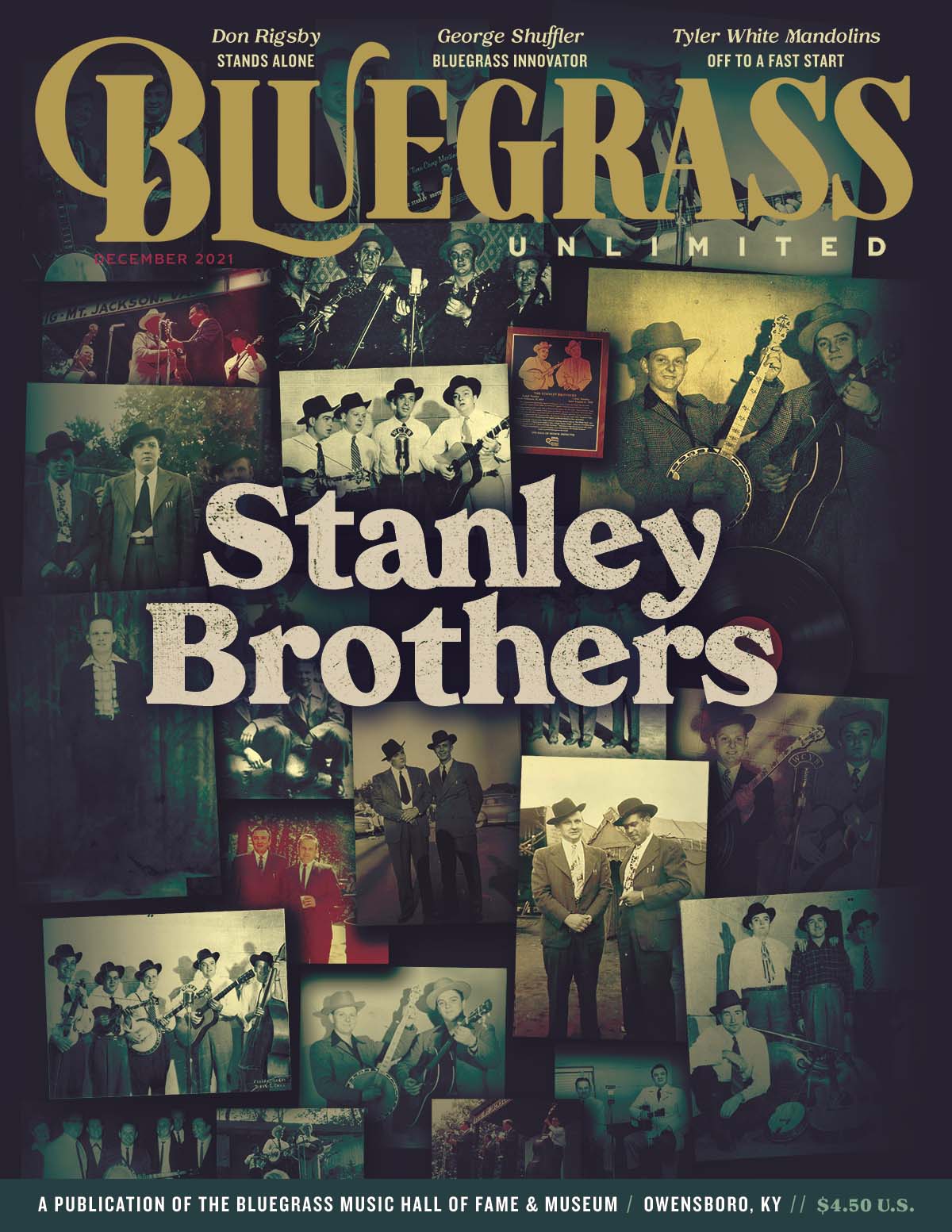
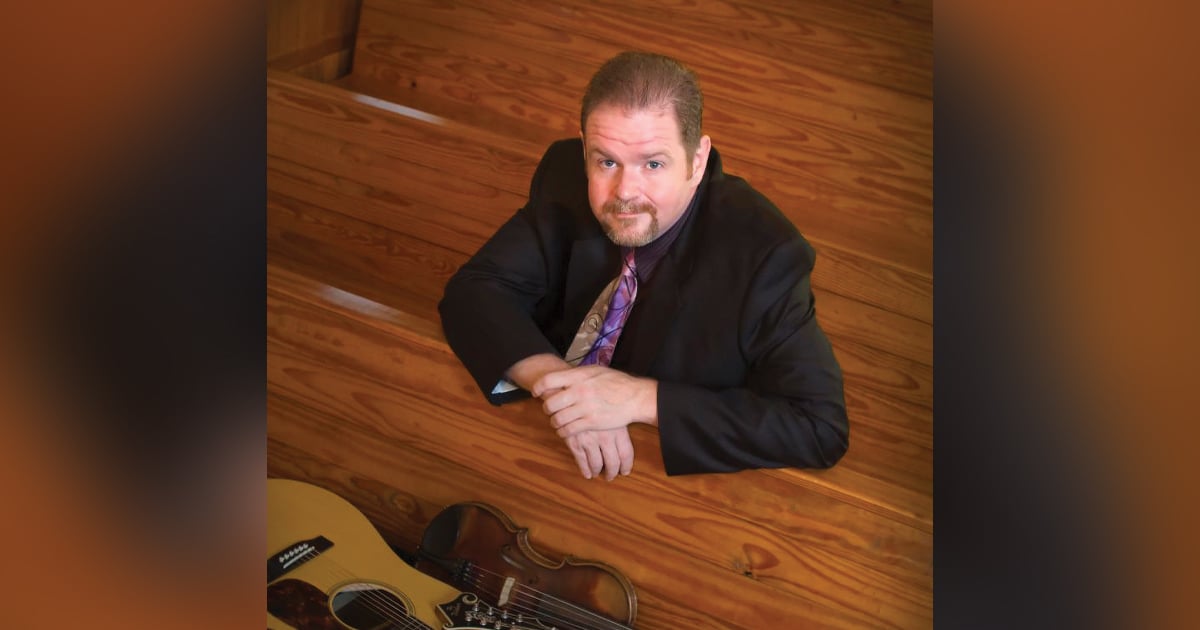
Don Rigsby Stands Alone
Bluegrass veteran Don Rigsby’s reputation speaks for itself. The award-winning musician has been a member of top bluegrass music groups including The Bluegrass Cardinals, JD Crowe and The New South, and the Lonesome River Band. A two-time Grammy nominee, Rigsby has won two SPBGMA “Traditional Male Vocalist of the Year” awards, multiple IBMA trophies, and contributed vocals to a Grammy-winning album by rocker John Fogerty.
In recent years he has been dividing his time in a variety of band configurations like the Band of Ruhks and Flashback. While he hopes more dates will open up with those bands, Rigsby has decided he needs to hone in on his solo work.
“There’s no animosity, no hard feelings, no ill will amongst any of us, but we’ve all come to the conclusion that for the time being it’s best to focus on things that we have some measure of control over,” Rigsby said in an interview near Grayson Lake close to his home county. “You can’t say we’re not going to take any dates ourselves because we might get a date with Band of Ruhks or Flashback. I can’t afford to do that. In this kind of economy and with the nature of the music business now, I’ve come to the conclusion I probably need to ramp up my long game and kick it up a notch as far as trying to do solo work.”
He starts that renewed effort with a new single, “These Days I Stand Alone” that he co-wrote with singer/songwriter Billy Droze, the head of Rigsby’s new label home RBR Entertainment. It speaks on a personal level about his desire to be independent.
I’m learning now to love me after depending on someone else
For the first time in my life I’ve stepped aside and let things go
Besides the good Lord and this mandolin these days I stand alone
“Standing alone except my mandolin and the Lord, that’s a pretty good summation of things,” Rigsby explains. “I’ve had a lot of ups and downs and personal struggles in my life. I lost my mother and father about five years apart. [I’ve had] shaky work opportunities. I never went without. I’ve always somehow or another—I know it’s God’s blessing—have had something that has come through to bail me out when I’ve been on the verge of losing something. I had a divorce. Just a lot of rocky things in life. Life’s not easy, and nobody promised you it would be. All God said is He would be with you, and that’s good enough. That’s the little bit of hope that we all need that there is a hereafter and that God’s love is the means to getting there. The end is the not the end. The end is actually the beginning. Chapter one. You just flip the page and move on through the rest of the book.”
Part of his earthly struggles included the pandemic that hit everybody hard in the music world, but in the midst of that storm came a bright rainbow. “The pandemic has been dreadful for everybody. I drew a little bit of unemployment. If it hadn’t of been for that, I would have been in a mess too. Throughout all that, you see, I got a day job again. It’s proved to be one of the most rewarding things that I’ve ever gotten myself involved in.”
The Isonville, KY native landed a job as Director of the Mountain Movers Music Company, part of Addiction Recovery Care (ARC), teaching musical skills to people whose lives have been taken over by drugs. His longtime friend and fellow musician, Rick May, helped him secure the job along with the company’s CEO Tim Robinson. “His belief in the power of the arts and his love for old time mountain music is the nexus of why we are doing the Crisis to Career initiative to start with,” Rigsby adds. “The best part of it is we take these people who are in the lowest spot in their life and give them a little bit of hope about making a recovery and using music as a coping skill to beat addiction and avoid returning to addictive behaviors. It’s really remarkable how these things tend to fall in your lap. I wasn’t looking for this kind of job.”
Unknowingly, though, his experiences on life’s highway had been preparing him for his new role. “In my travels in the music industry, I have encountered a lot of addictive behavior and a lot of people who were just on the verge of losing their life and losing everything they had worked for. A lot of talented people who have demons inside of them that seem to overpower them. I’ve had my fair share of them too. I never turned to drugs or alcohol, but I’ve had to fight multiple other things. It doesn’t make people that have that kind of stuff going on in their life bad people. It makes them troubled. I don’t judge anybody on first impressions. Everybody starts off with me on a blank slate, and where you go from there is kind of up to you.
“I had some people in my band at one time that were in really bad shape, and I had to let them go because of it. I’ve always wondered, ‘What more could I have done to help them?’ If I had kept them around, it would have destroyed everything that I was working for. But I always felt like I kind of let them down and kind of passed the buck by turning them out.
“I’ve been with this company for a year now, and I’ve learned there’s a few things that are true. One of them is addicts will lie to you, and they’ll try to put themselves in the most favorable light possible. Specifically, they haven’t come to grips with the fact that lies don’t work. Another thing that I’ve figured out is I can’t take home every puppy that I find alongside the road that needs a home. I can try to help them, and that’s what I try to do.”
People in the recovery journey at ARC may train to be a sound engineer, lighting technician, songwriter, song publisher and develop skills in graphic design, social media and other areas related to the music business. Based out of Louisa, KY, the Christian Bible-based program has a remarkable 81% success rate with people fighting addiction. “It’s amazing to see how many people are awakened to Christ through solving their problems with addiction,” says Rigsby, a devout Christian. “It’s a blessing to me. I’m sitting here a little overcome by it. People are hurting all over this country for a variety of reasons. We just want to help people. There are no two that are alike, and there are none that are forgotten, not by us. Through this same company I teach music to grade school kids one day a week too. I never fancied myself as a teacher. I used to do a little of it in college, but teaching has become, I guess, my main stay at this point.”
Still, making music is Rigsby’s passionate pursuit. He’s currently working on a new album that he expects to come out in the spring of 2022. So far, the CD includes a beautiful gospel song called, “When Jesus Calls My Name” that he wrote with Droze one night in Nashville and the patriotic number, “Divided We Fall.” The talented tenor and mandolinist is trying a variety of material.
“We’re going to throw some spaghetti against the wall and see what sticks,” Rigsby said. “I’ve always tried to find good material be it classics or obscure pieces or new things. I’ve been doing a good deal of writing myself. He’s [Droze] got great ideas. He’s younger than I am by a few years. He’s got some fresh thoughts about arrangements. I’m still old school, moldy fig kind of guy. It’s kind of cool to mix it up and see what we can come up with like that. I think with Billy being involved in it, it gives me a chance to stretch my legs a little bit and maybe do some things that are a little bit more contemporary.”
Rigsby also says he’s opening his mind to some different business approaches to the music. “I’ve seen that the business has changed a ton since I started all those years ago. It’s a singles-based business now. Radio is an important part of what we do, maybe the most important part. People aren’t buying albums for the most part. We’re going to make them, but for the most part people buy a song and download it. We’re a little bit behind the times because our fan base is somewhat older. That’s why we’ll continue to make discs and try to find other means of selling the music. It’s hard to make any money off sales now anyway.”
While Rigsby is up for the challenge, he wonders about some of the marketing changes in today’s music business. “I’ve never understood why anybody would publish their music for free on YouTube, Pandora and all those places because if you can get it for free, why do you want to buy it? Ralph Stanley was one of my mentors, and he always told me if you’re going to give something away nobody will want to buy it, and that’s the truth.”
Ralph Stanley, The Mentor
Stanley had a huge influence on Rigsby who first became acquainted with the Hall of Famer thanks to his dad. “My dad was a huge Ralph Stanley and Stanley Brothers fan. When I was about four or five years old my dad went to a flea market, maybe 40 minutes from the house, and came back home with an 8-track bootleg tape of Ralph Stanley. It was his Hills of Home project from 1969 that had Larry Sparks, Curly Ray Cline. One of the things that moved me as a little boy was his voice, the way he spoke so softly. He did the recitation about his brother passing away on the Hills of Home, ‘Let Me Rest On A Peaceful Mountain.’ I would play that over and over and over again. It also had on it a couple of Stanley Brothers songs, and one of them was ‘A Few More Years’ and the other one, which was the magic one for me, was ‘Little Maggie.’ To me—and I’ve told everybody who cares to hear this—that recording from 1960 was the most perfect recording of Ralph’s career. It’s as good as anything anybody ever recorded. Ralph was playing a flathead banjo on this particular cut. It was absolutely the perfect tempo. His pitch was perfect. The fiddle was perfect. It’s perfect and it’s lonesome and mournful. It will cut you plain to the bone. If it don’t, you don’t have a bone. That song and the recitation had me from there on out.”
As a treat for his sixth birthday, Rigsby’s parents took him to Paramount Arts Center in Ashland, KY, to see Stanley perform with his Clinch Mountain Boys which at that time featured Keith Whitley singing lead. “He was from Sandy Hook, which is 5 to 10 minutes from my house. My dad knew Keith, and he talked to him out of my sight without me knowing it and said, ‘It’s this boy’s birthday, and he would like to meet Ralph Stanley.’ Keith said he could take care of that.
“We’re all sitting out there before the show in the audience like seven or eight rows back, and here comes Keith. He’s got his suit and tie on. He bent down and looked at me and said, ‘Is this the boy that wants to meet Ralph Stanley?’ He said, ‘Do you want to go meet him?’ And I was awestruck, and I shook my head yeah. He picked me up and put me on his shoulders and carried me backstage to meet Ralph. He talked to me and was so gentle and good to me and asked me what I wanted to hear. I told him I wanted to hear two songs. He said, ‘It is your birthday.’ And he did both of them, and he dedicated them to me from the stage that night. I never forgot that. He never forgot me, and I never forgot him. We were friends ever since.”
In 2013 Rigsby released the critically-acclaimed Doctor’s Orders in tribute to Stanley. “I think maybe I stymied myself a little bit because that was successful, but that came along right at the time when we were trying to get things going with the Band of Ruhks. If I had been free to take all the dates that I might have gotten based on the hits from that, I might have been better off financially. But it is what it is. It’s all a series of decisions that we make, and they’re not all good decisions, but I wouldn’t take it back for that time I had to spend with my brothers, Ronnie, Kenny, and all the people we encountered. That was great character building and memories I’ll always have with me no matter what happens.”
Growing up in rural Isonville, KY, Rigsby’s DNA runs rich with that kind of traditional bluegrass music. He wants to continue to preserve it, but he’s a realist and knows bluegrass music must evolve somewhat over time. “I’m not the anti-modernization of anything. I know that the only thing that doesn’t change is that things change. Sometimes when we’re in a big hurry to make improvements, I think we have a tendency maybe to throw the baby out with the bath water. We’ve had some changes that have come along in the past, but bluegrass kind of had a form to it. We don’t need to take away too much from it, and we sure don’t need to add a whole lot because it’s good right like it is. People, I guess they’re looking for anywhere to find a home, and we’re hospitable folks but what winds up happening sometimes, I think, is we accept too much new stuff and throw away too much old stuff. Then, we wind up with something that’s unidentifiable.”
The Future
The esteemed player has given his time as a sideman for several prestigious bluegrass groups, but he has been hesitant to put together his own band. He was postponing the move because he was still trying to do Longview dates, Lonesome River Band reunions, and other notable gigs. But now the modest musician is ready to stand front and center with his own band. “I’ve been doing this for a while. I’ve had great opportunities. I’ve performed all over the world with about everybody I had any desire to sing or play with. I might be thinking too lofty, but I’d like to think people know who I am. My reputation, I like to think, is pretty good.
“I’ve got a good band now. I’ve got Elmer Burchett playing banjo for me, Colby Laney playing guitar, Tim Corbett playing bass, my cousin, Jonathan Rigsby playing fiddle/claw hammer banjo/harmonica, and we all sing. It’s probably the best band I’ve ever had overall. It’s a solid band every way you can look at it. There’s no weak links.
“I’d like to think if we get out and perform enough and people have the opportunity to see us that we’ll be in demand enough to play some. With my job, I can’t go out and play 150 dates a year. I don’t think I ever wanted to do that anyway, but I’d like to play 30-40 times a year with this band. I hope people like my new music enough to generate interest in the old music, and we can perform a little bit of all of it for them and go wherever it makes sense to go.”
With more than 37 years in the bluegrass music business, Don Rigsby is continues to successfully survive what at times can be a rocky ride. With all the bumps and bruises along the musical road, though, it’s the joy of performing for the fans that keeps the drive going. “The pandemic has been hard for everybody, and I’m no exception to that. But I never gave up. I’m still here plugging away. We’re going to try to get out and visit with the folks and perform. That’s the meat and potatoes for what makes us tick as people. People that play music are a curious lot anyway. It’s not all about the money, but it is some about the money. If it makes dollars, then it will make sense.
“I’m rich in so many ways. For one, I’ve got the love of the Lord, and that’s the main thing at the end of the day. I’ve got beautiful kids. My son has taken up playing now. My daughter is in her third year of nursing school and is a wonderful singer. I’ve got a lot to be happy about.”