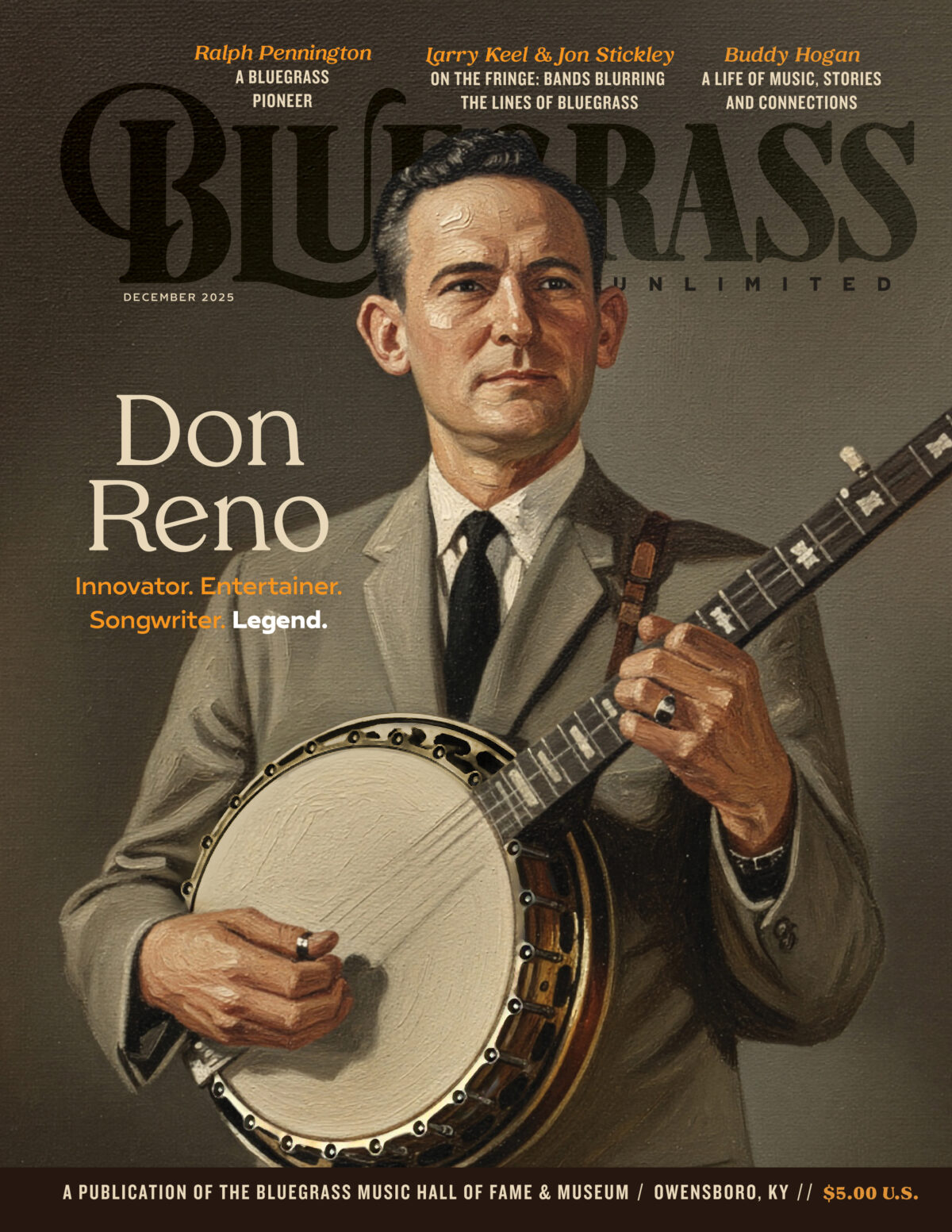
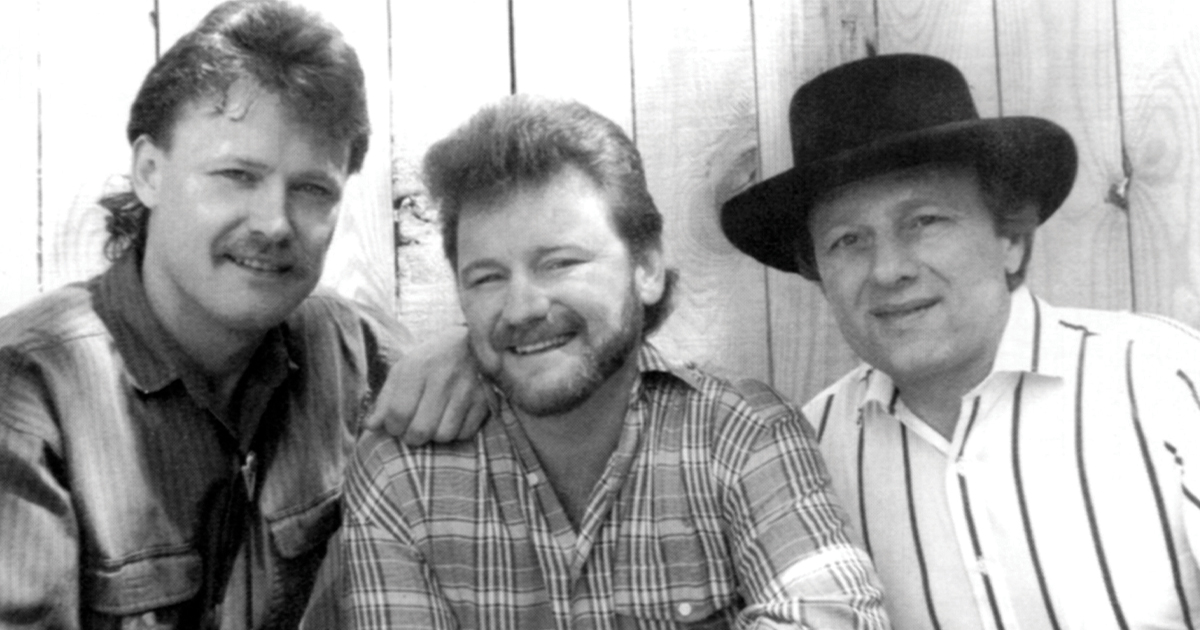
Don Reno’s Sons Ronnie, Don Wayne and Dale Remember Their Dad as Both a Man and a Musician
In Dan Miller’s wonderful and thorough retrospective article on Don Reno found elsewhere in this edition of BU, he gets into the music side of this amazing IBMA Hall of Fame artist.
Here, after wonderful interviews with his sons, Ronnie, Don Wayne, and Dale Reno, I try to unveil Don Reno as a man and human being.
Ronnie was the oldest of Reno’s three sons and the brother of three sisters as well. Being the elder brother, he was the first to perform with his father, and he got to see firsthand the rise of his Dad’s career after the elder Reno’s time overseas as a soldier during World War II.
“I was born in Buffalo, South Carolina, in 1947,” said Ronnie Reno. “My Dad did not talk much about his time in the war to me, but he was right in the thick of things. I do know that he fought on the Burma Road over in China. He talked briefly about being in a foxhole and how that was not a pleasant place to be when there was some action going on. He just didn’t talk about it often. But, he did have a pet monkey over there, and it used to ride around on the mule that he rode as a member of Merrill’s Marauders special operations unit, and he would cut that monkey’s hair. Dad was a good barber. I don’t know where he learned how to do it, but he used to cut everybody’s hair, and he used those old hand clippers to do it. But overall, he didn’t want to talk much about the war, and I just didn’t want to press him on it.”
As the now-famous story is told, Don Reno was a well-accomplished musician by the time he was a teenager, and when Bill Monroe asked him to be in his band in 1943, Reno headed into the military instead. While Reno was overseas, Earl Scruggs joined the Blue Grass Boys in 1945, and the rest, as they say, is history, as Scruggs became an icon of the American roots music world, especially with his work with Flatt and Scruggs and the Foggy Mountain Boys.
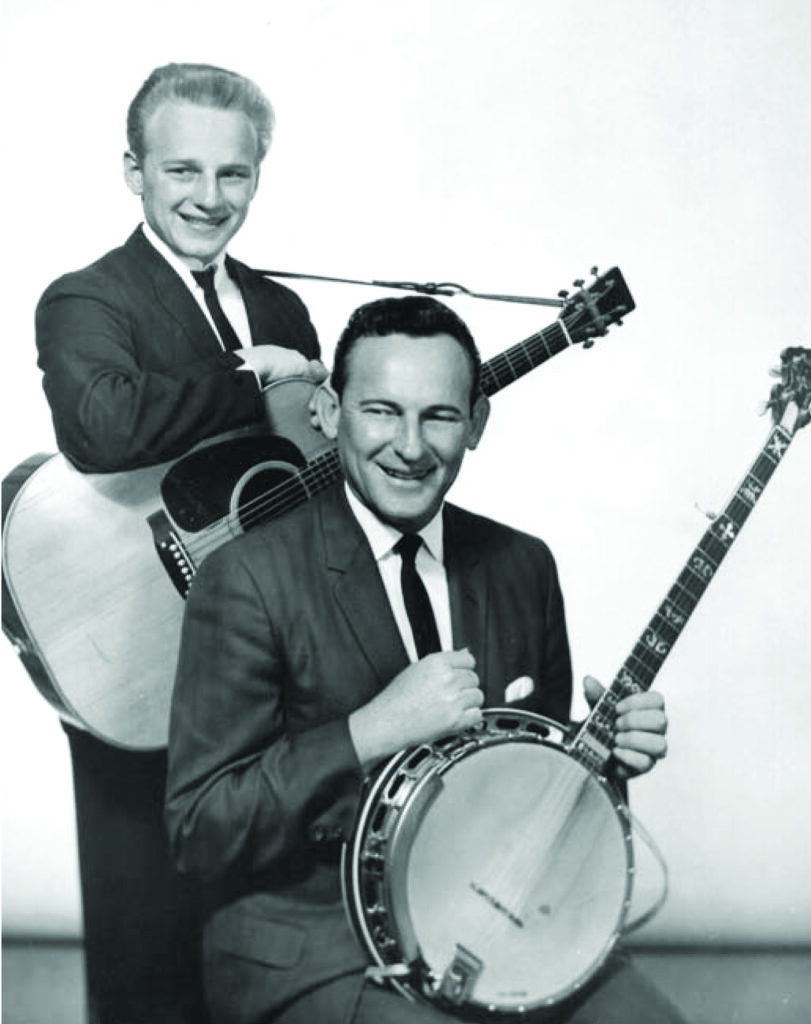
So, my question is: did Earl Scruggs and Don Reno get along with each other, or were they rivals? “My Dad and Earl got along wonderfully,” said Ronnie Reno. “They were very good friends. You see, everybody got along with Reno and Smiley. While some of the other bands were having various little conflicts or dealt with jealousy or whatever it was at the time, that did not happen with Reno and Smiley. They got along with everybody. Everybody in the bluegrass genre loved Dad and Red Smiley because they were sort of equalizers, yet they did their own thing. Bill Monroe would come by and eat breakfast with us. I’ll put it this way: Dad and Red’s egos were not bigger than who they would be talking to, and Earl and my Dad had a great relationship.
“Reno and Smiley would do shows with Lester and Earl, and they would play twin banjo tunes with each other,” continues Ronnie Reno. “We were around them a lot when we were in Richmond. Uncle Josh Graves and I were wonderful friends when I was a kid. We would do shows together with Lester and Earl in parks up in Rising Sun, Maryland, and at the New River Ranch, and Dad would come out and they’d do banjo duets together. They were not rivals. They were musicians with a common goal.”
Having a father that is a famous musician can be a positive thing when it comes to their kids who want to follow in their footsteps, or it can bring pressure and high expectations, depending on the approach. “As the years went on, he would get stressed a little because of getting older in age, but other than that, Dad was a very positive person all of the time,” said Ronnie Reno. “He had a lot of confidence in his ability and his musicianship, and he accepted life that way. When it came to me as a kid, he didn’t press it. He might leave his instruments lying around at times, and once we got a taste of it, we wanted to learn more and more about playing music. He would put us onstage, and once that adrenaline hits you and you felt that energy from the applause of the crowd, or even if it was somebody you knew in the audience who would smile and were happy when they saw us up there playing; once we got that bug, we decided that we should get better at it. That was the way he handled it, as, of course, Dad was there to show us anything we wanted to know about playing because he could do it all himself. He could play any stringed instrument he put his hands on. He was a great musician, and he loved to play.”
For Reno and Smiley, and later on with Bill Harrell, they rode with the waves of the changing times of the bluegrass genre. They hosted local TV shows, both at 6:30 in the morning at one point and in the afternoon in other years. They would set up a base of operations in a town and create a regional touring operation around it, and they became a part of the bluegrass festival circuit when that phenomenon appeared in the mid-1960s.
Back in the late 1940s, however, Don Reno spent a lot of time in Nashville, where he met a lot of talented people in the music business. “He made a lot of friends in Nashville then,” said Ronnie Reno. “Minnie Pearl was a dear friend. Tex Ritter was a dear friend. Ray Price was a very good friend, and Johnny Cash was a great friend to Dad. At one point, Ernest Tubb wanted him to join his band and play the electric guitar. Guitarist Hank Garland and my Dad were both from Spartanburg, South Carolina, and they played twin guitars together constantly in Nashville when Dad was there with Bill Monroe. Dad could twin any instrument, playing the second part to whatever anybody else was doing. It didn’t make any difference as to the situation. And yes, Dad owned some electric guitars and was a fine electric player. I have a picture of him playing with Carl Perkins. Reno and Smiley used to do tours with Buck Owens, Faron Young, and Carl Perkins, and Dad would play the electric guitar with them when he and Red were not doing their part of the show. Dad learned all of that from Arthur Smith, who recorded the first million-selling instrumental record called ‘Guitar Boogie.’ My Dad played on the original version of that song.”
Don Reno also enjoyed spending time in the great outdoors and collecting antique cars. “Dad loved to fish, and at one time, we had about 36 A-Model and T-Model antique cars,” said Ronnie Reno. “We had a bunch of them, and I used to wax them up. I remember when he bought a 1931 convertible touring car. Dad found it in an old man’s barn in the late 1950s or early 1960s when he went fishing somewhere near Clifton Forge, Virginia, and he bought it for $600. He brought it back to our shop, and it was Navy blue with pinstripes on it, and it looked brand new by the time I was done waxing it. Then, he went and sold it for $1200, and he thought that he had made the darndest deal that you had ever seen. He had doubled his money, yet I’d give anything to have that old touring car right now.”
Dale Reno was born in 1961, and Don Wayne Reno was born in 1963, which brought a different era’s approach to their music and to their time playing with their famous father. For Dale Reno, he was amazed at an early age at the success his father had already accumulated as a bluegrass star. “My Dad was a very fascinating man,” said Dale Reno. “I’m saying that not so much as a son talking about his dad, but instead more as a person watching how this man got through life. He was a very funny comedian who kept people laughing, and he was a prankster as well. He liked to pull pranks, and he just loved to mess with you. As our friend Earl Younger said about him, ‘When Reno was awake, that meant everybody was awake.’ If he caught you sleeping, that meant that you would get broom sticked under the nose or something similar, and he would just laugh. My Dad laughed the most of any man that I had ever seen. But, around the house, when I was growing up, Dad was a busy man when he was at home. He would write songs, and he liked to go to the grocery store and stock up on goods. He had a miniature grocery store set up down in our basement where he would stock up enough food for the winter. He’d buy loads of canned goods and coffee, and he really liked to do that kind of project. That probably came from his early days growing up on a farm in South Carolina and later in North Carolina.”
As far as where Don Reno learned how to cut hair, even Dale is not sure where that all started. “I do know that when he was in the war over in China, he was in charge of giving out haircuts and grooming people when they needed it,” said Dale Reno. “Later on, I remember Bill Monroe coming around and saying, ‘Hey Don, I need a haircut.’ My dad carried his barber tools with him every time he went on the road, and Bill liked the way he cut his hair. ‘Hey Don, you got your barber tools with you?’ ‘Yeah. Just come on over.’ Sonny Osborne told that story many times about the hippy that wandered into their camp by their bus at a music festival and passed out cold with his hair down past his shoulders. Sonny reportedly said, ‘That ole boy looks like he could use a haircut.’ So, my dad got on his bus, brought back his barber tools, and gave him a nice, beautiful haircut, although really short. The guy woke up and walked off, didn’t say a word, and they never saw him again.”
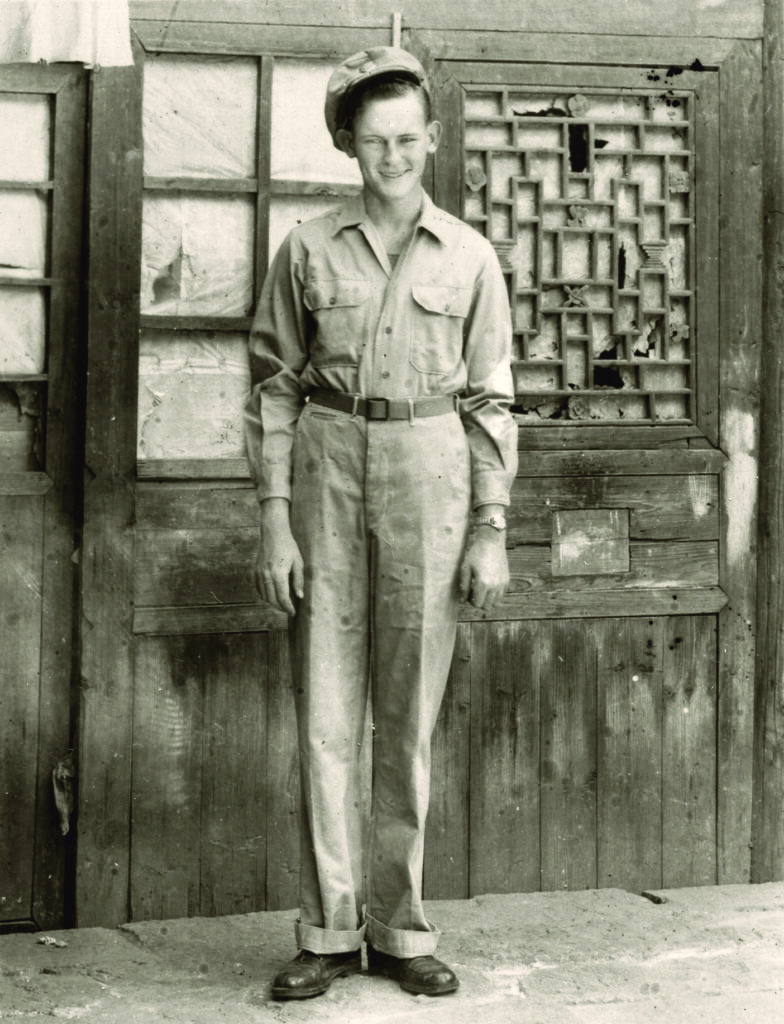
With World War II now two decades in the distance, Reno seemed to open up more about his experiences with his younger kids. “After Dad got back from the war, he and his brother ran a grocery store, and they had a little barbershop in the back of it,” said Dale Reno. “The truth is, Dad was affected quite a bit by the war. He volunteered because his older brother Harley got drafted, and he wanted to go with him. He ended up with a military outfit known as Merrill’s Marauders, which was a Special Operations unit made up of three thousand or so volunteers. They went behind enemy lines to fight the Japanese and try and open up the Burma Road in China. Dad said they marched 800 miles up the road and then marched 500 miles back while fighting the elite Imperial Japanese Army the whole way. So, he is a hero.”
Of the original 2,997 Merrill’s Marauders that entered the war in China on a volunteer basis, only 130 combat-able soldiers were left by the end of the war, and Don Reno was one of them. As the war came to a close, all of the troops’ horses were dead, and only 41 out of the 700 mules they brought with them survived. Reno’s fellow soldiers died from wounds and a myriad of ugly diseases such as cerebral malaria, amoebic dysentery, and scrub typhus.
“The one thing that he said turned his hair white was when he saw a snake that looked like it must have been 50-foot long, and he said that it scared him to death,” said Dale Reno. “I’m guessing that he saw a Burmese python that day. Back in North Carolina, where he grew up, the snakes are maybe two, three, or four feet long, so I imagine a fifty-footer would scare you. He also said he got involved with some hand-to-hand combat where a Japanese soldier hit him with the butt of his rifle and knocked his jaw out of its socket, yet he still had to keep fighting with that broken jaw to stay alive. After he dispatched the Japanese soldier, he went to the medic and said, ‘Well, I guess I’m getting out of here with this jaw hanging off of me like this.’ He said the medic told him, ‘Let me see what’s wrong with you, Reno,’ and he grabbed the jaw and jerked it back into place, and Dad said he about jumped up to the top of a coconut tree because of the pain. The medic told him then to get back out there because they needed him, and off he went.”
Don Reno experienced some of the worst combat conditions in all of World War II, and he did not come away unscathed. “He marched mile after mile in the hot jungle and fought and killed many an enemy soldier, got shot, got malaria really bad, and he dealt with the survivor’s guilt of being one of less than two hundred soldiers out of 3,000 that made it back,” said Dale Reno. “All of that combined together affected a lot of guys who fought over there. According to my Aunt Carrie, his sister, after my Dad came home from the war, he didn’t play a musical instrument for six months. He didn’t think that he would play music ever again. Then, one day, he decided to get his guitar, and he pulled it out from under the bed. He played a few chords on it and asked his sister, ‘Hey Carrie, how did that sound?’ She said, ‘That sounded real good, Don. It sounded wonderful.’”
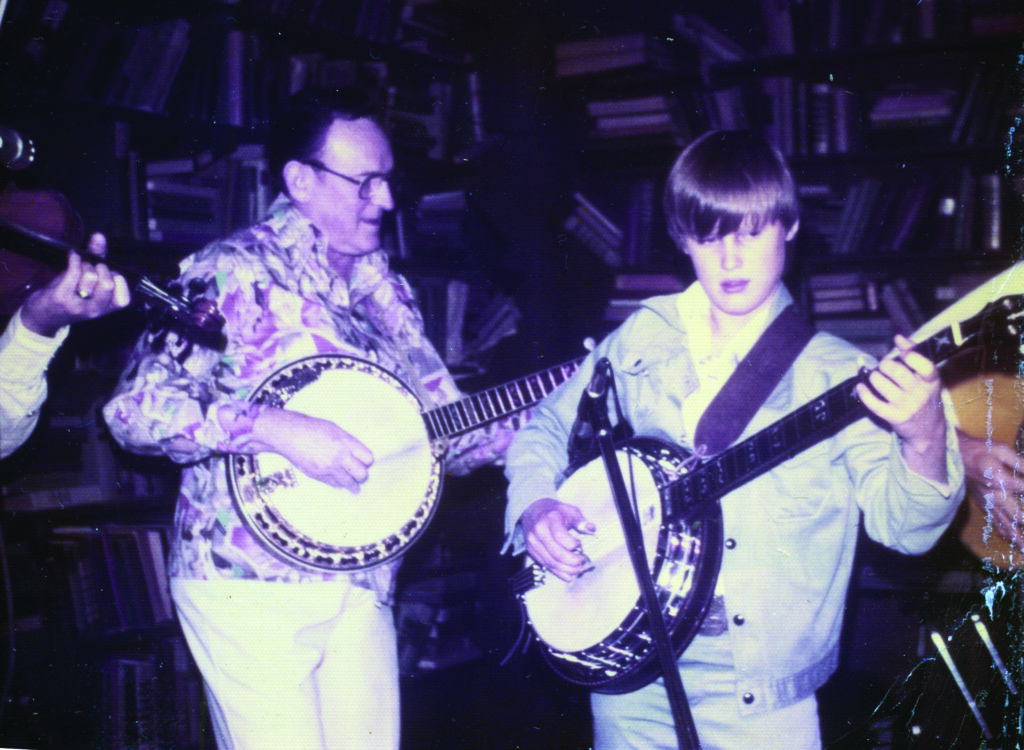
Youngest son Don Wayne Reno began playing with his dad when they lived in the Washington D.C. area. At that time, Don Reno, Bill Harrell, and Red Smiley were all playing together in the group. For Don Wayne Reno, it was a matter of waiting until he was ready to play at a high level before he would be brought up to pick some tunes onstage at the clubs.
As Don Wayne grew up, of course, he became a top-of-the-line musician that toured the world with the band Hayseed Dixie, which included his brother Dale Reno. Playing hard rock songs by bands such as AC/DC in the bluegrass style, the group began in the year 2000 and peaked out when it performed before about 150,000 people at the Glastonbury Festival in the UK in 2005.
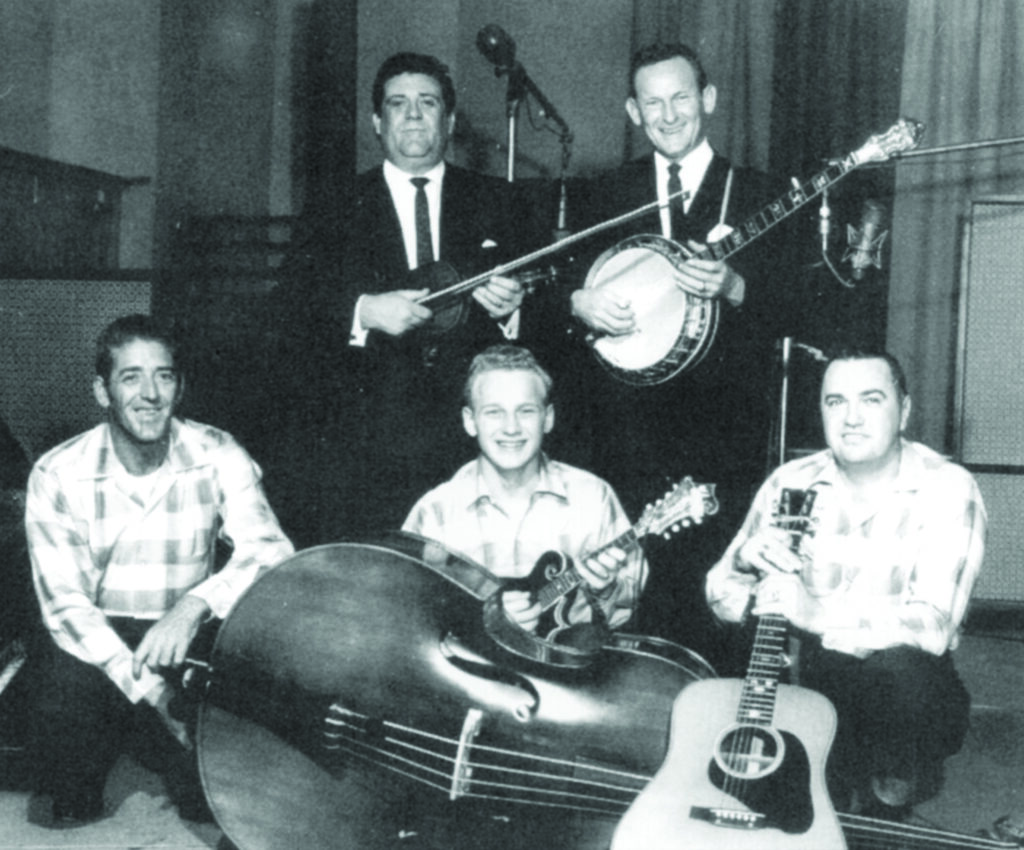
By 2013, however, Don Wayne and Dale had left the group and went back to playing more traditional bluegrass music with the Reno and Harrell band, featuring Bill Harrell’s son Mitch Harrell.
Looking back, Don Wayne is still amazed at his dad’s talent, including his skills on the guitar. “He was fantastic on the guitar, man,” said Don Wayne Reno. “When Dad would start doing some of the things that he could do on the guitar, I’d sit there and think, ‘Wow, he is just tearing it up.’ I knew I could never learn some of the stuff that he could do on the guitar. It was over my head, with all of the chord progressions and things that he could play. He flatpicked a lot of fiddle tunes back in the day, and yet he could play the electric guitar as well. I really think Dad thought of himself as being a guitar player just as much as being a banjo player. There was a need for banjo players back then, but he always made sure to add the guitar to Reno and Smiley’s music, including a couple of albums where it was only two guitars and a bass. When he would play some lead, Red’s rhythm guitar fit in perfectly.”
Around the house in the 1960s, father Reno would occasionally listen to the music of the day that his younger sons wanted to hear. “He had to listen to what we were all listening to then, but he did like The Beatles,” said Don Wayne Reno. “But, he also had a lot of old music that he liked to listen to, like The Blue Sky Boys and other artists that he grew up with, and he would break out those records and play them for us. The Farr Brothers on the fiddle was another group he enjoyed, and he was a big Ernest Tubb fan as well. I think Dad said he drank his first beer as a young man while listening to Ernest’s song ‘I’m Walking The Floor Over You,’ or something along those lines. My Dad would also sing songs like ‘Whole Lot Of Shaking Goin’ On’ once in a while onstage and have some fun with it. When we had Steve Wilson in the band, Steve could do impressions of famous singers like Merle Haggard, George Jones, Mac Wiseman, Marty Robbins, and all of those people, so we played a lot of that material in our shows.”
There are a lot of folks that still don’t realize that Don Reno wrote about 200 gospel songs over the years. Many have been recorded, but some have yet to see the light of day. “I was talking to my son Jason the other day, and he told me about how he likes to get up in the middle of the night and write down song ideas, and I said, ‘Well, you get that from your grandfather,’” said Don Wayne Reno. “My Dad would wake up in the middle of the night with an idea, and he couldn’t get it off of his mind until he wrote it down. He said, ‘I dreamed most of the songs that I wrote.’ Towards the end of his life, he started talking about doing some preaching. He knew all about the Bible and everything in it, and he could discuss it with you at length. He talked about that when he was in the hospital, saying, ‘If I get out of here and get well, I’m going to start doing some preaching.’ But, unfortunately, he never got out, and he passed away, and that was the worst thing to happen to me in my life. He died at 58, and it was strange to pass his age, yet Dad always seemed older than he was because of the way he lived. Between the war years, the rough days on the road as a musician, and all of it combined, he always seemed to me like he was in his 70s when he was in his 50s.”
Don Wayne, like all in his family, appreciate the incredible legacy that their father left behind when it came to being one of the best musicians in the history of bluegrass, and one of the best overall people to pick up a stringed instrument of any kind during his life span.
“We just thought of him as Dad, and he was so humble that he would almost have to get irritated to have to make us understand how successful he was in his heyday because we were too young to live through it,” said Don Wayne Reno. “Once I started diving into all of his albums and listening to them when I was learning how to play music in my teens, that is when it really hit home for me. I used to sit at the record table at our shows, and Dad’s fans would come up all of the time, all day long at a festival, and just tell me stories about him. They’d say, ‘He always remembers my name when I come see him, and I don’t care if it’s been ten years, he’ll still know my name.’ It’s stories like that that make you feel really good and makes you realize that, ‘Man, this guy was really something else, and he had all kinds of goodness that he put out into the world.’”
Sometimes, the Reno Family feels that their patriarch, Don Reno, gets left out of the bluegrass conversation on occasion, or if he is mentioned in a story or a history about the genre, it is brief. But, there is a documentary about Don Reno’s legacy in the works, and we hope these articles about him here in BU will shed some light on his brilliance as well.
Meanwhile, Don Reno’s story continues to inspire those who dig a little deeper into his gift as a young music prodigy, a war hero, and one whose plaque is hanging on the wall of great musicians at the Bluegrass Hall of Fame and Museum in Owensboro, Kentucky.
“When I was about 9 years old, my Dad gave me a little briefcase for Christmas,” remembers Don Wayne Reno. “I kept it for a while, but I didn’t have much use for it. So, being a kid, I gave it back to him as a present. After he died, I found that briefcase, and it was full of set lists, song lyrics, hand-written notes, and more. It was packed full of his things. I had no idea that he kept so much stuff from his career, like flyers from different shows, travel schedules for where they were touring, and it was all there, loose, all over the place. Now, each page is all in a book, and it isn’t going anywhere because it is one of the things that I treasure the most.”