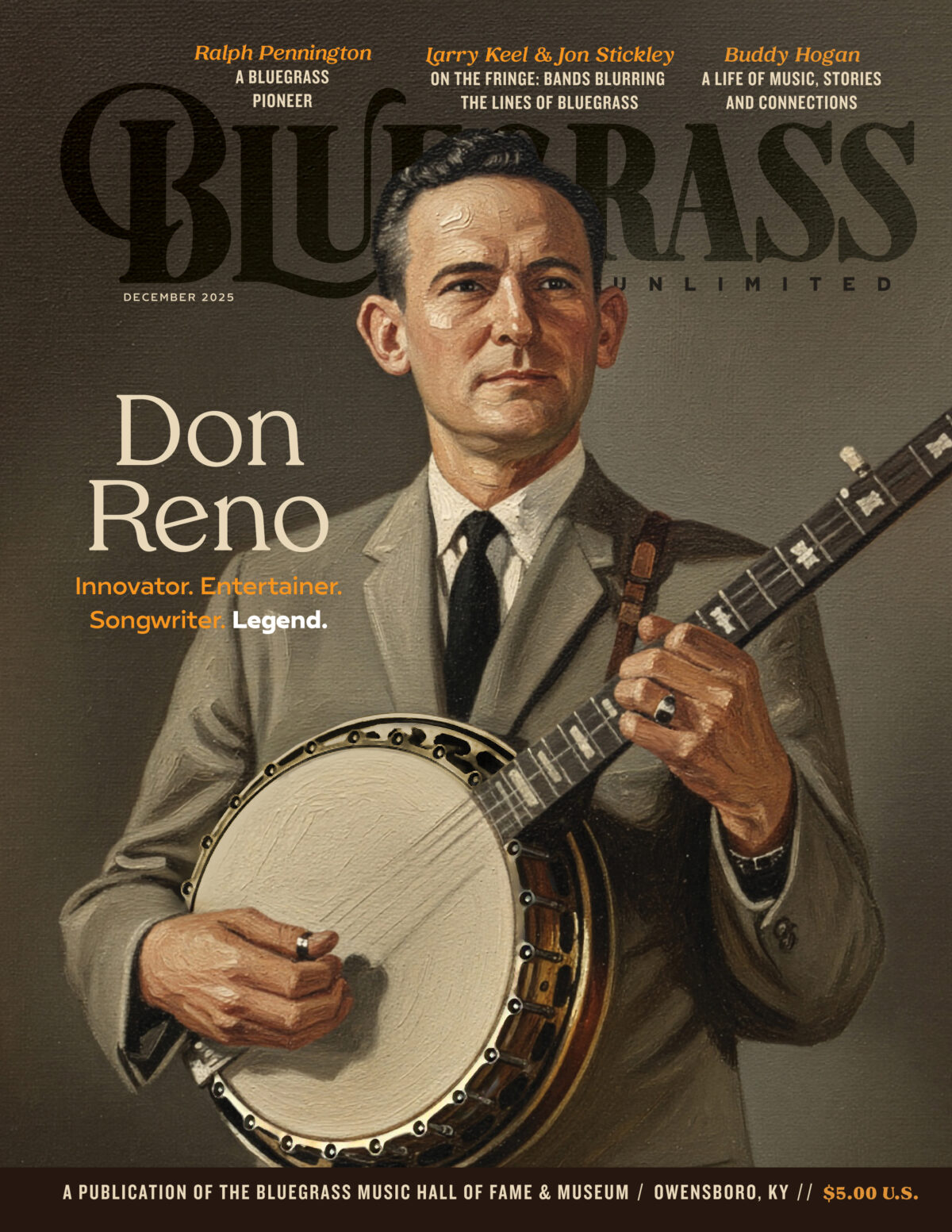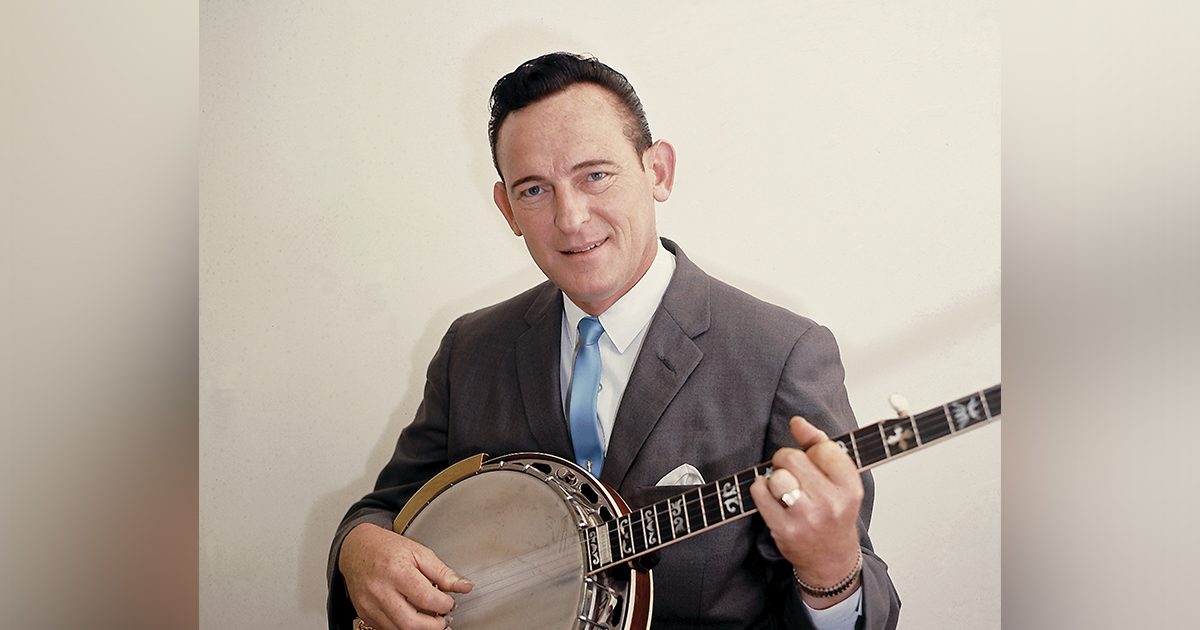
Don Reno: Innovator, Entertainer, Songwriter and Bluegrass Legend
Although he left us when he was far too young, at the age of 58, Don Reno made an enormous impact on bluegrass music. His work with the Morris Brothers, starting when he was just fourteen years old, his work with Bill Monroe after Scruggs left Monroe’s band, and his time spent with Arthur “Guitar Boogie” Smith all led to his development of very innovative approaches to both the guitar and banjo. In his subsequent work with Red Smiley, Bill Harrell and his sons he continued to develop new and creative ways to approach bluegrass that are still studied and replicated by young players today.
After coming together with Red Smiley when they were both members of Tommy Magness’ Tennessee Buddies, Reno and Smiley went on to create their own style of bluegrass that added a different twist to the first-generation era of bluegrass music that was being performed by Bill Monroe, the Stanley Brothers, Jim & Jesse, Jimmy Martin, the Osborne Brothers and Flatt & Scruggs. While each of these bands had their own way of presenting what was to later become known as bluegrass music, Reno & Smiley perhaps cut the widest path in terms of variety. Reno’s prolific writing of gospel tunes, bluegrass tunes and instrumental tunes added to the early canon of bluegrass and those songs are still performed as bluegrass standards today.
Reno continued innovating and creating solid bluegrass music while working with Bill Harrell and then, later, with his sons. From the first day he stepped on stage as a young boy until his death in 1984, Don Reno was creating new music and pushing the boundaries of bluegrass forward. His skill as a multi-instrumentalist, his talent as an entertainer and his creativity have been matched by very few in the history of bluegrass.
Background
Donald Wesley Reno was born on the twenty-first of February, 1926 in the Spartanburg area of South Carolina (the family was in Buffalo, South Carolina—about 25 miles from Spartanburg). Several of his aunts and uncles on his mother’s side of the family were musical, but not professional musicians (his mother had nine siblings). In an interview with Bill Vernon for Muleskinner News in 1973, Reno said that both his grandmother and grandfather played banjo and fiddle, however, he did not mention if they were his paternal or maternal grandparents.
When Don’s maternal grandfather and some of his children moved to Colorado in 1904, Don’s mother—Hattie Luejean Jones—and some of her other siblings stayed in North Carolina. Hattie, who was eighteen at the time, was married that same year to Zebulan “Zeb” Reno.
Don’s maternal grandfather, Wesley Graham Jones, was born in 1862 in Clyde, North Carolina. He passed in 1943 in Berthoud, Colorado—which would lend credibility to his having moved to Colorado. Don’s maternal grandmother, Margaret Elizabeth “Dollie” Massey, married Wesley Graham Jones in Crabtee, Haywood County, North Carolina in 1884.
Don’s paternal grandfather, William Renno (on his gravestone it is spelled Renno), was born in 1828 in Clyde, North Carolina and died in Clyde in 1903. His paternal grandmother, Martha, was born near Clyde, North Carolina in 1838 and passed there in 1920. So, we can see that both sides of Don’s family tree were originally from the western area of North Carolina.
Don was the youngest of six children—two boys and four girls—born to Zebulon (Zeb) and Hattie Reno. Zeb was born in Clyde, North Carolina in 1882 and passed in 1966 in Buffalo, South Carolina. Hattie was born in 1886 and passed in May 1950. There is no listing for Hattie’s place of birth or death, but we can guess that she was born in Clyde, since her parents lived there. We might also assume that Hattie died in Buffalo, South Carolina since that is where the family was living at the time of her passing.
The oldest of Zeb and Hattie’s children was a daughter—Fanny May—who was born in December of 1904, but passed away just about three months later. Don’s sister Nannie was born January 1908 and passed in 2001. His brother Harley (May 1911-October 1970) was next in line, then his sisters Carrie (January 1914-October 1979) and Gencie (1919-2004). When most of Hattie’s family moved to Colorado in 1904, thinking the change in climate would help Dollie’s poor health, they sold their farm on Tarheel Way in Clyde, North Carolina to Don’s parents, Zeb and Hattie. Zeb and Hattie owned the farm until 1938.
At some point in time, Don’s father moved the family to Buffalo, South Carolina so he could work at the Buffalo Textile Mill. Some reports say that the family had moved from the Spartanburg area of South Carolina back home to Clyde, North Carolina when Don was one year old—but Don’s son, Ronnie, said that they had already moved home to Clyde, North Carolina before Don was born and they were visiting Spartanburg when Don was born. In 1938, when they sold the farm in North Carolina, the family moved back to Buffalo. Don was eleven or twelve at the time.
The first recordings that Don remembers hearing were by Uncle Dave Macon and Jimmie Rodgers. His brother, Harley, about sixteen years his senior, had won a wind-up phonograph when Don was about four years old. His first exposure to recorded music came from that phonograph.
In addition to listening to the phonograph records, during his youth, Don was also hearing bands like The Monroe Brothers, The Blue Sky Boys, The Shelton Brothers, Cliff & Bill Carlisle, and J.E. Mainer’s Mountaineers on the radio. On Saturday nights, he was also listening to [Fiddlin’] Arthur Smith and the Dixieliners, Bill Monroe, Roy Acuff, Jack Shook & the Missouri Mountaineers and the Delmore Brothers on the Grand Ole Opry. In an article printed in the August 1980 issue of Bluegrass Unlimited, Reno stated that after he got his first guitar at the age of seven, “I followed the Delmore Brothers style of picking because there was none better.” In an interview with Pete Kuykendall in May of 1971 (printed in Bluegrass Unlimited Magazine in the July 1971 issue) Reno said, “Mainers Mountaineers, The Carlisle Brothers, Cliff and Bill, The Callahan Brothers, and The Blue Sky Boys were always my favorites.”
When Don was five or six years old, several of his brothers-in-law formed a band and Art Wooten came to stay with the Reno family for about three months. Wooten (1906-1986) would later go on to achieve fame as Bill Monroe’s first fiddle player, joining Monroe in 1938. He would also perform with the Stanley Brothers. Reno explained, “He came and sat in one night with these boys that were playing, and of course I was very small, and afraid to mess with their instruments. Leonard Snyder was playing banjo with the group then, and the first time I picked up his banjo—it was before I started school, so I had to have been five years old—to my amazement, I played “Brown’s Ferry Blues,” and I couldn’t believe it—it was a shock.”1 Snyder was the first banjo player that Reno can remember hearing. He played with a two-finger style like Wade Mainer. One magazine article (Bluegrass Unlimited, August 1980) reported that his brother Harley had formed this band and it was called Harley’s Haywood Mountaineers. Their home in Clyde, North Carolina was in Haywood County.
After Art Wooten left the house, Tommy Magness (1916-1972) came to the area and hung around with Don’s brother. Magness, who was about sixteen years old when he met the Reno family, would later go on to perform and record with Bill Monroe in 1940. Bill Monroe recalled, “Tommy Magness worked for me in 1940, and was on my first records. He had that fine old-time touch, rich and pure, but he was able to put a touch of the blues to it. He was the first man I heard play ‘Orange Blossom Special,’ and he could put a lot more in it than they do today. He taught me the song ‘The Hills of Roane County,’ and I taught him to play ‘Katy Hill’ in the bluegrass way.”2 Magness also famously performed with Roy Hall and Roy Acuff.
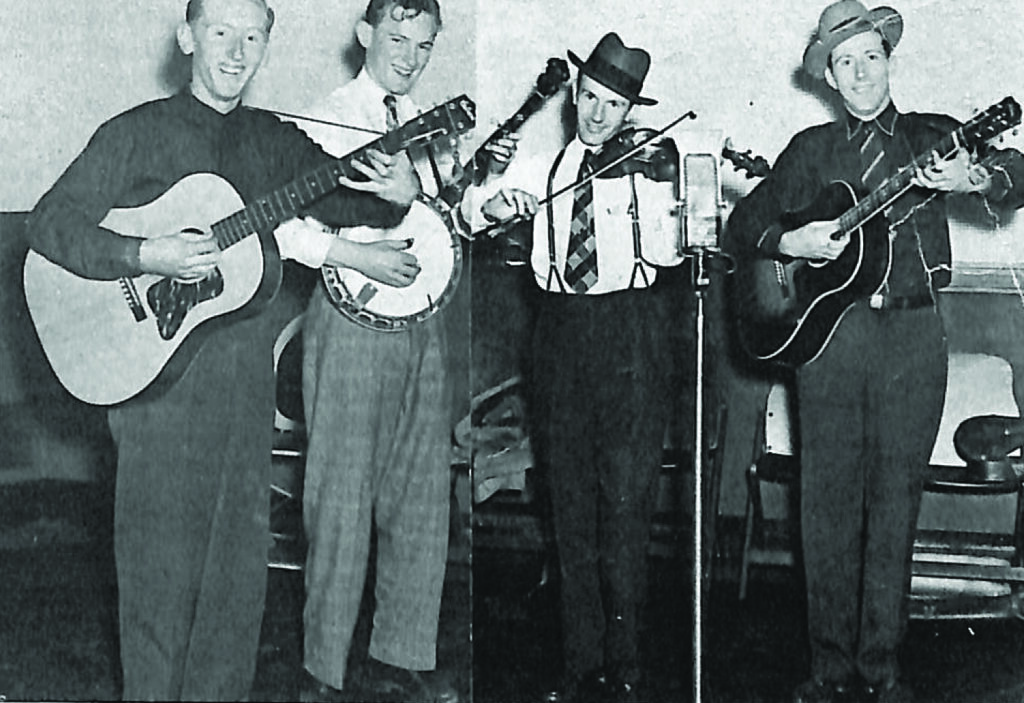
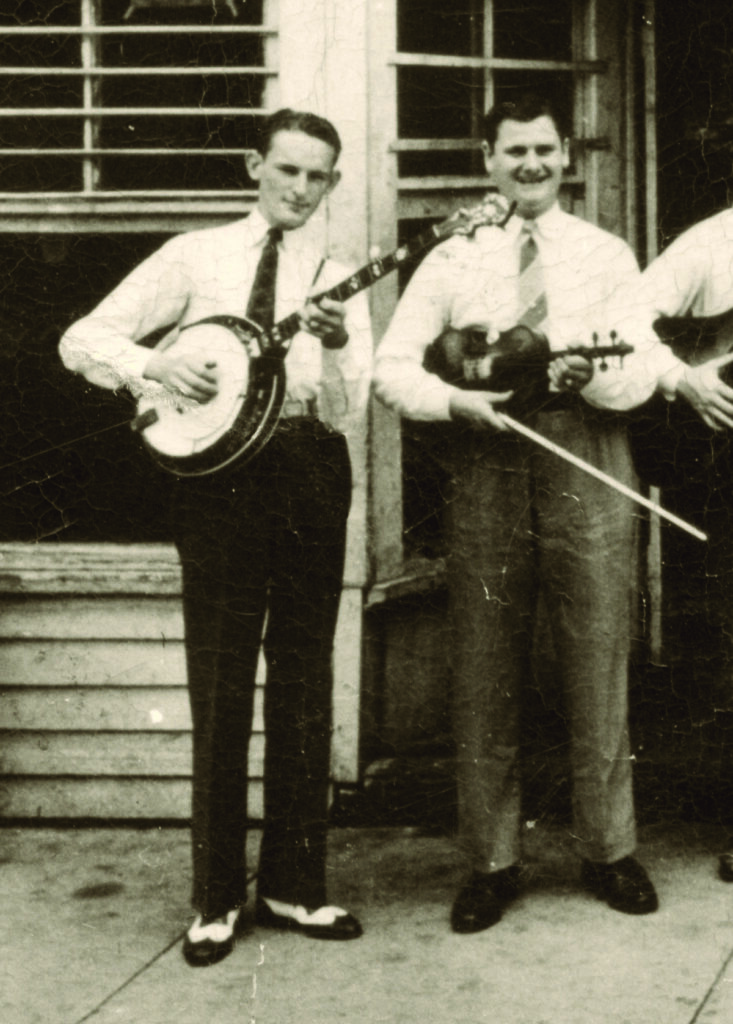
Magness’ sister, Lena, recalls Tommy and Don Reno playing music together when they hung around her home. She said, “He [Don] couldn’t play too good with Tommy then. I tuned Don’s first banjo. His brother had bought him a banjo for Christmas, and he couldn’t even tune it up. And I helped him tune it up, I learned him how all winter. He tormented the life out of it.”3
Recalling his early days with Magness, Don Reno said, “He was an excellent fiddler, and he started giving me some of the basics—I was playing guitar more than I was banjo—and he made me back up his breakdown fiddle numbers—he was hard on me if I did anything wrong!”4 Don also said of Magness, “He had the most perfect time of any musician I’ve ever heard, and he was the most critical of time. When I first started, he was playing in my brother’s band. He kept telling me over and over that if I didn’t learn time I might as well not even learn to play. He really chewed me out when I was little, but it was good for me that he did…I was about seven years old. By the time I was eight I could follow him on just about anything he wanted to play. In fact, he wouldn’t hardly let another guitar player fool with playing with him.”5
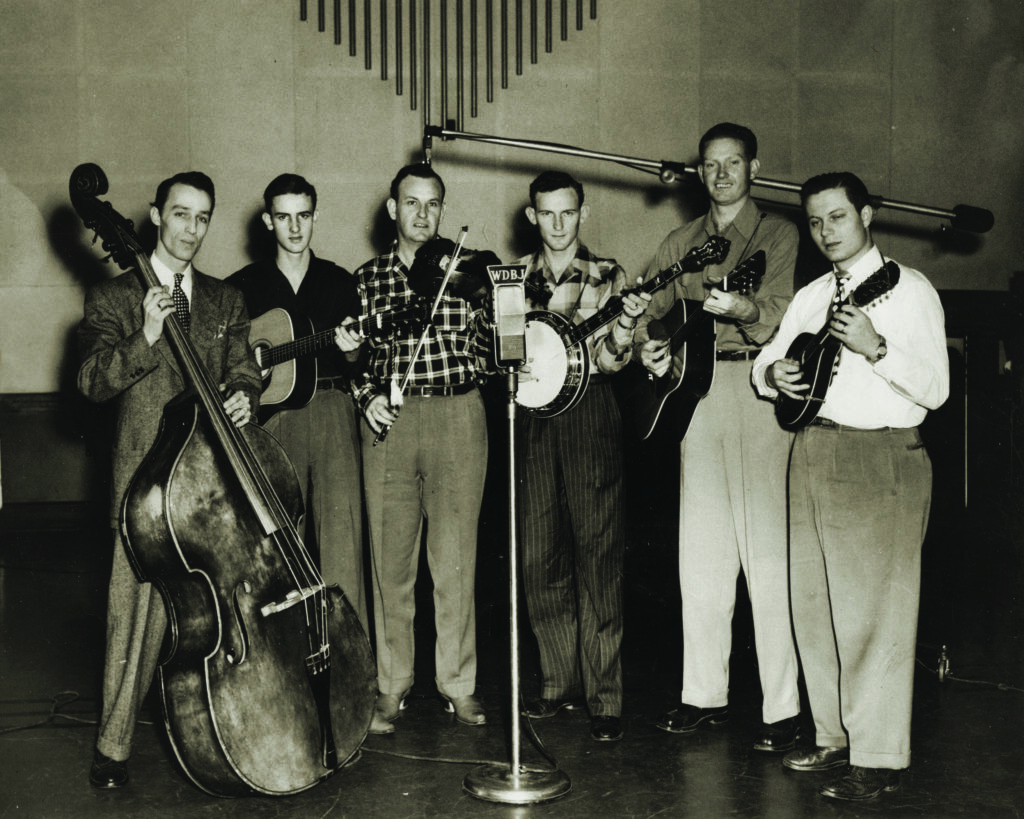
Don would later (starting in 1950) perform in a band with Magness called the Tennessee Buddies. The original personnel included Magness on fiddle, Hal Grant on mandolin, Dexter Mills on bass, Red Smiley on guitar, Verlon Reno (Don’s nephew) on guitar and Don Reno on banjo. Tragically, shortly after the band got started, Verlon Reno drowned while on a fishing trip at the Cowpasture River near Larmon’s Damn, Millboro Springs, Virginia. Verlon, the son of Don’s brother Harley, and just 16 years old at the time of his death, was a talented singer and guitar player.
The whole band was devastated by the loss, but decided to continue without Verlon. They had a morning show on WDBJ in Roanoke, Virginia and performed each night at the El-Tenedore Skating Rink in Floyd, Virginia. The band traveled to Cincinnati to record for Syd Nathan at King studios on the sixth of March in 1951 to record what was to be the first recordings featuring Reno and Smiley and Magness’ last record. The group recorded four gospel songs that were all written by Don Reno. Reno and Smiley enjoyed working together and shortly after the recording session they left Magness. They first went to work with Toby Stroud, but by January of 1952 they left him to form their own band.
While the job with Magness was an important milestone in Don Reno’s career—as that band first brought he and Red Smiley together—let’s back up a bit to Don’s earliest years learning music. Regarding his earliest recollections of the banjo Don said, “A friend of mine, J.R. Sorrels, lived over the hill and we decided if we really set our minds to it, we could make one….[it was] a very crude banjo, but at least I could play it. The strings were actually screen door wire tuned so low you might play four songs before breaking a string.”6
Don’s father did finally buy him a proper banjo and he sold his half of the home-built banjo to his friend for $1.50. [Note: Some sources say that Don was given this banjo, which had American flags drawn all over the head, by his brother.] Don played guitar and banjo with school friends Ed Russell, Howard Thompson, Joe Medford and Lemuel Mackey. They played before school, at recess and after school until the bus came to take them all home. Their first time to perform on stage was during a Halloween program at their school when Don was in the third grade. The first tune he played was “Brown’s Ferry Blues.” When Don started out playing the banjo, he was playing a two-finger style.
When Don was eleven, his family moved back to South Carolina and Don got his very first job as a professional performer. About that time, his father traded a hog for a Kalamazoo guitar and gave the guitar to Don. Reno’s first job was at WSPA in Spartanburg, South Carolina as a solo artist playing guitar and harmonica. He would play a guitar break, followed by a harmonica break, then sing a verse. His show lasted for an hour every morning from 6:00 to 7:00 am. Don said, “I got a coat hanger and made a rack that would hold a harp and started playing harp and guitar together.”7
The Tapp Brothers heard Don on the radio and convinced him to join their Tapp Brothers Band. Don’s first performance with the band was in Enoree, South Carolina. Talking about the Tapp Brothers in the Kuykendall interview (BU July 1971) Reno said, “…there was a group from over at Greer, S.C. Tapp brothers and the Ponders. They had a little group and all of them played guitar. They come over and wanted to start playing on the radio show with me so I figured there were too many guitars in the bunch so I started playing banjo. I played banjo. I’d played banjo before, but right at the particular time I was using guitar and harmonica.” Don was twelve when he joined the Tapp Brothers.
In 1940, Don Reno joined Tex Wells and his Smoky Mountain Rangers, performing with them for about five months. In the same interview with Kuykendall, Reno remembers, “Then I went to N.C. My brother had a group of musicians, good musicians too, and we started a band on WISE in Asheville called Smoky Mountain Rangers, and Zeke Morris who had been the other half of Zeke and Wiley, The Morris Brothers, heard the group and came over and wanted to take the group over. We moved back to Spartanburg and his brother George joined us. I worked with them for something like eight months.”
The Morris Brothers
Don Reno said that one of his favorite groups to listen to while he was still a kid was a group called Sambo & Handsome with George “Sambo” Morris and Leonard Stokes (nicknamed “Handsome”). The group included Snuffy Jenkins on the banjo. Don said, “They had one of the greatest all around groups I’ve ever heard.”8 When George Morris left Sambo & Handsome, Don started performing with George and his brothers as The Morris Brothers (George, Zeke and Wiley Morris). He was only about fourteen years old at the time. Zeke Morris remembers, “Don came to Asheville when he was but a boy and started playing with us. He was playing guitar then. We like him so we hired him. That was in ‘forty-one. We hired him to play guitar and then found out he played the banjo too. Don could really play that banjo. He played with three fingers, but it was his own style. He could play in any key and not use a capo or anything.”9
Regarding the Morris Brothers, Don stated, “Their trio efforts was the best I ever heard. Wiley Morris was really the Bing Crosby of country music.”10 He also stated, “Everybody tried to copy Wiley Morris’ guitar playing cause he was a hoss, when it came to rhythm. He was one of the finest rhythm men I ever heard.”11 When Don was with the band, they performed at WWNC in Ashville, North Carolina and WSPN in Spartanburg, South Carolina. He worked with them for about a year.
When asked about the origins of bluegrass music, Don Reno stated, “The Morris Brothers had one of the first bluegrass groups; Zeke played the mandolin, and they had Tiny Dodson on fiddle, George on guitar, Wiley on bass, and Hoke Jenkins was playing five-string with them, in the Snuffy Jenkins style, so they had the basic bluegrass lineup.”12 Zeke Morris remarked, “When we were coming up, there was no such a thing as bluegrass music. But we helped to build it into what it is today. If we hadn’t come along, I doubt very seriously if there would have been this particular type of music.”13
Some sources say that Don Reno joined the Morris Brothers in 1940. He replaced Hoke Jenkins (Snuffy Jenkins nephew). An interesting side note is that when Don Reno left the band in 1941, Hoke Jenkins came back to the band. When Jenkins was drafted, he was replaced by Earl Scruggs. This was Earl’s first professional job. Although some sources say the Scruggs joined the Morris Brothers in 1939, Thomas Goldsmith, in his book Earl Scruggs and Foggy Mountain Breakdown—The Making of an American Classic makes a very well researched statement that “Earl likely went to work with the Morrises in 1941 or possibly early 1942.”14
The way Don Reno remembers it was that he was with the Morris Brothers twice and that Earl took his spot in 1942. Perhaps Don replaced Hoke in 1940 and then Hoke came back when Don left the first time—then, when Hoke went into the service, Don replaced Hoke again and then Earl replaced Don when Don left the second time. Don said, “Hoke played a good banjo; he had to go to service, and I took his place. Then when I left the Morris Brothers the second time, Scruggs took my place. That had to be ’42, because I remember when Pearl Harbor was bombed. I remember playing Gibson, Georgia, the night before, with the Morris Brothers.”15
The Three Finger Banjo Style
When asked if the three finger style of banjo playing was formulated by Snuffy Jenkins, Reno said, “Snuffy Jenkins is the man that brought it to the front, and he had it just as strong and smooth, and going just as good, in the early thirties as Earl and I had it going in the late forties, if you want to know the plain truth about the whole situation.
“Jenkins was the man that told me and showed me how to use the third finger on a banjo. He took time out with me when I was very young. But to put a pick on the third finger, he started me off on the roll to ‘Steel Guitar Rag.’ He said, “use it if it kills you,’ and in three or four weeks it felt odd without it.”16
When asked if Jenkins ever told him where he’d learned the three finger banjo style, Don replied, “No, he never did, but I’ve heard of all these other guys, and heard some of them play, that were supposed to have taught Snuffy, but they didn’t have what Snuffy had—he was the authentic third-finger man. The others played with three fingers, but they didn’t use a predominant roll—it was a messed-up sort of deal, it wasn’t clean. Snuffy played ‘Sally Goodin’ and ‘Cumberland Gap’ the way Earl and I play it today, and these other guys didn’t.”17
When Tony Trischka asked Don about a banjo player named Smith Hammett that Earl Scruggs has mentioned as a three-finger style player, Don said, “I never did meet him. Snuffy knew of him, and I’ve seen other people who knew of him. They say he played three-finger, but he didn’t have it ironed out. Snuffy did.”18
When asked if he knew Earl at that time, Don said, “Oh, sure, I knew Earl—he used to come over to the radio station where I was doing radio shows, before he ever got into the music business—him and Grady Wilkie, in a ’35 Chevrolet.”19 In the BU July 1971 Kuykendall interview, Don added that when he first met Earl, he didn’t even know that Earl played the banjo. Don said, “He was pretty bashful and didn’t say much. The first I knew about his playing was when he wanted to trade his banjo for mine. He had a Sears Roebuck then. Of course I wasn’t interested, that’s when I found he played banjo and he played good banjo then.” Earl, born in January of 1924, was two years older than Reno.
In an April 1985 article in Frets Magazine, Earl Scruggs recalls, “I first met Don at a pickin’ contest. It was in a little town in South Carolina. I can’t even remember what year it was, but we were both young guys at the time. Later, when I first heard him on radio, I remembered him from that contest…I remember he had a two-finger style at the time and was one of the best banjoists I’d ever heard.”
In the same article, Earl also stated, “Other than myself, Don was the first three finger style banjo picker I heard on the Opry. Before us there had been Uncle Dave Macon and Stringbean, and two-finger picking was their style.”
Arthur Smith—The Carolina Hillbillies—Bill Monroe—The US Army
In 1942, Reno left the Morris Brothers to work with Arthur Smith and the Carolina Cracker Jacks. The band included Arthur Smith (1921-2014) on fiddle, mandolin and guitar. His brothers, Sonny and Ralph, played the guitar and bass, respectively. Reno was with Smith in Spartanburg until 1943 when the Smiths left the radio station and Arthur Smith joined the Navy. However, the station asked Reno to stay. He then formed a band called The Carolina Hillbillies with Howard Thompson on guitar, Shorty Boyd on fiddle and Mary Lou Morris on bass. Morris stayed for a short while and then left to get married. John Palmer took her place. Reno was still a teenager at this time.
When Pete Kuykendall (BU July 1971) asked Don if Arthur Smith influenced him to try and play jazz on the banjo, Don said, “…we did everything in the book music wise, all the top tunes of the twenties, Arthur played fiddle then and his brother Sonny played ‘sock’ rhythm guitar. I worked with him and got into playing open chords on hymns and slow numbers. I played more guitar then than Arthur did. He picked up a guitar once in a while and picked something on it, but he didn’t start playing guitar until after the band broke up and I went into the service. Arthur went over to WBT and went to work for the Briarhoppers. Later on he went into the Navy. He started featuring the guitar in Charlotte on WBT.” When Kuykendall asked Reno if he played lead guitar in those days, Don said, “Yes, I was playing lead, I was a much better guitar player than a banjo player.”
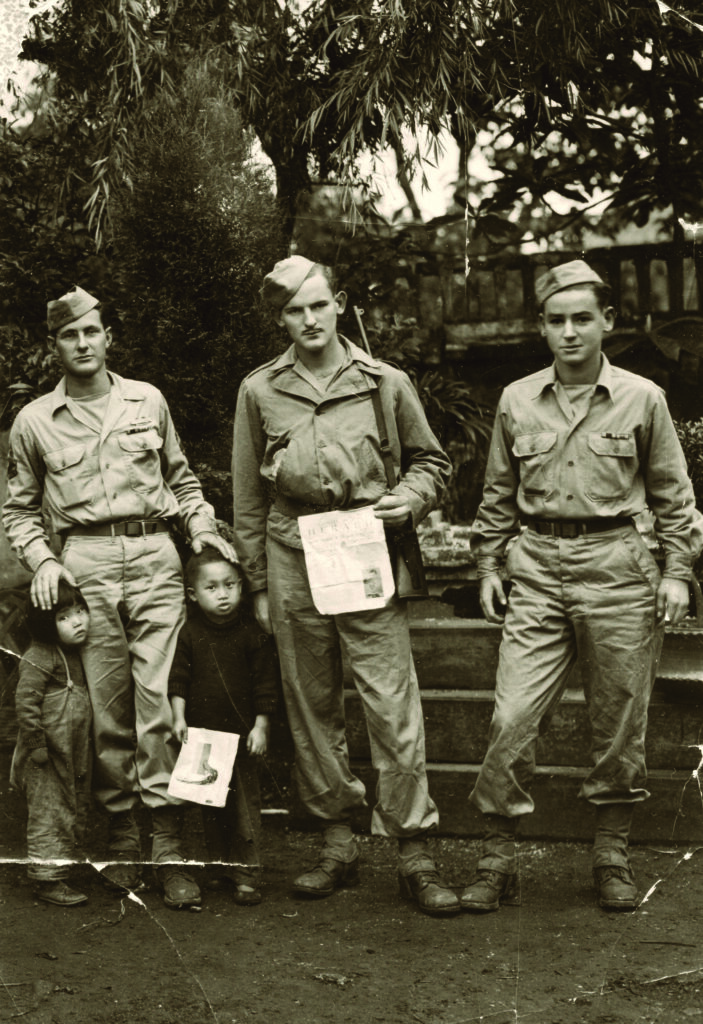
When Don was seventeen, he volunteered to take the Army physical to see if he could get into the service. About this time, Bill Monroe and his Blue Grass Boys came to Spartanburg to perform a tent show and Monroe tried to hire Reno. He told Monroe that if the Army did not take him, he would join the band. However, the Army did accept Reno in March of 1944 and he was sent to Fort Riley. He later spent time in China, Burma and India as a member of Merrill’s Marauders, an elite jungle warfare unit. Merrill’s Marauders was an all-volunteer special forces jungle warfare unit comprised of 3000 men who fought the Japanese in Burma from February through August, 1944. Of the 3000 men in Merrill’s Marauders, only 1310 survived the campaign and by the war’s end, only 270 had not been hospitalized for wounds or illness.
Reno did not officially play music in the Army, however, due to his music background, he was offered a job in special services. Don said, “I turned that down because I didn’t want to take what I call a chicken job.”20 The music that Don played while he was in the service was with friends.
It is not clear exactly when Reno was sent overseas and how long he stayed there. He entered the service in March of 1944 and the Japanese surrendered in September of 1945. The Merrill’s Marauders campaign in Burma lasted from February to September in 1944. In a Bluegrass Unlimited Magazine interview with Pete Wernick (conducted in September 1965 and published in the February 1967), Reno stated, “…I went to work with Arthur Smith. ‘Guitar Boogie’ was one of the records that we recorded in Washington, D. C. right after the war, I believe. We just thought we would do a flip side; it turned out to be a 2.5 million seller.” “Guitar Boogie” was recorded in 1945 and released in 1946. The tune included Arthur Smith on guitar, Don Reno on rhythm guitar and Roy Lear on bass, calling themselves the Rambler Trio. The recording session was actually for Cecil Campell and the Tennessee Ramblers and “The Ramblers Trio” threw in the song at the end of the session. The session produced four cuts with Arthur Smith playing guitar on some cuts and fiddle on others. Don Reno played guitar on some cuts and mandolin on others.
So, with that recording date in mind, Reno must have left the service sometime in 1945. Don’s oldest child, Jean was born in 1946 and his second child, Ronnie, was born in 1947. His third child, Donna, was born in 1952. Don had married the former Chloe Bell Robinson (1927-2005), of Buffalo, South Carolina on March 11th, 1944 just before going into the service. Chloe’s brother, George, had married Don’s older sister, Gencie, and Don met Chloe through them.
Regarding the “Guitar Boogie”session, Don told Pete Kuykendall (BU July 1971), “It was the latter part of ’45 or early ’46 we recorded ‘Guitar Boogie’ and I was playing rhythm guitar on that, he [Arthur Smith] was playing the lead.” When Kuykendall mentioned that it was an “odd turn-around” for Arthur to be playing lead and Reno rhythm, Don said, “We turned around every way back then, I played everything—bass, drums, whatever needed to be done. We played twin stuff with guitar and twin stuff with fiddles. He taught me to read and write music to the point that he would write out something he wanted me to play and that was what I had to play whether I liked it or not. He’d say, ‘You play that right there.’ If you wanted to get paid, you played that. He was real particular about not adding or taking away.”
Reno had first met Monroe when he was a young boy and hanging out with Tommy Magness. Don recalled, “He’d come and eaten supper when Tommy Magness was working with him one time, but I don’t think he remembered me then, because I was fairly small.”21 Later, in 1943 when Monroe was in Spartanburg, Clyde Moody, who was with Monroe at the time, had heard Reno play and took Don to the Franklin Hotel so that the other band members—Floyd Ethridge and Chubby Wise—could hear him. Don recalls, “I was working with Arthur then and after the show these guys took me over to the hotel, and played me all evening, just about, and were getting a kick out of it, and then Bill came in, and they started me all over again with him. He asked me if I wanted a job.”22
Bill Monroe and the Three-Finger Banjo Style
Bill Monroe had started his band Bill Monroe and his Blue Grass Boys in 1938 and had been searching for a particular sound. He famously found it when Earl Scruggs joined the band in December of 1945 and the addition of that banjo sound into Monroe’s band revolutionized the music and shaped it into what we know as bluegrass music today.
According to Don Reno, Monroe liked that particular three-finger-roll style of banjo playing. When asked if Monroe had any idea when he asked Don to join the band that the three-finger style would revolutionize the music, Don said, “I don’t think he really knew at the time, but he liked it better than anything he had heard in a while. He had offered Snuffy Jenkins a job, but Snuffy was too well established in Columbia, South Carolina, to take a job and go.”23 So, Earl Scruggs was the third in a line of North Carolina three-finger style banjo players that Monroe had invited to be in his band. A Bluegrass Unlimited article printed in August 1980, states, “Reno remembers hearing Monroe’s band—Scruggs on banjo, Chubby Wise, fiddle, Lester Flatt guitar, Cedric Rainwater, bass and Monroe, of course, mandolin—on the Opry when he got out of the service. He said, “They really sounded great. None will ever be better.”
When asked if the great success of Monroe’s band after Scruggs joined affected him, Don said, “I never thought about it. I was more interested in guitar than I was banjo then.”23 Don continued to play in the Snuffy Jenkins inspired three finger style after his return from the service, but said, “…now and then I’d throw in something extra from my guitar style.” This “something extra” would later be labeled “single-string style” banjo picking.
Back Home from the War
Just prior to joining the service, Don and his brother had purchased a grocery store and seven acres in Buffalo, South Carolina. Don recalls, “He [Harley] got out before I did and had everything lined up to start operating the store. We started running the grocery store and playing on Saturday nights, for shows, square dances and things like that.”24 Don ran the store after he left the Army, partially with the help of the government. Any veteran who started their own business received $100 per month for a year. The grocery business was a success, but Don still had music in his blood. He said, “…I guess music got too stout for my blood so I decided to just go on back into it.”25
The first group that Reno performed with when he returned from military service was a reformation of the Carolina Hillbillies. The band consisted of John Palmer, Pee Wee Gonsell and a fourteen-year-old Hank Garland. Both Don and Hank played electric guitars. When Garland left to join Paul Howard and Pee Wee left due to illness, Jess and Mays Pruett were hired. Don played banjo, John Palmer played bass, Jess Pruett played guitar and Mays Pruett played fiddle. The band performed on WSPA in Spartanburg. It was around the time the Don Reno was performing with the Carolina Hillbillies that his first son, Ronnie Reno, was born in September of 1947.
Banjo Innovation
Although Don Reno started out playing in a two-finger style, he eventually was inspired by Snuffy Jenkins to learn to play a three-finger rolling style. He didn’t stop there. In the late 1940s, he was getting together with other innovative musicians in country music who were interested in the type of music that the jazz musicians were exploring. Don said, “…it was actually the beginning of ’53 that I recorded ‘Limehouse Blues.’ Of course, I’d been playing all this stuff on the banjo before that, and [fiddler] Dale Potter was the only one that gave me any inspiration to keep playing it…We worked jobs together at the same time and we used to jam together, me and him and Grady Martin and Hank Garland and Billy Robinson. We’d all get together and have some wild jams back in the late forties. We didn’t dare let anybody hear us play…They would have all said, ‘Lord have mercy, they’re all nuts’…I taught Hank Garland to play electric guitar and played with him before he went to the Opry. In fact, I took Hank when he was fourteen and started teaching him guitar, and then I started playing twin with him. I just took everything off the guitar and put it on the banjo. I asked Dale Potter—he was digging far-out stuff back then—what he thought about it. He said he loved it. I said, ‘Would you pursue it on the banjo? Would you let anybody else listen to it?’ He said, I’d never quit it. I’d keep with it.’ He said, ‘You’ve got something different.’ So, I just always remembered what he told me.”26
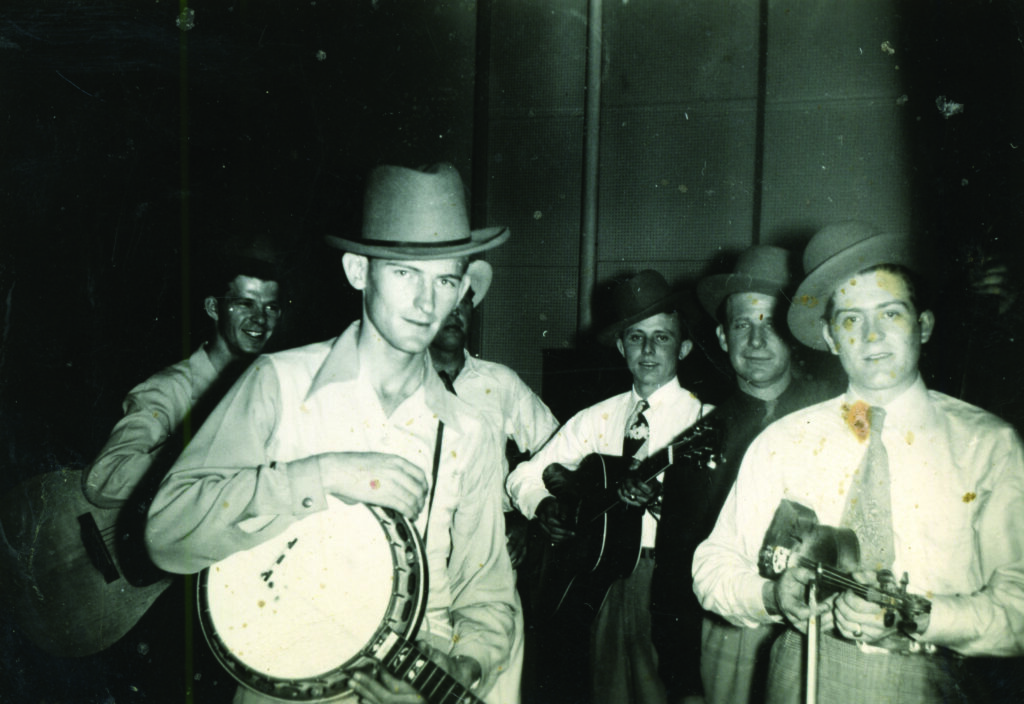
In the July 1971 BU interview, Kuykendall asked Reno if he had consciously changed his style after he heard Earl with Monroe. Don said, “Yes, I figured Earl had got the spotlight first and if I continued along the same way he did then I was just going to be a carbon copy of Earl Scruggs. I just didn’t see that. I was playing professionally before Earl was in a small market, but it would do me no good copying Earl. I saw the banjo was building and I wanted to put it into many different markets and higher brackets than it had been by doing some of the old pop tunes on the banjo. I’ll explain why. A person that didn’t really follow the music close couldn’t tell the difference between ‘Cripple Creek’, ‘Sally Goodin’’ and ‘Sally Johnson,’ it all sounded like a running conglomeration to them. If they heard something like ‘Five Foot Two’ or ‘Lime House Blues,’ ‘Yes Sir, That’s My Baby,’ something they had heard an orchestra play, they would say, ‘What is this playing?’ If you hear a banjo and get the ring of one in your head you’re stuck with it.”
Don Reno the Blue Grass Boy
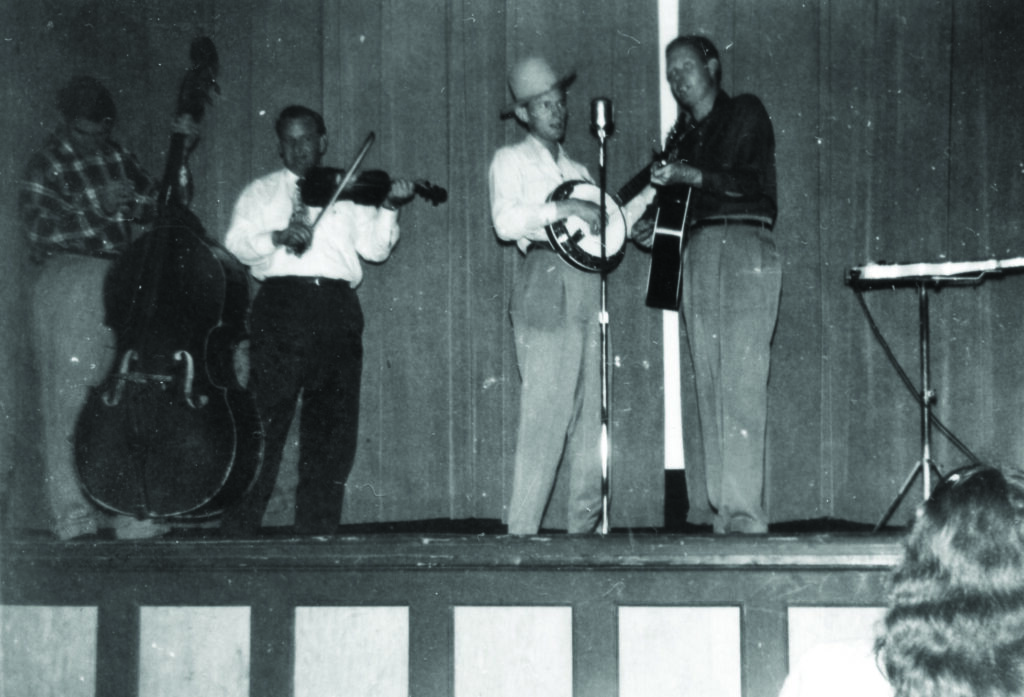
In March of 1948, Reno was listening to Bill Monroe and his Blue Grass Boys performing on the Grand Ole Opry and noticed that there was no banjo player. He concluded that Earl had left the band and he traveled to Nashville. When he arrived in Nashville, he discovered that Monroe was on the road and going to be performing in Taylorsville, North Carolina. So, Don headed that way. He drove 400 miles back east and arrived in Taylorsville just as Monroe was starting the second of three shows in the Bijou Theater. Don said, “I went backstage, took my banjo out of the case and walked on stage and started playing. Bill said, ‘Boy, I’ve been trying to find you.’ And I said, ‘Well, I finally made it.’”27
While Don was on stage, Monroe asked Reno, “Where is your capo?” Reno said, “Capo? For a banjo? I don’t have one.”28 When Don joined Monroe, the band consisted of Monroe (mandolin), Lester Flatt (guitar), Benny Martin (fiddle), Joel Price (bass and comedy) and Jack Phelps on steel guitar. Earl Scruggs and Howard Watts (Jody Rainwater) had recently left the band and Flatt left soon after. When Flatt left, only a week or two after Reno joined, Jim Eanes was hired to play guitar, but Eanes only stayed for a short time. Phelps moved over to guitar when Eanes left. In April of 1949, Mac Wiseman joined the band to fill the guitar spot and sing lead.
Although Reno had started exploring outside of the style of banjo playing that he learned from Snuffy Jenkins by the late 1940s, he played it straight when he was with Monroe. Don said, “People were watching real close to see if Bill could replace Scruggs. I played what Bill wanted me to play.”29 When Reno first joined the band, he played banjo and sang lead. When Mac Wiseman joined, Mac took over the lead singing job. Don would play banjo during the majority of the show, but would pick up the guitar when they sang hymns. Reno also occasionally played the fiddle with Monroe during a period when Monroe did not have a fiddle player.
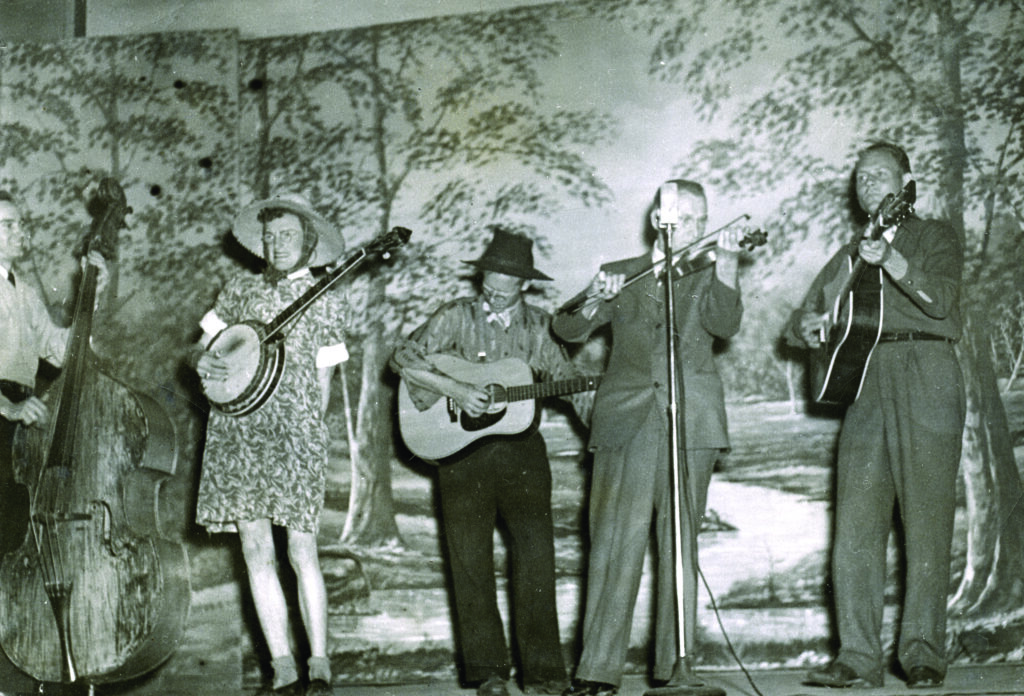
While Don was with Monroe, the band carried their own tent to set up and perform tent shows. They also had a baseball team. Bill had started with the tent shows in 1943 and the baseball team in 1944. When Reno was with the band, the baseball team consisted of Bill Monroe, Don Reno, Benny Martin, Joel Price (Monroe’s band), plus Jack Phelps, G. W. Wilkerson, Jr., Mac Carger (who had played semi-pro baseball in Arkansas) and Mel and Stan Hankinson. Reno played left field and third base. Monroe usually played first base. In several interviews, Reno stated that he was not a very good baseball player. In an interview in Muleskinner News, printed in the August 1973 issue, Reno said, “Phelps and Carger and Wilkerson, and Mel and Stan, were all good excellent ballplayers. Myself and Joel Price and Benny Martin weren’t nearly that good, but we played fairly decently.” Of Monroe’s baseball abilities, Don said, “He was a good hitter and a fine ballplayer.”30
In order to fill out the baseball team, Monroe put together a couple of acts— The Shenandoah Valley Trio and the Kentucky Twins—who would open up for Monroe’s band during the music show. Jack Phelps, G.W. Wilkerson and Mac Carger were in The Shenandoah Valley Trio and the Hankinson brothers were The Kentucky Twins (they were brothers, but were not actually twins).
When the band rolled into town, they would set up the tent, chairs and bleachers, play a ball game against a local club, then play the music show. They traveled in a 1946 nine-passenger Packard limousine with a rack on top for the instruments and suitcases. An additional five trucks were used to carry the tent, tent poles, chairs, bleachers and other equipment.
In addition to the tent shows, Monroe and his Blue Grass Boys were also involved in package shows put together by promoter Oscar Davis. Other bands that performed in the package shows included Cowboy Copas, Ernest Tubb, Rod Brasfield, Stringbean, Lew Childre, Kirk McGee and Uncle Dave Macon. Reno stated that many times he would drive his car while they were on the road and Uncle Dave Macon and Kirk McGee would ride along with him. When asked about Uncle Dave Macon, Reno said, “He was one of the greatest characters I ever met in my life. He was a barrel of fun, twenty-four hours a day, onstage or off. He would ride along at night and be funny all night long. I think Uncle Dave and Bill Monroe had more stamina than any two men I’ve ever known.”31
In July of 1949 Reno left Monroe and during the fifteen months he stayed with the Monroe, he never had the opportunity to record with the band. Don’s nephew, Verlon, played the guitar and sang and wanted Don to come back home and start a band with him. Reno decided to leave Monroe and go back to South Carolina. He explained, “My health at that time, due to malaria that I had contracted in service and which had begun to sap my strength, was not good. I was down to 134 pounds, and I didn’t know whether it would continue to hold up. I hated to leave Bill because I liked working with him. We always had fun, we had good times together; there was a good relationship between us then, and there still is today.”32
The Beginning of The Tennessee Cut-Ups
Shortly after Don Reno left Bill Monroe he formed the first band that he called The Tennessee Cut-Ups. This band consisted of Don Reno, Bill and Chuck Haney, Verlon Reno, John Palmer and Jimmy Pruitt. Some early photos of the band have Jarvis Haney on bass, while some have John Palmer on bass. Palmer was holding down a regular job and when he couldn’t make it, Jarvis Haney filled in. Haney was Don’s cousin on his mother’s side.
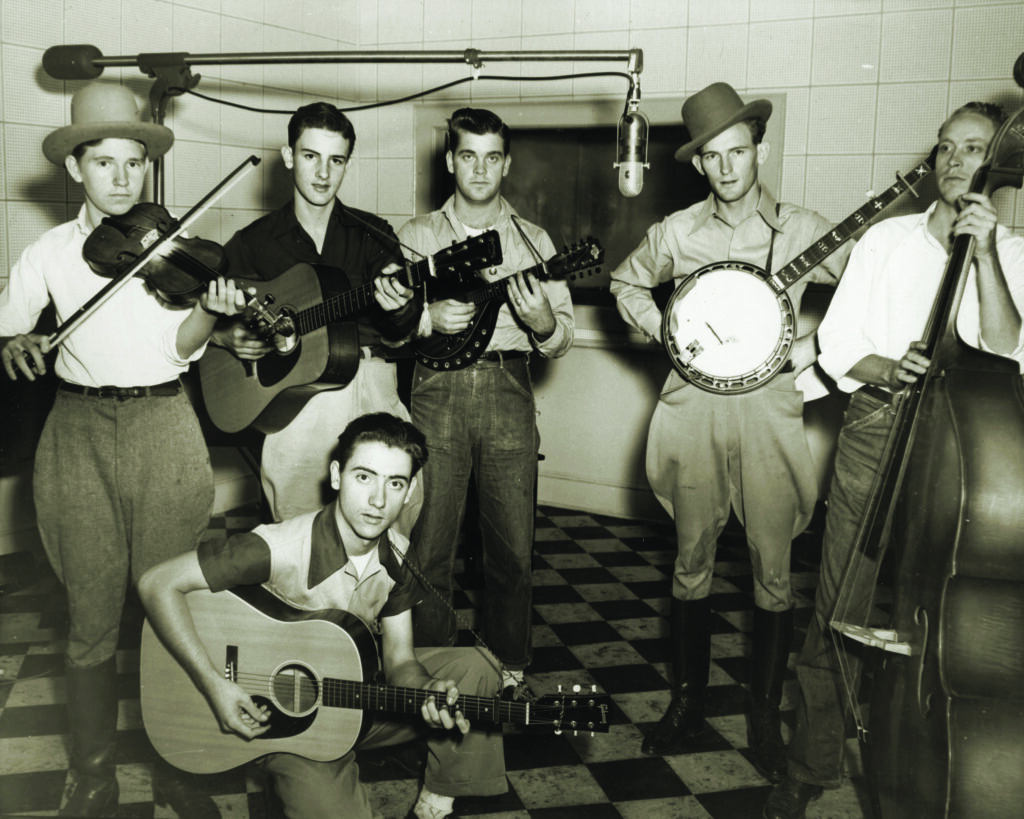
Originally, the band was supposed to consist of Don Reno, Benny Martin, Hillous Buttrum, Bill Haney and Verlon Reno. Don explained, “Benny had left prior to me, but when I left Bill I had worked my two-weeks’ notice, but Bill still didn’t have a banjo player, and I’d already sent Benny and Hillous home to Spartanburg. After I worked my two weeks, I worked two weeks more, because I thought so much of Bill that I couldn’t leave him without a banjo player. Benny and Hillous got cold feet. They figured ‘maybe Reno’s not going to come,’ and they came back to Nashville. So then I went on to South Carolina and picked up Jimmy Pruitt and John Palmer. Pruitt was only 13.”33 The band with Benny Martin and Hillous Buttrum had only performed one show together on WFBC in Greenville, South Carolina.
The Tennessee Cut-Ups first worked at WSPA in Spartanburg before moving to WFBC in Greenville. When the band made the move to Greenville, Palmer and Pruitt wouldn’t leave home because Palmer had a full-time job and Pruitt was still in school. To replace Palmer and Pruitt, Reno picked up Jimmy Lunsford on fiddle and Beamer Pruitt on bass. Both men already lived in Greenville. Occasionally, Chuck Henderson also performed with the band on mandolin, and he also played twin banjos on some tunes with Reno.
Tommy Magness and The Tennessee Buddies
By late 1949, Tommy Magness had left Roy Acuff and was interested in forming his own band. Magness had secured a good music job in Roanoke and he called Don to see if Don would be interested in joining him and bringing along a couple of musicians with him. The Tennessee Cut-Ups were not doing too well financially at the time, so Reno decided to join Magness and bring his nephew Verlon and Bill Haney with him. Magness had already brought in Al Lancaster and Red Smiley. Don remembers, “So we met December 27, 1949, at twenty minutes to six in the studios of WDBJ in Roanoke, VA, and we did our first radio show at six 0’clock without hardly any rehearsal, or anything.”34
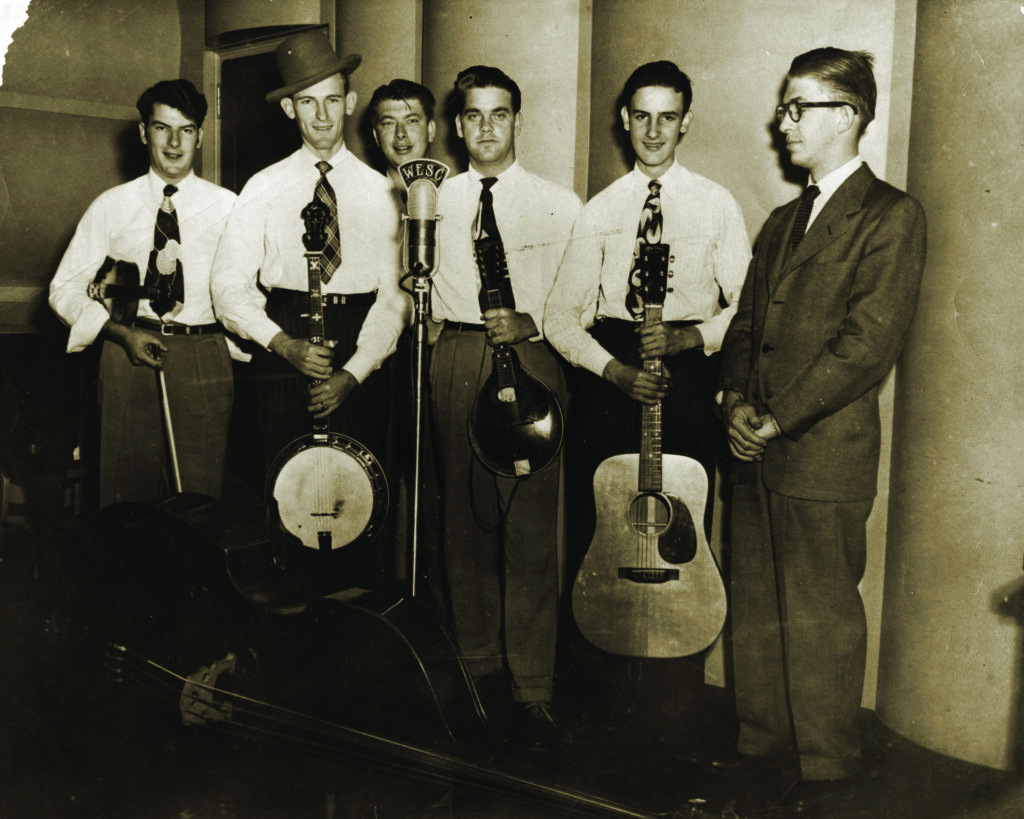
So, very late in 1949, Don, Verlon and Haney joined Tommy Magness in his band The Tennessee Buddies, but that band didn’t stay together for very long after Verlon drowned in June of 1950 (as mentioned earlier in this article). Before Don Reno and Red Smiley left Magness, they recorded together for the first time with Magness in February of 1951. By that time Lancaster had left the band and was replaced by Jack Phelps in the fall of 1950. The session, for the Federal label, produced four gospel quartet numbers. Reno’s banjo took the instrumental lead. Jack Phelps played electric steel guitar. Reno, Smiley and Phelps stayed with Tommy Magness until about May of 1951.
Don Reno, Red Smiley and Jack Phelps went to play with Toby Stroud at WWVA in Wheeling, West Virginia in late summer of 1951. They performed under the name The Blue Mountain Boys. Don said, “We were looking for something a little better and Toby had a show on a 50,000 watt radio station. He was looking for a group. We felt that in Roanoke we had reached our peak because there wasn’t anything but radio there. I guess you’d say the grass looked greener over there.”35 Don and Red didn’t stay with Toby Stroud very long because Don didn’t like the weather in Wheeling, he wasn’t particularly fond of having both a banjo and a steel guitar in the band and his mother had passed away about a month before Verlon and his father was home alone.
Don Reno & Red Smiley and The Tennessee Cut-Ups
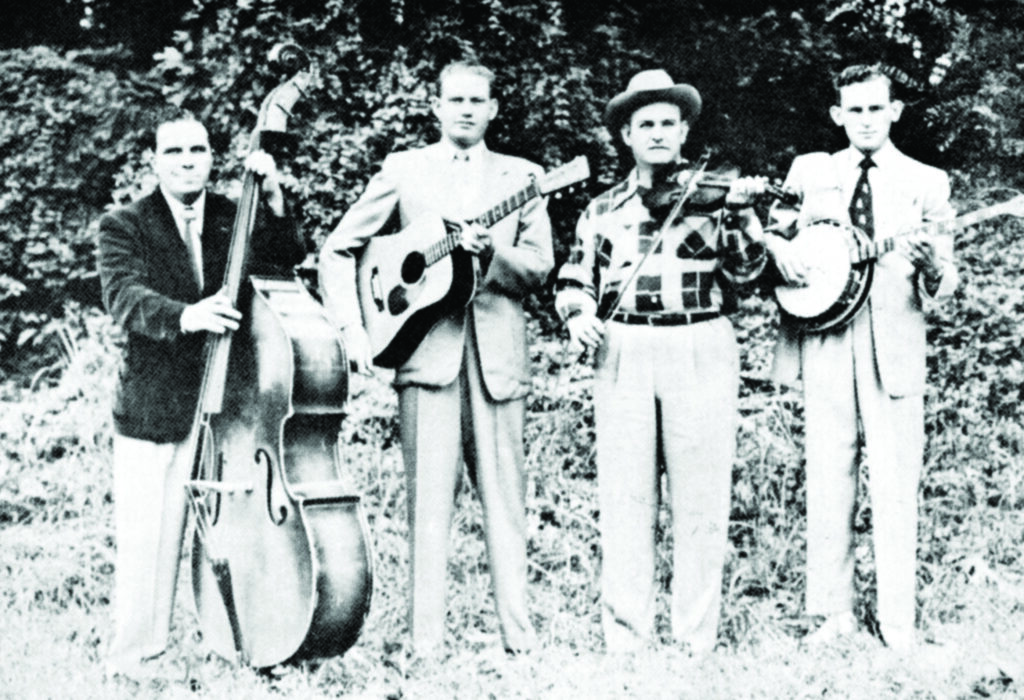
Reno and Smiley and The Tennessee Cut-Ups got a radio show at WBZU in Union, South Carolina and another show at WSPA in Spartanburg. Reno recalls, “After Red and I went back to S.C. we organized Don Reno, Red Smiley and the Tennessee Cut-Ups and our first recording was ‘I’m Using My Bible for a Road Map,’ and 15 others and then we disbanded. We almost starved to death, so I went back with Arthur Smith.”36 The musicians on that first King Records’ Reno and Smiley session were Jay Haney on bass, Chuck Haney on mandolin, Gopher Addis on fiddle, Red Smiley on guitar and Don Reno on banjo. Reno also played mandolin on three of the tunes using banjo picks. Additionally, Reno wrote all sixteen of the tracks cut on that album. The first King recording was cut in January of 1952.
In an interview printed in the February 1967 issue of BU, Don had this to say about disbanding the first version of Reno & Smiley and The Tennessee Cut-Ups, “We disorganized in the spring of ’52 after recording 16 sides for King and the first release came out I think about six weeks after we disbanded. If we’d stuck it out about six more weeks we’d a been all right. ‘I’m Using My Bible For A Road Map’ you know was one of our biggest records. I went back to work with Arthur Smith in Charlotte N.C. and worked ‘til ’55 and then Red and I organized again.”
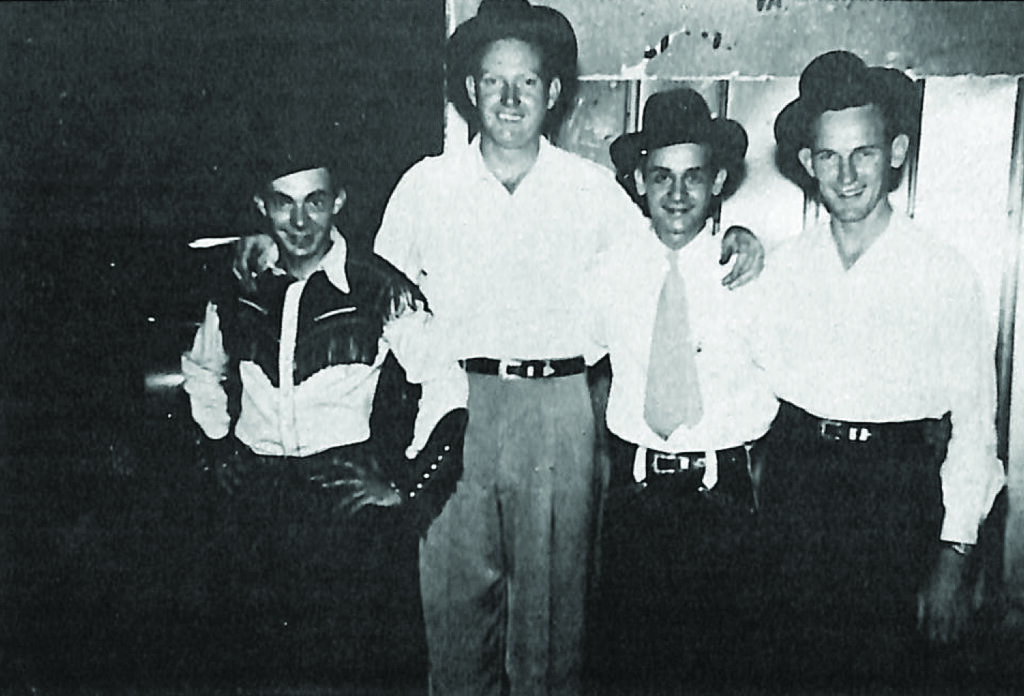
Smith was working out of WBT radio and WBT-TV in Charlotte. Reno called and asked if he could have his old job back. An interesting music business story resulted from Reno’s move back to working with Arthur Smith. In an interview printed in the September 1973 issue of Muleskinner News, Reno said, “There was a conflict in the Charlotte local of the union at that time—if there was a union banjo picker available, no other banjo picker could be hired. Shannon Grayson was on the block. Arthur became president of the union, his brother Ralph became sergeant-at-arms, and his manager, secretary-treasurer, and they eventually worked it around to where they could do anything they wanted to do.”37 Regarding his second stint with Arthur Smith, Reno said, “He featured me on banjo and started doing a lot of TV work around Charlotte. Arthur and I and Tommy [Faile] worked up three guitars. ‘3-D Boogie’ was cut using three guitars in harmony [and thus the name ‘3-D Boogie’]. I recorded quite a few numbers with Arthur.”38
The Reno & Smiley Recordings Continued
Although Don Reno was working with Arthur Smith from 1952 to 1955 and Red Smiley was working as an auto mechanic, their first recording had started to sell so well that Syd Nathan of King Records convinced them to continue recording together, even though they were not performing together. The second recording session for King was in 1953. For that session Jimmy Lunsford was on fiddle, Red Rector on mandolin, and Tommy Faile on electric bass. They recorded the session at WBT in Charlotte, North Carolina. Reno wrote all of the material for this second Reno and Smiley session. The biggest hits from this session were “Talk of the Town” and “Choking The Strings.”
Reno and Smiley recorded two sessions in 1954, totaling 32 sides. On the session, Bill Haney played mandolin instead of Red Rector and Harvey Rabon sang bass on four of the twelve numbers. Tommy Faile played the electic bass and Nelson Benton was on drums. [Note: This is possibly the first bluegrass session that included electric bass and drums.] The hits from this session included “Emotions,” “Tally Ho,” Someone Will Love Me,” and “Tree of Life.” “Limehouse Blues” and “Dixie Breakdown” also sold well. This recording session also occurred in Charlotte, North Carolina.
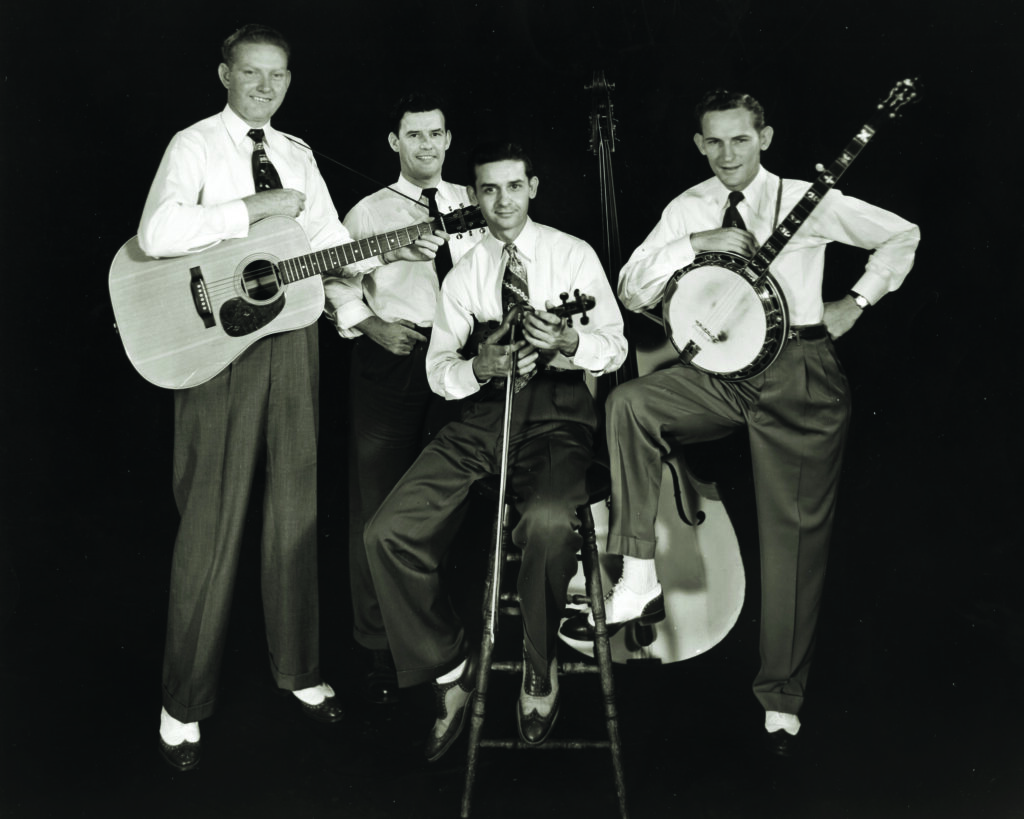
On the 8th of November in 1954, Reno and Smiley went to Cincinnati and recorded twenty tunes in twelve hours. The musicians on this session were Mack Magaha, Jimmy Lunsford, Smiley Hobbs, Red Smiley and Don Reno. Magaha and Lunsford played twin fiddles on many of the cuts. Smiley Hobbs played mandolin. On the tunes that only had one fiddle, Magaha played bass. On five of the gospel numbers, Reno played guitar instead of banjo.
When asked about Magaha joining the sessions, Reno said, “Mack had worked with me prior to going into the service. He had started working with me when I went to Greenville in 1949. He was already a terrific breakdown fiddler then. Mine was the only professional group he’d ever worked with. He worked with me for a short time again when I came back to South Carolina in the latter part of 1951, and then he went to service. He had just got out of service when he went with us to Cincinnati to record.”39 When Lunsford left the band due to poor health, Magaha joined the group.
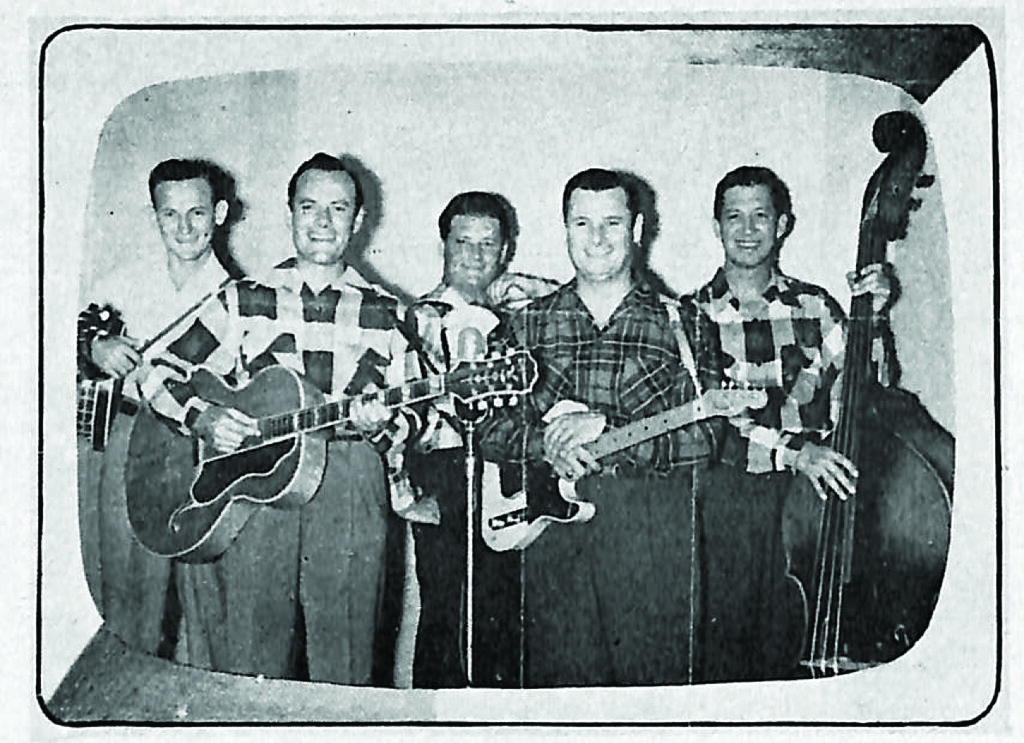
During this period of time, King was releasing a new Reno & Smiley single every six weeks. Many of the cuts from this twenty-song session sold well. Several of them, “Reno Ride,” “Banjo Signal” and “Banjo Riff” became banjo standards. When asked about becoming established as a banjo picker, Reno said, “‘Limehouse Blues’ and ‘Choking the Strings’ did a lot to establish me as a banjo player. I found out over the years that ‘Crazy Finger Blues’ had been well accepted too. ‘Limehouse’ was different enough from what had been played on the banjo by anybody else that it set me apart from the ‘Train 45’ pickers.”40
Reno and Smiley, Round Two
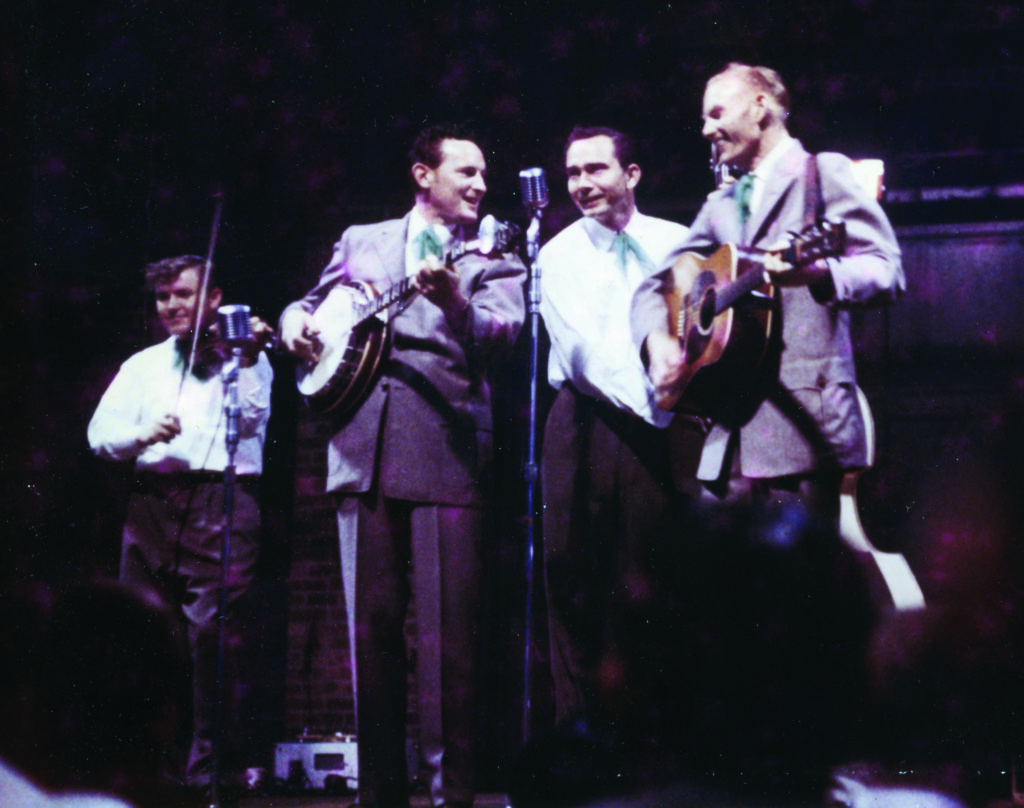
In 1955, Don Reno and Red Smiley got back together. When asked why he decided to join up again, Reno said, “I started getting offers of $400.00 and $500.00 a day for park shows because people had been hearing the records and wanted to get in touch with us. Red wanted to get back together then, so we had something to go on, so we went. It was quite a task turning in a resignation with Smith. He had been so nice to me.”41 In a different interview, Reno said, “It took me two weeks to get up enough courage to turn in my notice [with Smith] and then I did it by phone. I hated to do it—Arthur was a great friend of mine then, and he always has been. From the time I first met him when I was twelve years old, he’d been like a second father to me. He’s a wonderful man, a terrific musician, and a terrific entertainer.”42
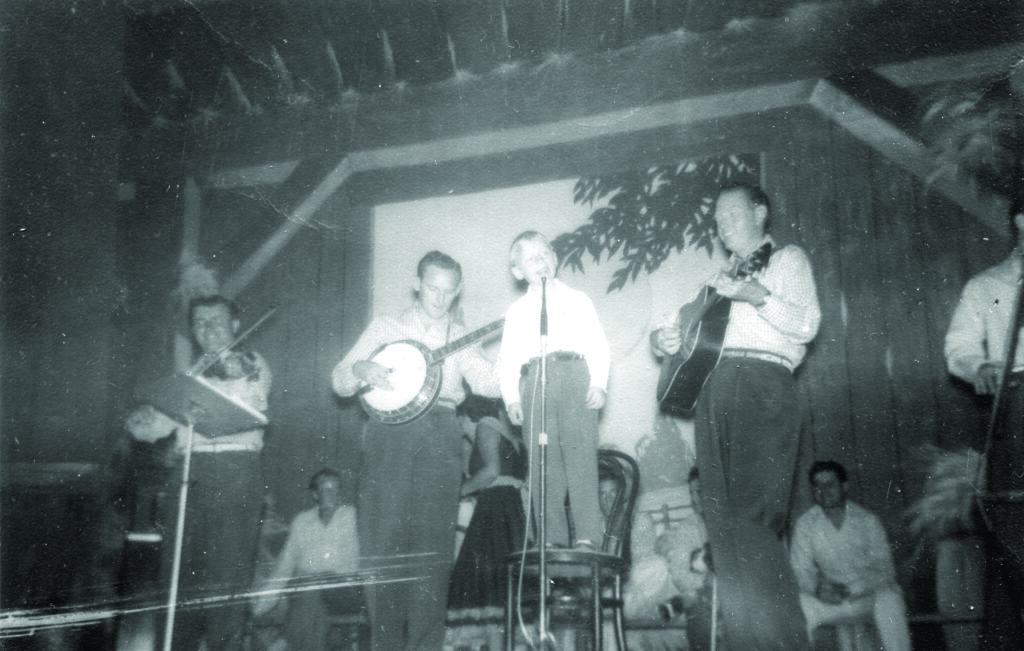
Soon after they came back together Reno and Smiley started performing at the WRVA Old Dominion Barn Dance in Richmond, Virginia with John Palmer on bass, Mac Magaha on fiddle, Red on guitar and Don on banjo. They recorded the show on Saturday nights. They also performed for WXEX in Petersburg on Tuesday nights. It was during their time at the Old Dominion Barn Dance that Don’s oldest son, Ronnie, would start performing with the group at the age of eight. Known as “Little Ronnie Reno,” he would stand on a chair and sing. Later he would also chop his mandolin and then he later started playing mandolin solos. He began performing as a full-time member of the band in 1959 at the age of twelve.
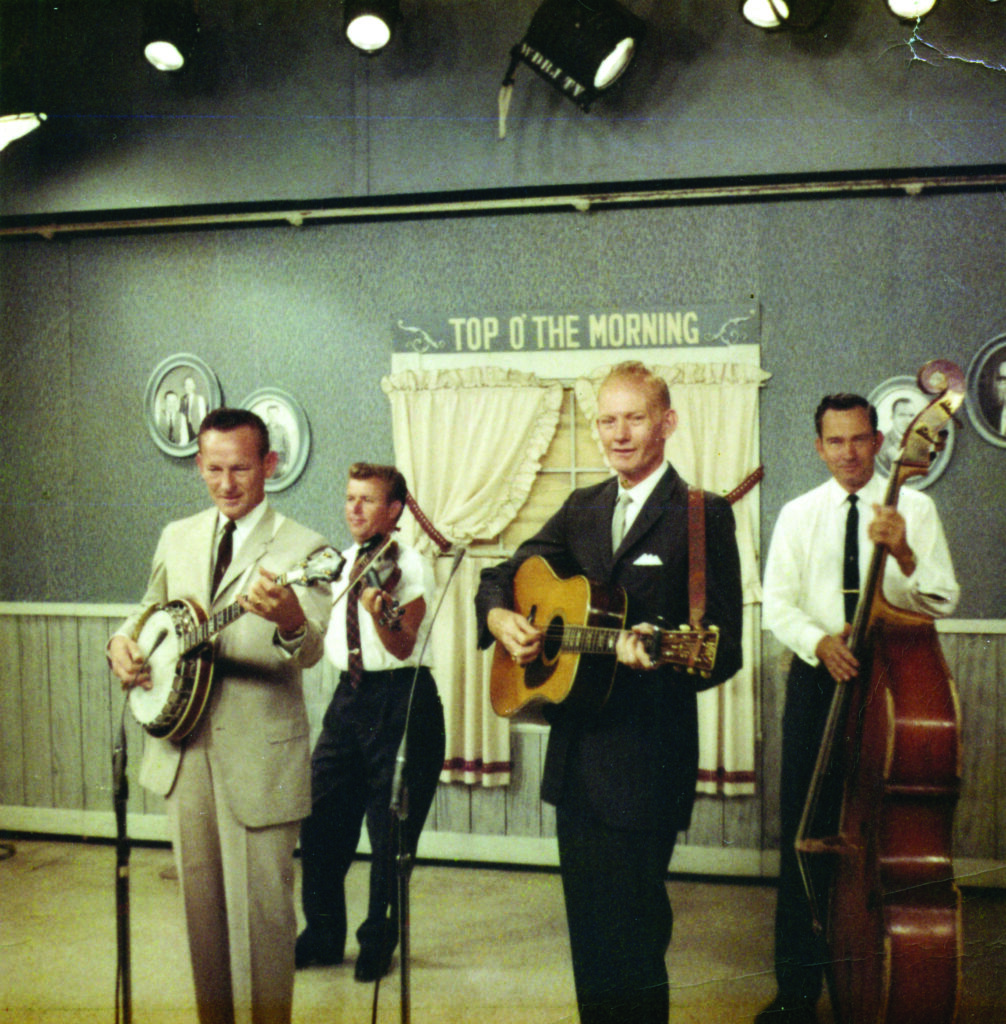
In the fall of 1955 Don and Red hired Carlton Haney to be their manager and they worked 342 days that next year. Starting at about Christmas time that year they also spent thirteen weeks on Connie B. Gay’s Washington, D.C. area television show Town and Country Time. They also appeared on national television on the Arthur Godfrey Show. On December 27 of 1956, they began broadcasting a daily, one hour weekday television show from Roanoke, Virginia over WDBJ. For the first two or three months, the show aired at night.
Then it was moved to a morning show. The television show was called Top O’ the Morning, and was hosted by Irving Sharp. The show was so popular that the station extended the program an extra half hour. The band had moved to Roanoke, but drove back to Richmond every Saturday to appear on the Old Dominion Barn Dance until the spring of 1957. As soon as they left the Old Dominion Barn Dance, they started performing on the WDVA Barn Dance in Danville, Virginia and stayed there until December of 1959.
In 1956, Reno wrote and recorded “Country Boy Rock and Roll” as a parody of rock music, which was rapidly gaining in popularity. This became the first recorded song in bluegrass that featured lead flatpicking on the acoustic guitar. As a result, flatpicking guitar legend Dan Crary likes to point out that the first flatpicking guitar solo that appeared in bluegrass music was “recorded by a banjo player performing a rock and roll song.”
In 1956, Mac Wiseman got a job working as the Artist and Repertoire (A&R) manager for the Dot Records country music division. One of the earliest acts that Mac secured for the label, early in 1957, was Reno and Smiley. Wiseman had known Reno from back when he joined Monroe in April of 1949. Wiseman and his wife had become friends with Don and his wife, Chloe, and had lived with them for a short time when Wiseman first came to Nashville from the WSB Barn Dance in Atlanta. When Reno and Smiley joined the Old Dominion Barn Dance in Richmond, Virginia, Wiseman was already a member and one of the show’s top stars. During that period of time, Reno, Smiley, Wiseman and Mac Magaha would go fishing together about two or three days a week. Reno & Smiley recorded one session for Dot and then went back to King. Benny Martin played twin fiddles with Mack Magaha on a few of the numbers on the Dot recording. Hank Garland can also be heard playing mandolin on this session.
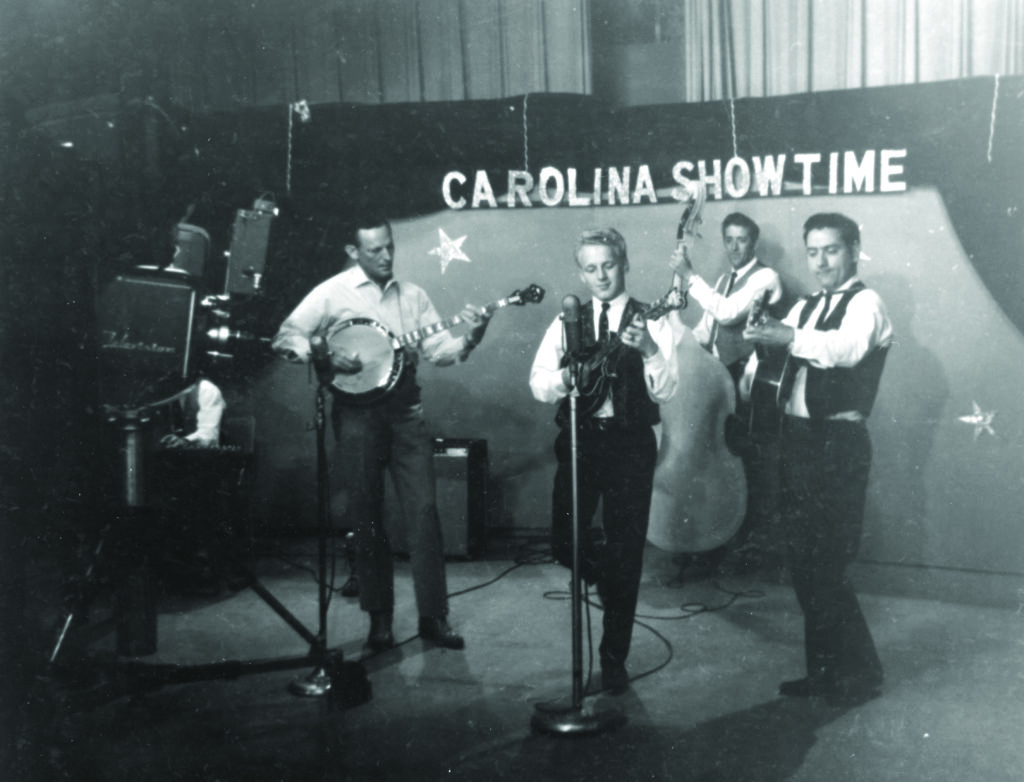
By 1958 Reno & Smiley were also performing on a television show out of Harrisonburg, Virginia on WSVA. That show lasted seven years. During this time, they also had a regular gig at the Verona Roller Land Skating Rink in Verona, Virginia, which was about 20 miles from Harrisonburg. Regarding their schedule, Reno said, “We went to Roanoke December 27, 1956, and started the Top O’ The Morning show. That was five days a week from 7 till 8 o’clock. Then they added another half hour, and we were on from 6:30 to 8, five days a week, live. Then we started a TV show in Harrisonburg, Virginia on Wednesdays, and an hour show on Saturday nights.”43 The band also toured package shows with country artists like Jim Reeves, Ray Price, Marty Robbins, Johnny Cash and Homer & Jethro.
In an interview that was conducted with Reno for BU in June of 1982, Don was asked about his early days with Red Smiley and how they developed their distinctive Reno and Smiley sound. Reno said, “Me and Red Smiley was ahead of everyone for years, because we didn’t do just hardcore bluegrass. We could do anything from the bluest bluegrass up to the newest tune of the day. I wanted to take the banjo further from the hills where people were accustomed to it, in the South more or less. I knew there was a market for the banjo. I knew all these songs. I was fortunate enough to learn them when I was a kid—pop tunes of the twenties and thirties, things like that. If it was a hit on Tin Pan Alley, then everybody in the world could hum a few bars. If it had been in movies, like ‘Limehouse Blues’—the tune always kind of haunted me and I would say that would make a good tune for the banjo. People would say you can’t play that on the banjo. I’d say if you can play it on one instrument you can play it on another.
“I spent a lot of time learning all those tunes—pop, Glenn Miller, Guy Lombardo—anybody that had something good. I knew that I could reach another market with those tunes. If they heard the banjo, they would take a liking to it, I figured. I knew that ‘Cripple Creek’ and ‘Old Joe Clark’ wasn’t gonna do it. ‘Cause if you’re not a musician, you don’t know one tune from another. All those banjo tunes sound the same. I did extensive research on the music and found out what were the hits from 1882 to 1946. It worked. In New York, Chicago, big towns, people who were buying that stuff (pop tunes) started buying banjo tunes. What I was trying to do was get the banjo to a larger market.”
As a follow up to Reno’s answer, the interviewer asked, “A lot of times when a pop tune or country song is done bluegrass style it doesn’t go over so well. How were you so successful at adaptation? Don answered, “Distinction. Don’t muddy it up until it sounds like a glamorization. When people hear Bill Monroe, they know it’s Bill Monroe. When they heard me and Smiley they knew it was Reno and Smiley. That’s our style. So we could take any song we wanted to and apply it to our act. It’s hard to find a style today. I don’t think bluegrass musicians are as dedicated to it as they were back when some of us older ones were coming along. They don’t work. They don’t do nothing unless they hear somebody good doing it. They’re not putting their feelings into it. You gotta use your own touch and feeling in a song, I think. Red and I did a song because we thought it was a good song. And we had feeling in the song because we liked it. It shows through in the end. I do something I don’t like, I can’t put feeling into it.
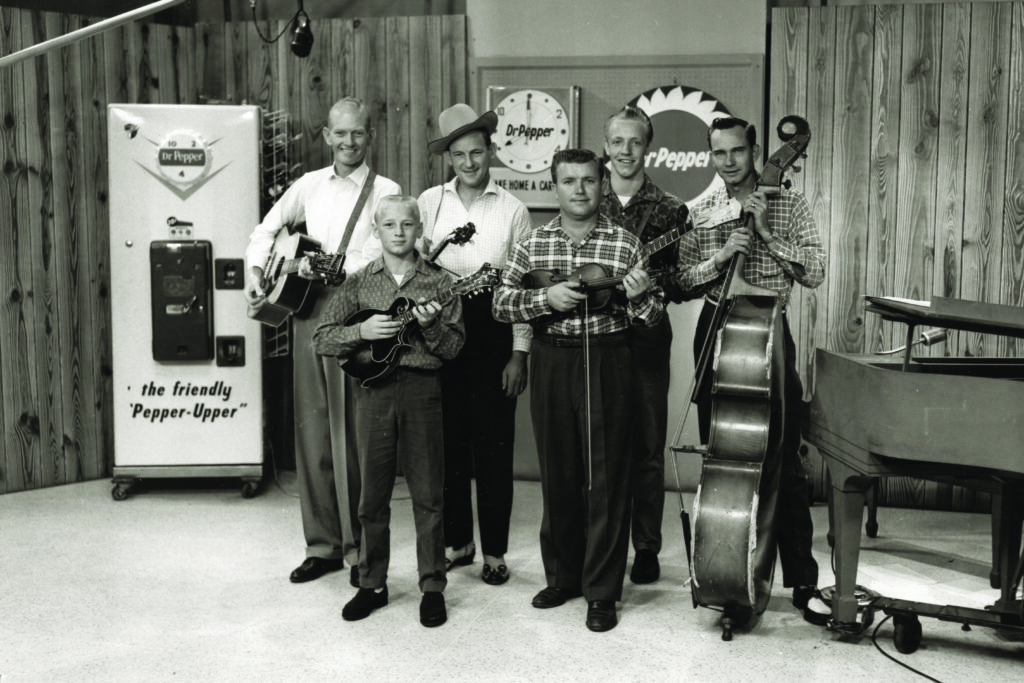
“We did an hour and a half TV show every morning for 12 years in Roanoke, Virginia. And in Harrisonburg, Virginia, it was two hours a week up there so we had to have a large repertoire of songs. We didn’t believe in repeating ourselves. At one time we had it down so we wouldn’t repeat a song on a show for at least a month. Every time a new song came out, we didn’t care who it was by, we put our arrangement on it, and put it on the show within two days after the record hit the market. We were recording like crazy. We had a new release every six weeks. I wrote 479 songs that have been recorded. So actually, I had enough of my own material even if we didn’t do anybody else’s numbers. But we did, cause people would request a hot song. You know, Jim Reeves, Ray Price, George Jones, anybody.
“Your overall sound is, I guess, just like making bread … You’ve got to put so many ingredients into it to make it. You can’t overdo it and you can’t under do it. But hardly ever you’ll catch two ladies’ biscuits that taste alike. Ever notice that? Music is the same way.”
Then the interviewer asked, “But what makes the biscuits different?” To which Don replied, “It’s their own originality. Their own recipe. And you can try to copy somebody making biscuits and you won’t never get the same biscuits they made. I never seen it done yet.”
After Reno & Smiley
In about 1966, Don left working with Smiley. In the interview Kuykendall conducted with Reno in May of 1971, Reno said, “We went to Richmond, Va. and from there to Roanoke, spent 10 years in Roanoke, doing the early morning TV show we started in ’56 and I’m out on the road touring because I like to meet people. Red’s health just won’t permit him to take the strain of the road.” When asked if that was the reason the partnership broke up, Don said, “Yes, that’s the reason. Red Smiley is certainly a wonderful guy. We never had a cross word. I enjoyed working with him and I’ll always treasure about 300 records that we made together.”
Red Smiley said, “We were limited (in area) by the restriction of the TV show and Don wanted to expand a bit more and I didn’t feel I was able to do it. Don and I never were enemies. With all honesty, Don and I never had a cross word.” 44 After Don left the show in about 1966, Red Smiley continued with the show with his band Red Smiley and the Bluegrass Cut-Ups (Red Smiley, Billy Edwards, Tater Tate, Gene Burrows and John Palmer) for another four years.
After Don left Red, the first album he recorded was Mr. Five String on the Dot label in January of 1965. Chuck Haney, Ronnie Reno, Duck Austin and Jimmy Buchanan recorded with Don on that album. Don and his son, Ronnie, performed together with Ronnie on the guitar. Also in the band were Duck Austin and Chuck Haney. Don’s daughter, Jean Reno, also occasionally played accordion with the band. In 1968, Ronnie would move on to play with the Osborne Brothers and then with Merle Haggard. When his father passed in 1984, Ronnie had his own band, but then decided to form The Reno Brothers band with his brothers in 1985. Don Reno’s sons, Dale and Don Wayne, had been born in 1961 and 1963, respectively. Don’s youngest child, his daughter Mitzi, was born in 1979.
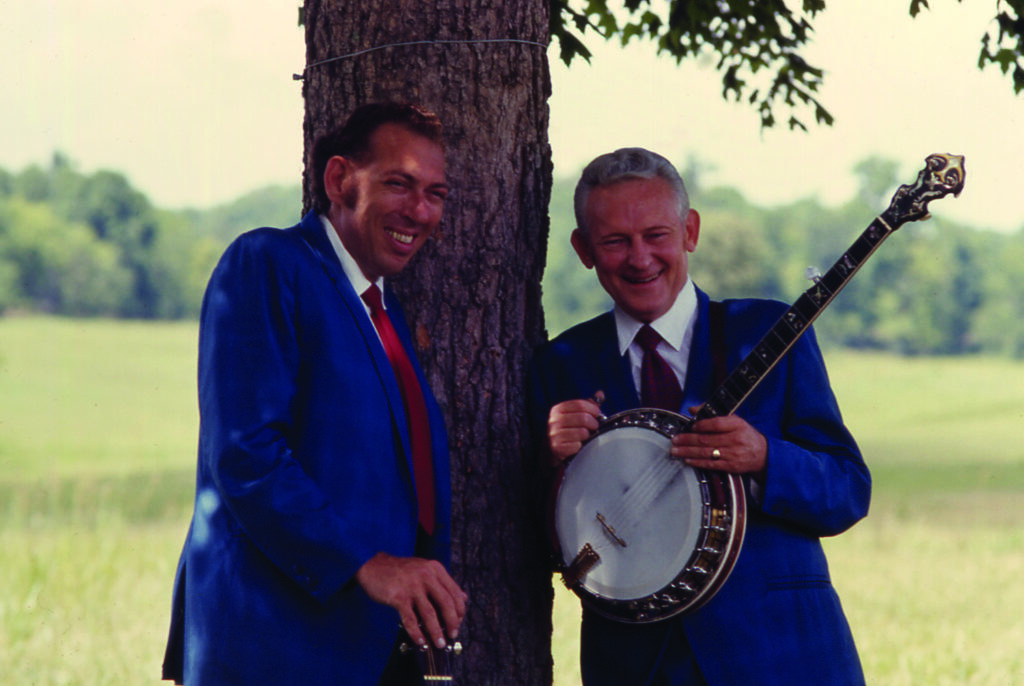
Don Reno performed with Benny Martin for a while starting in the fall of 1965 and they cut a full album of songs that came out on the Cabin Creek label as Bluegrass Gospel Favorites. They also cut a four-side session for the Monument label. Those four sides were released as singles. When asked why he and Benny split, Don said, “Benny had been used to working by himself. He like to work too many clubs to suit me. He’d been working joints where he used electrification, and I didn’t go for that too much.”46
In the spring of 1966, Don cut his Monument album, Don Reno A Song For Everyone, in Nashville. He brought Ronnie Reno, Jackie Phelps, Benny Williams and Junior Huskey into the studio to record with him. Ray Pennington was the producer and he also played snare on these sessions. Included on this album were two of the sides that Reno had recorded with Benny Martin. For performances at this time, Don didn’t have a regular band. He and Ronnie would travel and perform and pick up musicians to play with them. Some of the musicians who would sit in included Duck Austin and Jimmy Lundsford. Don moved to Nashville in June of 1966 and signed with Pamper Music as a writer, but didn’t stay there long.
Reno and Harrell
In about December of 1966 Don and Bill Harrell joined up and Don moved to Riverdale, Maryland. Don Reno and Bill Harrell first met when Reno & Smiley were performing at Wayson’s Corner, about 20 miles outside of Washington, D.C. Harrell started joining the band on stage and soon after became their mandolin player until he went into the service and they hired Benny Williams to play mandolin until Ronnie Reno became the full-time mandolin player. While Harrell was with the band, they performed for seven months on Connie B. Gay’s Washington, D.C. area television show Town and Country Time.
Red Smiley, who had retired in 1968 got “music fever” again and joined Reno and Harrell in 1969 and stayed with the group until he passed in January of 1972. Don Reno said, “The last two years and five months that Red worked with me and Bill Harrell were the happiest years we spent together.”45 Reno & Smiley recorded a project together in 1970 for Rome Records. It was titled, Reno and Smiley Together Again.
In 1972, Don went into the Starday Records studios in Nashville with Buck Ryan on fiddle and Bill Harrell on rhythm guitar and recorded a project of flatpicking guitar instrumentals. The record was not released at the time and was forgotten until 1998 and released in 1999 under the title The Golden Guitar of Don Reno.
In an interview for Bluegrass Unlimited in May of 1980, regarding his time with Don Reno, Bill Harrell said, “The time I spent with Don (from 1966 to 1977) was 10 good years. We did a lot of things together that were a lot of fun…I want our fans to remember what Don and I did as a team, but I also want them to look forward to what each of us will do in the future.” Others who performed with Reno and Harrell over the years they were together included Jerry McCoury, Del McCoury, Ronnie Reno, Duck Austin, Ellis Padgett, Ed Farris, George Shuffler and Buck Ryan.
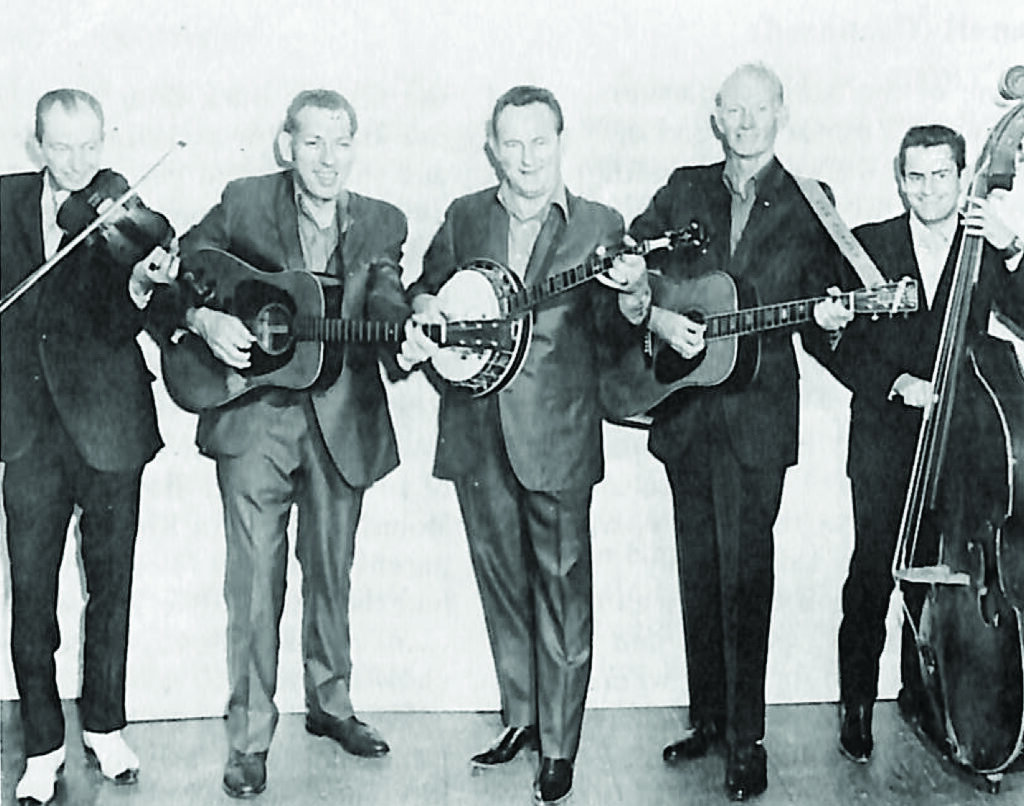
When Bill Harrell was in an automobile accident in 1977, that left him with two broken legs, Reno was without a singing partner again. He then began performing with his sons Don Wayne and Dale. Buck Ryan joined them on fiddle and Bonny Beverly on rhythm guitar. In 1978 Steve Wilson joined them on Dobro.
The Entertainer
In addition to being a very talented instrumentalist and songwriter (as of 1980 Reno estimated that he had written 457 songs), Don was also the consummate entertainer. When you watch old video footage of Don on stage, he is always engaging the audience.
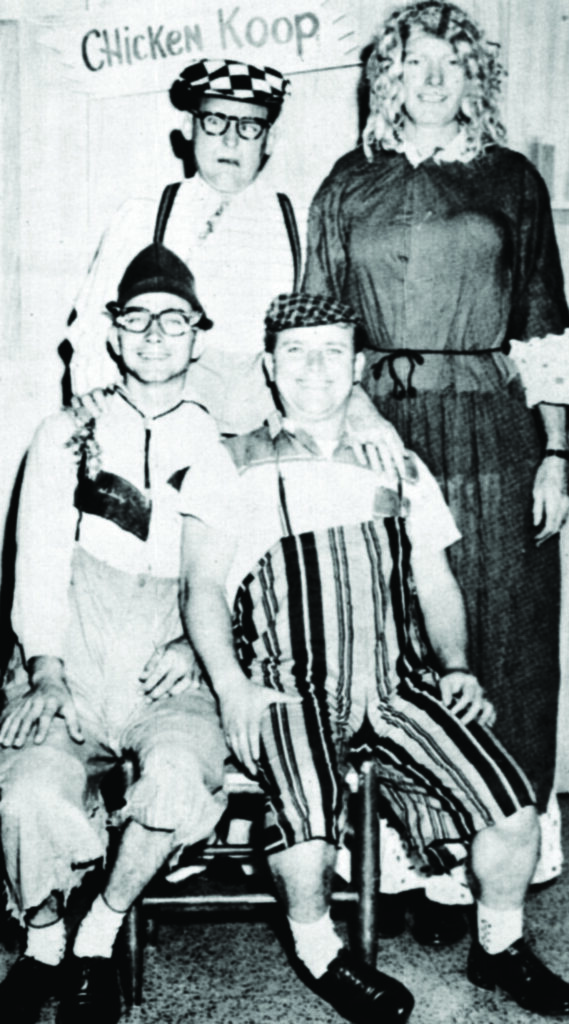
Back in the early days of bluegrass, most every act included comedy. Usually, the bass player dressed up and acted the part of a rube. Prior to Scruggs joining Monroe’s band, many of the old-time banjo players were also comedians. Reno had a character that he played called Chicken Hot Rod. Reno explains, “I’ve done comedy all my life and my brother and I had a ‘Chicken Hot Rod’ many years ago. The skits we worked out then were more action and not many words, but most people will remember that long after they have forgotten us.”47 The Reno & Smiley band all had characters that they played. Their comedy skits were billed as “Chicken and Pansy Hot Rod and the Banty Roosters.” Magaha’s mother had made Smiley a dress and they bought him a wig when they were in New York to perform on The Arthur Godfrey Show. Smiley’s name was Pansy Hot Rod, Palmer was Mutt Highpockets, Magaha was Jeff Doolytater and Reno was Chicken Hot Rod.
The first time Reno performed as Chicken Hot Rod was when he was with Tommy Magness. He and Bill Haney first worked as “Chicken and Gravy” and Magness changed it to Chicken Hot Rod.” When Haney went back into the service, Reno continued using that name. Reno also did the Chicken Hot Rod bit with Arthur Smith’s brother Ralph and they called it “Chicken Hot Rod and Brother Ralph.”
When Don Reno was interviewed for the June 1982 issue of BU, he talked about the importance of being a good entertainer and connecting with the fans. Reno said, “Above everything else in the business, treat fans just like you would if they were relatives coming to see you. A man will never forget you if you go up to him, shake hands and pat him on the back, whether you know him or don’t know him, and talk to him for a few minutes. And he’ll go over and tell people ‘I know Don Reno personally.’ If you see him again, make sure you speak to him and say it’s good seeing him again. I never forget faces. Names I will, but not faces. If I see you one time and see you ten years from now, well, I’ll know I’ve seen you.’
“I feel like I owe it to the people. And I love the people. I love to entertain for the people. And I love to get their reactions, their viewpoints. Everybody’s got something good if you’ll listen to them and it might do you some good. So pick out the good here and yonder and you find yourself taking somebody’s advice and maybe you never seen him before. Later you think so and so said this, and you start thinking about it, and later on it starts making sense to you.
“You stay down there with those people! Once you get over the people, you don’t know what you’re doing then. I mean, you’ve left them! You’ve lost touch with the audience. And when you lose touch with them, it’s like a phone cord. If somebody cuts the line you can’t talk to them. You don’t know what to sell them. You don’t know what you’re selling. I know what I’m selling. Because I stay with the people. I get out and talk with everybody.
“I never made a show out in my life. I never know what I’m going to play when I go up on stage. I just look out at the audience and study it. I can tell by looking at the faces what they want.
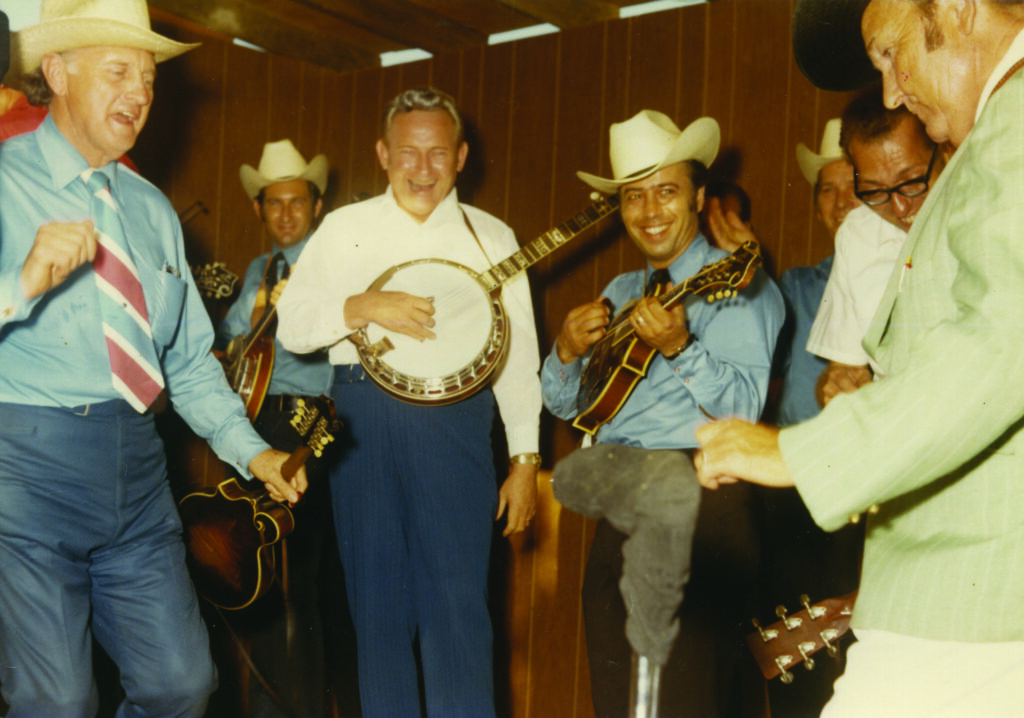
“I figure it like this: if you’ve changed people’s moods seven times in 45 minutes you’ve put on a good show. You don’t want to get them too sad. You want to get them to the top, then drop them back down then start them going back up again.
“But if they want all happy music, I’ll playing nothing but happy music. If they yell out for a song and I know just two words to it, I’ll try it, if they keep calling for it. If I fail to change their mood, I’ll go back to what they like. Because I play what they want.”
Don Reno spent his whole life, from the time he was a young boy until he passed in 1984, entertaining his fans. He was an extremely talented multi-instrumentalist and songwriter, but without having the attitude towards entertaining his fans that he expressed in the last few paragraphs, I don’t think that he would have had the great success that he achieved in his lifetime. He was one-of-a-kind.