Della Mae and the Spirit of the Sisterhood
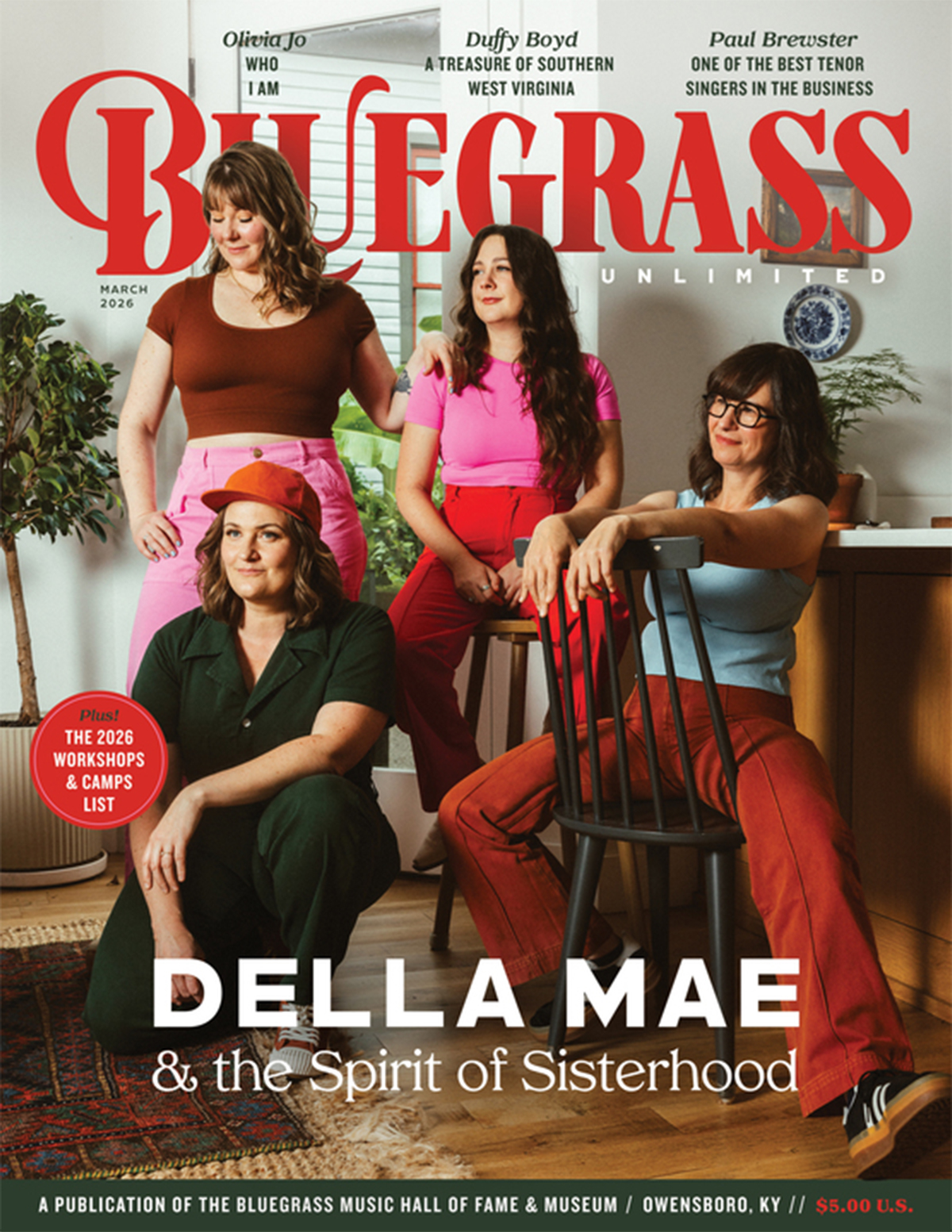
It’s a dreary January evening, but a quiet euphoria emanates from the four members of hard-driving all-female bluegrass group Della Mae. Earlier in the day, Kimber Ludiker, the group’s founder and a fifth-generation fiddle player, had laid eyes for the first time on the finished product of their new album, Magic Accident, on Compass Records. Now the Dellas (as they call themselves) collectively savor the moment.
“It’s a great feeling of accomplishment,” says Avril Smith, a founding member and lead guitarist. “We’re really proud of the music and excited to get it out there for people to hear.”
Formed by Kimber in 2010, Della Mae won widespread acclaim in 2013 with their Rounder Records release This World Oft Can Be. The album received a GRAMMY nomination for Best Bluegrass Album and helped Della Mae earn the 2013 IBMA Award for Emerging Artist of the Year. It solidified Della Mae’s reputation as a bluegrass powerhouse, outspoken advocates for women in music, and festival crowd favorite for their stellar and muscular musicianship, free-wheeling, adventurous approach to music, and considerable onstage energy and sass.
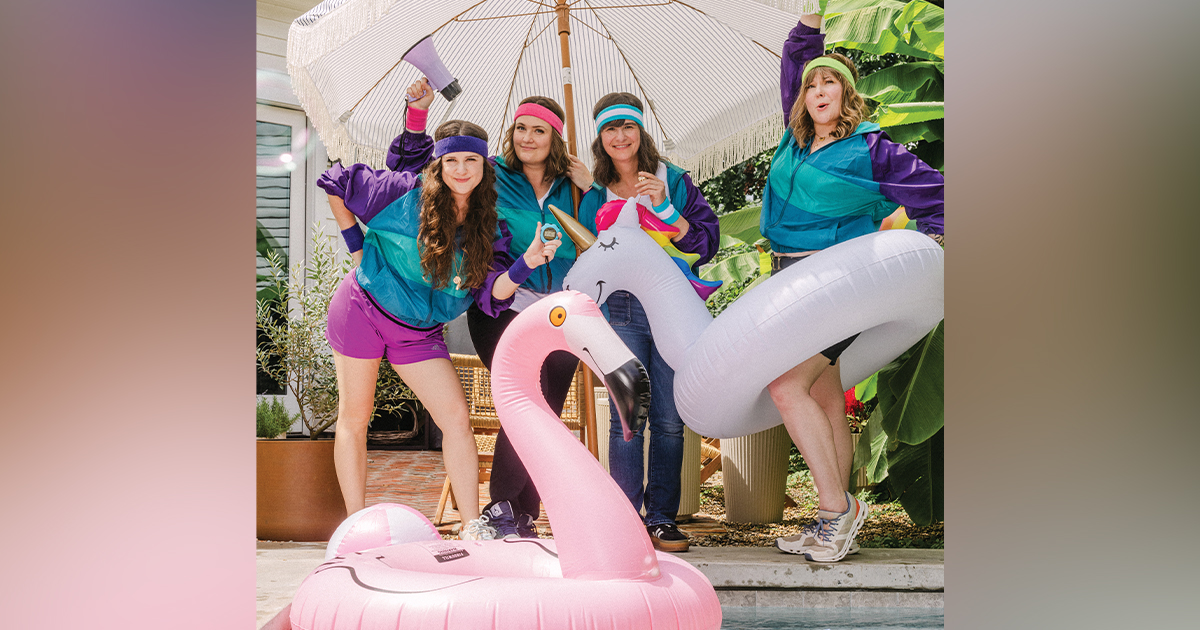
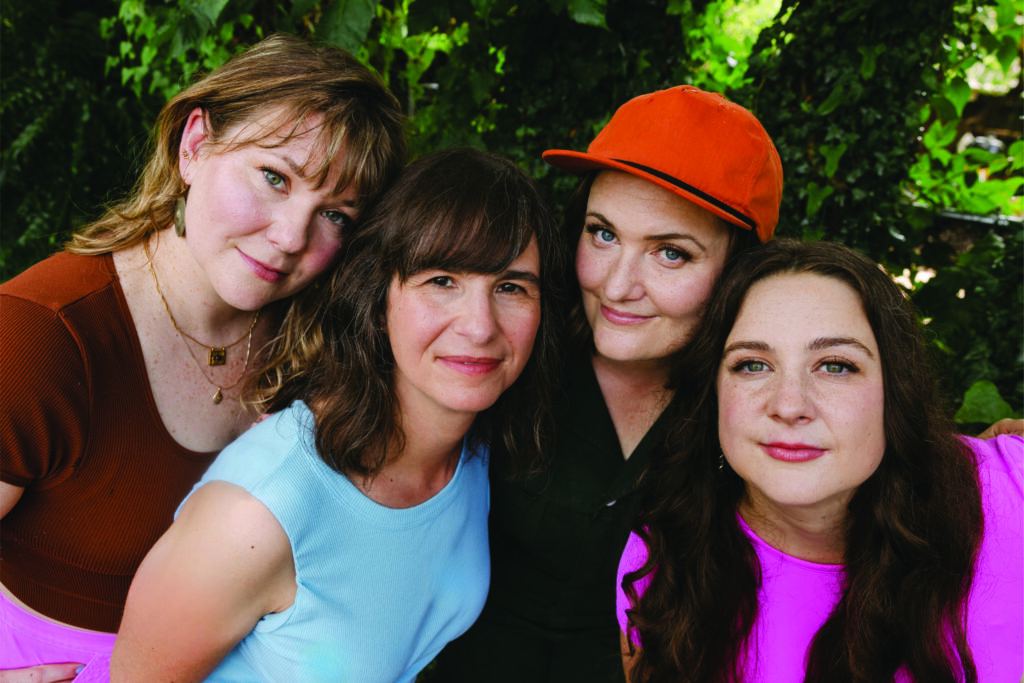
In addition to Kimber and Avril, Della Mae also includes Celia Woodsmith, long-time lead vocalist, guitarist and washboard player; and reigning three-time IBMA Bass Player of the Year Vickie Vaughn, who shares lead vocalist duties with Celia. And while Celia and Kimber do most of the talking onstage, in a conversational setting, all the Dellas have things to say.
Magic Accident
Magic Accident reflects the hard-won wisdom acquired in the years since Della Mae’s 2021 album Family Reunion. Their new songs range from traditional country to straight-ahead bluegrass to just plain rollicking. Musically, Della Mae keeps things interesting with their instrumental mastery; harmonies that blend like the family they have become; songs that playfully change time signature and tempo mid-stream; and chord progressions that follow the lyrics on unexpected detours before resolving.
Emotionally the album runs the gamut: despairing of a loved one ever changing (“What You’re Looking For”); the sweet familiarity of lifetime lovers (“Nothing At All”); and encouragement to forge your own path (“Outrun ‘Em”). But the song that perhaps best embodies Della Mae’s philosophy is “Little Bird,” penned by Celia along with co-writer Caroline Spence.
Little bird in her nest
Made of the pieces that serve her best
When she’s done she can rest
‘Cause she’s back home again
And in the final verse:
Little bird leaves her nest
Ain’t nobody can tell her to rest
To the north, east and west
‘Til she’s back home again
This bird has agency to make her own choices. She is her own bird.
Mission-driven though Della Mae may be, Magic Accident doesn’t preach; rather, it uplifts, encourages, and occasionally – particularly on the title cut – takes joyful flight. It’s title notwithstanding, the album’s optimism apparently surprised even the Dellas.
“I don’t think we set out to make a record full of little happy moments, but that’s exactly what happened,” says Vickie. “The overarching message is finding joy in the midst of all this…chaos…we’re living in.”
“Magic Accident is a love letter to younger women: the young women that we were, the young women that we mentor, the young women coming up in music now,” says Celia. “Do your own thing; be proud of yourself; protect your peace.”
Magic-Making Collaboration
The Dellas turned to Alison Brown, GRAMMY-winning banjo player and co-founder of independent label Compass Records, to produce the album. A long-time collaborator on previous Della Mae projects, Alison proved a natural fit, as did sound engineer Matt Coles, who has worked with the Dellas on numerous projects.
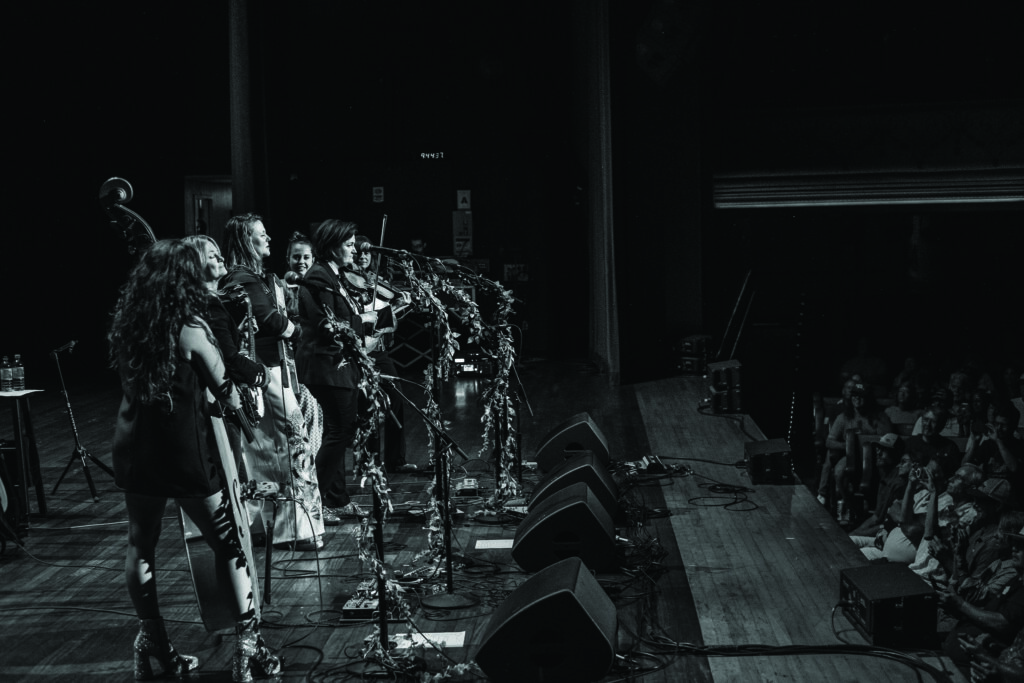
Della Mae’s musical footprint, like that of its new record label, embraces a range of influences. “Della Mae obviously has a foot in the bluegrass space,” says Alison. “People think of Compass as a bluegrass label because I’m a banjo player, but our footprint is more expansive than that, as is Della Mae’s. Some music on the new album falls in the Americana space, and they dip into the indie and contemporary folk spaces. They’re a roots music band…but their roots are in bluegrass.”
Kimber concurs. “We’re a string band, a roots music band, all those things, but we were born into bluegrass and we’ve never shied away from calling ourselves a bluegrass band. We’re a bluegrass band, dang it.”
“Alison is a hero and mentor for us,” Kimber adds. “She’s always been a sounding board for Della Mae, somebody we could talk to and ask advice, and her musicianship is just insane. So it was special to do this record with her.”
Alison, too, found the experience rewarding. “Every day they would start a crockpot with something cooking for lunch, so we’d do tracking all morning, then stop to eat,” she recalls. The Dellas’ homey vibe, she says, provided a safe place for artistic expression to flow.
“It’s a wonderful, nurturing, female energy,” she observes. “In the studio it creates a comfortable, comforting environment that allows everyone to do their best work and not be afraid to reach for the next bar.”
Della Mae brought high-quality songs with them to the studio. By then, each song on Magic Accident had been road-tested. “They brought fantastic songs to this project,” Alison says. “Everything is original on the record except for the Bruce Robison song, ‘Lifeline.’ Everything else they wrote … The songs almost played themselves.”
“Sometimes you’ll write songs and record them, then the first time you play them live is on your album release tour,” Kimber says. “But we collected these songs over time, toured with them and honed them. And because we got to spend time developing the songs, it made for what I think is a very powerful, cohesive record.”
“We knew the sound we wanted and where we were going with most of the songs, but Alison added a little extra sparkle,” observes Celia. “She’d hop on the track and play an amazing take, or come up with a cool arrangement or chord idea.”
“They had roadmaps and a good starting point for everything, but nothing was set in stone,” Alison reflects. “There was room for the music to flex if need be. And it was in the moment, so if someone had an idea to change something, we could try it to see if it changed it for the better. It’s fun for me, as a producer, when there’s room for input and flexibility. And there was a lot of room for banjo so I got to play on several tracks.”
“Alison has a very organized way of approaching a song,” says Celia. “Though we obviously put great effort into it, this album felt pretty effortless. And as producer and engineer, Alison and Matt played a big part in that. They’re one reason you hear so much joy in this album.”
The Songs and Their Writers
“One special thing about making this album is how collaborative it was, with Alison and also with other songwriters we all admire,” notes Avril.
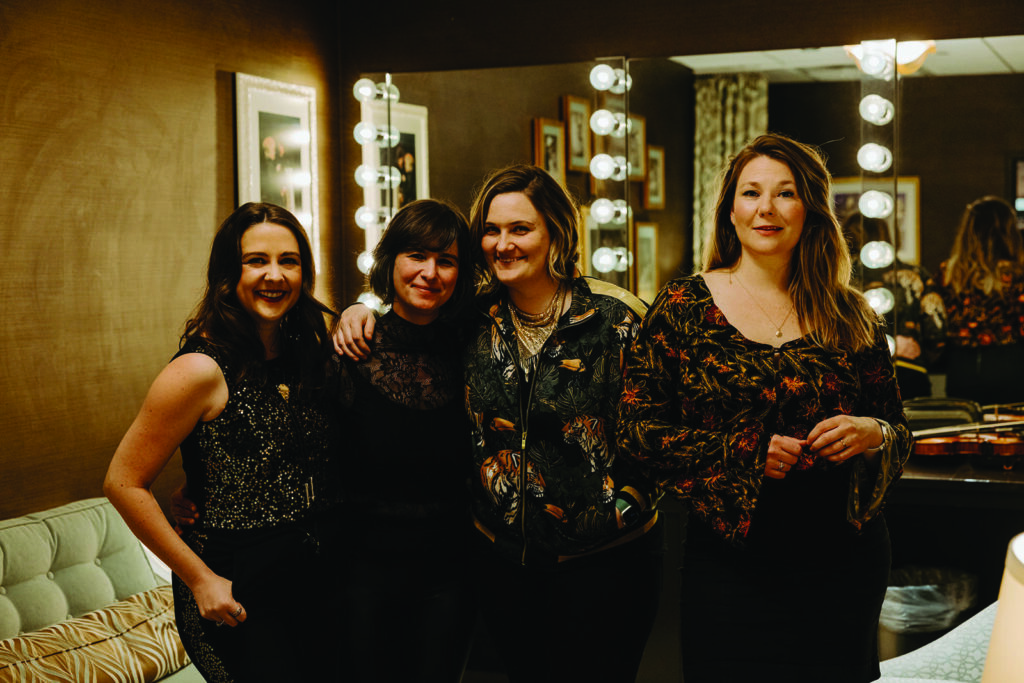
In addition to all four Dellas, album writer credits include Melody Walker, Becky Warren, Brennen Leigh, Phoebe Hunt, Mark Erelli, and particularly Caroline Spence, who wrote with several of the Dellas at a prolific two-day writing retreat that yielded several tracks on the album.
“There was a surfeit of great material,” Alison says. Deciding which songs to include, says Celia, is an intuitive process that the songs themselves sometimes guide.
“There’s a sixth sense as to which songs won’t make the cut,” she says. “Even great songs might be for another moment. You listen to what you have as a whole. Is there a feeling we need? A certain kind of song? Once you have everything, it’s best to just leave it.”
“A song we might not choose for this record may wind up on the next one,” explains Kimber. “It may need a little space so you can come back to it with fresh ears. Some songs just need more time.”
Cohesion
The time between albums brought the Dellas to new levels of cohesion and commitment. “It’s the nature of bands to always have some movement,” observes Kimber. “This particular lineup has been a band for seven years now, a good length of time for any band. Right now touring is tough, with expenses and overhead. We feel proud we’re still here. I think we’re the longest touring full-time all-female bluegrass band in history.”
Although single cuts from Vickie’s recent solo album Travel On have enjoyed steady airplay, Della Mae remains her top professional priority. “Since 2021 my time has mostly focused on growing with Della Mae,” she says. “For me, the difference between Family Reunion in 2021 and Magic Accident is we’re a more cohesive unit. When we recorded Family Reunion, I’d only been in the band a year or two, and I was still nervous about making creative decisions. Now we’ve spent time on the road and cowriting together, and we feel like family.”
“In making this album, everybody had equal creative input without fear,” Vickie continues. “We all had the same vision for each song, especially when we were writing them and coming up with the arrangements. And it’s because of time spent together and what we’ve developed over the last five years with Della Mae. It’s easy to work with people when you all have the same vision for a piece of art.”
“I think we’ve come into our own over many years,” observes Celia. “This is our seventh album. And even though they all sound like Della Mae, you can hear and see the growth from our first album to now.”
The Path to Now
The Dellas come from varied musical backgrounds. Vermont native Celia Woodsmith’s soulful, blues-tinged vocals are a mainstay of the Della Mae sound. Celia moved to Boston in 2007 to pursue a career as a rock ‘n’ roll singer. Then she met Kimber at a bluegrass jam.
“We started hanging out and she asked me to sing in Della Mae. It was a wild change in my life,” Celia recalls. “I didn’t know much about bluegrass, but I learned very quickly because of the community, the sharing of songs and the jamming, which is so important to what bluegrass is. It was a good education, going to festivals, playing around campfires, hearing the same songs again and again. I don’t know much about music theory, but I’ve been able to develop my ear pretty well over the years just learning to play songs the bluegrass way.”
Bassist and co-lead vocalist Vickie Vaughn, who hails from Kentucky, began singing professionally at the tender age of 9. “From the time I was 9 years old until I turned 18 I worked every weekend at the Kentucky Opry back home,” she relates. “I was steeped in traditional country music before bluegrass, so it wasn’t my first love, but it grew to be a close second. I have pride of place, and knowing the history of the music, it feels authentic to Kentucky, and it feels authentically me. I wanted to chase that, so I moved to Nashville, went to school at Belmont, and joined a gospel band. But I was just striving, until Kimber asked me to be in Della Mae.”
Spokane native Kimber Ludiker comes from five generations of fiddlers and is a Grand National Fiddling Champion. She also plays mandolin on stage and on the record. “I grew up in a fiddle family,” she says. “Almost everyone in our family plays; our holidays are just big jam sessions. So I was lucky to grow up surrounded by music. My parents had a music camp when I was growing up. It started out as a house camp, where we’d have 10 students come and stay at our house for the week, and it turned into a big fiddle camp with a couple hundred people for two weeks back-to-back. I also have educators in my family, so I also got the education bug.”
Kimber sees her family’s musical legacy as a form of love being passed from one generation to the next. “The love passing on fits so well with bluegrass music, in that it feels like you’re giving something to somebody that you love, sharing something you love so much you want them to do it, too, and to love it as much as you do.”
Today Kimber directs four different music camps, including IBMA Kids on Bluegrass, Ashokan Bluegrass Camp, Idaho Bluegrass Camp, and Youth Academy for the California Bluegrass Association. “When I’m not on the road my nose is in spreadsheets trying to organize these four music camps every year,” she says. “I love seeing kids so eaten up with bluegrass music, understanding at an early age that it’s about community, bringing people together and building friendships with other kids just as obsessed with it as you are. It’s great to see young people come together and become obsessed with something together… they love this music so much.”
Avril Smith also grew up in a musical family and began playing guitar at age 8. Her formative years in New York provided little exposure to country music and none to bluegrass; she listened to – and played – rock, pop and jazz. But a college friend, a bluegrass singer, introduced her to the music.
“I heard something in the music that really moved me,” she recalls. “I was also drawn to the roots music tradition where people who don’t know each other well and maybe don’t have a lot in common could still sit down together and jam for hours. I developed close friendships with other players and singers [that] propelled my excitement for the music and eventually led to meeting the women of Della Mae.”
Cultural Ambassadors
Della Mae serves as cultural ambassadors with the U.S. State Department, a role they won by auditioning for the American Music Abroad program. Their first trip overseas, in winter 2012, involved a six-week, six-country tour of Central Asia.
“I remember asking Kimber, ‘Central Asia? Like Thailand? Where are we going?’” laughs Celia. “We got acquainted with the “stans” – Kazakhstan, Tajikistan, Kyrgyzstan.”
“Each trip is a little different, but it typically involves a free public performance and collaborating with local musicians,” says Kimber. “We also go into schools to hold teaching clinics. In our work with the State Department we teach bluegrass programs and music to people all over the world.”
Celia recalls playing for an all-girls school in Pakistan. “The girls nearly tore the hinges off the doors trying to get into the auditorium to come see us.”
Serving as cultural ambassadors is “living the mission statement we’ve had as long as we’ve been a band,” she says, “to spread music, be mentors and teachers, and – by virtue of who we are, women playing bluegrass music – encourage young women to own their own power and step on a stage if they want to. We like to lead by example.”
“You can never tell what your reception is going to be. But when you’re exchanging music, and sharing a bit about yourselves personally – that exchange always goes incredibly well. It’s a beautiful thing.”
Voices of Experience
Celia has some practical advice for young artists. “Own your power and your space – in this music, and on stages,” she says. “Know your worth.”
“Take time to learn about all aspects of your craft,” she adds. “I encourage young musicians to learn about your gear and your instrument and how you want your instrument to be heard. Then learn how to articulate to a sound person what you need. Be curious about your gear. Learn how it works. Learn how to talk to a sound person.”
“There have been plenty of times when I haven’t known how to explain what I wanted,” she admits. “I’d just give up and deal with bad sound because I didn’t know how to ask for what I wanted. But you don’t have to do that. You can keep pushing, and you should! You want to sound good and feel good onstage.”
Kimber notes that IBMA has plans to start a youth engineering track. “It’s another way of empowering people to know more; it’s important.”
The Spirit of the Sisterhood
The Dellas are justifiably proud of their accomplishments, not only musically but in contributing to the growth of women’s roles in music. And though work remains to be done, Alison and the Dellas agree: women in bluegrass have made great gains in equality.
“When the music scene is at its best,” says Avril, “I have found it to be inclusive.”
“There’s been a lot of movement in the right direction,” agrees Kimber. “Once you see equal representation you’ll know it. … You can look at an event’s programming and tell how important certain people are by where they place folks. Still, it’s nice to see the progress made since we started the band.”
Though she downplays her accomplishments, both as top-tier musician and savvy businesswoman, Alison Brown’s credentials give the weight of authority to her perspective. “The sisterhood of bluegrass music is really important to me,” she says. “It’s wonderful to have done something long enough to have personally experienced the sea change from ‘you sure pick good for a girl’ back in the 1970s, and 1980s when there weren’t many women in bluegrass music, to the point where we are now. I can do a weekly hour-long radio show called ‘Pick Like A Girl” and feature only women in bluegrass music.”
“When I started playing you couldn’t play with a band of all women because there weren’t enough of us. Now you can. Della Mae, collectively and individually, is an important part of the continuing evolution of women in bluegrass – both with their music, and as role models for the next generation.”
“The architects of our music were all men,” she adds, “and there were women standing behind those men, playing important roles. I often think of the women we don’t hear about, like Ralph Stanley’s mom, who was obviously a banjo player because she taught Ralph how to play clawhammer banjo. There must be countless stories of women who never got on stage, whose stories fell by the wayside.”
“Times have changed. Women are charting paths, and, I think, making some of the most important bluegrass music ever made – and, because of their presence in our genre, drawing more people to our music.”
The bluegrass sisterhood encompasses many roles. “There’s a legacy being made; we’re at this wonderful tipping point,” says Alison. “When I started there weren’t many female ‘fill-in-the-blank.’ Now it includes everything in the musical ecosystem – artists, radio personalities, journalists, booking agents, venue presenters. We’re in a position to stand together, support each other, and rise together even more. It’s amazing to see.”
Give and Take
Much as they love their work, the Dellas acknowledge the challenges of achieving work-life balance. “We’re all very relational people, and we value our families,” says Vickie. “I’d be lying if I said being on the road so much, focusing so much time and energy on the band, doesn’t come with challenges. But what industry doesn’t?”
“It took the band awhile to find balance,” adds Kimber. “When we were in the thick of it, we knew if we put in the time it would pay off one day. But during one stretch, we did 220 days a year on the road for five years straight. I’m glad we did it; it got us where we are today, where we don’t have to be as crazy. But finding that balance is difficult.”
Yet the rewards still outweigh the challenges. “When we’re holding the vinyl in our hand it’s the culmination of what we do,” says Avril. “It’s exciting to have it in hand and be able to say, ‘This is what we made together.’ “
Celia cherishes the audience connection. “When you’re playing for an audience and they’re really with you, their energy helps propel the show,” she says. “And we’re all playing our best because of it; it’s a mutually reinforcing thing. It’s a great feeling.”
“One of the most rewarding things is having your music resonate with someone, and when people tell you your music has made a difference in their life,” says Kimber. “And getting to travel the world with my best friends is awesome. Any time we get somewhere early and can take a day on one end or the other of the run to have a little band vacation – that is the ultimate.”
“Della Mae has always been a safe place,” adds Vickie. “We’re family.”