David Allen “Dave” Freeman
(May 22, 1939 – December 25, 2023)
“Dave (Freeman) single-handedly built a company that encompasses record labels, wholesale distribution and mail order to the public. He has made a fair amount of money doing it, but every dollar has been made absolutely fairly and squarely. He brought to this music the thoroughgoing integrity, dedication and love of the music, and through the years this has never wavered. He is one of a handful of people—besides the performers themselves—who is the reason that this music has a worldwide and not just a back-porch audience.” So said columnist/disc jockey Bill Vernon in a 1990 issue of Blue Ridge Country magazine.
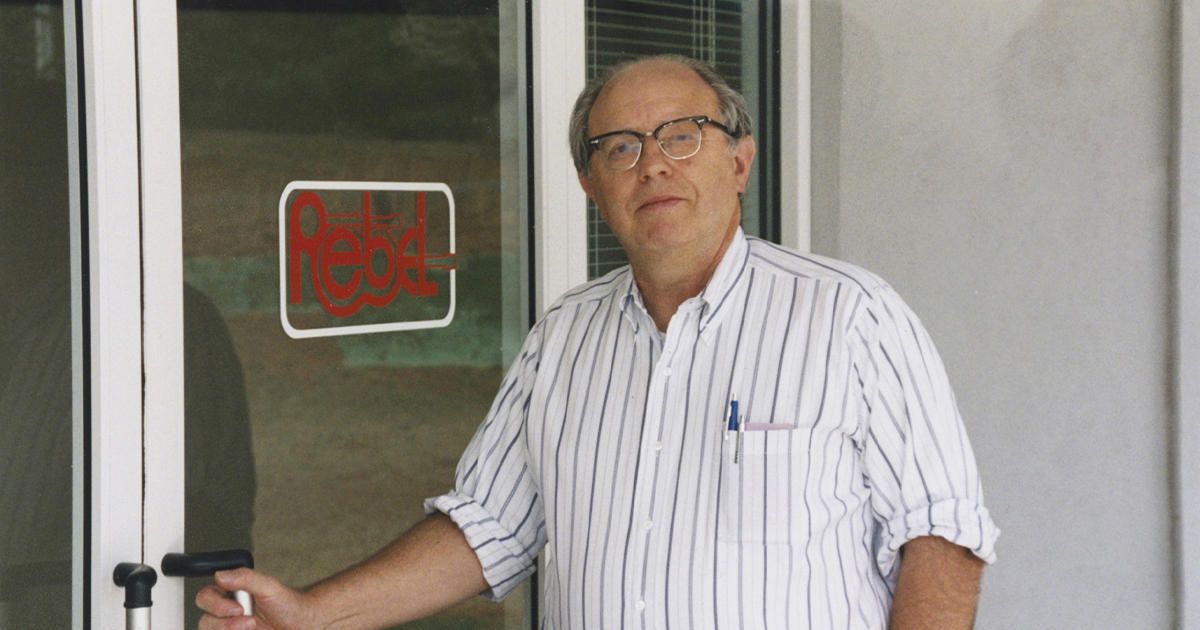
The company that Bill Vernon spoke of was a multi-faceted enterprise that Dave Freeman meticulously pieced together over the years. It included the old-time-oriented label known as County Records; the retail mail order concern County Sales – whose slogan was The World’s Largest Selection of Bluegrass and Old-Time Records; a wholesale distribution service known as Record Depot; the oldest continuously operating record label devoted solely to bluegrass – Rebel Records; and a music publishing company called Markyle Music.
A native of New York City, Freeman’s obsession with bluegrass, old-time, and blues music took hold by accident as a young teen. When he accompanied his family on a trip to Florida, by way of New Orleans, to visit relatives, regional broadcasts picked up on the family’s car radio exposed the thirteen-year-old to a variety of roots music. Once back in New York, Freeman set about scouring local records shops for this new music. He also made trips to local libraries in search of catalogs that would enable him to order records by mail. He even made a train trip to Washington DC to do similar research at the Library of Congress.
Freeman worked on assembling a collection of 78 rpm discs. He sometimes acquired multiple copies of the same disc, either as an upgrade or to be used for trading purposes. The trading and selling kindled his entrepreneurial spirit and at age fourteen, he began developing a mailing list for the purpose of sending auction lists to interested buyers.
In addition to collecting music on out-of-print 78s, Freeman was also interested in actually playing the music. He acquired a banjo at age fourteen and a mandolin at age sixteen. He later played in a New York-based group called Southern Express.
Freeman’s obsession for record collecting kicked into high gear in 1959 when he began making record hunting trips throughout the South. Initially, this took the form of visiting record stores and dealers. When partnering on later trips with fellow collector Joe Bussard, Freeman learned the art of canvassing door-to-door, searching out collectible 78 rpm discs.
From 1957 to 1961, Freeman attended Columbia University. He earned a bachelor of arts degree in Classic Languages. He secured a job with the Railway Mail Service, which operated out of Penn Station. He continued to devote his spare time to music.
In 1963, inspired by a series of jazz reissue albums on the Origin label, Freeman used 78 rpm discs from his record collection to assemble and release his first album. He created his own label for the release of the disc and named it County Records because it sounded rural. That first release was called A Collection of Rural Fiddle Music; its catalog number was County 501. Freeman related to Penny Parsons in a 1995 interview that “It was sort of like a mission at the time to introduce people to (this kind of music).” Other various artists albums soon followed. In 1965, Freeman had a minor hit with a reissue of music by North Carolina banjoist Charlie Poole; it was his first album devoted to a single artist.
Also in 1965, Freeman quit his job with the post office and went into the music business full-time. It was then that he formed the County Sales mail order concern. A key feature of the business was the bi-monthly newsletter that contained Freeman’s (sometimes brutally honest) record reviews. Former Bluegrass Unlimited magazine editor Pete Kuykendall told The Roanoke Times in 1993 that “Before Dave there were basically only fan magazines, and everything that got mentioned was the greatest thing since sliced bread.” Kuykendall asserted that Dave was “unafraid to speak bluntly.” County Sales customers, whose numbers later counted in the tens of thousands, came to rely on the straightforward, unbiased reviews.
The middle 1960s also saw the expansion of the County label to include newly-recorded albums by living artists. Among the first was a series of clawhammer banjo albums. Later albums featured legendary old-time fiddler Tommy Jarrell as well as a string of influential releases by Kenny Baker.
Coupled with Freeman’s passion for music was his love of family. In 1972, he married Andrea Lee Viola. Over the next decade, the couple had four children: Mark, Kyle, Connie and Whitney. Oldest son, Mark, eventually followed his father as a leader in the bluegrass recording community.
By the early 1970s, Freeman felt a need to be nearer to the music. Consequently, he purchased a home in Floyd County, Virginia, and moved County Sales and County Records there, too. In 1978, Freeman opened Record Depot in Roanoke, Virginia. It was a wholesale operation that, initially, distributed approximately 35 labels to retail accounts located in Virginia, the Carolinas, Tennessee, Kentucky and elsewhere.
The last piece of the puzzle came in 1980 when Freeman acquired Rebel Records. It came with a host of heavy hitters including Ralph Stanley, the Seldom Scene, the Country Gentlemen and Larry Sparks, to name a few. Freeman added his own stamp to the label with the signing of newer groups such as the Lost & Found, the Lonesome River Band, IIIrd Tyme Out and Blue Highway.
It was the combination of mail order chief, record label(s) owner, music distributor, collector and auctioneer that defined Freeman’s perception in the public eye for well into the early 2000s. Along the way, he developed a reputation for being a straight shooter, for treating people fairly, and for following thru on his commitments. His lifetime of service to the music was noted by the International Bluegrass Music Association with a Distinguished Achievement award (1989) and induction into the organization’s Hall of Fame (2002).
Word of Dave Freeman’s passing brought forth a multitude of heart-felt sentiments on Facebook from business associates, from artists that he worked with, from fellow collectors, and from loyal and appreciative customers. A representative sampling follows . . .
Milton Harkey: Dave Freeman was one of the nice guys. His business acumen combined with his love for our music landed him right in the middle of the industry. He was very instrumental with us at IBMA in the formative years. Bluegrass music will miss him greatly.
Dylan Locke: I’m deeply saddened to learn that we lost Dave Freeman this week. What a loss! His impact on our music is so deep. I’m forever grateful that he trusted me to take over County Sales.
Paul Brown: Dave Freeman was a reliable, honest, dedicated person who made truly great contributions to old-time and bluegrass music. His activities in recording, issuing, and distributing roots music helped undergird the lasting health of the music today. He offered me a job once. I couldn’t take it, because my journalism career was moving forward and I felt I needed to focus on that. It was not an easy decision for me. But we stayed in touch and collaborated on some projects including the CD reissue of the influential Camp Creek Boys album. The world will miss him.
Wayne Martin: Dave opened up a window to a world of old-time music that I didn’t realize existed. Much of what I understand about how to play stringband music was learned by listening to County Records. I stayed with him and his family in their home on Long Island when I was working on remastering the 78 recordings used on the three LPs entitled Round the Heart of Old Galax. This is a sad day.
Toshio Watanabe: Since the mid-1960s, David Freeman has always been a great guide and road map for my musical tastes. He has helped me discover great music and his contributions to music have been a model for our business. In 1968, our first self-product LP (Bluegrass 45) was featured in a County Sales newsletter with a great review. This was one of the impetuses for Bluegrass 45 to tour the US. I can’t begin to count the number of thoughts that go through my mind.
Chris Brashear: The first reviews I ever got for some of the music I contributed to Kentucky Rose and my first solo recording, Wanderlust, were from Dave. He made me feel like I really did have something to contribute. I knew he was knowledgeable, honest and sincere and eminently approachable. I will miss him and so will the whole bluegrass and old-time country music community. A life well lived.
Carl Goldstein: So sad. I knew Dave from the time he began County Sales. A fine, knowledgeable and delightful gentleman who will be sorely missed.
MaryE Yeomans: Dave Freeman was one of the good guys in the music business. He was always low-key and fair. When some other labels chased the big stars, Dave stayed true to the music he so dearly loved. His County Records catalogue says it all . . . I guess everyone enjoys making a profit, yet Dave made sure that so many amazing, little-known musicians were available for purchase by music fans like me, despite the fact that many of those projects would never, ever result in any kind of monetary gain for his label. He did it for love. He was so highly regarded by those whose lives (and there were many) he touched. He was the quiet guy in a room yet when he spoke everyone listened. In these changing times it saddens me deeply to know that Dave has gone on to the big heavenly jam. Always a gentleman, straightforward . . . for my vote, I loved his taste in music. After I did the photos for Ralph Stanley’s Clinch Mountain Country project, Dave chased me for years to get me to send him an invoice for my work and for use of the images in the CD packet. I just never got around to it. (I’m talking years!!) So one day I got a check in the mail from Dave. It troubled him greatly that I hadn’t been paid!! That’s the kind of guy Dave was.
Bonnie Gardner: My Daddy bought a lot of the albums that Dave Freeman produced of Charlie Poole and many other old-time musicians from back in the day. I loved going to County Sales and really enjoyed the days he had each year when musicians would come and play in the back lot. He did a lot for the music that we love.
Penny Parsons: We have lost a giant of the bluegrass industry. He has been a mentor to so many, including myself. His memory and legacy will live on forever. RIP Dave Freeman and thank you for all you gave us.
Sherry McKenzie: Growing up in Idaho and learning to play the fiddle, some of my best memories are of racing home from school to check the mail for recordings that I ordered from County Sales. I would pour over their newsletter and looked forward to each one, figuring out what I would save my allowance money for to buy next. County Sales / Dave Freeman was (and still is) a national treasure and was a game changer for me and so many others. Thank you, Dave.
Mark Newton: Dave was a mentor to me in a lot of ways and supported my career as an artist. He provided a platform for me to record records. He was one of the most knowledgeable people I know when it comes not only to the history of bluegrass, but folk, old-time, and music in general. He used to tell me stories of going to Washington Square when Bob Dylan and the folk era was happening, and of his background growing up as a kid and hearing the music from the south and becoming hooked instantly. His passion and love for the music and contribution was tremendous.
Jim Beaver: As a record collector, Dave Freeman was one of the important ones like Joe Bussard. I miss his 78 auctions and his mailed auction lists. The music he put out on County and Rebel is the preservation of our culture.
Lou Reid: Dave was the label owner that gave Terry Baucom and me the opportunity to record on Rebel Records. He was always easy to talk to about anything connected to the music and was always a fair person to conduct business with. Dave was very wise about bluegrass music and his knowledge went farther back than that. He was a collector and also knew about old 1920s and 1930s hillbilly/country 78 rpm records! These are the first generation of music.
Andrew Smith: In Australia, we couldn’t have done without Dave Freeman . . . his mail order business, County albums, and especially his newsletter which pointed us in the right direction.