
Christopher Henry Surprises His Mom, Murphy Henry, With Album of All-Stars Playing Her Songs
At a recent concert, after her sound check, bluegrass veteran Murphy Henry heard music over the house speakers that stopped her in her tracks. Bewildered, she was hearing one of her original songs being sung by the Queen of Bluegrass Rhonda Vincent. Running through her mental bluegrass database, there was no notion found anywhere in her memory of Vincent recording her song “I Ain’t Domesticated Yet,” with its blatantly recognizable song title. And yet, there it was, coming through the speakers.
Henry has been active in the bluegrass industry for many years, and as such has kept track of nearly everything that goes on in the genre. Therefore, the idea that a big bluegrass star would record one of her songs without her knowing it just didn’t make sense.
Henry grew up in the church in Northern Georgia and came out of the folk music scene when she first began to perform with her guitar. After being talked into going to a bluegrass festival, she was hooked. At another bluegrass event, she met her future husband Red Henry and they formed the band Red and Murphy and Company. They were based in Florida for years before moving to Virginia, and along the way they recorded seven albums and grew their family with the birth of their daughter Casey and son Christopher.
Now an accomplished banjo player, in the 1980s Murphy Henry invented and perfected her Murphy Method concept of banjo instruction. In the early days, the Murphy Method was taught using cassette tapes, and eventually branched out to include instructions on how to play other instruments. As technology improved, however, the Murphy Method would utilize videos and CDs and now the digital choices found in these modern times to get beginner and intermediate students over the hump.
Henry has also written the “General Store” column here in Bluegrass Unlimited Magazine for over 35 years. In the her monthly columns, she reports on all things bluegrass, from covering the deaths of bluegrass artists and births amongst the genre’s couples to passing on the news of band lineup changes and new recordings on the horizon. As a result, the notion that a star-level artist would record one of Henry’s songs without her knowing struck her as odd.
As the mystery played out that night in Winchester, Henry would soon learn that her son Christopher Henry, a top bluegrass musician in his own right, was the instigator.
“At the end of 2020, I was thinking about what would be a cool birthday present for Mom and I thought about trying to get some really cool and accomplished women that she admired to make a compilation video wishing her a happy birthday,” said Christopher Henry. “After that idea, I thought, ‘Well, how about getting together some amazing and fantastic women to sing her songs on an album?’ So, this whole project came from thinking about what would be a nice birthday present that she would like.”
The hard part, once the concept of a tribute album was hatched, was for Christopher to make this recording happen without his Mom getting wind of it.
“When it came to everybody that I told about the album—like Mom’s sisters and my dad Red and my sister Casey and all of the women musicians involved—I just told them that it was going to be a secret, a surprise birthday project, and everybody went along with it,” said Christopher Henry. “Everybody kept it quiet during the two to three months that we heavily worked on the project, although there was at least one close call as I had sent my sister a couple of mixes for her to make some comments on, to see which one she liked better, and I think my Mom was doing some babysitting for Casey and she had picked up her phone and responded, saying ‘Casey is not here right now.’ But Mom didn’t seem to look at the message or listen to the files, but it was still a close call.”
The reason that the project is full of recordings made mostly by female musicians is that it is a nod to Murphy Henry’s dedication to raising the profile of women in bluegrass music over the years. Perhaps the best example of this is Henry famously wrote the book Pretty Good For A Girl: Women In Bluegrass, which was published in 2013.
Full disclosure, I first met Henry almost 20 years ago when I was introduced to her by bluegrass musician Katie Laur. At the time, I was living in Cincinnati, Ohio, as did Laur, and Henry eventually uses some quotes from one of my interviews with Laur in her book. Laur was one of the first female bluegrass band leaders who was not married or related to the other musicians in the band, thereby fitting nicely with the theme of Henry’s research. The quotes came from 2002 article that I wrote called “O Sister, Thou Hath been There All Along,” which featured interviews with Laur and Henry along with the aforementioned Rhonda Vincent.
During that interview with Henry 21 years ago, I learned about the college thesis she wrote about musician Sally Ann Forrester and she eventually gave me a copy of that paper. In it, Henry explains that the singer and accordionist Forester was a member of Bill Monroe’s band in the 1940s, including for four months when she was in the group alongside Earl Scruggs in 1945. That is a fact that many bluegrassers are still not aware of to this day.
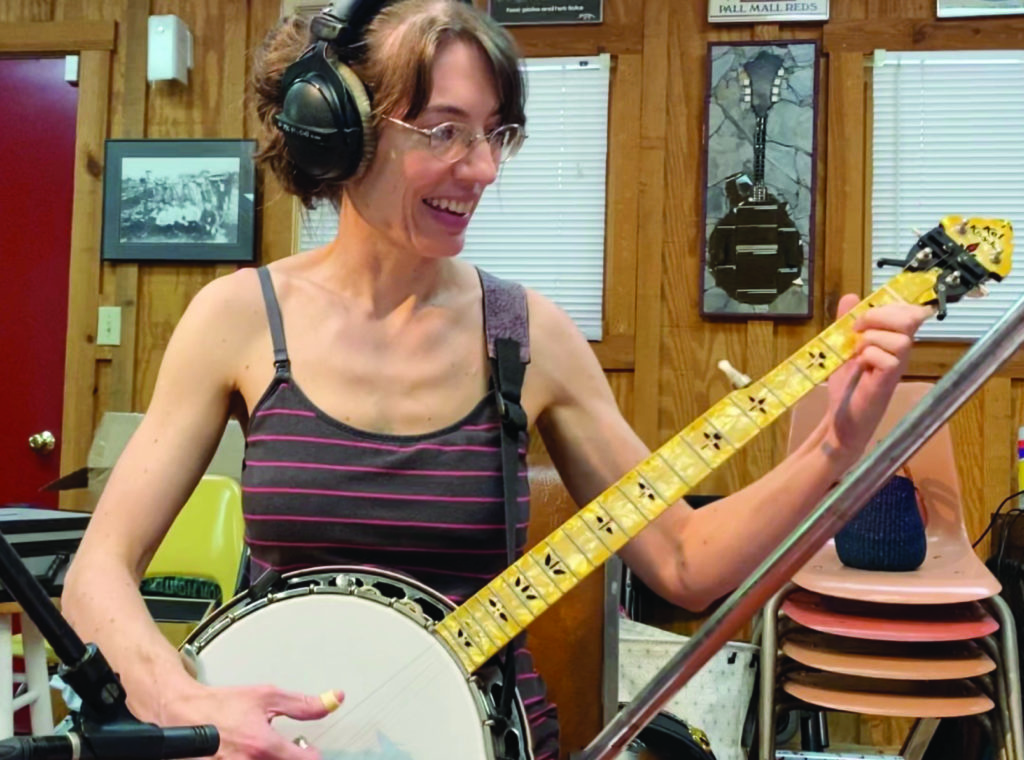
As Christopher’s birthday tribute to his Mom began to take shape, with much time spent on the road with a portable recorder, a plan was hatched to turn it into a full-fledged album. The end result is the new recording called When My Momma Sang To Me—The Songs Of Murphy Hicks Henry. Now available to the public at murphymethod.com and on the usual streaming services, the album features performances by current IBMA Fiddler of the Year Bronwyn Keith-Hynes, Rhonda Vincent, Alice Gerrard, Lindsay Lou, Kathy Kallick, Lizzy Long, Kristin Scott Benson, Gina Furtado, Malia Furtado, Leanna Price, Lauren Price, Teresa Pennington, Katie Powderly, AJ Lee, Cathy Fink, Marcy Marxer, Vickie Vaughn, Brooke Carlson Henry, Laura Orshaw, Phoebe Hunt, Sally Van Meter, Amanda Nord, Lis Williamson, David McLaughlin, Terry Smith, Lon Williamson, Chris Davis, Micah Bonn, Kathy Holliday, Laura Carrivick, Christopher Henry, Casey Henry, Red Henry, and Murphy’s sisters Nancy Hicks Pate, Argen Hicks and Laurie Hicks.
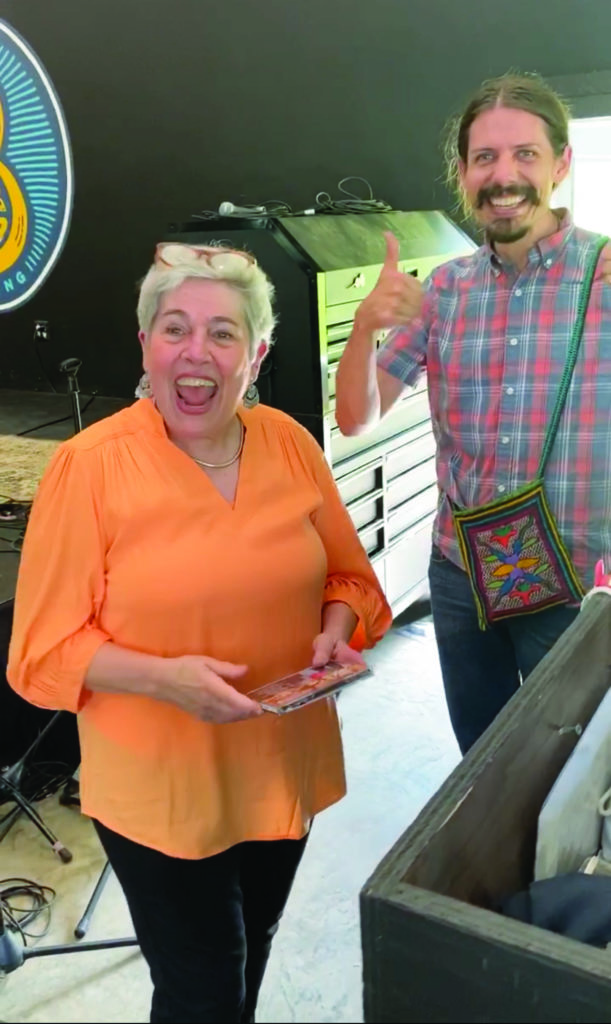
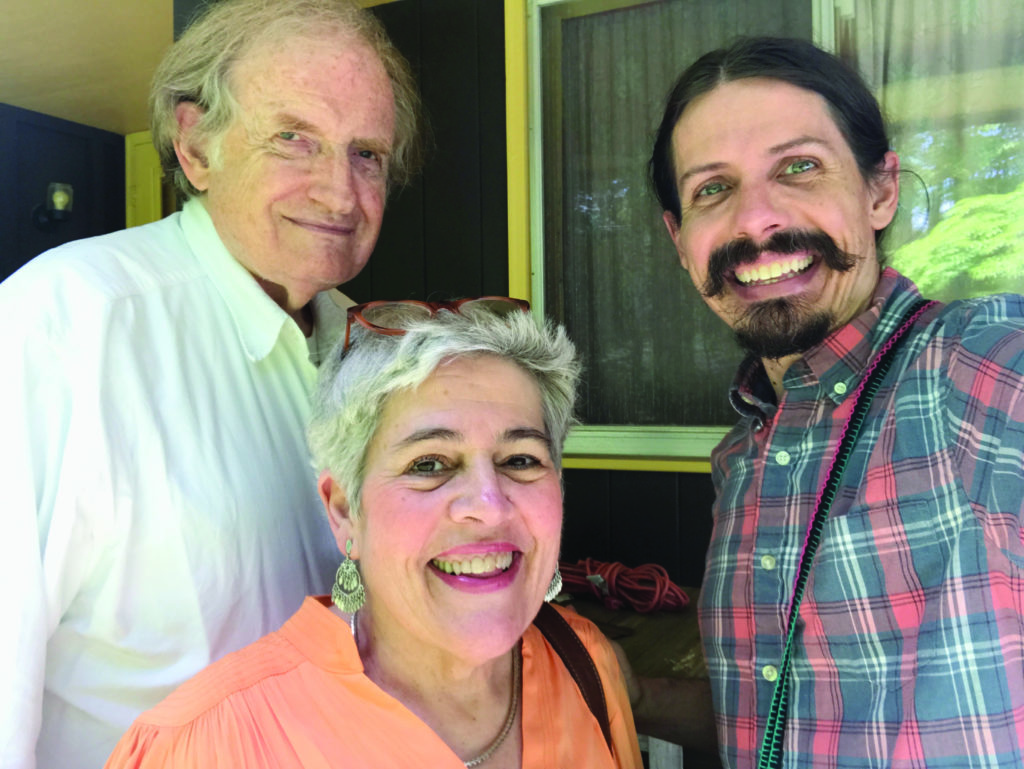
Once the album was complete, Christopher set about choosing a way to surprise his Mom with the end result. “We had a gig booked one Friday night at the B Chord Brewing Company in Winchester, Virginia, and I talked to Marty, who runs the sound, and I told him about it and I said, ‘Would it be cool if I gave you the CD and you played it after our sound check, and then my Mom will hear it? Then, she will want to know what it is and will come up, and then you can give her the album,’” said Christopher Henry. “That is kind of what happened, although he ended up playing the CD before the sound check I was outside while my Mom was talking to some of her friends. But, it worked out perfectly, better than I could have planned it, because it surprised everybody at that moment. She heard her song, ‘I Ain’t Domesticated Yet,’ and then comes up to me and says, ‘What is that?’ I said, ‘I don’t know. Let’s go talk to Marty.’ Marty then hands her the CD and that became the ‘big moment.’ She said she was speechless, and she gave me a big hug and said, ‘I can’t believe it. This is one of the best moments of my whole life.’”
Here is how it happened from Murphy Henry’s point of view. “We had just got to The B Chord and was setting up the sound system and I was outside, talking to one of my Murphy Method students and when I walked back into the building, I heard Rhonda Vincent singing one of my songs over the sound system in the venue,” said Murphy Henry. “Red was playing the mandolin that night, Chris was playing the guitar, I was playing the banjo and Marshall Wilborn was playing the bass. And, I was like, ‘That is my song, but that is not me singing it.’ I knew it was my song ‘I Ain’t Domesticated Yet,’ because there is nothing else that sounds like it or has a title like it. I walked over to ask the guy behind the bar, ‘Where is that music coming from?’ I knew it was Rhonda’s voice because she is so recognizable.”
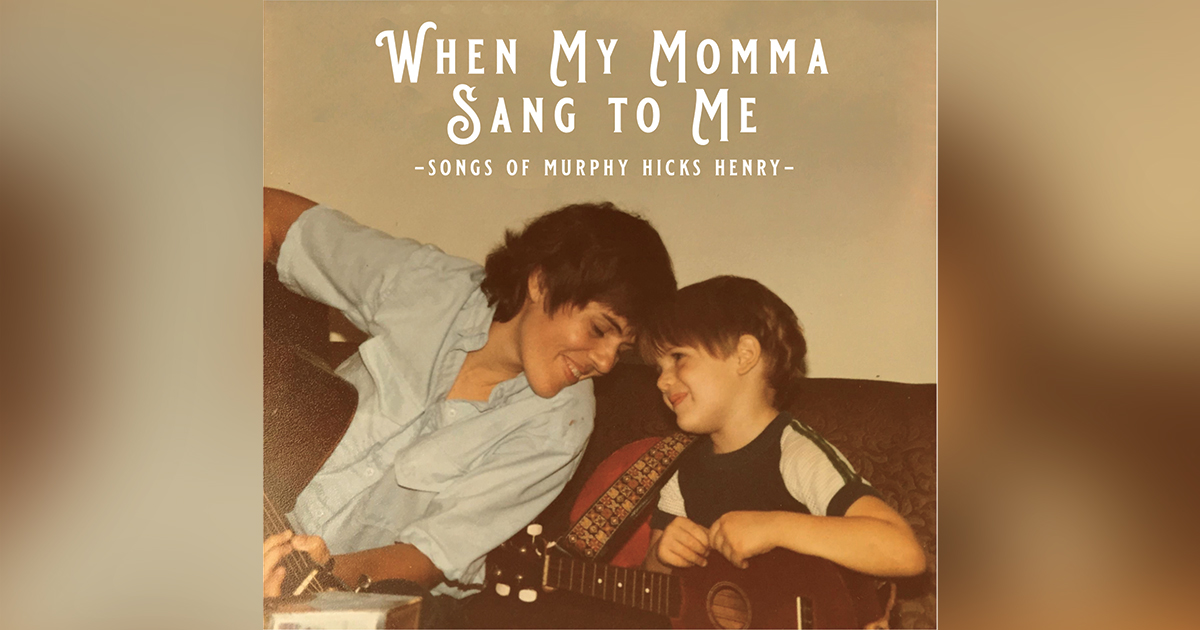
Henry admits that she had a quizzical look on her face as the song continued. “I went over to Red and said, ‘Do you hear this on the sound system? What is this?’” said Henry. “Then, Red says, ‘Go ask Christopher.’ I said, ‘Christopher, what is this?’ That is when we walked over to Marty and he held up the CD cover, which features a photo of Christopher at three years old with me, who is about 33 years old or so back then. And I saw the album’s title, ‘When My Momma Sang To Me,’ and I was just speechless. Then he says, ‘Happy Birthday,’ and then he opens the CD case and I get to see my songs recorded by all of these amazing women. It was all so fabulous. Of course, I was hugging him and I’m laughing in disbelief and half crying at the same time.”
If you go on Youtube and search for “The making of the Songs of Murphy Hicks Henry album “When My Momma Sang to Me” on Christopher Henry’s channel, you will see the video of Murphy’s big moment with her son.
While this whole undertaking is a sweet and wonderful family experience, the Henry family decided to release this project as a stand-alone recording because it is truly full of great bluegrass music.
The bluegrass genre has featured many incredible female musicians over the decades, yet in the ten years since Henry released her book “Pretty Good For A Girl: Women In Bluegrass,” things have changed for the better. For instance, in 2016, Becky Buller became the first-ever female IBMA “Fiddler of the Year” award winner, in 2016 Sierra Hull became the first-ever female IBMA “Mandolin Player of the Year,” in 2017 Molly Tuttle became the first-ever female IBMA “Guitar Player of the Year” award winner, and in 2019 Sister Sadie became the first all-female band to win the IBMA “Vocal Group of the Year” Award.
All of those impressive artists are stepping on the ground first walked on by Missy Raines and Kristin Scott Benson, who won their IBMA Awards for bass and banjo respectively over a decade earlier, and other great award-winning female leaders like Alison Krauss and the aforementioned Rhonda Vincent, who made their mark in the coveted IBMA “Entertainer of the Year” category.
“It makes me happy, if not ecstatic, to see Molly Tuttle’s band onstage with Bronwyn Keith-Hynes playing the fiddle, or when I see A.J. Lee leading her own band while being so fantastic on the mandolin,” said Henry. “I’m amazed by Sierra Hull and the Price Sisters, and Laura Orshaw who is playing with the Po Ramblin’ Boys. Missy Raines, of course, has been there forever and is still going so strong, as is Rhonda Vincent. Those are people that I either barely mentioned in my book, or with others like the Price Sisters, they were not even around back then because they were so young. These kinds of accomplishments were almost unheard of in the bluegrass era that I was writing about in my book. I just think the progress has been fabulous. I will always appreciate the women musicians that went before us and the ground work done by people like Lynn Morris, Laurie Lewis, Hazel Dickens and Alison Krauss, who all made it easier for all of these women to press it further forward. Things have changed and I’m really happy to see it. I think it is very heartening to see what is happening now.”