Center for Appalachian Studies
Appalachian State University
In the heart of the western North Carolina mountains is the small town of Boone. Named after the historical figure Daniel Boone, who lived in the area for two years in the 1700s hunting and trapping before moving westward through the Cumberland Gap into what is now called Kentucky, Boone also features a downtown statue of local legend and IBMA Hall of Famer Doc Watson.
Located at 3333-feet above elevation in Watauga County, Boone is also the home of Appalachian State University. Firmly planted in the Blue Ridge Mountains, the area has always been a hot bed of bluegrass and old-time music, and that is still true today. Not only was the next-door town of Deep Gap the home of the aforementioned Doc Watson, but fellow IBMA Hall of Famer Earl Scruggs grew up 75 miles due south in Shelby, NC, and the equally-honored bluegrass great Dr. Ralph Stanley spent most of his life living in McClure, Virginia, 130 miles to the north.
If one is to truly learn about bluegrass music and the kind of pre-bluegrass sounds it derived from, the study of the Appalachian culture is essential. That is the approach of Appalachian State University’s Center for Appalachian Studies, created in 1978. The program continues the long history of the study of the folklore of the region, especially following the great work by past Appalachian scholars Cratis Williams and Amos Abrams.
One important educational goal offered by the Center for Appalachian Studies is its master’s degree in Appalachian Studies offering two concentrations, one for Sustainability in Appalachia and the other in Culture and Music. You can also achieve an undergraduate minor in Appalachian music there as well.
Julie Shepherd-Powell is the Graduate Program Director for Appalachian Studies at Appalachian State University. With her father working for the United States Forest Service, Shepherd-Powell lived in various cool places as a kid from Virginia to Nevada. Eventually with her parents living in eastern Tennessee, she decided to enroll at Appalachian State University where she got her Bachelor’s degree in Anthropology and a Masters in Appalachian Studies. After graduating, she worked for the famed Appalshop media, arts and education center in Whitesburg, Kentucky before achieving her Ph.D. at the University of Kentucky in Lexington.
“The reason I chose Appalachian Studies is when I was an undergraduate here at Appalachian State, I ended up in some courses that included Alex Hooker’s Appalachian Strings class, where I began to learn how to play the banjo and I started flat-foot dancing,” said Shepherd-Powell. “It gave me a connection to my grandparents. It was the first time that I had a way to understand where my family was from that was outside of the mainstream stereotypes that you hear about the mountains. My Papaw was raised in Madison County, North Carolina—near Max Patch—and my grandma is from Waynesville in Haywood County. They were true mountain people and were really different than any of my other friend’s grandparents when I was growing up. My friend’s grandparents all had college educations and they certainly didn’t sound like what my Papaw and Mamaw sounded like when they spoke, and they didn’t have the same kind of stories.”
Shepherd-Powell was lucky in that she had those mountain grandparents who at least tried to turn her onto Appalachian roots music. “When I was a kid, my Papaw always talked about growing up and listening to the Grand Ole Opry and would tell me about Grandpa Jones and other folks on the show that he would listen to,” said Shepherd-Powell. “I didn’t have a reference point to any of that when I was a young person. So, when I began to take Appalachian Study classes, it gave me a way to learn about and think about where I came from in a way that felt more at home with me. That was always important to my mom, and also to my dad who grew up in Salisbury, North Carolina. My dad was into doing family genealogy and was interested in my Papaw’s stories, including about him working for the Civilian Conservation Corps in the Great Smoky Mountains. My dad, being a lover of the forest, of the national forests and the Great Smoky Mountains in particular, loved those stories and recorded a lot of them.”
After getting her final degree in 2017, the position came open later that same year in the Appalachian Studies program at Appalachian State and Shepherd-Powell went for it. By 2020, she was named an Assistant Professor and Graduate Program Director of Appalachian Studies. “A lot of times our students end up taking courses in both concentrations because they love all of the sustainable environmental aspects of Appalachia and are concerned with those issues, and they also realize that culture and music is a really important part of this region, too,” said Shepherd-Powell. “We have an old-time music traditions course and a local music traditions class and we have Tim Stafford of the bluegrass group Blue Highway teaching a bluegrass course for us as well.”
Two very popular undergraduate courses in the program include the aforementioned Appalachian Strings class in fiddle and banjo taught by Alex Hooker, and the History of Appalachian Music class taught by Mark Freed, who is the Cultural Resource Director for the town of Boone, runs the famous Jones House Community Cultural Center and live music venue, and is on the board of the very important Junior Appalachian Musicians program.
The Director of the Center of Appalachian Studies is Trevor McKenzie, who followed the acclaimed Pat Beaver in that position in August of 2021. A bluegrass and old-time musician from a young age, McKenzie grew up in Blacklick, Virginia, located just north of Rural Retreat and 40 miles from the famous Galax Old Fiddler’s Convention, now in its 86th year.
McKenzie was lucky enough to be able to take an Appalachian Studies course while in high school taught by Debra Wilkerson. The class just happened to use a textbook called Hillbillyland—What The Movies Did to the Mountains and What the Mountains Did to the Movies written by J. W. Williamson, who was then a professor of English at Appalachian State University and Editor of the Appalachian Journal.
Now aware of and impressed with Appalachian State University, the young McKenzie would migrate to Boone after high school to get an undergraduate degree in Public History focusing on Appalachia and achieving a Master’s degree in Appalachian Studies. Before becoming Director of the Center of Appalachian Studies, he worked as an archivist in the adjacent W. L. Eury Appalachian Collection at Appalachian State which is the largest collection of Appalachian materials in the world. In fact, the Eury Collection features the earliest known recording of Doc Watson.
“I think Appalachian music is sort of a gateway to talk about this region and understanding this place and its people,” said McKenzie. “For some students, it’s the first thing they learn about. You hear people talk about Appalachian sounds in music, even when talking about popular music. When you hear about the ‘Appalachian feel’ in the music of the Avett Brothers or Billy Strings or other popular groups, there is an attraction to that as well as to this so-called ‘fourth folk music revival’ that we are currently in where people are putting banjos and fiddles and acoustic instruments back into music again.
“Often you hear the term ‘Appalachian’ bandied about in those types of discussions and I think many students come in with that awareness,” continues McKenzie. “When they come to a place like Appalachian State, they already have that in the back of their mind. Because of that, they think those courses will appeal to them and when they get into those classes, they get a deeper appreciation for the traditions and the complicated stories of the people and the places where that music really comes from. That is why those classes are appealing, but that is also why those classes are important.”
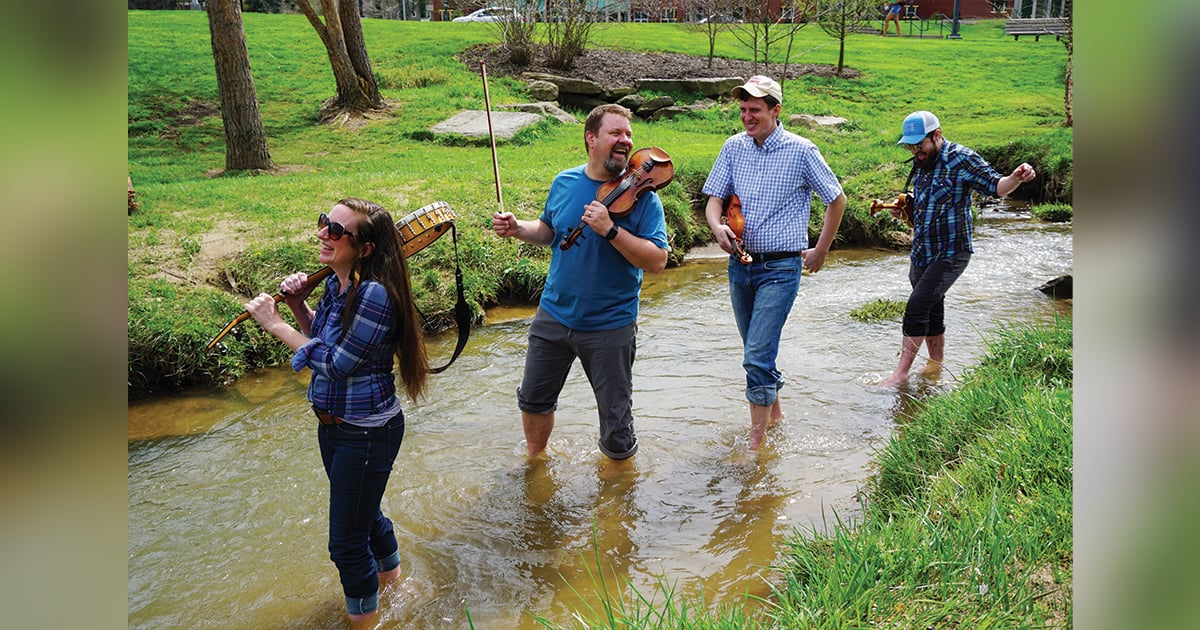
Both McKenzie and Shepherd-Powell, who in their spare time both play in the band called the Kraut Creek Ramblers along with the forementioned Alex Hooker and Aaron Ratcliffe, love their jobs and the results of their efforts.
“I think we will continue to get more graduate students because folks seem to keep coming back like I did,” said Shepherd-Powell. “There is a community of folks who have been through this program and I think that sort of closeness, whether people are working for a non-profit or are working to get more degrees, we tend to stick together. I think, for instance, that the Appalachian Studies Conference is a place where everyone comes together in a positive way. The track record of the folks who have been through this program and the work that they have done combined with the faculty who really do care about this place and the people that live here, both locally and in the whole Appalachian region, we will continue to get more students in the future.”
More information can be found at appcenter.appstate.edu/ and interdisciplinary.appstate.edu/appalachian-studies.