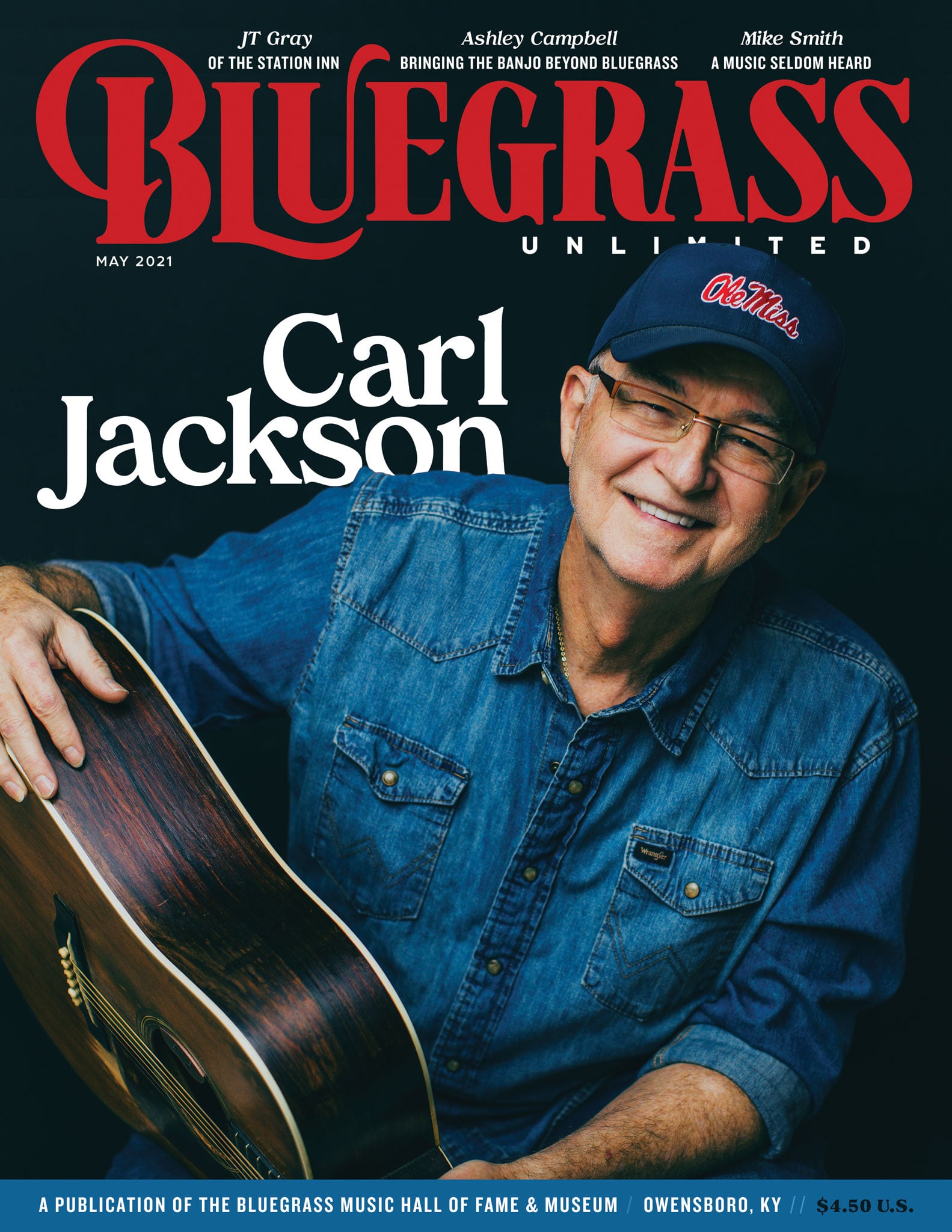
Carl Jackson
Born Over A Bluegrass Bandstand
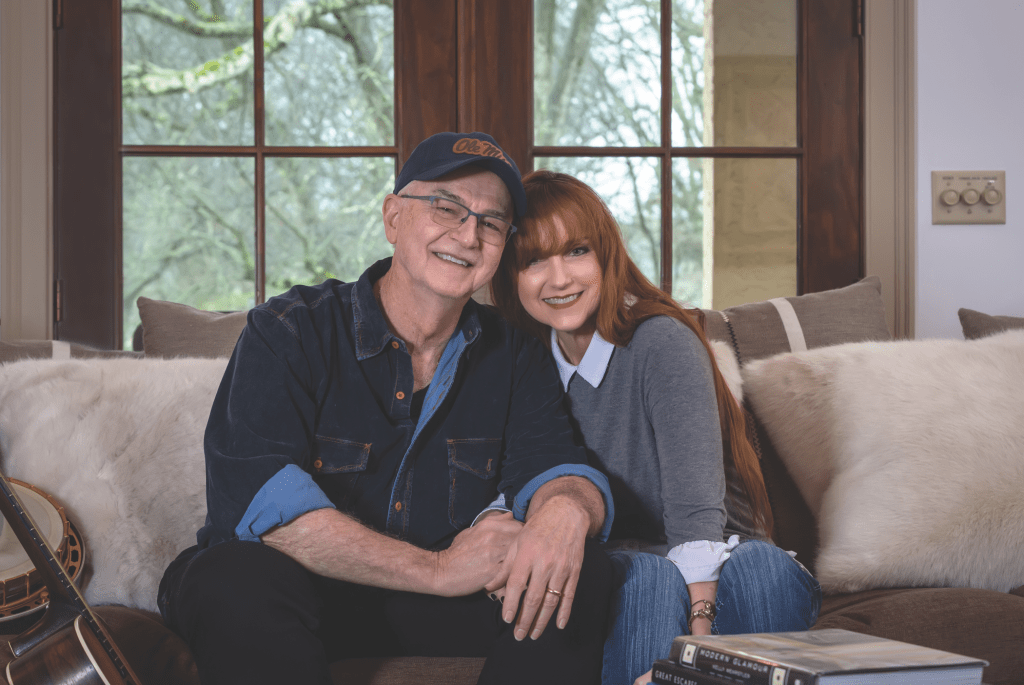
Photo by Sheri Oneal
In awkward adolescent script scrawled in his high school yearbook, amidst the well wishes and inside jokes from his buddies, one theme appears several times: “See you on the Glen Campbell Show.”
“I look back, and I wonder how they knew that,” says the yearbook’s owner, Carl Eugene Jackson, Louisville, Mississippi’s proudest son.
But his schoolmates couldn’t have actually been clairvoyant. If they were, they’d have also mentioned Jackson’s future work with Dolly Parton, Vince Gill, Linda Ronstadt, Emmylou Harris, Ricky Skaggs, Dwight Yoakam, Merle Haggard, Del McCoury, Garth Brooks, the Seldom Scene, Tony Rice, Doyle Lawson & Quicksilver, The Whites, lllrd Tyme Out, John Starling, Sam Bush, Jerry Reed, or the PBS documentary about him and so many more artists it would fill half this article.
If bluegrass and early country music has an equal to elite pop and jazz producer Quincy Jones, who made quite a stir with another talented Jackson in the 1980s, Carl Jackson could be it. Winner of multiple Grammy Awards and a profundity of industry awards, Jackson has earned his place with the best of the best on stage, in the studio, and behind the scenes as a songwriter. He’s emerged as a producer with a deft, yet recognizable style, an acclaimed stage and studio musician and gifted harmony vocalist, and most importantly, someone who puts his own musical ambitions aside to play and sing what makes the people around him sound their best.
Interviewing Jackson, his genuine humanity and humility shines through. Throughout his storied career, Carl Jackson has always lifted up the people around him without competing for the spotlight. Get him started talking about himself, and it usually curves back around to other artists like Bradley Walker, The Church Sisters, Val Storey, Colonel Isaac Moore, and Ashley Campbell who he feels deserve more attention.
Jackson’s story, quite naturally, begins in the deep south. Born to Ruby Pearl Young Jackson and Lethal Andrew Jackson on Sept. 18, 1953, Jackson seems to have been born to be a musician, bringing the cliché to life. He came into this world at a tiny medical clinic on the second floor of the Strand Theatre, where he would later watch movies as a teenager, and where bands like his dad’s bluegrass group, the Country Partners, occasionally performed.
“Mom and Dad ran a music store around 10-12 years in my hometown Louisville. They closed it in the mid-70s or early ‘80s. Jackson’s Music Shop,” he recalls with pride, adding, “I still have the sign hanging in my den.”
Jackson’s father and two uncles, Burgess and Pete, had their own radio show on the local station. “I grew up loving that music, grew up on bluegrass. There was no bigger fan of bluegrass than my dad. They had a regular radio show on WLSM, our hometown radio station. When I got to where I could play well enough—I started banjo around 8—I joined the band,” Jackson says.
His upbringing was pure country, living six miles out of town and along with his sister, Dianne, enjoying the nurturing love of true family life. Next door lived his paternal grandparents, A.G. and Sarah, who had a 30-acre spread where Carl’s dad later built a five-acre lake brimming with bass and bluegill, furthering his son’s lifelong love of fishing. Days were filled with an obsession for farm ponds, baseball diamonds, and music—with music eventually winning out over the dream of catching a record largemouth or playing centerfield for the Yankees. Although bluegrass was always his favorite, growing up in the ‘60s, even in rural Mississippi, Jackson heard all the popular music of the day.
“I later became a huge Eagles fan, Elton John—my songwriting was influenced by (Bernie) Taupin and John, Jimmy Webb. I had a bunch of influences growing up, none bigger than Glen Campbell. I loved Jerry Reed, especially his second album, Nashville Underground. I was slowing down LPs, soaking up influences, and never thought I would get to spend time producing, writing songs, and singing with so many of my heroes,” he explains.
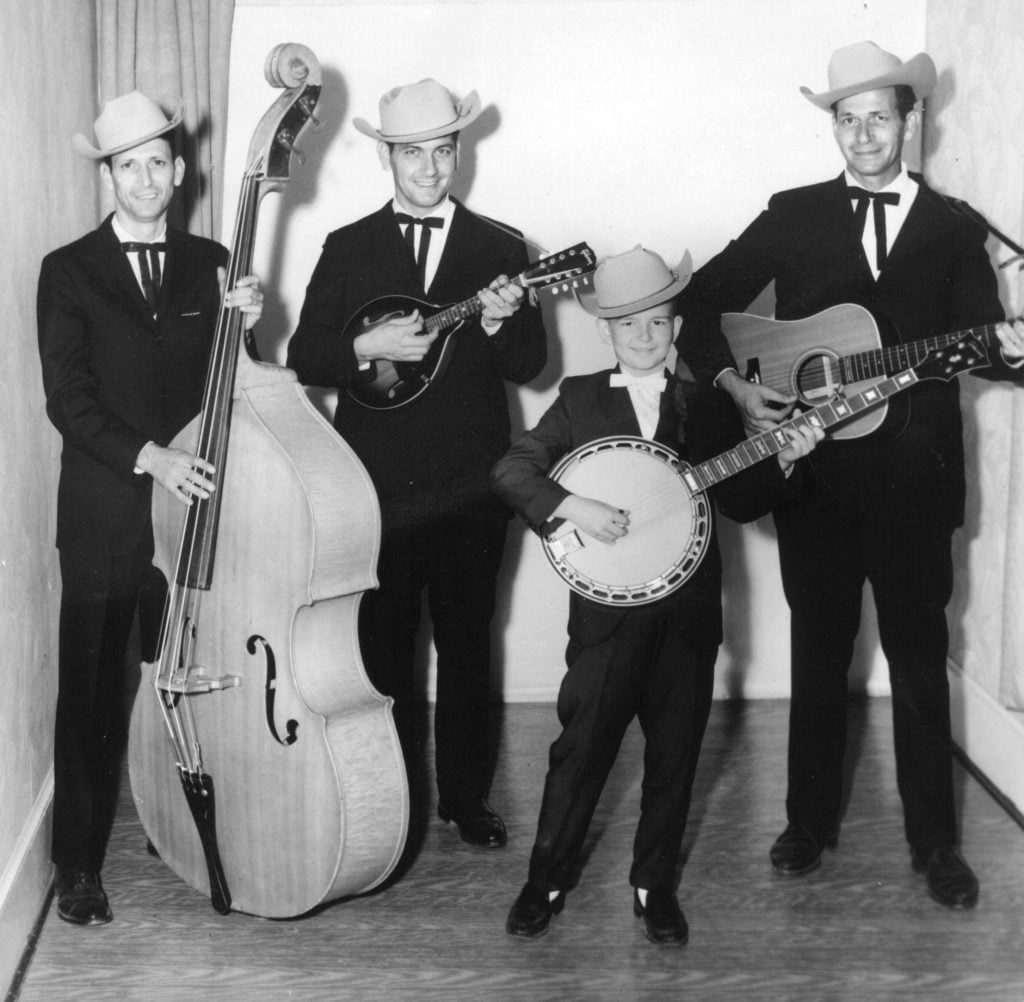
Asked if he had any banjo teachers and how he learned to play, Jackson says he did what was needed to improve in the bleak days before Peghead Nation and Homespun Tapes. “When I first played, I had a teacher for maybe three in-person lessons. He later sent tapes that I listened to, lessons on reel-to-reel tape. His name was Bud Rose, from east Tennessee. Bud joined Carl Sauceman’s Green Valley Boys for a short time and was featured on a weekly TV program on WTOK in Meridian, MS. This was way before my Jim & Jesse days. My uncle decided to take lessons from Bud, so I told Daddy I wanted to learn to play,” Jackson recalls. “After joining Jim & Jesse, Jack Hicks was influential, too. I took that and ran with it on my own. Jesse’s cross-picking carried over to my guitar playing too, with a three-finger style.”
As he grew, Carl practiced banjo day and night, quickly gaining a reputation in the area’s bluegrass community as a star-to-be, and not just amongst his yearbook note-writing classmates.
“I could sing harmony early on. One song I remember I sang was ‘New Freedom Bell’ with my dad and uncles. I could sing higher than a bat, especially then,” he says with a laugh.
But the banjo was always his first love. His ambition and talent drove him to practice and perfect the skills that one day would see him introduced as “the world’s greatest banjo player” on stages from The Tonight Show, to Hollywood network TV shows, to auditorium stages and venues a dozen time zones from his Mississippi birthplace.
Between playing in his father’s band and jamming with other players at local festivals, Jackson soaked up not just a passion for musical excellence, but a broad array of bluegrass influences.
“I always liked good music, no matter what style. In the bluegrass realm, I was really into Earl Scruggs and Allen Shelton, Don Reno, all the great banjo players. Bill Keith’s playing was really cool. There weren’t as many guys playing chromatic in those days,” he recalls. “And I was very much into songwriting, very much into Jim & Jesse, the Stanley Brothers, Osborne Brothers, Flatt & Scruggs, all the great bluegrass groups. I loved them all.”
Near the top of his list were the stalwart McReynolds boys from Carfax, Virginia. The close harmony singing of the brothers, their great song catalog, and Jesse’s brilliantly innovative cross-picking mandolin style grabbed young Carl’s attention like few others. He certainly recalls their first face-to-face meeting.
“Dad took me to see them at a little school auditorium in Reform, Mississippi. Actually, what I really wanted was to listen to the Ole Miss football game that night, but once there I was glad he made me go. I loved the show. Allen Shelton was playing banjo with them, and Jimmy Buchanan on fiddle. Dad walked me backstage and introduced me. I think really he just wanted to meet them,” Lethal’s son confesses. “So, I played for them and they brought me on stage, where we played a tune or two. I was probably 10 or 11, I can’t remember exactly. I was so dad-gum young, nothing fazed me. But it went very well, and they hired me at 14.”
Questioned about how Ruby and Lethal were convinced to let their 14-year-old boy travel the hard bluegrass road with a bus full of grown men, Jackson smiles and thinks back. “I’ve always looked at that as another God thing. He put me in the right place. And I couldn’t have asked for better people to help me find my way. Our first tour was two weeks, and boy was I homesick. But I loved being on stage, playing music with them, and it’s even more special to me now than it was then.”
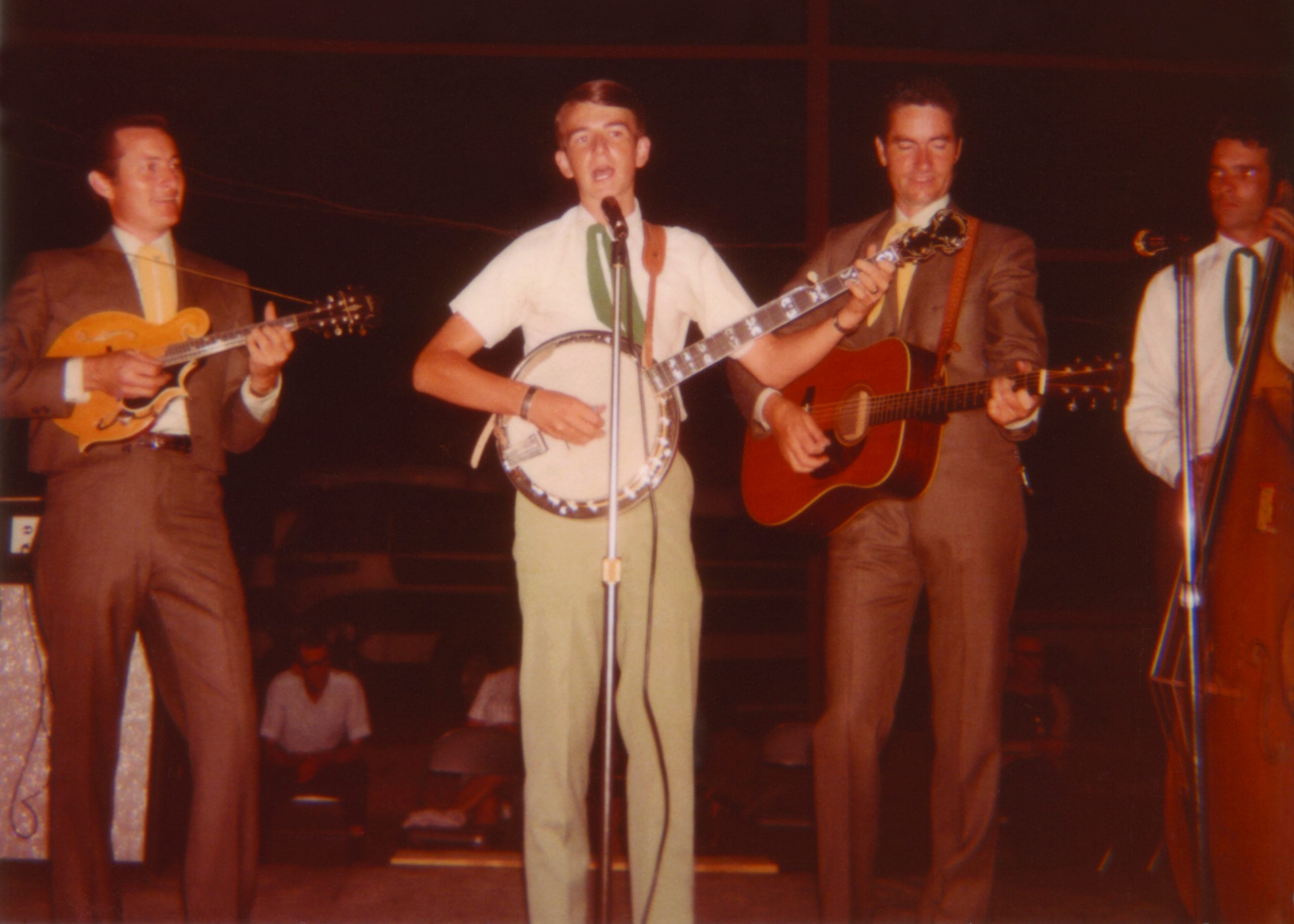
Most of Carl’s time following the long white line with Jim & Jesse and the Virginia Boys was through the summer festival season. “They didn’t do a lot of touring otherwise, but right then, that’s when they did the most. We also played the Opry quite a bit on weekends. I did finish high school with my classmates in ‘71. Principal Clay said if I could keep my grades up, I could miss school when I had to play a show. And I always was thankful for that.”
Carl credits that time in his life for shaping and influencing not just the musician he became, but the person he grew to be. “I think I was blessed to be on the road with such wonderful people. They were always a good influence. I noticed how kind they were, and they were total pros on stage. To have that opportunity, you’re around them and you have a tendency to emulate them and want to be like them, was amazing. Jim McReynolds couldn’t sing any clearer or more beautiful. And Jesse’s crosspicking and split-string technique were very influential on my playing. We had so much fun on the road,” Jackson says.
Jackson spent his early teenage years playing with the McReynolds, along with a short stint with the Sullivan Family (which included a 12-year-old Marty Stuart), following his time as a Virginia Boy. But over time, he started to feel the itch to make his own music. The timing proved perfect. Keith Whitley was just out of Ralph Stanley’s Clinch Mountain Boys and Jimmy Gaudreau was no longer a member of the Country Gentleman. The three gifted young musicians added Bill Rawlings on bass and plotted a potential supergroup called Country Store.
But as he worked to develop a superstar bluegrass band that would feature his fresh style on banjo, Jackson’s classmates’ earlier predictions suddenly, with absolutely no forewarning, became reality. He met Glen Campbell.
Country Store had only been together formally for a week when Campbell was playing the Ohio State Fair, and Carl and Keith were eager to go. Backstage, after the show, Jackson ran into Campbell’s longtime banjo player Larry McNeely, who asked him back the next day for a jam. But when Jackson arrived, it quickly didn’t feel like a jam at all.
“It was funny because Larry kept asking, ‘Can you play this, can you play that?’ And I’d play it for him. And then he’d ask me to play something else, so I played that,” Jackson says as he explains the odd “jam.” At one point, McNeely just looked over and asked, “Would you like to have this job?” After explaining that “he was tired of traveling” and was “looking for someone that could replace him,” McNeely excused himself and returned a few minutes later with an even more mysterious request. Would Carl come with him to meet Glen Campbell? The handwriting in the yearbook had suddenly shifted to the wall.
Once inside, Campbell greeted Carl warmly and repeated McNeely’s requests to play snippets of several tunes on banjo, as well as guitar. He recalls Glen eventually asking him if he could play “The Claw” by Jerry Reed. Carl replied, “Yes,” and then proceeded to play it for him. When he finished, Glen asked with a smile, “How much you wanna make?” Carl grinned and with an 18-year old’s flair said simply, “A million bucks!” A lifelong friendship was immediately set in stone. The jam session had, in fact, been an audition for one of the most high-profile sideman gigs of all time in country music. You can still hear the faint tinge of astonishment in Jackson’s voice as he retells the timeworn anecdote.
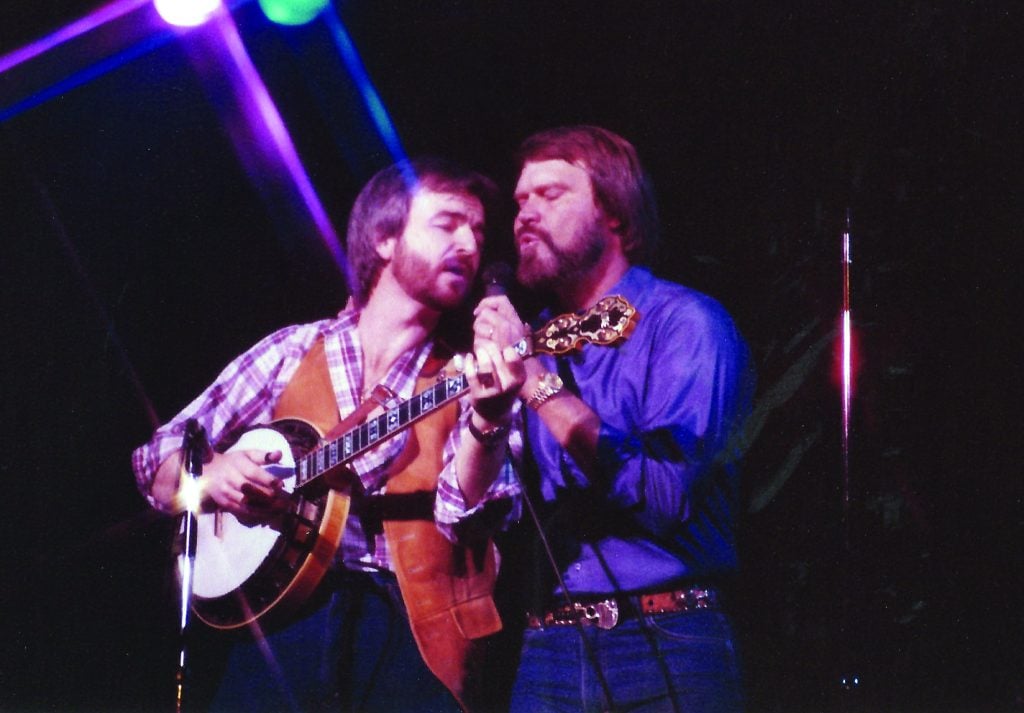
Ask Carl how many gigs he did with Campbell and he can’t even guess. “I never tried to add it up,” he admits. “We had 12 years on the road, played usually 12 weeks a year in Vegas, another four in (Lake) Tahoe. And these shows were seven nights a week, two shows a night. We went to Japan twice, Australia three times, South Africa, and so many other shows all over the world,” his voice trails off, then adding enthusiastically, “And I promise you there was not one time Glen didn’t feature me (on banjo) and the bluegrass segment.”
In one highlight of that part of his career, Glen and Carl were out promoting Jackson’s famous Carl Jackson—Banjo Player LP and its classic banjo instrumental tune “Song For Susan.” Campbell had persuaded his label, Capitol Records, to release it. And so it came to pass that on February 19, 1973, Johnny Carson, legendary host of The Tonight Show with an audience in the tens of millions, introduced his next guests as “Carl Jackson, and Glen Campbell.” Odd that his high school prognosticators somehow failed to write, “See you on the Johnny Carson show,” isn’t it?
How did it feel to get top billing over his esteemed boss on the nation’s most popular late-night program, seen by millions every night? Was getting top billing a practical joke Campbell had pulled on him?
“No, I knew about it ahead of time. The album was probably just coming out. And we were also on Jack Parr, Merv Griffin, so we were promoting that album,” he answers. “I still have the dressing room card from The Tonight Show. A friend of mine at NBC got me a copy of the video (now on YouTube) and I’d never seen it until a few years ago.”
Spending a dozen years as Campbell’s musical partner tutored Carl Jackson as he grew into the musician and producer he is today. Their relationship was so close, Carl is godfather to Campbell’s daughter Ashley, and plans a new record or two with her.
When prompted, Jackson enthusiastically calls Glen Campbell the best singer he’s ever worked with—a cohort that includes Emmylou Harris, Vince Gill, and Dolly Parton and so many other greats—and also the best musician. What makes Jackson feel that way, and what lessons did he glean for his future as a professional in the music industry?
“When I say (Campbell) was the best singer, I mean ever, period. And I mean that from the heart. Glen had a very pleasing voice, but talking technically, man, it was perfection. He simply did not make vocal mistakes. And his range was almost endless, especially in the early years. The closest singer to him I ever heard was Linda Ronstadt, if they’d asked Glen to do opera, he could. That was the level he was at,” Carl explains.
Jackson also greatly admired the bossman’s guitar playing, noting that Campbell meticulously studied Django Reinhardt, George Benson and other jazz guitar greats and could play their solos perfectly, in addition to his trademark pieces like the “William Tell Overture” on guitar. Campbell’s attention to every musical detail left a lasting impression on the teenage banjo whizkid from tiny Louisville, Mississippi.
But as he had with Jim & Jesse, after 12 years with Campbell, Jackson felt the need to move on and find his own way in the music industry.
“I got the Columbia (Records) deal in 1984, so it was time to move on my own,” he tells Bluegrass Unlimited. “I wasn’t mad at Glen. I felt like I could have stayed with him ’til the day he died. He treated me like a son. I just thought it was time to make my own way. I had a couple semi-hits, ‘She’s Gone, Gone, Gone,’ and ‘Dixie Train,’ in the country world. That didn’t pan out, but I wanted to do my own music, not sell out for commercialism. So, I made it clear I wanted to do my stuff, and (Columbia) dropped me. But the songwriting doors opened.”
Indeed they did. Jackson penned or co-wrote hits with his former boss, Vince Gill, Pam Tillis, and many more. A poll conducted by Bluegrass Unlimited several years ago found Carl has written eight of the top 200 bluegrass songs of all time. So far.
Beyond the writing desk, Jackson has forged a leading place as a bluegrass and early country music producer. In May of 2015, Jackson released his heartfelt tribute to the historic 1927 Bristol Sessions, a two-CD set called Orthophonic Joy: The 1927 Bristol Sessions Revisited. The discs tell the complete story of “the Big Bang of country music,” narrated by legendary Grand Ole Opry announcer Eddie Stubbs. The star-filled list of contributing artists includes Doyle Lawson & Quicksilver, Emmylou Harris, Marty Stuart, Dolly Parton, Ashley Monroe, Steve Martin & The Steep Canyon Rangers, Vince Gill, Keb’ Mo’, The Church Sisters, Brad Paisley, Ashley & Shannon Campbell, Larry Cordle, and many more. It’s like Quincy Jones revisiting the earliest Louis Armstrong recordings with Wynton Marsalis and Tuba Skinny.
Carl also found production success with another star-studded project in 2011. Mark Twain: Words & Music tells the life story of America’s “Lincoln of Literature.” Livin’ Lovin’ Losin’ – Songs Of The Louvin Brothers, won a Grammy in 2003 for Country Album of the Year to sit alongside 1991’s Best Bluegrass Album, Spring Training, featuring Carl & John Starling. And he produced Glen Campbell’s farewell CD, Adios, as the singer’s Alzheimer’s disease took his musical career and eventually his life.
In recognition of his success, and his ongoing roots to his hometown, on December 26, 2011, Mississippi honored Carl with an official Country Music Trail Marker in his hometown of Louisville. The marker, which highlights Jackson’s career, stands within a stone’s throw of the historic Strand Theatre where he was born, and where he and his dad played bluegrass together. Every December, with recent exceptions due to COVID-19, Carl performs his annual “Home For Christmas” concert at The Strand.
It’s a career for the ages, filled with opportunities and career changes young Carl Jackson never imagined when he obsessively practiced banjo. But did the fork in the road that played such a decisive career role when he joined Campbell instead of pursuing Country Store have an unforseen downside?
Poised with Country Store to be a key part of what could have become an influential progressive bluegrass band that was a perfect platform for his pioneering melodic banjo style, it was over before it really started. Just one week after their formation, Jackson got the call to replace Larry McNeely as the banjo player for The Glen Campbell Show, and no one turns down that gig. But does Carl ever think that he lost some status as a budding bluegrass banjo superstar because he left the bluegrass festival and recording scene for over a decade while he was touring with Campbell?
“That’s a very good question. After winning my first award, Muleskinner News voted me 1971 “Most Promising Banjo Player,” I think that everybody was talking about my banjo playing, and if you asked them, I think they knew and would have good things to say about my playing. The way I feel is we traveled all over the world, played in front of millions of people I would imagine, and there was not one show where bluegrass was not included. (Glen) did a bluegrass section every show, not with a full bluegrass ensemble, but we did bluegrass songs and promoted the genre. I feel like I did my best to honor bluegrass all over the world. I think that (banjo) recognition isn’t there as much, maybe because I was out of sight and out of mind. I still get asked, ‘You play banjo, too?’ So, I do understand the question, and I guess it has crossed my mind not seeing my name listed sometimes as one of the best banjo players.”
In recognition of his success in music, an extensive documentary, “Meet Carl Jackson,” by Mississippi Public Television was released March 15. “(All PBS) stations can continue to add it and run it as much as they want. In fact, we are asking folks to call their local PBS stations and request it. They are not required to run it,” Jackson reports.
And Carl’s wife Robin runs a YouTube channel with numerous clips from her husband’s career (search “Robin and Carl Jackson” to subscribe). “It has tons of video, both past and present, and we would dearly love for more and more people to subscribe. I know we sure get a lot of feedback from it,” Carl adds.
As someone dedicated to furthering bluegrass music and enhancing the careers of emerging artists he admires, it’s not unexpected that Jackson has thoughts on the modern bluegrass scene.
“Billy Strings is phenomenal. He’s sat in with us at the Station Inn on Mondays. Molly Tuttle is a super player. How cleanly she plays is so wonderful, plus she has a great voice. I’ve met them both, but don’t know them well. I also love hearing Billy Droze records,” he reports.
With such a storied career, Carl Jackson has no need to prove anything to anyone, not even himself. Today, he can pick and choose projects that suit him. He’s planning a new banjo record, as well as a full-blown bluegrass band CD, if he can ever overcome some issues with his home remodeling contractors. Most of all, one gets the sense that he’s at peace with himself and the life he’s built with his wife, Robin, and with the many career choices he’s made.
And if Yogi Berra had signed baseball nut Carl Jackson’s yearbook, the inscription probably would have read, “When you come to a fork in the road, take it.”
Man, did he ever.