Cameron Knowler
Explores Pre-Bluegrass Flatpicking Guitar
Cameron Knowler, an expert on pre-bluegrass guitar styles, wants you to know that guitars have feelings, too. So much so that he’s written a brilliant guitar method book by that same name. To support that and his many other projects, Knowler created a private press and webstore called Rural Guitar to help you get in touch with your instrument’s deepest emotions and feelings.
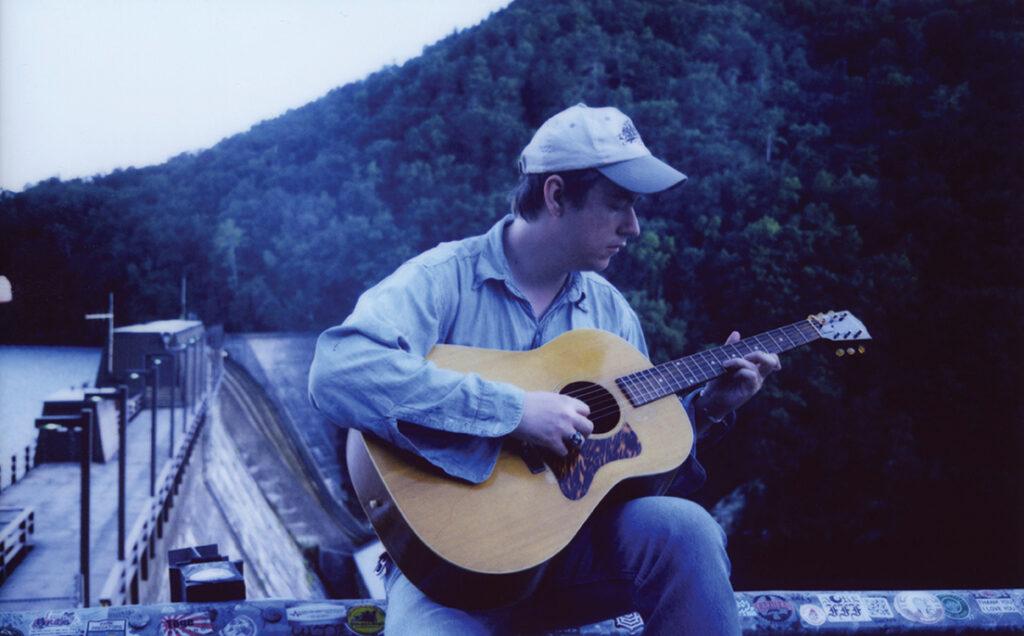
Along the way, the affable desert son will show you aspects of early flatpicking and thumb-fingerpick single-note styles, the original G-runs, and unique chording techniques from pre-bluegrass guitarists like George Riley Puckett and Lonnie Johnson that echo hauntingly through modern guitar breaks from Doc Watson, Del McCoury, Billy Strings, Norman Blake, and many more. Or he’s just as likely to play you an original instrumental on Norman Blake’s ornately decorated 1933 LC Century of Progress model Gibson guitar that is now in Knowler’s care.
Knowler’s Rural Guitar focuses on the development of early American guitar styles through intensive lessons and creative research. His book, Guitars Have Feelings Too, sets in motion his ethic that “questions the nature of melodic, flatpicked guitar and its interrelationship with rhythm guitar styles of the 1920s and ‘30s.” Freed from the constraints of popular bluegrass flatpicking, he takes the guitarist on a deeply immersive voyage through under-appreciated acoustic guitar styles that laid the foundations for modern bluegrass players, most of whom have never heard, or even heard of, these creative giants of the past.
Born and raised in Yuma, Arizona, where the incessant sun makes for perfect conditions to grow lettuce, not bluegrass, Knowler roamed the foothills of the Gila Mountains around his home riding dirt bikes and playing guitar as a kid. Mostly self-taught, Knowler passed a stressful audition that got him into the University of Houston’s Moores School of Music, earning an undergraduate degree in jazz guitar performance and later a master’s in archival work.
Cameron has since become an acclaimed educator, multi-instrumentalist, and recording artist who specializes in the art of the conceptual record, putting forth instrumental works that Folk Radio UK has referred to as “Western sound-painting.”
But it certainly wasn’t a straight line he followed from playing loud electric guitar under western skies to studying ancient Skillet Lickers records and many other playing styles of their day. Certainly, there was no bluegrass music in his family or on his horizon. However, a fortuitous choice on a family trip to cowboy country changed his musical direction forever.
“I was on a trip with my grandparents in Cody, Wyoming, and that night we had two entertainment options: the rodeo or a local family bluegrass show with Don Miller and his family. So, we went to the bluegrass show, and I had never heard music like that before. I typed some search words into YouTube upon arriving home, and through that, I found Norman Blake’s first instructional video on Homespun. It was self-contained acoustic guitar, heavily chordal in style, yet melodic. There was something logical to me about it,” he explains. “From there, I just tried to copy that sound. I didn’t know about Monroe and Flatt & Scruggs, or any other pioneers at that time—just Norman.”
As part of his craft as an acoustic flatpicker and fingerpicking stylist, Knowler follows in the theoretical footsteps of Blake, his longest-standing hero in the field. One thing that immediately attracted Knowler to Norman was the Georgia-native’s unadorned, down on the farm, honest musical persona. “I liked the fact that, to me, Norman was very traditional, very dry, but dressed like a hipster-hippie in funky clothes. But he was also forward-thinking, namely on social issues and the music itself. Same with his guitar style, and his slope-shouldered D-18,” Knowler tells Bluegrass Unlimited. “I immediately thought he had the coolest style, and his right-hand work with the pick… it looked so easy to do, but it’s obviously not. This was what led me down the path.” Since then, he has developed a friendship with Blake, visiting him at his cabin in rural Georgia that he shares with his wife, Nancy.
In addition to establishing himself as a sideman and solo artist, Knowler’s educational ethos is “rooted in practicality, theory, and intuition.” It’s clear that Norman Blake’s stellar guitar work was the perfect north star for his musical journey, though it took a long time to arrive at the trailhead; however, we all know that what survives in the brutal desert tends to be slow and deliberate.
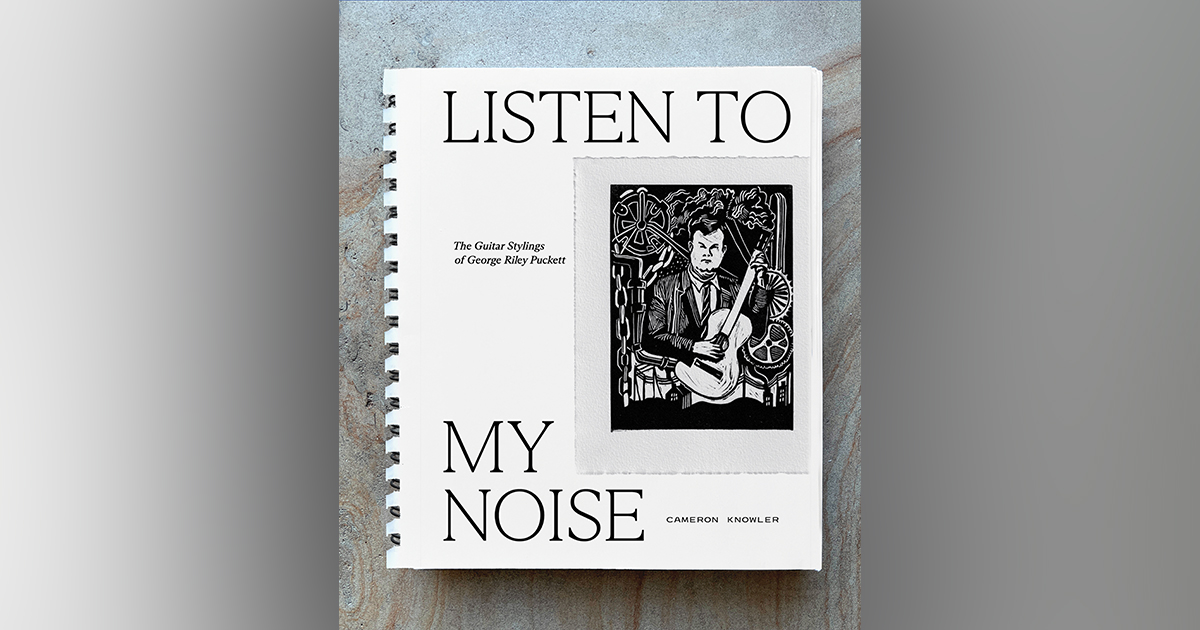
Knowler has launched a variety of online courses and books (digitally and in print) covering much of what he’s unearthed from ancient recordings, even promotional photos from the very bygone past. His projects vary from Listen To My Noise: The Guitar Stylings of George Riley Puckett, the aforementioned Guitars Have Feelings Too, as well as e-book courses on the rhythm guitar styles of Norman Blake, Maybelle Carter, and Dick Justice. It’s a project with no end for the gifted Arizonan.
So what led him to found Rural Guitar? “It came from the idea to continue the legacy of institutions like Homespun and Stefan Grossman’s Guitar Workshop, though it didn’t feel right to solicit products under my own name. This way, Rural Guitar can exist as a more wide-ranging thing, opposed to ‘Cameron Knowler’ as an individual.”
Asked to explain its mission, he summarizes the thesis from Guitars Have Feelings Too, his first method book: that modern creativity in acoustic guitar benefits enormously from studying and absorbing closely its long and sometimes obscure or forgotten history in the deepest realms of pre-war country and blues music forms.
The guitar community’s reaction has, in his words, “been overwhelmingly great, though it’s still crazy to me how many people don’t know that I’m Rural Guitar. Last year, we cleared 1,000 orders, which still blows my mind.”
Knowler wants to inform guitarists from all backgrounds of the value in going back in history to absorb the sources of what evolved into the post-war acoustic guitar styles that directly inform the music we hear today.
“There’s so much to learn from these pre-bluegrass sources,” he says. “Take folks like Riley Puckett, Jimmie Rodgers, and Dick Justice, for example, and sit with their music; from there, listening to their descendants, folks like Grandpa Jones and later players such as Doc Watson, is quite a revelatory process.”