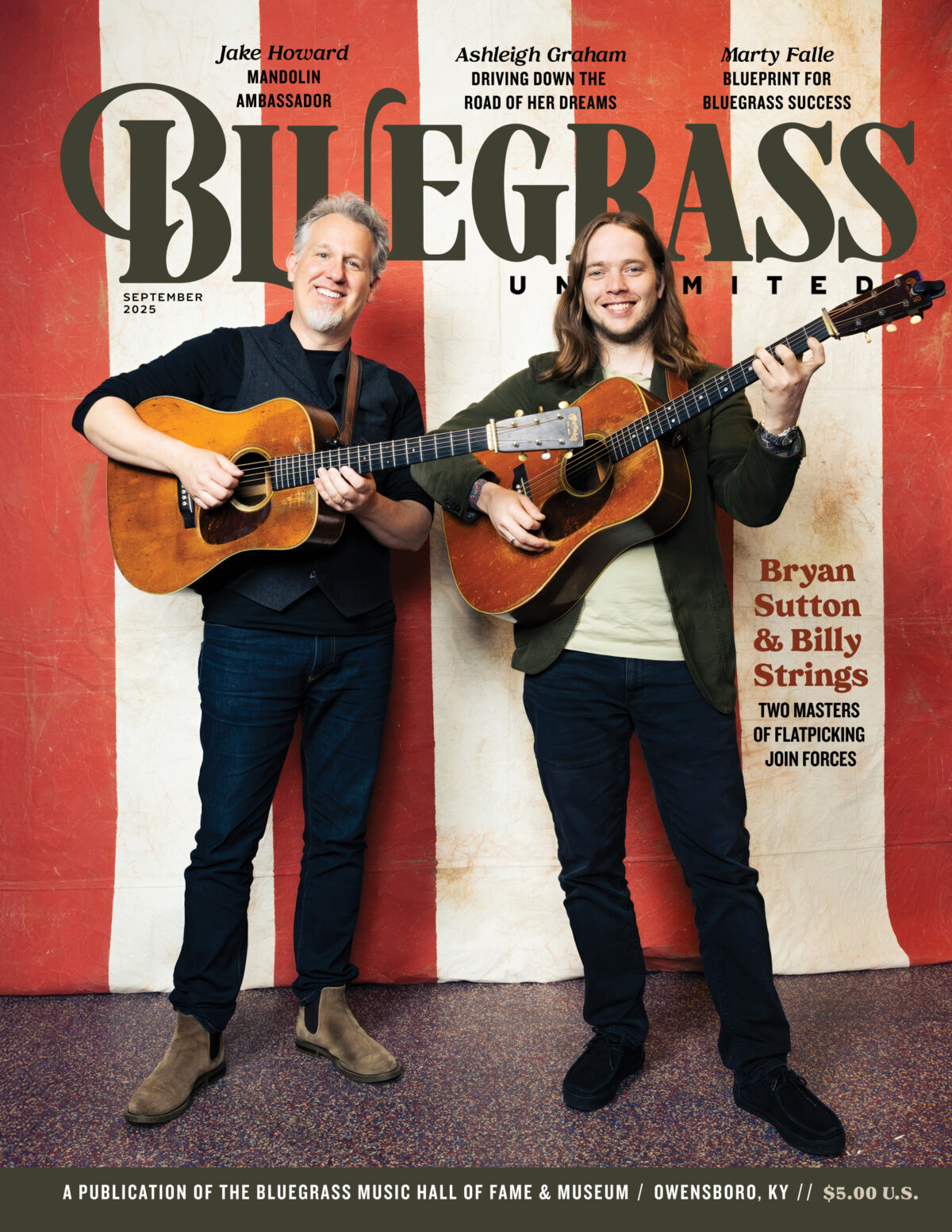
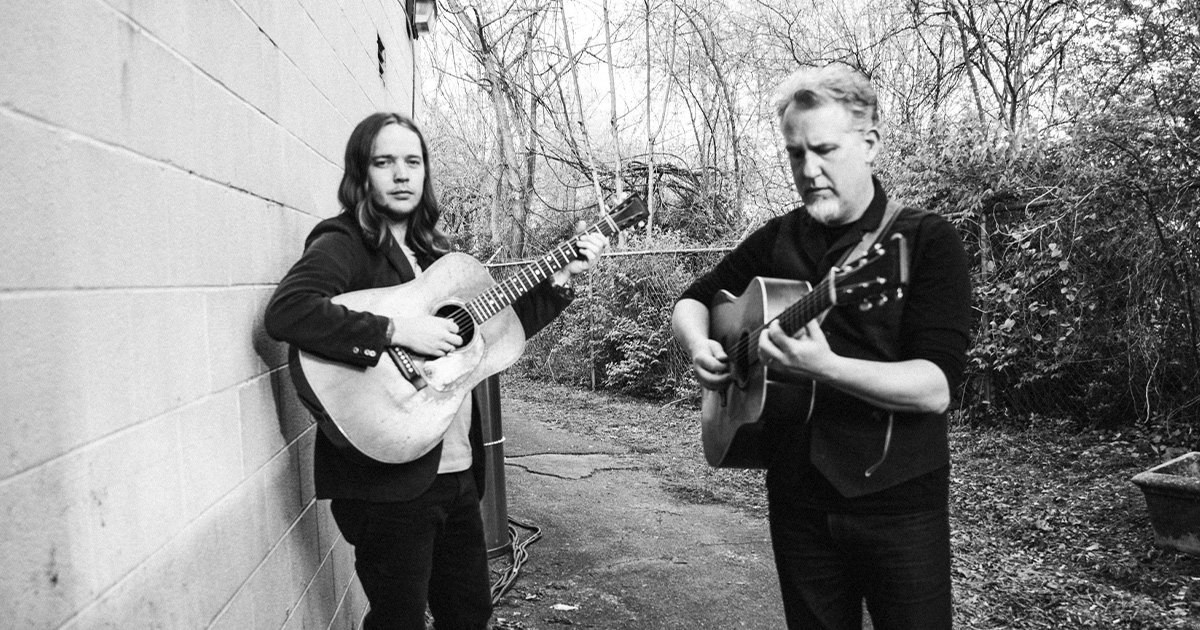
Bryan Sutton & Billy Strings
Two Masters of Flatpicking Join Forces
Photos by Joshua Black Wilkins
Years ago I wrote an article about Norman Blake and stated that if there were a Mt. Rushmore for flatpicking guitar, the players whose faces would be carved in that mountain would be Doc Watson, Clarence White, Dan Crary, Norman Blake and Tony Rice. While these are certainly the heroes and founding fathers of flatpicking, two of the more modern players who could certainly be included along-side those legends are Bryan Sutton and Billy Strings.
When Bryan Sutton joined Ricky Skaggs’ band in 1995, at the age of 22, he impressed everyone who loved bluegrass and flatpicking. Guitar builder Dana Bourgeois said, “The first time I heard Bryan play, I knew he was going to be a major force in the flatpicking world.” Now, thirty years later, Bryan has been that force, and then some. Every aspiring flatpicker that has come along over the past three decades has spent time studying Bryan’s playing and I’m certain that he has appeared on more recorded projects over the years than any other flatpicker in history.
Close to fifteen years after Bryan Sutton burst on the bluegrass scene, a young picker named William Apostol, who had spent the majority of the time between his sixth and eighteenth birthdays picking at home with his Dad and playing along with recordings in his bedroom, started to step out and make a name for himself. That young man, who had been given the nickname “Billy Strings” by his mother’s best friend, started to gain the attention of the flatpicking and bluegrass worlds while he was touring with mandolinist Don Julin. I interviewed Billy in 2014, when he was 21 years old, and stated, “Billy Strings is a force of nature. If you feel like your guitar playing is getting stale, he is someone that you need to hear play the guitar. It will wake you up like getting a shot of adrenaline in the arm. When I talk with him, or see him play, I can imagine what it might have been like talking to or watching a young Jimmy Martin. He has the same energy and emotion that I felt when I interviewed Martin. It is the energy that comes from wearing your heart on your sleeve, meeting life head on and playing right from the gut. His energy and enthusiasm are contagious. Hearing him will make you remember why you fell in love with flatpicking.” The rest, as they say, his history. Billy has now inspired tens of thousands of people to fall in love with flatpicking.
Now Bryan Sutton and Billy Strings have recorded a live album together—Billy Strings & Bryan Sutton Live at the Legion—and are going out on the road for a short tour in September 2025. For me, this live recording is honestly one of the best albums I have ever listened to—bar none. Years ago, I was at the Birchmere in Alexandria, Virginia when Doc Watson, Norman Blake and Tony Rice performed a show together. I felt that nothing else in the world of flatpicking could ever top that, but this new album from Sutton and Strings gets me there. If you haven’t heard it yet, I highly recommend that you check it out on your favorite streaming platform.
Bryan Meet Billy
Bryan Sutton’s history with Billy Strings dates back to a YouTube video that he watched after it was recommended to him by Punch Brothers guitar player Chris Eldridge. Bryan said, “There was a YouTube video of Billy at, I think, a Folk Alliance conference putting on a showcase in a hotel room. He was doing ‘Freeborn Man.’ He was young and unknown and doing what a lot of artists will do and go to Folk Alliance and play as much as possible to get as much exposure as possible. He was doing his thing and bringing a bunch of attitude and fire, but also tons of great playing. He demonstrated heavy facility on the guitar.”
When asked about the first time he became aware of Bryan Sutton, Billy said, “When Bryan was with Ricky Skaggs they put that record out called Bluegrass Rules. Bryan played a guitar solo on the track ‘Get Up, John’ and it was just like, ‘Who the hell is that!?’ Then there was this guy who was playing the open mic nights in Traverse City and he gave me this DVD of Bryan that was an instructional video. I watched the hell out of that thing. It had footage of him and Cody Kilby ripping it up. Those guys were kind of like my heroes.”
From the first time Bryan saw Billy on the YouTube video Billy remained on Bryan’s flatpicking radar and he started to run across Billy on the road when Billy was performing with Don Julin. Bryan said, “There was actually a Hot Rize show in Pennsylvania, in about 2014, where Billy and Don played in the lobby of the theater that we played. It was a co-bill with Hot Rize, Del McCoury and David Grisman. Billy and Don played in the lobby as people were walking in, kind of a busker gig. That was the first time that I actually met him and we got to hang out backstage and talk about Doc Watson and all kinds of stuff.”
The first time the Bryan and Billy had the opportunity to sit a pick together was at Merlefest about a year or two later. Bryan said, “We finally got to sit down, just the two of us. It was late in the day and everything else had shut down and we played for a good while—an hour and a half to two hours.” When asked if he could recall what that first picking session was like, Bryan said, “When you play with somebody else, you sort of get this sense like you are having a conversation with them. It either takes off and feels very comfortable or it feels like you are struggling to think of things to talk about. With Billy it was never any struggle. He is such a great reservoir of songs and can sing anything. The playing was real easy and natural. It was a real organic ‘falling off the log’ kind of thing where we were really digging each other as far as what the other would play. It didn’t feel like either of us was trying to elbow for space in the musical conversation. It just flowed really naturally.
“He is such a strong rhythmic player as well. Everything he plays is rhythmically connected and trustworthy. It was a lot of listening, I guess that is what it comes down to. When musicians are working with each other in duets, or bigger ensembles, if everyone is listening and gets out of their own way it makes really good things happen. I felt like we were doing that naturally.”
When asked to say more about Billy’s rhythm playing, Bryan said, “One thing that Billy does better than anybody, since Doc Watson, whether he is singing or just playing, is provide so much substance beyond just rhythmic strumming. It comes down to the core of how he feels a pocket and how he settles into that pocket and how that pocket becomes part of his sound. It is not just notes flying…there is something that you can really tap your foot to and get behind and trust. I have always felt that in his playing…just so solid—a brick wall kind of solid…and trustworthy. It is in everything he does. His rhythm playing is as much influenced by Mac Wiseman and Larry Sparks as it is Doc and Tony. As far as playing just good ole bluegrass songs, he has got that fully well-rounded sound, not just, ‘here is bluegrass filtered through Tony Rice and here is what we do in the 21st century.’ There are elements of that there, but there is also a broader vocabulary.”
When asked to recall that first picking session with Bryan, Billy said, “I look up to Bryan. He is about the best damn flatpicker in the world. I was just an aspiring guitar picker back then and really eager. I was amazed that this guy would take time out of his day to go grab a guitar and pick with me. I asked him if he would want to play a few tunes and he went and grabbed his guitar and we sat under this little tent. We started picking a few tunes and we have been friends ever since. We both cut our teeth on that Doc Watson stuff and it is nice to play with someone who knows that stuff real well. There are these little nuances in the music that sometimes come out. When you are a geek about the music, it is cool when those things happen and you can feel it. It is like, ‘Whoa, that kind of reminds me of the Doc and Merle thing.’”
When Bryan recorded his Not Too Far From the Tree album in 2006, he was able to record duets with the legends of flatpicking—Norman Blake, Dan Crary, Tony Rice, Doc Watson, George Shuffler, Russ Barenberg, David Grier, Jack Lawrence—and a couple of non-flatpickers like Earl Scruggs and Jerry Douglas. When asked if picking with Billy was similar to picking with any particular guitar player he recorded with on that album, Bryan said, “I’m deep enough in it to hear the various influences, or colors, in anybody’s sound and I hear some Tony, I hear a lot of Doc, but I also hear Mac Wiseman and Red Smiley…it is really well-rounded. It is Billy’s thing based on the stuff that he has listened to and I can tell that he has been singing a long time and he has the sweet spot of being supportive, but also strong—which is what all of those guys did. I don’t hear one particular source come out in the mix. It effectively is very Billy.”
Being able to assimilate many influences and not sound like any of them in particular takes plunging deeply into a broad range of musical approaches. Bryan said, “Growing up around his dad, Terry Barber, who was into so much music from Doc to the Stanley Brothers to Mac Wiseman and Jimmy Martin, he was exposed to so much so young and dove into it, studied it and absorbed it. His listening to other things beyond bluegrass—whether be Black Sabbath or any other kind of rock music, and other stuff that was so solid rhythmically—affected him as well. Outside of the specific music, Terry’s passion and love for it was influential. He heard something that he thought was really good and he wanted to share it with Billy.”
After that first jam session at Merlefest, Bryan recalls that every once in a while he and Billy would see each other out on the road and try to create an opportunity to pick together whenever they would cross paths. He said, “We played a duet set at DelFest and I also sat in with his band. Then at Merlefest we played the midnight jam with Tommy Emmanuel. Every time we were around each other, we’d end up doing something. He was living in Nashville by that time and would get together here and there and play some and we did a full show at the Station Inn in January of 2020.
“During the pandemic, I sat in with his band on a live stream from the Station Inn. He would have been very much on that rocket to the top…by this point, the rocket had already launched. So, he was drawing big crowds and moving quickly on that path. He started playing bigger venues and playing less and less at the festivals where I was playing. Even so, I would still see him here and there and hang out with him in Nashville.”
Bryan As Mentor
Bryan Sutton is someone who has taken a deep dive into all aspects of music, including the “mental side” of playing music. When I interviewed him in 2000, he said, “The biggest challenge for me right now as a musician is not more chords that I want to learn, or more licks that I want to learn, or playing faster or slower. Musically I feel comfortable and confident with my ability. But there is a mental side to being a professional musician that is challenging and sometimes rears its ugly head when you are not prepared for it. It is not a lack of confidence really, but it has to do with the fact that you have done something so much that you begin to think about it too much. You lose the initial energy and spontaneity that made something great in the first place. When you ‘try’ to recreate something, or purposefully take it to a different level, it doesn’t happen. ‘Trying’ to do something and spontaneity don’t mix.”
Bryan said that many times when he and Billy Strings would get together in Nashville they would discuss the mental aspects of playing music. Bryan recalls, “We would discuss things like developing strategies to learn how to get out of your own way and accepting performance pressures—or whatever other narratives are going on in your head—so that you can let your true and honest voice come through. “
Bryan continued, “All through this time we would chat and he and I got into a lot of deeper conversations about the mental side of playing and tension awareness and we have always had a good connection on that front as far as sharing our experience as performers and being on stage and trying to be the best players that we could. He was really working on trying to be a better player, so there were a lot of conversations around that.”
Regarding their conversations, Billy said, “There is a lot of stuff that goes into playing and one of the things that I really envy about Bryan and Béla Fleck and Chris Thile is like they have this Zen thing. To me, Bryan is like a Zen master and I am in training. I still have all this tension. Somebody like Bryan is loose and fluid when he is playing. He lets the motif carry him. It is hard to explain, but it is like a Zen thing. It is like if I’m playing pool and I really focus and try to aim and try to make it go into that pocket, it never will. But, if I hold a conversation and put that stick up there and wack it, it usually goes right in. It is that kind of thing. It is totally Yoda, you know? He’s Yoda.”
Concluding the conversation about the contact that Bryan and Billy had during Billy’s rise to fame, Bryan said, “I guess I would sum some of this up to say that it was periodic, but consistent, as far as he and I hanging out and talking about music, talking about playing music and the mind and body experience of being guitar players. Once he started playing arenas, there were a few times that I would go out and sit in with him. Like a lot of relationships in music, you don’t see each other all that much, but you are aware of where each other is and there will be texts or calls about one thing and another.”
One of the many things that is impressive about Billy Strings is his willingness to always push his art and his skill forward. He does not rest on his fame or his success, he is always seeking to improve. When asked to comment about Billy’s willingness to continually work hard to improve his guitar playing, Bryan said, “He has an honest awareness about who he is and how he feels about himself. There is no bravado or celebrity fame or big shot show. You are seeing a musician that is striving to be the very best and he has always been that way. He wants to be better and is willing to do whatever. When a performer is at his level, it is potentially tempting to think, ‘People are going to buy a ticket no matter what.’ He doesn’t think that way and that makes Billy who he is…his willingness to work and improve and try stuff out. It is honest and shows up in his performances. He has a curiosity and a desire to improve and be better—and that is who he is, not something he is putting on. He is naturally a guy that is so committed to what he wants to do, and do it to the best of his ability. And if it is not as good as he wants it to be, he is going to go figure out how to be better.”
Bryan As The Bridge
Bryan Sutton is a flatpicking guitar player who is somewhat of a bridge between the legends like Doc Watson, Tony Rice, Norman Blake, George Shuffler and Dan Crary and the younger players like Billy Strings and Molly Tuttle. He knew, performed with and recorded with the true flatpicking heroes. However, not one of those legends was able to fill an arena night after night. So, I asked Bryan to comment on Billy’s success. He said, “I have different takes on that. One…I completely appreciate it and support it. I think it is awesome. I applaud his willingness, upon reaching that kind of status and that level of selling out an arena three nights in a row, and not feel like, ‘I need to now change.’ A standard music business reaction is, ‘What can we do to make it even bigger, or even louder?’ Or some people might say, ‘Let’s get a drummer,’ or ‘Let’s go more electric.’ He has tapped into that because he loves it, but at the core he has not changed anything about himself. Part of the phenomenon of it is that it is who he is and he is willing to be himself. He is not falling into the trap that a lot of people fall into. They say, ‘OK, now that we are on this big national stage, we have to look more like these pop or rock people and try to be more palatable to the general scene. What makes him what he is, is that he is maintaining uniqueness and there is a draw to that.
“People are still looking for something real and something honest. Billy and Chris Stapleton are both willing to be themselves and not play the Nashville game and not play the rock game. The ‘suits’ try to make it so corporate and predictable, but thankfully there are these people out there like Billy that totally bust the system and draw thousand and thousands of people to it over and over again. You just have to sit back and say, ‘I’m not sure why this happens, but we are glad that it continues to do that.’
“People appreciate that personal honesty and integrity and musical honesty and integrity. I think what happens in this phenomenon of Billy is that he shares a lot of himself on-line, his good and his bad and his family, and he fosters a community. When I have been at his shows, you feel that. There are people who are there to just be part of the community. When I go to his shows I see kids, older folks and everything in-between. He is not just playing to dudes in their thirties. It is broader than that. If there is chemistry in that, it is just who he is and how he shares himself with the world. That is a lot of it.”
Live at the Legion
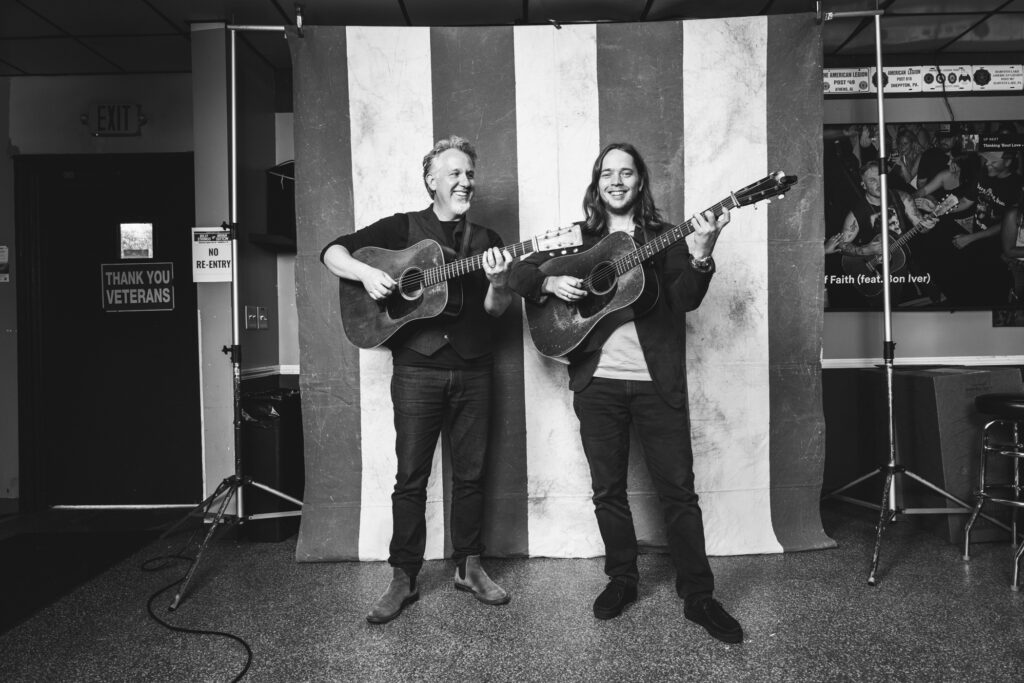
When asked about how the idea of recording a live duo show came together, Bryan said, “Ever since that Station Inn show, there have been conversations about doing something like that again. The conversations leading up to the American Legion show started a year or so before that. We have always had a good time playing with each other and it has always felt very natural and conversational, and just fun. The recording was secondary. We were just looking to book another show on same date when we were all in town. It is always a challenge to fit something like this into his touring schedule. We wanted to get something bigger than the Station Inn, but not an arena or the Ryman. The American Legion here in Nashville has become a cool place to play. It has a good vibe.”
Originally the idea was to have Bryan and Billy perform two nights in a row so that they could have more material to draw from for the recording, however, the American Legion Hall was not able to do that, so they decided to perform two shows on the same day. Bryan said, “I think that actually helped because we could go in there with a very concerted effort for what we were doing and not have too much time to think about it.”
Regarding the choice of songs for the set list, Bryan said, “We got together the day before and worked through a pile of tunes. When he and I get together, we know most of the same things. He has taken a deeper dive into the vocal songs. Billy has such an encyclopedic knowledge of tunes by Mac Wiseman, Larry Sparks, Jim Eanes, the Delmore Brothers… and the ability to just pull them out. He reminds me of Tim O’Brien in that way. So, we sat around and played and, for instance, he had just worked up this Blaze Foley song and we said, ‘That feels good, let’s put it on the list.’
“We were looking for balance…things that he could sing and things that I could sing, things that we could sing together. Of course, we both have sort of an endless supply of fiddle tunes and Doc Watson is a collective glue between he and I. So, obviously we were going to dip into that repertoire with tunes like ‘Walk On Boy’ and ‘Way Downtown’ and that sort of stuff. There is some of that Doc and Merle sound and some brother duet stuff. We went through songs and made a list. It was easy. We were not slack about it, but Billy, being the person that he is, we were not going to try to write a bunch of material or figure out fancy arrangements. We were just going to do what we do and not over-think it.”
When asked about performing with Bryan for this recording, Billy said, “When I’m performing with Bryan I feel comfortable and relaxed, so I’m able to play some of those things that happen in my head. Or, just by following Bryan maybe some kind of magic thing will happen. There were a couple of moments on the record, like on ‘Ground Hog,’ where we just went off and started jamming and we really got into some beautiful stuff and neither of us knew what the hell we were doing, we were just listening to each other.”
Because the set list came together naturally the day before the show, Bryan said that had they sat down on a different day, it probably would have been a different pile of tunes. Bryan and Billy are going to be touring together in September of 2025, playing roughly ten dates. He said that while they will be performing some songs from the album during the tour, he predicts that the set list will change nightly depending on what they feel like performing on any given day. Bryan said, “We are going to continue to dip in, not just present that record.”
Looking forward to the tour, Bryan said, “What I like about continuing to play with Billy is that we love to play these old tunes, but we are also going to be very improvisational and conversational in the moment. If that means that we kind of take quick little left turns and get silly or crazy, we are both very willing to go there. I think that shows up on the record, too.”
Billy agreed, saying, “Bryan is one of those players that makes you feel better about yourself. He is so good that when you start playing, what he is playing underneath you picks you up and lifts you. It is almost like somebody gives you a push. He lifts other players up so high. It is so much fun to play with him because of that. It is very conversational and there are a lot of musical jokes that happen back and forth. It can turn on a dime. We really just listen to each other and have a conversation. Anything can happen. It is a lot of fun.”
Looking Ahead for Bryan
In addition to this new recording with Billy Strings, Bryan Sutton has another really nice recording project that he has been working on as a follow-up to Not Too Far From The Tree. In addition to his other studio work, the occasional tour dates, his annual guitar camp and his online lessons through Artist Works, Bryan Sutton has also been working on a duet album that is kind of a sequel to his 2006 release Not Too Far From the Tree. Bryan said, “I’ve done a part two, if you will, of that duets record that came out. It will be 20 years next year. I have always thought about doing another one. Whereas the first one was Doc, Tony, Norman and George Shuffler, my dad and all my guitar heroes, this next one is more peers and people who are younger than me. There are more of them now, so I have to look the other way. It will be a collection of duets. I’ve already recorded a lot of them and it is still growing at this point, here in July of 2025. I did one just yesterday with Andrew Marlin.”
When asked about the record’s content, Bryan said, “Whereas the last one was all guitars playing fiddle tunes, this one will also be all guitars, but there will also be some vocals on it and I’m also branching out beyond just bluegrass. Tommy Emmanual will be on there. I did a duet with Joe Bonamassa. I’m also tapping into my Nashville buddies, like Brad Paisley. That has been fun. I work a lot outside of bluegrass, and I have been fortunate to be around a lot of great guitar players over the years. So, it seems fun to dip into that part of my career and those relationships that I’ve created here in Nashville. But, there are also a lot of bluegrass pickers—Zeb Snyder, Jake Eddy, Jake Stargel, Jake Workman, Kenny Smith, Molly Tuttle, Jordan Tice…Sierra Hull.” In addition to the new recorded material, Bryan also has some archived material from the Not Too Far From The Tree sessions that did not appear on that project. He will release some of those cuts on the new album. Bryan hopes to start releasing some of the new material in September of 2025 and continue to release more of the cuts in 2026 to mark the 20th anniversary of his first duet project.