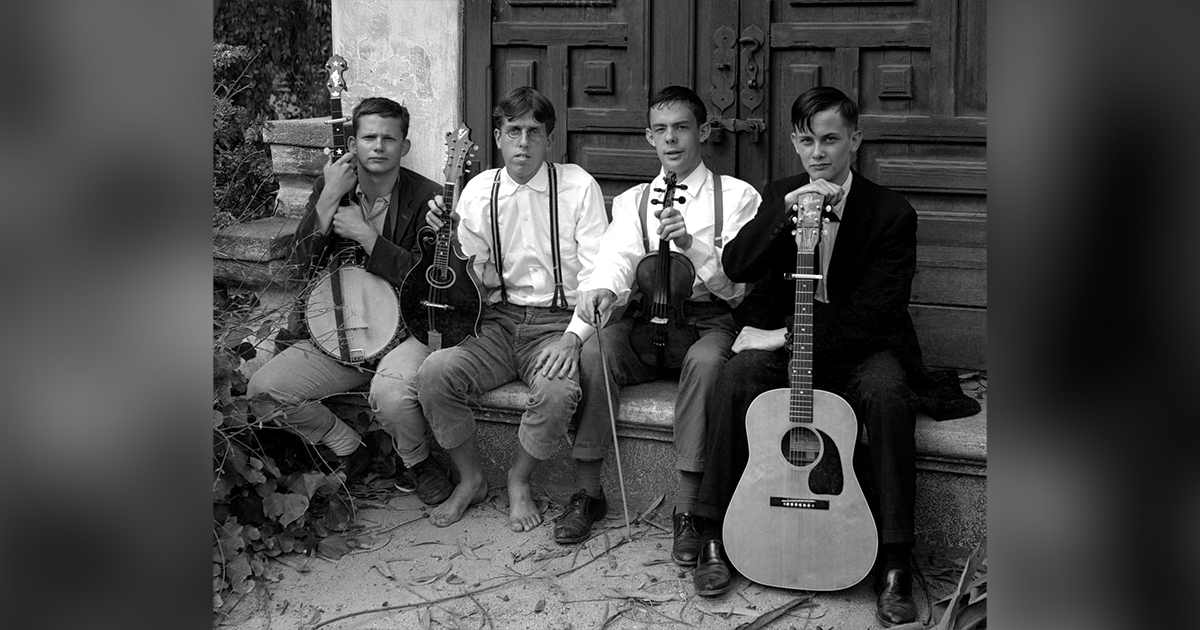
“Bluegrass Spectaculars” at the Ice House
Bluegrass Hall of Fame member Carlton Haney has received (and deserved) much acclaim for his production of a bluegrass festival in 1965 at Cantrell’s Horse Farm in Fincastle, Virginia, universally hailed as the first multi-day bluegrass festival and the model for all that followed. The only problem with this much-repeated narrative is that “Bluegrass Spectaculars,” a two-day festival presenting 15 bluegrass bands at the Ice House in Pasadena, California, had taken place almost two years to the day earlier.
“Bluegrass Spectaculars” (aka the Ice House Bluegrass Festival) was held over Labor Day weekend 1963. The festival presented afternoon and evening shows on Sunday (9/1) and an evening show on Monday (9/2), Labor Day. It was reported in Billboard, the music industry trade magazine, that “at least” 15 bluegrass bands performed (but I can account for only 10 of them).
The Ice House, located on North Mentor Avenue, opened in 1960 as a folk music club, presenting both touring and local artists, with a smattering of bluegrass bands. The “Bluegrass Spectaculars” was the venue’s first experiment with this kind of programming, and it’s not known if the club ever did it again.
The “Bluegrass Spectaculars” was the first gathering of the bluegrass tribe in southern California. Bluegrass had been previously included at folk festivals (UCLA and Monterey, for example) and at contests like the Topanga Banjo and Fiddle Contest, which started in 1961. But this was the first genre-specific bluegrass event not built around a contest, and it drew most of the region’s existing bluegrass bands.
The festival kicked off Sunday afternoon with sets by the Mad Mountain Ramblers and probably the Scottsville Squirrel Barkers, plus perhaps two or three other bands.The Sunday evening show presented sets by the Pine Valley Boys, the Bluegrass Ramblers, the Willow Creek Ramblers, the Kentucky Colonels, Crown Junction Stompers, the Golden State Boys and the Haphazzards. The Labor Day concert presented return sets by the Bluegrass Ramblers, the Willow Creek Ramblers, the Kentucky Colonels and the Haphazzards. The evening concert was closed by Glen Campbell (and maybe the Dillards).
Information survives, somewhat miraculously, for two of the three concerts, with Sunday afternoon’s details apparently lost to the ages. For the other two, however, what remains is a schedule of the bands that played, along with the personnel list and set list for each band. What follows is a note about each band, highlighting what individual band members would go on to accomplish in the music.
Mad Mountain Ramblers
David Lindley (banjo and fiddle), Chris Darrow (mandolin and fiddle), Bob Warford (banjo and Dobro), Steve Cahill (guitar), Phil Cleveland (bass)
Semi-regulars at the Ice House, the Mad Mountain Ramblers was started by David Lindley, the winner of the banjo contest at the Topanga Banjo and Fiddle Contest in 1962 and 1963. At the time of this gig, the band was wrapping up a stint at Disneyland, playing on the “Mine Train Through Nature’s Wonderland” ride in Frontierland. Lindley and Darrow would reunite in 1966 in the “psychedelic folk” band Kaleidoscope. Lindley would go on to be the multi-instrumentalist super-sideman for Jackson Browne, among other accomplishments. Darrow joined the Nitty Gritty Dirt Band in 1967. Warford would later play with the Golden State Boys and the Kentucky Colonels.
Scottsville Squirrel Barkers
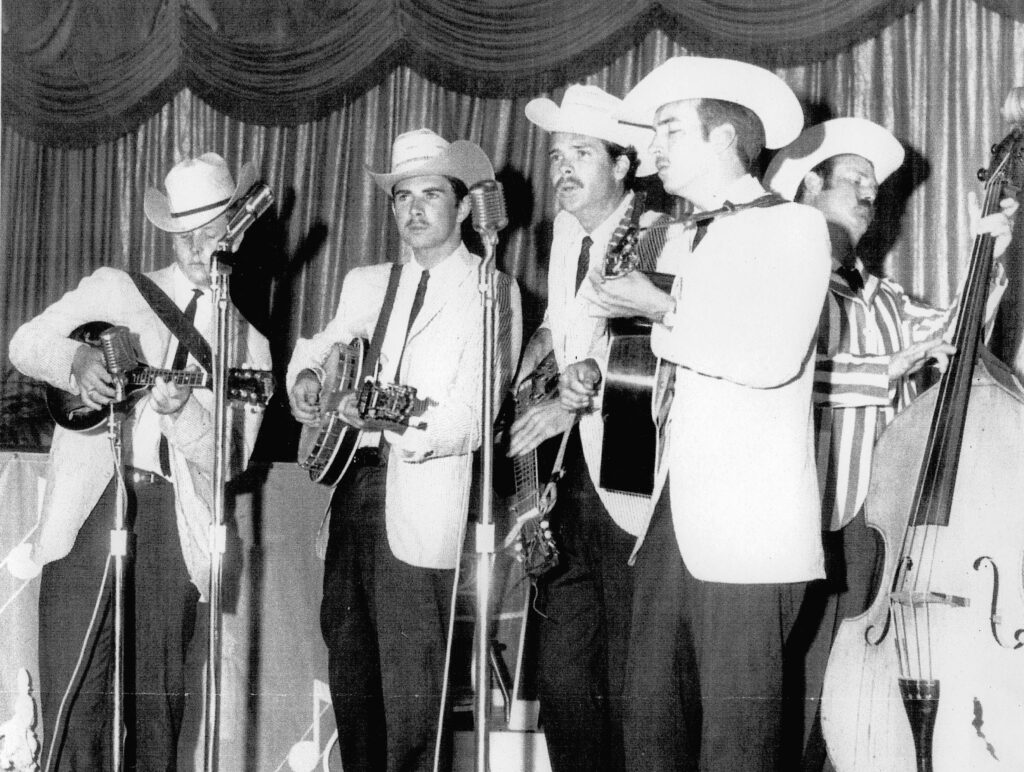
Chris Hillman (mandolin), Kenny Wertz or possibly Bernie Leadon (banjo), Larry Murray (Dobro), Gary Carr (guitar), Ed Douglas (bass)
The Scottsville Squirrel Barkers, up from San Diego, lasted only about 18 months but the band launched the careers of Chris Hillman (Hillmen, Byrds, Flying Burrito Brothers, Desert Rose Band and beyond) and Kenny Wertz (Country Gazette and Flying Burrito Brothers). Hillman left the band soon after this gig, but before he left, the band recorded Bluegrass Favorites by the Scottsville Squirrel Barkers. The album, only about 18 minutes long and containing 10 traditional songs and tunes, was sold across the country for under a dollar in bargain bins in drug and grocery stores.
Pine Valley Boys
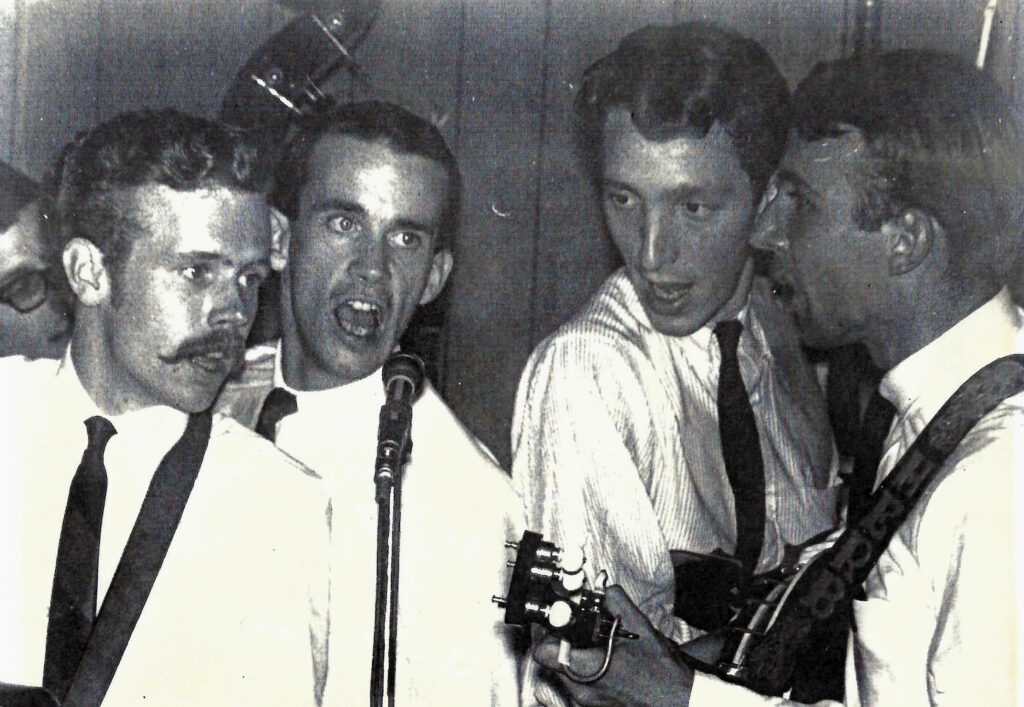
Butch Waller (mandolin), Herb Pedersen (banjo), Rich Conley (guitar), Tommy Hollis (bass)
The Pine Valley Boys was a San Francisco band started by two high school friends, Herb Pedersen and Butch Waller. The band moved to Los Angeles in 1963 to work at one of California’s leading folk music clubs, the Troubadour, where it was the house band and ran the weekly “Hoot Nights.” The band ended in 1964. Pedersen embarked on a long career that would encompass Vern & Ray, Flatt & Scruggs, the Dillards, the Desert Rose Band, the Laurel Canyon Ramblers and more. Butch Waller started the staunchly traditional band High Country in 1968, which is still going strong more than fifty years later.
Bluegrass Ramblers
Herb Rice (m), Tom Kuehl (g), Richard McEwen (dob), Ron LeGrand (b), Red Ashley (f), Eric White (bs)
Mandolinist Herb Rice formed the Golden State Boys in the late 1950s with his brother-in-law Hal Poindexter, who played guitar and sang. By 1963, Rice was playing with the Bluegrass Ramblers. The Ramblers’ left-handed banjo player Ron LeGrand subsequently played in such bands as the Fly-by-Night Fleabags, Aunt Dinah’s Quilting Party and Wild Oats. Kuehl also played in Aunt Dinah’s and would later be a co-owner of the House of the Rising Sun, a leading roots music club in Redondo Beach.
Willow Creek Ramblers
Andy Aldrich (guitar), Philip Poth (banjo), Don MacAllister (mandolin)
A bluegrass trio from Seattle, the Willow Creek Ramblers probably traveled the furthest for this gig. The band’s set lists indicate a preference for the Carter Family: “Lula Walls,” “I’m Thinking Tonight of My Blue Eyes” and “I Ain’t Gonna Work Tomorrow.”MacAllister swapped his mandolin for an electric bass the following year and started a rock band called the Daily Flash. That band created enough of a buzz in Seattle to get invited to move to Los Angeles and record a few singles.
Kentucky Colonels
Clarence White (guitar, mandolin), Billy Ray Latham (banjo, guitar), Roger Bush (bass), Bobby Slone (fiddle)
By the time of this gig, the Kentucky Colonels had already recorded a handful of singles (as the Country Boys) and an album, The New Sound of Bluegrass America, and made two appearances on the hit television program The Andy Griffith Show. The band would embark on its first national tour a few weeks later, playing in Denver, Detroit, Boston, Philadelphia and Washington, D.C. Roland White was still in Germany serving with the U.S. Army—he was due home later in the month—so Clarence played mandolin on some cuts; Billy Ray Latham switched from banjo to guitar on those numbers. Roger Bush later joined Country Gazette, while Bobby Slone would have a long association with J.D Crowe & the New South.
Golden State Boys
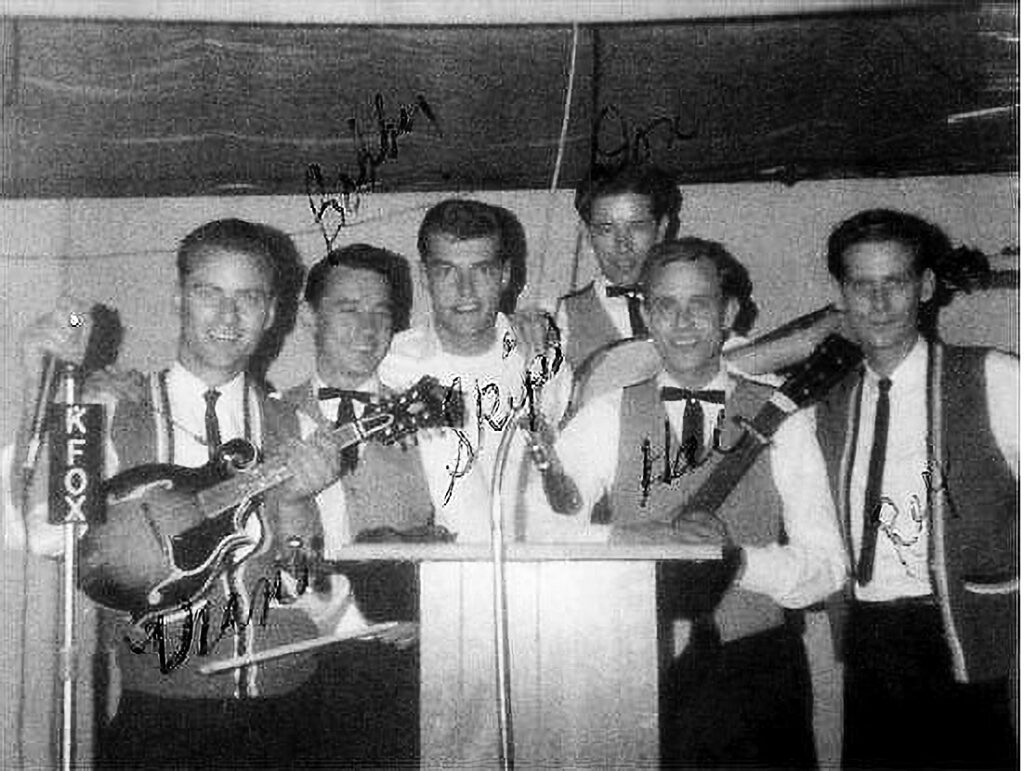
Hal Poindexter (guitar), Don Parmley (banjo), Vern Gosdin (mandolin), Rex Gosdin (bass), Skip Conover (Dobro)
The Golden State Boys, started in the late 1950s, was one of the leading bluegrass bands in California. This was one of the last gigs for this line-up of the band, as there was a rift in the band, and it split in two. Poindexter kept the name and rebuilt the band. Parmley and the Gosdin brothers recruited Chris Hillmen and started working as the Blue Diamond Boys. The name was soon changed to the Hillmen. Parmley would start the great bluegrass band the Bluegrass Cardinals in the mid-1970s, about the same time Vern Gosdin was becoming one of the most respected country singers of the day.
Crown Junction Stompers
John Lyons (mandolin), Al Merian (guitar), Sandy Mosley (banjo)
The Crown Junction Stompers were best-known at this point for winning the stringband contest at the 1962 Cat’s Pajama Folk Festival in Pasadena (the Mad Mountain Ramblers came in second). As winners, the Stompers received a week-long engagement—paying union scale!— at the Ash Grove, the leading roots music club in Los Angeles. Mosley left the group the following year to join the Greenwood Country Singers, an uptown folk group that recorded an album for Kapp.
Haphazzards
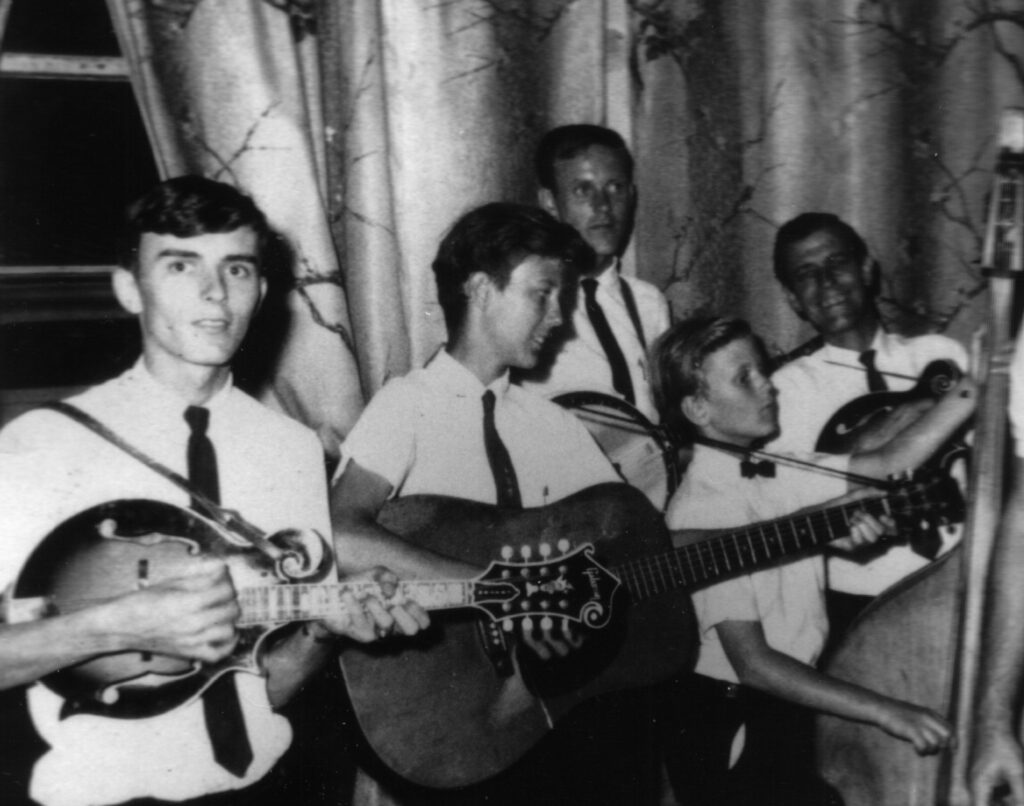
Larry Rice (mandolin), Tony Rice (guitar), Ronnie Rice (bass), Andy Evans (banjo)
The Haphazzards featured the three oldest sons of Bluegrass Ramblers mandolinist Herb Rice—Larry (age 14 at the time) Tony (12) and Ronnie (8). Among the tunes the young band played were “Foggy Mountain Breakdown,” “Foggy Mountain Top,” “Cumberland Gap” and “John Henry.” Larry and Tony went on to long, distinguished and influential careers in bluegrass. They teamed up 34 years later with two people they met at this festival, Chris Hillman and Herb Pedersen, and recorded three albums for Rounder.
Glen Campbell
Glen Campbell (12-string guitar), Hal Poindexter (guitar), Billy Ray Latham (bass), Eric White (bass)
Glen Campbell was still four years away from his breakthrough career-making hit, “Gentle on My Mind,” making his living at the time as an A-team session musician in Los Angeles, a member of the ubiquitous studio cadre known as the Wrecking Crew. His first album, Big Bluegrass Special, had been released on Capitol in 1962. Campbell made a pair of records for World Pacific in 1963, 12 String Guitar! and 12 String Guitar! Vol 2, by the Folkswingers (actually Campbell on 12-string guitar with backing by Dean Webb and Doug and Rodney Dillard).
According to the notice in Billboard, the Dillards were also at the festival, playing with Glen Campbell on Monday. It would make sense for them to be there, but the surviving information doesn’t confirm it. If the band was there, it either played on Sunday afternoon (for which the info is missing) or the information about Campbell’s Monday show is wrong. Maybe someone reading this will remember and set the record straight. If the Dillards weren’t there, they should have been.
All three of the concerts were emceed by Hugh Cherry, a popular disc jockey on KFOX, the leading county music station in Los Angeles. A former drinking buddy of Hank Williams in Nashville, Cherry mentioned several times in his introductory comments that the event was the first large-scale gathering of bluegrass bands in California. Given Cherry’s involvement, it’s fair to assume that the “Bluegrass Spectaculars” was promoted with on-air announcements on KFOX.
KFOX, which went to an all-country format in 1959, played bluegrass as part of its programming mix. It even promoted bluegrass in its print media advertising, a rarity for a big-city station, promising listeners “COUNTRY and FOLK MUSIC BLUEGRASS and An Occasional HOOTENANY.” By the mid-sixties, the station claimed to be the number one country station in the United States.
Considering the heights to which many of these young musicians ascended in their later careers—including memberships in the bluegrass, country and rock music halls of fame—the Ice House Bluegrass Festival was an astounding showcase of unbridled talent and unlimited potential. It truly deserves to be known as “ground zero” for southern California bluegrass and what came to be called country-rock. It was a seminal moment in the development of both styles of music.
Carlton Haney’s place in the bluegrass pantheon is secure. His 1965 festival in Fincastle, Virginia, inspired many imitators and is clearly the most influential festival in bluegrass history. It just wasn’t the first multi-day bluegrass festival in the country, as is often claimed. That honor belongs to Pasadena’s little-known “Bluegrass Spectaculars.”