
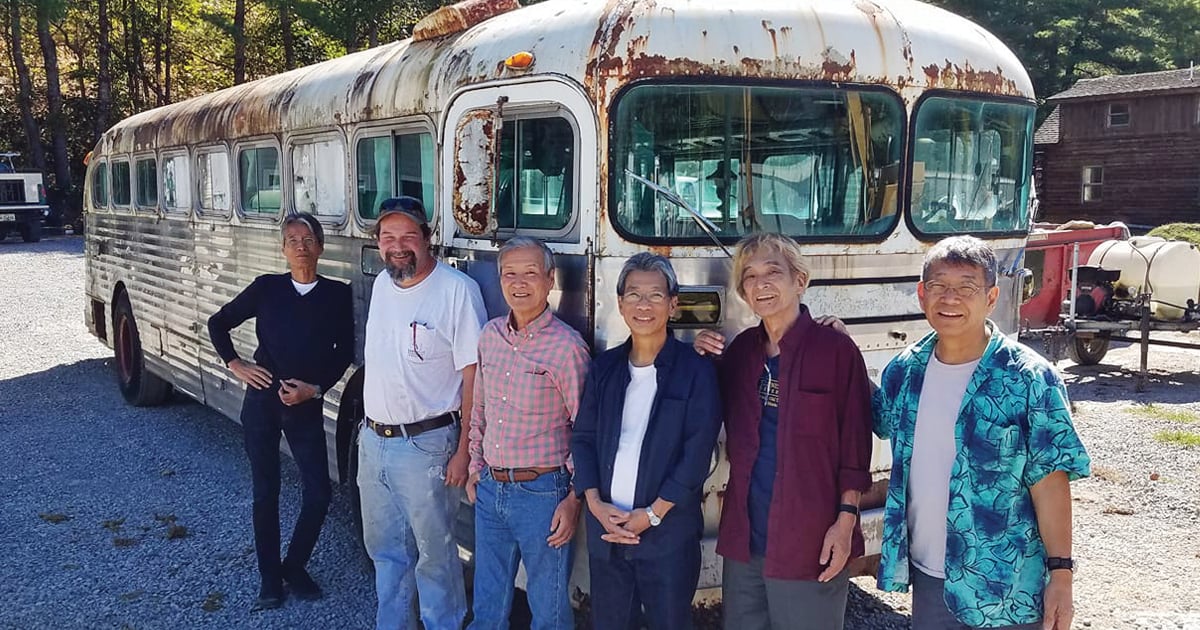
Bluegrass and Country Music in Japan
As an “overseas brat” growing up in Japan during the 1950s and 60s, it was always a treat for our family to tune into the Far East Network (810 on the radio dial). Broadcasting from Tokyo, the Armed Forces network affiliate station would bring us America’s Top 40 with Casey Kasem, Paul Harvey’s commentary, football and basketball games, deejay Charlie Tuna, and classic radio series with Johnny Dollar, The Shadow, Lone Ranger, Wild Bill Hickok, Twilight Zone, Chickenman and more. I learned some Japanese by listening to Hiroko Kubota’s “Phrase of the Day,” and, at the time, I must admit more of an affinity for FEN’s “Teenagers on Parade” programming than Saturday nights from the Grand Ole Opry.
During the U.S. occupation of Japan (1945-52) and decades following, the Japanese people were also greatly influenced by what they heard on the Far East Network. With a zeal to adopt anything that exemplified the American spirit and freedom, the Japanese explored Western culture, language and music. In the postwar years, and during the Korean and Vietnam Wars, bands made overseas trips to entertain the troops. As a military dependent, I recall paying a buck or so to see fantastic shows by The Supremes, Beach Boys, Ventures, Sam & Dave, Temptations and many more at our base theater or gymnasium. The Japanese also heard these groups and formed their own, the best of which played for the GIs in base clubs.
Dr. Toru Mitsui, from Osaka, majored in English, studied literature, and researched old English ballads dating back to the 17th century. “Soon after the war,” states Mitsui, “the idea of democracy was sort of imported. Not very specifically, but it was reflected in the image of the wide west and freedom. That tendency was reflected in the music heard on the radio. Japanese felt liberated by the lively music. The Japanese looked up to Americans. Everything was great in America.” Over the years, some interest by the Japanese in the music has waned, but those who kept at it developed a consciousness and sound of their own. Locals accept the music and singing, and they appreciate the amazing feelings and experiences conveyed.
In 1958, Mitsui published Music Life with many photos of country western bands in Japan (like The East Mountain Boys). In 1967, the author and scholar published Bluegrass Music in Japan. According to Mitsui, an early group along these lines was The Western Melodies, formed in 1948 by Mr. Sotoyama, as well as country singers Jimmy Tokita and Terry Teramoto.
Universities also played a key role in the proliferation of American music and culture. Western concepts hold a certain fascination for the Japanese, and many college students found that studying English was an interesting way to satisfy their curiosity and learn more about the world. In the late 1950s, Kenji Nozaki, who headed up the American Folklore Society, organized a bluegrass group called the Sunny Mountain Boys comprised of students from a Kyoto university. The Tokyo-based Ozark Mountaineers was another early bluegrass band headed up by Michio Higashi.
The Ozaki Brothers (Yasushi and Hisashi) were early pioneers of the music in Japan. Hisashi has gone to Heaven, but Yasushi, now over 90-years-old, recalls the time. “During World War II, we couldn’t listen to American music, so we listened very, very carefully. American music was totally different. It was very bright and made us want to dance. With its harmony and feeling, it seemed to create the best language, across the country, across the world.” For forming one of the first bluegrass bands in Japan, the brothers have been inducted into the International Bluegrass Music Association’s Hall of Fame.
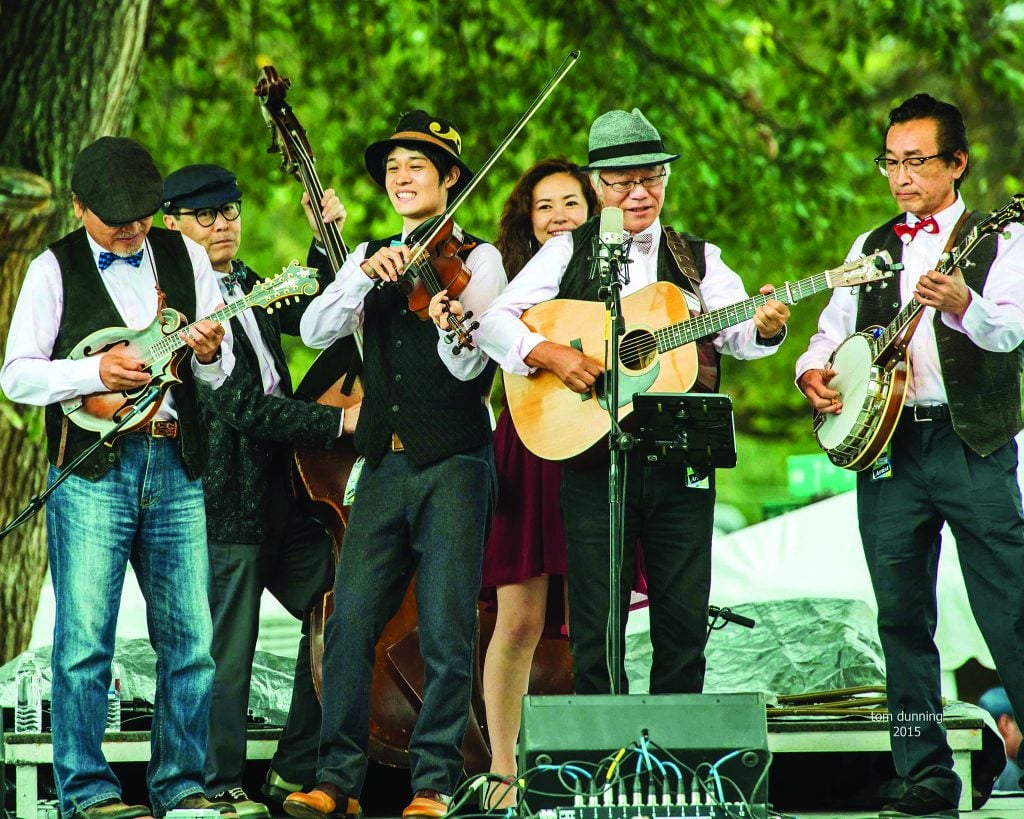
During junior high school, Toshio Watanabe began to like the cowboy music he heard in western movies. He picked up a Hank Snow record, attended jams hosted by the American Folklore Society, and heard live music at Kenji Nozaki’s nightclub called Lost City in Kobe. It wasn’t long before Toshio, his brother Saburo, and a couple others were part of a house band called Lost City Ramblers performing there regularly. With the Otsuka brothers, the Watanabe brothers formed Bluegrass 45 that toured the U.S. in 1971 and released a couple records on the Rebel label. Toshio and Sab started their own record label (Red Clay), mail order record business (Blue Grass and Old Time Music B.O.M. Service), the annual Takarazuka Bluegrass Festival and monthly Moon Shiner Bluegrass Journal. In 2022, the festival will celebrate its 50th anniversary, and that will be a momentous occasion in The Land of the Rising Sun.
Recognizing that our societies are different, the Japanese remain somewhat conflicted about bluegrass music. To be authentic, they believe the songs should be sung in English, and the lyrics are often too American to be easily translated. Even if they were translated, few would be able to understand or relate to the very American ideas and humor found in country and bluegrass music. However, it also works both ways, and many Japanese words or concepts are somewhat difficult for us to understand. Many Japanese bluegrass band names are quite humorous, just for fun, based on puns or perhaps even sexual innuendo. Some band names (like “Ichi, Ni, no San Gurasu”) just have a nice flow or cadence to them when rattled off, in this case meaning “One, Two, Three Grass”).
In bluegrass shows, I always have some fun with the audience by mentioning how bluegrass music is growing around the world and then singing some Japanese words for Bill Monroe’s “Y’All Come.” Roughly translated, they truly convey the Japanese bluegrass spirit: “When you live in the country, everyone is a friend, happy friends! Anytime you’d like, let’s play together. The dawn is breaking!” Deep down inside, I sense a fair amount of understanding and appreciation for the themes in bluegrass music. Those who have enthusiastically gravitated to bluegrass and country music in Japan realize it conveys many of the same simple moods and feelings as many Japanese folk and popular songs that tell of rustic country homes, ancestral ties, and a simpler slower-paced and more rural lifestyle.
Besides the sense of camaraderie among pickers, there’s also friendly competition to play and perform as extraordinarily well as possible. Virtuosity is a goal. Japanese players put a lot of emphasis on their notes, aiming for perfection in tone and clarity, and relegating a song’s lyrics to secondary importance. As Saburo “Sab” Watanabe once told me, “We Japanese really concentrate on the notes. Most players don’t entirely understand what the lyrics are about so maybe there isn’t as much feeling. Some singers just say the words. Some try to translate the words and sing in Japanese, but it usually doesn’t work. We decided that the words are not so important, but the music is very important. And Japanese are extremely good imitators, and so polite they even copy the mistakes.” Sadly, in 2019, Sab Watanabe passed away at age 69.
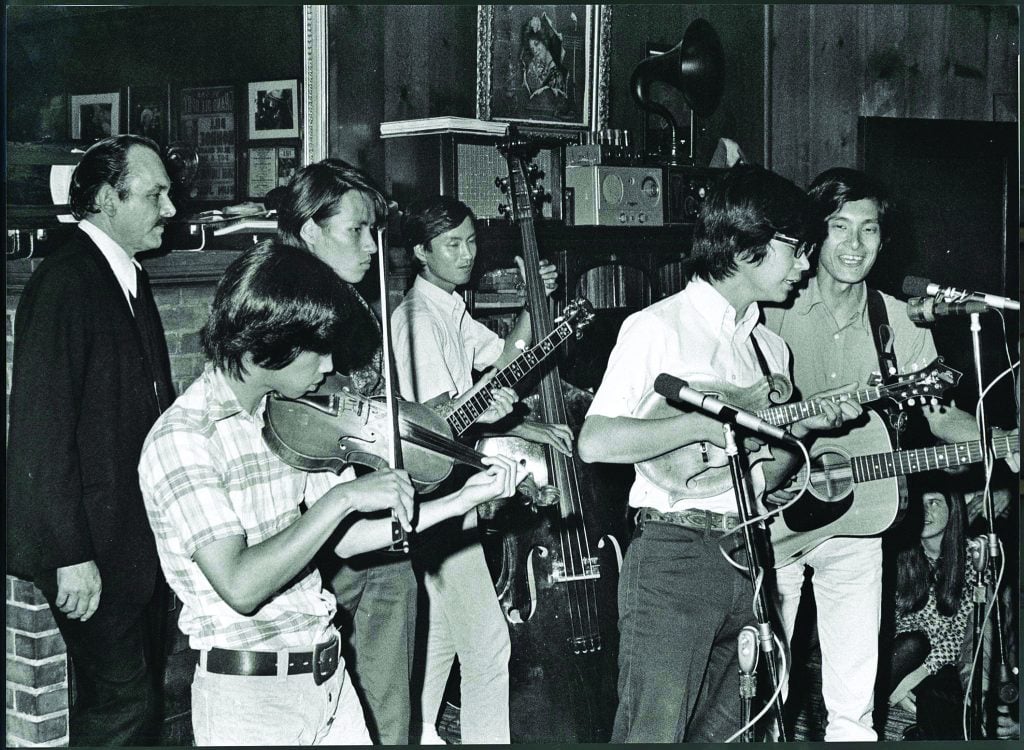
One Japanese vocalist who sings with considerable feeling is guitarist Masuo Sasabe from Yokohama. His father and grandfather had played traditional Japanese folk music. Masuo first heard American old-time music at age 15, and he remembers thinking that all folk music around the world, including bluegrass, sounded the same. “It was lonely, very lonely, but it had a drive in a delightful way. I dreamed of creating that sound of mountain music myself.”
Sasabe-san studied and spent a career working in architecture (specialty design), and feels that music and architecture are just the opposite of each other. He had planned to quit playing music when starting his professional career, but after a trip to the U.S. and a parking lot jam session at a festival in Columbus, Ohio, he started practicing more than ever and never got a chance to quit. “It would drive me crazy if I didn’t have music in my life,” declares Sasabe. “I can release stress when playing music.”
When I first met Masuo in 1986, he was playing with the bands, Peach Pickin’ Time and Cha Cha Maru, and later with The Japanese Bluegrass Band. He has played music since the 1960s, appeared at bluegrass festivals in the U.S., and regularly performs at Japanese music venues (called “live house”) like Tokyo’s Rocky Top. Masuo Sasabe now fronts a band called The Blueside of Lonesome. Banjo-player Ryukichi Hayakawa, who is also a luthier, once said, “If I have to choose between a good meal and music, I’d choose music. Today, it’s all music of the world.”
The Blueside of Lonesome’s female singer, Yoshie Sakamoto, learned much of the music from her father. Yoshie’s friends would tease her because her dad wore odd clothes and played country music. Now, she finds it ironic that she’s singing bluegrass and country songs, and she admits to getting a little nervous when native English speakers listen to their music. Since 2013, The Blueside of Lonesome attempted to make an annual pilgrimage, at the invitation of Byron Berline, back to perform at Oklahoma’s International Bluegrass Festival. The band always received a very warm welcome and great reception from the audience.
Another fine singer is multi-instrumentalist Kazuhiro Inaba, a graduate of Kansai University of Foreign Studies, who speaks fluent English and learned much about old-time and bluegrass music from his banjo-playing father. He has played with the New Smiling Mountain Boys, Bluegrass Ramble and now fronts his band called Kazuhiro Inaba & Bluegrass Buddies.

An interesting documentary film, released in 2017, Far Western is the brainchild of director James Payne, who tells the story of how audiences in Japan have become enthralled with American bluegrass and country music. The award-winning film features many interviews with artists, fans, promoters, along with footage from clubs and outdoor festivals.
Payne first met Masuo Sasabe and other Japanese musicians in 2006, and he visited Tokyo and Yokohama clubs such as Nashville, Rocky Top, Pettycoat Lane and Lonestar. Payne saw firsthand the Japanese passion for American music when working on a documentary about the 2007 Japanese tour by Kyle Dillingham & Horseshoe Road, a bluegrass/Americana act from Oklahoma City. The reaction of Japanese fans to this lively music, along with their deep awareness and appreciation for its history, left a strong and lasting impression.
Payne explains what drew him to filming Japanese country/bluegrass musicians and their experiences. “On one level, I was curious about how this music found its way here. Why is there a signed picture of Waylon Jennings in a bar called Rocky Top in Ginza Tokyo? And then the bigger, perhaps unanswerable, question is why does this music we think of as a regional, folk music culture resonate so strongly with people on an island halfway around the world. It shows the strange ability for music to communicate emotions or experiences like nothing else can.”
The interviews with Masuo Sasabe and others are incredibly endearing and a vital, rich part of the film. Payne clearly established a strong sense of trust with the film’s characters. “I think with just about everyone we spent time with,” recalls Payne, “it was readily apparent that we were doing this story because of a love for music and telling people’s stories. It was simple. We’ve made great friends. This year The Blueside of Lonesome will make their annual trip to our hometown of Tulsa, Oklahoma to play a show. We keep up with [country musician] Charlie Nagatani and his family as well.”
An old bluegrass song tells of how “We Live in Two Different Worlds,” but Far Western is an inspiring movie that tells how a devoted group of people, with music their lifelong obsession, have used it to bridge geographic, language and cultural barriers between two countries. It’s a powerful idea that music can be universal and need not abide by cultural ownership.
Over the course of making Far Western, the idea evolved. “It certainly was a factor in a broad sense, yes,” says James Payne. “I thought from the start that this film is more about this phenomenon than a biopic or character driven story. In the end, this film is a collection of mini-portraits surrounding this larger idea.”
Born in 1936 and from Kumamoto, Charlie Nagatani started singing country music in 1961, opened his honky-tonk called “Good Time Charlie,” and he has remained dedicated to the genre ever since. “I just wanted to sing on stage. I never changed my way. I kept singing.” Since 1961, Nagatani figures that 78 different players have been in his band, Charlie and the Cannonballs, that, at its peak, was doing 300 shows a year. A legend in both Japan and the U.S., Nagatani has gained honorary citizenship in 33 states, met two American presidents, been recognized as an official Kentucky Colonel, and won awards from various peace and cultural societies.
“Country music is the best part of my body inside. Without this, I can’t live on, I guess,” exclaims Nagatani. “I want to let Japanese people know the real American music culture. So I’m singing country music. Soon after the war, you just dial and you happen to hear the music. We really couldn’t understand anything. Like Minnie Pearl, ‘How-deee!’ We couldn’t really understand the rest. So I made a band to try and play at festivals. We practiced hard for a year. So we said let’s go and see. So we headed to America.”
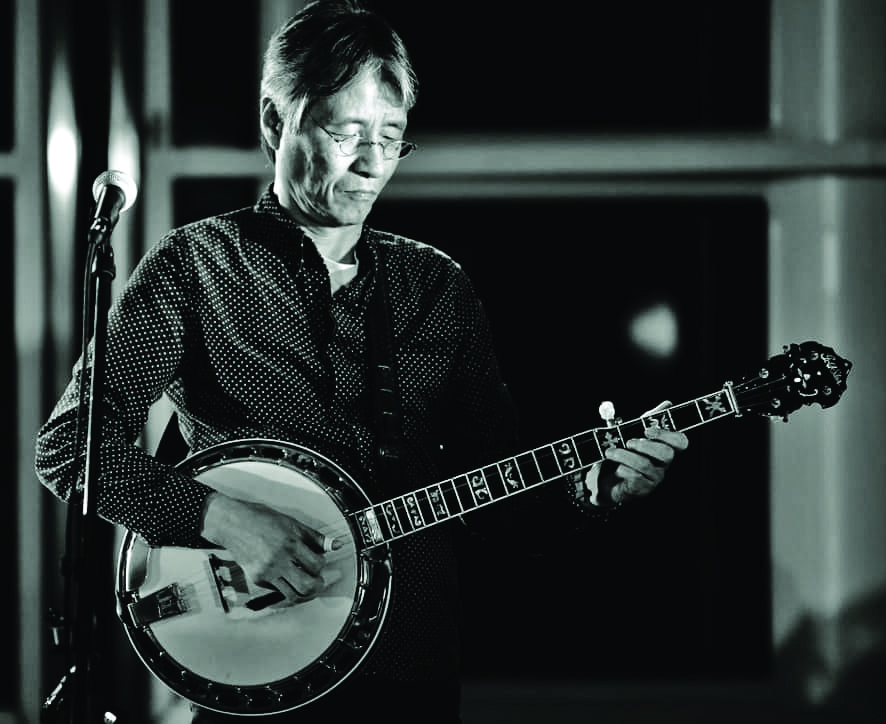
To pursue his dream (and without much financing), Nagatani started his own country music festival in Japan that has run for about 30 years. The Grand Ole Opry invites him to sing there each year, and, he has appeared there over 20 times. “A country musician’s dream is to sing on the Opry stage. It’s just like going to Heaven or like going to the moon.” While his heart always trembles, many fans love Charlie because of his genuine spirit, kind heart and ability to bring people together who love the music. Now, he has a small, but tight, group of supporters all over Japan who celebrate and help him keep the music alive.
The proponents of this music in Japan speak about it with adoring reverence. Masuo Sasabe concludes, “Bluegrass in Japan will always be trying to catch up with the amazing players in America. But bluegrass music has become our mutual language for communication. It’s wonderful! The music has no borders, and it has become the world’s music.”
Rudyard Kipling once wrote that, “East is east, and west is west, and never the twain shall meet.” But, that was before World War II, the Far East Network, internet, e-mail, YouTube and other technological advances that have made our planet one large and better connected global community. As the people of the Far East embraced country and bluegrass music, they made it Far Western with interpretive twists of their own device. Whether you call it bluegrass music on this side of the Pacific, or burugurasu ongaku on the other, one thing is certain. Those who have experienced both cultures have a special Trans-Pacific connection, forged through music, that is hard to fully comprehend, appreciate and explain. It’s a beautiful story, and it will be fascinating to see what the next few chapters hold.