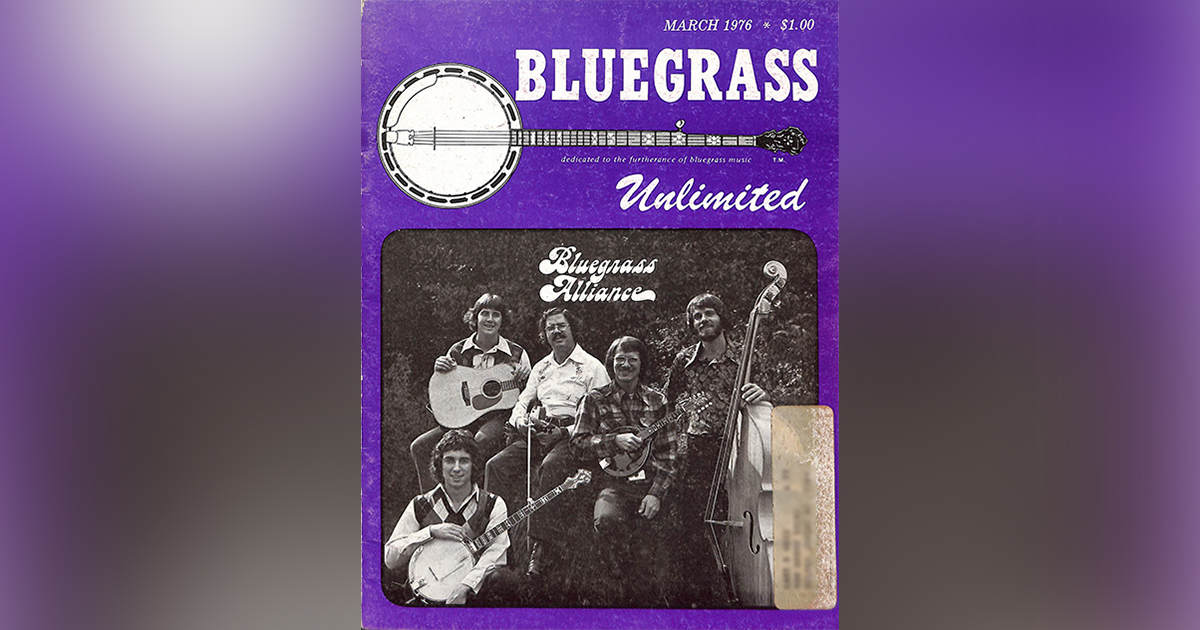
Bluegrass Alliance—River Front Bluegrass
Reprinted from Bluegrass Unlimited Magazine
March 1976, Volume
The Great Midwestern Bluegrass Music Hall, 118 West Washington Street, in Louisville, Kentucky, is the new home base of the Bluegrass Alliance—when they are at home. The former warehouse is only a few blocks from where the famous sternwheeler “The Belle Of Louisville” docks on the Ohio River, and it fairly reeks with the atmosphere of the flamboyant steamboat days.
Filled with lighted stained-glass windows. Tiffany-style lamps, red brocade, and natural brick walls, the Music Hall can boast three service bars (one which has beer piped through the copper coils of a genuine Kentucky still) its own delicatessen, and a seating capacity, on two floors, of over 600.
Lonnie Peerce, fiddler and leader of the Alliance, is a partner in this venture with Doug Gossman, who has been manager of other restaurants and taverns in the Louisville area. Doug handles the food and drink side of the business, and Lonnie takes care of booking in such bluegrass bands as Del McCoury and The Dixie Pals, The Country Gazette, and J.D. Crowe and The New South for the times when the Alliance is on the road. Lately, they are traveling much of the time.
“We opened it up the first week of August, and then didn’t get back here until the third week in September,” said Lonnie recently. “Then we were gone during October, but got to play here most of the month of November.”
Although they enjoy the friendly reception of the local crowds, the Alliance likes to travel, and Lonnie believes any band can get stale if they stay in the same place too long.
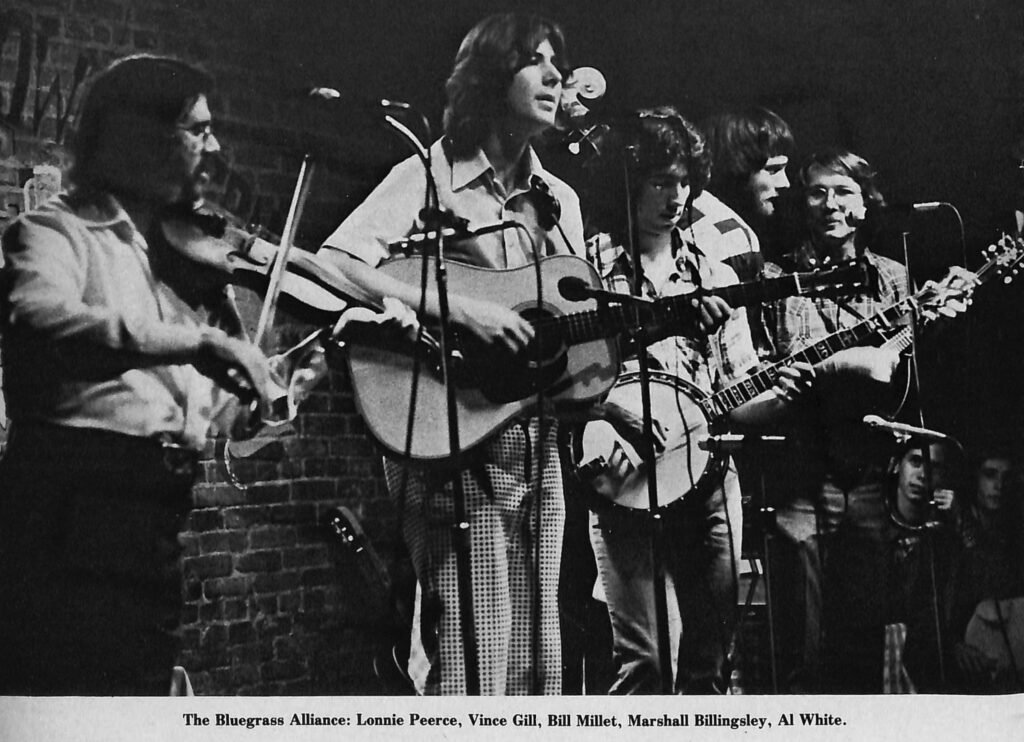
“We enjoy being on the road. The boys are enthusiastic and conscientious, and we get along well and travel well together. We can work and have a good time, too.”
The work of the Bluegrass Alliance is not just practice and stage appearances. A lot of thought and planning goes into every facet of their business, for business it is, and a profitable one.
Local advertising is handled by a prominent agency, and a well thought-out program is directed primarily at the youth of Louisville, by way of the rock radio stations. A handsome brochure has been made up to introduce the Alliance to promoters and managers of clubs all over the country, and single records are carefully gauged to appeal not only to died-in-the-wool bluegrass fans, but to radio station personnel who might play them to a different audience.
The music of the Alliance, too, is calculated to reach all levels of listeners. With a healthy respect for tradition, they translate songs from many sources to their particular style. A look at their repertoire list shows such diverse songs as “Why Don’t You Tell Me So,” from Flatt and Scruggs, “One Tin Soldier,” from the movie “Billy Jack,” and Merle Haggard’s “Sing Me Back Home.” Yet the unmistakable stamp of the Bluegrass Alliance makes each of these songs, and many more, uniquely their own.
Through turmoil and turnover, The Bluegrass Alliance has maintained their characteristic sound, and today’s band sounds much like previous groups. Most of them have been working together about a year and their smooth on-stage manner testifies to a lot of practice, regular work, and to the capability of each individual, as well.
Bill Millet, the banjo player, is originally from Dallas, Texas, and in addition to bluegrass is an excellent classical guitar player. He sings most of the baritone with the group, occasionally sings lead, and sometimes plays guitar.
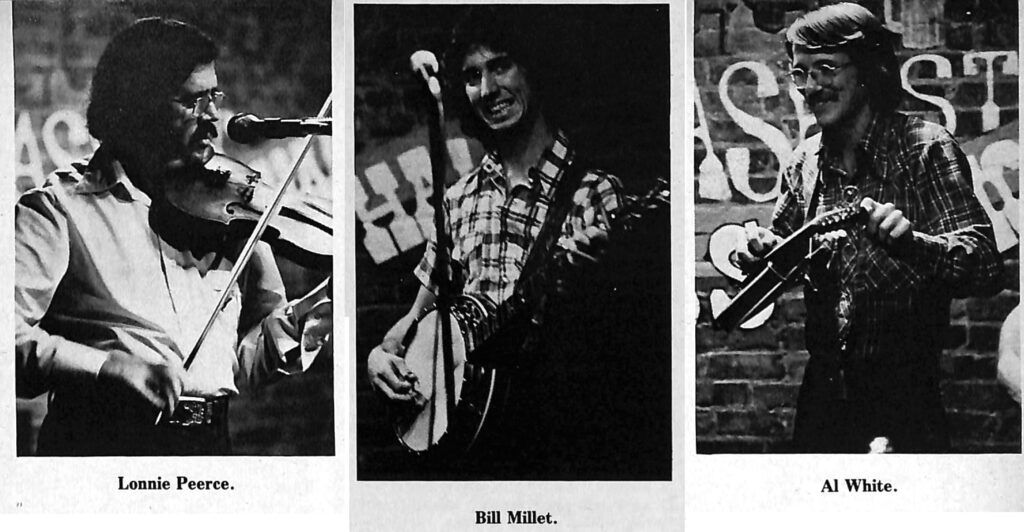
Another Texan, Al White, the mandolin player, also plays a number of instruments. He sings some baritone and lead, and plays guitar and fiddle with the band at times.
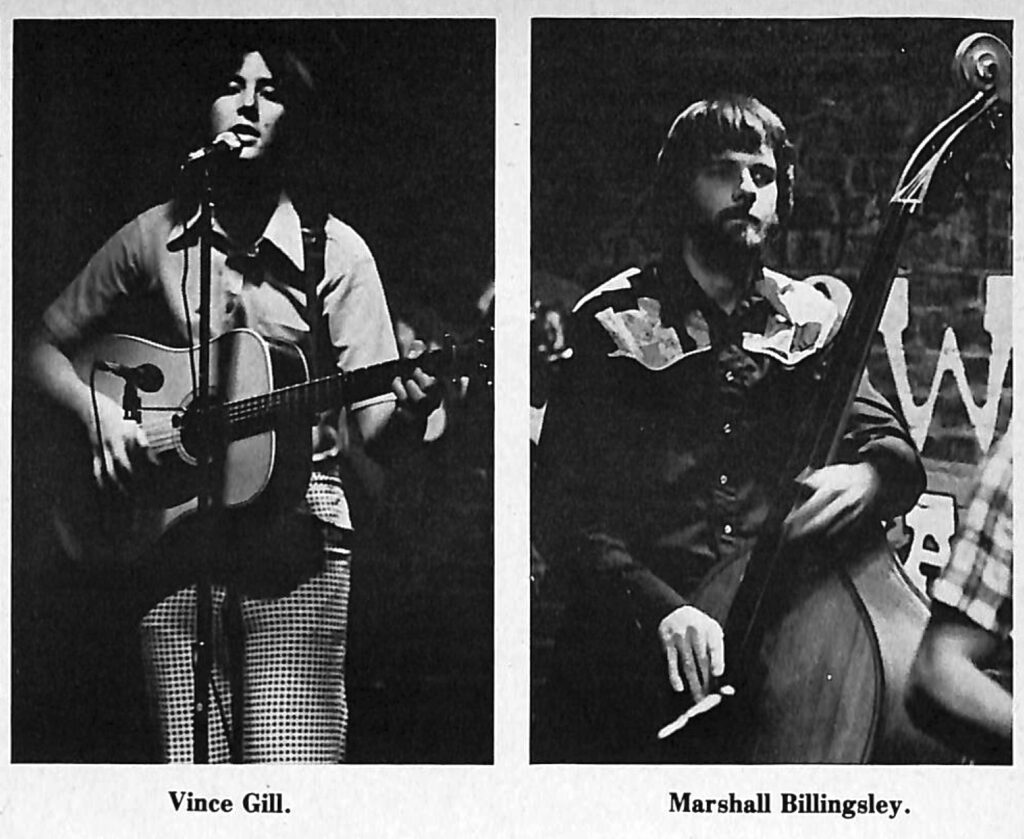
Marshall Billingsley, from Fort Smith Arkansas, is the bass player for the Alliance, and he, too, does some baritone and lead singing.
The newest member of the group, Vince Gill, comes from Oklahoma City. Primarily lead singer and guitar player, he also plays Dobro, mandolin, banjo, and fiddle.
Lonnie Peerce, of course, plays fiddle and sings tenor.
The Alliance is proud of their versatility, and every show features at least one number when they swap instruments and parts. This is always a big crowd pleaser, on the road or at home.
And there are plenty of crowds to please. Not only does the Alliance perform at many major festivals throughout the season, but they work clubs and shows during the winter, too, and on the weekends when they find themselves in Louisville, they play to standing room only at the Music Hall.
“Wednesday has gotten nearly as big as Friday and Saturday nights,” Lonnie says, “And the people have learned to come early if they want a good table. They start coming here before eight to hold a front table, and by the time we come on at nine-thirty, there’s not a seat upstairs.”
Success on the road and the large crowds they have drawn in Louisville have led The Alliance to plan their first bluegrass festival for next summer in nearby Meade County, Kentucky, near Brandenburg. Bookings are already completed for the event which will take place June 25, 26, and 27, 1976.
Excitement about this festival and a busy schedule ahead, combined with optimism engendered by a recent all-out recording session in Nashville, have brought The Alliance to a new peak of enthusiasm. Long known as one of the hardest working and best managed groups in bluegrass music, The Bluegrass Alliance can look forward to 1976 as their best year yet.