
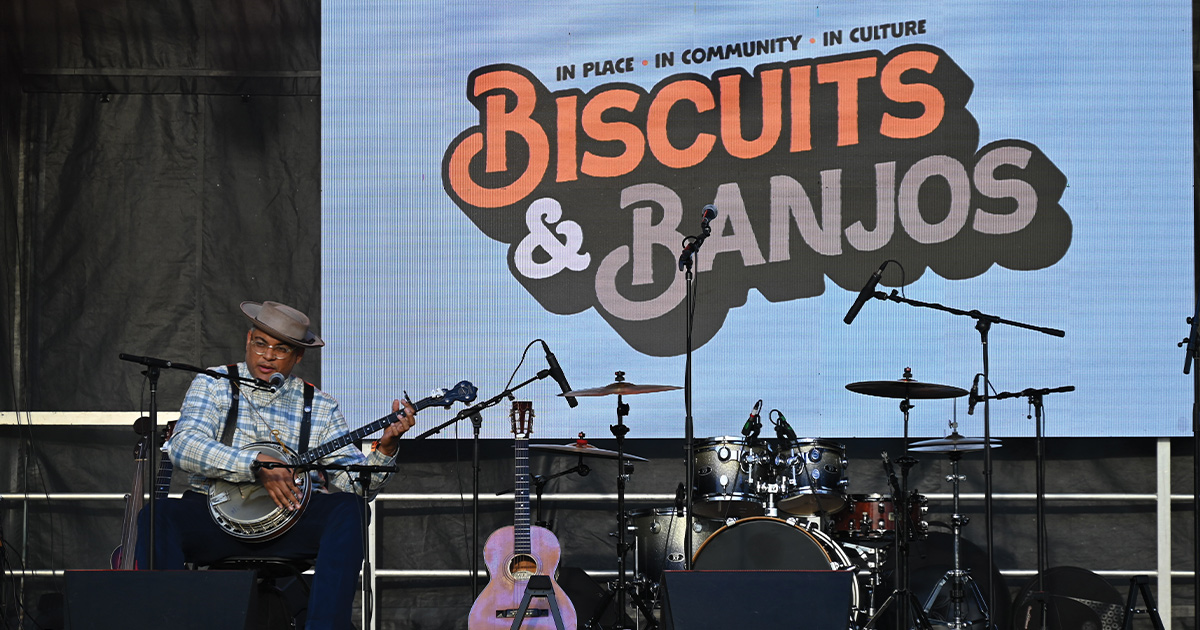
Biscuits & Banjos
Exploring the Black Roots of Bluegrass, Old Time and Americana
The first Biscuits and Banjos festival took place in Durham, North Carolina during the weekend of April 25th-27th, 2025. The festival was initiated by Rhiannon Giddens and is dedicated to the celebration and exploration of Black music, art, and culture in her home state of North Carolina. The festival was a 3-day event to exchange ideas, expand conversations, uplift traditions, and trace the musical and geographical connections of Old Time, Country, Americana, Folk, Jazz, Blues, and Bluegrass to highlight their complicated origins.
The weekend highlighted Black artists and creators, with musical performances alongside lectures, workshops, and readings from authors, visual artists, and of course chefs as the festival name implies, food was as much a part of the celebration as was music.
Panel discussions included topics such as “Reframing Cultural Legacy”, “Black Voices in Country Music, “Theoretical Perspectives on Black String Band History” and of course, “The Art of the Biscuit.”
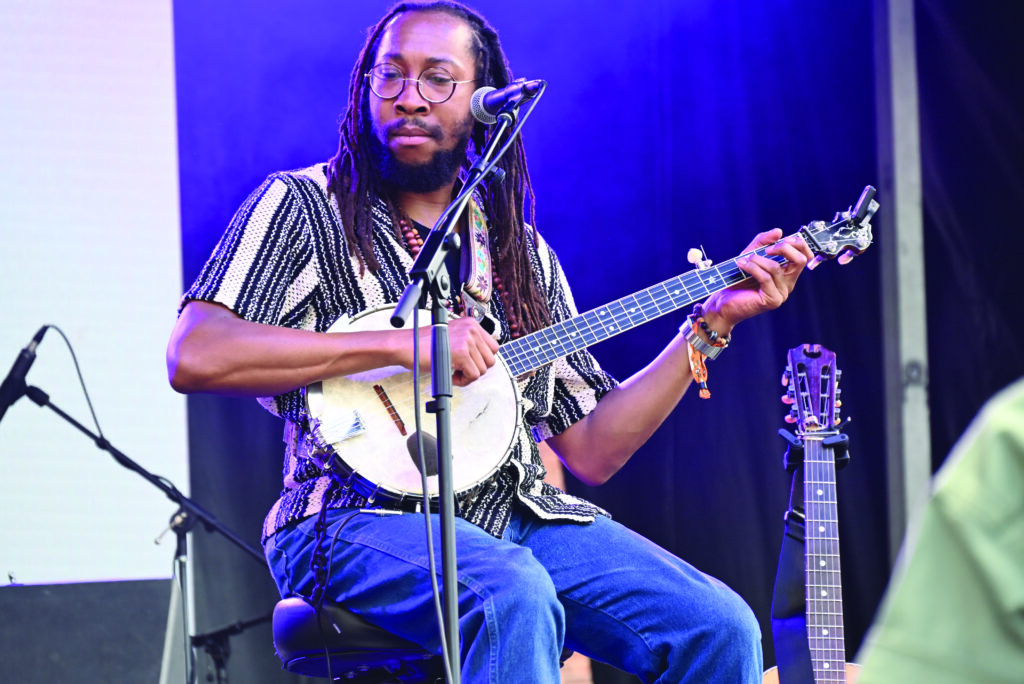
During his set Friday afternoon, Dom Flemons said that 20 years ago the question was “Is there such a thing as a Black string band, and now the question is how many Black string bands are there?”
The festival was centered in Durham on this weekend to honor the 20th Anniversary of the Black Banjo Gathering – a landmark musical summit that became the impetus behind the creation of GRAMMY-winning Black string band, the Carolina Chocolate Drops.
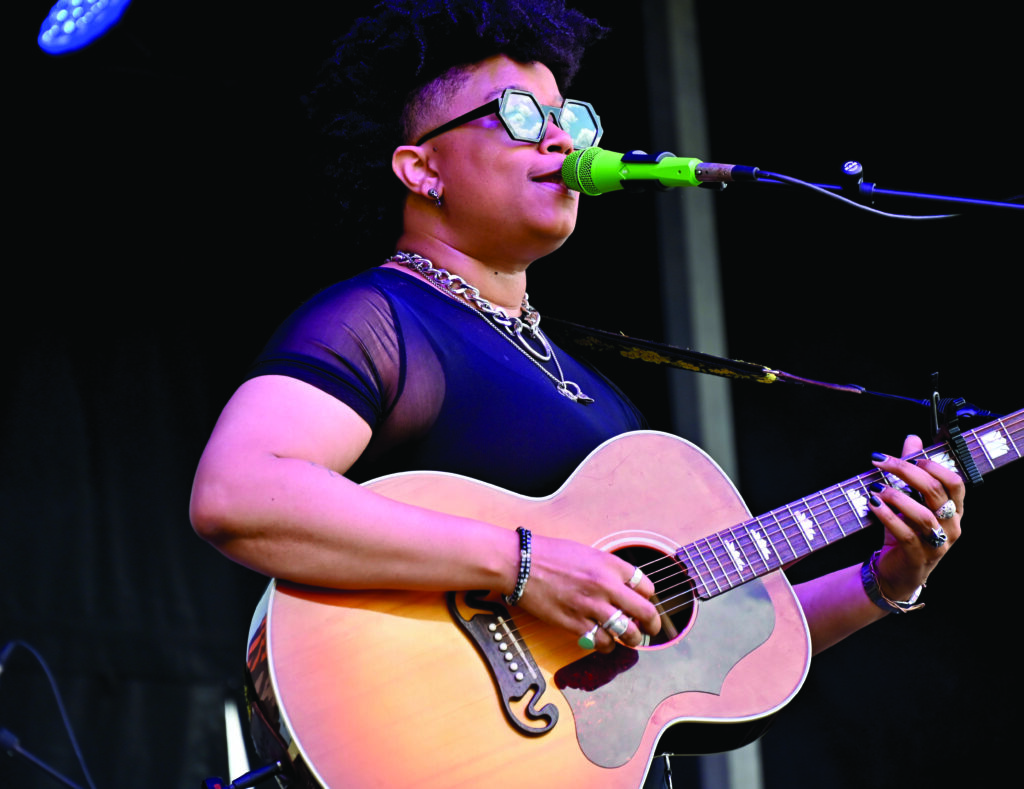
The festival took place in several locations in downtown Durham that included indoor and outdoor spaces large and small. The music featured a diverse mixture of Southern sounds that ranged from old-time songs by artists like Dom Flemons or Hubby Jenkins to the high energy old-time band New Dangerfield. From modern country from Rissi Palmer, Miko Marks, and Misha Fair to the powerhouse vocals and topical songs of Toshi Reagon. There was a celebration of young and old carrying on the traditions, seen in Friday night’s show with Leyla McCalla and Taj Mahal.
While there were plenty of banjos, fiddles and guitars on stage, it was not strictly a Bluegrass or Old Time festival. Those musical genres were represented but as branches that grew from Black Roots music and so they sat alongside Country, Folk, Americana, Blues, Rock and Rap. The connection was not music that all sounded the same, but rather music and culture that came from the same roots.
Musician and scholar Joe Johnson had been to a lot of Old Time, Folk, and Roots Music festivals but Biscuits and Banjos was “The first one that was so Black centered, and that was refreshing. I’ve been to a lot of festivals where I was one of the few Black people, it was nice to be in the majority and not in the minority.”
Dr. Dena Ross Jennings, one of the participants observed that “Even for those of us who are identifying as Black Americans it was something totally different because we’re used to going to a festival and needing to code switch. One piece of the festival that felt new was being able to move in a large festival without feeling like I’ve got my shoulders up, and I’ve gotta watch and make sure I don’t step out of line or don’t appear as different or don’t appear as the bright, shiny object in the room which can be even worse.”
Johnson said “There’s a lot of beauty in the undefinability of the festival. We’re in the new generation, we’re folks that are doing all kinds of things coming from the Black banjo and string band tradition. We don’t fall into the very limiting boxes of Old Time or Bluegrass. Black banjo and string band music is not just one tradition, there were many different artists that we have learned from. There’s a variety of traditions and just as there are multiple traditions and multiple manifestations.
To really enjoy what’s going on now you might have to step outside of your comfort zone, step outside of the Bluegrass or Old Time festivals and hear other genres that are inspired by the same traditions.” This, of course, is good advice for anyone wanting to enjoy more of the music happening today. If one is willing to explore with an open mind, there’s no telling how much interesting music you might find.
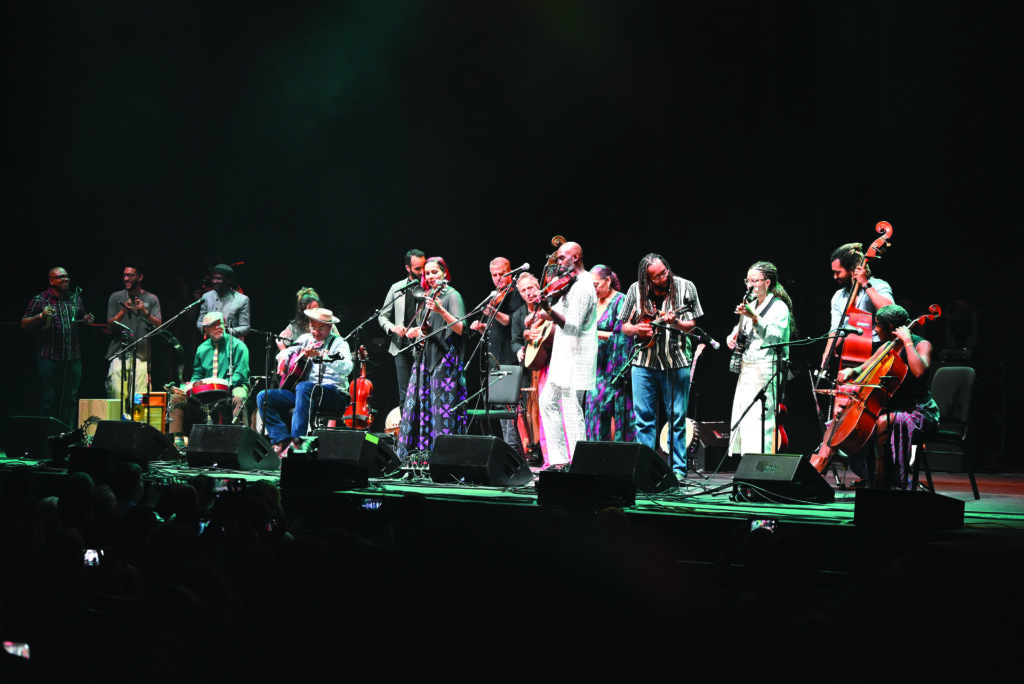
The centerpiece of the festival was Saturday night’s show at the Performing Arts Center with Rhiannon Giddens’ Carolina Breakdown which featured a reunion of The Carolina Chocolate Drops.
Original member of the Carolina Chocolate Drops, Dom Flemons shared some of the thinking behind this reunion show “When we started there weren’t many Black artists in the Americana or Folk Music world. You might see Mavis Staples or someone like that, maybe with a Gospel connection, but for acoustic-based music, it was a rarity to see a Black artist at festivals. In the time since we last played there’s been a huge black roots music community that has emerged and blossomed and is continuing to evolve to the current moment. I felt it was very important for people to see the group again. I wanted people to see what the legend of the Carolina Chocolate Drops is and was. A lot of the younger folks who were performing on stage with us never saw the Chocolate Drops. For the most part, many people hadn’t seen the glory of what the original trio could provide in terms of music. So that was something that was really important for me, for everybody, to get to see the group and to be able to show that, that we could still provide, not only great music, which was something that we always were able to do, but with us all being relatively young Still, we were also able to show a vibrant energy, that was really special.”
It’s no secret that Bluegrass owes a lot to African American musical traditions. The name of Arnold Shultz is widely known to any serious student of the genre. The traditions Shultz grew up with evolved side by side with the Scots-Irish traditions that Bill Monroe grew up with. Talking about these intersecting traditions Flemons said “Some people will say that Arnold Shultz was a Bluegrass musician. I disagree, Bill Monroe actually defined the genre of Bluegrass. Arnold Shultz is a musician who informs Bill Monroe.”
Digging deeper into the sounds of musicians like Shultz you’ll hear those building blocks or essential elements that would go into Bluegrass. At Biscuits and Banjos, we heard those building blocks, those traditions, those ancient tones (as a wise man once called them) and we heard the many ways those building blocks have been used to create new sounds. Whether it’s Bluegrass or Rock and Roll, the roots are always there. Dom Flemons takes up this idea, “Will The Circle Be Unbroken, a song that has roots in the Black church, and it’s adapted and turned into something new as different people perform the song. Even if you’re not seeing black people playing it, that doesn’t mean that the black roots of the music have actually changed, they’re still there”
You knew you were at a different kind of festival when that song was introduced as coming from Lesley Riddle who was instrumental in the development of the Carter Family repertoire. Again, serious students of Old Time and Americana know that Riddle was an important source of material for the group, sharing songs and transcribing melodies, but it’s significant that at a festival where some folks may be getting their first taste of Roots Music, they’re getting a more complete version of the history.
Celebrating the legacy of Black musical heritage and educating the audience on such as vast topic was an audacious undertaking that the festival organizers carried out with a joyful energy that was clearly felt at all the events. Talking with fellow participants there was a constant buzz of “Can you believe this is happening?” Followed up by “Where do I find more about this band, this style, these traditions?”
There’s often a lot of conversations about where Bluegrass is going. Biscuits and Banjos offered some exciting glimpses of how the music is evolving and thriving, in part by looking back on the past. Bluegrass didn’t appear out of nowhere and it was never frozen in time like some kind of fossil preserved in stone. A dynamic genre will grow and evolve. Knowing more about where it came from may point to where it can go. The combination of musical celebration and education at Biscuits and Banjos was a wonderful reminder of the varied roots and traditions that nourish the music we love.