
Bill Poffenberger
Classic Fiddler From the Early Days of Bluegrass
I have recently been listening to some of my older bluegrass albums and kept hearing wonderful fiddle breaks and backup, particularly on the Emerson and Waldron albums. I knew that the fiddler was Bill Poffenberger but I didn’t know much about him. I remember meeting him at a Berryville, VA festival almost 50 years ago but had not crossed paths with him since. I became intrigued and wondered if he was still around and if he was still playing. What was he doing now? Many questions came to mind. And I don’t remember ever reading about his life in Bluegrass Unlimited or anywhere else. So, I felt that he deserved recognition for the wonderful music he gave us for so many years. The same can be said about many of the other unrecognized band members from the early days of bluegrass. So, I asked around and learned that he was living in Boonesboro, Maryland not far from my home in Strasburg, Virginia. I phoned him and told him what I was planning and he was very receptive to the idea of an article. I went to his home and spent several interesting hours talking with him about his life and music.
Bill was born in June, 1933 and was raised on a farm near Jefferson, Maryland. It was a small farm with a few animals and they raised some crops. His father Charles, nicknamed Brooksie, played fiddle in the late 1920’s through the 1940’s five or six nights a week in the Frederick County area. Bill’s interest in the fiddle peaked when he was just a young boy—two or three years old. Fiddlers from the area would gather in the living room of the farmhouse, crank up the old wood burning stove, and jam for hours at a time. Bill would go into the room, plop into his little red wooden chair, and listen with rapt attention. The sound of the fiddle and his desire to play became his musical legacy.
At a very early age Bill came down with a serious nerve condition that completely disabled him. He was under medical care and was not allowed to work, play, or do much of anything. His uncle Albert Fisher gave him an old fiddle with the hope that it would help him recuperate. Bill took that fiddle up to his bedroom and learned to play by just listening to fiddle music on his radio and trying to copy what they were doing. It came to him very easily, he learned quickly, and at age twelve made his first solo appearance at a community gathering. By the time he was fifteen he was jamming with other nearby musicians. It became apparent that Bill had an inborn musical talent that only a select few are blessed with.
In the later part of 1956 Bill got his first professional gig with Lucky Chapman and the Ozark Mountain Boys. Other members were John Duffy on mandolin, Bill Blackburn on banjo, Bill Berry on bass and Lucky played guitar. Their first recording was released on a custom pressing by Starday for the band’s self-produced record label, Maryland Records. Side A is “I’ve Waited So Long,” a nice vocal written and performed by Lucky. Bill played a nice strong intro and break and John’s tenor to Lucky on the chorus was a harbinger of things to come. The other side, “Blue Grass,” is an instrumental written and played by John Duffy. This was his first recording and is certainly considered historical. It is Bill’s recollection that they made the recording at Joe Bussard’s house. Over the next two or three years they made several more recordings that were released on Joe’s Fonotone label. Joe is a renowned collector of recordings and had a studio in his basement.
The Ozark Mountain Boys played throughout Frederick County at town celebrations, fireman’s carnivals and local festivals. They also had a regular Saturday afternoon radio show on WFMD in Frederick, MD and made one appearance on the Saturday Country Music Show at Turner’s Arena in Washington DC. The show was hosted by Jimmy Dean and aired over WMAL TV. Many national acts appeared along with upcoming artists including a young Patsy Cline. Bill Harrell often performed on mandolin with Reno and Smiley. The success of this show led to Jimmy Dean landing an early morning network TV show. And soon thereafter he hosted a weekly variety show on network television.
Bill’s next band was with The Blue Grass Travelers which began performing in 1962. It is interesting to note that a 45 rpm extended play cover sleeve spells the band name “Blue Grass Travelers.” I believe this is about the time that various discussions on the spelling led to a consensus that the genre should be identified as “bluegrass,” one word. Bill Berry was on guitar, Paul Chaney played banjo, and Carrol Harbaugh was on bass.
The Travelers stayed very busy and played throughout the mid-Atlantic area. WCBG in Chambersburg, PA and WSVA in Harrisonburg, VA are two of the many radio stations where they made regular appearances. They were often guests on the Don Reno and Red Smiley TV show in Harrisonburg and when Reno and Smiley were on the road they hosted and performed on the show. The Travelers made regular appearances on the WWVA Wheeling Jamboree and the Old Dominion Bam Dance in Richmond, VA. Bill owned a Cadillac limousine and became the transportation for most of their travels. A treasured memory for Bill was when the band attended Fan Fair in Nashville and Bill Monroe befriended him and arranged for him to attend the Grand Ole Opry on Friday and Saturday nights. The Travelers made several additional recordings in Joe Bussard’s studio and Bill’s fiddle breaks and backup on these recordings is creative and equal, in my opinion, to many of the classic recordings of the 1950s. Bill’s melody lines and backup are the epitome of what a bluegrass fiddler should play.
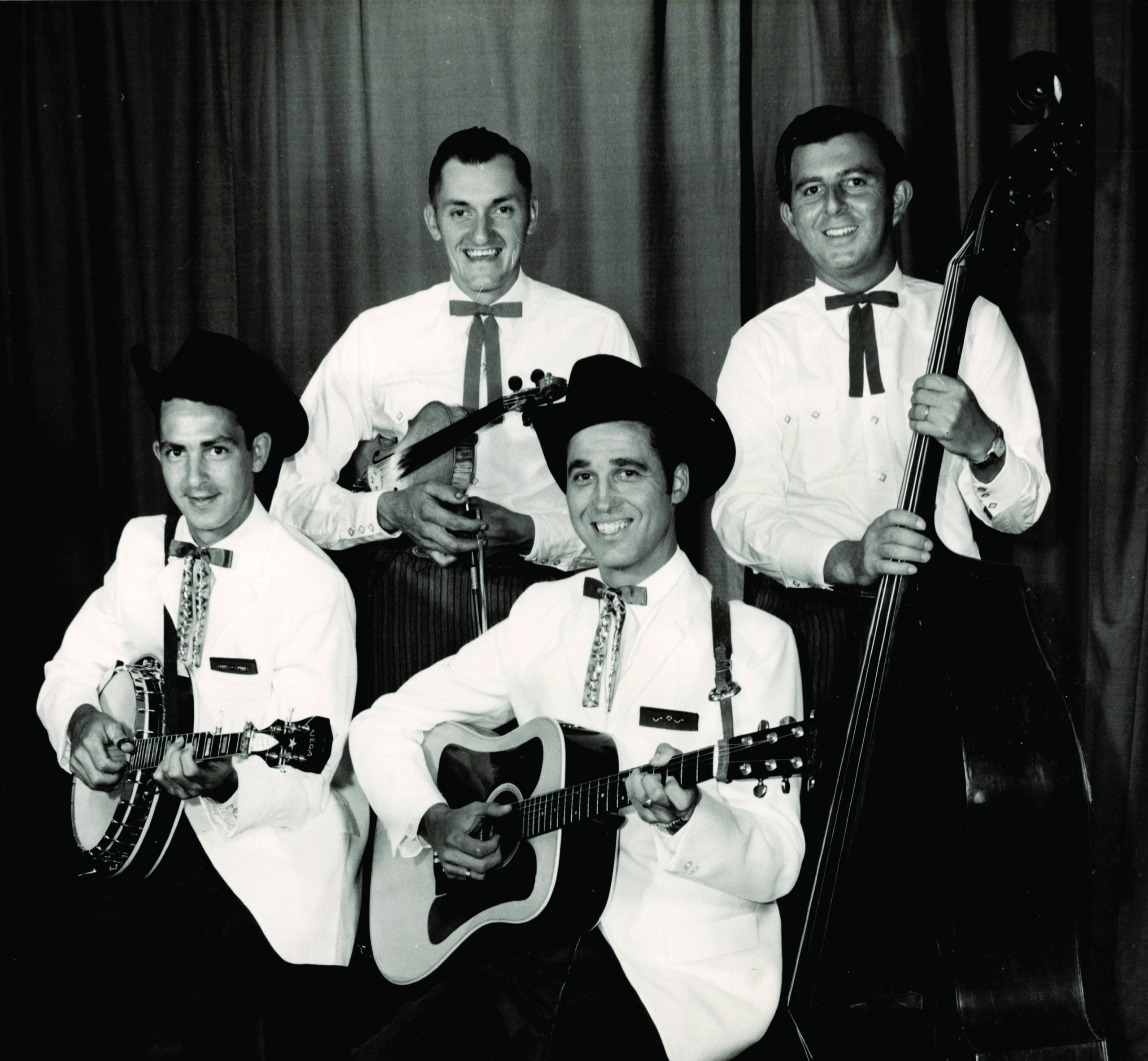
In October 1968 Bill joined the Emerson and Waldron band and recorded and traveled with them for the next two years. Through their recordings and Bill Emerson’s reputation and creative ability the band quickly gained national recognition. Emerson had the ability to find material from pop and rock genres and magically transform them into bluegrass hits. They were the first bluegrass band to record “Fox On The Run” which quickly became a bluegrass standard.
On one occasion they played at a White House staff party and Bill met and shook hands with senators and representatives including Gerald Ford who was to become president a few years later. It was quite a thrill for a modest country boy to play for and meet some of the leaders of our country.
Emerson dissolved the band in 1970 when he rejoined the Country Gentlemen. Cliff Waldron left the area to work with Jim Eanes during the time he fronted the Shenandoah Cutups. Cliff stayed with Jim for only a few months and returned to the Northern Virginia area with plans to form a band. The musicians he recruited for his first band as a solo artist would go on to become legends. Along with Bill Poffenberger, Ben Eldridge was on banjo, Mike Auldridge played Dobro, Tom Gray was on bass and Dave Auldridge played guitar and sang the tenor parts. Tom stayed only a short time and was replaced by Ed Ferris. Their first album titled, Right On continued in the style of the Emerson and Waldron band with much of their repertoire drawn from contemporary popular music. But the style and performance on the album retained the feel and sound of traditional bluegrass music.
The band, named New Shades of Grass, traveled throughout the country in a motor home. They went to Florida, Canada, the Midwest, Arizona and as far west as California. A favorite venue for Bill was playing at the Bean Blossom Festival. On one trip their vehicle broke down and Bill was able to determine that the vehicle had blown a camshaft. He worked as a mechanic when he was not on the road playing music and was able to make the needed repairs and get them going. What a wonderful bonus for a band when one of the musicians is also a gifted mechanic.
Most of their travel was on extended weekends so they played locally during the week in Woodbridge,Virginia at a night spot named Ruby’s. They drew good crowds and Ruby often brought in other bands. On one occasion Bill Monroe was there without a fiddle player and Poffenberger became a Blue Grass Boy for the evening. Bill left the New Shades of Grass in 1973 when he became road weary and decided that he needed a break from so much travel. He decided that staying closer to home and playing local gigs would suit him much better.
But this was not to last for long. Del McCoury first met Bill in 1956 at the New Dominion Bam Dance in Richmond, Virginia. Del was playing banjo with Keith Daniels and Bill was playing fiddle with Lucky Saylor. Del admired Bill’s fiddle work and in February, 1974, he asked Bill to go to Boston for a one week gig. He hadn’t intended to go back on the road again but after some thought, and since he wasn’t working at the time, perhaps the Boston trip might be fun and interesting. The only problem with this one week trip was that Bill ended up playing with Del for the next four years. But it was a good four years. The other band members were Don Eldrith on mandolin and second fiddle, Bill Runkle on banjo, Dee Gunter on guitar, and Dewey Renfro on bass. It was a great band and was well received wherever they played.
Del McCoury told me an interesting story about how organized and efficient Bill was. When the band was at a festival they would often sit around the front of the bus listening to tapes and just having a good time among themselves. Poffenberger would leave the group and go to the back of the bus and change into his performance clothes. When he returned to the front he would stand there and prominently point at his watch. If the others didn’t get the hint Bill would tell them, “Okay boys, lets get moving and get dressed. It’s almost show time!” Del also commented on how wonderful it was to have a mechanic in the band. When there were problems or breakdowns Bill could most always get them back on the road.
Bill played on three of Del’s albums and traveled with him throughout the United States and Canada. They played at a number of bluegrass package shows at colleges throughout the country. Lester Flatt and the Nashville Grass and Bill Monroe and the Blue Grass Boys would often appear on these shows. When Del went to Japan for a tour, Bill declined to make the trip because of his dislike of flying. But the couple of weeks off during this period provided a nice respite from the heavy travel schedule.
Del had an agent in Nashville and whenever a show was booked the band had to be there. And some of the shows were just too far away in terms of reasonable travel time and expenses. The other band members were growing road weary and these long road trips and expenses made earning a living wage very difficult. After one long unprofitable road trip the whole band gave their notice and soon thereafter formed a new band. They felt that as a group they would be better able to control their own destiny. They named the band Square Deal. There was no disrespect meant toward Del and the group pledged among themselves to always be fair with each other and operate as a partnership. And Del told me that he understood their decision and that there were no hard feelings. But it must have been a difficult time for Del having to put together a new band so quickly. Square Deal stayed together for about two years and played mostly in the mid-Atlantic area. They made one LP album for the DeeDee label titled Country Boy Rock and Roll. It is a well-produced album with twin fiddle by Bill and Donny Eldrith. Del’s son Ronnie McCoury played mandolin on the album.
After the gig with Square Deal, Bill decided that he would stay home on the farm and just play with local bands when asked. He worked as a mechanic at two garages and repaired autos, tractors and other farm equipment. He also bought and repaired old tube radios for resale. But with his reputation as a master musician the calls kept coming. He described it to me as “just playing with this one and that one.” One of the bands he played with on a fairly regular basis was Roy McMillan and the High Country Boys. In 1974 he played on Roy’s Rebel album titled Time To Think. Buck Ryan played twin fiddle and Bill remembers arriving at the studio and learning that he would be playing the second parts. He had never done this before and in a panic learned to play these parts very quickly. Bill is a quick study and is able to learn songs and parts after hearing a melody just one time.
Bill also played on shows with Benny and Vallie Cain and was on the More of Benny and Vallie Cain Rebel album. He often filled in with Don Reno and Bill Harrell. Buck Ryan was their regular fiddler but was experiencing serious health issues so whenever he was feeling bad he would call on Bill to fill in. Some of the other bands he filled in with include The Scott Brannon Band, Walter Hensley and Jim McCall, and the Carroll County Ramblers with Chris Warner. Bill never filled in with the Johnson Mountain Boys, but he jammed and played twin fiddles with Eddie Stubbs one memorable afternoon.
For several years, beginning in 1988, Bill played with a group made up of Welby Kinney on banjo, Jimmy Kinney on bass. Ashby Rollins on mandolin and Ralph Gheen on guitar. They played locally at town events, festivals, weddings, churches and carnivals. I saw them perform on a couple of occasions and they were really good. It’s a shame that they never made any albums.
Richard Kleese of Five of a Kind Bluegrass Band remembers how Poffenberger became a member of the band. In Richard’s earlier days he had worked in the metropolitan Washington, DC area and had become a big fan of Emerson and Waldron. He had met Bill Poffenberger on several occasions and had struck up a casual friendship with him. As Richard recalled, “We were playing at a carnival near Jefferson, Maryland and I looked out in the crowd and saw Bill Poffenberger. I recognized him and I told the guys that we’d better be on our toes because Bill Poffenberger was in the audience. And they asked ‘who’s he’. And I said that he is a real hot fiddle player, fellows. I know him and he can really play. We played a few more tunes and took a break and I approached Bill and asked what he was doing here. He said that he lived nearby. So, I told him how nice it was to see him and asked if he had his fiddle with him. He had one in the trunk of his car so I asked if he would like to play a tune or two with us on the next set. He said yes, went and got his fiddle, and played the entire set with us.” Richard said it was a real thrill for him because it was the first time he had ever played with a fiddler and Bill Poffenberger was such an excellent player.
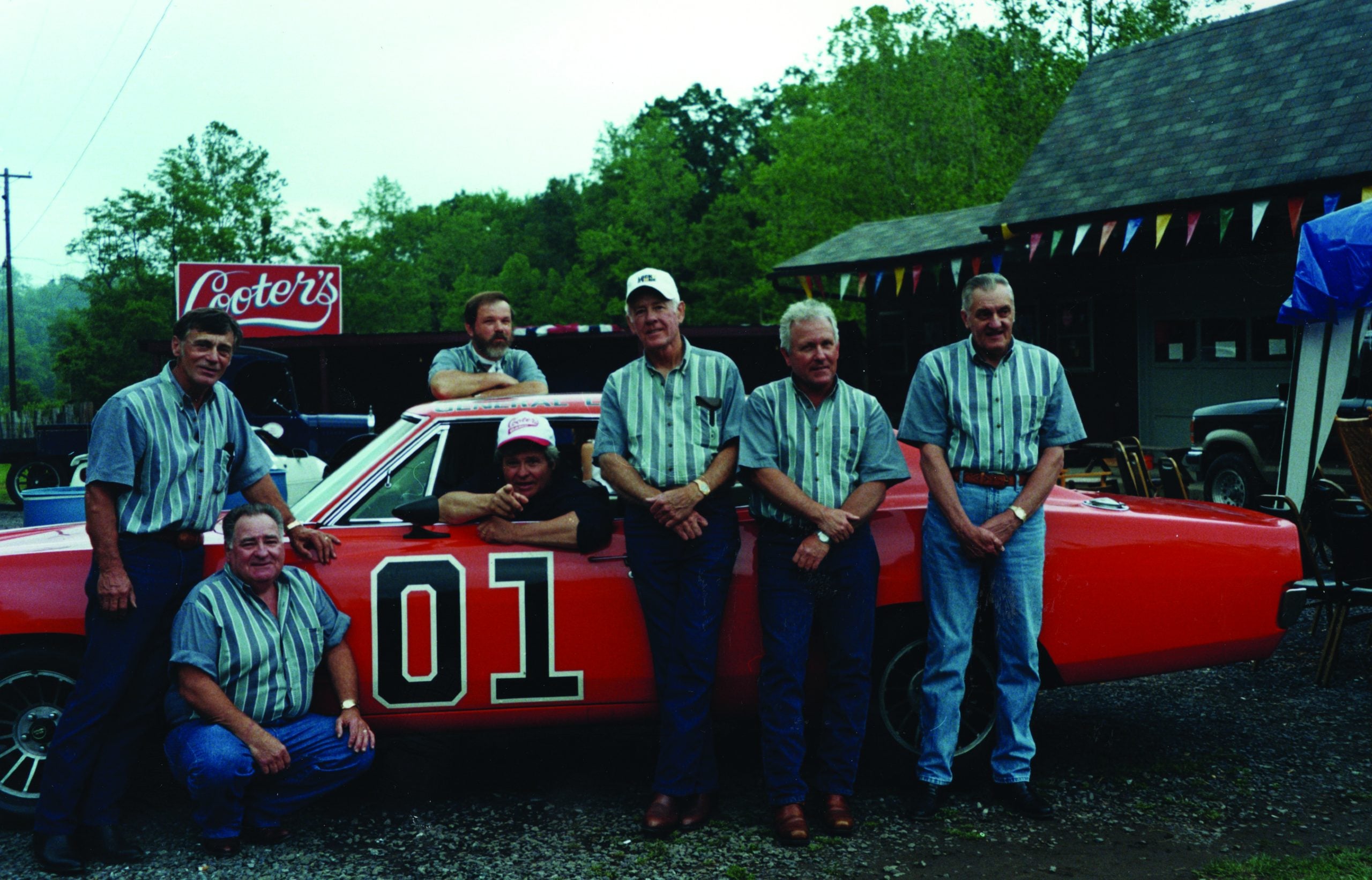
Richard remembered that the band was booked to play at the Old School House in Luckets, Virginia the next week and he invited Bill to play with them if he wasn’t already busy. And to Richard’s great surprise Bill showed up and played the entire show with the band. “I told him that he would be most welcome to play on any of our shows that he wished to play. Just show up. And Bill said, ‘Well, I’ll just join the band and play full time.’ And he played with us on most of our shows for the next six years.” One gig that Bill especially remembers was playing at Cooter’s Garage in Luray, Virginia. Cooter was the mechanic on the popular Dukes of Hazzard TV show and he posed with the band sitting in his car. Bill played some great fiddle on Five Of A Kind’s CD project Best Hand and was featured on several instrumentals. Richard told me “Bill’s presence improved the sound and quality of our music. He had a friendly way of correcting us when someone was out of tune or was not hitting the right harmony note. Bill got along with everyone and we loved having him in the band.”
After leaving Five of A Kind, Bill retired from music and took a job with Frederick County Schools and stayed close to home. Tom Gray told me an interesting story from the early days of his knowing Bill. It’s not music related but is a nice story of their friendship. “I knew Bill lived with his parents in a house near Catoctin Creek. One cold winter day, January 2, 1971, my late wife Sally and I and another couple took a canoe trip on Catoctin Creek. It was half frozen over which slowed us down considerably and the ice was not thick enough to walk on. So, we broke the thin ice and poled with our paddles through the crunchy slush to shore. It was getting dark and we still had a few miles to go to our planned take-out where we’d left my car. Fortunately, I recognized that we were near the Poffenberger house. I walked up to the door hoping to find Bill and ask for a ride. Bill came to the door and was very surprised to see me. He and his parents were finishing up their dinner of roast wild duck and we were served hot drinks, cake and fruit. Bill gave me a ride to my car and we drove back to his house, loaded the two canoes on top of my car and headed home.” What a lucky break to have been stranded so near a wonderful and helpful person.
Over a 50-year music career Bill Poffenberger has earned the respect and admiration of bluegrass musicians and fans throughout the world. He was an ideal band mate. He played intricate tasteful fiddle breaks which always followed the melody line. He knew how to play backup and make the band and the vocalist sound their best. He never cared about being in the spotlight and he got along well with everyone. Most of the albums Bill is on can be found on YouTube. Aspiring fiddle players and afficionados would do well to have a listen. Bill Poffenberger certainly is a classic fiddler from the early days of bluegrass.