Bill Monroe Style Mandolin Improvisation Course
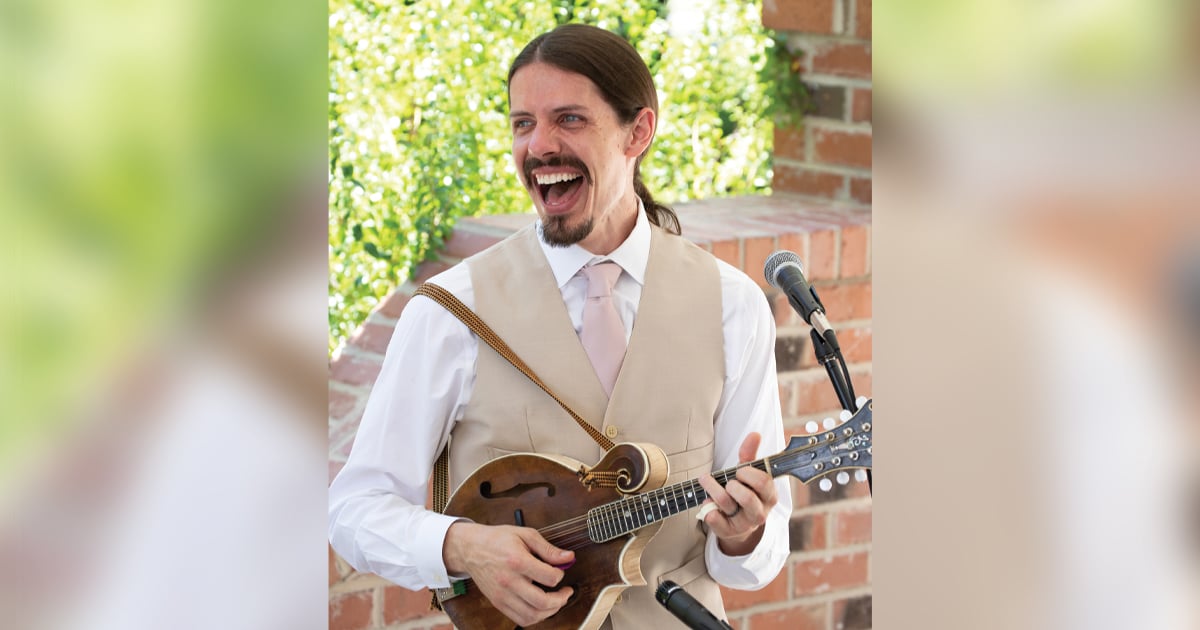
Photo By John Malinowski
If you travel to a foreign country, you can buy a travel guide, a map and a phrase book and head out on your own, or you can find someone who knows the language, geography, history, and customs and ask them for help. The second option is usually the easiest, most efficient and informative. The same can be true of learning stylistic music. If you want to learn to play the mandolin like Bill Monroe, the banjo like Earl Scruggs, the fiddle like Kenny Baker, or the guitar like Tony Rice, you could transcribe solos on your own and work to analyze the style, or you could seek out someone who has done the work and already captured the essence of the style.
Capturing the essence of a style doesn’t not mean simply learning note-for-note song transcriptions any more than memorizing the Gettysburg Address is equivalent to orating like Abraham Lincoln. Being a stylistic player doesn’t equate to being a mimic. You may start with mimicking, but ideally you want to be inventive and creative within the bounds of the style. When you learn a new language, you may start by memorizing words and phrases, but to be fluent you have to be able to take the vocabulary of that language and creatively combine it in new ways that express your individual thoughts and ideas.
Christopher Henry is guy who is fluent in Monroe style mandolin and he has developed a method of teaching the language of Monroe mandolin so that you too can move beyond memorized tunes and phrases and develop fluency. He offers this instruction in the three-part Monroe Style Improvising Course, each part consisting of a large collection of video lessons that you can download from his website. On the website, Christopher introduces the course by calling it “A clear and coherent codified system unlocking endless creative potential.” His goal here is not to teach you how to mimic Monroe, it is to help you approach your own creative solos, improvisations, and compositions in a Monroe style.
Christopher grew up surrounded by the sounds of Monroe style mandolin as his father, Red Henry, and close family friend, David McLaughlin, are two of the best Monroe stylists in bluegrass music. He has studied Monroe’s playing since he was very young. In fact, there is a short video that is thrown in as a bonus to the first level of the coarse that shows Christopher playing on stage with Jimmy Martin in 1994, when he was only about 12 or 13 years old. After Chris takes his mandolin solo on “Will The Circle Be Unbroken” Jimmy Martin says to the audience, “He’s heard Bill Monroe ain’t he?”
Christopher has been studying Monroe’s mandolin style for the majority of the four decades that he has been alive and has truly been able to “codify” it in a systematic way. What this codification involves is first learning a series of modular devices, or musical phrases. Chris lays out twelve of these in video “zero” of the first level of the course and adds more as the course continues. He has given these modular phrases inventive and memorable names such as “Staggered 16th Notes,” “The Slidey Lick,” “The Scooper,” The Screamer,” “Paddy on the Turnpike Rhythm Lick,” etc. Each of the three levels of Christopher’s course were designed to be studied over a 12-week period and each includes roughly eighteen to twenty hours of video lessons.
Once you learn the modular devices that are explained in video “zero,” you will first learn how to apply a few of them over top of the rhythm and changes to simple bluegrass songs and fiddle tunes like “On and On,” “Nine Pound Hammer,” “Blueridge Cabin Home,” “Old Joe Clark,” “Soldier’s Joy,” and “Salt Creek.” In this phase of the course you are simply playing licks over chord changes and it may not yet sound much like Monroe. However, with these exercises Christopher is simply helping you set up base camp. You have yet to really start your journey up the Monroe style mountain.
Video six is where you are first introduced to an actual Monroe transcription with a Monroe solo to “On and On.” In video seven, Christopher shows you how you might improvise on that tune in a coherent way using the modular devises. In video eight Christopher brings in David McLaughlin as a special guest. David plays an improvised version of “On and On” and then Christopher and David discuss David’s solo and how he basically strung a bunch of the Monroe licks together to play the solo. David then plays the tune in the key of A and, again, discusses how he is simply “re-sorting” those modular devices.
An important aspect of this discussion with David McLaughlin is when David plays “Soldier’s Joy” as a fiddle player might approach it, and then plays the tune like Monroe might approach it. Christopher and David then discuss the difference and the viewer can start to understand how Monroe approached expressing song melody like an impressionist painter rather than a realist.
Video nine of the course is where the whole approach really starts to come together. At the beginning of this video Christopher shows Bill Monroe playing “Bluegrass Breakdown” during a live show. At the bottom of the screen Christopher adds a text bar that names the modular lick that Monroe plays during every phrase of the song. He starts the tune with the “Paddy on the Turnpike Lick,” then moves into the “F Chug and Minor/Major Lick,” then the “Half Scoop,” then “Staggered C Blues Minor/Major Lick,” etc. By the end of the tune the lightbulb has gone off in your head and you see exactly how Monroe applied these devises, or variations thereof, to create his solos on tunes like “Bluegrass Breakdown.”
During the duration of this course, Christopher provides you everything that you might want or need. He provides you with the modular devices, presents many note-for-note transcriptions of Monroe tunes, demonstrates how you might modify those Monroe transcriptions by using the modular devices, demonstrates how to transcribe Monroe solos by ear, presents Monroe (either in video or audio) playing numerous variations of his tunes, provides rhythm back up tracks for you to practice with, studies the songs of other Monroe style players (Frank Wakefield, Dean Webb, Red Henry, David McLaughlin, Ronnie McCoury), and he interviews other Monroe-style “disciples” (Red Henry, David McLaughlin, Peter Rowan, and Lauren Price Napier). Christopher’s philosophy is that to learn the Monroe style “it takes a village.” He presents all of his videos with an excitement and enthusiasm for Monroe style mandolin which is infectious.
Since this short article is not nearly long enough to give you the full picture of Christopher Henry’s Monroe Style Mandolin Course. I conducted a podcast interview with Christopher about the course that will be posted on the Bluegrass Unlimited website in June 2021. We have also posted a video lesson with Christopher on the lessons page of the Bluegrass Unlimited website which will allow you to get a sampling of a couple of the modular devices and how they work. You can also explore Christopher’s website,
www.noyamountainmusic.com.
I suggest that if you want to climb the Mount Everest of bluegrass mandolin, you think about hiring Christopher Henry to be your Sherpa.