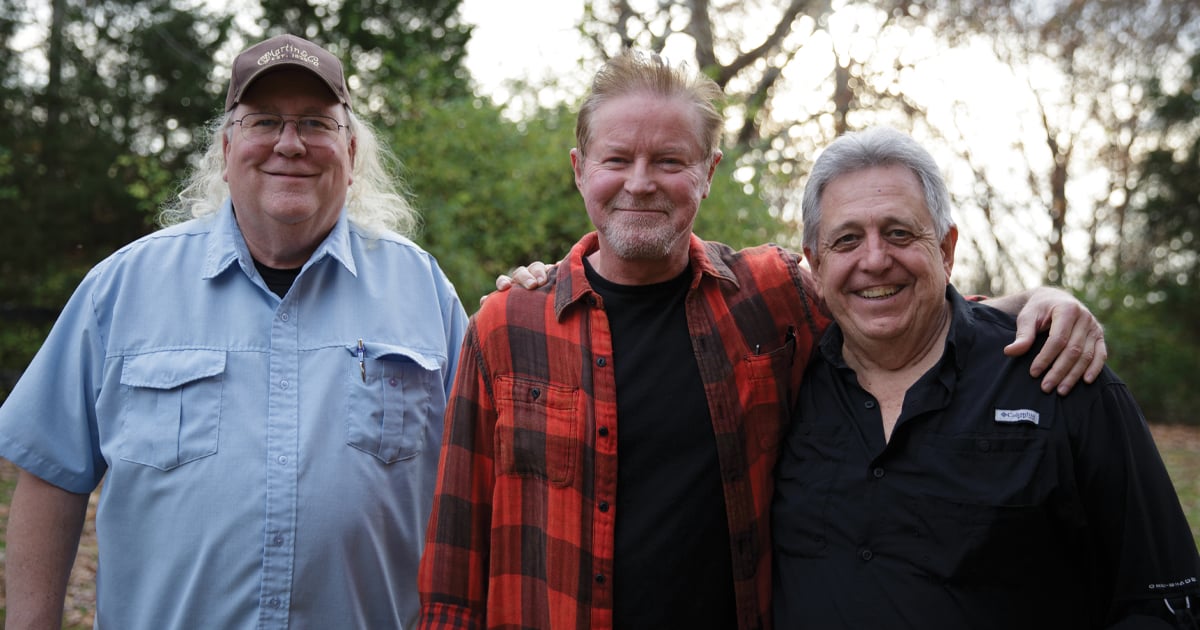
Bil VornDick
Putting Together The Pieces
Photos Courtesy of Bil Vorndick
Bil VornDick, audio engineer/producer to the stars, summarized his role in the studio and music industry, “I’m there to help people and I’m good at putting together puzzles. I like putting it together so people will enjoy listening to it.” VornDick’s puzzles have garnered him over 45 Grammy finalists, numerous IBMA awards, and a myriad of other accolades in various styles of music. Dobro player extraordinaire, Jerry Douglas, stressed, “Bil’s been responsible for the sound of bluegrass and for setting a bar for its quality.”
Queen of Bluegrass, Rhonda Vincent, also praised his work. “Bil VornDick has a keen ear for sound and an incredible knowledge and collection of microphones and equipment. He has an amazing understanding of sound and how to capture the natural sounds of an instrument or voice. I’ve witnessed Bil stand in front of an instrument and listen to the sound, then select the perfect microphone to capture the sound, along with selecting the perfect chain of equipment. His array of awards for the music he has created, produced, and recorded are the perfect example of how Bil VornDick perfected his craft to be one of the top engineers in Nashville.”
Established as one of the premier engineer/producers in the music business worldwide, VornDick has a laundry list of songwriters, musicians, bands, and artists that he has worked with in the studio. In addition to Douglas and Vincent, others include: Marty Robbins, Ralph Stanley, Bob Dylan, Alison Krauss, James Taylor, New Grass Revival, Keith Whitley, Dolly Parton, Vince Gill, Sam Bush, John Cowan, Mark O’Connor, Bela Fleck & the Flecktones, Peter Rowan, Roland White, Lynn Anderson, Aubrey Haynie, Craig Duncan, Doc Watson, Ricky Skaggs, George Jones, Marty Stuart, Claire Lynch, Byron Berline, Vassar Clements, Don Henley, Herb Pedersen, plus many more.
VornDick has always had a burning passion for music. Coming from a musical family in northern Virginia, Bil’s mother was a composer, who earned a BMI award. “I still have my mom’s baby grand piano and started playing when I was 3 or 4 years old. I have a background in music, play various instruments (strings, keys, and brass). It helped studying many years of music theory, physics of music, and experimenting micing instruments and matching mics and preamps. I was classically trained and started transcribing concert scores in 7th grade. Fritz Velke, the famous composer, was my middle school music teacher. Once Mr. Velke wrote the master concert scores, I transcribed the music for the different keys of the instruments.”
In high school, Bil was a first chair trumpet player in the concert band (performing in the all-state band for three years), drum major for his marching band, and guitarist in the jazz band. Starting in seventh grade, he played guitar in the Mockers, a prominent rock-n-roll band in northern Virginia. (The drummer is now a doctor and officer of Vanderbilt Hospital. The bassist, Harry Daley, became Jimmy Buffett’s first band mate.)
“I was in a pop band, but bluegrass impressed me. Bluegrass artists can sing, play and perform it. Pop music not so much. My brother played bluegrass on his stereo in his bedroom next to mine. So I heard the greats being played. I grew up watching the Dillards on The Andy Griffith Show, the Smothers Brothers, and Ed Sullivan.” (VornDick produced Rodney Dillard’s recent album, Old Road New Again.)
Rodney lauded his producer/engineer. “I’ve known Bil for years. He has great ears, some of the best in the business! Plus, he has the technical know how to back it up. He got the best vocal sound on me that I’ve ever had. Bil has such knowledge of how to record acoustic instruments and gets the best, pure tone. Like the ripples in a pond, I don’t think he knows how many people he’s affected.”
In his teens, the sound prodigy manned a two-track studio in his home, where he recorded songs to mail and pitch to publishers in New York. In the summer, he traveled to New York City and met with music execs, songwriters, and publishers in downtown Manhattan. He would stay in the Taft Hotel where Jimmy Rogers died. As a youth, Bil’s dad took him to see Broadway musicals. He saw the original casts of My Fair Lady, West Side Story, South Pacific, and Peter Pan. Later, he saw Hair and was invited on stage for the last scene by Heather Mac Rae.
VornDick even composed a few musicals in college, but his older brother John, who had attended Fincastle, the blueprint for bluegrass festivals, kept exposing him to bluegrass. John camped in a trailer, rationed out cases of beer, and served food that their mom had cooked for John to take.
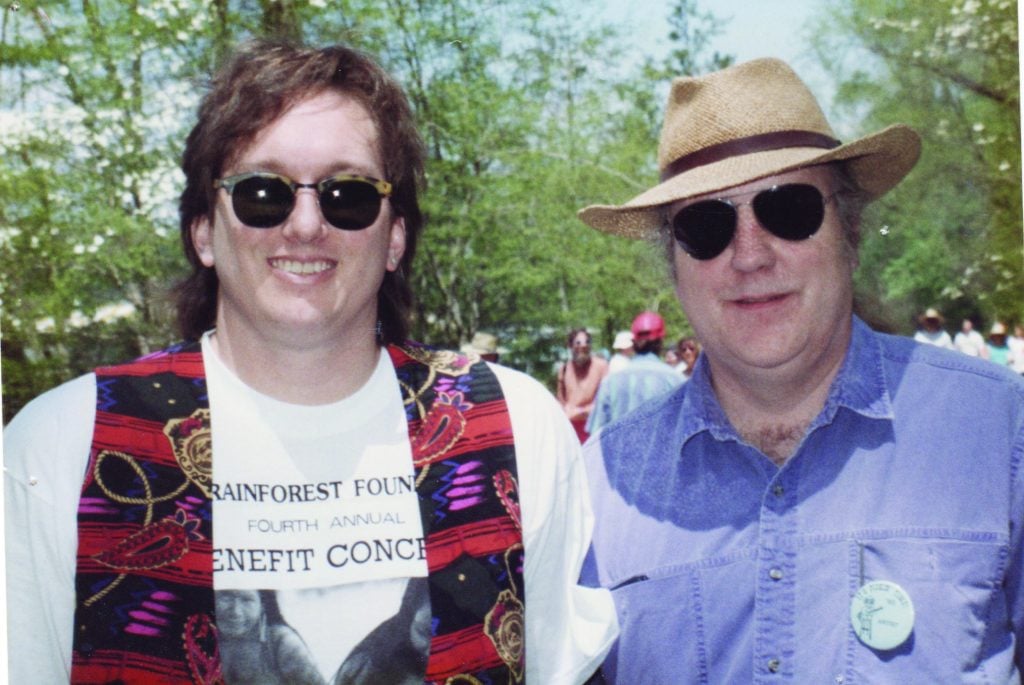
Bil’s first major bluegrass festival was at Berryville. Bil listened to the music from the stage as it poured out of tin horns mounted in the trees of Watermelon Park. With his trained ear, he thought he could make it sound better. “I walked up to the Shure PA mixers and made some adjustments. Carlton Haney walked over and said, ‘What are you doing? It sounds a lot better. I’ll give you free tickets, cheeseburgers, and cokes if you’ll help run the sound at my festivals.’ I thought, ‘What a deal!’ The next year I got to hang out with Eddie Adcock (who was now running audio). Eddie had a real console and speakers. He really helped festivals sound so much better.”
That partnership afforded the aspiring sound engineer many years of memorable experiences. “I was doing sound at Watermelon Park for Eddie years later when his friend Danny Gatton played electric guitar on ‘Orange Blossom Special’ with Liz Meyer and Friends. There was a rush of people that tore down a snow fence. Being there for that incident, that surge was the first time I ever saw something like that. For about 15 minutes after he arrived, I met Jerry Douglas at Berryville. He was still in high school and playing that summer with the Country Gentlemen.” Flux reflected, “We’re friends. Our relationship began as childhood pals who found their way to the same town and got back together and made great sounds. He’s been in my life for 50 years.”
VornDick built a storehouse of memories. “I remember Pete Kuykendall pitching a tent for Bluegrass Unlimited at an early Berryville Festival. He was trying to hold down ropes on the corner of the tent. I walked over and tied a taunt line for him. He asked how I did that. I told him that I was an Eagle Scout.” Later while assisting Adcock at the Shriner’s festival in Wise, VA, VornDick witnessed Ralph Stanley inviting Ricky Skaggs and Keith Whitley to sing with him before they became his band members. “We all ended up becoming really good friends. I planned to ask Keith to sing happy birthday on a video for my brother’s 50th on the day Keith died. It’s one of those days you will remember until you pass.”
After graduating from high school in 1968, VornDick attended UVA, then later transferred to Northern Virginia Community College in Annandale. Bil’s dad, a superintendent at the Evening Star in DC, didn’t want his youngest son to major in music so Bil worked for the newspaper in the department next to where Mike Auldridge worked. RCA’s Frank Grist learned of Bil’s talents and carried him to Nashville where he signed as a songwriter for fabled Cedarwood Music. During that trip, Bil met Chet Atkins plus many of Nashville’s who’s-who. Bil returned regularly to Cedarwood to submit songs to John and Bill Denny. They became lifelong friends.
Doors Kept Opening
“I met Harlan Howard in 1975 while in England, visiting the assistant conductor of the London Philharmonic. I was a guest on the BBC radio show, ‘Both Sides Now’, with a live audience at the Hippodrome. Wally Whyton, was the BBC interviewer. After the show Wally wanted to take my wife and I to the pub next door where he introduced me to Harlan. I said, ‘I’ve got a tiger by the tail.’ He smiled and said, ‘It’s plain to see’. I said, ‘It is you! What are you doing in London? ‘ He said, ‘Looking for my next wife.’ Later he said, ‘Son, look me up (when you get to Nashville).’ He is one of the best songwriters ever! I would cancel master recording sessions to do a demo with Harlan Howard. One time Harlan walked in with Keith Whitley to sing his demos. It doesn’t get much better. Joe Allen was on bass and broke a string during that session. That bass is now in the Musician’s Hall of Fame and the string is still wound up.”
One day I came home and my dad asked, “Why is Chet Atkins calling you and why is he wanting to take you to dinner?” Over that dinner, Atkins suggested that he apply to Belmont University where they offered a new degree in Music Business. Taking Mr. Guitar’s advice, VornDick transferred. In July 1977, Bil and his wife relocated, setting up a four-track studio in their rental home in Nashville. While attending Belmont, VornDick worked part time as a recording engineer at various studios including the Oak Ridge Boys’ Superior Studio. He recorded Marty Stuart’s first album for Ridge Runner (Records). Bil’s brother came to watch. Bil and John had known Marty since he first played with Lester Flatt. “I would do sessions on Saturdays and Sundays to help pay bills and get my chops together. Lots and lots of Gospel Quartet albums. We would record five songs before lunch, five after lunch. The group would have an hour or so to fix their parts. I had an hour and a half to mix it without computer automation and then it was done. I would go home and eat a hot dinner with my wife.”
“I recorded a Jimmy Martin album at Superior Studio. It took an hour and fifteen minutes to get the whole thing done on stereo quarter inch tape, edit each song with leader tape, and write names on the box. He only did one song twice and played the songs in the order that they would appear on the album. I only charged him $70 for the studio and me, $50 for the recording, $15 for the tape, and $5 for the box and label. Jimmy first said he wasn’t going to pay it. Then he pulled out a wad of money and declared, ‘I’ll never use you again.’” (Jimmy ended up working on other projects Bil produced or engineered.)
Following graduation, Bil co-wrote a pop song with some friends, “Skylab is Falling”, and recorded it as the Astronuts in June 1979. “On July 21st, it won American Bandstand’s Rate-A-Record. We beat out ‘Disco Duck’! We wore silver fire suits and rode in the bed of a green pickup truck on Music Row handing out records,” he mused.
“Marty Robbins had opened up a studio at the old Union Hall and I was doing some demos there for various publishing companies. Marty walked in one day when he was recording demos for Loretta Lynns’ publishing company and asked if I could meet with him the next day. We met in his office. He was looking for a chief engineer and offered me the job recording his albums for CBS. I said, ‘yes’, and didn’t even ask what it paid.” That position enabled VornDick to engineer records for some of the biggest names in country music. He worked for Robbins until just before his death. (Bil’s father who had really liked Marty Robbins and others that Bil recorded, would die before getting to meet them.)
After Marty Robbins’ death, the sound master continued to put music together. He consulted on construction of, and became chief engineer for, what is now Curb Studio on 16th Avenue and where he recorded Bela Fleck’s Deviation and Double Time. Later, Bil owned Music Row Audio, a recording facility that specialized in unique acoustic recordings. He recorded Bela Fleck’s Inroads and Drive at Sound Connection along with many other albums with his friend Jerry Douglas, plus The Nashville Bluegrass Band, Maura O’Connel, Alison Krauss, IIIrd Tyme Out, Doyle Lawson, Country Gentlemen, Ralph Stanley, and others.
“I love the challenge of getting it recorded accurately. I can wear both hats (engineer and producer). The producer answers the questions. There’s a trust between the engineer and the musicians like on Bela’s Drive album. Not many albums have that much interaction between the musicians. Another is the Grammy winning Great Dobro Sessions.” Fleck readily agreed. “Bil showed up at the perfect time in Nashville for a bunch of us acoustic players who were trying hard to make our new bluegrass-rooted instrumental recordings sound as good as we imagined them in our dreams. He taught us and learned from us, and was a great partner in the creation of a lot of wonderful music.”
In 1993, Bil produced Claire Lynch on her Brentwood Bluegrass album, Friends for A Lifetime and then Moonlighter. “I still cry when I hear ‘Between the Two of Them’,” he admitted.
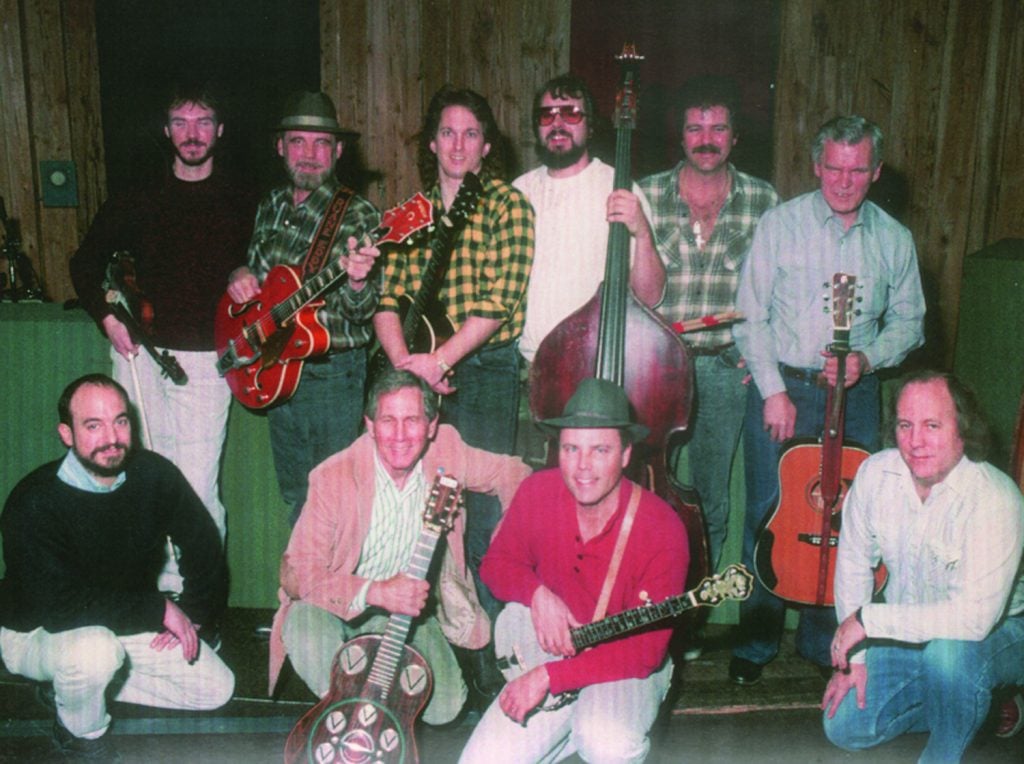
VornDick has worked in and for the music community in many different entities. He saw the need for musicians to receive affordable health insurance. VornDick explained his inspiration. “I wanted to figure out a way for engineers, musicians, songwriters, and independent contractors in the entertainment industry to be able to have affordable insurance. I was at an Eric Clapton concert with a childhood friend who runs a large hospital in town who knew what I was trying to do. And then it came to me, and he saw the expression on my face. This was years before the Affordable Health Care Act, and that idea became Sound Health Care, that expanded to 46 states.”
Another piece of VornDick’s puzzle was serving as an adjunct professor at his Alma Mater, Belmont University (2001-2014). He advised the institution to purchase Oceanway Studios “so that Studio A would be my classroom for the capstone class for those students focusing on Engineering and Production. It is my favorite control room where I recorded the Earls of Leicester’s Grammy winning album. The Neve 8078 recording console (one of the last of the ‘80 series’ hand-wired analogue mixing consoles) is the largest discrete Class A Neve on planet earth.”
When asked how he mixes digital with analog during the recording process, the master sound man, confessed, “It’s an art. I paint sonic images and environments like you would on a canvas, but with air.” Douglas elaborated on his friend’s abilities, “If you ask a question, in terms that aren’t clean like maybe a sound, there are two kinds of engineers: 1) Bil, who goes after it. 2) Others who say, ‘I don’t know how, man.’ He’s forgotten more than most will ever know. Bil and I have made so many records, it’s automatic. We have a strange language like twins. I can say, ‘Would you tweak that high range a little?’ And he’ll say, ‘Sure.’”
The Dobroist continued, “Bluegrass recordings were inferior (to other genres of music). You couldn’t hear the bass. Studios just put up mics and didn’t EQ them. I became a producer, taking pains so the listener could hear the whole band. Bil was the engineer to make it happen. We made a team and we made a market share.”
VornDick explained his craft. “You’re like the nurse and the doctor. You find songs to become stylistic. Alison (Krauss) is a good example of finding songs for her Two Highways album for her genre/age group (in 1989) and I’ve Got That Old Feeling (in 1990).”
“(To begin with) I didn’t know who she was. At one of the first IBMAs in Owensboro, in front of the showcase lounge, a teenager pointed at me, giggled, and ran off. She came back later, introduced herself, and said, ‘I want you to produce my album.’ I met with her and gave her assignments like vocal training and performance exercises. She asked why she needed to do that stuff. I said, ‘my name’s going to be on the album.’ She accomplished the goals. We picked out some songs and started on the road having fun. That album took Union Station to the Grammy Awards.
“That year my friend, Bruce Hornsby, won the Bluegrass Grammy for playing a keyboard solo on a bluegrass record. (1990 “Best Bluegrass Album”—Bruce Hornsby and the Nitty Gritty Dirt Band The Valley Road) I was sitting behind Bonnie Raitt. She said, ‘You had that category surrounded, didn’t you?’”
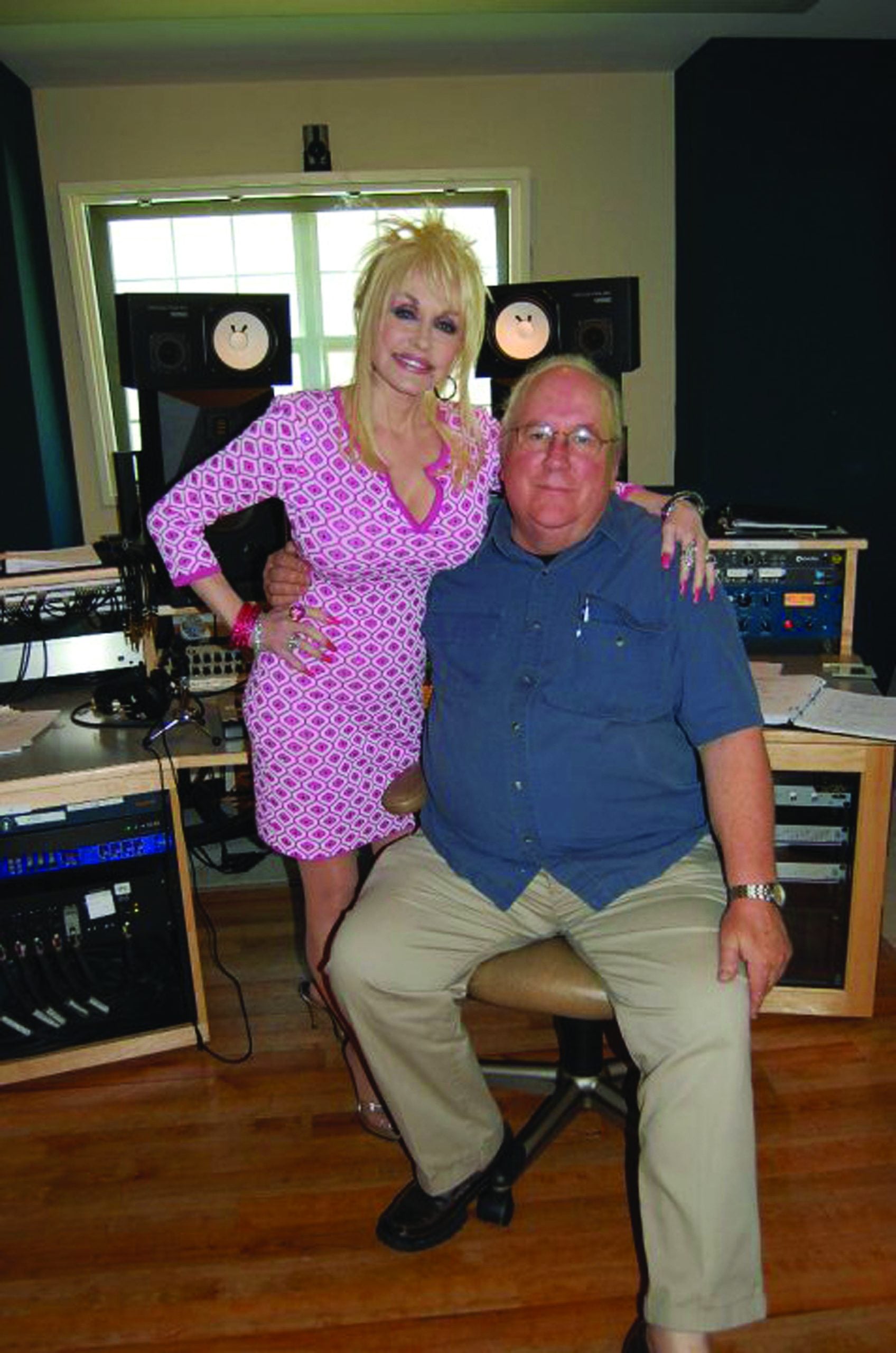
Douglas played on Alison’s first album, but became more involved in her next one. “Bil taught me more about making records than anyone else. One of the first records we worked on together was Alison Krauss’ second record, I’ve Got That Old Feeling. We produced it. Bil hung with her through the vocals. It was the first bluegrass record to sell over 100,000 copies.” That project reached number 61 on the Billboard Country Albums chart. During the 1991 Grammy Awards, the album, I’ve Got That Old Feeling, won “Best Bluegrass Recording.” They both received their first Grammy.
VornDick approached a public relations marketer that Raitt had mentioned during the Grammys. “I want you to do promotion for Alison Krauss. She said, ‘I don’t do bluegrass.’ We had to break the facade of bluegrass being the stepchild of country music. How soon they forget! I had Ken Irwin of Rounder Records hire Bonnie’s publicist. I knew a strong publicist would break out Alison with a good marketing plan I had in mind. A friend from high school was editor of Junior Scholastic. He wrote about her, a teenager in a teen magazine. The LA PR person got other articles in major teenager magazines and major press. It helped target her market and caused people her age to buy her records.”
Bil and Alison formed a working bond. He arranged her Opry debut. She nicknamed him–Ben. “Alison has always called me Ben because she thought I looked like Ben Franklin. Alison wanted me to manage her back when everything was going well. I said no, so she hired her best friend, Denise Stiff.”
Dreams Do Come True
VornDick reflected on highlights in his career. “The most challenging album was Clinch Mountain Country. (IBMA’s 1999 “Album of the Year” and “Recorded Event of the Year”). It was a logistical nightmare though. It wasn’t the artists; the artists wanted to sing with Ralph. Going through their management and labels, they knew me and it went smoothly.”
The double CD featured Ralph Stanley singing duets with Bob Dylan, George Jones, Marty Stuart, Dwight Yokum, Patty Loveless, Vince Gill, Ricky Skaggs, Diamond Rio, and Porter Wagoner, to name just a few. The 36-song, 34-artist set was also a Grammy finalist. “Bob Dylan had always wanted to sing with Ralph, so I called Dave Freeman. I said, ‘I want to have country music artists on this album that have wanted to sing with Ralph.’ He asked, ‘How much does it cost?’ I responded, ‘Have I ever produced an album that didn’t make you a profit?’ So, I contacted Bob and proceeded.”
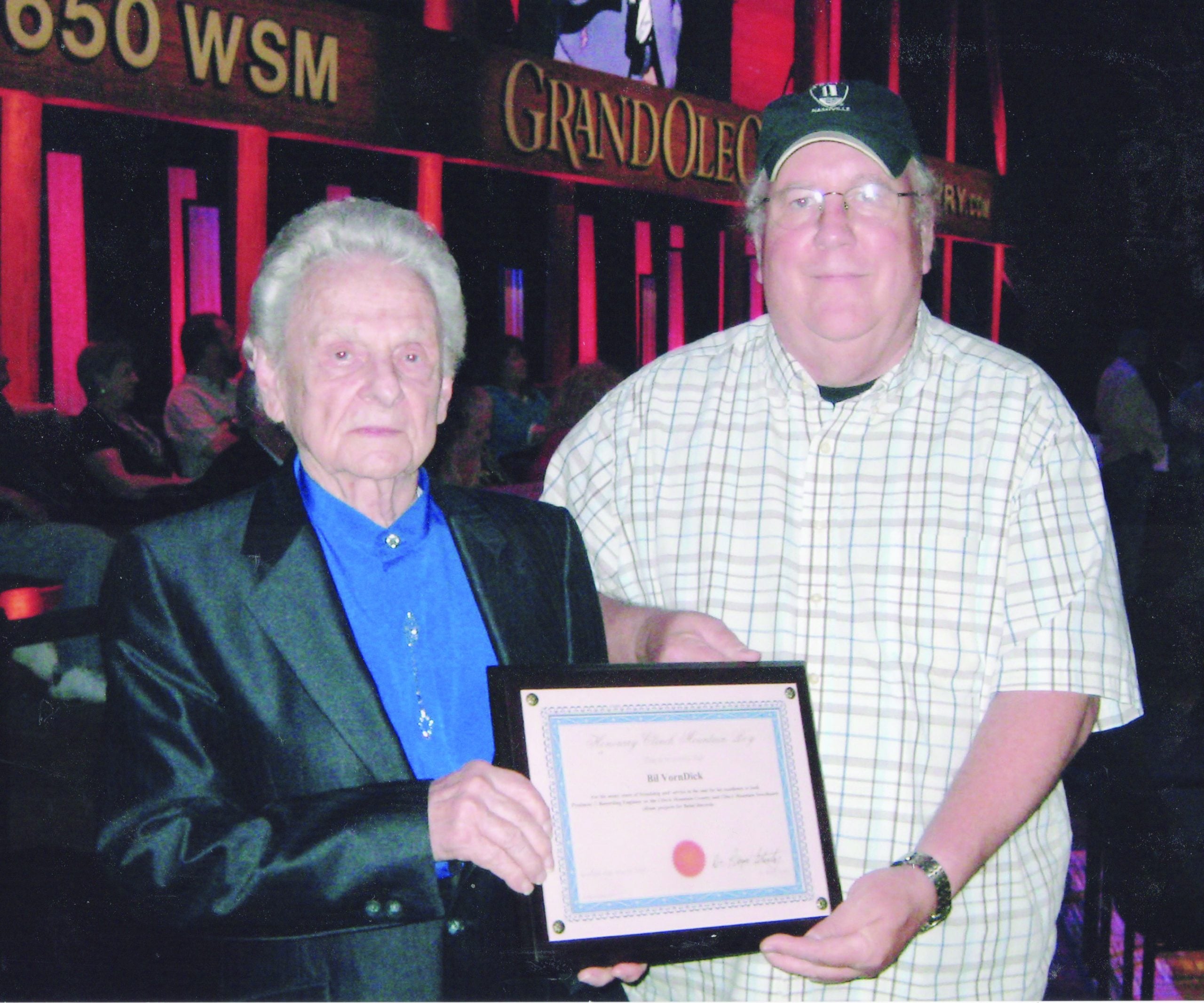
Two years later, VornDick returned with Clinch Mountain Sweethearts which paired Ralph with female singers such as Dolly Parton, Gillian Welch, and Joan Baez. “Receiving the Belmont Alumni of the Year, (CCMA’s) Pioneers Award, Grammys, and IBMA Awards are nice, but seeing Ralph get inducted into the Grand Ole Opry, then Ralph inducted me as an honorary Clinch Mountain Boy on the stage of the Opry, was a real high for me. I’ve got that photo and certificate hanging in my home, and so proud of that. I had been a fan a very long time.” VornDick and other Masons, including Don Rigsby, took part in Ralph’s funeral during his death procession.
Over the years, VornDick has worked in all genres of music, but he had an affinity for bluegrass. “I wanted to see bluegrass get back and be popular. My objective was to get younger people loving the music, with recording the Young Acoustic All Stars. There’s been a resurgence with Billy Strings. Before him, the Earls of Leicester. I mixed the ‘Earls’ for kids, not like old Flatt and Scruggs records. A good marketing idea is to always look at the next generation. Keep the blood running. Since Americana joined with bluegrass that path is going to get wider.”
VornDick serves on numerous college advisory boards, works with various nonprofit organizations, and was a founding member of the International Bluegrass Music Association. He and his wife of 45 years, Patricia, have a son, a daughter, and five grandkids. He is a Shriner, 32nd Degree Mason, and was an assistant Boy Scout master. In recent years, VornDick purchased the original Nashville Moose Lodge, installed a recording studio (Mountainside Productions and Mountainside Audio Labs), and resides there.
When asked about retirement, VornDick shrugged, “I’m still having fun! I’m currently working on three albums; one is the 102nd album with Craig Duncan.” Duncan enjoys their work, too. “Working with Bil is a joy. He loves what he does and he does it well. Bil’s care in listening to each instrument and placing microphones based on what he heard along with his overall approach in recording impressed me the first time we worked together. He studies and understands recording techniques and communicates well with the musicians and the producer. He is always looking for the best tone, mix, and overall sound for each individual project.”
VornDick concluded, “The gig I have is a lot of fun musically. I pick and choose my projects. I enjoy what I do. I work with the best musicians, songwriters, and artists. I’m trying to help the team (the artists) for the best representation of the song. I try to translate their vocals to paint a picture for the listener. Music is an emotional thing. I grew up playing guitar and listening to Chet and Doc. Recording them, I was like a little kid in a candy shop.”
Going about his business of putting music pieces together, Bil VornDick has managed to fly just under the publicity radar and he likes it that way. He loves making others sound good. “I am a guy in the background to help them realize their dreams.”
For more info: www.bilvorndick.com or www.allmusic.com